Hi everyone,
As I mentioned a few days ago in the comments on ArXplorateur’s post
(https://voyageforum.com/forum/deux-semaines-en-ouganda-en-solo-en-transports-d10553168/)
—which was the first to reopen the forum’s Africa section—I wanted to share our feedback on our three weeks in Uganda.
We recently traveled between late August and mid-September with the Mpolampola agency, which many of you know, run by Paul.
I’m editing a one-hour film about this trip, which I’ll be uploading soon to our travel-focused YouTube channel:
https://www.youtube.com/@lolodetoul54
It’s almost finished and ready to be uploaded.
We planned an ambitious itinerary (maybe *too* ambitious?).
Here’s the breakdown of our packed schedule:
D0 Saturday 24/08: Departure from Paris to Uganda via Kigali with Rwandair
D1 Sunday 25/08: Arrival in Entebbe Sunday morning. Departure for Lake Mburo National Park. Night at Rwakobo Lodge
D2 Monday 26/08: Lake Mburo National Park. Walking safari and boat tour of the lake. Night at Rwakobo Lodge
D3 Tuesday 27/08: Departure for Lake Bunyonyi. Night at Birdnest Overseas
D4 Wednesday 28/08: Boat and walking tour of the lake, then drive to Lake Mutanda Lodge
D5 Thursday 29/08: Hike to see the golden monkeys, then departure for Nkuringo Bwindi Gorilla Lodge
D6 Friday 30/08: Hike to see the gorillas. Night again at Nkuringo Bwindi Gorilla Lodge
D7 Saturday 31/08: Drive to Queen Elizabeth National Park. Night at Twin Lakes Safari Lodge
D8 Sunday 01/09: Vehicle safari and boat tour on the Kazinga Channel. Night at Twin Lakes Safari Lodge
D9 Monday 02/09: Drive to Kibale Forest and walk around Crater Lake. Night at Isunga Lodge
D10 Tuesday 03/09: Chimpanzee trek in Kibale Forest and walk in Bigodi Swamp. Night at Isunga Lodge
D11 Wednesday 04/09: On the road to Murchison Falls National Park. Walking tour with rhinos at Ziwa Rhino Sanctuary. Night at Murchison River Lodge
D12 Thursday 05/09: Vehicle safari in Murchison Falls National Park and boat ride to the falls. Night at Murchison River Lodge
D13 Friday 06/09: Drive to Chobe Lodge by the Nile
D14 Saturday 07/09: Long road trip to Kidepo Valley National Park. Night at Adere Lodge
D15 & D16: Safari in Kidepo Valley National Park. Nights at Adere Lodge
D17 Tuesday 10/09: Very long drive to Sipi Falls (Mount Elgon). Night at Lacam Lodge
D18 Wednesday 11/09: Visit to the falls, then drive to Jinja (source of the Nile). Night at Haven Lodge
D19 Thursday 12/09: Drive to Kampala. Night at Latitude 0.
D20 Friday 13/09: Discovering shoebills in Mabamba Swamp. Evening flight back to France via Kigali, Rwanda.
That’s the teaser done! I’ll be back with more details soon.
Looking forward to sharing!
Loïc
892 similar discussions in English
Hello,
I’m taking advantage of the forum reopening to ask this question:
For her 70th birthday, my mom will receive—as a gift—a trip to South Africa at the end of May 2025. We’ll arrive and depart (13 nights later) from JNB on Air France AF990/AF995. We’ll obviously rent a car for certain parts of the trip. I’ve been to the Cape Town area and as far as Agulhas twice, but she’s never been to South Africa before. She might enjoy a day or two of safari, but it’s not a priority for her. I’m well aware that trying to pack in too much is risky, which is why I’m looking for your advice on itineraries, safety, and health (status of the Marburg virus). So far, which combinations of these visits (in no particular order) would be doable and most enjoyable for her at a reasonable pace:
1-day excursion to Pilanesberg Park (+ Hartbeespoort on the way back if possible), self-drive or with a tour guide? 2 nights around the Panorama Route self-driving Garden Route from/to George/PLZ for 5 nights (what are the must-sees for a first-timer with so little time?) Wine region for 2 nights (is it worth doing both the Stellenbosch bus tour and the Franschhoek Wine Tram the next day, or vice versa)—she loves good wine! Cape Town for 2 nights (is it worth stopping at the Cape of Good Hope if—only if—you’ve maybe already been to Agulhas?).
This would give a final itinerary like this:
Day 1: Morning arrival in JNB—rest day/to be defined Day 2: Guided game drive excursion to Pilanesberg Park Day 3: Flight JNB–Port Elizabeth, pick up rental car, drive to Tsitsikamma Day 4–6: Garden Route: activities to be defined Day 7: Transfer to Franschhoek: Wine Tram in the afternoon Day 8: Taxi to Stellenbosch for the Vine Hopper bus tour Day 9–11: Transfer to Cape Town: activities to be defined Day 12: Flight from Cape Town to Hoedspruit or Nelspruit Day 13: Visit the Panorama Route Day 14: Flight from Hoedspruit or Nelspruit to JNB, then evening flight back to France
Given the time spent on the Garden Route, what are the must-sees? Same question for the Panorama Route? In general, she prefers beautiful walks with incredible landscapes/views and cultural visits over big cats, but it would be a shame not to see some local wildlife like meerkats, whales (I doubt it in May), or penguins during her stay! There you go—feel free to critique (not too harshly, though😛)/advise/improve. Thanks in advance! 🙂
Hello,
I’m Bruno, and I need some advice for planning a long, amazing trip (at least 1 month) to the United States. I want to show my kids the incredible places I visited nearly 30 years ago! 🤪
How do I travel with 3 teens, who should I call, and what do you recommend?
Things have changed so much since then, and it’s way easier to travel at 20 with just a backpack! ^^
Thanks in advance! 😏
INTRODUCTION
Travel journal updated in MAY 2025
Since our travel plans outside Canada were canceled due to Covid-19, we decided to take our vacation in Quebec this summer and cover over 5,270 kilometers to explore the various tourist attractions of the North Shore and Gaspésie.
This summary will cover our experiences on the North Shore, while Gaspésie will be the subject of a future summary.
The North Shore, known for its stunning nature, is the perfect spot for outdoor enthusiasts since you can enjoy activities like hiking, wildlife observation, sea kayaking, fishing, and hunting (to name just a few).
It’s also one of the best places in the world to see whales.
Our journey along the North Shore took place between the villages of Tadoussac and Kegaska, as Route 138 ends at the beautiful, long beach in Kegaska.
Hello everyone.
Preamble:
Sooner or later, you’ve got to take the plunge! I thought lockdown would be the perfect time to start this travel journal, but between working from home and gardening, I just didn’t have the time (or the motivation). Plus, long-haul trips weren’t really on the cards back then... But then I stumbled upon my photos and thought, "I’ve got to share my latest adventure in Brazil—you guessed it!"
First, a little flashback: some of you (yes, really, in DMs!) pointed out the big gaps in my travel journals—India in 2019, Vietnam in 2018, so many missed opportunities!
Truth is, for India, I traveled with a private guide and honestly didn’t have much to add to the tons of well-documented journals already out there. Plus, I still haven’t decided if I love or hate India... So, how do you share your feelings when you’re not even sure yourself? As for Vietnam, I had plenty to say—even though the itinerary was pretty classic—but I’ll admit the vibe on this part of the forum at the time kinda put me off for a while... And time flies, and memories fade... Anyway, just wanted to clear that up for my (many or few) readers. *Tudo bem*, let’s get started!!
Hey everyone,
I’m sharing a slightly unusual travel journal with three goals. To make it work, this discussion should stay in the travel journal section so we can find it easily and keep adding info to existing posts.
This journal is meant to help "newbies" discover these magical places.
We go to Southern Africa not just for the animals, but also for that soft light, the atmosphere, and those incredible wild campsites where you feel so at home... I’d love for you all to share your favorite spots here—those we miss so much.
The last goal is figuring out how to photograph them. Honestly, I’m not happy with my photos because they don’t capture the feeling I get when I’m there or that unique atmosphere.
I’ll start with one of the first spots that, for me, is one of the most beautiful in Southern Africa: Passarge Valley 2 in the Central Kalahari. There, you’re alone—completely alone. The next campsite is over 25 km away, and that’s a half-day of 4x4 driving. In front of you, there’s nothing but the CKGR plains with herds of springboks... absolutely stunning 😎

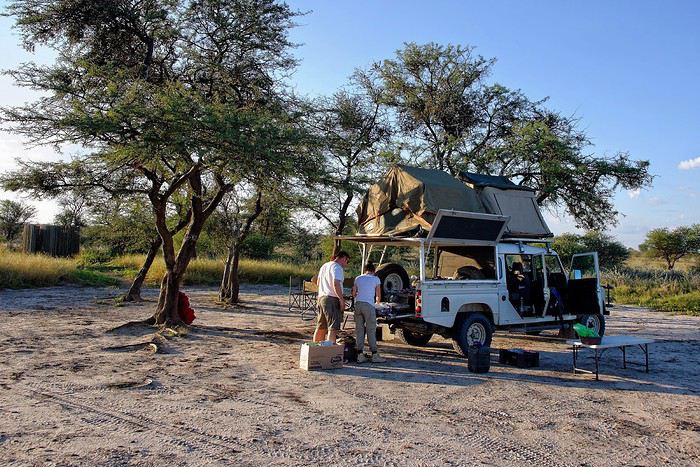
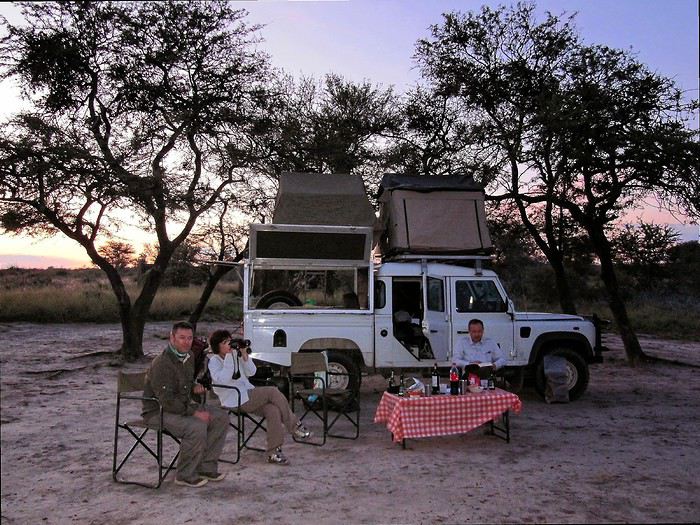
I’m sharing a slightly unusual travel journal with three goals. To make it work, this discussion should stay in the travel journal section so we can find it easily and keep adding info to existing posts.
This journal is meant to help "newbies" discover these magical places.
We go to Southern Africa not just for the animals, but also for that soft light, the atmosphere, and those incredible wild campsites where you feel so at home... I’d love for you all to share your favorite spots here—those we miss so much.
The last goal is figuring out how to photograph them. Honestly, I’m not happy with my photos because they don’t capture the feeling I get when I’m there or that unique atmosphere.
I’ll start with one of the first spots that, for me, is one of the most beautiful in Southern Africa: Passarge Valley 2 in the Central Kalahari. There, you’re alone—completely alone. The next campsite is over 25 km away, and that’s a half-day of 4x4 driving. In front of you, there’s nothing but the CKGR plains with herds of springboks... absolutely stunning 😎
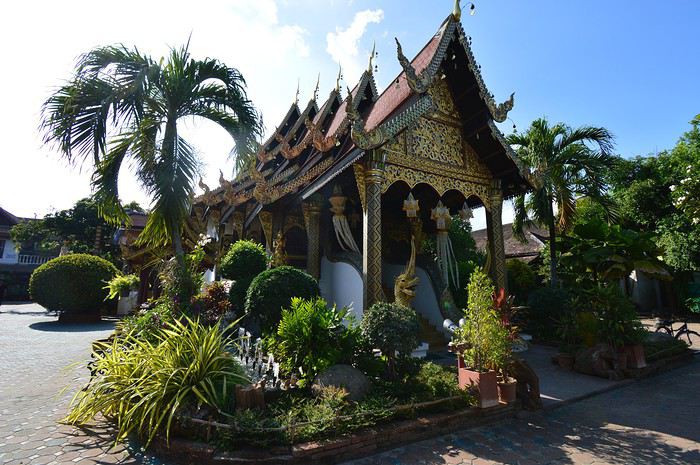
Hi everyone,
In these dark times, and after two months of lockdown, I thought now would be a good moment to write up the travel journal of our last trip to Thailand, to (maybe) help some of you escape a little. The idea is also, and above all, to give back to this forum, and I hope my tips or ideas will help future travelers. Don’t hesitate to contact me via private message or in the comments if you have any questions.
Before I start this story, I must warmly thank the people who patiently informed, advised, and guided us. Jojoone, Jodelavega, Jungletrool, DearPatsy, Tarajellow, and the others—thank you so much. This trip wouldn’t have been as wonderful without your help.
We’re a couple in our thirties who love traveling (we did a round-the-world trip several years ago now), and we’re big fans of Thailand, where we’ve been multiple times. We’re used to backpacking and even have a bit of wanderlust! But this year, everything was different since we were traveling for the first time with our baby, who was just under 2 years old (22 months). This raised HUGE questions for us, as we usually travel pretty casually and intuitively. While I found some answers on this forum, there was still a lot of information I couldn’t find, so I apologize in advance to those who travel without young kids—I plan to address that with a dedicated section. Generally, I think preparation is the key to a successful trip with a little one. For us, lots of questions beforehand meant no stress during the trip—everything was simple, and there were no bad surprises.
For those in a hurry, here’s a summary: 3-week stay (09/30/19 to 10/18/2019) Flight tickets (2 adults, 1 baby without a seat): 1052 € Itinerary: Bangkok 5 days, Chiang Mai 5 days, Lampang 3 days, Kanchanaburi 3 days, Bangkok 2 days.
General info about traveling with babies:
Here are the topics that caused us the most concern, our choices, and our observations after the trip.
1- Choosing the itinerary / road safety
This was THE biggest concern for us. Living in France with a top-rated rear-facing car seat, we were terrified at the idea of putting our baby in a car, bus, or any vehicle without protection (not to mention Thailand’s terrible reputation for road safety). We ended up making a radical decision that removed all our stress and let us enjoy a fantastic trip: no road travel (though you’ll see later that we had to bend this rule once, and everything went fine). We decided to follow the railway route heading north (for safety reasons, we didn’t consider the south and its islands with a baby) and chose our stops based on that. The train is a super comfortable way to travel with a young child. Sure, it’s slow—we were warned—but the best advice I can give is to take your time with a little one. Thailand is hot, noisy, and crowded—everything is tiring. Taking it slow is the best way to enjoy your trip. And I think (this is just my opinion) trying to keep an adult’s pace would only lead to frustration and exhaustion for everyone. The only car trips we took were short transfers in the city, and for those, we brought a sling (like a pre-tied baby carrier) so the baby was strapped to one of us, and we were both buckled up with the seatbelt passing between the baby and the parent carrying them. In case of a crash, there was no risk of crushing the baby (though obviously, it wasn’t completely safe, but we figured at city speeds, it was manageable).
2- Gear / what to pack?
In everyday life, we already keep things simple, so for travel, it was obvious we wouldn’t overpack. Crib, stroller, car seat, etc.—we decided to bring almost nothing and didn’t regret it. In my opinion, a stroller isn’t useful in Thailand. The sidewalks are unusable, packed with people and stalls. In busy places like night markets, you’ll prefer having your child close to you, at adult height, rather than in the crowd. Of course, it depends on where you go, but generally, a stroller will be more of a hassle than a help. We opted for a small, non-bulky hiking backpack and a sling (which fit in the backpack’s pocket) made of thin fabric for car trips. In hindsight, I think this was the perfect choice.
For cribs, high chairs, etc., there’s no need to bring your own—every place finds solutions for babies, and you can even contact them beforehand to put your mind at ease. During our stay, we were offered a baby crib, a futon on the floor, a single bed (not suitable for a baby, though), and always a solution for seating at meals. Only one hotel in Chiang Mai refused to help and asked for an outrageous extra fee, but I think that’s unusual, and we generally have mixed memories of that place. We brought a small fabric seat that attaches to any chair—it takes up the space of a folded raincoat and was very useful (though you can manage just fine by having the baby eat on your lap).
For baby food, diapers, etc., we didn’t bring anything. Just enough to last two days while we got settled, and that was plenty—no need to overpack. You can easily find diapers at Tesco, Lotus, or even 7/11. For food, we’d gotten our daughter used to eating pieces a few months before the trip, and we ordered broths to “dilute” the dishes. She loved it, tried everything with pleasure, and never had any issues. That said, I don’t know about milk—my daughter doesn’t drink it.
Here’s our “packing list” for 3 weeks with a 22-month-old:
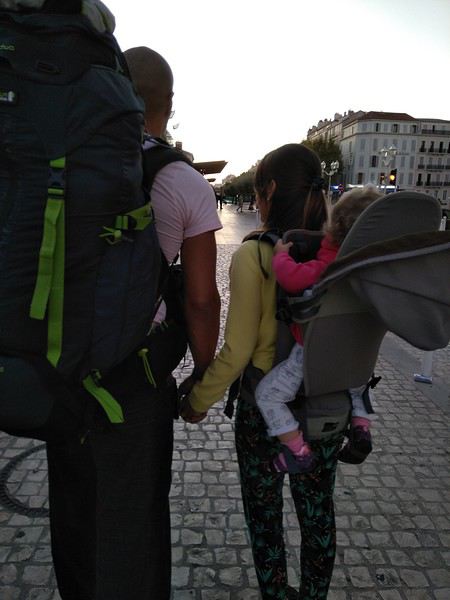
My partner: 1 travel backpack and a small empty (cabin-sized) rolling suitcase for shopping on the way back. For me: baby in a hiking backpack (with a sling and the small folded seat in the backpack’s pocket). It was simple for getting around, and I think if we’d packed more, we would’ve struggled without gaining any extra comfort.
3- Mosquitoes / Malaria / Dengue / Vaccines
As if on purpose, just months before our trip, a flood of articles on the forum and online warned us that Thailand was in the middle of a dengue epidemic, and locals advised us to be careful. Not exactly reassuring when traveling with a baby…🤪 After much hesitation, we decided to bring a small mosquito net (recommended by a mom on the forum—shoutout to Popinette) that opens like a pop-up tent (and folds just as easily). For how little space it took up, we didn’t regret it. It was attached to the back of the travel backpack and let us sleep soundly :p If it helps anyone, here’s the one we had: Deryan Peuter model.
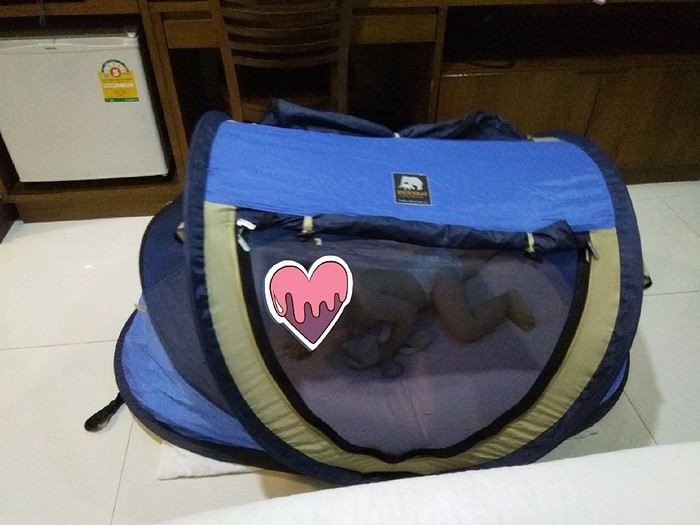
We also brought a mosquito net for ourselves but didn’t end up using it—with precautions, we didn’t have any mosquitoes at night.
For protection, we chose Insect Ecran (tropical version, the red one) because it doesn’t contain DEET but uses Icaridin, which is less toxic for little ones. We also pre-treated our clothes with Insect Ecran textile spray. We also decided to dress our daughter in light, long-sleeved outfits (covering arms and legs), and she wasn’t any hotter but was protected. It was a great choice, and we ended up dressing like her. Contrary to what I’d read, I didn’t find the smell strong—I actually thought it was quite discreet. My daughter and my partner didn’t get a single bite. As for me, I still got bites on exposed areas (I’m *very* prone to mosquito bites), so I switched to a local product—less well-formulated but apparently more effective for me.
We had our daughter vaccinated against Hepatitis A. We got conflicting advice on this: the pediatrician said it was unnecessary if she didn’t eat from street stalls (where dishes are washed in questionable water), but my GP said the opposite. We decided to book an appointment at a travel vaccination center, and the doctor was clear—she needed the vaccine.
4- Book in advance?
Finally, a question that had never crossed our minds before: should we book in advance? Again, this is just my opinion, but I think yes. It makes things much easier. Since we wanted to minimize road travel, it was much simpler to find well-located accommodations that let us do everything on foot (and with a baby, reducing travel and lightening the schedule is really helpful). Booking ahead meant no bad surprises, no fully booked places, and no hassle walking around with luggage and a baby. We booked everything in advance via Booking and Agoda, and by comparing with on-site prices, we didn’t pay more (we were traveling in the low season).
Here’s our feedback and observations. If they can help other parents prepare for their trip, I’d be thrilled.
With all that said, time for vacation!
Well, since the lockdown is dragging on, I’m starting a new travel journal following the one I finished publishing yesterday:
https://voyageforum.com/discussion/voyage-pays-perles-voyage-dans-ouest-americain-d9943984/
This time, after the U.S., we’re heading to the Middle East—Jordan!
And we’re keeping up the good habits: one day’s entry published every day at 5:30 PM! Happy reading, and feel free to leave a comment, question, or remark...
Franck
Franck
Hi everyone,
I’d love to share a little travel journal from our 14-day/12-night road trip with our two teens (14 and 17) in February/March 2020. A huge thank you to all of you who helped me plan this trip to South Africa—your patience with my endless questions was amazing!
We left Lyon on Saturday, February 22 at 7:00 AM and arrived in Johannesburg at 10:00 PM after a short layover in Amsterdam. Flights cost 440 € per person (booked in October), with carry-on luggage. We added just one checked bag for the whole family (80 € round-trip with the free Flying Blue membership). Since we’d be moving around a lot, we packed light! In Lyon, we reserved parking at P5 in advance for 70 € for 14 days. The Air France/KLM flight was smooth. When we landed, we picked up our bags and had booked a night at the Aero Guest Lodge, just 5 minutes from the airport, with a free shuttle and breakfast. All you have to do is send a WhatsApp message when you arrive at the airport to let the shuttle driver know. The tricky part? Finding him in the terminal—he wasn’t holding a sign with the hotel’s name. 🤪 A South African called him for me since my English wasn’t great (and I had to get used to the accent 😛), and helped us spot the driver (who was actually less than 5 meters away!) with other guests. When we got to the hotel: all good, except we were 10 people in a van meant for 7. The room was spacious—one king-size bed and two single beds for the kids—with a simple but clean bathroom, a garden, pool, and breakfast (which we didn’t try). All for 65 €, so an awesome value!
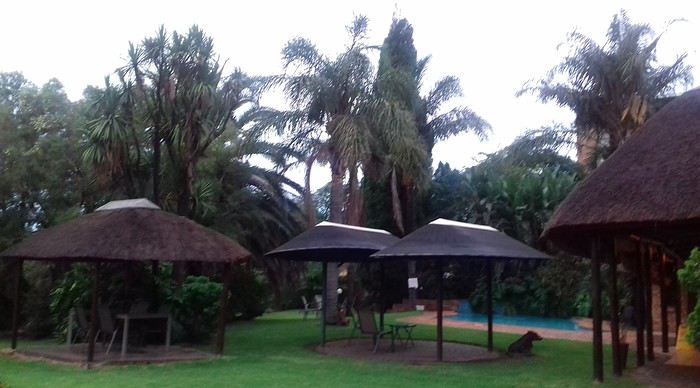 After a restful night, we woke up at 6:00 AM to catch the shuttle back to the airport. Just a heads-up: there’s only one shuttle per hour in the morning, and Kulula canceled our 9:00 AM flight, moving it to 8:00 AM—so no time for breakfast (it starts at 6:30).
We waited 15 minutes in the lovely garden for the driver, who dropped us off at the airport in 5 minutes.
We checked in for our flight to Cape Town, which cost around 40 € (including two checked bags per person).
We grabbed breakfast at the airport instead (less than 20 € for all four of us—one of the nice surprises of South Africa!), and arrived in Cape Town at 10:20 AM.
 After quickly picking up our bags, we headed to the Avis counter and left with a Toyota Corolla for 80 € for 4 days (rented with the Flying Blue card—free additional driver).
Everything’s on the left... not easy, but it works if you plan your route well.
We drove to our Airbnb in Constantia. We were surprised to see animals, bikes, and pedestrians on the highway!
We arrived around 11:30 AM at our rental—a huge house in the vineyards, in a super secure neighborhood, about 15-20 minutes from Hout Bay. It felt like Beverly Hills, but with super-high walls and barbed wire around the villas. 😕

We dropped off our bags, changed into shorts (it was around 30°C/86°F), and headed to the Bay Harbour Market in Hout Bay. We had lunch there—such a great vibe! We wandered through the stalls, everyone picked their own dish, and we sat down on the terrace. There was music, artisans of all kinds... a really nice moment.

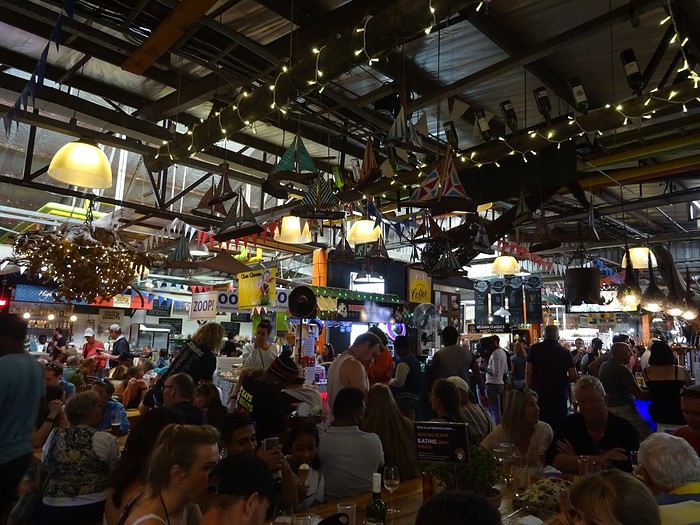
I’d withdrawn 50 € before leaving... and that gave me change to pay the parking attendant. Lunch cost around 30 € for four, including food and drinks.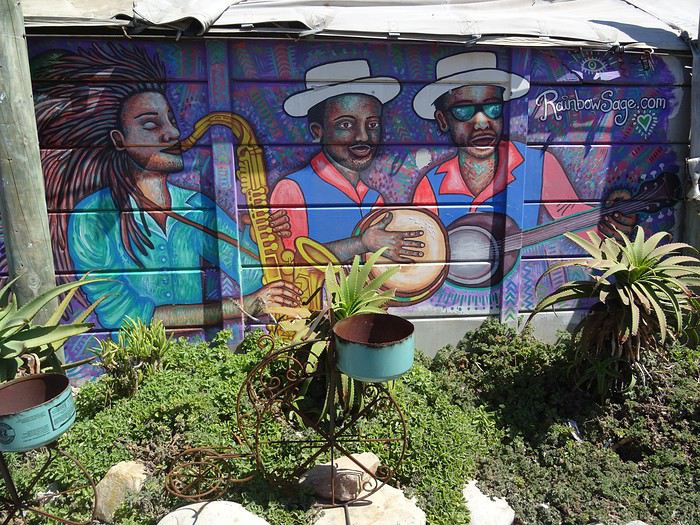

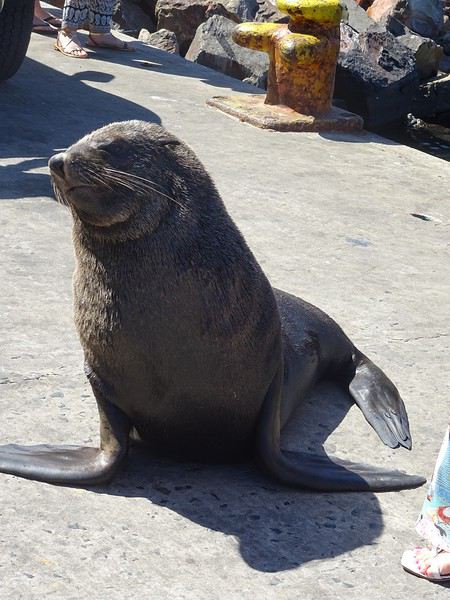
After browsing the artisan stalls, we headed to Hout Bay Beach near the restaurant, Marina Wharf (another small tip for the parking attendant—we’d have to get used to that!). We stopped to admire the sea lions. An ice cream for 1 €? No way we were saying no! 🙂
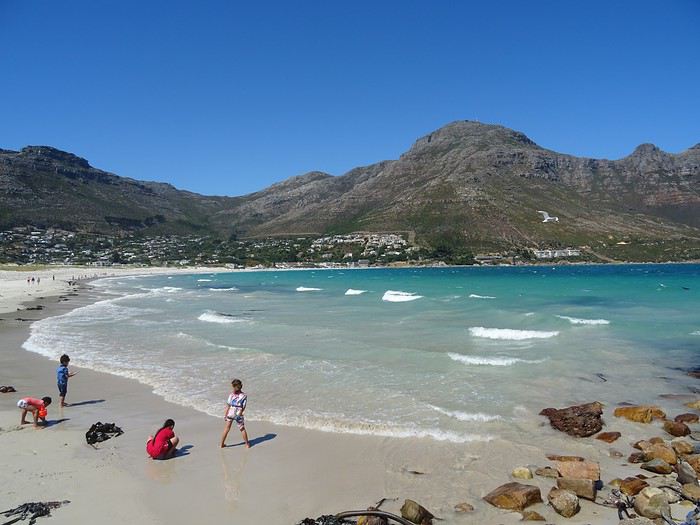
The fatigue was starting to hit, so we headed to the grocery store 10 minutes away (Constantia shopping center) and then had an aperitif in front of the vineyards, opening a delicious bottle of white wine.
I’d love to share a little travel journal from our 14-day/12-night road trip with our two teens (14 and 17) in February/March 2020. A huge thank you to all of you who helped me plan this trip to South Africa—your patience with my endless questions was amazing!
We left Lyon on Saturday, February 22 at 7:00 AM and arrived in Johannesburg at 10:00 PM after a short layover in Amsterdam. Flights cost 440 € per person (booked in October), with carry-on luggage. We added just one checked bag for the whole family (80 € round-trip with the free Flying Blue membership). Since we’d be moving around a lot, we packed light! In Lyon, we reserved parking at P5 in advance for 70 € for 14 days. The Air France/KLM flight was smooth. When we landed, we picked up our bags and had booked a night at the Aero Guest Lodge, just 5 minutes from the airport, with a free shuttle and breakfast. All you have to do is send a WhatsApp message when you arrive at the airport to let the shuttle driver know. The tricky part? Finding him in the terminal—he wasn’t holding a sign with the hotel’s name. 🤪 A South African called him for me since my English wasn’t great (and I had to get used to the accent 😛), and helped us spot the driver (who was actually less than 5 meters away!) with other guests. When we got to the hotel: all good, except we were 10 people in a van meant for 7. The room was spacious—one king-size bed and two single beds for the kids—with a simple but clean bathroom, a garden, pool, and breakfast (which we didn’t try). All for 65 €, so an awesome value!
After a restful night, we woke up at 6:00 AM to catch the shuttle back to the airport. Just a heads-up: there’s only one shuttle per hour in the morning, and Kulula canceled our 9:00 AM flight, moving it to 8:00 AM—so no time for breakfast (it starts at 6:30).
We waited 15 minutes in the lovely garden for the driver, who dropped us off at the airport in 5 minutes.
We checked in for our flight to Cape Town, which cost around 40 € (including two checked bags per person).
We grabbed breakfast at the airport instead (less than 20 € for all four of us—one of the nice surprises of South Africa!), and arrived in Cape Town at 10:20 AM.
After quickly picking up our bags, we headed to the Avis counter and left with a Toyota Corolla for 80 € for 4 days (rented with the Flying Blue card—free additional driver).
Everything’s on the left... not easy, but it works if you plan your route well.
We drove to our Airbnb in Constantia. We were surprised to see animals, bikes, and pedestrians on the highway!
We arrived around 11:30 AM at our rental—a huge house in the vineyards, in a super secure neighborhood, about 15-20 minutes from Hout Bay. It felt like Beverly Hills, but with super-high walls and barbed wire around the villas. 😕We dropped off our bags, changed into shorts (it was around 30°C/86°F), and headed to the Bay Harbour Market in Hout Bay. We had lunch there—such a great vibe! We wandered through the stalls, everyone picked their own dish, and we sat down on the terrace. There was music, artisans of all kinds... a really nice moment.
I’d withdrawn 50 € before leaving... and that gave me change to pay the parking attendant. Lunch cost around 30 € for four, including food and drinks.
After browsing the artisan stalls, we headed to Hout Bay Beach near the restaurant, Marina Wharf (another small tip for the parking attendant—we’d have to get used to that!). We stopped to admire the sea lions. An ice cream for 1 €? No way we were saying no! 🙂
The fatigue was starting to hit, so we headed to the grocery store 10 minutes away (Constantia shopping center) and then had an aperitif in front of the vineyards, opening a delicious bottle of white wine.
From Beijing to Khiva: China, Kyrgyzstan, Tajikistan, Uzbekistan
Chronicle of anecdotes, highlights, and other adventures that marked this eight-week journey in 2018.
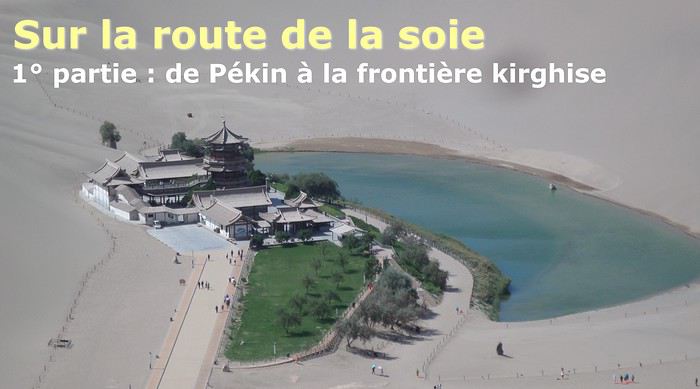
The Chinese Far West More than 30 years after my first trip to eastern China, I finally fulfilled an old dream: traveling solo from Beijing to the far west, discovering Xinjiang, the Uyghur people and the oppression they endure, the oases of Turpan and Kashgar, the Taklamakan Desert, the end of the Great Wall... The route was covered by train.
MENU PART 1: CHINA
1- Beijing (Jiankou) : the authentic Great Wall, without tourists 2- Cycling in Beijing, the best way to get around 3- Beijing : departure for the far west 4- Jiayuguan : getting by without English 5- Jiayuguan : scams and heritage 6- Dunhuang : abundance in the middle of the desert 7- Turpan : the Uyghurs under heavy surveillance 8- Kashgar : love at first sight for the old city 9- Kashgar : China’s recipe for controlling the populace 10- Tashkurgan : what on earth was I thinking going there! Kyrgyz border: a surreal epic Photo album from the 80s, contributions from other travelers (page 2)
1- JIANKOU Finding the authentic Great Wall, without tourists or a guide Friday, August 24, 2018 Thirty years later, I didn’t feel like revisiting the Great Wall at Badaling or any other overcrowded site. I chose to explore it at Jiankou, in its wildest, most authentic, and unrestored section, starting from a lost village deep in a valley—though it wasn’t *that* lost, since it had everything for communication.
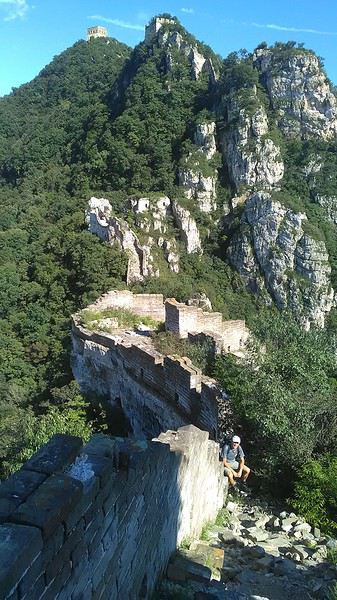
No need to pay for a taxi to get there—by timing it right, you can take the bus for just a few yuan. You have to get off at Xizhazi, the bus terminus. Be careful, there are only two buses a day in each direction. At the Xizhazi bus stop, I met a young couple who’d arrived with zero information about what to expect. We hiked the three of us toward the restored section of Mutianyu.
Still, be cautious With GPS and a topographic map (OpenTopoMap), you can set off without a problem or guide. The trail up to Jiankou is easy and well-marked. The trails down are too. But be careful—once you’re on the Wall, it’s real mountain hiking, with easy but dangerous climbing sections (over sheer drops). Not for amateurs or those afraid of heights! But what a reward. The Wall all to yourself, where it’s at its most daring. Truly mesmerizing.
More photos...
2- BEIJING The best way to get around the capital Sunday, August 26 The best way to explore the city is still by bike. Most are in a bike-share system, but you need to use an app—WeChat, the app that does everything, like monitoring your every move. No way I was installing that.
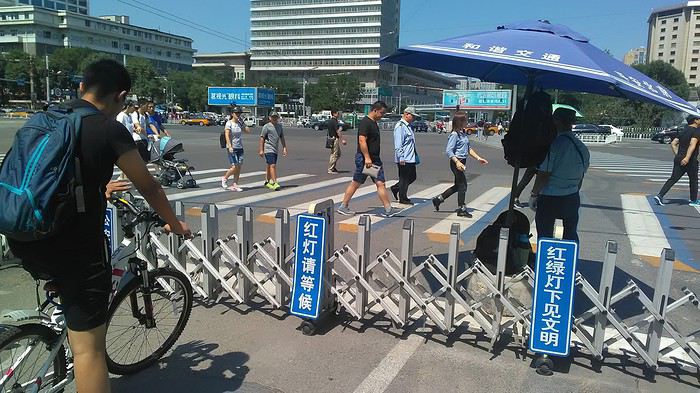
I found one at a rental shop near the hostel. The key is to quickly learn local traffic customs to minimize risks. Bike lanes are wide along the avenues.
But you still have to: - Watch out for anything parked on the bike paths—the most annoying are people napping or talking on the phone in their cars - Keep an eye on everything coming the wrong way—the list is long - The worst is right turns on red, which in Chinese traffic rules seem to have priority Once you get the hang of it, it’s fine. The city is huge but flat, so you can just wing it.
3- BEIJING By train to the far west Sunday, August 26 Beijing West Station is the size and operates like an airport. With your e-ticket from the agency, you first have to pick up your ticket at the special "English" counter, after passing through security. With your ticket in hand, you have to exit and enter through the boarding waiting area—not the platform—after a second security check.
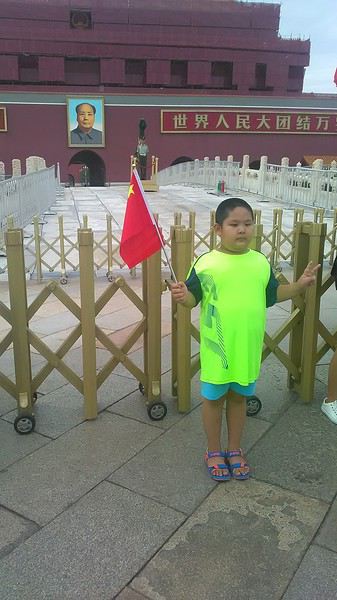 Then you find the right hall and wait for the sign to finally access the platform. In the end, it works pretty well given the incredible number of passengers to manage. Everywhere in Beijing, I saw that the Chinese have mastered crowd flow management.
Nice surprise: second-class carriages are clean, air-conditioned, and bright. Perfect, since I was in for 20 hours. One uniformed attendant per carriage, mobile meal service—luxury! Small downside: no luggage space. Hauling your suitcase up to the top bunk is quite a workout. I was in the middle, so it wasn’t too bad. The landscape, though, whether rural or urban, is pretty bleak. That should change once we leave the eastern plains.
Of course, I got my first police visit, with a thorough passport check and bag search. I was warned—going to the Chinese far west exposes you to this kind of hassle. But they were polite and respectful.
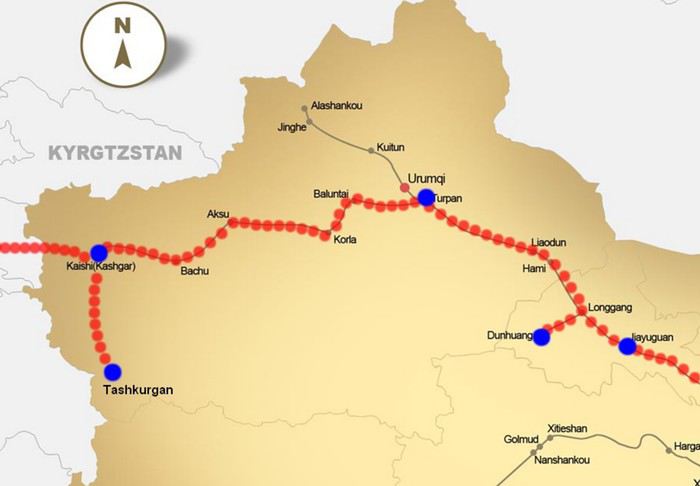 The Chinese Far West
4- JIAYUGUAN Getting by without English Monday, August 27 At the gates of two deserts (Gobi and Taklamakan) and at the foot of the Tibetan highlands, the Great Wall ends at Jiayuguan. Here, I found the deeper China I’d somewhat rediscovered during my bike ride, even if now everyone gets around on electric bikes and I’m no longer stared at like an alien.
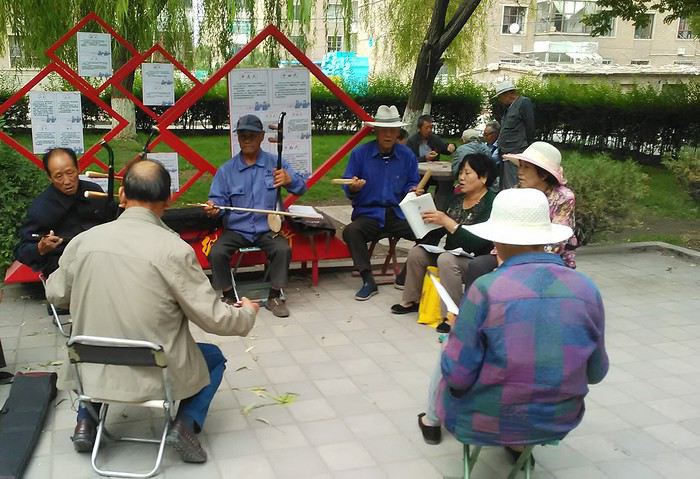
Prices are nothing like Beijing: you can find a full meal for 2 €, and my bike cost 7 € for two days. Plus, few people speak English—neither the owner of the HI hostel where I stayed, nor the ticket sellers at the sites, let alone the servers at the small eateries where I ate. Everything is written in Chinese. So I had to use the little Chinese I know to communicate about essentials. It makes the locals laugh to see a European trying to speak their language, but it earns respect. With Google Translate’s help, I managed.
Rant: With their avenues blocked for construction for kilometers without warning, and new roads not yet on maps, I must’ve taken 15 km of detours. More photos...
5- JIAYUGUAN Scams and heritage Tuesday, August 28 The Great Wall doesn’t exactly end at the fort I visited yesterday but 10 km further, at the entrance to a river gorge at the foot of the mountains. All that’s left is a badly damaged tower (more like a mound of earth) and a section of clay wall, similar to the one I biked yesterday.
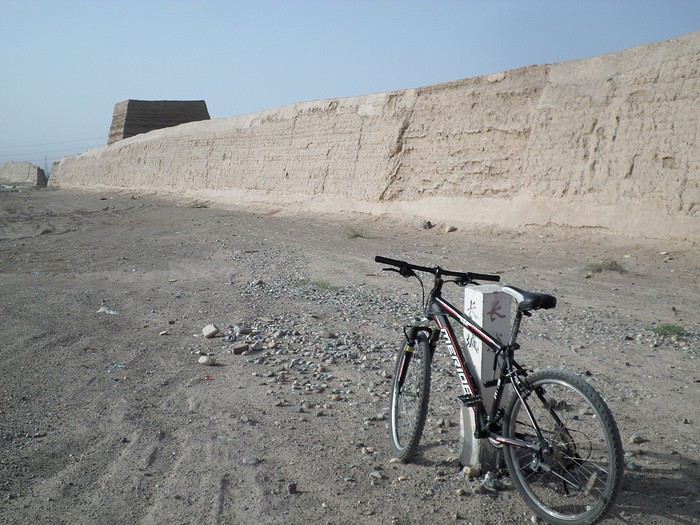
This morning, I hopped on my bike, determined to venture into the desert to see this highly symbolic site. First, you access it via a wide, brand-new road with not a soul in sight. Just before the site, I came across a grand welcome gate, very period-style, but it’s actually the inevitable toll booth.
Behind the gate, the road continues straight to the site, which you can see in the distance—at least 2 km away—the remains of the tower and wall. I had to leave my bike here. Fine. I went to the ticket counter and asked the price: 120 yuan! I couldn’t believe it—over 15 € for a simple mound of earth.
I showed my displeasure to the attendant, who couldn’t care less, and immediately turned back. 120 yuan—that’s the price for a new road, a fancy gate planted 2 km before the site just to force you to take a shuttle, and employees with nothing to do all day... Now I understand why I didn’t meet anyone!
Heritage China is a bit pricey Generally, sites are expensive for the country’s standard of living, but travelers are supposed to have money, so why hold back? I even gave up on the Forbidden City—reservations required days in advance (or on the black market at an impossible price). I prefer to keep the memory of my first visit, when entry must’ve cost a few dozen cents, and there were only a handful of visitors.
This morning, I took a taxi to see remarkable tombs of common people from the 3rd to 6th centuries. They’re small vaulted caves made of painted bricks, depicting scenes of daily life. Very pretty and moving. But even here, though the price was more reasonable, I was left wanting—only one of the 16 tombs is open to visitors, and it’s apparently not the most beautiful.
The authentic China—at least what’s left of it... Wandering the impersonal avenues of the city, you stumble upon a market. There, you still find traditional China—small shops with questionable hygiene, Go players, musicians, and even a dental prosthetist. The last refuge for those untouched by modernity. More photos...
6- DUNHUANG Abundance in the middle of the desert Wednesday, August 29 Well, I thought the landscape would be less bleak as I headed west. Nope. The only distraction in this expanse of dark, clayey sand is the forests of pylons and wind turbines, plus wild camels racing each other.
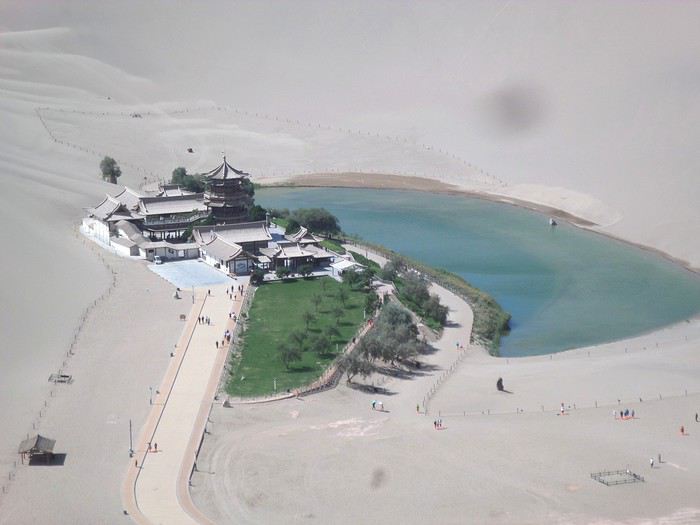 However, Dunhuang, the gateway to the Taklamakan, is by far the most pleasant Chinese city I know. There’s a real city center you can explore on foot. It’s hot but not unbearable, with a light, dry breeze. Much nicer than Beijing. The Han Chinese are still the majority, but the Muslim Uyghurs are more numerous, and the muezzin’s call to prayer echoes around the mosque.
The most surprising thing is the abundance and diversity of fruits and vegetables. You wonder how it all grows here. Well-irrigated, the desert sands are very fertile. Here, raisins have subtle, mysterious flavors, and the lamb really tastes like lamb.
Today, I visited the must-see Mingshashan, a dune complex next to which Pila is a molehill. The Basque Country, but covered in sand... More photos...
7- TURPAN The Uyghurs under heavy surveillance Friday, August 31 Surveillance cameras everywhere in the city, armed police stationed at intersections, in front of public buildings, at the entrance and inside tourist sites, police stations on every corner, patrols on foot or by car, khaki uniforms even for middle schoolers... here, the Han Chinese are in the minority, and you can feel it. Turpan feels like a city under siege.
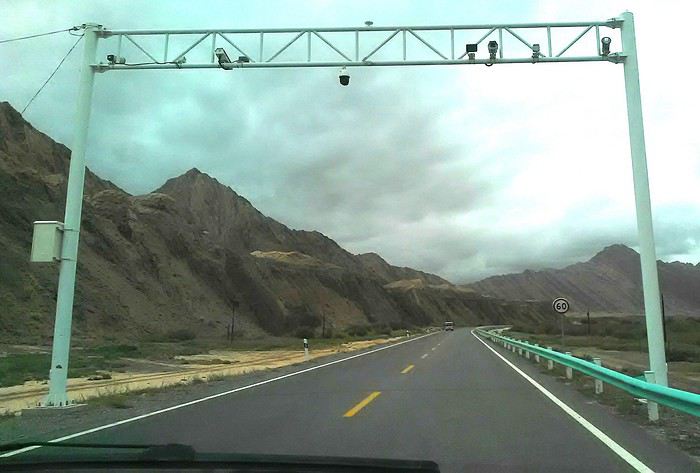
To enter the youth hostel where I stayed, there’s even a security gate, and the receptionist (a Han, like everyone in tourism) wears a bulletproof vest! Reassuring. Still, you don’t feel particularly threatened here, especially as a European. The troublemakers are the Chinese, not the Uyghurs. Generally, China is a very safe country for visitors.
Smile, you’re on camera! I was biking on an avenue when the car in front of me got flashed for driving slowly. I quickly understood why when I got flashed too.
Here, the official time is Beijing time, but it gets dark two hours later. It’ll be even worse in Kashgar. Trickier to manage: everything is displayed in Chinese and Arabic. Nothing in English. Choosing a menu is a shot in the dark. Apart from a few young Chinese, no one here speaks English, and my Chinese doesn’t seem very understandable...
Mogao, the end of the road for the Han Yesterday, near Dunhuang, I went to Mogao, a complex of decorated caves with Buddha sculptures and paintings. Stunning, but so crowded! Luckily, here in Turpan, Chinese tourists barely venture out. So I visited a Silk Road ghost town with only a handful of other visitors and under a howling wind.
The modern Chinese city is swallowing up the old Uyghur neighborhoods—only a museum-like district remains in the center, and pockets of resistance on the outskirts are doomed to disappear soon. More photos...
8- KASHGAR A (relative) love at first sight for the old city Sunday, September 2 After three overnight trains, here I am in the far west of China, nearly 4,000 km from the capital. Despite the omnipresent police and an old city preserved UNESCO-style, Kashgar is my Chinese love at first sight.
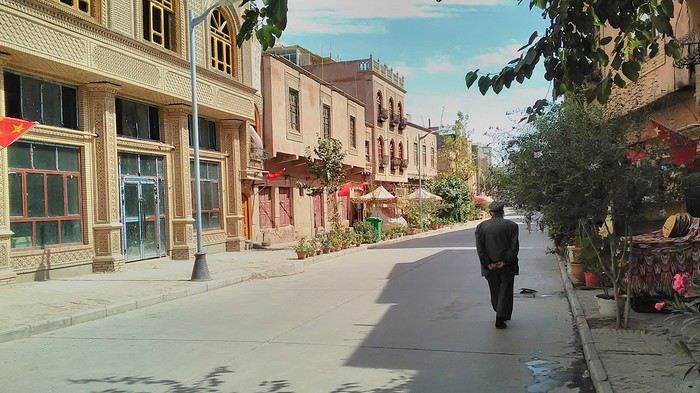
Finally, Chinese... well, sort of, because we’re in Uyghur territory here—a Turkic people with nothing culturally in common with the Han, the eastern Chinese. It started badly yesterday at Turfan station, where after three security gate passes, at least five passport checks, and a bag search, three adorable policewomen confiscated my antibacterial lotion because it had a flammable logo...
Then came the welcoming committee of armed cops at Kashgar station. Once all that was over, they left me alone—except you still have to go through security checks like everyone else to enter the old city, the bazaar, the livestock market... The further west you go, the more the siege mentality is evident. Luckily, the border isn’t far...
Despite the inevitable destruction-reconstruction, the city center has been well preserved. Thankfully, because it’s a very original style, a mix of local and colonial. I love it, even if it’s a bit too artificial, sanitized, and watered-down, and rather empty of residents. On the Silk Road, the city was famous for its great food. And it still is—rarely have I seen such richness and abundance of food! And not just scorpions or snakes. More photos...
9- KASHGAR China’s recipe for controlling the populace Saturday, September 1 Xinjiang, along with Tibet, is a "sensitive" area of rebellion in the eyes of Chinese authorities. As a result, the state has these regions and their populations under total control. Tourists also feel the consequences, even if they’re not at risk of re-education camps.
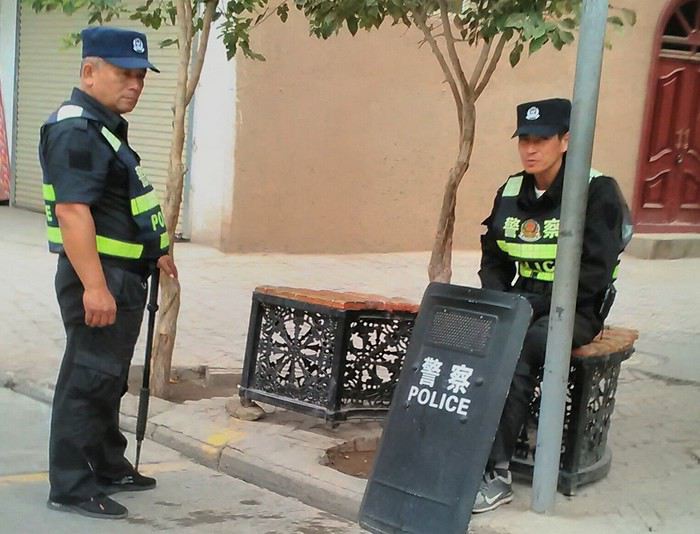 - Putting barbed wire and anti-ramming barriers around sensitive sites (schools, big hotels, government buildings...)
- Installing traffic surveillance gates with cameras and photo flashes (for all vehicles passing, including bikes) throughout the city and even in the countryside
- Posting uniformed guards with tasers, batons, or huge baseball bats every 100 meters
- Training the Han population (ethnic Chinese) in self-defense with sticks, preferably in the morning on the street. Men and women of all ages
- Starting school with the national anthem, doing military exercises, and receiving political indoctrination, all neatly lined up in the courtyard. (The dream school for any teacher)
- Placing a snitch in uniform (a pseudo-guard) in public gathering places, like youth hostels. Mine spends the day loafing around the courtyard
- Putting Chinese flags everywhere on the streets to remind everyone who’s in charge
- Installing security gates at every entrance to areas frequented by tourists (thanks for that) but not just there
- Never photographing cops, or else! I tried, but it’s not easy...
With all that, you can stroll around safely Not much crime! As for the amount the Chinese state spends to maintain such a system, it’s staggering! A third of the Han living in Xinjiang work in security. Today, I wandered freely around old Kashgar, which is quite large after all. More photos...
10- TASHKURGAN What on earth was I thinking going there! Wednesday, September 5 First, there’s the taxi—pretty crappy, with a driver who doesn’t speak a word of English and won’t stop smoking. Over six hours in that... shared with a completely out-of-it American.
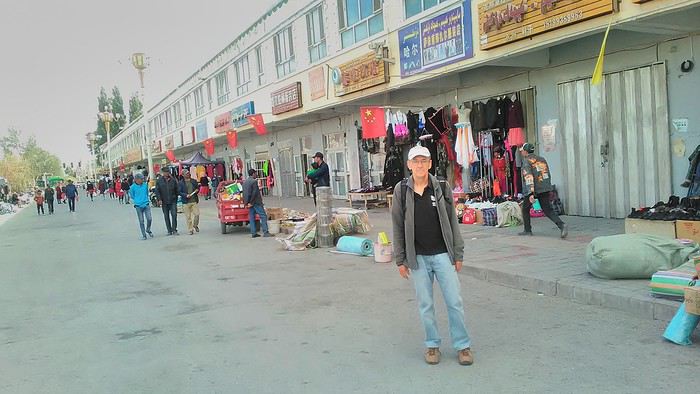
Then there are all the checkpoints along the way. I won’t go on—you know the drill by now.
After that, there’s Tashkurgan—a town with nothing to see, nothing to do. Deserted as soon as night falls. There’s this huge youth hostel and a few lost Chinese tapping away on their smartphones, chain-smoking. This lost American-European crowd, swapping tips on how to enter Pakistan or Tajikistan.
Luckily, there’s the Chinese Pamir Highway, lined with peaks over 7,000m. There’s the feeling of no longer being in China, with a population whose features are Middle Eastern. And these Tajik women with their stunning hairstyles and vibrant costumes. There’s the fact of having reached the westernmost Chinese city, far from crowds and tourist sites. A sort of end of the world. More photos...
11- KYRGYZ BORDER A surreal epic Thursday, September 6 The road from Kashgar to the Kyrgyzstan border is a little over 200 km and passes through beautiful landscapes of colorful, desert-like mountains with acrobatic folds. That’s the bucolic part of the trip.
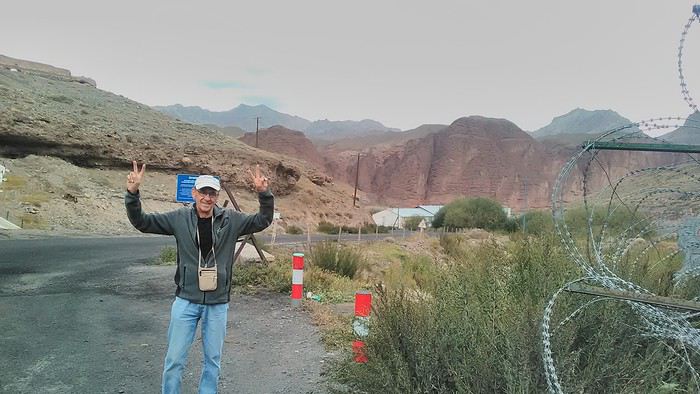 Yesterday, I managed to gather four people to rent a minibus to reach the border more easily: a Spaniard and an Argentine I’d already met in Turpan, and two New Zealanders who responded to the ad left at the hostel.
Absurdity and paranoia of Chinese authorities The highlight was crossing the town of Wuqia, 50 km past Kashgar. After tallying up with my fellow sufferers, we must’ve passed about ten checkpoints with: - Passport checks: 14 times, sometimes by two cops side by side - Bag checks: 4 times - Smartphone checks: 2 times, with deletion of "non-compliant" photos, and registration of your IMEI in the exit log!... Absurd and surreal at the same time, since my camera stayed in my bag, my apps are in French, and my photos have been online for ages...
With all that, we arrived just as the last checkpoint before the no man’s land marking the border between the two countries was on lunch break. And bam! Another 1.5-hour wait, alongside truckers who were much more used to this than we were.
What to think? The cops themselves aren’t fooled. They play the role they’re asked to, but sometimes you can coax a smile out of them—they realize how ridiculous the situation is.
What’s the point? That’s the big question my companions and I were tempted to answer with "to piss people off." To show you your place isn’t here, but with the other tourists, over there in the east, in Shanghai, Xi’an, or Guangzhou.
As for you, a traveler from a democratic country, you really experience this as aggression, humiliation, a violation of your private space. And yet, I’m respected, they speak to me properly. Today, I better understand what a Palestinian or a citizen of an occupied country might feel daily. A unique experience! Thanks, China.
And to top it off, the cherry on the cake! It’s still this glowing button you press to rate your passage after clearing the last obstacle before the exit stamp. I was so surprised it turned off before I could react. The Spaniard, with great humor and irony, had time to vote "excellent." In the end, he wasn’t wrong—you can hardly do better!
PS: I ditched my buddies at the border. They didn’t want to pay for a taxi to continue. So I took a direct taxi to Osh. The first 100 km are fabulous. I couldn’t take many photos, but I’ll be back on Monday to go to Tajikistan.
More photos...
The rest of the Silk Road, Part 2, in these travel journals: Kyrgyzstan, Tajikistan, Uzbekistan.
The Chinese Far West More than 30 years after my first trip to eastern China, I finally fulfilled an old dream: traveling solo from Beijing to the far west, discovering Xinjiang, the Uyghur people and the oppression they endure, the oases of Turpan and Kashgar, the Taklamakan Desert, the end of the Great Wall... The route was covered by train.
MENU PART 1: CHINA
1- Beijing (Jiankou) : the authentic Great Wall, without tourists 2- Cycling in Beijing, the best way to get around 3- Beijing : departure for the far west 4- Jiayuguan : getting by without English 5- Jiayuguan : scams and heritage 6- Dunhuang : abundance in the middle of the desert 7- Turpan : the Uyghurs under heavy surveillance 8- Kashgar : love at first sight for the old city 9- Kashgar : China’s recipe for controlling the populace 10- Tashkurgan : what on earth was I thinking going there! Kyrgyz border: a surreal epic Photo album from the 80s, contributions from other travelers (page 2)
1- JIANKOU Finding the authentic Great Wall, without tourists or a guide Friday, August 24, 2018 Thirty years later, I didn’t feel like revisiting the Great Wall at Badaling or any other overcrowded site. I chose to explore it at Jiankou, in its wildest, most authentic, and unrestored section, starting from a lost village deep in a valley—though it wasn’t *that* lost, since it had everything for communication.
No need to pay for a taxi to get there—by timing it right, you can take the bus for just a few yuan. You have to get off at Xizhazi, the bus terminus. Be careful, there are only two buses a day in each direction. At the Xizhazi bus stop, I met a young couple who’d arrived with zero information about what to expect. We hiked the three of us toward the restored section of Mutianyu.
Still, be cautious With GPS and a topographic map (OpenTopoMap), you can set off without a problem or guide. The trail up to Jiankou is easy and well-marked. The trails down are too. But be careful—once you’re on the Wall, it’s real mountain hiking, with easy but dangerous climbing sections (over sheer drops). Not for amateurs or those afraid of heights! But what a reward. The Wall all to yourself, where it’s at its most daring. Truly mesmerizing.
More photos...
2- BEIJING The best way to get around the capital Sunday, August 26 The best way to explore the city is still by bike. Most are in a bike-share system, but you need to use an app—WeChat, the app that does everything, like monitoring your every move. No way I was installing that.
I found one at a rental shop near the hostel. The key is to quickly learn local traffic customs to minimize risks. Bike lanes are wide along the avenues.
But you still have to: - Watch out for anything parked on the bike paths—the most annoying are people napping or talking on the phone in their cars - Keep an eye on everything coming the wrong way—the list is long - The worst is right turns on red, which in Chinese traffic rules seem to have priority Once you get the hang of it, it’s fine. The city is huge but flat, so you can just wing it.
3- BEIJING By train to the far west Sunday, August 26 Beijing West Station is the size and operates like an airport. With your e-ticket from the agency, you first have to pick up your ticket at the special "English" counter, after passing through security. With your ticket in hand, you have to exit and enter through the boarding waiting area—not the platform—after a second security check.
Then you find the right hall and wait for the sign to finally access the platform. In the end, it works pretty well given the incredible number of passengers to manage. Everywhere in Beijing, I saw that the Chinese have mastered crowd flow management.Nice surprise: second-class carriages are clean, air-conditioned, and bright. Perfect, since I was in for 20 hours. One uniformed attendant per carriage, mobile meal service—luxury! Small downside: no luggage space. Hauling your suitcase up to the top bunk is quite a workout. I was in the middle, so it wasn’t too bad. The landscape, though, whether rural or urban, is pretty bleak. That should change once we leave the eastern plains.
Of course, I got my first police visit, with a thorough passport check and bag search. I was warned—going to the Chinese far west exposes you to this kind of hassle. But they were polite and respectful.
The Chinese Far West4- JIAYUGUAN Getting by without English Monday, August 27 At the gates of two deserts (Gobi and Taklamakan) and at the foot of the Tibetan highlands, the Great Wall ends at Jiayuguan. Here, I found the deeper China I’d somewhat rediscovered during my bike ride, even if now everyone gets around on electric bikes and I’m no longer stared at like an alien.
Prices are nothing like Beijing: you can find a full meal for 2 €, and my bike cost 7 € for two days. Plus, few people speak English—neither the owner of the HI hostel where I stayed, nor the ticket sellers at the sites, let alone the servers at the small eateries where I ate. Everything is written in Chinese. So I had to use the little Chinese I know to communicate about essentials. It makes the locals laugh to see a European trying to speak their language, but it earns respect. With Google Translate’s help, I managed.
Rant: With their avenues blocked for construction for kilometers without warning, and new roads not yet on maps, I must’ve taken 15 km of detours. More photos...
5- JIAYUGUAN Scams and heritage Tuesday, August 28 The Great Wall doesn’t exactly end at the fort I visited yesterday but 10 km further, at the entrance to a river gorge at the foot of the mountains. All that’s left is a badly damaged tower (more like a mound of earth) and a section of clay wall, similar to the one I biked yesterday.
This morning, I hopped on my bike, determined to venture into the desert to see this highly symbolic site. First, you access it via a wide, brand-new road with not a soul in sight. Just before the site, I came across a grand welcome gate, very period-style, but it’s actually the inevitable toll booth.
Behind the gate, the road continues straight to the site, which you can see in the distance—at least 2 km away—the remains of the tower and wall. I had to leave my bike here. Fine. I went to the ticket counter and asked the price: 120 yuan! I couldn’t believe it—over 15 € for a simple mound of earth.
I showed my displeasure to the attendant, who couldn’t care less, and immediately turned back. 120 yuan—that’s the price for a new road, a fancy gate planted 2 km before the site just to force you to take a shuttle, and employees with nothing to do all day... Now I understand why I didn’t meet anyone!
Heritage China is a bit pricey Generally, sites are expensive for the country’s standard of living, but travelers are supposed to have money, so why hold back? I even gave up on the Forbidden City—reservations required days in advance (or on the black market at an impossible price). I prefer to keep the memory of my first visit, when entry must’ve cost a few dozen cents, and there were only a handful of visitors.
This morning, I took a taxi to see remarkable tombs of common people from the 3rd to 6th centuries. They’re small vaulted caves made of painted bricks, depicting scenes of daily life. Very pretty and moving. But even here, though the price was more reasonable, I was left wanting—only one of the 16 tombs is open to visitors, and it’s apparently not the most beautiful.
The authentic China—at least what’s left of it... Wandering the impersonal avenues of the city, you stumble upon a market. There, you still find traditional China—small shops with questionable hygiene, Go players, musicians, and even a dental prosthetist. The last refuge for those untouched by modernity. More photos...
6- DUNHUANG Abundance in the middle of the desert Wednesday, August 29 Well, I thought the landscape would be less bleak as I headed west. Nope. The only distraction in this expanse of dark, clayey sand is the forests of pylons and wind turbines, plus wild camels racing each other.
However, Dunhuang, the gateway to the Taklamakan, is by far the most pleasant Chinese city I know. There’s a real city center you can explore on foot. It’s hot but not unbearable, with a light, dry breeze. Much nicer than Beijing. The Han Chinese are still the majority, but the Muslim Uyghurs are more numerous, and the muezzin’s call to prayer echoes around the mosque.The most surprising thing is the abundance and diversity of fruits and vegetables. You wonder how it all grows here. Well-irrigated, the desert sands are very fertile. Here, raisins have subtle, mysterious flavors, and the lamb really tastes like lamb.
Today, I visited the must-see Mingshashan, a dune complex next to which Pila is a molehill. The Basque Country, but covered in sand... More photos...
7- TURPAN The Uyghurs under heavy surveillance Friday, August 31 Surveillance cameras everywhere in the city, armed police stationed at intersections, in front of public buildings, at the entrance and inside tourist sites, police stations on every corner, patrols on foot or by car, khaki uniforms even for middle schoolers... here, the Han Chinese are in the minority, and you can feel it. Turpan feels like a city under siege.
To enter the youth hostel where I stayed, there’s even a security gate, and the receptionist (a Han, like everyone in tourism) wears a bulletproof vest! Reassuring. Still, you don’t feel particularly threatened here, especially as a European. The troublemakers are the Chinese, not the Uyghurs. Generally, China is a very safe country for visitors.
Smile, you’re on camera! I was biking on an avenue when the car in front of me got flashed for driving slowly. I quickly understood why when I got flashed too.
Here, the official time is Beijing time, but it gets dark two hours later. It’ll be even worse in Kashgar. Trickier to manage: everything is displayed in Chinese and Arabic. Nothing in English. Choosing a menu is a shot in the dark. Apart from a few young Chinese, no one here speaks English, and my Chinese doesn’t seem very understandable...
Mogao, the end of the road for the Han Yesterday, near Dunhuang, I went to Mogao, a complex of decorated caves with Buddha sculptures and paintings. Stunning, but so crowded! Luckily, here in Turpan, Chinese tourists barely venture out. So I visited a Silk Road ghost town with only a handful of other visitors and under a howling wind.
The modern Chinese city is swallowing up the old Uyghur neighborhoods—only a museum-like district remains in the center, and pockets of resistance on the outskirts are doomed to disappear soon. More photos...
8- KASHGAR A (relative) love at first sight for the old city Sunday, September 2 After three overnight trains, here I am in the far west of China, nearly 4,000 km from the capital. Despite the omnipresent police and an old city preserved UNESCO-style, Kashgar is my Chinese love at first sight.
Finally, Chinese... well, sort of, because we’re in Uyghur territory here—a Turkic people with nothing culturally in common with the Han, the eastern Chinese. It started badly yesterday at Turfan station, where after three security gate passes, at least five passport checks, and a bag search, three adorable policewomen confiscated my antibacterial lotion because it had a flammable logo...
Then came the welcoming committee of armed cops at Kashgar station. Once all that was over, they left me alone—except you still have to go through security checks like everyone else to enter the old city, the bazaar, the livestock market... The further west you go, the more the siege mentality is evident. Luckily, the border isn’t far...
Despite the inevitable destruction-reconstruction, the city center has been well preserved. Thankfully, because it’s a very original style, a mix of local and colonial. I love it, even if it’s a bit too artificial, sanitized, and watered-down, and rather empty of residents. On the Silk Road, the city was famous for its great food. And it still is—rarely have I seen such richness and abundance of food! And not just scorpions or snakes. More photos...
9- KASHGAR China’s recipe for controlling the populace Saturday, September 1 Xinjiang, along with Tibet, is a "sensitive" area of rebellion in the eyes of Chinese authorities. As a result, the state has these regions and their populations under total control. Tourists also feel the consequences, even if they’re not at risk of re-education camps.
- Putting barbed wire and anti-ramming barriers around sensitive sites (schools, big hotels, government buildings...)
- Installing traffic surveillance gates with cameras and photo flashes (for all vehicles passing, including bikes) throughout the city and even in the countryside
- Posting uniformed guards with tasers, batons, or huge baseball bats every 100 meters
- Training the Han population (ethnic Chinese) in self-defense with sticks, preferably in the morning on the street. Men and women of all ages
- Starting school with the national anthem, doing military exercises, and receiving political indoctrination, all neatly lined up in the courtyard. (The dream school for any teacher)
- Placing a snitch in uniform (a pseudo-guard) in public gathering places, like youth hostels. Mine spends the day loafing around the courtyard
- Putting Chinese flags everywhere on the streets to remind everyone who’s in charge
- Installing security gates at every entrance to areas frequented by tourists (thanks for that) but not just there
- Never photographing cops, or else! I tried, but it’s not easy...With all that, you can stroll around safely Not much crime! As for the amount the Chinese state spends to maintain such a system, it’s staggering! A third of the Han living in Xinjiang work in security. Today, I wandered freely around old Kashgar, which is quite large after all. More photos...
10- TASHKURGAN What on earth was I thinking going there! Wednesday, September 5 First, there’s the taxi—pretty crappy, with a driver who doesn’t speak a word of English and won’t stop smoking. Over six hours in that... shared with a completely out-of-it American.
Then there are all the checkpoints along the way. I won’t go on—you know the drill by now.
After that, there’s Tashkurgan—a town with nothing to see, nothing to do. Deserted as soon as night falls. There’s this huge youth hostel and a few lost Chinese tapping away on their smartphones, chain-smoking. This lost American-European crowd, swapping tips on how to enter Pakistan or Tajikistan.
Luckily, there’s the Chinese Pamir Highway, lined with peaks over 7,000m. There’s the feeling of no longer being in China, with a population whose features are Middle Eastern. And these Tajik women with their stunning hairstyles and vibrant costumes. There’s the fact of having reached the westernmost Chinese city, far from crowds and tourist sites. A sort of end of the world. More photos...
11- KYRGYZ BORDER A surreal epic Thursday, September 6 The road from Kashgar to the Kyrgyzstan border is a little over 200 km and passes through beautiful landscapes of colorful, desert-like mountains with acrobatic folds. That’s the bucolic part of the trip.
Yesterday, I managed to gather four people to rent a minibus to reach the border more easily: a Spaniard and an Argentine I’d already met in Turpan, and two New Zealanders who responded to the ad left at the hostel.Absurdity and paranoia of Chinese authorities The highlight was crossing the town of Wuqia, 50 km past Kashgar. After tallying up with my fellow sufferers, we must’ve passed about ten checkpoints with: - Passport checks: 14 times, sometimes by two cops side by side - Bag checks: 4 times - Smartphone checks: 2 times, with deletion of "non-compliant" photos, and registration of your IMEI in the exit log!... Absurd and surreal at the same time, since my camera stayed in my bag, my apps are in French, and my photos have been online for ages...
With all that, we arrived just as the last checkpoint before the no man’s land marking the border between the two countries was on lunch break. And bam! Another 1.5-hour wait, alongside truckers who were much more used to this than we were.
What to think? The cops themselves aren’t fooled. They play the role they’re asked to, but sometimes you can coax a smile out of them—they realize how ridiculous the situation is.
What’s the point? That’s the big question my companions and I were tempted to answer with "to piss people off." To show you your place isn’t here, but with the other tourists, over there in the east, in Shanghai, Xi’an, or Guangzhou.
As for you, a traveler from a democratic country, you really experience this as aggression, humiliation, a violation of your private space. And yet, I’m respected, they speak to me properly. Today, I better understand what a Palestinian or a citizen of an occupied country might feel daily. A unique experience! Thanks, China.
And to top it off, the cherry on the cake! It’s still this glowing button you press to rate your passage after clearing the last obstacle before the exit stamp. I was so surprised it turned off before I could react. The Spaniard, with great humor and irony, had time to vote "excellent." In the end, he wasn’t wrong—you can hardly do better!
PS: I ditched my buddies at the border. They didn’t want to pay for a taxi to continue. So I took a direct taxi to Osh. The first 100 km are fabulous. I couldn’t take many photos, but I’ll be back on Monday to go to Tajikistan.
More photos...
The rest of the Silk Road, Part 2, in these travel journals: Kyrgyzstan, Tajikistan, Uzbekistan.
Passionate about travel, animals (furry, feathered, scaly), and my partner’s love for photography, it was in 2014, after encountering orangutans in Gunung Leuser National Park in Sumatra, that I felt the urge to see other great apes in their natural habitat and in the wild. For my 40th birthday, I dreamed of only one thing... seeing gorillas. I still had four years to wait and four years to save up.
At the time, I had only heard of the Virunga Mountains, particularly the part in Rwanda. To be honest, Uganda had never really struck me as a destination I’d ever set foot in, and the DRC, for security reasons, didn’t particularly appeal to me.
But then, one day, I heard that Rwanda was going to increase the price of gorilla permits to USD 1,500 per person. Ouch... that seemed way overpriced, especially since we were going as a couple and I really wanted to see them twice. $6,000 for two days... Okay, it’s for my 40th birthday, but still...
At the end of 2017, I started looking more closely into our trip planned for December 2018. A stroke of luck in my schedule meant my former English teacher sent me a link to an article she’d written for her travel agency about her encounter with gorillas in Uganda. Hmm, Uganda? It was the first time I’d read about the country. Why not?
I scoured various forums in French and English and re-discovered voyageforum.com. And most importantly, I came across Ticapi’s travel journal, which I devoured in one evening, and a few months later, Muriel18’s, whose release I eagerly awaited. Wow!!! Not only can you see gorillas in Uganda, but also chimpanzees and the shoebill, not to mention the savannah and the chance to go on more classic safaris.
All that’s left is to convince my better half that Uganda is a safe country...
Usually, and now more than ever, we prefer independent travel and self-drive trips in particular. But given the proximity to the DRC border, the potentially impassable roads after rain, and rental cars that aren’t always in the best condition, we hired a guide for two weeks in December 2018. The months passed, and the excitement grew.
Three weeks before departure, I fell ill after a work trip to Asia. Darn! This time, I didn’t waste any time—I quickly saw a doctor and got rid of that virus. That was the plan! Flu or malaria? (I’d been to the Amazon six months earlier.) The doctor didn’t know; the cough only appeared a few days later. We did blood tests two days in a row to rule out malaria. So it was the flu or... pneumonia :-( ...?
The X-rays spoke for themselves—it was pneumonia, and it was already quite advanced. No big deal, I still had two weeks to recover! I religiously took my antibiotics, downed loads of vitamin C, but nothing worked—the antibiotics didn’t seem to be doing anything. I was coughing so hard I thought my lungs would come up, I was short of breath, exhausted. I’d dreamed of this trip for so long... it seemed unthinkable not to go. Five days before departure, my doctor hospitalized me—the pneumonia had worsened, and my blood oxygen levels were dangerously low. I was in tears but still in denial about what was happening to me. Besides, I’d still taken my anti-malarial, because I was determined to leave.
I spent the first day in the emergency room on oxygen 24/7. The germ causing my pneumonia was unknown to the infectious disease and pulmonary specialists. They tried a combination of antibiotics. No big deal, in four days, I’d be leaving. I harassed the doctor, who must have thought I was crazy, to find out when I could be discharged—"because, you see, doctor, I have a flight to Uganda on Saturday." On Thursday, the doctor was firm: I’d still be hospitalized on Saturday... deep down, I knew it but didn’t want to admit it. My partner handled canceling the flights, contacted our travel insurance (thankfully we had some), and I wrote to our guide (who, in the meantime, had become our tour operator) who could hardly believe it. And neither could I! We told ourselves it was just postponed and that we’d take this long-awaited trip at the end of 2019!
March 2019, the tour operator reached out to us: "Didn’t you say you wanted to go to Uganda this year? You’d better hurry and book the gorilla permits before they run out."
Oh yes, we wanted to see the gorillas. But we hesitated about rebooking. I still hoped to do this trip as a self-drive. The thing is, this year, we managed to take three weeks off, and we also wanted to spend a week in Rwanda. My partner still didn’t feel comfortable driving there. Yet, he’s driven all over the world. I respected his feelings, especially since he’s the only one who drives.
Anyway, we went back and forth but neither of us really said what we were thinking: "What if we used someone else to organize our trip?" In the end, we went with him again, made a first deposit for four gorilla permits (two days each) (not the best idea we’ve ever had), and looked into adding Rwanda to our itinerary. We’d have a guide/driver for the whole trip with mid-range accommodations.
After several back-and-forths, the itinerary was supposed to look something like this. To be honest, I got fed up after a while.
Day 1: Arrival in Kigali in the evening Day 2: Transfer from Kigali to Akagera NP Day 3: Safari in Akagera NP Day 4: Akagera NP and night in Nyagatare Day 5: Transfer from Nyagatare to Nyungwe Forest Day 6: Nyungwe Day 7: Nyungwe Day 8: Transfer from Nyungwe to Lake Kivu, Rubavu/Gisenyi Day 9: Transfer from Rubavu/Gisenyi to Kisoro/Uganda via the Cyanika border Day 10: Gorilla tracking in Mgahinga NP Day 11: Golden Monkey tracking in Mgahinga NP, night at Lake Mutanda Day 12: Gorilla tracking in Bwindi, Ruhija (later changed to Rushaga) Day 13: Queen Elizabeth NP, Ishasha sector in the morning and Kazinga Channel in the afternoon Day 14: No clear answer on activities for that day. After three attempts, I gave up. I shouldn’t have... Day 15: Chimpanzee tracking in Kyambura Gorge, night at Lake Nkuruba Day 16: Lake Nkuruba, morning activities around the lake and Bigodi Swamps in the afternoon Day 17: Transfer from Lake Nkuruba to Murchison Falls Day 18: Murchison Falls Day 19: Murchison Falls Day 20: Transfer from Murchison Falls via Ziwa Rhino Sanctuary, night in Entebbe Day 21: Entebbe – Mabamba Swamps Day 22: Mabamba Swamps in the morning, Botanical Garden in Entebbe in the afternoon, and transfer to the airport for the overnight return flight.
In April, he asked us for a substantial deposit for the accommodations and some park activities, as one of his colleagues was doing the same tour in May and it would be good if he could secure the already-made reservations by paying the bill.
A week before departure, just like in 2018, we paid the remaining balance of the agreed amount. Three days later, since I hadn’t heard from him (the TO is based in Germany), I sent him a message to confirm he’d received the payment.
My partner joked, "And that’s when he tells us he closed the account we sent the money to." I forced a laugh... and even more so when the TO asked me which account I’d sent the balance to... "Uh, the same one as before." And then he told me he’d closed that account and maybe should’ve mentioned it earlier... uh, you think?! And of course, he needed the money sent again quickly. "Well, buddy, you’ll have to wait until I get it back!!!
It was already late, and my bank had been closed for hours. The next morning, first thing, I called my bank and explained the situation.
"Unfortunately, we can’t do anything for you; you’ll have to wait for the money to be returned." "But how long will that take?" "A few days or weeks, depending on the banks, and you should expect transfer fees."
Brilliant! :-(
After nearly 10 years of traveling almost exclusively without traditional travel agencies, had we just been scammed? I went back to the forums to reread posts about this TO from other travelers. They were all positive; no one mentioned a scam.
The next day, I searched online for the contact details of his bank in Germany. I wrote to the generic email address in English, explaining that I’d made a transfer without knowing that this gentleman had closed his bank account. The employee replied in impeccable English that the bank only responded to emails written in German. Grrr! I used a well-known translator since my German is, let’s say, rusty, and resent my email in German. The same agent replied in German that unfortunately, they couldn’t do anything for me—that if the account had been closed, an automatic rule would return the money to the sender... period, end of story!
Well, our money is lost somewhere in the "cloud," or so we hope! Wait and see!
No news from our TO, and we didn’t reach out either—we were too annoyed by the whole situation.
And there you have it—promise made, promise kept. Here I go! I’m going to try and share our adventure under the Moroccan sun. I’ll do my best to capture how we felt during this trip. And I hope you’ll be kind to a newbie at this!
We planned this trip with the tips we got from this forum, so thank you to everyone who helped us prepare. Thanks to you, we had unforgettable moments.
Here’s our itinerary, which let us see the Atlas Mountains, the oases of the South, the sandy desert, and the Atlantic coast. We landed in Marrakech early in the morning, and our rental car agent was waiting for us at the airport. After sorting out the formalities, we left Marrakech heading toward Ouarzazate.
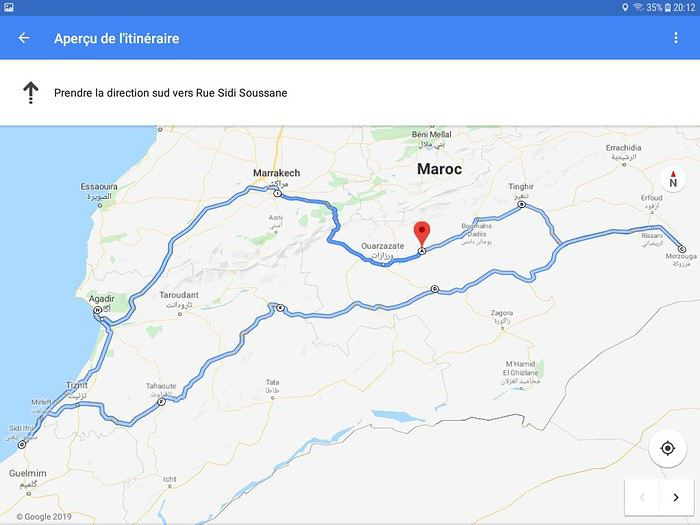
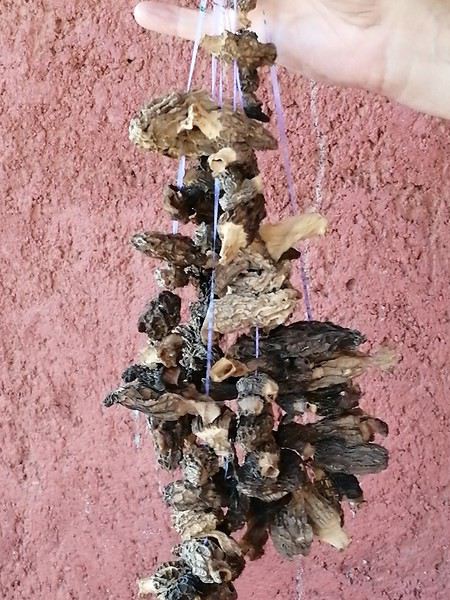
The heavy traffic in Marrakech quickly gave way to smooth driving. As soon as we left the city, it was calm. And right outside the city, we came across shepherds grazing their sheep by the roadside... It’s definitely a surprise at first! But yes... We’re in Morocco... No doubt about it... We’re in the thick of it! As we started gaining altitude, vendors waved at us, offering dried morels. At first, we weren’t sure what they were selling, but we stopped for tea on a terrace to admire the mountain scenery, and they offered us those famous morels again.
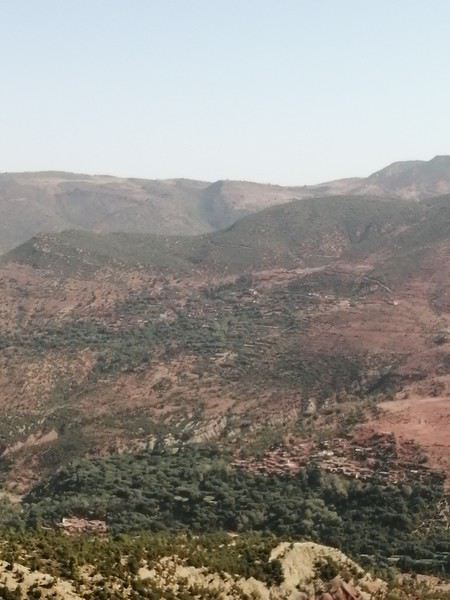
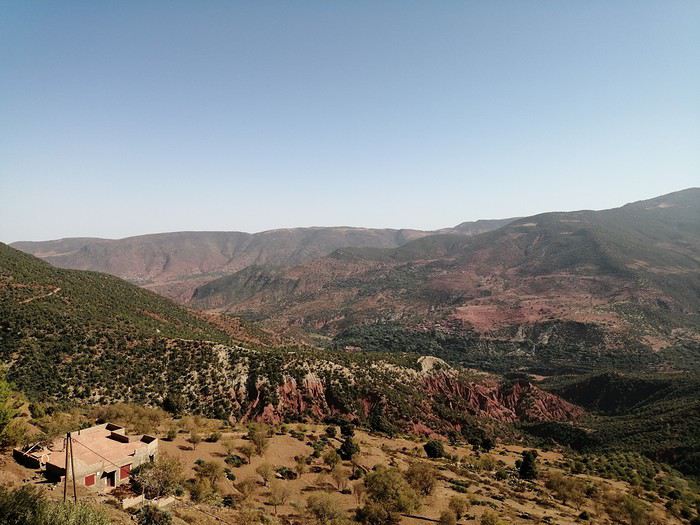
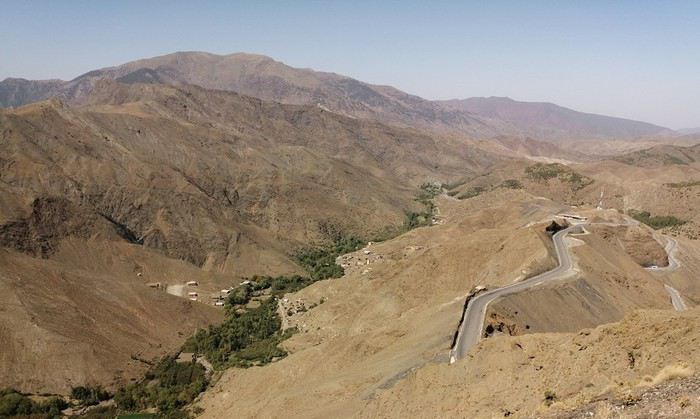
We continued our climb toward Tizi N Tichka... Gigantic valleys stretched out before us. With every turn, we discovered breathtaking landscapes.
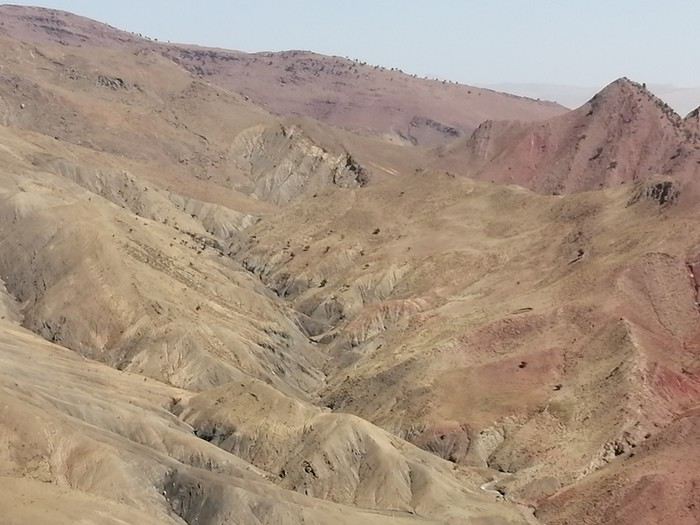
Villages built into the hillsides blended into the earth. It was strikingly simple yet harmonious.
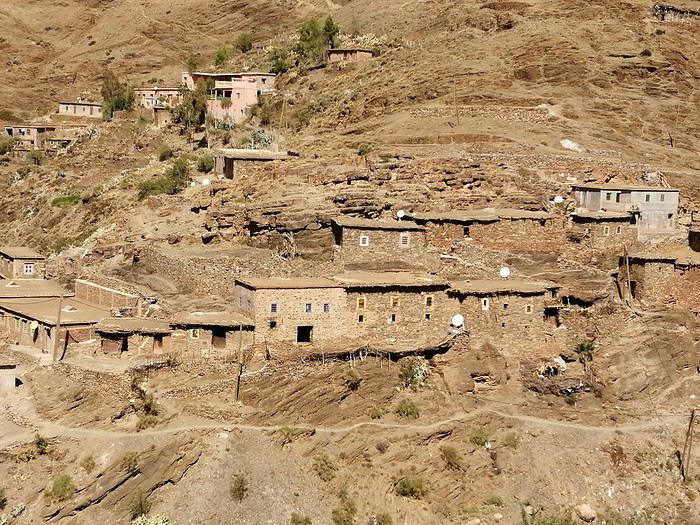
At the top of the pass, 2200m up, we stopped to soak in the moment, the fresh air, and the view.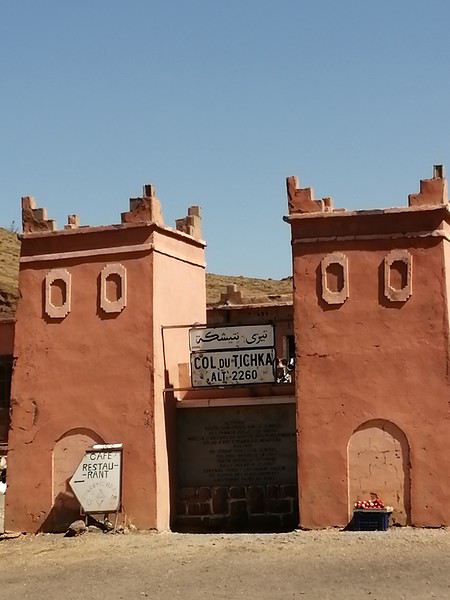
And we carried on toward Ouarzazate. The road was under construction. Mechanical giants were tackling the mountain. But the mountain was enormous. We were impressed by the scale of the work.
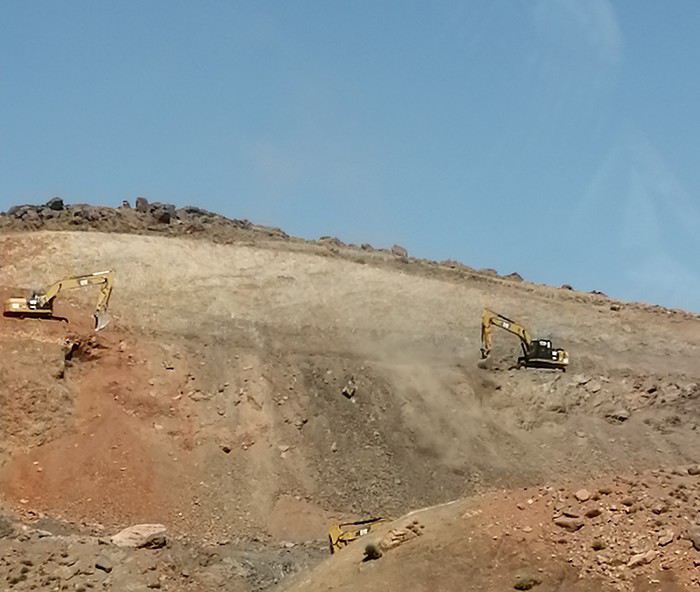
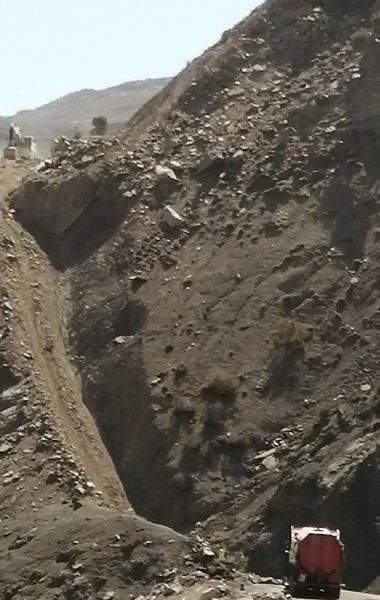
Then, we left the main road to head left toward Telouet... It was stunning. The colors changed. Maybe we felt less overwhelmed by the imposing Atlas. Just a personal impression!
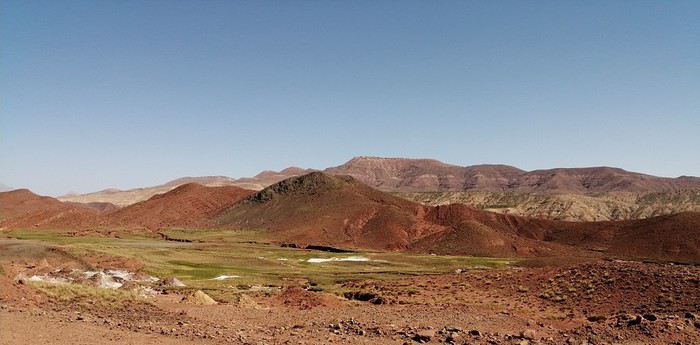
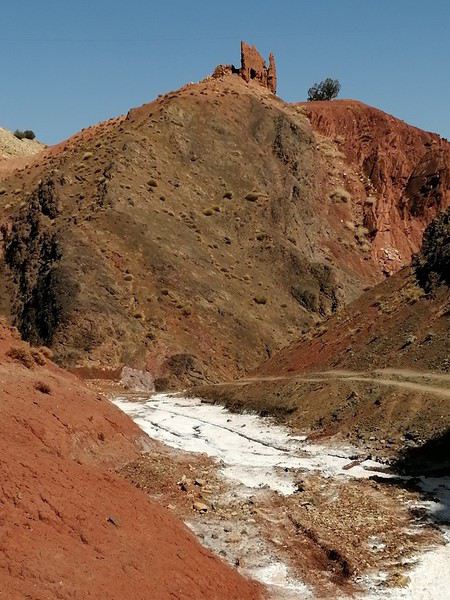
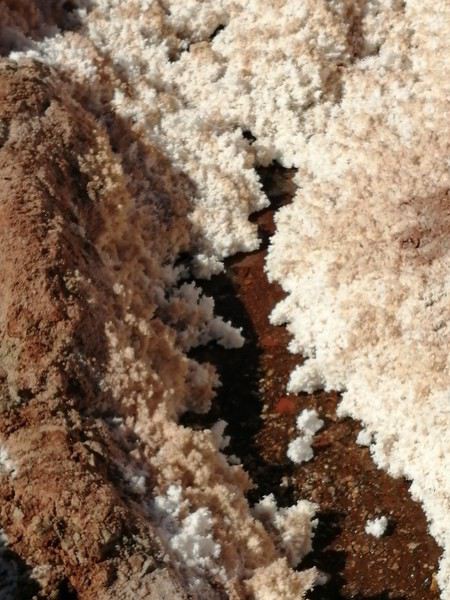
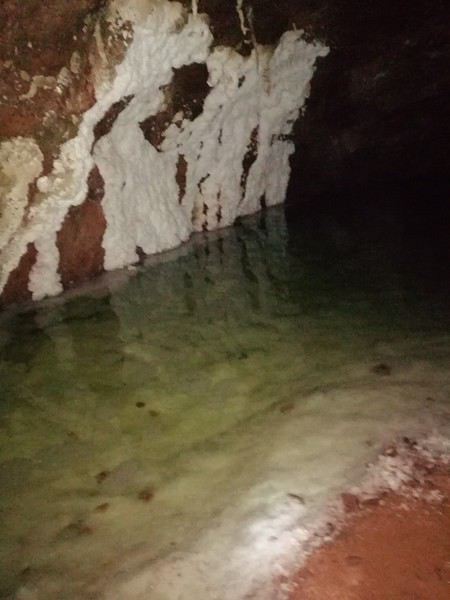
Right after passing through Telouet (maybe we’ll shock history buffs—we didn’t visit the kasbah), we went to see the salt mine. It was unexpected. Salt was everywhere. The stream water wound its way between salt crystals and waterfalls. It was really pretty. And then there was the cave. We had a guide for the visit. Stalactites and stalagmites crisscrossed here and there. At the back of the cave, we saw a small lake surrounded by crystals. It was beautiful.
We hit the road again. We drove through stunning landscapes: vast plains for grazing herds, rivers nestled deep in the valleys.
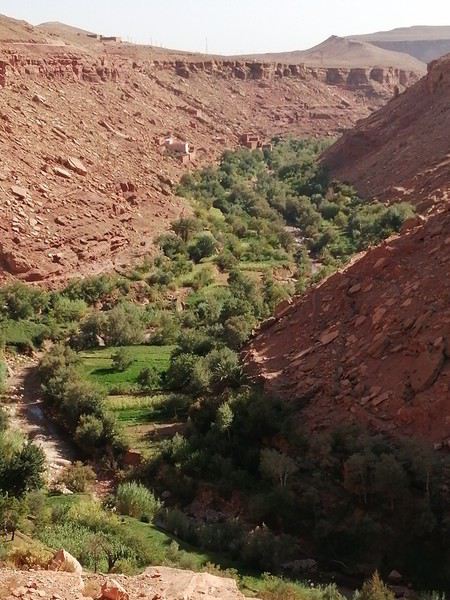
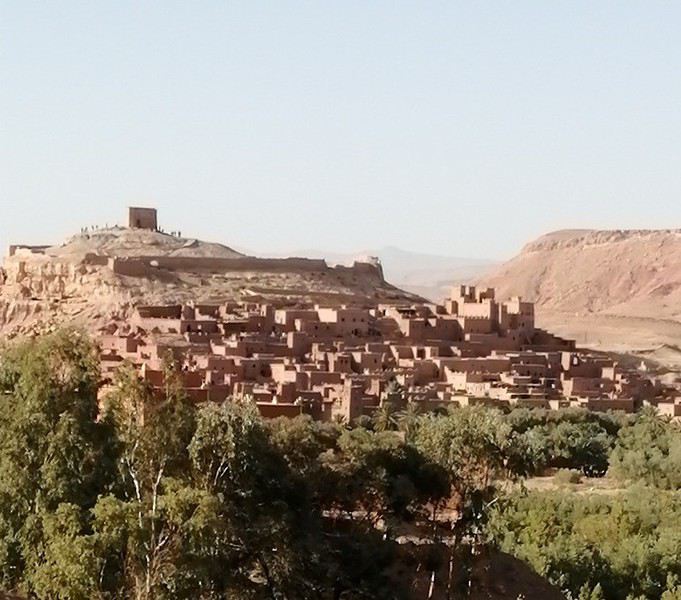
We proudly drove past the ksar Ait Benhaddou without stopping—just long enough to snap a quick photo and keep going so we’d arrive before nightfall.
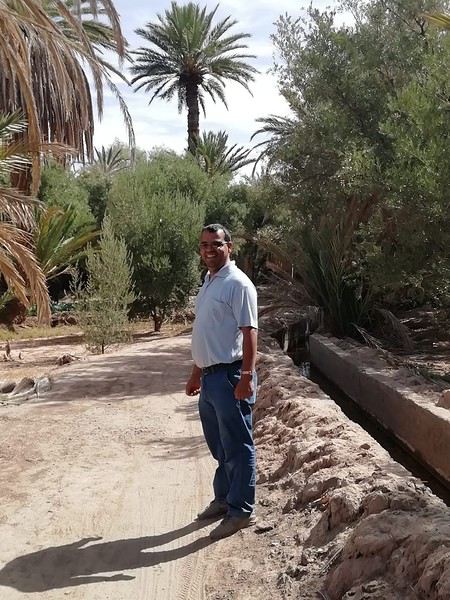
We made a few small purchases in Ouarzazate and headed straight for the Skoura palm grove, where we’d booked three nights at the guesthouse Kasbah La Palmeraie. Mohamed, the owner, welcomed us warmly, and we shared tea with the family. We felt right at home. We were made to feel welcome.
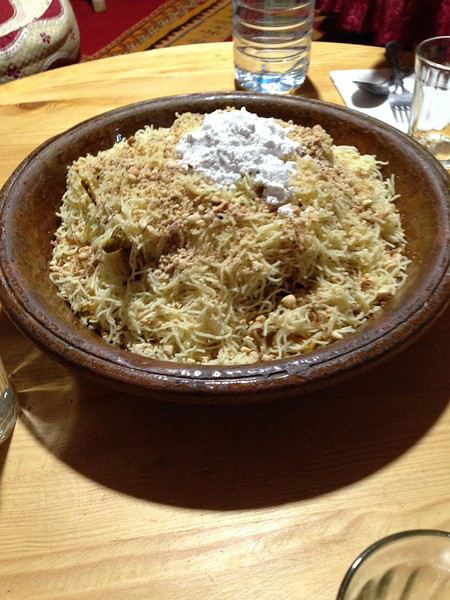
Dinner was a hit—a real Moroccan meal, a sweet-and-savory dish with steamed vermicelli and chicken. Delicious! A great surprise for us—we’d never tried it before.
After such a long day that started so early, we were happy to crawl into bed. But we felt like the trip was off to the best possible start.
Until tomorrow, if you’d like!
We planned this trip with the tips we got from this forum, so thank you to everyone who helped us prepare. Thanks to you, we had unforgettable moments.
Here’s our itinerary, which let us see the Atlas Mountains, the oases of the South, the sandy desert, and the Atlantic coast. We landed in Marrakech early in the morning, and our rental car agent was waiting for us at the airport. After sorting out the formalities, we left Marrakech heading toward Ouarzazate.
The heavy traffic in Marrakech quickly gave way to smooth driving. As soon as we left the city, it was calm. And right outside the city, we came across shepherds grazing their sheep by the roadside... It’s definitely a surprise at first! But yes... We’re in Morocco... No doubt about it... We’re in the thick of it! As we started gaining altitude, vendors waved at us, offering dried morels. At first, we weren’t sure what they were selling, but we stopped for tea on a terrace to admire the mountain scenery, and they offered us those famous morels again.
We continued our climb toward Tizi N Tichka... Gigantic valleys stretched out before us. With every turn, we discovered breathtaking landscapes.
Villages built into the hillsides blended into the earth. It was strikingly simple yet harmonious.
At the top of the pass, 2200m up, we stopped to soak in the moment, the fresh air, and the view.
And we carried on toward Ouarzazate. The road was under construction. Mechanical giants were tackling the mountain. But the mountain was enormous. We were impressed by the scale of the work.
Then, we left the main road to head left toward Telouet... It was stunning. The colors changed. Maybe we felt less overwhelmed by the imposing Atlas. Just a personal impression!
Right after passing through Telouet (maybe we’ll shock history buffs—we didn’t visit the kasbah), we went to see the salt mine. It was unexpected. Salt was everywhere. The stream water wound its way between salt crystals and waterfalls. It was really pretty. And then there was the cave. We had a guide for the visit. Stalactites and stalagmites crisscrossed here and there. At the back of the cave, we saw a small lake surrounded by crystals. It was beautiful.
We hit the road again. We drove through stunning landscapes: vast plains for grazing herds, rivers nestled deep in the valleys.
We proudly drove past the ksar Ait Benhaddou without stopping—just long enough to snap a quick photo and keep going so we’d arrive before nightfall.
We made a few small purchases in Ouarzazate and headed straight for the Skoura palm grove, where we’d booked three nights at the guesthouse Kasbah La Palmeraie. Mohamed, the owner, welcomed us warmly, and we shared tea with the family. We felt right at home. We were made to feel welcome.
Dinner was a hit—a real Moroccan meal, a sweet-and-savory dish with steamed vermicelli and chicken. Delicious! A great surprise for us—we’d never tried it before.
After such a long day that started so early, we were happy to crawl into bed. But we felt like the trip was off to the best possible start.
Until tomorrow, if you’d like!
Hello everyone,
Here’s the story of our two-week trip—13 nights, actually—in the national parks of northern and southeastern Kenya, which we took last September at the end of summer. My wife and I planned this trip with a French agency (Bel Africa, Paris), which worked with a local operator in Nairobi (Nadhy Travels & Tours). The latter provided a driver-guide and vouchers, but no aperitif🙁! Our all-inclusive package included animal safaris exclusively in a customized 4x4 vehicle (with a pop-up roof) and accommodations in high-quality lodges that we selected ourselves. It’s great for comfort, but not so much for the wallet. The cost was obviously astronomical for the services provided. But that’s just my usual take on lodging in East and Southern Africa! Our itinerary was a loop starting and ending in Nairobi, passing through Ol Pejeta, Buffalo Springs-Samburu, Meru NP, Amboseli, and Tsavo West.
Trip breakdown:
Day 1 to 3: Ol Pejeta Day 3 to 7: Buffalo Springs Day 7 to 8: Meru NP-Nairobi Day 9 to 11: Nairobi-Amboseli Day 11 to 14: Tsavo West
Photo gear we brought:
- 1 bridge camera - 2 DSLR bodies - 2 telephoto lenses: 70-200mm f/2.8 and 200-500mm f/5.6 - 2 pairs of 10x42 binoculars
What motivated this trip? We wanted to recharge and were looking for a certain tranquility that would be ideal for wildlife observation and photography—our hobbies. That immediately ruled out the parks in the southwest, which are too crowded. Plus, those would have likely been a repeat of what we experienced in Tanzania a few years earlier (see my travel journal "The Great Migration"). Buffalo Springs particularly appealed to us because of the unique animal species it’s home to. It was really their existence that drove our choices. We wanted to see animals we’d never seen before in their natural habitats.
So, on a beautiful late-summer evening, we took off from Paris-CDG for Nairobi. The overnight flight was uneventful, and we landed early in the morning at Jomo Kenyatta International Airport (NBO). But our driver-guide wasn’t waiting for us. Judging by the number of signs being held up, we must have been the only travelers in that situation. Good grief, why wasn’t he there like all the others?
We’ve been back for a month now, so it’s high time I posted the story of our adventures! 😉 I’d also like to thank everyone who shared their own experiences on this forum (or elsewhere) and gave us tips—it really helped us plan our trip.
14/09/2019: Johannesburg - Vryburg After months of waiting and reading other travelers’ journals, it’s finally our turn! We arrived in Johannesburg from Nantes and Paris in the morning. We looked for the Bushlore rep—we’d rented our 4x4 from them—but there was no sign with our name! « Bushlore? She’s a woman, I saw her a few minutes ago, » someone told us. A minute later, the Bushlore employee showed up: a man! 🤪 He sped onto the highway, and just 30 minutes later, we arrived at the rental place. It’s a big operation with good organization and lots of vehicles—pretty reassuring. Our 4x4 was there, a classic Toyota Hilux fully equipped for safari: rooftop tent, dual diesel tanks, 60-liter water reserve, two batteries, two spare tires, all the camping gear, plus everything needed for *désensablement* (getting unstuck from sand). Speaking of which, is it "désensablage" or "désensablement"? Best to just avoid getting stuck in the first place! 😏 Good news… or not: the vehicle was brand new, with barely 100 kilometers on the odometer. On one hand, we figured we wouldn’t have mechanical issues or a fridge breakdown, but on the other, we knew it wouldn’t be easy to return it without a single scratch. Either way, it was our first time renting a 4x4, and we were impressed.
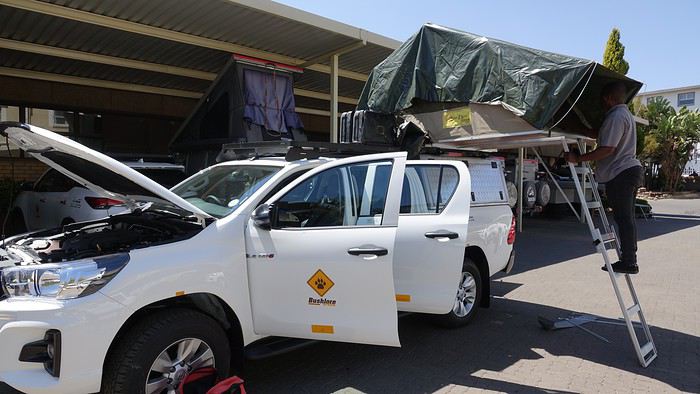
We set off toward Kgalagadi Transfrontier Park—it’s not exactly around the corner! In 1994 (when Mandela had just become President) and 2007, during our two previous trips to South Africa, we loved this park, so we couldn’t imagine going to Botswana without returning. The road was pretty monotonous, with not much to see except a few ostriches.
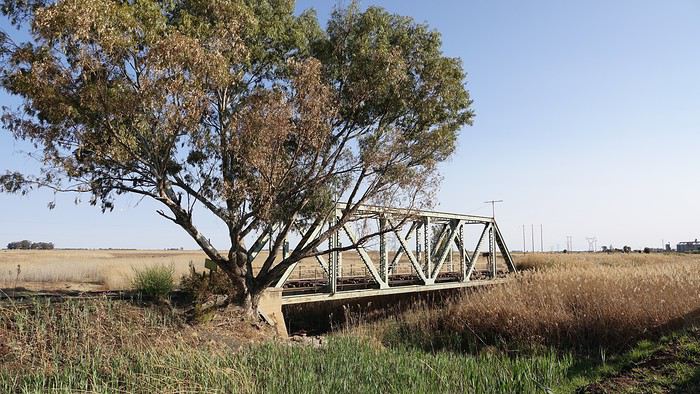
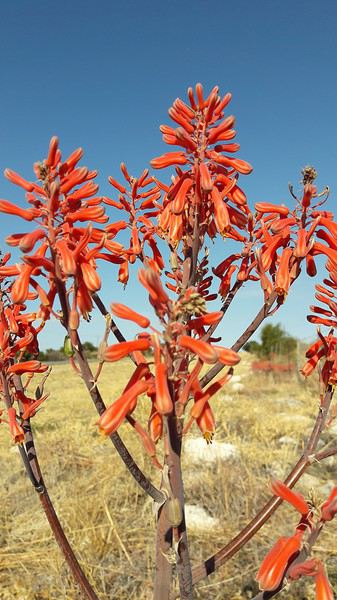
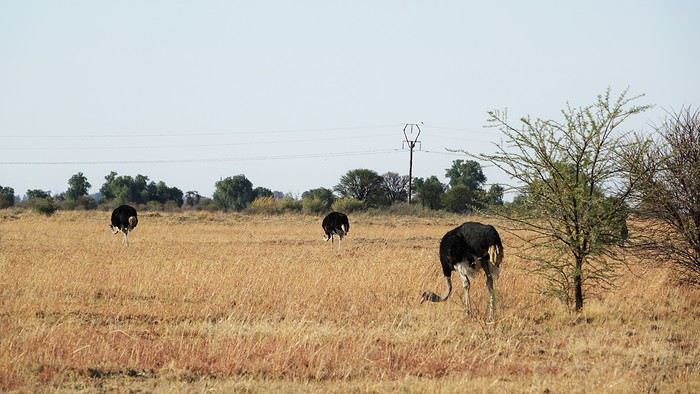
We stopped for the night in Vryburg at the Kameelboom Lodge campsite. It was a bit noisy since it’s close to the road, and the facilities weren’t great, but it was fine for one night.
14/09/2019: Johannesburg - Vryburg After months of waiting and reading other travelers’ journals, it’s finally our turn! We arrived in Johannesburg from Nantes and Paris in the morning. We looked for the Bushlore rep—we’d rented our 4x4 from them—but there was no sign with our name! « Bushlore? She’s a woman, I saw her a few minutes ago, » someone told us. A minute later, the Bushlore employee showed up: a man! 🤪 He sped onto the highway, and just 30 minutes later, we arrived at the rental place. It’s a big operation with good organization and lots of vehicles—pretty reassuring. Our 4x4 was there, a classic Toyota Hilux fully equipped for safari: rooftop tent, dual diesel tanks, 60-liter water reserve, two batteries, two spare tires, all the camping gear, plus everything needed for *désensablement* (getting unstuck from sand). Speaking of which, is it "désensablage" or "désensablement"? Best to just avoid getting stuck in the first place! 😏 Good news… or not: the vehicle was brand new, with barely 100 kilometers on the odometer. On one hand, we figured we wouldn’t have mechanical issues or a fridge breakdown, but on the other, we knew it wouldn’t be easy to return it without a single scratch. Either way, it was our first time renting a 4x4, and we were impressed.
We set off toward Kgalagadi Transfrontier Park—it’s not exactly around the corner! In 1994 (when Mandela had just become President) and 2007, during our two previous trips to South Africa, we loved this park, so we couldn’t imagine going to Botswana without returning. The road was pretty monotonous, with not much to see except a few ostriches.
We stopped for the night in Vryburg at the Kameelboom Lodge campsite. It was a bit noisy since it’s close to the road, and the facilities weren’t great, but it was fine for one night.
Hello! 🙂
In 2017, struck by western addiction, our first road trip gave us an irresistible urge to return, which we did from September 2nd to 24th, 2019, on a loop from Denver to Denver via Yellowstone. The westernmost point of this journey, which took us through the geographical center of the USA, brought us within about a hundred kilometers of Moab, which had been the easternmost point of our last trip.
We’ve been back for over a month now, and I realize I’m starting to forget some details—it’s high time I started my travel journal before my brain turns into Swiss cheese and lets everything slip away. As I mentioned in my last story, it’ll take me quite a while to finish, so if any travelers have specific questions, don’t hesitate to message me privately. Once again, I’d like to thank everyone who helped me (and there were many!) prepare our road trip, with a special shout-out to Disneydiddl, Hiacinthe, and Titou (ladies first) as well as Fred and Itat, whom I bombarded with questions for months and who always kindly and patiently gave me tons of great tips. It’s thanks to all of you that this trip was such a success. I was a little worried I wouldn’t recapture the emotion and enthusiasm of our 2017 trip, but this one was just as "Wow" as the last.
For those who don’t know us, let me introduce our little group. We’re four friends in our sixties (this time, everyone made it, which let us score some "senior" discounts...). We live in the Var region, have known each other for over 20 years, and this was our second trip together to this magical West.
Mimi (Michèle): always the smallest and the funniest. Thank goodness she was there to speak English! Maumau (Maurice): her husband, always with his white hair, his Gallic mustache, his humor, and his Southern accent. He drove every other day. DD (André): the one with the beard, with whom I celebrated our 41st wedding anniversary at Yellowstone. Our second driver appreciated having a peaceful mind since he’s been retired since July. Marcalamar (Martine): that’s me—still blonde with glasses, still talking a lot, and still terrified of messing up the organization of this trip despite all the hours spent on the forum.
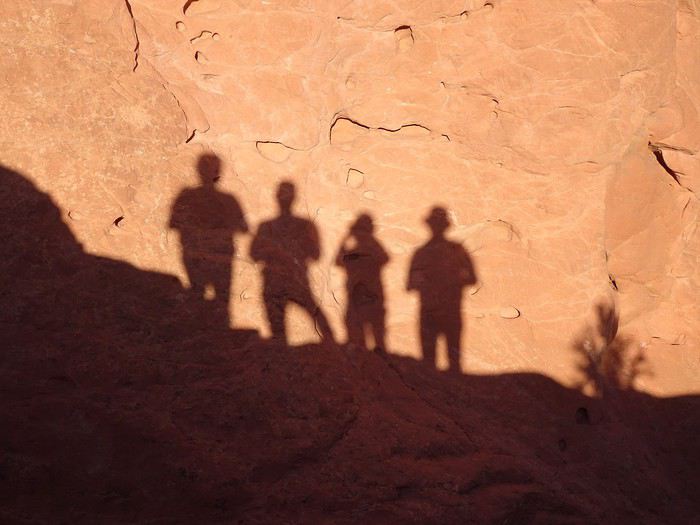 Recognize us? Ha ha ha!!!! No, just kidding!!!!
That’s us!!!
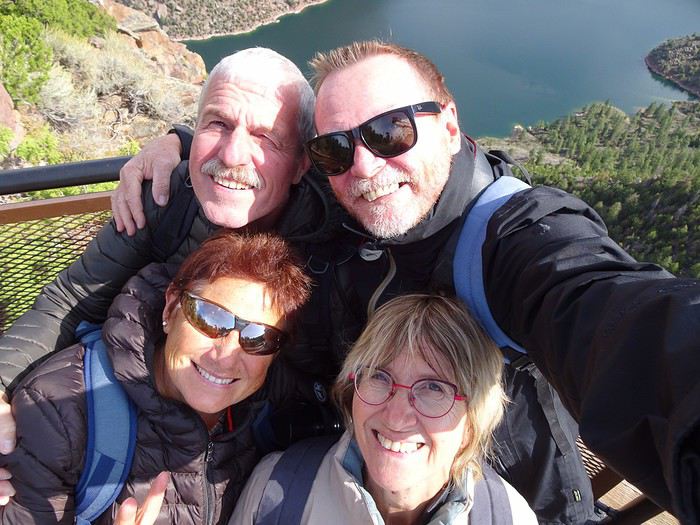
In 2017, struck by western addiction, our first road trip gave us an irresistible urge to return, which we did from September 2nd to 24th, 2019, on a loop from Denver to Denver via Yellowstone. The westernmost point of this journey, which took us through the geographical center of the USA, brought us within about a hundred kilometers of Moab, which had been the easternmost point of our last trip.
We’ve been back for over a month now, and I realize I’m starting to forget some details—it’s high time I started my travel journal before my brain turns into Swiss cheese and lets everything slip away. As I mentioned in my last story, it’ll take me quite a while to finish, so if any travelers have specific questions, don’t hesitate to message me privately. Once again, I’d like to thank everyone who helped me (and there were many!) prepare our road trip, with a special shout-out to Disneydiddl, Hiacinthe, and Titou (ladies first) as well as Fred and Itat, whom I bombarded with questions for months and who always kindly and patiently gave me tons of great tips. It’s thanks to all of you that this trip was such a success. I was a little worried I wouldn’t recapture the emotion and enthusiasm of our 2017 trip, but this one was just as "Wow" as the last.
For those who don’t know us, let me introduce our little group. We’re four friends in our sixties (this time, everyone made it, which let us score some "senior" discounts...). We live in the Var region, have known each other for over 20 years, and this was our second trip together to this magical West.
Mimi (Michèle): always the smallest and the funniest. Thank goodness she was there to speak English! Maumau (Maurice): her husband, always with his white hair, his Gallic mustache, his humor, and his Southern accent. He drove every other day. DD (André): the one with the beard, with whom I celebrated our 41st wedding anniversary at Yellowstone. Our second driver appreciated having a peaceful mind since he’s been retired since July. Marcalamar (Martine): that’s me—still blonde with glasses, still talking a lot, and still terrified of messing up the organization of this trip despite all the hours spent on the forum.
Recognize us? Ha ha ha!!!! No, just kidding!!!!
That’s us!!!Hello,
It often happens that we're asked what to visit in Belgium. And the answers usually point to Bruges, Ghent, Antwerp, and Brussels—and rightly so, as these cities are well worth visiting ;). However, Belgium, though small, isn’t just limited to these four cities.
I live in one of them (Brussels), enjoy spending time in the other three, but I’d like to highlight some lesser-known spots that could add to the trip for those who want to see a bit more or something different. Between trips, I like exploring one or two corners of the country where I live.
Hence the idea for a travel journal of walks.
Most of the places I’ll talk about can be visited as a day trip from Brussels, whether by public transport or car.
In chronological order of the topics covered:
- The Gileppe Dam (Liège province) - message 2, page 1 - The Domaine de La Hulpe (Walloon Brabant) - message 3, page 1 - Mechelen (Antwerp province) - message 4, page 1 - The coast - message 5, page 1 - The Westhoek, from De Panne - message 6, page 1 - The Zwin, from Knokke - message 7, page 1 - Lier (between Mechelen and Antwerp) - message 8, page 1 - Mons (Hainaut) - message 9, page 1 - The Florenville region - message 12, page 1 - The East Cantons - message 13, page 1 - Dinant - message 18, page 1 - The Japanese garden in Hasselt - message 24, page 2 - Leuven - message 29, page 2 - Louvain-la-Neuve - message 32, page 2 - Ostend - message 42 (page 3) and message 166 (page 9) - The floralies of Groot-Bijgaarden - message 43, page 3 - Halle Forest - message 44, page 3 - Pralines - message 54, page 3 - Charleroi - message 68, page 4 - Namur - message 92, page 5 - Le Bois du Cazier (Marcinelle) - message 95, page 5 - Couques and gosettes - message 96, page 5 - Liège - message 99, page 5 - Tournai - message 115, page 6 - Oudenaarde - message 121, page 7 - Meise Botanical Garden - message 124, page 7 - Tongeren - message 125, page 7 - Beersel Castle (Flemish Brabant) - message 126, page 7 - Brussels in lockdown (messages 150 and 154, page 8) - Notre-Dame à la Rose Hospital in Lessines (messages 161 and 162, page 9) - Westende (message 167, page 9) I’ll keep updating this list as the journal progresses...
Hi there,
I’m heading to Nepal very soon to do the Three Passes Trek, among other things. Could anyone tell me what the average daily budget is for this trek? From what I’ve heard, this area seems more expensive than others.
Thanks in advance for your replies! :)
I’m heading to Nepal very soon to do the Three Passes Trek, among other things. Could anyone tell me what the average daily budget is for this trek? From what I’ve heard, this area seems more expensive than others.
Thanks in advance for your replies! :)
Really disappointed with Costa Rica! Pura vida? The scam of the century!
(Costa Rica pure emptiness).
The country where animals are free and people are in cages. 3 weeks in December in this country and never again. Imagine the trailer of a movie that seems interesting, and when you go see it, you realize it’s a flop and the best moments were in the trailer. Well, that’s exactly how we felt with Costa Rica pure emptiness. My wife and I have traveled quite a bit and didn’t expect to be so wrong about a place. On the main routes, we visited: San José Alajuela Limón, Cahuita, Puerto Viejo, Manzanillo (Caribbean side) Jaco, Quepos, Manuel Antonio (Pacific side) And a few short stops in intermediate towns.
Our dissatisfaction grew gradually like this:
When we arrived at the hotel, the taxi dropped us off on a small street in front of a white metal gate with ground-floor windows barred. We looked at it skeptically, but the sign matched. He approached the gate, rang the bell, the buzzer sounded, and the door opened slightly. The hotel wasn’t bad for the price, a 10-minute walk from downtown, but with a "Fleury-Mérogis" vibe guaranteed.
So far, so good.
After showering and regaining our bearings, we headed downtown. What started to unsettle us on the way was seeing houses with bars on the ground-floor windows and even on the second floor. At first, we thought the hotel’s neighborhood wasn’t great.
Downtown San José: It’s a generic city, not very exotic, with a pedestrian street and a small mercado where you can eat local food without frills. Very few tourists—if any—which let you blend in with the locals. We had lunch and struggled to make ourselves understood because, aside from one or two shops, English wasn’t spoken. On the way back to the hotel, we took a different route, and while chatting and strolling, my wife pointed out a beautiful two-story white house completely barricaded like Fort Knox. From that moment, we started noticing the facades of houses and buildings, and wow, it was creepy—most looked like prisons, some even with barbed wire. Though put off, we told ourselves it was probably a big-city thing and the rest of the country couldn’t be like this.
So far, so good.
We relaxed at the hotel and had a drink at the bar. Night falls early, around 5:30 PM. By 7:30 PM, we headed back downtown for dinner. A bit unsettling for a capital—downtown was almost deserted, and aside from fast-food chains, very few restaurants were open, with hardly anyone on the streets. Bars with security guards out front. I won’t say we felt unsafe that night, but once it got dark, we realized the bars on the windows weren’t for nothing. First day in, and our impression was already mixed.
The next day, we explored the city and surroundings, and our feelings didn’t change.
So far, so good.
Off to Cahuita by bus—4 hours of travel. The landscapes are very green but quickly become monotonous. The road runs alongside the forest and passes through a few towns and villages, and even in the countryside, there were just as many prison-like houses. The bus dropped us off at Cahuita’s terminal station—only four of us got off. It’s a village, or rather, a small town. Cahuita is basically one straight road and a perpendicular one, and honestly, doubt started to creep in. A few restaurants that add 13% tax and 10% service charge—so 23% extra. We dropped our stuff at the hotel and went to explore. In 20 minutes, we’d seen it all. We had lunch and planned to check out the famous park. Entry is by donation—well, the "entry" is a joke. There’s a path along the forest by the sea, and that’s it.
Nothing’s going right anymore.
We thought it was a total scam, but since we hadn’t gone far, we decided to come back the next day to explore further. We returned to the hotel, relaxed, and around 8:00 PM, we went out for dinner. Only two restaurants were open, and the streets were deserted.
Creepy!
The next day, we explored the so-called park more thoroughly and really got it. A path along the forest by the sea—2 hours there and 2 hours back, where you see animals that feel like showing their faces. A total joke—"all that for this?"
The beach was full of wood debris and coconut husks. We wondered if the photos online were edited because the sea, very rough, wasn’t the azure blue we’d seen in pictures. But calling this a park is a joke—it’s like a new concept.
When we thought about the reviews online, we started to suspect that professionals with interests in the country were monitoring and countering any negative feedback that could harm their business. Too bad we didn’t check the negative reviews beforehand—we did while we were there, and it helped. We wondered if we’d become too demanding after all our travels, but no—when something’s bad, it’s bad.
Manuel Antonio’s park is even more ridiculous—there’s a short path along the sea for about 500 meters, and then nothing. You have to climb through mud and hack your way through the forest. We ended up barefoot because the mud was up to our calves. All that to see a raccoon and a few parrots flying overhead.
We didn’t expect Noah’s Ark, but we’ve seen more animals in Bali, Mexico, and Thailand while visiting temples or just walking around than in these so-called parks!
Puerto Viejo, not far from Cahuita and supposedly livelier—well, it couldn’t be worse! According to Lonely Planet, it had a Caribbean vibe and wild nights, but maybe that was a long time ago. The good reggae music playing everywhere isn’t enough.
In the evening, Puerto Viejo was a bit livelier than Cahuita, but that’s not saying much. Very few tourists—if any—no night market, just two or three shops open selling $20 T-shirts. Same vibe as San José.
No big deal—we enjoyed the beach and the sun, which was reliable. Our itinerary was supposed to include Tortuguero Park, but after talking to other travelers who’d just been, we changed our minds, knowing we’d be visiting Manuel Antonio Park on the Pacific side.
To get back to the Pacific side, you have to take the bus and go through San José again—5 hours this time—then switch bus terminals and another 4.5 hours to Quepos. A stopover town to get to Manuel Antonio’s beach and park! A town just like the others we’d seen—deserted as soon as the sun sets, and not exactly bustling during the day either. (Where are all the tourists?)
Still as many bars on the windows and that feeling of being in the wrong place.
7 km later: Manuel Antonio beach and park. The beach is very beautiful and quite large, but don’t expect turquoise blue water—the waves stir up the sand, giving the water a brownish color. Along the beach, shops and restaurants for about 300 meters, and then nothing. At night, after sunset, the town shuts down too.
Manuel Antonio Park is highly praised for its wildlife, so we were eager to see it. When you express dissatisfaction with Cahuita or Manzanillo parks, the response is always, "But you should’ve gone to Monteverde or Manuel Antonio!" No matter what you do or say, they’ll tell you, "You should’ve gone there or here."
Back to our famous park—entry was about $16, and contrary to what we’d heard, it wasn’t crowded! Guides at the entrance with spotting scopes offered their services for about $30. The park: a mix of boardwalk and dirt paths through the forest, sometimes running alongside beautiful coves and beaches. As soon as we entered, a crowd was taking photos of a deer eating leaves. A little further on, a guide with a group of five stopped. The guide raised his arm and set up his spotting scope! He showed them, about 100 meters away, a hummingbird perched on a branch. Some, looking through the scope, exclaimed, "Oh my God! Amazing! Incredible!" For a moment, we thought they’d discovered a unicorn or were in Jurassic Park and had just crossed paths with a T-Rex! The concept is comical—looking at a bird or another animal through a spotting scope because it’s too far away. Isn’t that what TV is for? For our part, we saw monkeys, ants, an armadillo, an iguana, and the backside of a sloth climbing a tree. Amazing, incredible!
We stayed a few days in Manuel Antonio to enjoy the beach, changing hotels often because prices varied wildly from one day to the next for shameful services. On top of that, they’d quote a price in dollars and convert it at their discretion—thieves!
Alajuela, a city near the airport, has a two-story mall and a local market downtown! No interest except its proximity to the airport.
What we liked:
The climate and, in hindsight, San José—the most authentic city we visited.
What we didn’t like, in addition to what we’ve already mentioned:
Costa Ricans aren’t very friendly or communicative. English is barely spoken, not even by doctors at Quepos Hospital, where my wife ended up with food poisoning (thanks, Google Translate). The widespread obesity among Costa Ricans, who eat like Americans. The insecurity. The eco-hipsters who leave their $150 lodges in minivans with guides to visit parks and other sites, then return to barricade themselves in their fortresses at nightfall (oh my God, amazing, incredible). The blue signs at the entrance of towns that accept this payment method: "We accept American Express." Parking lots that become paid just because a guy is watching your car. Prices displayed in dollars. The cost of living (hotels, restaurants, taxes). Landscapes that are too green and not flowery enough. Beaches—nothing exceptional. Pollution in cities where big American trucks rule. Sewage dumped directly into the sea. Aside from the jungle, there’s nothing to visit—no ruins, monuments, or anything worth seeing.
In short, my wife and I think the hype about this supposedly eco-friendly country is overrated. It’s just the trendy destination of the moment. There are much better, cheaper, and more authentic places. In hindsight, we keep the good memories and our beautiful photos, but if we had to do it over...
Before signing off, a little message to those who don’t like hearing opinions different from theirs: Well, some things aren’t up for debate. And to those who’d have us believe that in 3 weeks, we don’t have the right to criticize a country or express our feelings—how can you praise it in so little time? What a scam. Costa Rica is a money pit. Pura vida? Pure cosmic emptiness.
If you like spending your evenings barricaded in your cozy hotel after dark, this country is for you. For everyone else: run!
After several months of delay, Madagascar has just launched an electronic entry visa for the island, available online. It allows tourists to stay for 30 (35 €), 60 (40 €), or 90 days (50 €).
Read more...
We went to Morocco in April with our children and grandchildren.
We landed in Marrakech around 9 AM and took a bus to our small hotel in the Guéliz district. This was to avoid dealing with taxi drivers who might give our young travelers a very negative impression of Marrakech... The bus drops us off very close to the Hôtel Toulousain, which has always given us the warmest welcome for over 25 years. We settle into our rooms and head to the medina to have lunch first and then wander through the streets of the old city, introducing it to our little group.
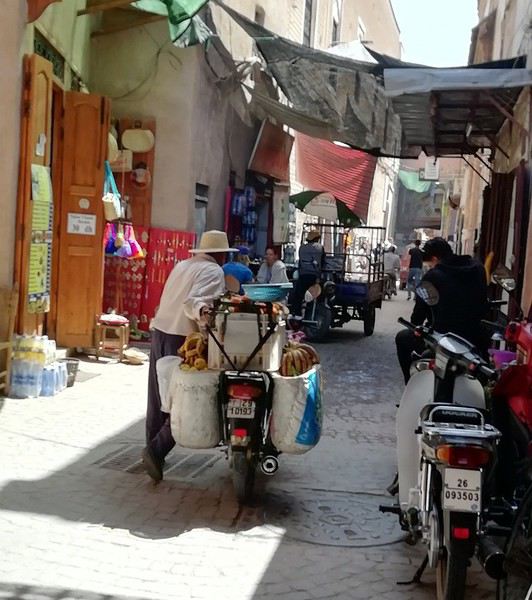
Young and old alike are amazed by the craftsmanship and attention to detail in the work done by the various artisans.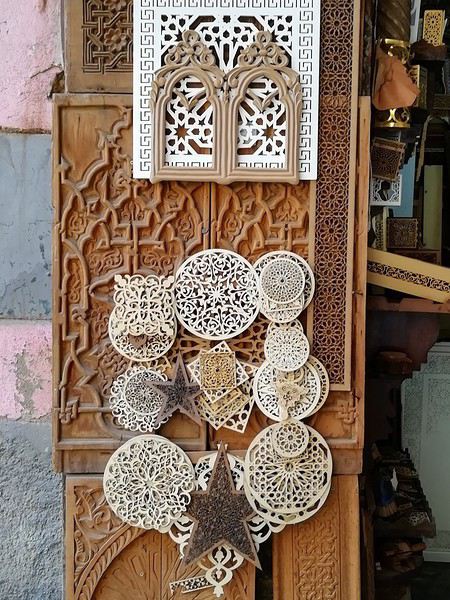
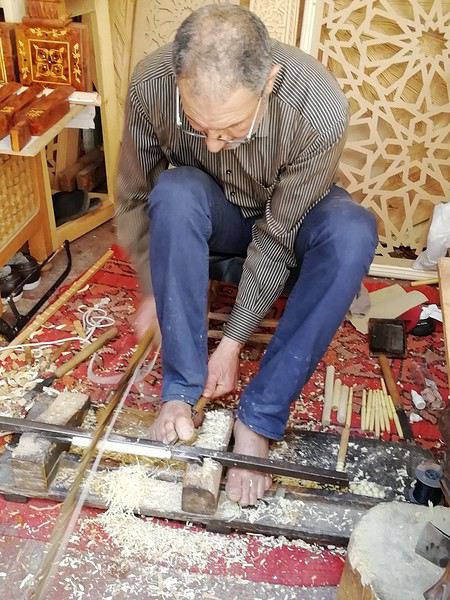
The souks also impress first-time visitors, both with their size and the sheer amount of goods on offer. For those visiting for the first time, it’s a real maze. Colorful chameleons everywhere... Will they survive for long in their cages under the scorching sun?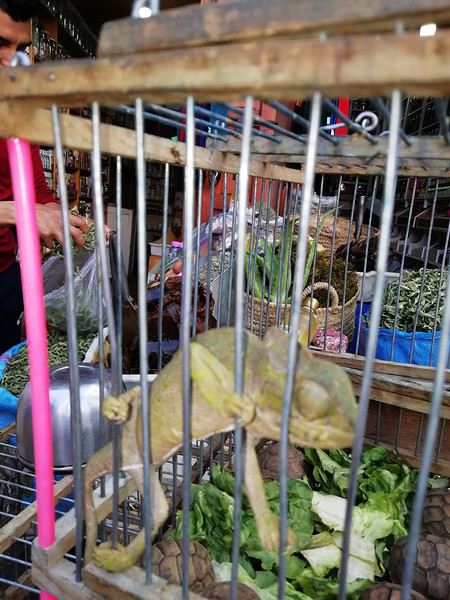 Another surprise for the kids: the lollipop vendor in Jemaa El Fna Square, with giant lollipops that really whet their appetites...
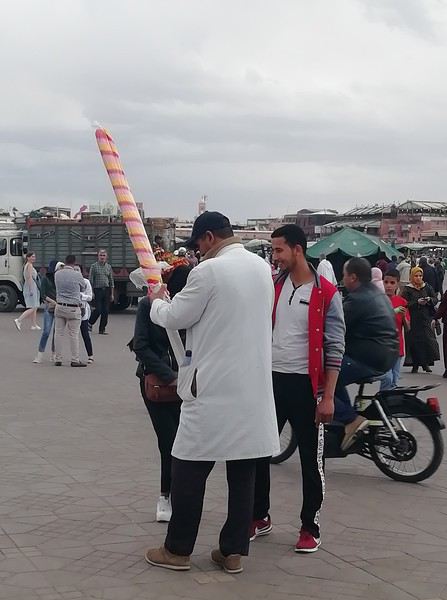
By late afternoon, little legs are tired, and horse-drawn carriages are a welcome way to get back to the hotel.
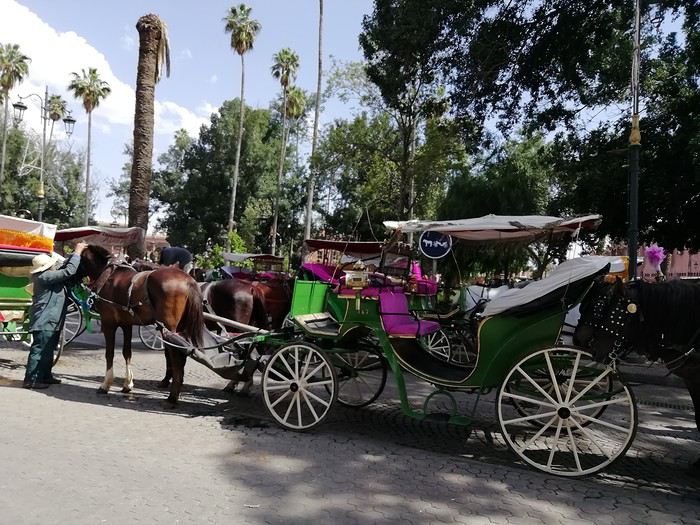
Young and old alike are amazed by the craftsmanship and attention to detail in the work done by the various artisans.
The souks also impress first-time visitors, both with their size and the sheer amount of goods on offer. For those visiting for the first time, it’s a real maze. Colorful chameleons everywhere... Will they survive for long in their cages under the scorching sun?
Another surprise for the kids: the lollipop vendor in Jemaa El Fna Square, with giant lollipops that really whet their appetites...By late afternoon, little legs are tired, and horse-drawn carriages are a welcome way to get back to the hotel.
Here’s a little recap of the cities I’ve seen around the world:
- Shanghai: ultra-modern skyscrapers as far as the eye can see on one side, and on the other, families crammed 10 to a 20-square-meter studio in rundown buildings.
- San Francisco: a city with a huge proportion of people who are high and have lost their minds.
- Accra (Ghana): streets so empty you keep wondering where everyone is hiding.
- Delhi: crumbling fortresses and mosques tucked away at every corner—dream territory for budding archaeologists.
- Bangalore: the "Bangaloreans" are true modern-day cowboys—you’ve got to see how rickshaws, motorbikes, and buses try to overtake each other like it’s a PlayStation game.
- Srinagar (in the Kashmir region of northern India): a city where almost every building could pass for a slum (except the mosques), and the only people who don’t look like beggars are the military and the imams.
- Beijing: crowds tightly controlled by the army, and loads of Western tourists asking you on the street where to find Western junk food chains.
- Amritsar (in the Punjab state of India): the city with the world’s only 100% vegetarian McDonald’s.
- Florence: the place where the quality of food varies the most in the world between touristy restaurants and local spots.
- Chennai: a boy and girl holding hands in public is considered absolutely horrifying to locals, who worship a god whose symbol is a sexual element.
- Cambridge (Massachusetts, USA): a city where street names and building numbers aren’t marked (just like in India), and every person you ask for help turns out to be a tourist.
- Boston: the city with the slowest subway in the world—you can almost catch up to it by running.
- Yangon: just a 5-minute boat ride from downtown (no bridge) and you’re suddenly in the middle of the deep countryside.
- Naypyidaw (capital of Myanmar): a ghost town where only one car passes every 5 minutes on the 8-lane highways.
- Kuala Lumpur: Hindu temples, Chinese pagodas, Malay architecture, British colonial buildings, and ultra-modern glass towers all mixed together, making you lose your bearings.
After several trips to Tenerife, we’re finally discovering the beautiful island of Lanzarote this year!
We fell in love with this small island with its magnificent volcanoes and white villages without large hotel complexes!

I won’t be writing a day-by-day travel journal, but rather giving an overview of our experience! For hiking, we chose trails that were about an hour long and accessible for my mom, but we noted some longer ones to do if we come back—I’ll talk about those later!
To visit the sites, depending on the places you choose, you can get BONOS for discounts: more details here: https://turismolanzarote.com/fr/cact-lanzarote-tarifs-et-abonnements/ We bought ours at the first site we visited (Montañas del Fuego), but you have to ask for them—otherwise, they won’t offer them. Make sure to plan ahead which places to include.
Our favorites were the volcanic discoveries and other landscapes of the island: EL PARQUE TIMANFAYA: Las Montañas del Fuego ****
Stunning colors—it’s absolutely breathtaking! Our only regret is not being able to hike through these incredible landscapes!
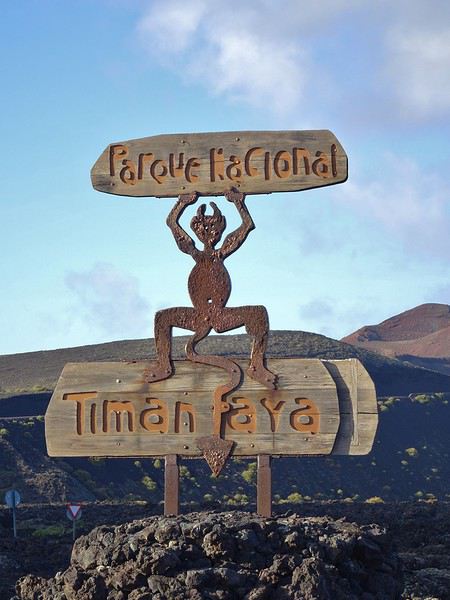
GPS: 29°00'21.6"N 13°45'11.7"W 9 AM - 5:45 PM
We’d noted, “Best to go early in the morning or late in the evening.” We arrived 5 minutes before the park opened. We’d barely parked when we hopped on the first bus for the mandatory 14 km tour included in the ticket. Perfect—no waiting! We sat on the right side of the bus for the best views.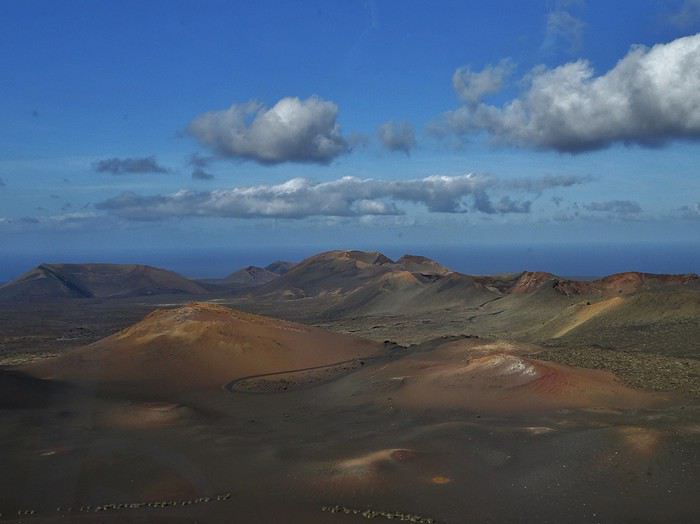
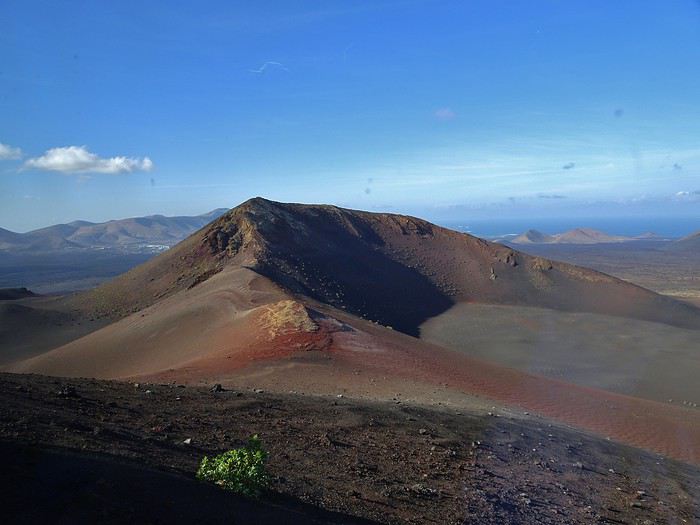 Afterward, we watched the geothermal demonstrations. It’s amazing how hot those little rocks picked up from the ground feel in your hand!
When we left, we saw how right the advice to arrive early was! Newcomers had to queue first to pay at the entrance, then again to access the parking (which was full, so they only let cars in when a spot opened up), and yet again to board the bus! We wouldn’t have wanted to deal with all that!
MONTAÑA CUERVO*** (Crow Mountain) Hike: 1-2 hours / 4 km GPS: 28°59'46.7"N 13°41'04.5"W
A small crater where wild geraniums grow! The hike is short, easy, and very pleasant. It follows a lava field covered in pale-green lichens before entering the crater. To avoid crowds, don’t go too late! We were lucky to have the parking lot almost to ourselves—lots of people were arriving later, even buses!


MONTANA COLORADA*** Hike: 1 hour – beautiful and easy, peaceful, no crowds. GPS: 29°00'18.0"N 13°41'01.7"W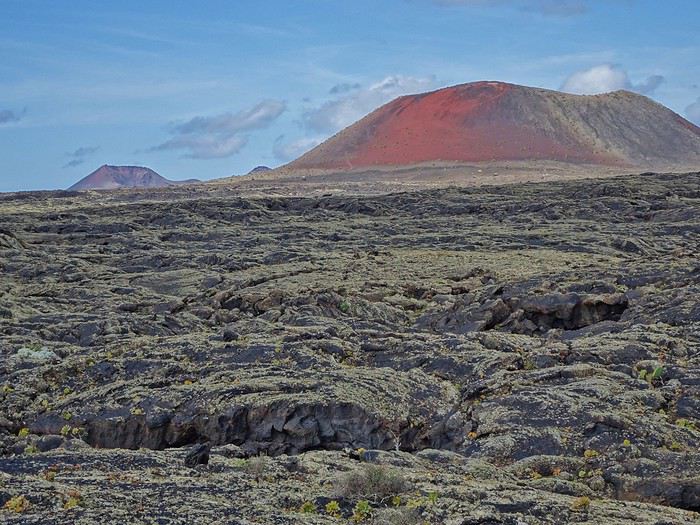 The trail loops around this stunning red mountain. Gorgeous colors, striking contrasts, and amazing volcanic rocks! Keep an eye on the ground—you’ll find little “green gems” in the small volcanic stones!


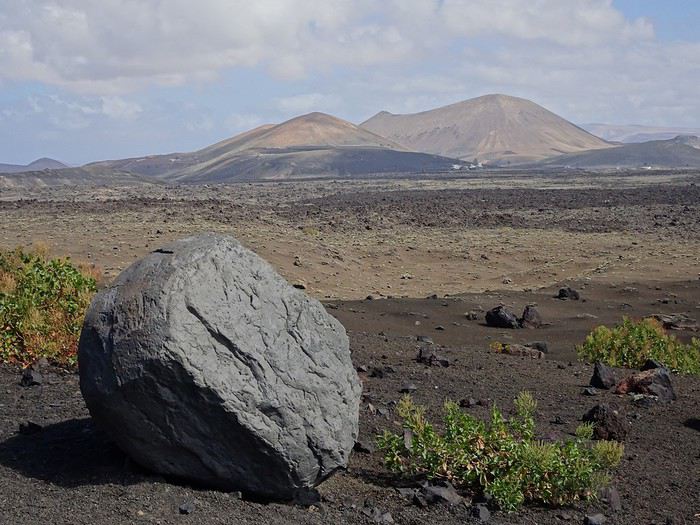
CUEVAS DE LOS VERDES*** We were more drawn to Las Cuevas, which felt more natural, than Los Jameos—though some might find the latter more beautiful, it’s more developed. GPS: 29°09'38.9"N 13°26'19.2"W 10 AM - 6 PM. Guided tour lasts just under an hour. Avoid late morning or early afternoon visits—it gets crowded. A tunnel and volcanic tube formed by an eruption of Monte Corona. The cave is named after the Verdes family, who once owned it. The space is often wide but sometimes narrow! The visit is very impressive, with a great surprise at the end!


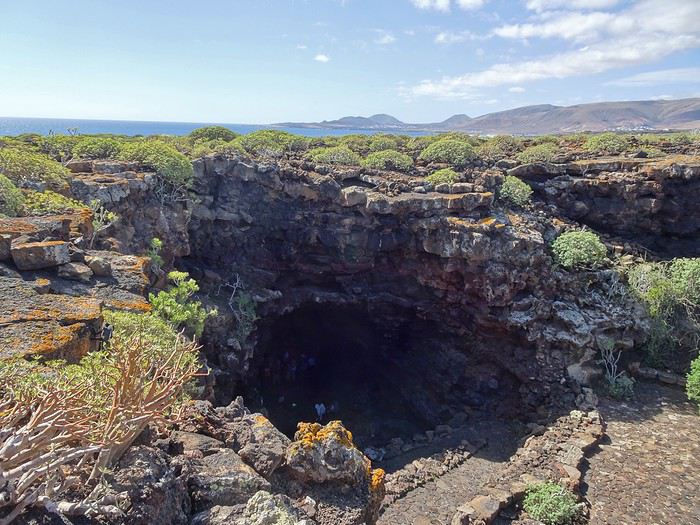

VOLCANO MONTAÑA ROJA** in Playa Blanca A hike you can do on foot from our hotel! Beautiful views from the top of the volcano. You can walk around it, see amazing rocks, and even descend into the crater (a different perspective with stunning colors).
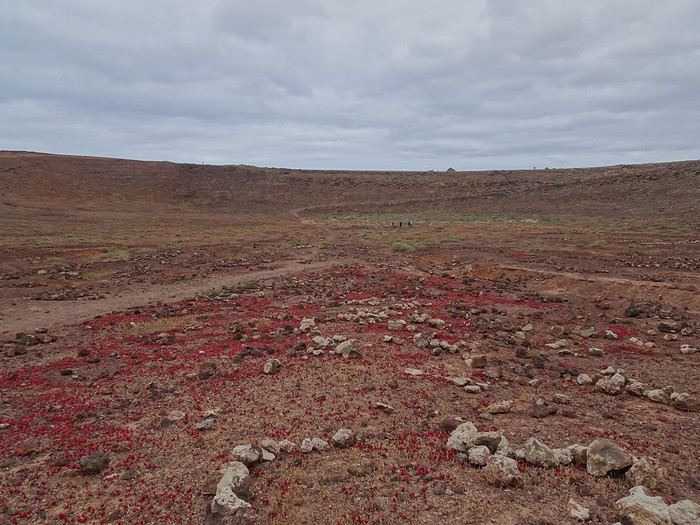

I won’t be writing a day-by-day travel journal, but rather giving an overview of our experience! For hiking, we chose trails that were about an hour long and accessible for my mom, but we noted some longer ones to do if we come back—I’ll talk about those later!
To visit the sites, depending on the places you choose, you can get BONOS for discounts: more details here: https://turismolanzarote.com/fr/cact-lanzarote-tarifs-et-abonnements/ We bought ours at the first site we visited (Montañas del Fuego), but you have to ask for them—otherwise, they won’t offer them. Make sure to plan ahead which places to include.
Our favorites were the volcanic discoveries and other landscapes of the island: EL PARQUE TIMANFAYA: Las Montañas del Fuego ****
Stunning colors—it’s absolutely breathtaking! Our only regret is not being able to hike through these incredible landscapes!
GPS: 29°00'21.6"N 13°45'11.7"W 9 AM - 5:45 PM
We’d noted, “Best to go early in the morning or late in the evening.” We arrived 5 minutes before the park opened. We’d barely parked when we hopped on the first bus for the mandatory 14 km tour included in the ticket. Perfect—no waiting! We sat on the right side of the bus for the best views.
Afterward, we watched the geothermal demonstrations. It’s amazing how hot those little rocks picked up from the ground feel in your hand!When we left, we saw how right the advice to arrive early was! Newcomers had to queue first to pay at the entrance, then again to access the parking (which was full, so they only let cars in when a spot opened up), and yet again to board the bus! We wouldn’t have wanted to deal with all that!
MONTAÑA CUERVO*** (Crow Mountain) Hike: 1-2 hours / 4 km GPS: 28°59'46.7"N 13°41'04.5"W
A small crater where wild geraniums grow! The hike is short, easy, and very pleasant. It follows a lava field covered in pale-green lichens before entering the crater. To avoid crowds, don’t go too late! We were lucky to have the parking lot almost to ourselves—lots of people were arriving later, even buses!
MONTANA COLORADA*** Hike: 1 hour – beautiful and easy, peaceful, no crowds. GPS: 29°00'18.0"N 13°41'01.7"W
The trail loops around this stunning red mountain. Gorgeous colors, striking contrasts, and amazing volcanic rocks! Keep an eye on the ground—you’ll find little “green gems” in the small volcanic stones!CUEVAS DE LOS VERDES*** We were more drawn to Las Cuevas, which felt more natural, than Los Jameos—though some might find the latter more beautiful, it’s more developed. GPS: 29°09'38.9"N 13°26'19.2"W 10 AM - 6 PM. Guided tour lasts just under an hour. Avoid late morning or early afternoon visits—it gets crowded. A tunnel and volcanic tube formed by an eruption of Monte Corona. The cave is named after the Verdes family, who once owned it. The space is often wide but sometimes narrow! The visit is very impressive, with a great surprise at the end!
VOLCANO MONTAÑA ROJA** in Playa Blanca A hike you can do on foot from our hotel! Beautiful views from the top of the volcano. You can walk around it, see amazing rocks, and even descend into the crater (a different perspective with stunning colors).
Hello everyone,
It’s been a little over a year and a half since we first set foot in South Africa, and ever since, we’ve been dreaming of returning to explore Southern Africa.
First of all, a big thank you to all the forum members—there are so many on this VoyageForum section, some of whom are unconditional and indispensable experts on the destination—for the amazing travel journals that only make you want one thing: to go and discover these stunning lands. The first journal I read was Bruno’s (Montagnard74), and I was completely captivated by the face in the colors of the rainbow nation.
Now it’s my turn to add my small contribution by recounting our two-week trip during the Christmas period in South Africa.
Even though Attila strongly advised against visiting South Africa during the South African summer holidays, we still gave it a try since my husband doesn’t have the option to choose his vacation dates.
So we went during the peak tourist season, with all its drawbacks: difficulties finding accommodations, crowds at certain sites... But on the bright side, it’s the beautiful season in South Africa while it’s gray and cold back home.
For this trip, we wanted to explore Cape Town and its surroundings, which are already packed with things to see. As a result, we didn’t have time to head north without rushing too much. So we planned the following itinerary, staying in the south:
J1: Lyon/Dubai J2: Dubai/Cape Town J3: Table Mountain – Cape Town J4: Botanic Garden - Robben Island J5: Cape Peninsula J6: Cape Agulhas - Gansbaai J7: De Hoop - Swellendam J8: Garden Route - Knysna J9: Garden Route - Addo NP J10: Addo NP J11: Oudtshoorn J12: Little Karoo J13: Wine Route - Cape Town/Dubai J14: Dubai/Lyon
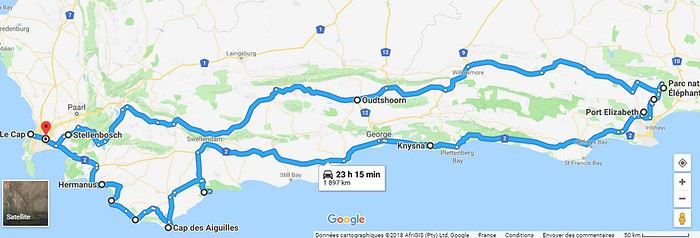
To give you a taste of what we experienced on the South African roads, here’s a little preview of the wildlife and flora we encountered, as well as the beaches and mountains we glimpsed.
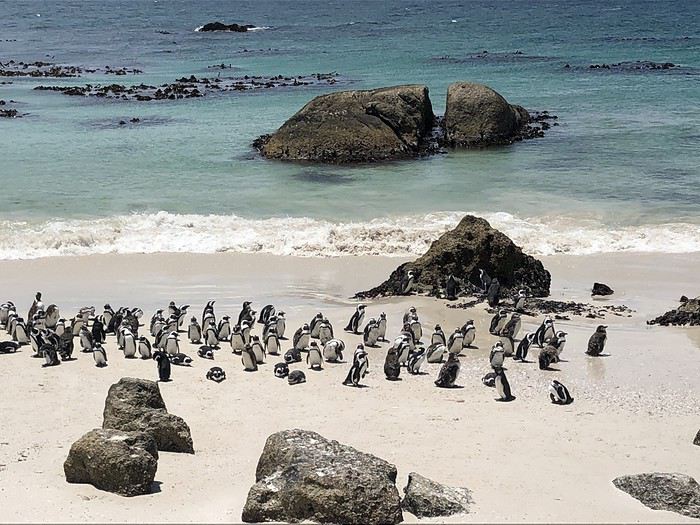
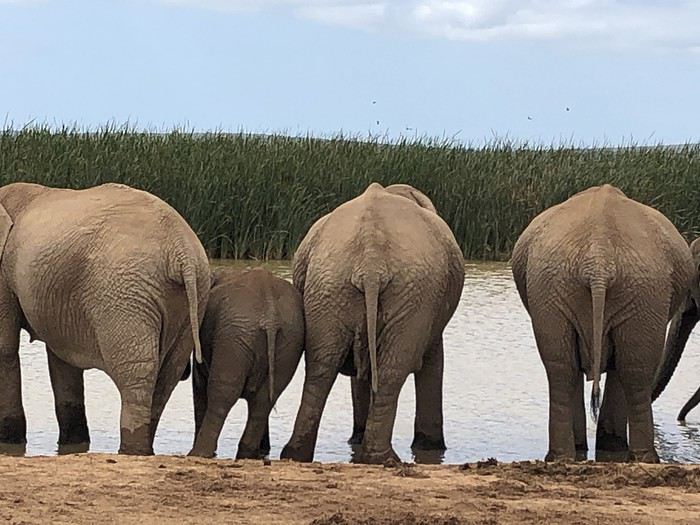
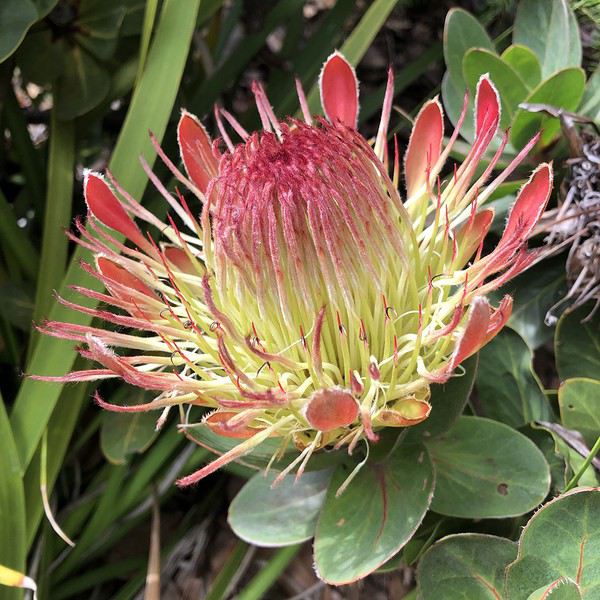
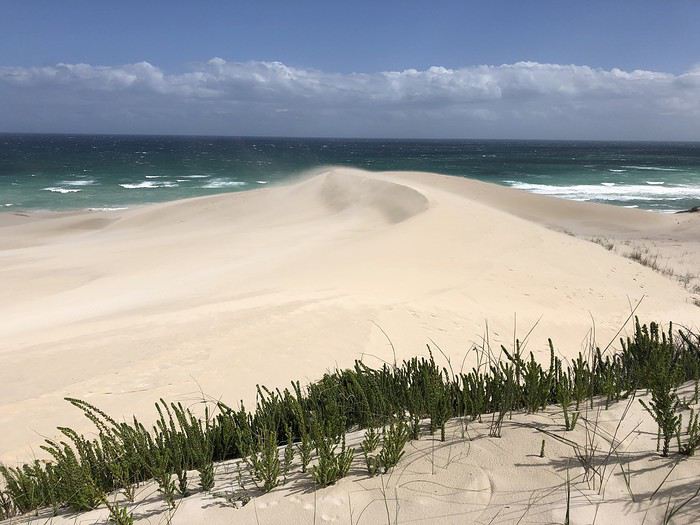
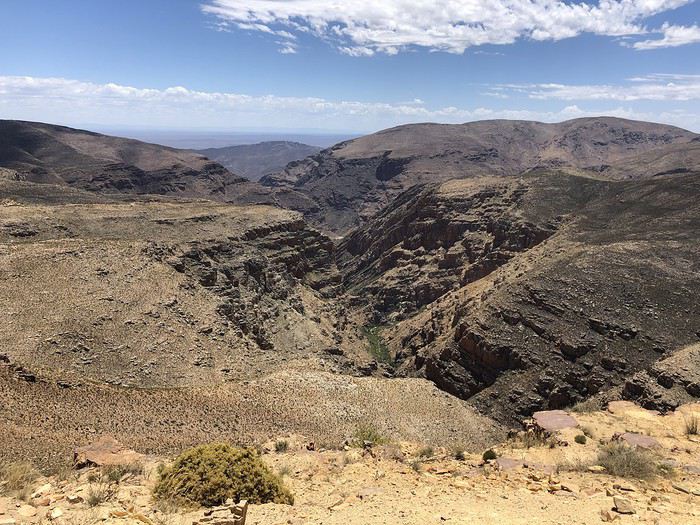
The rest here
First of all, a big thank you to all the forum members—there are so many on this VoyageForum section, some of whom are unconditional and indispensable experts on the destination—for the amazing travel journals that only make you want one thing: to go and discover these stunning lands. The first journal I read was Bruno’s (Montagnard74), and I was completely captivated by the face in the colors of the rainbow nation.
Now it’s my turn to add my small contribution by recounting our two-week trip during the Christmas period in South Africa.
Even though Attila strongly advised against visiting South Africa during the South African summer holidays, we still gave it a try since my husband doesn’t have the option to choose his vacation dates.
So we went during the peak tourist season, with all its drawbacks: difficulties finding accommodations, crowds at certain sites... But on the bright side, it’s the beautiful season in South Africa while it’s gray and cold back home.
For this trip, we wanted to explore Cape Town and its surroundings, which are already packed with things to see. As a result, we didn’t have time to head north without rushing too much. So we planned the following itinerary, staying in the south:
J1: Lyon/Dubai J2: Dubai/Cape Town J3: Table Mountain – Cape Town J4: Botanic Garden - Robben Island J5: Cape Peninsula J6: Cape Agulhas - Gansbaai J7: De Hoop - Swellendam J8: Garden Route - Knysna J9: Garden Route - Addo NP J10: Addo NP J11: Oudtshoorn J12: Little Karoo J13: Wine Route - Cape Town/Dubai J14: Dubai/Lyon
To give you a taste of what we experienced on the South African roads, here’s a little preview of the wildlife and flora we encountered, as well as the beaches and mountains we glimpsed.
The rest here
Hi everyone,
Just sharing a bit about a place we loved in Sulawesi, in an area that’s almost unknown to Western tourists.
Afni and Ilak, a lovely Indonesian couple, built two bungalows on a beach on Banggai Island (the main island of the Banggai archipelago).
The Banggai Islands are an archipelago east of Sulawesi, off the coast of Luwuk. The main island is quite large, with a small town and several villages. From there, you can head to other smaller islands. There are diving spots, snorkeling, paradise-like beaches, Bajo villages, and more. However, there’s no dive center that I know of, no restaurants for Westerners. Very few people speak English—if anyone at all on the smaller islands.
There are still some tourist facilities, though. But since no information is available in English, it remains mostly a destination for local Indonesian tourism for now. That’s what makes it so charming.
When we went there, the bungalows were already built, but the place wasn’t officially open yet because some essential amenities (kitchen, bathroom) were missing. So we’d walk 20 minutes to the nearby village to shower and eat at our hosts’ house. Now it seems all the amenities are finished, and it’s officially open.
We spent about ten days there, on Banggai Island and Mbuang Mbuang Island.
Mbuang Mbuang has stunning lagoons, diving and snorkeling spots, and a hidden jellyfish lake (don’t believe those who say there are only 5 or 6 in the world—they’re forgetting to count this one!). It’s also a bit of an adventure, since: - No one speaks English in the village - There was no phone signal (so no Google Translate to help communicate) - No restaurants (not even a warung!) - Ferries don’t run every day
But the locals are incredibly kind and ready to help, so you never feel lost.
In short, it’s a destination to visit soon—it has all the makings of a new tourist hotspot.
You’ll need plenty of time, though, as the journeys are long, especially if you want to explore islands beyond Banggai. Like anywhere off the beaten path, don’t expect all the Western-style services.
To get there, the easiest way is to fly to Luwuk (there are flights from Makassar and Manado) and take an overnight ferry.
Here’s a little YouTube link about the place: https://www.youtube.com/watch?v=e9S2CubaneE
Benjamin
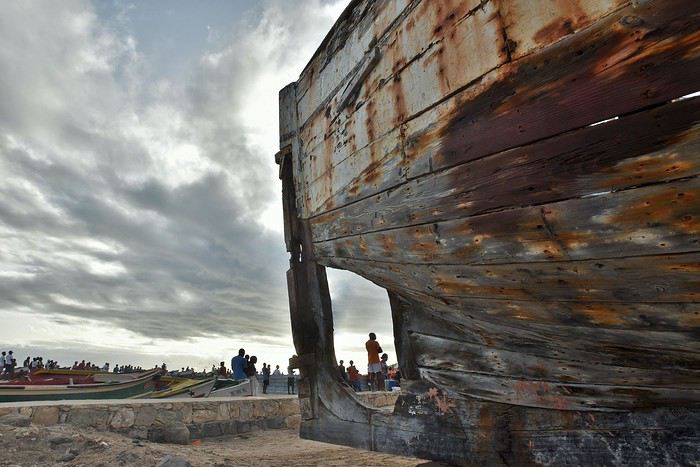
It’s been a month and a half since our family returned from Cape Verde, and I’ve finally found the time to write this travel journal about this beautiful yet little-known destination.
Cape Verde is a small volcanic archipelago made up of ten isolated islands in the middle of the Atlantic Ocean. At the crossroads of maritime routes between three continents—Africa, the Americas, and Europe—its name is tied to the history of slavery.
But today, this little piece of Africa with Creole influences has a lot to offer travelers craving a change of scenery and adventures off the beaten path.
We visited three of these ten lovely islands rising from the ocean: Maio, the wild and authentic island; Fogo, the volcanic one; and Santiago, the cosmopolitan hub.
MAIO: THE SMALL, WILD, AND AUTHENTIC ISLAND
To travel between the neighboring islands of Santiago, where we landed from France, and Maio, the first stop on our trip, there are two options: plane or boat. To avoid the risk of the boat being canceled due to rough seas—and to save time—we chose to fly. The flight takes just fifteen minutes, while the boat ride lasts three hours. Since our stay was only fifteen days, saving that half-day was a big deal.
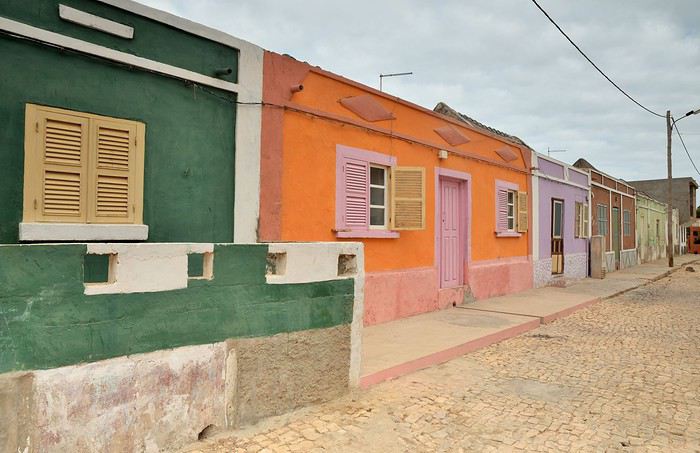 The colorful houses of Vila de Maio
Our first day on the island didn’t let us see the sun. It’s mid-August, the very start of the rainy season—which should really be called the cloudy season. This “rainy” period has nothing to do with what happens in other parts of the world, like Southeast Asia, where the monsoon can be devastating. Here, locals hadn’t seen a drop of rain in nearly a year, and for them, it’s a tragedy. That’s why the ground is so dry and the vegetation so sparse.
As a result, fruits and vegetables are scarce, and livestock are suffering so much that some farmers are forced to cull their herds. Ironically, back in France, we’d just come out of a miserable winter with nearly five months of nonstop gray skies and frequent rain, especially in some regions. Is our climate out of whack?...
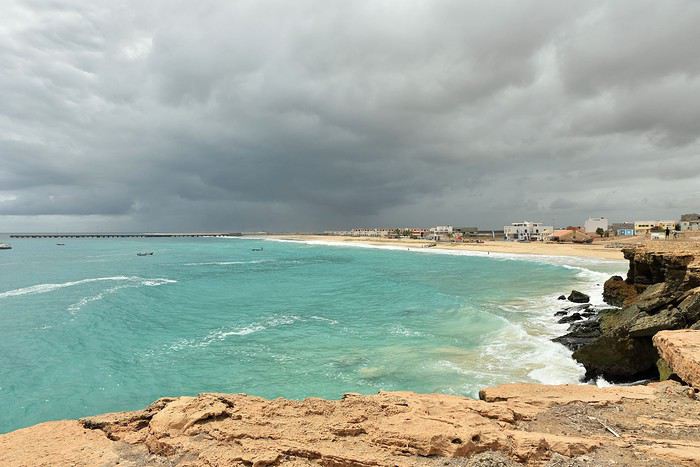 The beach bordering the village of Vila de Maio
We stayed a week on Maio. We were lodged at Stella Maris Village, a small residence at the edge of Vila. A shared pool, perched on a small cliff, overlooks the deep blue sea.
 Sunset at Stella Maris Village
The cliff isn’t very high, but it offers a nice view of the surroundings.

From the residence, it’s just a ten-minute walk through the village to reach the beach.
> The beach and the fishermen
We didn’t choose Maio just for its calm, wild, and authentic vibe. It was also so Victor and Arthur, our two sons, could earn their Level 1 scuba certification in Cape Verde’s beautiful waters, known for their abundant marine life but still relatively untouched by divers—for now...
On the first day, we met Bernard, who runs AAA Maio Plongée, to plan the five dives needed for their certification.
The dive sites are accessible by boat, but to reach it, you have to cross the surf. The waves vary in strength, and while they were gentle for our first snorkeling trip, getting past them with scuba tanks on our backs was a bit more of a workout for the later dives.
Snorkeling trip: this time, the waves were gentle...
The week of diving with Bernard went perfectly, in Cape Verde’s surprisingly fish-rich waters. On the morning of the last dive, while checking the sea to cross the surf safely, we even spotted a pod of dolphins swimming across the bay in the distance. Always a magical moment...
In a week, the beach at Vila, where the dive club is located, was the liveliest spot we saw on the whole island. All day long, fishing boats returned loaded with fish of all sizes.
 Return from fishing
Here, fishermen have a strong sense of solidarity because they can’t pull their boats out of the water alone, especially when the waves are rough.
So, all day long, whenever a boat comes in, the fishermen on the beach rush to help drag it ashore and secure it higher up on the sand, away from the sea.
The sight of these colorful fishing boats on the beach is something we saw everywhere in Cape Verde.

Sometimes, the fishermen bring back impressive catches. Instead of carrying the fish by hand to a proper spot, they clean them right on the beach.
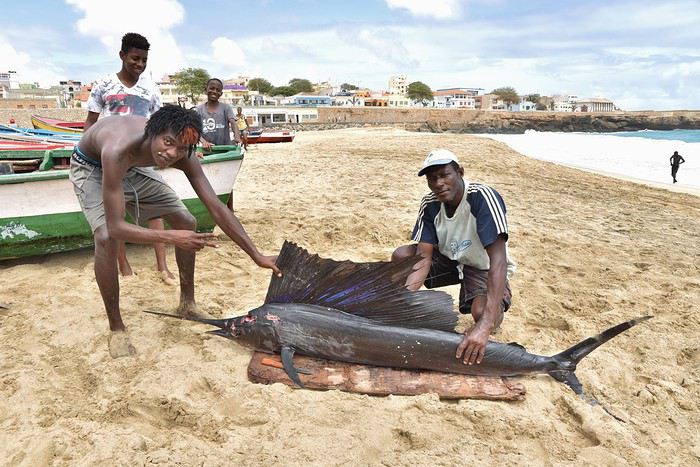
Sailfish
But every evening during our stay, this beach also hosted Maio’s annual soccer tournament. Residents from villages across the island gathered here at the end of the day to compete, including a few women’s teams.
Players were cheered on by hundreds of spectators—which is a lot for a small island with barely 8,000 inhabitants.
The beach doubled as a stadium: sand replaced grass, and the fishermen’s colorful boats served as seats and bleachers. The celebration had a laid-back vibe, with loudspeakers blasting music and the smell of grilled fish in the air.
Meanwhile, kids splashed around in the sea, which could sometimes be dangerous. The waves could be strong, but the currents were the real concern.
Hi everyone,
Here’s a recap of our self-drive trip in Tanzania.
Tanzania is a stunning country, but it’s changing fast, which means that any self-drive info you gather in advance might be outdated by the time you travel.
Still, here’s some info for future self-drivers.
The vehicle: After lots of research, thinking, and calculations, we had our 4x4 with roof tents shipped from South Africa through our rental company of two years, Safari4x4Hire. The price for 31 days came to $247.00 per day. That’s cheaper than some Tanzanian rental companies (Shawsafaris: $380.00 per day, total with 18% tax) and just a little more expensive than others (Tanzanian Pionners), but with the guarantee of having a well-maintained and reliable vehicle. You can check out the discussion I started: here
Traffic: The speed limit is 80 km/h on roads and 50 km/h in villages. Watch out—there are lots of police checks at village entrances (speed radar). In villages and towns, also be careful with minibuses, which are everywhere and stop and start without signaling. As for paved roads, most are in good condition, and many tracks are brand new or being renovated (the Chinese are in the area!).
Campsites: It’s very easy to find a spot in Tanzanian campsites (few self-drivers), so no need to book in advance (we were often alone in campsites outside the parks). Inside the parks, it’s easy to book public campsites at the gates. With roof tents, the downside is that sites are usually designed for travelers with ground tents, but we always found space for our vehicle. Another downside is making a fire—it’s nearly impossible to find wood (Tanzanians don’t usually make fires for cooking or ambiance). Campsite prices outside the parks range from $5.00 to $15.00 (price with 18% tax). I’ll list the prices for campsites inside the parks below.
Food: There are very few supermarkets in Tanzania, and prices can be steep if you’re not careful (European brands). For fruits and vegetables, you can easily find roadside vendors. For other groceries, you can shop at supermarkets (Dar es Salaam, Arusha). In Arusha, there’s a brand-new Shoppers Supermarket—clean and well-stocked—and for meat, don’t hesitate to visit the Meat King butcher. It’s also often possible to eat well at campsites with restaurants for around $10.00 (price with 18% tax).
Some other info: 1. At gas stations, you almost always pay in cash, usually in Tanzanian shillings.
2. Park entries, campsites, and Ngorongoro are paid with a card (Visa, etc.) directly at the gates. Exception: Selous, where you need a permit in advance (we didn’t have one when we arrived at the north gate, but we were still able to enter thanks to the kindness of the gate attendant).
3. Watch out—some regions outside the parks have a tax: the Wildlife Management Fee. Payment is a bit unclear: - For Lake Chala, we paid at the gate in cash. - For Lake Natron, you can’t pay at the gate—we had to arrange it with the campsite. - For the area between Tarangire Gate and Lake Burungi (to reach a campsite), you can’t pass the gate without paying in Arusha first.
4. For divers, you can do amazing dives in Pangani with Kasa Divers.
Park entry and campsite prices in July/August 2018:
Saadani National Park:
Park entry per person: $30 + 18% (for 24 hours)
Park entry for vehicle (under 2000 kg): $40 + 18% (for 24 hours)
Night at Public Campsite per person: $30 + 18%
Arusha National Park:
Park entry per person: $45 + 18% (for 24 hours)
Park entry for vehicle (under 2000 kg): $40 + 18% (for 24 hours)
We slept outside the park.
Serengeti National Park:
Park entry per person: $60 + 18% (for 24 hours)
Park entry for vehicle (under 2000 kg): $40 + 18% (for 24 hours)
Night at Public Campsite per person: $30 + 18%
We couldn’t get a night in a Special Campsite.
Ngorongoro Conservation Area:
Park entry per person: $60 + 18% (for 24 hours)
Park entry for vehicle (under 2000 kg): $40 + 18% (for 24 hours)
Night at Public Campsite per person: $30 + 18%
Night at Special Campsite per person: $60 + 18%
Descent into the crater for vehicle: $250 + 18% (you don’t need a guide to go into the crater).
Tarangire National Park:
Park entry per person: $45 + 18% (for 24 hours)
Park entry for vehicle (under 2000 kg): $40 + 18% (for 24 hours)
Night at Public Campsite per person: $30 + 18%
Ruaha National Park:
Park entry per person: $30 + 18% (for 24 hours)
Park entry for vehicle (under 2000 kg): $40 + 18% (for 24 hours)
Night at Public Campsite per person: $30 + 18%
Selous Game Reserve:
Park entry per person: $75 + 18% (for 24 hours)
Park entry for vehicle (under 2000 kg): $50 + 18% (for 24 hours)
Night at public campsite per person: $30 + 18% (You don’t need a guide to visit Selous, but a GPS with the Tracks4Africa map is essential—there are lots of tracks).
Conclusion: We loved the northern parks, but they’re really crowded, especially with safari vehicles (though that does make it easier to spot wildlife—just follow the cars). Still, we preferred the southern parks—they’re wilder, less crowded, and almost no safari vehicles. In the campsites, you can often find yourself alone (just how we like it 😏!). But both north and south have amazing wildlife and friendly people!
If you’re interested in more info about Tanzania, I’d be happy to help.
Hi there,
I’m diving into a recap of our loop—pretty classic, really—Denver-Yellowstone-Denver this past summer, from July 24 to August 17. Given the sheer number of trip reports already out there (or in the works), and since I don’t have the writing chops or the photography skills of many of you, I’ll keep it practical—well, I’ll try, at least—to share our take on some of the less-visited parks and spots.
First off, a huge thank you to everyone whose trip reports, blogs, websites, comments, and more helped us put together this itinerary. Looking back, it could’ve been even better optimized: a few disappointments when we missed out on some great discoveries, often because we were short on time. Plenty of reasons to come back to the area!
We’re traveling with our four (almost) teens—18, 16, 14, and nearly 12 years old. To keep the trip enjoyable for everyone, we had to make compromises on both sides: cutting a visit short to spend more time swimming, waking up at dawn, and so on. But logistics also played a big role—things like laundry, grocery shopping, and keeping luggage organized could’ve quickly become time-consuming without a little planning. And honestly, I think we visited every Walmart along the way! Blame it on the lack of fridges in some accommodations and, more importantly, the *very* limited space in the car, which made it impossible to bring a proper cooler. I’ll come back to the car saga later.
For accommodations, this year we alternated between basic cabins in KOA campgrounds and Yellowstone (when staying more than one night in the same place) and hotels. Always with a pool (except in Yellowstone, of course), which let the kids burn off energy—because they always have reserves, even after packed days!—and, let’s be honest, gave us a chance to relax. No Wi-Fi issues either; we all had plans with 25 GB of data (a big thanks to Gilles for the amazing deal at 0.99 €). It worked perfectly, even for texts and calls between phones—no extra charges.
Now, onto our route: as I mentioned, a classic Denver-Yellowstone-Denver loop. To avoid rushing through the parks or spending all our time on the road, we prioritized staying as close to them as possible, with at least two nights in each place. And I’ve got to say, it’s really nice to settle in, even if it’s just for two nights. It also helped us deal with the weather, which wasn’t always great during this trip. The trade-off? With vacation time being limited, some driving days ended up being long. We knew that going in, but since we kept a relaxed pace with no time constraints (don’t ask me for timings—I don’t keep track of the clock on vacation, except in the morning to get everyone up before noon!), we sometimes ended up with marathon days.
With that said, I’ll dive into the trip itself in the next post.
Hi everyone,
The idea of visiting Japan goes back a year now. I remember because I was looking for cheap flights to Europe from Paris. Surprisingly, the round-trip to Japan with Air China was just as affordable—if not cheaper—than many European destinations.
So, the tickets were booked. Three seats (including one for a 12-year-old), ten days over Easter 2018, AirBnB accommodation. Of course, in ten days, you visit without *really* visiting—you only scratch the surface. Just the classics: Kyoto, temples, moonlit rivers; the Shinkansen; and Tokyo, gardens, wandering, high-tech, and... maids.
I have to admit, we don’t know much about the country, and the thought of how we’d manage is a constant source of worry. What if this trip reveals my inability to open up to other cultures?
We board the first Air China flight with that question on our minds.
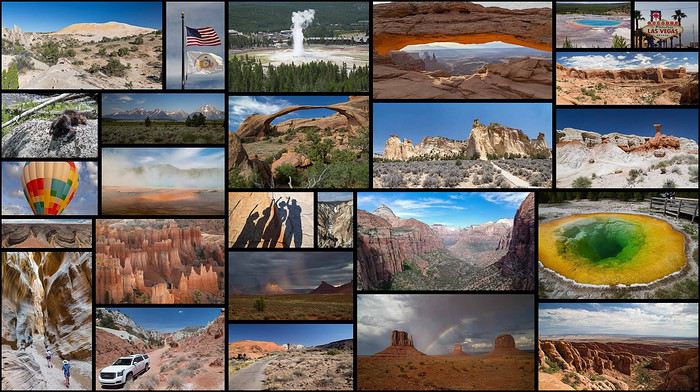
Nine Bretons in the USA from June 24 to July 20, 2018: Greenery and mosquitoes in the North, heat and storms in the South
Choosing the trip:
After returning from the USA in 2014 (travel journal here), it was clear we’d go back, this time with the firm intention of bringing our kids. 😇
2015 was the year of Scotland (travel journal here), 2016 was a work year, and 2017 was the discovery of Aragon in Spain (travel journal here)… Meanwhile, our kids’ age still seemed like a hurdle for this kind of trip. The long wait turned out to be an advantage, letting us refine the project and rally others: what started as a two-week trip for four turned into three weeks for nine!! JF’s parents (M&P, who’d already been in 2014) and JF’s brother (C&D&Y) joined our little family (C&JF&A&L)!!😎 After plenty of family discussions, route tweaks, travel journal reads, and advice from VF (plus some specialized books like Photographing the Southwest by Laurent Martrès), we made up our minds—fully aware of the constraints—and split the trip in two:
- First week, just the four of us in an SUV + hotels, looping from LV (Valley of Fire, Saint George, Bryce, Kanab), focusing on rocky, sandy, and colorful hikes:
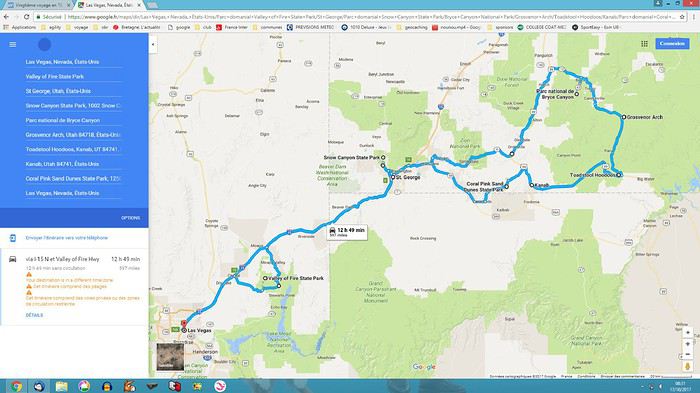 - Followed by two weeks with nine people in 2 RVs + campgrounds, as close to nature as possible in the parks (Snow Canyon, Kodachrome, Yellowstone, Arches, Canyonlands, Dead Horse, Monument Valley, Grand Canyon):
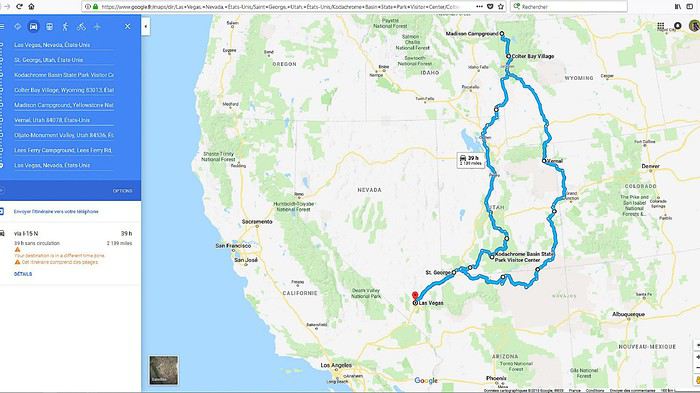 🙂Before going further, we want to thank the forum members who took the time to answer our questions. Your patience and kindness are amazing! We might forget someone, but thank you all: Jpg13, Mlefebvre, Kast13,Glll2012New, PCecile, Aquilegia, Adumas4, Ju45, Mycovtt, Natb72, Soula1, Orionide, Simonic, Hiacinthe, etc.
Traveling with nine people (ages 9 to 76, including three kids!!) requires some serious logistics and near-perfect timing to avoid wasting time. The plan went off without a hitch😎… well, almost—we’ll get into the details later…😛🏴☠️🙂 In the end, we came back enchanted and happy!! 🙂The family aspect played a big part, but we also discovered spots that were much less crowded, definitely less known to the general public and the hordes of Asian tourists… The kids returned with stars in their eyes, and the adults with just as many memories (plus around 1,200 photos and 130 GB of GoPro video to sort through)!!😎 We’re already feeling the itch to go back—a Denver loop is starting to take shape…😇
Thoughts on the Americans we met and places we visited: They haven’t changed since 2014… Still cool, optimistic, and smiling, always ready to strike up a conversation and offer help—even without the lure of our tourist dollars. (Only two cold locals at Monument Valley clearly made little effort to help us.) We noticed a few changes in the parks😕: some infrastructure was less well-maintained (wobbly wooden walkways, for example), French info pamphlets disappeared from entrance huts, and there were fewer rangers (Lee’s Ferry ranger station was closed). These changes are likely due to Trump’s restrictive policies toward national parks. On the economic side, gas prices rose by 30% since 2014, now around 0.85 € per liter, and with the current exchange rate, conditions are much less favorable for European tourists than in 2014. But this area is so beautiful—too bad Americans have such an idiot for a president!😠
The flights: Round-trip Paris CDG to Las Vegas LAS Roissy to Los Angeles with Air Tahiti Nui, then American Airlines for Los Angeles to Las Vegas. The A340s were impeccable, and service was great with Air Tahiti Nui (the tiare flower given at boarding), and no complaints about AA either.🙂
The hotels: All booked in advance, either through Hotels.com or directly on the hotel’s website (like the Planet Hollywood in Las Vegas). No surprises, everything met expectations.🙂 It’s a real plus for a family of four to have two beds in every room… Still rare in France.
The campgrounds: Except for one night at Lee’s Ferry, all were booked from France through NPS, Xanterra, and KOA sites. No surprises here either—everything met expectations and was well-organized (fire rings and tables at every site, for example).🙂
The vehicles:
First week: Four people in a GMC Yukon XL from HERTZ, at Las Vegas airport for 327 €, unlimited miles, second driver, and insurance. A typically American beast—355 hp, seven seats: it’s long, big, wide, and tall😮😎😎!! Impeccable condition, quiet, super comfortable with tons of safety features and gadgets (like weather updates tied to GPS!!), and it averaged about 12 L/100 km in 2WD (in 4WD, we nearly hit 19 L on the Stukumpah Road…). A total win thanks to the HERTZ GOLD card, following Jpg13’s advice (Jean-Pierre, you’re my idol!!😎). It let us skip the counter lines (we didn’t even stop there!), pick up the car, and leave the parking lot in under seven minutes… Even less time for the return!
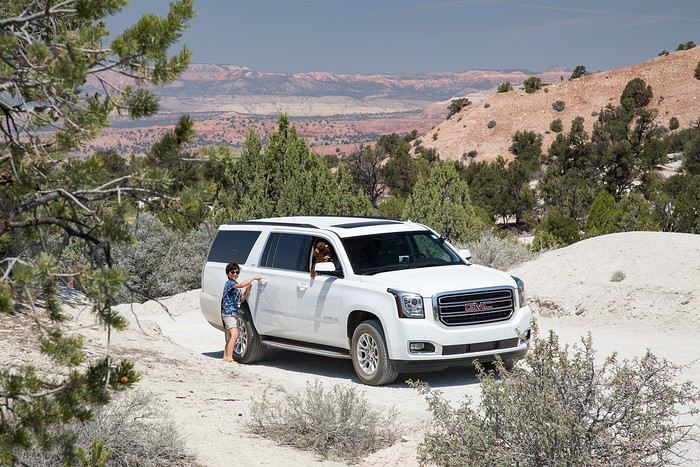 Second and third weeks: Nine people in two RVs. A 30-foot RV + a 25-foot RV from CRUISE AMERICA in Las Vegas for 5000 €, unlimited miles, kitchenware, and linens/towels/comforters.
A love story in 2014 with this same agency, but unfortunately, this year was much more mixed: aging RVs, ineffective AC in the C30, a leak in the C25’s skylight, a leak in the C25’s toilet drain valve (imagine the dump every time we opened the drain plug…😠🙁), late delivery of both RVs (after 5 PM, though the contract said 4 PM max), abnormal wear on the front tires (we’d discover that later😠), trouble closing the door, etc.In short, a disappointment.😠
Note that other rental companies (El Monte and Road Bear) are probably gaining market share—we saw a lot of their vehicles on the road, and they offer much newer models (at least on the outside) for similar prices…🙂
But setting aside those issues, the vehicles still did their job: letting us sleep as close to nature as possible in the parks and enjoy beautiful sunrises/sunsets with family campfires and marshmallows flambéed with Jack Daniel’s Tennessee Honey😇!!😎 Also worth noting: Cruise America’s solid roadside assistance (we’ll talk more about that later), and how easy it was to drive these beasts—nearly 10 meters long! (Our walkie-talkies were super handy for communication between the two RVs.)
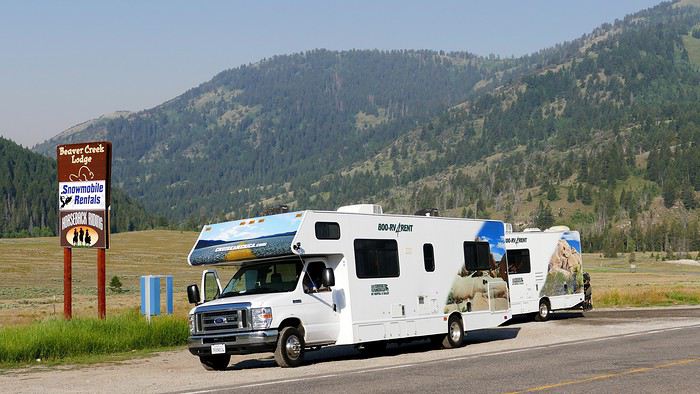 And for the last day, a Ford Transit 12-seater from Hertz, at Las Vegas airport for 145 € for 24 hours. Perfect for a day with nine people and nine suitcases + nine bags!! Everything fit in the trunk, and it let us explore LV independently (including a trip to the outlet) for less than three taxis would’ve cost…😎
There you have it—the scene is set! If you’re interested in the rest, feel free to join in. The travel journal is done on the computer, and we’re up to day 11 for photos… We should be posting daily!!🙂
See you soon. Christelle & JF
Hello forum,
Did any of you feel the same things we did in China?
We spent a good twenty days there in August. First, we traveled solo around Chengdu, then joined an organized tour for 12 days (Beijing, Pingyao, Xi'an, Guilin, Xingping, Yangshuo, Shanghai, Wuzhen) and extended our stay by 4 extra days to visit Zhangjiajie.
The landscapes were stunning, and we have unforgettable memories... but we were really disappointed by the following points:
- The food: way too spicy. Lacking in flavor, not much taste. I’m speaking "in general" because we did enjoy some good steamed dumplings, smoked pork, and other dumplings... But compared to Thailand, Cambodia, or India, Chinese cuisine didn’t impress us at all.
- The behavior of the Chinese: disrespectful, rushed, agitated. You constantly have to fight—people push, crowd, and overwhelm you... At the entrance to the Terracotta Army (and other sites), it’s a human tidal wave... and I mean that literally. We were carried by the crowd without even touching the ground. It was like a situation where you have one bowl of rice and 20,000 starving people diving for it...
You’re at a ticket counter, and they cut in front of you. You’re in line for boarding, suitcase ready to go on the conveyor belt, and someone shows up out of nowhere to put THEIR suitcase down... even though they have a flight ticket with THEIR seat number and won’t be leaving before you!!!! You’re getting on the bus, and someone shoves past you just so they don’t end up behind you.
It’s like these people only think about themselves. I didn’t see a single person let someone else go first or even ask—it’s as if politeness and respect are completely foreign to them.
It’s honestly exhausting and draining...
- Communication: In every other country we’ve visited, whether in Asia or Europe, we always manage—with English, a few words of Italian, French, or Spanish. In China, I’ll be blunt: if you don’t speak Chinese, you’re screwed. And yet, a pair of kids around ten or twelve years old asked us in English where we were from :)
- Understanding: Here’s the rule. Even if the person you’re talking to speaks a little English and says they understand you... make sure they *really* do, because 9 times out of 10, they don’t. Out of pride or just cluelessness, they’ll give you a big smile and nod, but in reality, they didn’t get what you were saying.
Several times with our group, in the evening at a restaurant, if we hadn’t been helped by someone at another table who spoke a little English, we’d still be there. The classic example: the waiter brings one menu (for 10 people at the table), and we’re all trying to explain that we need 4 or more menus. Five minutes later, he’s still staring at us with that same blank smile...
In 3* or 4* hotels, you go to the front desk for a hot water or AC issue. Three or four staff members just stand there beaming at you. You try to explain with photos or a translator, but in the end, you leave with the problem unresolved.
They don’t speak—they shout... on buses, in hotels...
We were also surprised to find that self-service laundromats were almost nonexistent. We got scammed once at a hotel with an astronomical bill!
As for flights, we flew Air China on the way there and Austrian Airlines on the way back—no comparison. Air China had zero service and food that was "baby food" quality. Austrian Airlines had multiple services, a decent meal, and smiling flight attendants.
I don’t know if any of you had the same experience in this country, but I’m definitely not eager to go back. Whereas if someone offered me India, Thailand, or Vietnam tomorrow, I’d be there in a heartbeat!!!