Hi there,
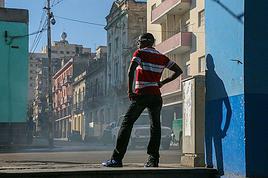
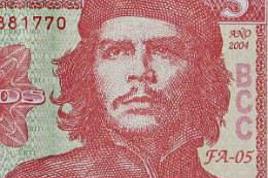
I just booked my round-trip flight ticket to visit Cuba for two months, from January to March 2025. I’ve heard about the challenges Cubans are facing and the recent changes the island has gone through—economically (like the end of the dual-currency system) and administratively (the introduction of an e-visa)...
This is my first time visiting the country, so I’m still figuring out all the administrative steps I need to take before I go.
1) Can I apply for the electronic e-visa now (still 22 €?) from home on the website evisacuba.cu?
2) I read that I need to fill out a form 48 hours before departure on the site dviajeros.mitrans.gol-.cu/inicio. Is it possible to do this now to save time?
3) I’m a bit confused about the currency. From what I understand, there’s now only the Cuban Peso. Should I exchange my euros at the airport, or wait until I arrive at the *casas particulares* in Havana that I’ve already booked and ask the owner?
Thanks in advance for your help!
This first trip of 2025 will have the taste of Asia.
More precisely, Thailand!
It’s not my first time—I’ve often traveled across Southeast Asia between 2000 and 2015. (This travel journal, for example...)
But it’ll be my partner’s first steps in this part of the world.
The itinerary we’ve chosen will alternate between familiar sights for me and new discoveries for both of us.
I’ll get to see how the country has changed in 20 years—and what’s stayed the same!
We were torn between the north and the south of the kingdom. Fears of smoke from slash-and-burn farming and a desire to relax on the sand tipped the scales toward the south...
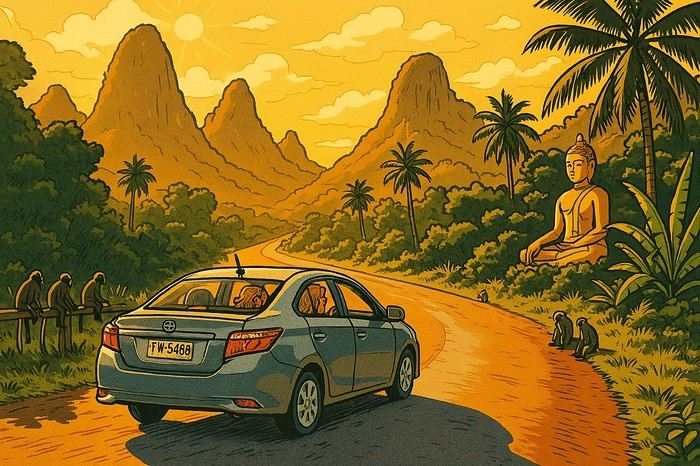
What if we rented a car?
I think driving in sprawling Bangkok would be a bit ambitious, so we’ll only book our vehicle from Hua Hin to return it in Surat Thani.
Other transportation will range from tuk-tuks to overnight trains and ride-hailing services.
And of course, the plane!
I’d love to travel from Auvergne to Bangkok by road, but 15 days wouldn’t be enough...
Plus, the current geopolitical situation isn’t exactly favorable...
So, once again, we’ll be stuck for hours in the less-than-comfortable economy class of Qatar Airways.
The arrival time was on schedule, entry formalities were quick, and all our luggage made it.
We left Lyon in wind and cold—now we’re breathing in the warm, humid air of กรุงเทพมหานคร.
To reach our hotel, we first took the metro, which dropped us off in the city center in about 30 minutes for the incredible price of 1.18 €.
A few taps on the GRAB app, and we booked a ride-hailing service for the last few kilometers.
We waited a while for our driver due to insane traffic in the area, but once in the 4x4, we were at our lodging in no time.
We chose this small hotel for its riverside location, tranquility, and price.
It’ll do the job perfectly—the only downside is the weak breakfast.
The room is inviting, and we collapse onto the bed for a well-deserved short nap.
Wake-up call in an hour for our first visits!
See you soon...
More precisely, Thailand!
It’s not my first time—I’ve often traveled across Southeast Asia between 2000 and 2015. (This travel journal, for example...)
But it’ll be my partner’s first steps in this part of the world.
The itinerary we’ve chosen will alternate between familiar sights for me and new discoveries for both of us.
I’ll get to see how the country has changed in 20 years—and what’s stayed the same!
We were torn between the north and the south of the kingdom. Fears of smoke from slash-and-burn farming and a desire to relax on the sand tipped the scales toward the south...
What if we rented a car?
I think driving in sprawling Bangkok would be a bit ambitious, so we’ll only book our vehicle from Hua Hin to return it in Surat Thani.
Other transportation will range from tuk-tuks to overnight trains and ride-hailing services.
And of course, the plane!
I’d love to travel from Auvergne to Bangkok by road, but 15 days wouldn’t be enough...
Plus, the current geopolitical situation isn’t exactly favorable...
So, once again, we’ll be stuck for hours in the less-than-comfortable economy class of Qatar Airways.
The arrival time was on schedule, entry formalities were quick, and all our luggage made it.
We left Lyon in wind and cold—now we’re breathing in the warm, humid air of กรุงเทพมหานคร.
To reach our hotel, we first took the metro, which dropped us off in the city center in about 30 minutes for the incredible price of 1.18 €.
A few taps on the GRAB app, and we booked a ride-hailing service for the last few kilometers.
We waited a while for our driver due to insane traffic in the area, but once in the 4x4, we were at our lodging in no time.
We chose this small hotel for its riverside location, tranquility, and price.
It’ll do the job perfectly—the only downside is the weak breakfast.
The room is inviting, and we collapse onto the bed for a well-deserved short nap.
Wake-up call in an hour for our first visits!
See you soon...
Hello! 🙂
January 2026 Here we go again for new adventures and the pleasure of sharing them with you here! First of all, I’d like to thank everyone who helped me with the preparations, even with some last-minute improvisations just days before departure. Thanks to Montagnard74, Jojoone1, Songsam, Attila, Dennis2, NadegerFERM, and the authors whose travel journals about Laos inspired me (Montagnard74, Muriel18, Mavietongs...).
In this story, written by Richard and illustrated by me, we’ll tell you about the journey of four friends: Catherine, Richard, Nathalie, and Bruno. A reinvented but overall successful trip, filled with discoveries and surprises, the scents of spices and frangipani flowers, (too) spicy food, sunsets, and... one big mess.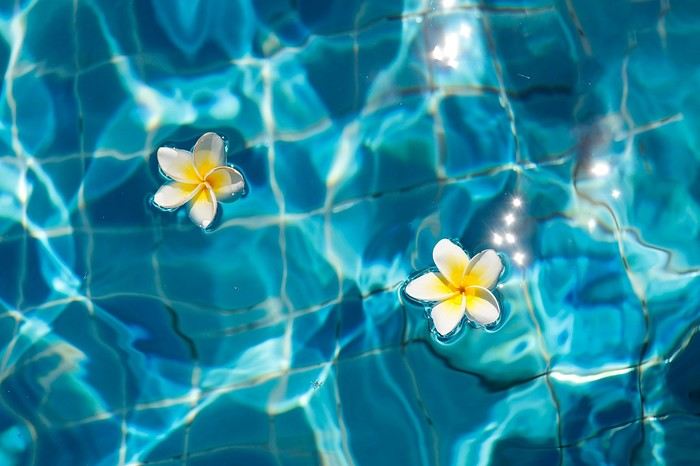
January 2026 Here we go again for new adventures and the pleasure of sharing them with you here! First of all, I’d like to thank everyone who helped me with the preparations, even with some last-minute improvisations just days before departure. Thanks to Montagnard74, Jojoone1, Songsam, Attila, Dennis2, NadegerFERM, and the authors whose travel journals about Laos inspired me (Montagnard74, Muriel18, Mavietongs...).
In this story, written by Richard and illustrated by me, we’ll tell you about the journey of four friends: Catherine, Richard, Nathalie, and Bruno. A reinvented but overall successful trip, filled with discoveries and surprises, the scents of spices and frangipani flowers, (too) spicy food, sunsets, and... one big mess.
Hi everyone,
I’m a die-hard fan of India, but it’s time I discovered Thailand too to broaden my Asian horizons.
I’m heading there on January 19, 2025, for a 46-day trip (no visa needed as I’m French). I’ve pored over a few guidebooks and travel blogs. Based on what caught my interest, I’ve put together a rough itinerary and list of sights. But since I know absolutely nothing about Thailand, I’m kind of flying blind here.
Since I’m not exactly a spring chicken anymore, I’ve opted for a few bases where I’ll stay several days in the same place. That way, I won’t have to change locations and hotels every day or so, packing and unpacking my suitcase constantly. Instead, I plan to explore the surrounding area each day, within a maximum radius of 50 to 70 km.
So, first question: Is that kind of round-trip distance manageable in a day in Thailand?
In India, renting a car for a day—with a driver—currently costs around 35 to 40 € per day. Knowing that 1,300 to 1,500 THB would be my absolute max, and even then, only if I don’t rent a car every single day.
Which brings me to my second question: Am I being unrealistic?
Otherwise—third question—once I’m settled in the city I’ve chosen as my base, can I get around within that 50–70 km radius using public transport?
I’ve already booked all my hotels—with free cancellation—on booking.com at an average price of 950/1,000 THB per night. Does that put me in a good range for value for money? Or am I dreaming?
Here’s my plan:
BANGKOK (13 days, 14 nights): 1 week for exploring Bangkok – Kanchanaburi/Erawan National Park? – Ayutthaya/Lopburi? – Muang Boran – Samut – Songkram/Amphawa
Bangkok -> Chiang Mai by overnight train in first-class sleeper
CHIANG MAI (6 days/6 nights): Mae Hong Son – Hot springs – Chiang Dao – caves – Lamphun – other places to be decided on the spot based on what’s worth seeing and transport options
Chiang Mai -> Chiang Rai
CHIANG RAI (7 days/8 nights): Fang – Tha Ton – Chiang Saen – Doi Tung – Chiang Khong – Doi Ang Khang, Phu Chi Fah, etc.
Chiang Rai -> Phrae
PHRAE (4 days/5 nights): Lampang and surrounding areas, depending on what’s interesting to see
Phrae -> Loei
LOEI (4 days/5 nights): Phu Kradung – Chiang Khan and surrounding areas, depending on what’s worth seeing
Loei -> Buriram
PHIMAI (Nakhon Ratchasima/Khorat) (5 days/6 nights): Phimai – Prasat Muang Tam – Phanom Rung – Prasat Phanom Wan
Phimai -> Khorat (airport or train station) -> Bangkok (overnight in Bangkok)
Day 46: BANGKOK -> KOCHI
Thanks in advance for your thoughts and advice!
Here’s my plan:
BANGKOK (13 days, 14 nights): 1 week for exploring Bangkok – Kanchanaburi/Erawan National Park? – Ayutthaya/Lopburi? – Muang Boran – Samut – Songkram/Amphawa
Bangkok -> Chiang Mai by overnight train in first-class sleeper
CHIANG MAI (6 days/6 nights): Mae Hong Son – Hot springs – Chiang Dao – caves – Lamphun – other places to be decided on the spot based on what’s worth seeing and transport options
Chiang Mai -> Chiang Rai
CHIANG RAI (7 days/8 nights): Fang – Tha Ton – Chiang Saen – Doi Tung – Chiang Khong – Doi Ang Khang, Phu Chi Fah, etc.
Chiang Rai -> Phrae
PHRAE (4 days/5 nights): Lampang and surrounding areas, depending on what’s interesting to see
Phrae -> Loei
LOEI (4 days/5 nights): Phu Kradung – Chiang Khan and surrounding areas, depending on what’s worth seeing
Loei -> Buriram
PHIMAI (Nakhon Ratchasima/Khorat) (5 days/6 nights): Phimai – Prasat Muang Tam – Phanom Rung – Prasat Phanom Wan
Phimai -> Khorat (airport or train station) -> Bangkok (overnight in Bangkok)
Day 46: BANGKOK -> KOCHI
Thanks in advance for your thoughts and advice!
From Southern Shikoku, between land and sea, to the blue waters of Miyakojima and finally Tokyo’s megacity
Hi everyone,
I have to admit, I really hesitated before deciding to write this travel journal... Writing one takes a lot of time and energy, and since this is my 4th trip, I wondered if it would actually interest anyone other than myself (both for the discovery and the writing). But after a few "Are you going to write a journal?" requests and especially the renewed pleasure from reading other travelers’ travel journals about Japan or elsewhere on this forum or elsewhere, I’ve decided to share this 4th installment in the Land of the Rising Sun here.
The itinerary: 27 full days, from late May to late June 2025, right in the middle of the rainy season, including:
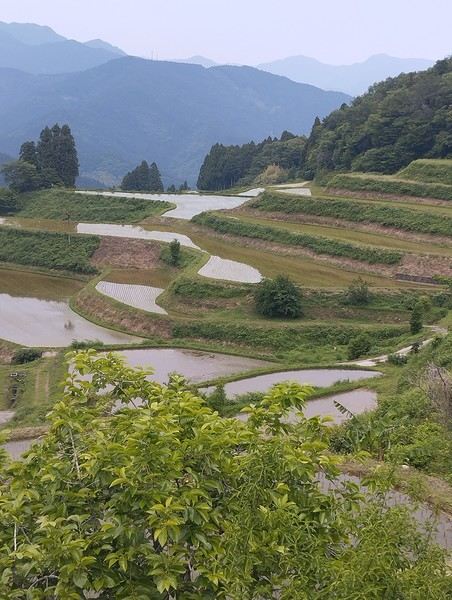
-->13 days in Shikoku, from Kochi (Kochi Prefecture) to Matsuyama (Ehime Prefecture)
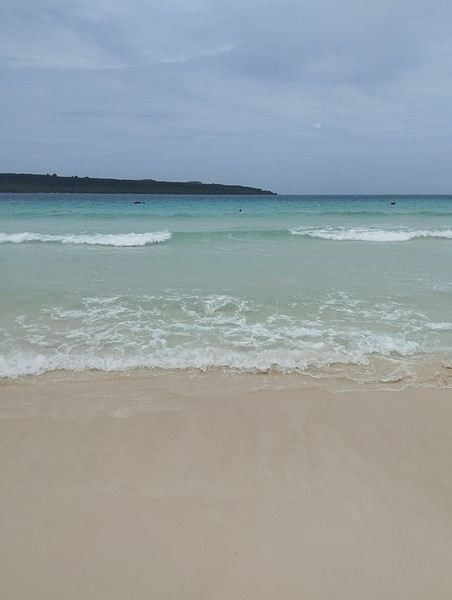
-->7 days in Miyakojima (Okinawa Prefecture)
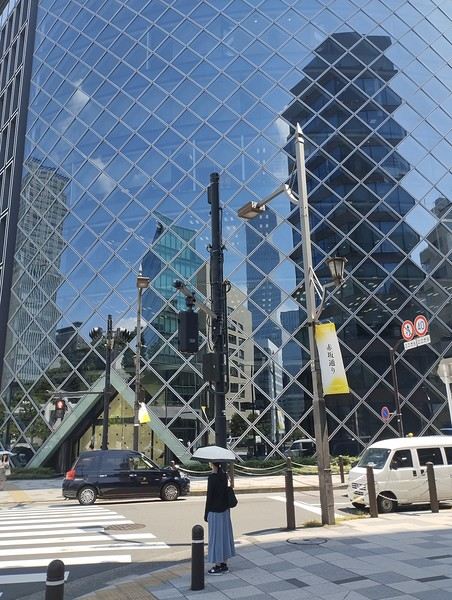
-->7 days in Tokyo
The trip was decided on fairly last-minute this year, as usual.
I regularly check flight prices to track fluctuations for this destination, even without concrete plans. Finding a slightly cheaper direct flight (900 €) than what I’d seen in previous months (around 1,200–1,400 € on average) for a Paris-Tokyo route with Japanese airline ANA was too tempting to resist the urge to return to this enchanting country. After long hesitations between exploring the San’in region (Matsue, Tottori, Yamaguchi) and southern Shikoku, the decision was made—I took the plunge! The tickets are booked: Paris to Kochi with a layover in Tokyo, all with ANA, the airline I’d been dreaming of... for 1,120 € per person. Okay, it’s not cheap, but it’s still better than in 2023.
We leave in 2 weeks!! Now it’s just a matter of getting everything ready!
Intense work ahead in these 2 weeks to:
finalize a more precise itinerary and reach an agreement—yep, because even though we both love Japan, our preferences differ slightly, and we have to choose between exploring new places or taking time to revisit beloved spots... decide how much time to spend in each selected area without rushing while still exploring research places that might interest us and watch videos about Japan book accommodations: yes, it’s possible to do this on the spot as we go, but last year, we noticed that last-minute options were pretty expensive, so we’re booking ahead—even if it means keeping a few options open while we decide or see if better deals pop up later reserve rental cars order yen check the weather regularly and wonder if choosing the *tsuyu* (rainy season) was really a good idea—and whether we’ll be stuck in non-stop rain???
What a tough job, right? Traveling to Japan for a month—such a hard life! Despite this being my 4th trip, the excitement is just as intense as the first time.
The only small downside is that when we booked the flight tickets, there were only a few seats left, so we’re only sitting together on the international return flight. Plus, on the outbound flight, we’ve got the middle seats. Another lingering question: what French-language films will be available? According to the internet, the selection seems limited. Oh well, these are just minor details—it’s almost time to fly!
PS: I’ll be posting slowly and irregularly... so for those interested, be patient or maybe set an alert...
Hi everyone,
I have to admit, I really hesitated before deciding to write this travel journal... Writing one takes a lot of time and energy, and since this is my 4th trip, I wondered if it would actually interest anyone other than myself (both for the discovery and the writing). But after a few "Are you going to write a journal?" requests and especially the renewed pleasure from reading other travelers’ travel journals about Japan or elsewhere on this forum or elsewhere, I’ve decided to share this 4th installment in the Land of the Rising Sun here.
The itinerary: 27 full days, from late May to late June 2025, right in the middle of the rainy season, including:
-->13 days in Shikoku, from Kochi (Kochi Prefecture) to Matsuyama (Ehime Prefecture)
-->7 days in Miyakojima (Okinawa Prefecture)
-->7 days in Tokyo
The trip was decided on fairly last-minute this year, as usual.
I regularly check flight prices to track fluctuations for this destination, even without concrete plans. Finding a slightly cheaper direct flight (900 €) than what I’d seen in previous months (around 1,200–1,400 € on average) for a Paris-Tokyo route with Japanese airline ANA was too tempting to resist the urge to return to this enchanting country. After long hesitations between exploring the San’in region (Matsue, Tottori, Yamaguchi) and southern Shikoku, the decision was made—I took the plunge! The tickets are booked: Paris to Kochi with a layover in Tokyo, all with ANA, the airline I’d been dreaming of... for 1,120 € per person. Okay, it’s not cheap, but it’s still better than in 2023.
We leave in 2 weeks!! Now it’s just a matter of getting everything ready!
Intense work ahead in these 2 weeks to:
finalize a more precise itinerary and reach an agreement—yep, because even though we both love Japan, our preferences differ slightly, and we have to choose between exploring new places or taking time to revisit beloved spots... decide how much time to spend in each selected area without rushing while still exploring research places that might interest us and watch videos about Japan book accommodations: yes, it’s possible to do this on the spot as we go, but last year, we noticed that last-minute options were pretty expensive, so we’re booking ahead—even if it means keeping a few options open while we decide or see if better deals pop up later reserve rental cars order yen check the weather regularly and wonder if choosing the *tsuyu* (rainy season) was really a good idea—and whether we’ll be stuck in non-stop rain???
What a tough job, right? Traveling to Japan for a month—such a hard life! Despite this being my 4th trip, the excitement is just as intense as the first time.
The only small downside is that when we booked the flight tickets, there were only a few seats left, so we’re only sitting together on the international return flight. Plus, on the outbound flight, we’ve got the middle seats. Another lingering question: what French-language films will be available? According to the internet, the selection seems limited. Oh well, these are just minor details—it’s almost time to fly!
PS: I’ll be posting slowly and irregularly... so for those interested, be patient or maybe set an alert...
Hello,
After several years, I’ve finally decided to repost a travel journal on the forum. We returned a few weeks ago from an incredible trip to Kenya, and it’s reignited my desire to share our emotions in the face of these animals.
Kenya wasn’t originally a priority for us in terms of safari—we had the impression it was too touristy. So, we started with other destinations: Namibia, Tanzania, Botswana, and South Africa. But as I did more research, especially on the forum (thanks in part to Sylvie’s many trips), I eventually convinced myself that Kenya could be magnificent, as long as we chose our itinerary carefully and avoided peak seasons.
We ended up going in January, from the 17th to the 31st. We worked with a travel agency (TP) that crafted a custom itinerary for us: Samburu-Ol Pejeta-Naivasha-Maji Moto-Maasai Mara-Diani. They partnered with a local French-speaking agency, and everything was perfectly organized. Our trip exceeded all our expectations, and none of it would’ve been as amazing without our guide, Alfred. He accompanied us for 10 days and was a fantastic travel companion—professional, respectful of the animals, and always in good spirits. We formed a great bond with him in such a short time.
- **January 17th** After meeting up with Juliette and Charlotte in Rennes the night before, we left at 4 AM for Roissy Charles de Gaulle Airport. The thick fog made the drive pretty rough, but we arrived safely around 7:45 AM. A Blue Valet driver was waiting to take our car. Check-in went smoothly, and we waited patiently for our 10:40 AM flight. Unfortunately, despite boarding on time, a passenger was missing, and we had to find a replacement last minute. Then, another passenger who had checked in and dropped off their luggage wasn’t on the plane, so they had to unload their bags. After a long period of uncertainty and spotty communication from the crew, we finally took off over an hour late.
We arrived in Nairobi in the late afternoon, 45 minutes behind schedule. The administrative formalities were endless—it took nearly 1.5 hours from landing to leaving the airport with our luggage. When we stepped out, Alfred, our guide, was waiting with a big smile and drove us to the Eka Hotel, not far from the airport. Exhausted from the long journey, we fell asleep quickly.
- **January 18th** Alfred met us at 7 AM for a long drive to Samburu Reserve. We had a peaceful night, unlike the girls, who barely slept because their neighbors were talking loudly all night. Things even escalated when Charlotte started shouting insults to get them to quiet down, but it didn’t work.
It was Sunday, so traffic around Nairobi and along the route was light. Aside from a quick "technical stop," we drove straight through and arrived in Samburu after just under 6 hours. Because of the lower altitude (around 1,000m on average), it was hot—over 30°C in mid-January.
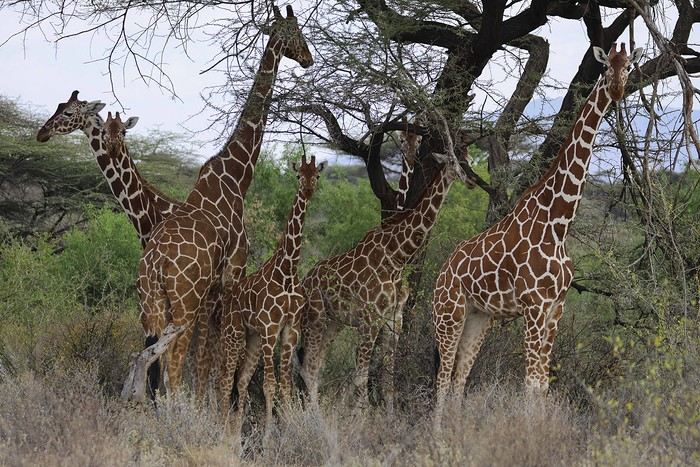
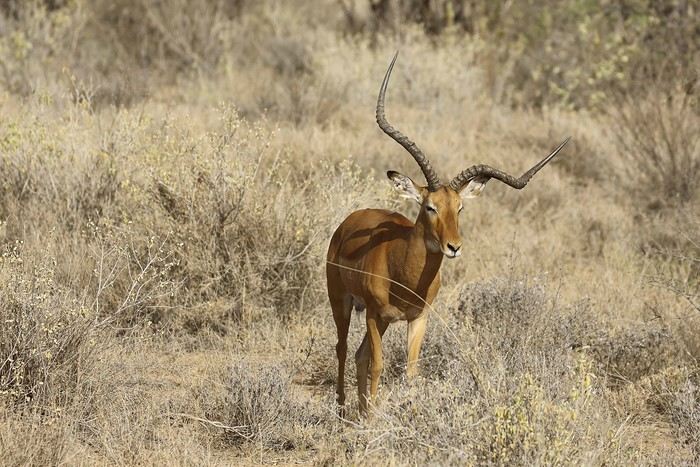
As soon as we entered the reserve, we spotted some impalas and quickly came across one of the region’s endemic species: the reticulated giraffe, which is absolutely stunning.
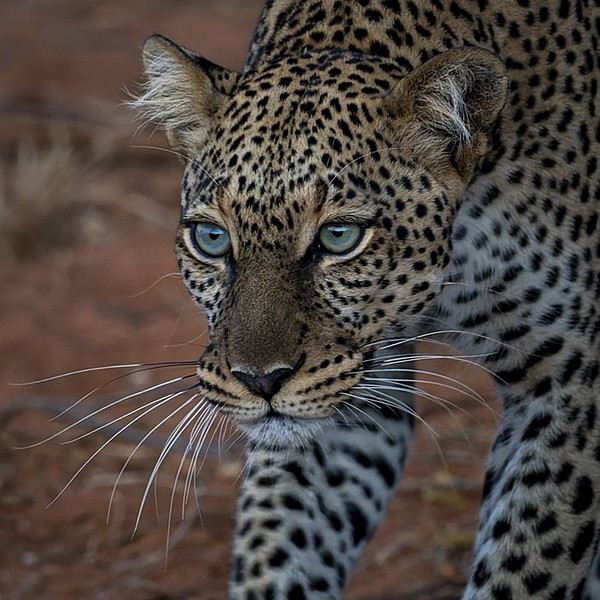
While heading to our camp for lunch, Alfred crossed paths with another vehicle and learned that a leopard was nearby. We started searching, and a few minutes later, Anny spotted a shape in a tree—it was our leopard!
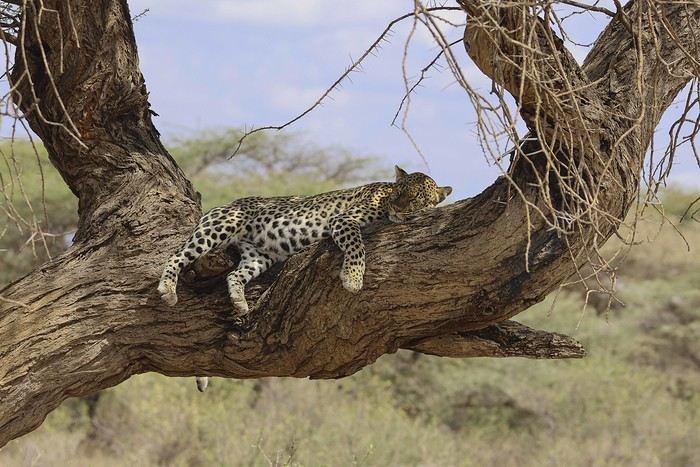
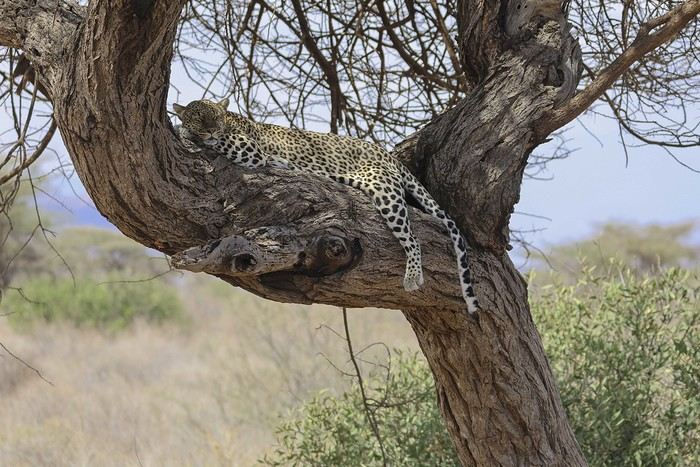
There were actually two of them—a mother and her adolescent. The young one was perched high in the tree, in the shade. We got to observe them for a good half-hour in excellent conditions, with just one other vehicle nearby.
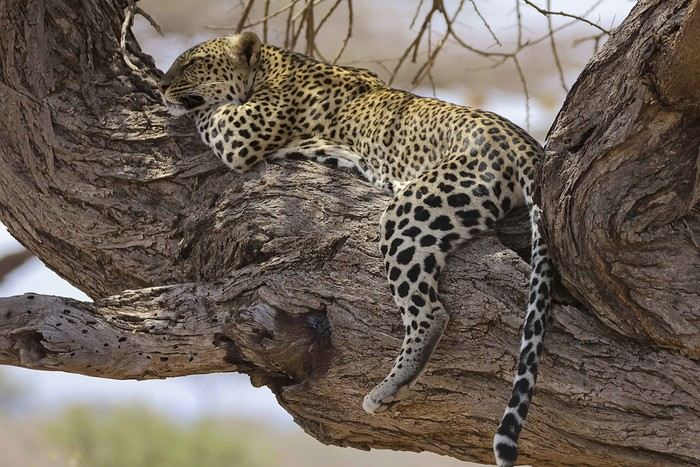
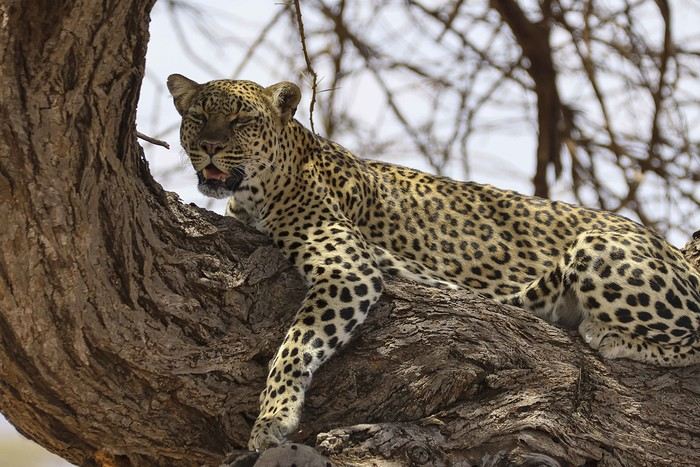
Alfred also noticed that the mother had hidden prey (a gerenuk gazelle) in the vegetation, away from prying eyes.
It was time to head to our camp, the Ashnil Samburu Camp, located in the Buffalo Springs area, by the river, in an idyllic setting surrounded by the region’s typical vegetation.
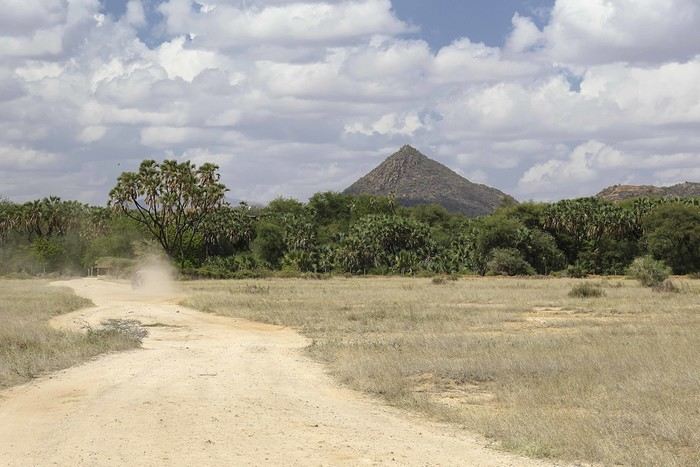
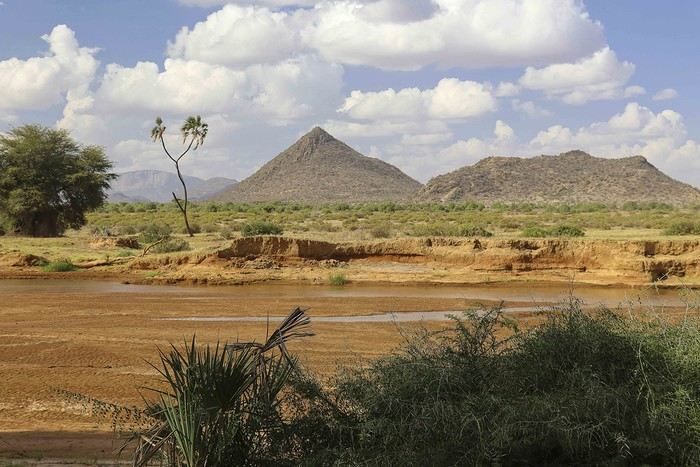
The welcome was fantastic—we immediately felt at home, and that feeling lasted throughout our 3-day stay in the reserve. It was 2 PM, but no one rushed us to the table. Our waitress, Sheila, who took care of us the whole time, was as lovely as the rest of the team. Barely seated, we were invited to watch an elephant passing right by the camp, in front of the restaurant. This trip was off to a great start!
After lunch, we relaxed by the pool. Monkeys, especially vervets, were everywhere, and a camp employee was assigned to keep an eye on them and shoo them away if needed (especially the baboons).
A little before 4 PM, we met up with Alfred for our first game drive. Just outside the camp, a few elephants were in the valley near the river.
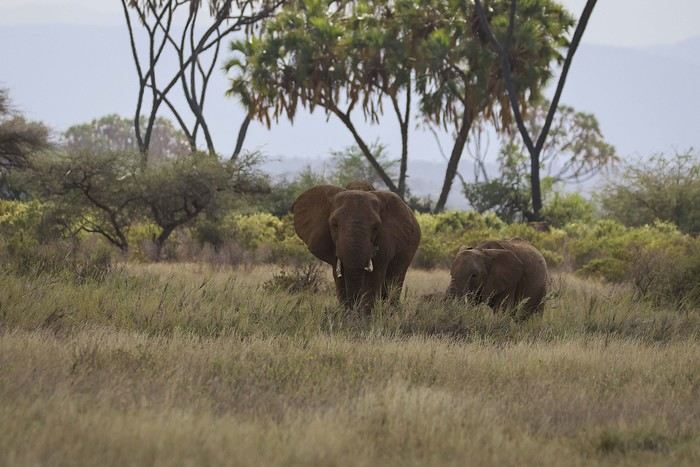
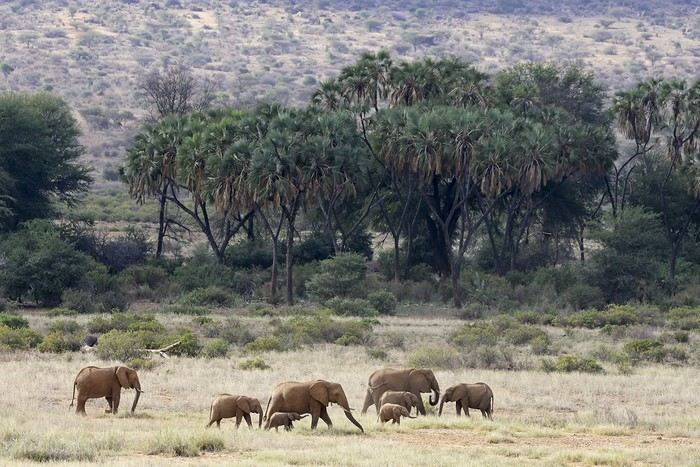
We’d see them in the same area almost every day. We also spotted some gazelles.
After several years, I’ve finally decided to repost a travel journal on the forum. We returned a few weeks ago from an incredible trip to Kenya, and it’s reignited my desire to share our emotions in the face of these animals.
Kenya wasn’t originally a priority for us in terms of safari—we had the impression it was too touristy. So, we started with other destinations: Namibia, Tanzania, Botswana, and South Africa. But as I did more research, especially on the forum (thanks in part to Sylvie’s many trips), I eventually convinced myself that Kenya could be magnificent, as long as we chose our itinerary carefully and avoided peak seasons.
We ended up going in January, from the 17th to the 31st. We worked with a travel agency (TP) that crafted a custom itinerary for us: Samburu-Ol Pejeta-Naivasha-Maji Moto-Maasai Mara-Diani. They partnered with a local French-speaking agency, and everything was perfectly organized. Our trip exceeded all our expectations, and none of it would’ve been as amazing without our guide, Alfred. He accompanied us for 10 days and was a fantastic travel companion—professional, respectful of the animals, and always in good spirits. We formed a great bond with him in such a short time.
- **January 17th** After meeting up with Juliette and Charlotte in Rennes the night before, we left at 4 AM for Roissy Charles de Gaulle Airport. The thick fog made the drive pretty rough, but we arrived safely around 7:45 AM. A Blue Valet driver was waiting to take our car. Check-in went smoothly, and we waited patiently for our 10:40 AM flight. Unfortunately, despite boarding on time, a passenger was missing, and we had to find a replacement last minute. Then, another passenger who had checked in and dropped off their luggage wasn’t on the plane, so they had to unload their bags. After a long period of uncertainty and spotty communication from the crew, we finally took off over an hour late.
We arrived in Nairobi in the late afternoon, 45 minutes behind schedule. The administrative formalities were endless—it took nearly 1.5 hours from landing to leaving the airport with our luggage. When we stepped out, Alfred, our guide, was waiting with a big smile and drove us to the Eka Hotel, not far from the airport. Exhausted from the long journey, we fell asleep quickly.
- **January 18th** Alfred met us at 7 AM for a long drive to Samburu Reserve. We had a peaceful night, unlike the girls, who barely slept because their neighbors were talking loudly all night. Things even escalated when Charlotte started shouting insults to get them to quiet down, but it didn’t work.
It was Sunday, so traffic around Nairobi and along the route was light. Aside from a quick "technical stop," we drove straight through and arrived in Samburu after just under 6 hours. Because of the lower altitude (around 1,000m on average), it was hot—over 30°C in mid-January.
As soon as we entered the reserve, we spotted some impalas and quickly came across one of the region’s endemic species: the reticulated giraffe, which is absolutely stunning.
While heading to our camp for lunch, Alfred crossed paths with another vehicle and learned that a leopard was nearby. We started searching, and a few minutes later, Anny spotted a shape in a tree—it was our leopard!
There were actually two of them—a mother and her adolescent. The young one was perched high in the tree, in the shade. We got to observe them for a good half-hour in excellent conditions, with just one other vehicle nearby.
Alfred also noticed that the mother had hidden prey (a gerenuk gazelle) in the vegetation, away from prying eyes.
It was time to head to our camp, the Ashnil Samburu Camp, located in the Buffalo Springs area, by the river, in an idyllic setting surrounded by the region’s typical vegetation.
The welcome was fantastic—we immediately felt at home, and that feeling lasted throughout our 3-day stay in the reserve. It was 2 PM, but no one rushed us to the table. Our waitress, Sheila, who took care of us the whole time, was as lovely as the rest of the team. Barely seated, we were invited to watch an elephant passing right by the camp, in front of the restaurant. This trip was off to a great start!
After lunch, we relaxed by the pool. Monkeys, especially vervets, were everywhere, and a camp employee was assigned to keep an eye on them and shoo them away if needed (especially the baboons).
A little before 4 PM, we met up with Alfred for our first game drive. Just outside the camp, a few elephants were in the valley near the river.
We’d see them in the same area almost every day. We also spotted some gazelles.
Hello everyone,
I imagine many of you have been captivated by the Masai Mara park and/or your safari experience with Tony Crocetta/Melting Pot Safari. Still, I’d like to share my perspective. First, I’m an avid traveler, especially in love with Africa, which my partner and I have explored a bit (Zambia, South Africa, Botswana, Kenya, Zimbabwe, Namibia...). That said, I want to express my deep disappointment with both the Masai Mara and Tony Crocetta’s camp, Melting Pot Safari, where we stayed last year.
First, about the park: it’s stunning, no doubt. But what a highly touristy place! I can’t find the words to describe the horror of being among 30 4x4 vehicles lined up in front of a lioness hunt, let alone encircling her right after her kill while her prey is still alive in her jaws... no respect for wildlife. The same goes for surrounding a young leopard playing with its small prey, a moment when I counted over 50 vehicles, most with their engines running... sickening. I turned away, both my gaze and my camera. What a disaster to see this natural wonder of Africa turned into a tourist hotspot.
Yes, I loved this place on Earth, but no, I won’t "promote" it anywhere or to anyone.
Next, I also wanted to share my dissatisfaction with Tony Crocetta’s famous camp, Melting Pot Safari: where to begin? We booked a private vehicle for four with two friends, and I have no complaints about the vehicle itself (though it obviously came at a cost). The windows and the vehicle weren’t very photo-friendly, but let’s move on. The trip between the sisters’ guesthouse (which was fine) and the camp went smoothly, except we arrived a bit too late. Result: "We’ll leave for the safari an hour later today because the driver has to respect his rest hours." Perfect—with park formalities, we only spent about an hour in the park that evening. The safari got off to a great start... During our 12-day stay, we saw some amazing things. Tony wasn’t at the camp—I don’t know what the atmosphere is like when he’s there, but it was rather cold during our trip. Sylvie, his wife, barely looked at us, never asking how our day, night, or game drive went (I think she spoke to us once during the stay, plus the day we arrived, of course). We felt invisible... (if I were mean, I’d say the money had already been deposited into Melting Pot’s bank account.) The evening meals, if I may say so, were a joke: not enough dessert (aside from fruit, but the few elaborate desserts—like 10 for 18 guests) for everyone, barely enough meat or sides. If you were unlucky like us and ended up with a group of 15 people who decided to skip the starter, you’d better hurry to get your main course, or there might not be any left—and no refills... We always ate our fill, but sometimes we had to serve ourselves in advance. Finally, I want to correct something about the quality of the meals: seriously, this buffet was really mediocre and far from the culinary standards I’d read about in my pre-trip research (see their Facebook page). Anyway, let’s move past the food—after all, the avocados were sublime, and we’re not there primarily to eat.
About the tent: the river views were beautiful, and the beds were very comfortable. No running water, individual showers outside the tent, and dry toilets—but it’s Africa, so we weren’t shocked. However, I’m disappointed that for this "modest" price, I wasn’t warned there’d be no soap (and no, I don’t travel with my own soap—and for the price, a little bar in the tent wouldn’t be a luxury). But let’s move on—the hippo views were fantastic. Oh, and to preserve the Masai Mara’s water (which makes sense) and for hygiene reasons, underwear isn’t washed by the camp staff—fair enough. But then what’s that little sign next to the bed? Oh right, for a hefty sum, underwear suddenly becomes "washable"...
Finally, my biggest gripe is about the essential part: the game drives. In France, they sell you a dream with a "photo safari" (what’s the difference, really? A room with a few more electrical outlets?). They promise guides especially suited for photography (not a given, sorry) and vehicles that can get close to animals and go off-road... but here’s the catch: the guides are bound by park laws and hounded by rangers looking to fine rule-breakers. Result: as soon as a white ranger vehicle is spotted, we have to abandon our spot for a wild chase through the grass. Fun once... The next day, we learned that another group’s guide got caught and had to pay $100 for breaking the rules—a sum he casually asked the travelers in his vehicle to cover... because of course, Melting Pot lures tourists with dreams, the poor rangers try to get close, all while breaking park laws... and they break those laws for Crocetta’s company, which, of course, won’t dip into its profits to pay the fines. Basically, it’s "keep the clients happy, but don’t get fined—or the fines are on you or you’ll have to ask the clients directly." Nice boss! Anyway, there were long discussions about this last year, especially among the guests in the fined vehicle. My partner and I found these practices unacceptable, and we were deeply disappointed by this attitude.
I know many people adore this park and/or this company—maybe you were luckier... or maybe you’re less demanding than we are when it comes to respecting rules, nature, and clients. But after traveling through much of southern Africa, I can tell you we personally came back frustrated from this experience and aren’t eager to return... You’ve been warned.
I imagine many of you have been captivated by the Masai Mara park and/or your safari experience with Tony Crocetta/Melting Pot Safari. Still, I’d like to share my perspective. First, I’m an avid traveler, especially in love with Africa, which my partner and I have explored a bit (Zambia, South Africa, Botswana, Kenya, Zimbabwe, Namibia...). That said, I want to express my deep disappointment with both the Masai Mara and Tony Crocetta’s camp, Melting Pot Safari, where we stayed last year.
First, about the park: it’s stunning, no doubt. But what a highly touristy place! I can’t find the words to describe the horror of being among 30 4x4 vehicles lined up in front of a lioness hunt, let alone encircling her right after her kill while her prey is still alive in her jaws... no respect for wildlife. The same goes for surrounding a young leopard playing with its small prey, a moment when I counted over 50 vehicles, most with their engines running... sickening. I turned away, both my gaze and my camera. What a disaster to see this natural wonder of Africa turned into a tourist hotspot.
Yes, I loved this place on Earth, but no, I won’t "promote" it anywhere or to anyone.
Next, I also wanted to share my dissatisfaction with Tony Crocetta’s famous camp, Melting Pot Safari: where to begin? We booked a private vehicle for four with two friends, and I have no complaints about the vehicle itself (though it obviously came at a cost). The windows and the vehicle weren’t very photo-friendly, but let’s move on. The trip between the sisters’ guesthouse (which was fine) and the camp went smoothly, except we arrived a bit too late. Result: "We’ll leave for the safari an hour later today because the driver has to respect his rest hours." Perfect—with park formalities, we only spent about an hour in the park that evening. The safari got off to a great start... During our 12-day stay, we saw some amazing things. Tony wasn’t at the camp—I don’t know what the atmosphere is like when he’s there, but it was rather cold during our trip. Sylvie, his wife, barely looked at us, never asking how our day, night, or game drive went (I think she spoke to us once during the stay, plus the day we arrived, of course). We felt invisible... (if I were mean, I’d say the money had already been deposited into Melting Pot’s bank account.) The evening meals, if I may say so, were a joke: not enough dessert (aside from fruit, but the few elaborate desserts—like 10 for 18 guests) for everyone, barely enough meat or sides. If you were unlucky like us and ended up with a group of 15 people who decided to skip the starter, you’d better hurry to get your main course, or there might not be any left—and no refills... We always ate our fill, but sometimes we had to serve ourselves in advance. Finally, I want to correct something about the quality of the meals: seriously, this buffet was really mediocre and far from the culinary standards I’d read about in my pre-trip research (see their Facebook page). Anyway, let’s move past the food—after all, the avocados were sublime, and we’re not there primarily to eat.
About the tent: the river views were beautiful, and the beds were very comfortable. No running water, individual showers outside the tent, and dry toilets—but it’s Africa, so we weren’t shocked. However, I’m disappointed that for this "modest" price, I wasn’t warned there’d be no soap (and no, I don’t travel with my own soap—and for the price, a little bar in the tent wouldn’t be a luxury). But let’s move on—the hippo views were fantastic. Oh, and to preserve the Masai Mara’s water (which makes sense) and for hygiene reasons, underwear isn’t washed by the camp staff—fair enough. But then what’s that little sign next to the bed? Oh right, for a hefty sum, underwear suddenly becomes "washable"...
Finally, my biggest gripe is about the essential part: the game drives. In France, they sell you a dream with a "photo safari" (what’s the difference, really? A room with a few more electrical outlets?). They promise guides especially suited for photography (not a given, sorry) and vehicles that can get close to animals and go off-road... but here’s the catch: the guides are bound by park laws and hounded by rangers looking to fine rule-breakers. Result: as soon as a white ranger vehicle is spotted, we have to abandon our spot for a wild chase through the grass. Fun once... The next day, we learned that another group’s guide got caught and had to pay $100 for breaking the rules—a sum he casually asked the travelers in his vehicle to cover... because of course, Melting Pot lures tourists with dreams, the poor rangers try to get close, all while breaking park laws... and they break those laws for Crocetta’s company, which, of course, won’t dip into its profits to pay the fines. Basically, it’s "keep the clients happy, but don’t get fined—or the fines are on you or you’ll have to ask the clients directly." Nice boss! Anyway, there were long discussions about this last year, especially among the guests in the fined vehicle. My partner and I found these practices unacceptable, and we were deeply disappointed by this attitude.
I know many people adore this park and/or this company—maybe you were luckier... or maybe you’re less demanding than we are when it comes to respecting rules, nature, and clients. But after traveling through much of southern Africa, I can tell you we personally came back frustrated from this experience and aren’t eager to return... You’ve been warned.
Prologue
This journal recounts a trip to Rajasthan that’s already over a year old and that I’ve only now found the chance to write about. The summer of 2024 marked my return to India—my tenth trip—after six long years away since my last solo wanderings in Tamil Nadu in 2018 (the journal of which is published on this site). That absence was partly (but not only) due to the long COVID and post-COVID period, which saw a complete halt and then a major slowdown in global tourism. To top it off, Voyage Forum announced its closure in an end-of-the-world atmosphere. A sad time for our favorite social activity…
A few weeks after returning from Rajasthan, I tried to motivate myself to start writing a journal to publish on a forum claiming to be VF’s successor, which I’d eventually signed up for out of desperation. But I kept hesitating and putting the project off because, for one, I no longer have the time I used to. For another, the vibe wasn’t really taking off on that forum—it was overrun with ads and not very active, contrary to what its host’s name suggested. Despite its good intentions and commendable role as a stopgap, it also turned out to be very impractical to use, especially when you don’t have much time like me. I’ll admit I’d occasionally check back on VF to see if anything was happening. But all the discussions remained frozen in time, stuck in that fateful year, 2020. Then, rumors swirled online about shady reasons behind its closure, leaving little room for hope.
And then, one fine morning, I got a message at work from Marien informing me that VF had reopened. What a huge surprise! Even though the forum’s “end” had played out in a somewhat apocalyptic atmosphere, the memories of passionate and heated discussions, the frank debates, and the useful exchanges that made this site a traveler’s goldmine and a unique hub of conviviality all came rushing back to me like a breath of fresh air. I finally saw a sign and tried to motivate myself to find the time to publish the journal of this tenth trip to India and fifth to Rajasthan. But in the end, I got bogged down in professional and family obligations and never managed to find the time to get started. That’s now fixed, though, because I had two reasons for wanting to do it: I find that looking back on a trip to tell others about it is a highly beneficial introspective exercise. Also, I thought this journal could be useful to other travelers on a few points.
Because, “do we really need yet another journal about Rajasthan?” you might rightly ask! Especially in a time when so many journals about the “Land of Kings” have been published since VF’s return, not to mention the countless stories you can already find online about this region, one of India’s most touristy. And I’d add, why go back to Rajasthan for a fifth time, where I’ve already dragged my feet more than enough—through its forts, deserts, temples, cities, villages, bumpy roads, train stations, tasty street food stalls, cheap guesthouses, and more? Where some might see just another overhyped tourist destination full of the same old *Arabian Nights* clichés, worn to a thread, that I mentioned earlier, when there’s so much else to see in India? Well, first because it’s a magnificent country I never tire of, where I started an academic study and made so many connections. It’s also packed with places where you won’t find a single tourist (right, Marie-Jo?), even in the heart of well-trodden paths and classic itineraries. And most importantly, as I said earlier, things have changed in recent years. First, after six years without traveling far, the urge to go back to India was getting stronger. But this time, no more solo trips (often) or duo adventures (sometimes)—now it’s a team of four that has to come along! And even if you can argue with that, what better place than Rajasthan to introduce India to people who’ve never seen it? To kids you want to amaze? Plus, traveling with your new little family to your favorite country isn’t the same as going solo in often spartan conditions that only affect you. It’s a different challenge, but ultimately probably much harder. So, is it really reasonable to take two kids to India, including a two-year-old baby? That’s one of the main goals of this journal (but not the only one)—to try to answer that question.
As you can tell, it’s not so much the destination but the slightly unusual setup of this trip that, in my opinion, will make this journal interesting. Despite my experience and expertise (yes, I dare say it) in India, there were plenty of questions before we finalized the plan and said, “Alright, let’s go!” The questions were flying for us parents. Is it wise to travel to India with a two-year-old? What would we do (it happened) if the kids got very sick? Would they be able to handle a road trip on Rajasthan’s bumpy, dusty roads using public transport? Could they handle the shock of such a different world—the dirt, poverty, pollution, noise (…and the smell, as they say), the spicy food, monkeys, mosquitoes, snakes, tigers, leopards, and so on? In short, all the clichés that I usually joke about suddenly became potential realities. Another concern: as a mixed Franco-African family (not me, but my partner and her oldest), wouldn’t we risk not always being well received, given what you sometimes hear about that in India? How would Indians react to seeing a mixed-race family, the ultimate taboo in a country of purity and social segregation, which would undoubtedly raise many questions for them? Of course, not everything went as expected… Because, as you know, with India—and what makes it charming for some—there are always complications: sometimes where you don’t expect them… and sometimes where you do. I’ll go into detail about that in the journal to come (not right away) and in the final review (even later). These experiences could be useful to travelers who find themselves in similar situations and have the same questions we did before embarking on such a journey. And maybe it’ll spark the curiosity of those who aren’t concerned and will read yet another Rajasthan journal, but with its own unique twists.
Despite my unchanged constraints, which mean I have little time to write this, I don’t want to rush the story, so I’ll take my time. There will probably be lulls. I hope that won’t stop people from coming to react, debate, share their impressions, or ask for information.
This journal recounts a trip to Rajasthan that’s already over a year old and that I’ve only now found the chance to write about. The summer of 2024 marked my return to India—my tenth trip—after six long years away since my last solo wanderings in Tamil Nadu in 2018 (the journal of which is published on this site). That absence was partly (but not only) due to the long COVID and post-COVID period, which saw a complete halt and then a major slowdown in global tourism. To top it off, Voyage Forum announced its closure in an end-of-the-world atmosphere. A sad time for our favorite social activity…
A few weeks after returning from Rajasthan, I tried to motivate myself to start writing a journal to publish on a forum claiming to be VF’s successor, which I’d eventually signed up for out of desperation. But I kept hesitating and putting the project off because, for one, I no longer have the time I used to. For another, the vibe wasn’t really taking off on that forum—it was overrun with ads and not very active, contrary to what its host’s name suggested. Despite its good intentions and commendable role as a stopgap, it also turned out to be very impractical to use, especially when you don’t have much time like me. I’ll admit I’d occasionally check back on VF to see if anything was happening. But all the discussions remained frozen in time, stuck in that fateful year, 2020. Then, rumors swirled online about shady reasons behind its closure, leaving little room for hope.
And then, one fine morning, I got a message at work from Marien informing me that VF had reopened. What a huge surprise! Even though the forum’s “end” had played out in a somewhat apocalyptic atmosphere, the memories of passionate and heated discussions, the frank debates, and the useful exchanges that made this site a traveler’s goldmine and a unique hub of conviviality all came rushing back to me like a breath of fresh air. I finally saw a sign and tried to motivate myself to find the time to publish the journal of this tenth trip to India and fifth to Rajasthan. But in the end, I got bogged down in professional and family obligations and never managed to find the time to get started. That’s now fixed, though, because I had two reasons for wanting to do it: I find that looking back on a trip to tell others about it is a highly beneficial introspective exercise. Also, I thought this journal could be useful to other travelers on a few points.
Because, “do we really need yet another journal about Rajasthan?” you might rightly ask! Especially in a time when so many journals about the “Land of Kings” have been published since VF’s return, not to mention the countless stories you can already find online about this region, one of India’s most touristy. And I’d add, why go back to Rajasthan for a fifth time, where I’ve already dragged my feet more than enough—through its forts, deserts, temples, cities, villages, bumpy roads, train stations, tasty street food stalls, cheap guesthouses, and more? Where some might see just another overhyped tourist destination full of the same old *Arabian Nights* clichés, worn to a thread, that I mentioned earlier, when there’s so much else to see in India? Well, first because it’s a magnificent country I never tire of, where I started an academic study and made so many connections. It’s also packed with places where you won’t find a single tourist (right, Marie-Jo?), even in the heart of well-trodden paths and classic itineraries. And most importantly, as I said earlier, things have changed in recent years. First, after six years without traveling far, the urge to go back to India was getting stronger. But this time, no more solo trips (often) or duo adventures (sometimes)—now it’s a team of four that has to come along! And even if you can argue with that, what better place than Rajasthan to introduce India to people who’ve never seen it? To kids you want to amaze? Plus, traveling with your new little family to your favorite country isn’t the same as going solo in often spartan conditions that only affect you. It’s a different challenge, but ultimately probably much harder. So, is it really reasonable to take two kids to India, including a two-year-old baby? That’s one of the main goals of this journal (but not the only one)—to try to answer that question.
As you can tell, it’s not so much the destination but the slightly unusual setup of this trip that, in my opinion, will make this journal interesting. Despite my experience and expertise (yes, I dare say it) in India, there were plenty of questions before we finalized the plan and said, “Alright, let’s go!” The questions were flying for us parents. Is it wise to travel to India with a two-year-old? What would we do (it happened) if the kids got very sick? Would they be able to handle a road trip on Rajasthan’s bumpy, dusty roads using public transport? Could they handle the shock of such a different world—the dirt, poverty, pollution, noise (…and the smell, as they say), the spicy food, monkeys, mosquitoes, snakes, tigers, leopards, and so on? In short, all the clichés that I usually joke about suddenly became potential realities. Another concern: as a mixed Franco-African family (not me, but my partner and her oldest), wouldn’t we risk not always being well received, given what you sometimes hear about that in India? How would Indians react to seeing a mixed-race family, the ultimate taboo in a country of purity and social segregation, which would undoubtedly raise many questions for them? Of course, not everything went as expected… Because, as you know, with India—and what makes it charming for some—there are always complications: sometimes where you don’t expect them… and sometimes where you do. I’ll go into detail about that in the journal to come (not right away) and in the final review (even later). These experiences could be useful to travelers who find themselves in similar situations and have the same questions we did before embarking on such a journey. And maybe it’ll spark the curiosity of those who aren’t concerned and will read yet another Rajasthan journal, but with its own unique twists.
Despite my unchanged constraints, which mean I have little time to write this, I don’t want to rush the story, so I’ll take my time. There will probably be lulls. I hope that won’t stop people from coming to react, debate, share their impressions, or ask for information.
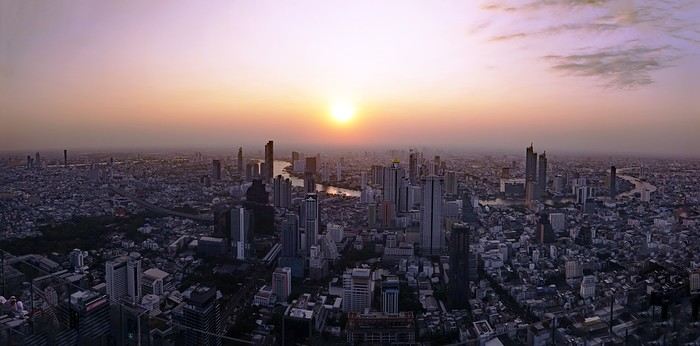
A somewhat lengthy title... I could have simply written: from Bangkok to Chiang Rai, via Chiang Mai, since that was my route. But when poets embellish our travel journals with their verbal flourishes, you’ve got to try not to be too ordinary.
Skyscrapers of excess? You’ll have gathered that from the photo illustrating this journal—though it might change as the trip goes on.
The excess of markets—not so much in their size, though... Chatuchak... But in their sheer number. Day markets, night markets, floating markets, fresh produce markets, fish markets, meat markets, spice markets, fabric markets... and even... amulet markets... For luck, good fortune, protection. Not to mention, sadly, the market for girls—and boys, incidentally. I’ve even heard they’re displayed in windows. I’ve heard about that one, like you have, but I didn’t set foot in it, so I can’t say anything about it. Some even claim there’s a black-market trade in children. Disgusting! It reminded me of the book *The Parcel* by Anosh Irani, which I recommended in another journal. The story is set in India, but I’ve been told it exists in Thailand too. So, the "famous Thai markets" we’re bombarded with in paper and online guides—sure, they amazed me in the first few days, and I don’t regret visiting them. But no matter how big they were, I quickly got my fill since you saw the same things at every stall...
I had a market overdose.
Excess of tourism? I should say *tourists*, since I saw them literally swarming in the streets and those famous markets. I’d forgotten about them. I’d lost the habit, living in an Indian city for so long...
Waterfalls are a bit like markets. At this time of year, they’re not particularly spectacular, but they’re everywhere. There are the ones everyone goes to see. For example, Erawan, which I decided to skip even though it was in my original itinerary—I guessed it’d be a nightmare with the selfie circus. On the other hand, you come across them all over the place, hidden in the mountains and forests, not listed in any guide. Not to mention the ones you can find in temples or even private homes... Yes, really! Thais love waterfalls, so they install them in their gardens—and I even saw one in the middle of the city, right on the street! Sometimes they’re tiny, but very photogenic.
But what do ice cubes have to do with this? Why the excess of ice cubes? Not only are they everywhere by the ton, but they put them in *everything* you drink. You’d think they’d even put them in soup! And it’s not just one or two ice cubes—no! They fill the container to the brim, whatever it is, then pour the liquid on top to fill the gaps. They’ll make you an excellent coffee right in front of you, piping hot, then—bam! An avalanche of ice cubes in the glass. Okay, I’m exaggerating a little. They *do* sometimes ask if you prefer your coffee—or tea—hot. Everything edible, and especially everything drinkable, is refrigerated: vegetables, fruit, hot drinks (I mean, drinks that are *usually* hot), but meat and fish are left out in the open. They just wave a little whisk to shoo away the flies when they get too eager. Mind you, I never put fruit, cheese, eggs, or water in the fridge in France, but I do in India. And I refrigerate meat and fish too... Though sometimes one of those little flies sneaks into the fridge...
You won’t find practical or technical details in this journal, like addresses or prices. Others do that better than me. You also won’t find the names of obscure or unknown places I discovered, or directions to get there.
I don’t really feel like recounting what I saw day by day, following my schedule and route. There might be flashbacks, projections into the future. It’ll depend on my memories, what I felt, what I hated, what comes back to me—and maybe your questions and our exchanges. And for those who’ve never read me before, you’ll have to get used to my parentheses and digressions, maybe on a completely different subject, as my thoughts wander. Stories within stories. There’ll also be long, endless sentences—but still punctuated, so you can follow along. Though I used to curse Proust and his sentences that started on one page and ended on the next, sometimes even further. I’d have to reread them twenty times to follow and understand what he was saying. I hated Proust. But hey, I was 20. Maybe I’d like him now?
See? The digressions are starting already. Forgive me.
You’ll find few photos here. First, the number is limited, and second, photos aren’t the main purpose of either VF or a travel journal. They’re too often used to mask the poverty of the text. And, sorry to say it, but so many of them are just plain ugly! If you really want to see photos, I’ll share some links where you can browse them at your leisure
Back on the forum, I’m starting to write up two 3-week trips to Kenya in August 2021 and 2023.
In 2021, Quynh and I traveled with Régis (Rjulie95 on VF). Our son joined us in Baringo for the second half of the trip.
In 2023, we went with two friends who’d been dreaming of seeing wild animals ever since we got back from Kenya. We didn’t need much convincing to go with them!
The two itineraries are almost identical (well, when you love something...) but we did make a few tweaks.
- The first part of the trip was with a local driver/guide, Félix, who was recommended by Sylvie56. Sylvie and her husband Ben are Kenya enthusiasts—they’ve been there countless times, always with Félix... and for good reason! He’s fantastic!
- The second part was with Melting Pot Safari, an agency that adapted to our photography needs. Tony Crocetta, the co-founder (along with his Kenyan friend Simon Chebon), is a wildlife photographer himself.
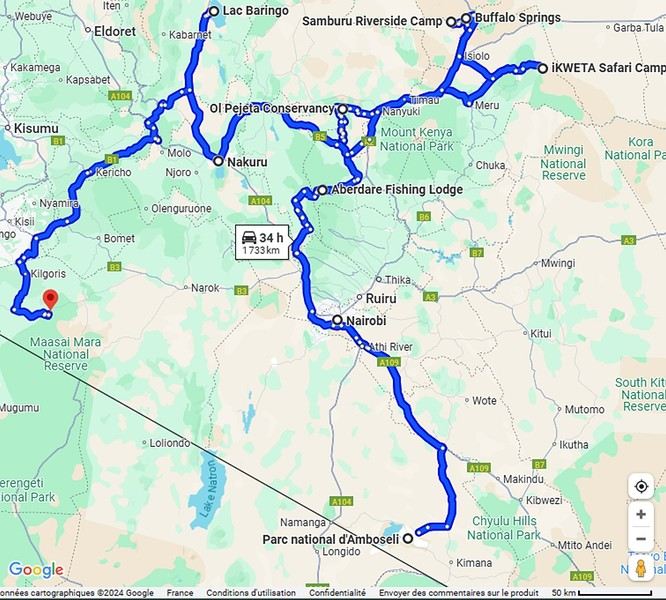
Here are the itineraries for both trips, including accommodations:
In 2021: Day 0: Paris / Nairobi - 67 Airport Hotel Day 1: Nairobi / Amboseli - Simba Cottage Day 2: Amboseli - Simba Cottage Day 3: Amboseli / Aberdares - Fishing Lodge Day 4: Aberdares - Fishing Lodge Day 5: Aberdares - Fishing Lodge Day 6: Aberdares / Samburu - Riverside Camp Day 7: Samburu - Riverside Camp Day 8: Samburu - Riverside Camp Day 9: Samburu / Nakuru - Merica Hotel Day 10: Nakuru / Baringo - Tumbili Cliff Lodge Day 11: Baringo - Tumbili Cliff Lodge Day 12: Baringo - Tumbili Cliff Lodge Day 13: Baringo / Maasai Mara – Meltingpot Bush Camp Day 14 to 18: Maasai Mara – Meltingpot Bush Camp Day 19: Maasai Mara / Nairobi – Roussel Guest House Day 20: Nairobi / Paris
In 2023: Day 0: Lyon / Paris / Nairobi - 67 Airport Hotel Day 1: Nairobi / Meru - Ikweta Camp Day 2: Meru - Ikweta Camp Day 3: Meru - Ikweta Camp Day 4: Meru / Samburu - Riverside Camp Day 5: Samburu – Riverside Camp Day 6: Samburu / Buffalo Springs – Samburu Simba Day 7: Buffalo Springs / Ol Pejeta – Sweetwater Camp Day 8: Ol Pejeta / Amboseli - Simba Cottage Day 9: Amboseli - Simba Cottage Day 10: Amboseli - Simba Cottage Day 11: Amboseli / Nakuru – Lake Nakuru Lodge Day 12: Nakuru / Baringo - Tumbili Cliff Lodge Day 13: Baringo - Tumbili Cliff Lodge Day 14: Baringo - Tumbili Cliff Lodge Day 15: Baringo / Maasai Mara – Meltingpot Bush Camp Day 16 to 20: Maasai Mara – Meltingpot Bush Camp Day 21: Maasai Mara / Nairobi / Paris
Here’s an itinerary—it’s not exactly what we did, but a combination of both.
Ready to join us on safari to see some wild animals?
The two itineraries are almost identical (well, when you love something...) but we did make a few tweaks.
- The first part of the trip was with a local driver/guide, Félix, who was recommended by Sylvie56. Sylvie and her husband Ben are Kenya enthusiasts—they’ve been there countless times, always with Félix... and for good reason! He’s fantastic!
- The second part was with Melting Pot Safari, an agency that adapted to our photography needs. Tony Crocetta, the co-founder (along with his Kenyan friend Simon Chebon), is a wildlife photographer himself.
Here are the itineraries for both trips, including accommodations:
In 2021: Day 0: Paris / Nairobi - 67 Airport Hotel Day 1: Nairobi / Amboseli - Simba Cottage Day 2: Amboseli - Simba Cottage Day 3: Amboseli / Aberdares - Fishing Lodge Day 4: Aberdares - Fishing Lodge Day 5: Aberdares - Fishing Lodge Day 6: Aberdares / Samburu - Riverside Camp Day 7: Samburu - Riverside Camp Day 8: Samburu - Riverside Camp Day 9: Samburu / Nakuru - Merica Hotel Day 10: Nakuru / Baringo - Tumbili Cliff Lodge Day 11: Baringo - Tumbili Cliff Lodge Day 12: Baringo - Tumbili Cliff Lodge Day 13: Baringo / Maasai Mara – Meltingpot Bush Camp Day 14 to 18: Maasai Mara – Meltingpot Bush Camp Day 19: Maasai Mara / Nairobi – Roussel Guest House Day 20: Nairobi / Paris
In 2023: Day 0: Lyon / Paris / Nairobi - 67 Airport Hotel Day 1: Nairobi / Meru - Ikweta Camp Day 2: Meru - Ikweta Camp Day 3: Meru - Ikweta Camp Day 4: Meru / Samburu - Riverside Camp Day 5: Samburu – Riverside Camp Day 6: Samburu / Buffalo Springs – Samburu Simba Day 7: Buffalo Springs / Ol Pejeta – Sweetwater Camp Day 8: Ol Pejeta / Amboseli - Simba Cottage Day 9: Amboseli - Simba Cottage Day 10: Amboseli - Simba Cottage Day 11: Amboseli / Nakuru – Lake Nakuru Lodge Day 12: Nakuru / Baringo - Tumbili Cliff Lodge Day 13: Baringo - Tumbili Cliff Lodge Day 14: Baringo - Tumbili Cliff Lodge Day 15: Baringo / Maasai Mara – Meltingpot Bush Camp Day 16 to 20: Maasai Mara – Meltingpot Bush Camp Day 21: Maasai Mara / Nairobi / Paris
Here’s an itinerary—it’s not exactly what we did, but a combination of both.
Ready to join us on safari to see some wild animals?
Voilà bientôt deux mois que nous sommes rentrés (voyage du 21/9 au 6/10), les impressions se sont un peu décantées, le tri des photos est en bonne voie et la rédaction du récit avance (doucement mais ça avance 😇). Il est donc grand temps que je commence ce carnet.
GENÈSE DU VOYAGE
Pourquoi le Vietnam ?
Depuis quelques années, nous avons l'habitude de partir systématiquement vers l'ouest qui nous a largement comblés. Cette fois-ci, une envie "d'autre chose" nous pousse à regarder vers l'Est. Pourquoi pas l'Asie ? Nous ne connaissons ni l'un ni l'autre. C'est une idée de mon homme, en ce qui me concerne, l'orient n'a pas encore réussi à faire naître, dans mes jambes et dans ma tête, ce fourmillement qui déclenche un voyage mais j'adopte volontiers l'idée, curieuse, comme toujours.
Je me colle au sujet, écluse la toile, les guides touristiques. D'emblée la Thaïlande et l'Inde seront écartés. J'en ai trop entendu parlé. La Chine me tente mais c'est si grand que je m'y perds avant même d'y poser un pied. J'ai envie d'authenticité, de beaux paysages, pas d'un parcours formaté. Je veux construire notre voyage.
Mon regard glisse sur la carte, cherche dans toutes les magnifiques photos postées par d'autres voyageurs, s'envole en parcourant des récits, des expériences, des impressions diverses et finit par s'arrêter sur le Vietnam. Pourquoi là ? Peut-être le vague souvenir de quelques cours d'histoire, la sensation d'un passé commun, d'un bout de chemin, prometteur et douloureux parcouru ensemble. Mettre une réalité, un présent sur le passé et faire basculer tous ces clichés un peu surannés dans le XXIème siècle.
Était-ce un bon choix pour une première découverte de l'Asie ?
Je n'ai pas de réponse juste une question qui s'impose à notre retour. Pour l'authenticité et le dépaysement, sans conteste oui. Pour la beauté des paysages, j'attendais sans doute plus que je n'ai trouvé. Un très beau pays mais pas de waouh, pas d'évidence, aucun de ces moments où l'on reste juste scotché. Mais c'est peut-être affaire de circonstances. je vous laisse juger au fil de mon récit, forcément subjectif, forcément engagé, comment pourrait-il en être autrement.
Ce sera le Nord, en automne
Très vite, la silhouette de dragon de ce pays qui s'étire du nord au sud et barbotte dans la Mer de Chine me met face à une évidence : les distances, les différences de climat, le peu de temps dont nous disposons, à peine 15 jours, ont vite fait d'opérer une saine sélection. Pas question, pour nous, de courir de train en avion. Ce sera donc le nord et juste le nord. Hanoi et Ha Long sont d'autorité sur la wish list. S'y rajouteront, au fil de mes recherches la baie d'Halong terrestre, facile à explorer en solo et le nord avec ses rizières que j'aimerais découvrir au moment des récoltes. On hésitera un peu avant d'inclure au programme, en prime, les montagnes et paysages minéraux de l'extrême nord-est.
L'automne, c'est théoriquement l'époque où la période des pluies s'achève dans le nord. J'ai la naïveté de croire ou de vouloir croire que c'est une saison propice. Mais la météo n'est pas une évidence, ni ici, ni ailleurs. Au final, nous ne nous en sommes pas trop mal sorti du moins dans la première partie de notre périple. Pour la fin, c'est une autre histoire ! Et ne croyez pas qu'une pluie de mousson dure juste 5' ou même 1h. Elle peut durer toute une journée, plusieurs journées même en reprenant à peine son souffle. Nous avons donc découvert le sens exact de l'expression "être trempé jusqu'aux os" 😏. Et en suivant les actualités climatiques après notre retour, je me suis dit que finalement, on s'en était bien tiré. Plus de détails dans le récit journalier si ça vous dit ...
Quelle formule ?
Nous avons pris l'habitude, ces dernières années de voyager en totale liberté, location de voiture, arrêts où on le souhaite, quand on le souhaite, aussi longtemps qu'on le souhaite et balades à pied sur le même mode.
Mais ici, impossible de louer et de conduire soi même une voiture. Les transports en commun me paraissent un mode de transport un peu rigide, surtout pour une durée de séjour courte. On n'est pas des adeptes de la moto. Donc il nous reste la solution de la voiture avec chauffeur et guide puisque généralement les chauffeurs ne font office ... que de chauffeur 😛
C'est une formule que nous appréhendions un peu et ce voyage confirmera nos craintes. Si cette solution comporte des avantages, elle a aussi un certain nombre d'inconvénients non négligeables. Pas l'idéal en ce qui nous concerne et je ne pense pas qu'on retentera un jour une telle expérience. Affaire à suivre ...
L'agence
Plusieurs mois avant le départ, j'ai demandé des devis à 3 agences locales parmi les mieux notées ou du moins, parmi celles le plus souvent citées, en précisant nos desideratas ainsi que l'itinéraire que nous souhaitions suivre, celui-ci ayant été affiné avec l'aide de gentils forumeurs 🙂
Les trois propositions reçues ont été sensiblement équivalentes au niveau du prix cependant, une des agences s'est montré assez peu réactive tandis que la deuxième a cherché dans un premier temps à nous "coller" un circuit tout fait puis dans un second temps à adhérer à toutes nos demandes sans le moindre conseil et enfin à nous inonder de publicités et de rappels. La troisième agence a été très pro du début à la fin, prompte dans ses réponses, à l'écoute de nos demandes, suggérant certaines modifications sans jamais de relance intempestive. C'est donc avec eux que nous avons signé pour 8 jours de circuit guidé dans le nord, la réservation d'une croisière plus quelques transferts programmés. Tout s'est parfaitement déroulé du début à la fin et nous n'avons regretté qu'une seule chose, que l'attitude de notre guide n'ait pas été à la hauteur de celle de son employeur, GP travel 😕
Remerciements
Avant de commencer le récit à proprement parlé (enfin 😊!) Je tiens à remercier tous les "piliers" du forum Vietnam (et les autres aussi) qui, au-delà des chamailleries qui émaillent parfois certaines discussions, m'ont beaucoup aidée à construire ce voyage, directement ou indirectement. Je ne citerai personne en particulier de peur d'en oublier mais je suis certaine qu'ils se reconnaîtront 😉
Merci aussi à tous ceux qui prennent la peine de faire, ici ou ailleurs des retours ou des carnets, des blogs, des sites, de partager des photos ou des impressions. Au-delà du simple plaisir de les lire, ils sont une source d'inspiration et une aide considérable.
S'il ne fallait mentionner qu'un site à consulter, je citerais celui de Hanh, une jeune vietnamienne, que j'ai trouvé particulièrement remarquable et bien construit. Merci à elle pour le partage !
GENÈSE DU VOYAGE
Pourquoi le Vietnam ?
Depuis quelques années, nous avons l'habitude de partir systématiquement vers l'ouest qui nous a largement comblés. Cette fois-ci, une envie "d'autre chose" nous pousse à regarder vers l'Est. Pourquoi pas l'Asie ? Nous ne connaissons ni l'un ni l'autre. C'est une idée de mon homme, en ce qui me concerne, l'orient n'a pas encore réussi à faire naître, dans mes jambes et dans ma tête, ce fourmillement qui déclenche un voyage mais j'adopte volontiers l'idée, curieuse, comme toujours.
Je me colle au sujet, écluse la toile, les guides touristiques. D'emblée la Thaïlande et l'Inde seront écartés. J'en ai trop entendu parlé. La Chine me tente mais c'est si grand que je m'y perds avant même d'y poser un pied. J'ai envie d'authenticité, de beaux paysages, pas d'un parcours formaté. Je veux construire notre voyage.
Mon regard glisse sur la carte, cherche dans toutes les magnifiques photos postées par d'autres voyageurs, s'envole en parcourant des récits, des expériences, des impressions diverses et finit par s'arrêter sur le Vietnam. Pourquoi là ? Peut-être le vague souvenir de quelques cours d'histoire, la sensation d'un passé commun, d'un bout de chemin, prometteur et douloureux parcouru ensemble. Mettre une réalité, un présent sur le passé et faire basculer tous ces clichés un peu surannés dans le XXIème siècle.
Était-ce un bon choix pour une première découverte de l'Asie ?
Je n'ai pas de réponse juste une question qui s'impose à notre retour. Pour l'authenticité et le dépaysement, sans conteste oui. Pour la beauté des paysages, j'attendais sans doute plus que je n'ai trouvé. Un très beau pays mais pas de waouh, pas d'évidence, aucun de ces moments où l'on reste juste scotché. Mais c'est peut-être affaire de circonstances. je vous laisse juger au fil de mon récit, forcément subjectif, forcément engagé, comment pourrait-il en être autrement.
Ce sera le Nord, en automne
Très vite, la silhouette de dragon de ce pays qui s'étire du nord au sud et barbotte dans la Mer de Chine me met face à une évidence : les distances, les différences de climat, le peu de temps dont nous disposons, à peine 15 jours, ont vite fait d'opérer une saine sélection. Pas question, pour nous, de courir de train en avion. Ce sera donc le nord et juste le nord. Hanoi et Ha Long sont d'autorité sur la wish list. S'y rajouteront, au fil de mes recherches la baie d'Halong terrestre, facile à explorer en solo et le nord avec ses rizières que j'aimerais découvrir au moment des récoltes. On hésitera un peu avant d'inclure au programme, en prime, les montagnes et paysages minéraux de l'extrême nord-est.
L'automne, c'est théoriquement l'époque où la période des pluies s'achève dans le nord. J'ai la naïveté de croire ou de vouloir croire que c'est une saison propice. Mais la météo n'est pas une évidence, ni ici, ni ailleurs. Au final, nous ne nous en sommes pas trop mal sorti du moins dans la première partie de notre périple. Pour la fin, c'est une autre histoire ! Et ne croyez pas qu'une pluie de mousson dure juste 5' ou même 1h. Elle peut durer toute une journée, plusieurs journées même en reprenant à peine son souffle. Nous avons donc découvert le sens exact de l'expression "être trempé jusqu'aux os" 😏. Et en suivant les actualités climatiques après notre retour, je me suis dit que finalement, on s'en était bien tiré. Plus de détails dans le récit journalier si ça vous dit ...
Quelle formule ?
Nous avons pris l'habitude, ces dernières années de voyager en totale liberté, location de voiture, arrêts où on le souhaite, quand on le souhaite, aussi longtemps qu'on le souhaite et balades à pied sur le même mode.
Mais ici, impossible de louer et de conduire soi même une voiture. Les transports en commun me paraissent un mode de transport un peu rigide, surtout pour une durée de séjour courte. On n'est pas des adeptes de la moto. Donc il nous reste la solution de la voiture avec chauffeur et guide puisque généralement les chauffeurs ne font office ... que de chauffeur 😛
C'est une formule que nous appréhendions un peu et ce voyage confirmera nos craintes. Si cette solution comporte des avantages, elle a aussi un certain nombre d'inconvénients non négligeables. Pas l'idéal en ce qui nous concerne et je ne pense pas qu'on retentera un jour une telle expérience. Affaire à suivre ...
L'agence
Plusieurs mois avant le départ, j'ai demandé des devis à 3 agences locales parmi les mieux notées ou du moins, parmi celles le plus souvent citées, en précisant nos desideratas ainsi que l'itinéraire que nous souhaitions suivre, celui-ci ayant été affiné avec l'aide de gentils forumeurs 🙂
Les trois propositions reçues ont été sensiblement équivalentes au niveau du prix cependant, une des agences s'est montré assez peu réactive tandis que la deuxième a cherché dans un premier temps à nous "coller" un circuit tout fait puis dans un second temps à adhérer à toutes nos demandes sans le moindre conseil et enfin à nous inonder de publicités et de rappels. La troisième agence a été très pro du début à la fin, prompte dans ses réponses, à l'écoute de nos demandes, suggérant certaines modifications sans jamais de relance intempestive. C'est donc avec eux que nous avons signé pour 8 jours de circuit guidé dans le nord, la réservation d'une croisière plus quelques transferts programmés. Tout s'est parfaitement déroulé du début à la fin et nous n'avons regretté qu'une seule chose, que l'attitude de notre guide n'ait pas été à la hauteur de celle de son employeur, GP travel 😕
Remerciements
Avant de commencer le récit à proprement parlé (enfin 😊!) Je tiens à remercier tous les "piliers" du forum Vietnam (et les autres aussi) qui, au-delà des chamailleries qui émaillent parfois certaines discussions, m'ont beaucoup aidée à construire ce voyage, directement ou indirectement. Je ne citerai personne en particulier de peur d'en oublier mais je suis certaine qu'ils se reconnaîtront 😉
Merci aussi à tous ceux qui prennent la peine de faire, ici ou ailleurs des retours ou des carnets, des blogs, des sites, de partager des photos ou des impressions. Au-delà du simple plaisir de les lire, ils sont une source d'inspiration et une aide considérable.
S'il ne fallait mentionner qu'un site à consulter, je citerais celui de Hanh, une jeune vietnamienne, que j'ai trouvé particulièrement remarquable et bien construit. Merci à elle pour le partage !
Here we go...
It’s been almost a month since we got back, and my head is still over there... Just like every time... For my own sake, I know travel journals are useful for travelers planning a trip to a country. But selfishly, they’re also helpful for me—to put the final stone on each journey and revisit it from time to time, just for the memories...
So, this trip won’t be any different, and I invite you to follow along on our Andean adventure, from Lima to the Southern Lipez, from December 16, 2016, to January 14, 2017. It’s a chronological journal because I don’t know how to approach it any other way. It doesn’t hold any absolute truths—just my experiences and feelings, which are obviously personal and not objective!
But if it inspires you to visit these magical countries (and I assume you’re already interested if you’re here) or gives you a couple of tips, then I’ll consider it a win!
So, let’s hit the road for the land of wide-open spaces!
It’s been almost a month since we got back, and my head is still over there... Just like every time... For my own sake, I know travel journals are useful for travelers planning a trip to a country. But selfishly, they’re also helpful for me—to put the final stone on each journey and revisit it from time to time, just for the memories...
So, this trip won’t be any different, and I invite you to follow along on our Andean adventure, from Lima to the Southern Lipez, from December 16, 2016, to January 14, 2017. It’s a chronological journal because I don’t know how to approach it any other way. It doesn’t hold any absolute truths—just my experiences and feelings, which are obviously personal and not objective!
But if it inspires you to visit these magical countries (and I assume you’re already interested if you’re here) or gives you a couple of tips, then I’ll consider it a win!
So, let’s hit the road for the land of wide-open spaces!
Par habitude, mes textes sur ce forum sont plutôt sur un ton léger, j'aime aborder les choses avec humour, surtout quand il s'agit de choses sérieuses. Mais pour ce post, je vais mettre mon habit sérieux. Costume ok, cravatte ok, chaussures qui brille c'est bon, on y va.
J'ai récemment eu un long débat sur les langues avec les amis Australiens avec qui je passe le plus clair de mon temps ces jours-ci. Après y avoir beaucoup réfléchi et fait des recherches, je pense que nous devrions tous parler anglais? Pourquoi? Permettez moi de partager cette reflexion.
Entre 6,000 et 7,000 langages différents existent, suivant quelle définition de "langage" vous utilisez et comment vous présentez la distinction entre langage et dialecte.
Suivant les données que vous choisissez, (prenons les estimatons de Kryss Talaat, comme le fait wikipedia), les 30 premiers couvrent 6.2 milliards d'entre nous. Le top 3 est bien connu: Mandarin, Englais et Espagnol. Il couvre 2.6 miliards.
Si nous regardons les chiffres, la conclusion facile pourrait être: nous devrions tous parler Mandarin, vu que c'est le plus parlé.
Oui, mais nous pourrions aussi affirmer que l'Anglais est la langue internationale des affaires, donc ce devrait être la langue que chacun doit connaitre.
Attendez, pourquoi argumenter? Nous pouvons simplement admettre que tous les langages sont voués à être remplacé tôt ou tard, donc ceci est une discussion inutile.
Regardons ça de plus près.
Histoire
L'humanité a connu des langages significatif dans le passé. Phoenicien, Sanskrit classic, Grec Ancien, Hebreux ou Latin: ils ont tous été des langages majeurs à un moment donné. Pas parlé par tous, mais ils étaient des signes fort de la globalisation dans ces temps anciens. Que c'est il passé? Guerres, évolutions linguistiques, divisions de pays: tôt ou tard, chacun d'entre eux a été ajouté à la longue liste des langues morte. Dans l'état d'esprit d'aujourd'hui des anglophones, le futur de l'Anglais n'a jamais été aussi brillant. Mais dans l'état d'esprit du 2ième siècle en Europe, le futur du Latin n'avait jamais été aussi brillant également. Alors pourquoi l'anglais serait il différent?
Nous pouvons raisonnablement considérer qu'il va suivre son chemin à travers les siècles pour finalement mourrir, remplacé par le Mandarin ou une autre langue. Mais c'est un fait, le monde a beaucoup changé depuis le 2ième siècle. Malheureusement, les guerres sont toujours présentent. Les divisions de pays et les évolutions linguistiques aussi. Au 2ième siècle, des langues continuent de mourrir, comme l'Eyak (en Alaska, éteind en 2008) ou le Cromarty (Langue Germanique du nord de l'Ecosse éteinte l'an dernier).
Alors qu'est ce qui a changé?
Les communications mondiales. En l'an 200, l'Empire Romain n'avait pas la moindre idée de ce qui se passait en Asie ou en Amérique. Mais nous aujourd'hui si. Nous sommes au courant de ce qui se passe à peu près partout en ce moment. Alors peut-être parce que nos moyens de communication sont si différents, l'histore n'est plus vraiment un guide.
Technologie et communauté.
C'est peut être la première fois où nous possèdons un langage parlé dans tous les pays du monde, d'une manière ou d'une autre. La globalisation des marchés, l'économie, les technologies, les communications donnent à l'Anglais le pouvoir de dominer le monde comme aucun langage avant lui.
J'ai lu quelque part que des chercheurs avaient dit qu'un quart de la population mondiale pouvait communiquer en anglais. Impossible à vérifier une pareille statistique. J'ai essayé, mais chaque pays possède ses propres chiffres. Ce que nous pouvons affirmer c'est que l'Anglais est la langue commune dans presque tous les domaines, de la programmation au traffic aérien en passant par le vocabulaire des marchés financiers. Si vous avez une licence de pilote, vous savez commment échanger avec une tour de contrôle en utilisant les termes techniques anglais. La domination en temps que langage d'Internet est évidente: 56% du contenu d'Internet est en Anglais quand seulement 27% des utilisateurs actifs sont anglophones. Quand vous voyagez, dans chaque aéroport international, vous trouverez de pictogrammes et leur traductioin en Anglais. Etre éduquer signifie connaitre l'anglais dans beaucoup de pays. C'est assez courant de tranvailler dans une entreprise pas anglaise qui possède l'anglais comme langue officielle.Pourquoi? Parceque leurs affaires sont faites avec le monde extérieur, via Internet, ou toute autre forme de communication, en Anglais.
Donc même s'il y a plus de gens qui parlent le Chinois comme première langue, c'est bien l'anglais qu'ils doivent utiliser s'ils veulent devenir pilote, programmeur ou échanger avec d'autres cultures. Et c'est pareil pour les Espagnols, les Indiens les Russes, les Français ou tout autre non-natif anglophone.
Apprentissage
Oui, ok, nous avons tout ça. Mais admettons que nous ne l'avons pas. Disons que nous devons prendre une langue pour tout le monde, pour le contrôle aérien, les marchés financiers, la programmation et tout le reste. Dans ce cas ourquoi ne pas choisir le Chinois vu que c'est la première langue la plus parlée?
En utilisant les mêmes données que précédemment, l'estimation de Kryss Talaat, nous pouvons confirmer qu'en effet, le Chinois est le langage numéro 1. Nous pouvons aussi voir que l'alphabet le plus utilisé est l'alphabet Latin, avec près de deux fois plus d'utilisateurs que les pictogrammes chinois (2.4 vs 1.3 milliards). Nous pouvons aussi vérifier que la racine Indo-Européenne est 2,5 fois plus commune que la racine Sino-Tibetaine (3.4 vs 1.4 milliard).
Donc, si 5 à 7 milliards de personnes doivent apprendre un langage, ces deux statistiques indiquent que le langage le plus simple avec lequel débuter serait basé sur l'alphabet Latin et les origines Indo-Européennes. origins. Pourquoi? Parce que cela voudrait dire que la plupart des gens n'auaient pas à apprendre un alphabet, et trouveraient de (très) nombreux mot communs ou avec des orgigines communes. Cela ramène la liste à 7 langages: Anglais, Espagnol, Portuguais, Français, Allemand, Italien et Polonais.
Lequel choisir? Bien, soyons pragmatique. Quelles sont les difficultés pour apprendre un nouveau langage? Grammaire, genres, arguments, conjuguaisons, longs mots. Le genre (masculin/féminin) c'est un des plus compliqués. Comment est construite la logique? Y en a t il une? Non. Aucune. Un mot masculin en Allemand, comme table (der Tisch) peut être féminin en Français (la table), et neutre en Norvégien (Bord). C'est juste quelque chose que vous devez apprendre. Cela rend une telle langue plus difficile à apprendre. Encore plus si ce genre entraine des règles d'accords compliquées.
L'Anglais est le meilleur candidat. Il n'y a ni arguments (le, la...), ni genres, pas d'accords, et une grammaire relativement simple. Ce langage est partout est peut être écouté, lu, intégré et utilisé partout. Il a des mots courts, et les accords des verbes ne changent qu'à la troisième personne. Les anglophones sont très tolérents avec les erreurs car l'Anglais est pour beaucoup une seconde langue.
Un argument des détracteurs est de dire que l'Anglais est le langage qui contient le plus de mots, et complique le problème. Ce qui est très probablement vrai. Combien y a t il de mots dans la langue Anglaise? C'est presque impossible de répondre, parce que cela dépend de ce que vous entendez par langue Anglaise et par mots. Mais c'est un faux problème. Je vais aller directement à la conclusion (Vous pouvez creuser ce sujet si vous voulez en allant ici). Dans plus d'un million de mots, un ado de 16 ans en utilise autour de 10 000 - 12 000, et 20 000 à 60 000 pour un étudiant diplômé. Une étude de l'OED (Oxford English Dictionary) montre que 90% de l'OEC (Oxford English Corpus, une collection de textes écris ou parlés en Anglais sélectionnés pour être représentatifs de la langage) représente pas plus de 7 000 mots, 50 000 mots pour 95%.
Tous ensembles
Si nous mettons ensembles l'apprentissage, les technologies et les communications, il apparait alors assez facilement que l'anglais est le meilleur candidat finalement.
Vous pouvez demandez: "Mais pourquoi devrions nous tous parler un même langage?", "La différence c'est bien, pourquoi veux-tu la changer?" ou ce genre de question. Oui, mais non. La différence peut être une bonne chose, bien sur, mais si nous voulons communiquer plus vite, plus facilement et plus efficacement, nous devrions converger vers une langue commune. Ce n'est pas parcequ'un langage s'éteind, comme ceux mentionnés plus haut, qu'il meurt. Nous avons toujours des livres en Latin, Grec Ancien ou Sanskrit. Et nous utilisons encore ces écrits pour étudier notre passé. Mais si un jour nous voulons que tous soient unis, nous devons être capable de tous nous comprendre.
Je pense sincèrement que nous nous dirigeons doucement vers ce point, vers le point où tout le monde sera à même de communiquer sans la barrière de la langue. Et pour moi, en tant que non-natif anglophone cette future langue s'appelle l'Anglais.
N'hésitez pas à commenter et donner votre avis, si vous êtes d'accord, ou pas. Surtout si vous ne l'etes pas en réalité ... 😉 Et en tant que voyageur que vous êtes surement (ou alors si vous êtes sur ce forum, vous êtes curieux, ou perdu remarque...) je suis sur que vous avez un avis sur la question!
Version original de cet article sur mon site perso ici.
J'ai récemment eu un long débat sur les langues avec les amis Australiens avec qui je passe le plus clair de mon temps ces jours-ci. Après y avoir beaucoup réfléchi et fait des recherches, je pense que nous devrions tous parler anglais? Pourquoi? Permettez moi de partager cette reflexion.
Entre 6,000 et 7,000 langages différents existent, suivant quelle définition de "langage" vous utilisez et comment vous présentez la distinction entre langage et dialecte.
Suivant les données que vous choisissez, (prenons les estimatons de Kryss Talaat, comme le fait wikipedia), les 30 premiers couvrent 6.2 milliards d'entre nous. Le top 3 est bien connu: Mandarin, Englais et Espagnol. Il couvre 2.6 miliards.
Si nous regardons les chiffres, la conclusion facile pourrait être: nous devrions tous parler Mandarin, vu que c'est le plus parlé.
Oui, mais nous pourrions aussi affirmer que l'Anglais est la langue internationale des affaires, donc ce devrait être la langue que chacun doit connaitre.
Attendez, pourquoi argumenter? Nous pouvons simplement admettre que tous les langages sont voués à être remplacé tôt ou tard, donc ceci est une discussion inutile.
Regardons ça de plus près.
Histoire
L'humanité a connu des langages significatif dans le passé. Phoenicien, Sanskrit classic, Grec Ancien, Hebreux ou Latin: ils ont tous été des langages majeurs à un moment donné. Pas parlé par tous, mais ils étaient des signes fort de la globalisation dans ces temps anciens. Que c'est il passé? Guerres, évolutions linguistiques, divisions de pays: tôt ou tard, chacun d'entre eux a été ajouté à la longue liste des langues morte. Dans l'état d'esprit d'aujourd'hui des anglophones, le futur de l'Anglais n'a jamais été aussi brillant. Mais dans l'état d'esprit du 2ième siècle en Europe, le futur du Latin n'avait jamais été aussi brillant également. Alors pourquoi l'anglais serait il différent?
Nous pouvons raisonnablement considérer qu'il va suivre son chemin à travers les siècles pour finalement mourrir, remplacé par le Mandarin ou une autre langue. Mais c'est un fait, le monde a beaucoup changé depuis le 2ième siècle. Malheureusement, les guerres sont toujours présentent. Les divisions de pays et les évolutions linguistiques aussi. Au 2ième siècle, des langues continuent de mourrir, comme l'Eyak (en Alaska, éteind en 2008) ou le Cromarty (Langue Germanique du nord de l'Ecosse éteinte l'an dernier).
Alors qu'est ce qui a changé?
Les communications mondiales. En l'an 200, l'Empire Romain n'avait pas la moindre idée de ce qui se passait en Asie ou en Amérique. Mais nous aujourd'hui si. Nous sommes au courant de ce qui se passe à peu près partout en ce moment. Alors peut-être parce que nos moyens de communication sont si différents, l'histore n'est plus vraiment un guide.
Technologie et communauté.
C'est peut être la première fois où nous possèdons un langage parlé dans tous les pays du monde, d'une manière ou d'une autre. La globalisation des marchés, l'économie, les technologies, les communications donnent à l'Anglais le pouvoir de dominer le monde comme aucun langage avant lui.
J'ai lu quelque part que des chercheurs avaient dit qu'un quart de la population mondiale pouvait communiquer en anglais. Impossible à vérifier une pareille statistique. J'ai essayé, mais chaque pays possède ses propres chiffres. Ce que nous pouvons affirmer c'est que l'Anglais est la langue commune dans presque tous les domaines, de la programmation au traffic aérien en passant par le vocabulaire des marchés financiers. Si vous avez une licence de pilote, vous savez commment échanger avec une tour de contrôle en utilisant les termes techniques anglais. La domination en temps que langage d'Internet est évidente: 56% du contenu d'Internet est en Anglais quand seulement 27% des utilisateurs actifs sont anglophones. Quand vous voyagez, dans chaque aéroport international, vous trouverez de pictogrammes et leur traductioin en Anglais. Etre éduquer signifie connaitre l'anglais dans beaucoup de pays. C'est assez courant de tranvailler dans une entreprise pas anglaise qui possède l'anglais comme langue officielle.Pourquoi? Parceque leurs affaires sont faites avec le monde extérieur, via Internet, ou toute autre forme de communication, en Anglais.
Donc même s'il y a plus de gens qui parlent le Chinois comme première langue, c'est bien l'anglais qu'ils doivent utiliser s'ils veulent devenir pilote, programmeur ou échanger avec d'autres cultures. Et c'est pareil pour les Espagnols, les Indiens les Russes, les Français ou tout autre non-natif anglophone.
Apprentissage
Oui, ok, nous avons tout ça. Mais admettons que nous ne l'avons pas. Disons que nous devons prendre une langue pour tout le monde, pour le contrôle aérien, les marchés financiers, la programmation et tout le reste. Dans ce cas ourquoi ne pas choisir le Chinois vu que c'est la première langue la plus parlée?
En utilisant les mêmes données que précédemment, l'estimation de Kryss Talaat, nous pouvons confirmer qu'en effet, le Chinois est le langage numéro 1. Nous pouvons aussi voir que l'alphabet le plus utilisé est l'alphabet Latin, avec près de deux fois plus d'utilisateurs que les pictogrammes chinois (2.4 vs 1.3 milliards). Nous pouvons aussi vérifier que la racine Indo-Européenne est 2,5 fois plus commune que la racine Sino-Tibetaine (3.4 vs 1.4 milliard).
Donc, si 5 à 7 milliards de personnes doivent apprendre un langage, ces deux statistiques indiquent que le langage le plus simple avec lequel débuter serait basé sur l'alphabet Latin et les origines Indo-Européennes. origins. Pourquoi? Parce que cela voudrait dire que la plupart des gens n'auaient pas à apprendre un alphabet, et trouveraient de (très) nombreux mot communs ou avec des orgigines communes. Cela ramène la liste à 7 langages: Anglais, Espagnol, Portuguais, Français, Allemand, Italien et Polonais.
Lequel choisir? Bien, soyons pragmatique. Quelles sont les difficultés pour apprendre un nouveau langage? Grammaire, genres, arguments, conjuguaisons, longs mots. Le genre (masculin/féminin) c'est un des plus compliqués. Comment est construite la logique? Y en a t il une? Non. Aucune. Un mot masculin en Allemand, comme table (der Tisch) peut être féminin en Français (la table), et neutre en Norvégien (Bord). C'est juste quelque chose que vous devez apprendre. Cela rend une telle langue plus difficile à apprendre. Encore plus si ce genre entraine des règles d'accords compliquées.
L'Anglais est le meilleur candidat. Il n'y a ni arguments (le, la...), ni genres, pas d'accords, et une grammaire relativement simple. Ce langage est partout est peut être écouté, lu, intégré et utilisé partout. Il a des mots courts, et les accords des verbes ne changent qu'à la troisième personne. Les anglophones sont très tolérents avec les erreurs car l'Anglais est pour beaucoup une seconde langue.
Un argument des détracteurs est de dire que l'Anglais est le langage qui contient le plus de mots, et complique le problème. Ce qui est très probablement vrai. Combien y a t il de mots dans la langue Anglaise? C'est presque impossible de répondre, parce que cela dépend de ce que vous entendez par langue Anglaise et par mots. Mais c'est un faux problème. Je vais aller directement à la conclusion (Vous pouvez creuser ce sujet si vous voulez en allant ici). Dans plus d'un million de mots, un ado de 16 ans en utilise autour de 10 000 - 12 000, et 20 000 à 60 000 pour un étudiant diplômé. Une étude de l'OED (Oxford English Dictionary) montre que 90% de l'OEC (Oxford English Corpus, une collection de textes écris ou parlés en Anglais sélectionnés pour être représentatifs de la langage) représente pas plus de 7 000 mots, 50 000 mots pour 95%.
Tous ensembles
Si nous mettons ensembles l'apprentissage, les technologies et les communications, il apparait alors assez facilement que l'anglais est le meilleur candidat finalement.
Vous pouvez demandez: "Mais pourquoi devrions nous tous parler un même langage?", "La différence c'est bien, pourquoi veux-tu la changer?" ou ce genre de question. Oui, mais non. La différence peut être une bonne chose, bien sur, mais si nous voulons communiquer plus vite, plus facilement et plus efficacement, nous devrions converger vers une langue commune. Ce n'est pas parcequ'un langage s'éteind, comme ceux mentionnés plus haut, qu'il meurt. Nous avons toujours des livres en Latin, Grec Ancien ou Sanskrit. Et nous utilisons encore ces écrits pour étudier notre passé. Mais si un jour nous voulons que tous soient unis, nous devons être capable de tous nous comprendre.
Je pense sincèrement que nous nous dirigeons doucement vers ce point, vers le point où tout le monde sera à même de communiquer sans la barrière de la langue. Et pour moi, en tant que non-natif anglophone cette future langue s'appelle l'Anglais.
N'hésitez pas à commenter et donner votre avis, si vous êtes d'accord, ou pas. Surtout si vous ne l'etes pas en réalité ... 😉 Et en tant que voyageur que vous êtes surement (ou alors si vous êtes sur ce forum, vous êtes curieux, ou perdu remarque...) je suis sur que vous avez un avis sur la question!
Version original de cet article sur mon site perso ici.
Hello,
Since it came into force, Regulation 261/2004 of the European Parliament and Council, which defines air passenger rights, has faced fierce resistance from airlines, backed by IATA (the association representing almost all passenger airlines).
Beyond the airlines' often abusive—and even frequently bad-faith—resistance to passenger rights, IATA has been lobbying EU institutions for years, with the Council paying close attention for a long time.
As a result, the Council and the Commission have been proposing revisions to Regulation 261/2004 for years that are particularly unfavorable to passengers. The latest attempt nearly eliminated the right to compensation for delays of 3 hours or more upon arrival at the final destination.
However, since this is a regulation of both the European Parliament AND the Council, the two bodies had to agree.
But the European Parliament has always stood firm, consistently responding that passenger rights must be preserved.
After 11 years of struggle, it seems likely that we’re finally nearing the end of the match between the European Commission, the Council (the 27 heads of state or government), and the European Parliament.
Indeed, the Commission and the European Parliament have agreed on a text that will be debated again on Monday, July 6, 2026, with a vote scheduled for July 7, 2026. It’s very likely that this text, which would come into force in a year, will be adopted.
The main changes would be as follows: - Families with children will no longer be forced to pay to sit together on planes; - A flight will be considered canceled (not just delayed) if it departs more than one hour late; - Right to compensation for arrival at the final destination if the delay exceeds 3 hours (no longer "3 hours OR more"). The arrival time will be when the plane, having reached its parking spot, engages its parking brakes (no longer when the aircraft door opens); - Airlines can no longer refuse boarding or charge extra on the return flight for a passenger who didn’t take the outbound flight; - If a flight is canceled, the airline must, at the same time as informing passengers of the event, offer the choice between a refund and re-routing, and inform them of their rights to assistance and, if applicable, compensation; - The airline must, without undue delay, inform passengers of the reason; - In the case of a connecting flight, if the connection is missed and the delay at the final destination entitles the passenger to compensation, the responsible airline will be liable. This is very different from the current situation, where, under the KLM ruling, any airline operating a segment of the flight is liable for compensation. This promises more disputes that the Court of Justice of the European Union will have to resolve if two separate airlines operating segments of a connecting flight are both responsible for the delay. See this case for an example: https://retardimportantavion.wordpress.com/2026/04/18/swiss-international-air-lines-la-mauvaise-foi/ Moreover, this case demonstrates in advance another potential dispute: It could be argued that it wasn’t a missed connection since the flight was canceled before the first leg even departed. - Within 96 hours of a flight that could entitle passengers to compensation, the airline must contact them to inform them of their rights and explain the next steps. - Passengers must claim their right to compensation within 9 months. This is very different from the current situation, as Regulation 261/2004 sets no time limit. Currently, national law applies—in France, the limit is 5 years. The airline must respond within 30 days. If the airline refuses compensation on the grounds of "extraordinary circumstances," it must specify which type of case it refers to from the list in the annex of the new regulation. If the case isn’t on the list, the airline must explain what the event was, why it qualifies as extraordinary circumstances with "clear, substantial, and concise" explanations, and why it’s directly linked to the reason given. It must also declare what "reasonable measures" were taken to mitigate the issue. This is, of course, a huge change in the regulation, with the clear goal of preventing airlines from declaring just anything as "extraordinary circumstances" to avoid compensation. - If, within 3 hours of a last-minute canceled or delayed flight, the airline hasn’t offered re-routing under comparable transport conditions and as soon as possible—whether on one of its own flights or another airline’s—the passenger will have the right to arrange their own re-routing and demand a refund for the new ticket, up to 400% of the original ticket price. This is a significant improvement that would have likely prevented the case described here: https://retardimportantavion.wordpress.com/2024/01/12/reacheminement-catastrophique-droit-indemnisation-meme-circonstances-extraordinaires-2/ - If a flight is canceled due to "extraordinary circumstances," the airline will only be required to offer up to 3 nights in a hotel. This is a major change, as there’s currently no limit. Expect disputes if the extraordinary circumstances end while the passenger hasn’t been re-routed. - The price of a flight, as first displayed, must obligatorily include a cabin bag. This doesn’t prevent the airline from offering a price reduction if the passenger waives the cabin bag. This will put an end to abnormal practices, such as (just one example) Condor charging extra for a cabin bag on long-haul flights like Frankfurt (Germany)–Puerto Plata (Dominican Republic)–Santo Domingo (Dominican Republic)–Frankfurt. - Free correction of a passenger’s name if requested 48 hours before departure. Note: This can’t be used to replace one passenger with another—just to correct a typo, e.g., Dupont instead of Dpont. - Airlines’ websites and apps must include information on how to file a claim.
It’s clear that, despite a few details, these changes are very positive for upholding passenger rights. It remains to be seen whether this text will be definitively adopted on July 7, 2026, as is very likely, and, more importantly, whether IATA will encourage airlines to loyally respect these new rules or persist in their old habits.
Best regards,
Since it came into force, Regulation 261/2004 of the European Parliament and Council, which defines air passenger rights, has faced fierce resistance from airlines, backed by IATA (the association representing almost all passenger airlines).
Beyond the airlines' often abusive—and even frequently bad-faith—resistance to passenger rights, IATA has been lobbying EU institutions for years, with the Council paying close attention for a long time.
As a result, the Council and the Commission have been proposing revisions to Regulation 261/2004 for years that are particularly unfavorable to passengers. The latest attempt nearly eliminated the right to compensation for delays of 3 hours or more upon arrival at the final destination.
However, since this is a regulation of both the European Parliament AND the Council, the two bodies had to agree.
But the European Parliament has always stood firm, consistently responding that passenger rights must be preserved.
After 11 years of struggle, it seems likely that we’re finally nearing the end of the match between the European Commission, the Council (the 27 heads of state or government), and the European Parliament.
Indeed, the Commission and the European Parliament have agreed on a text that will be debated again on Monday, July 6, 2026, with a vote scheduled for July 7, 2026. It’s very likely that this text, which would come into force in a year, will be adopted.
The main changes would be as follows: - Families with children will no longer be forced to pay to sit together on planes; - A flight will be considered canceled (not just delayed) if it departs more than one hour late; - Right to compensation for arrival at the final destination if the delay exceeds 3 hours (no longer "3 hours OR more"). The arrival time will be when the plane, having reached its parking spot, engages its parking brakes (no longer when the aircraft door opens); - Airlines can no longer refuse boarding or charge extra on the return flight for a passenger who didn’t take the outbound flight; - If a flight is canceled, the airline must, at the same time as informing passengers of the event, offer the choice between a refund and re-routing, and inform them of their rights to assistance and, if applicable, compensation; - The airline must, without undue delay, inform passengers of the reason; - In the case of a connecting flight, if the connection is missed and the delay at the final destination entitles the passenger to compensation, the responsible airline will be liable. This is very different from the current situation, where, under the KLM ruling, any airline operating a segment of the flight is liable for compensation. This promises more disputes that the Court of Justice of the European Union will have to resolve if two separate airlines operating segments of a connecting flight are both responsible for the delay. See this case for an example: https://retardimportantavion.wordpress.com/2026/04/18/swiss-international-air-lines-la-mauvaise-foi/ Moreover, this case demonstrates in advance another potential dispute: It could be argued that it wasn’t a missed connection since the flight was canceled before the first leg even departed. - Within 96 hours of a flight that could entitle passengers to compensation, the airline must contact them to inform them of their rights and explain the next steps. - Passengers must claim their right to compensation within 9 months. This is very different from the current situation, as Regulation 261/2004 sets no time limit. Currently, national law applies—in France, the limit is 5 years. The airline must respond within 30 days. If the airline refuses compensation on the grounds of "extraordinary circumstances," it must specify which type of case it refers to from the list in the annex of the new regulation. If the case isn’t on the list, the airline must explain what the event was, why it qualifies as extraordinary circumstances with "clear, substantial, and concise" explanations, and why it’s directly linked to the reason given. It must also declare what "reasonable measures" were taken to mitigate the issue. This is, of course, a huge change in the regulation, with the clear goal of preventing airlines from declaring just anything as "extraordinary circumstances" to avoid compensation. - If, within 3 hours of a last-minute canceled or delayed flight, the airline hasn’t offered re-routing under comparable transport conditions and as soon as possible—whether on one of its own flights or another airline’s—the passenger will have the right to arrange their own re-routing and demand a refund for the new ticket, up to 400% of the original ticket price. This is a significant improvement that would have likely prevented the case described here: https://retardimportantavion.wordpress.com/2024/01/12/reacheminement-catastrophique-droit-indemnisation-meme-circonstances-extraordinaires-2/ - If a flight is canceled due to "extraordinary circumstances," the airline will only be required to offer up to 3 nights in a hotel. This is a major change, as there’s currently no limit. Expect disputes if the extraordinary circumstances end while the passenger hasn’t been re-routed. - The price of a flight, as first displayed, must obligatorily include a cabin bag. This doesn’t prevent the airline from offering a price reduction if the passenger waives the cabin bag. This will put an end to abnormal practices, such as (just one example) Condor charging extra for a cabin bag on long-haul flights like Frankfurt (Germany)–Puerto Plata (Dominican Republic)–Santo Domingo (Dominican Republic)–Frankfurt. - Free correction of a passenger’s name if requested 48 hours before departure. Note: This can’t be used to replace one passenger with another—just to correct a typo, e.g., Dupont instead of Dpont. - Airlines’ websites and apps must include information on how to file a claim.
It’s clear that, despite a few details, these changes are very positive for upholding passenger rights. It remains to be seen whether this text will be definitively adopted on July 7, 2026, as is very likely, and, more importantly, whether IATA will encourage airlines to loyally respect these new rules or persist in their old habits.
Best regards,
Hi there. I hold a 60-day C1 visa obtained online in early April, and I’ve been in Indonesia since April 14th.
I’d like to extend my visa, something I thought was possible online under the same conditions as when I got the visa—but oh no! I realize first that I can’t find my visa on the immigration website with the requested details (passport number, date of birth, nationality)... and also that it seems a sponsor is required for the C1 visa, not only for the extension but even for the initial visa application, which wasn’t asked of me before!!!!
So, I’m wondering how I should go about getting this extension... Has anyone gone through this experience? What solutions might there be, given I only have two weeks left to sort this out...
Thanks for your helpful feedback
Bonjour,
je suis à la recherche d'âme charitable.
Avec une amie, nous partons au mois de mai en Russie. Afin d'être un peu libre, nous voulons faire la demande d'un visa privé, qui nous permettra de rester sur place 90 jours. Afin de ne pas dépenser tout notre budget dans les hôtels nous ferons du couchsurfing (on dormira chez des habitants ) et cela n'est pas possible avec un visa touriste, car il faut justifier le moindre battements de cils. En d'autre thermes il faut dire où on dort, où on va, ce que l'on visite...
Je recherche du coup une personne russe ou une personne qui connaît des personnes y vivant, pour faire une invitation auprès du service fédéral des migrations en Russie, pour nous. En gros il faut remplir un papier dans le service officiel. Ne connaissant pas l'administration russe cela peut nécessité une journée de disponibilité...
En échange de ce grand service, nous viendrons rendre visite à cette âme charitable, avec les bras remplis de spécialités made in France ☺.
Merci d'avance pour vos futurs com'
Je recherche du coup une personne russe ou une personne qui connaît des personnes y vivant, pour faire une invitation auprès du service fédéral des migrations en Russie, pour nous. En gros il faut remplir un papier dans le service officiel. Ne connaissant pas l'administration russe cela peut nécessité une journée de disponibilité...
En échange de ce grand service, nous viendrons rendre visite à cette âme charitable, avec les bras remplis de spécialités made in France ☺.
Merci d'avance pour vos futurs com'
Hey there, community! Back this weekend, below is my travel journal from my adventure in Indonesia. Enjoy the read!!!
Day 1 - August 10, 2025 New life downloading for three weeks! And for that, Flo and I launched a public tender... A public tender? What’s that got to do with a travel journal???... Well, when you think about it, few destinations tick all the boxes for an August adventure: Meaning, finding a place that’s exotic in the middle of August, not too expensive, not too packed with tourists, warm but not *too* warm, with postcard-perfect landscapes, dreamy beaches, tasty cuisine with a hint of exoticism, friendly and welcoming locals, where you’re free to sleep under the stars among the mosquitos, take transport surrounded by chickens, and even eat from a pig trough if you feel like it—well, turns out it’s not that easy to find! I’d even say, given how thick the list of requirements is, there’s a big risk the tender could be declared unsuccessful for failing to meet just one criterion. Let’s just say the candidates better submit a rock-solid proposal!
After reviewing all the responses and presentations from the candidates, the obvious choice for us is... Indonesia! Except that trying to explore a country as vast as Indonesia and its 17,504 islands in less than five years is a bit like reading the summary of a Proust novel without taking the time to savor each of its 950 pages! Don’t worry, I won’t name them all here. Besides, do they even all have names? No! Only 7,870 have been named—their parents clearly ran out of ideas for the rest. Anyway, our society, which worships the "work more to earn more" mantra, unfortunately limits our adventure time. So we’ll only get to see a small part of Indonesia, and we’ll have to make a tough choice to head for the best of the best in this archipelago of over seventeen thousand islands. Each one has its own selling points: Sumatra, Sulawesi, Java, the Celebes, Bali, Borneo, Papua, Timor, the Moluccas... So many names that smell of adventure... Another tender, another list of requirements, another review of proposals... Drumroll... Splash splash... And the lucky winner is... Ta-da... Java, Bali’s big sister, where I’ve already been eight years ago... Java the programming language. The Java of Broadway. We’re gonna *do* the Java. Java the coffee. And yes, Java is also an island!
This island, four times smaller than France, is home to 136 million people, making it the most populated island in the world! Fun fact: Indonesia, with its 260 million inhabitants, is just shy of the podium for the world’s most populated countries, after the winning trio of India, China, and the United States. And it’s on this island of Java that you’ll find Jakarta, the (soon-to-be-former) capital and main airport of the country, where we’ll soon land after our nineteen-hour flight! Yep, nineteen hours! I mean, Indonesia in general—and Java in particular—is a *tad* farther than going on vacation to Grandma Yoyo’s! Not sure where it is? Easy. Grab a map. Plant your finger on the big island at the bottom right—aka Australia for those who struggle with geography—move it up two centimeters, and bam, welcome to Indonesia!
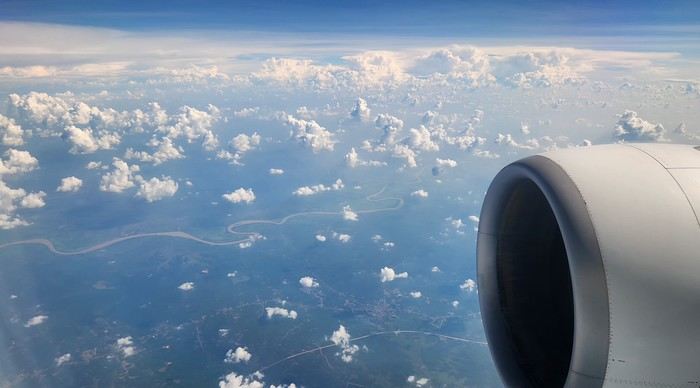
Nice transition, right? Because "Welcome to Indonesia" is exactly what the friendly flight attendant just said to me as we got off the plane! That’s it, our chakras are open, we’ve arrived at our (air)port. Time for rest, pool, cocktails, and a beach with our toes spread out... Wait, if you bought that, you clearly don’t know us yet! Since we still have energy to burn and need to adjust to the flight and time difference, we tackle the long administrative formalities to enter Indonesia, just to earn the right to hop in a 45-minute Grab taxi to the train station. The train station? What train station?... What do you usually do at a train station? Take a train, of course! Off we go for a three-hour train ride to Bandung, where we’ll officially start our adventure tomorrow after our first Indonesian night...
Unfortunately, we were a bit slow off the mark, which meant we missed the 6:25 PM train by two minutes. Oh well, we’ll have to wait until 11 PM. We take the opportunity to stretch our legs in Jakarta, soak up the atmosphere, and enjoy the delicious smells wafting from the *warungs*—those little typical street restaurants. A quick stop at the National Monument, a detour to a night market to devour our first *kwetiaw goreng* and *teh manis* for 60,000 rupiahs (that’s 3 € for two), and just like that, our penalty is lifted, and we’re allowed to hit the road again. Off to Bandung, where we arrive at 2 AM for... a *very* short night...
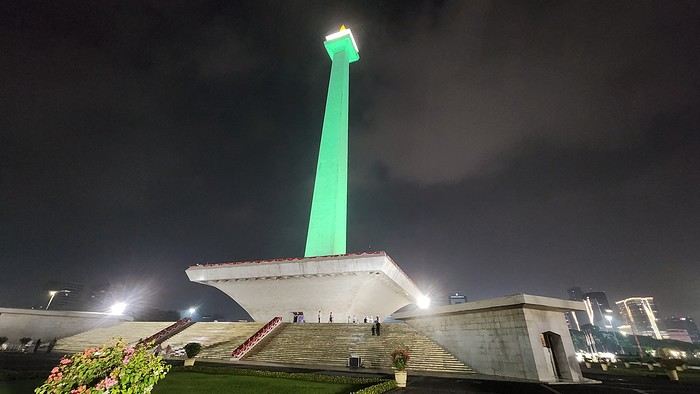
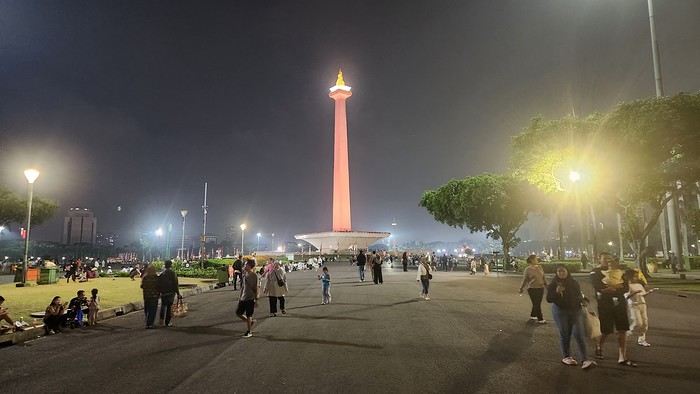
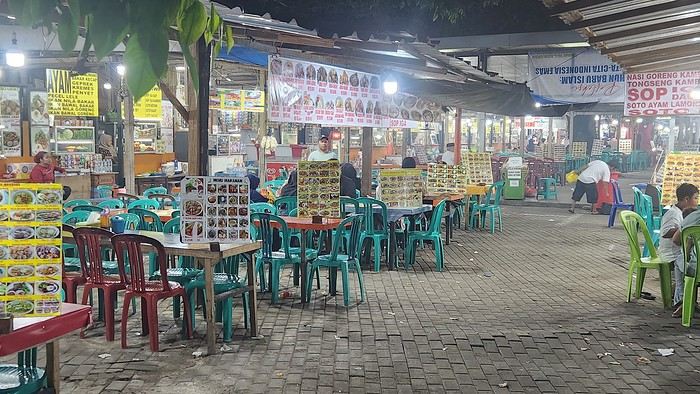
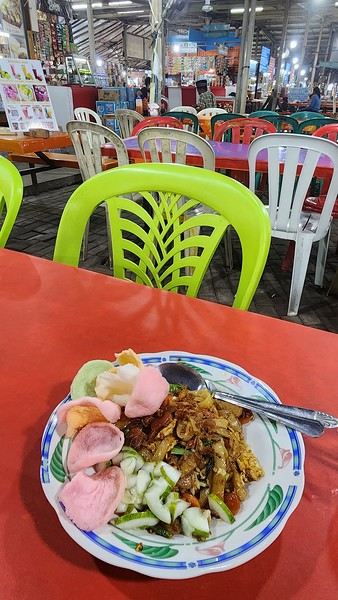
Day 1 - August 10, 2025 New life downloading for three weeks! And for that, Flo and I launched a public tender... A public tender? What’s that got to do with a travel journal???... Well, when you think about it, few destinations tick all the boxes for an August adventure: Meaning, finding a place that’s exotic in the middle of August, not too expensive, not too packed with tourists, warm but not *too* warm, with postcard-perfect landscapes, dreamy beaches, tasty cuisine with a hint of exoticism, friendly and welcoming locals, where you’re free to sleep under the stars among the mosquitos, take transport surrounded by chickens, and even eat from a pig trough if you feel like it—well, turns out it’s not that easy to find! I’d even say, given how thick the list of requirements is, there’s a big risk the tender could be declared unsuccessful for failing to meet just one criterion. Let’s just say the candidates better submit a rock-solid proposal!
After reviewing all the responses and presentations from the candidates, the obvious choice for us is... Indonesia! Except that trying to explore a country as vast as Indonesia and its 17,504 islands in less than five years is a bit like reading the summary of a Proust novel without taking the time to savor each of its 950 pages! Don’t worry, I won’t name them all here. Besides, do they even all have names? No! Only 7,870 have been named—their parents clearly ran out of ideas for the rest. Anyway, our society, which worships the "work more to earn more" mantra, unfortunately limits our adventure time. So we’ll only get to see a small part of Indonesia, and we’ll have to make a tough choice to head for the best of the best in this archipelago of over seventeen thousand islands. Each one has its own selling points: Sumatra, Sulawesi, Java, the Celebes, Bali, Borneo, Papua, Timor, the Moluccas... So many names that smell of adventure... Another tender, another list of requirements, another review of proposals... Drumroll... Splash splash... And the lucky winner is... Ta-da... Java, Bali’s big sister, where I’ve already been eight years ago... Java the programming language. The Java of Broadway. We’re gonna *do* the Java. Java the coffee. And yes, Java is also an island!
This island, four times smaller than France, is home to 136 million people, making it the most populated island in the world! Fun fact: Indonesia, with its 260 million inhabitants, is just shy of the podium for the world’s most populated countries, after the winning trio of India, China, and the United States. And it’s on this island of Java that you’ll find Jakarta, the (soon-to-be-former) capital and main airport of the country, where we’ll soon land after our nineteen-hour flight! Yep, nineteen hours! I mean, Indonesia in general—and Java in particular—is a *tad* farther than going on vacation to Grandma Yoyo’s! Not sure where it is? Easy. Grab a map. Plant your finger on the big island at the bottom right—aka Australia for those who struggle with geography—move it up two centimeters, and bam, welcome to Indonesia!
Nice transition, right? Because "Welcome to Indonesia" is exactly what the friendly flight attendant just said to me as we got off the plane! That’s it, our chakras are open, we’ve arrived at our (air)port. Time for rest, pool, cocktails, and a beach with our toes spread out... Wait, if you bought that, you clearly don’t know us yet! Since we still have energy to burn and need to adjust to the flight and time difference, we tackle the long administrative formalities to enter Indonesia, just to earn the right to hop in a 45-minute Grab taxi to the train station. The train station? What train station?... What do you usually do at a train station? Take a train, of course! Off we go for a three-hour train ride to Bandung, where we’ll officially start our adventure tomorrow after our first Indonesian night...
Unfortunately, we were a bit slow off the mark, which meant we missed the 6:25 PM train by two minutes. Oh well, we’ll have to wait until 11 PM. We take the opportunity to stretch our legs in Jakarta, soak up the atmosphere, and enjoy the delicious smells wafting from the *warungs*—those little typical street restaurants. A quick stop at the National Monument, a detour to a night market to devour our first *kwetiaw goreng* and *teh manis* for 60,000 rupiahs (that’s 3 € for two), and just like that, our penalty is lifted, and we’re allowed to hit the road again. Off to Bandung, where we arrive at 2 AM for... a *very* short night...
Ce voyage qui suit une vaste diagonale allant grosso modo du parc Chobe aux parcs du Namakwa trouve son origine dans une discussion entre 2 fort rhumeurs célèbres hélas aujourd'hui disparus, l'abus de rhum sans doute...
 Ah ! Attendez, on me signale dans mon oreillette qu'ils seraient toujours vivants, ce qui, vous en conviendrez, est tout de même assez exceptionnel !
Ha ! Ha !
Par respect pour leur famille je tairai les pseudo de Max68 et de Voyajou.-
-
FAT BASTARD
-
(certaines photos, surtout parmi celles prises à Soweto, ne sont pas de moi, elles sont choisies au hasard du net en fonction de leur ressemblance avec ce que j'avais moi même vu)
-
Et c'est donc par un beau matin du mois d'Août que je débarquais à l'aéroport Tambo international de Johannesburg, précédé par ma troupe de femelles, poussant pour elles un caddie surchargé et la tête pleine de rêves du voyage à venir.
Les formalités de passage de la petite dernière n'ont posé aucun problème, les certificats de naissance dûment traduits et estampillés par traducteur agréé sont acceptés : nous rejoignons le grand hall de l'aéroport et retrouvons notre loueur au bureau des informations.
(pour ceux qui veulent savoir la vérité sur Southafrica4x4 c'est là, pour les autres qui veulent rester aveugles, lisez ci dessous)
Ah ! Attendez, on me signale dans mon oreillette qu'ils seraient toujours vivants, ce qui, vous en conviendrez, est tout de même assez exceptionnel !
Ha ! Ha !
Par respect pour leur famille je tairai les pseudo de Max68 et de Voyajou.-
-
FAT BASTARD
-
(certaines photos, surtout parmi celles prises à Soweto, ne sont pas de moi, elles sont choisies au hasard du net en fonction de leur ressemblance avec ce que j'avais moi même vu)
-
Et c'est donc par un beau matin du mois d'Août que je débarquais à l'aéroport Tambo international de Johannesburg, précédé par ma troupe de femelles, poussant pour elles un caddie surchargé et la tête pleine de rêves du voyage à venir.
Les formalités de passage de la petite dernière n'ont posé aucun problème, les certificats de naissance dûment traduits et estampillés par traducteur agréé sont acceptés : nous rejoignons le grand hall de l'aéroport et retrouvons notre loueur au bureau des informations.
(pour ceux qui veulent savoir la vérité sur Southafrica4x4 c'est là, pour les autres qui veulent rester aveugles, lisez ci dessous)
"Ce bon vieux Carel ! Comment vas-tu old fellow !" " I'm fine, thank you Erwan ! allons découvrir ton magnifique 4x4 sur le parking !" - "Ah mais non...ça ne va pas du tout...mais alors pas du tout" Carel qui a la particularité d'être non seulement gras mais en plus visqueux, transpire abondamment et diffuse une odeur suave de vieille soupe alentours. "mais, je, enfin, c'est bien un defender puma 110 que tu as commandé ?" "Oui" "Avec 2 tentes de toit, matériel de camping, roue de secours additionnelle, téléphone satellite et tout et tout ?" "Oui" "so what ?" éructe -il son haleine fétide in my general direction. "Alors IL EST BLANC CASSE TON 4x4 !!! j'avais demandé BLEU MARINE, comme feu Voyajou !" (oui : à l'époque, j'ignorais qu'il fût encore de notre monde...) Les genoux cagneux de l'infâme s'entrechoquent évoquant curieusement l'Espagne. "Oh my god ! Oh my god ! Je ne savais pas que c'était si important ! Je n'ai plus de Puma bleu, je suis perdu, je vais être obligé de faire sepuku là, ici tout de suite..." "Bon...n'en venons pas à des extrémités aussi euh...extrêmes, tu n'es ni japonais, ni samouraï, une pendaison bien classique m'aurait tout aussi bien convenu, mais nous n'avons ni arbre, ni corde, ni katana. Pourtant, je ne peux pas accepter un defender blanc, c'est trop la honte, donc, soit tu m'en trouves un bleu, soit n'importe quoi d'autre pourvu que ce soit mieux...en attendant tu me loges bien sûr." "Of course of course" - Nous déposons nos sacs au Mapunbugwe hôtel au centre de Joburg. Hôtel pas terrible, les chambres sont grandes et propres, mais la peinture jaunasse les rend glauques et surtout, elles sont très mal chauffées. les couloirs sont limite stressants. Par contre le restau n'est pas mal du tout et le personnel est sympathique et prévenant. Nous décidons d'occuper l'après midi en faisant le fameux bike tour de Soweto, Je demande à la réception de me passer Lebo's back packer et nous prenons rendez vous pour un tour de 4h. Je rappelle l'ignoble juste avant le début du tour pour lui signifier que nous ne serons pas rentrés avant 17 h. "Oui Maîîîître, merci maîîîître , je vous verrai demain à 11 h maîîîître" "Soit, va en paix" Nous rejoignons Soweto en taxi. L'endroit est situé proche de terrains vagues, le voisinage n'est donc pas envahissant, la voie ferrée passe tout près.


Nous nous joignons à un groupe d'anglo australiens qui font le même tour que nous. Les vélos sont déglingués, mais en état de marche, il suffit de choisir ceux qui n'ont pas de roue à plat. Les mécanos gagneraient sans doute à graisser les chaines et les dérailleurs, il y aurait sans doute moins de casse ? C'est peut-être pour maintenir l'emploi que ce défaut criant de maintenance est perpétué : un mécano personnel va nous suivre pendant tout le périple. Notre groupe de blancs casqués, pédalant furieusement à le queue leu leu fait tâche, difficile de passer inaperçu, un des australiens a même eu l'idée saugrenue d'enfiler sa tenue safari kaki du plus mauvais goût...mais n'ergotons pas sur les goûts et les couleurs, c'est juste que...bon...
 (les 2 photos ci dessus ne sont pas de moi)
Donc, on nous voit, on nous remarque et on nous le fait savoir "M'lophi ! M'lophi !" nous apostrophent les gamins en tendant des mains que nous nous faisons un devoir de checker l'une après l'autre au risque de nous péter la gueule.
On rigole, on nous interpelle, on nous désigne, on nous salue, on nous demande du boulot, mais on ne nous menace jamais.
Pourtant, il y a de la viande saoule à Soweto en ce dimanche qui décline, ça titube pas mal et certains regards sont franchement dans le vague, mais nous passons sans doute trop vite pour que toutes les connections se fassent dans ces cerveaux embrumés.
Nous goûterons la" bière" locale (rien à voir avec de la bière),
(les 2 photos ci dessus ne sont pas de moi)
Donc, on nous voit, on nous remarque et on nous le fait savoir "M'lophi ! M'lophi !" nous apostrophent les gamins en tendant des mains que nous nous faisons un devoir de checker l'une après l'autre au risque de nous péter la gueule.
On rigole, on nous interpelle, on nous désigne, on nous salue, on nous demande du boulot, mais on ne nous menace jamais.
Pourtant, il y a de la viande saoule à Soweto en ce dimanche qui décline, ça titube pas mal et certains regards sont franchement dans le vague, mais nous passons sans doute trop vite pour que toutes les connections se fassent dans ces cerveaux embrumés.
Nous goûterons la" bière" locale (rien à voir avec de la bière),
 (les 3 photos suivantes ne sont pas de moi)


 nous visiterons les quartiers pauvres, classe moyenne et classe aisée qui se cotoient.
-
Nous passons près de chez Mandela et nous arrêtons dans un petit marché où divers exposants vendent des productions locales, surtout des vêtements de créateurs locaux, un peu d'artisanat de déco.
Je suis surpris de constater la frilosité de nos camarades anglo saxons qui restent près de notre guide qui nous a pourtant laissé quartier libre et donné rendez vous dans 20 mn, l'endroit est plutôt hype et inspire confiance, un petit groupe joue du reggae, il y a des marchands de saucisse : c'est la fête du Dimanche.
Nous finissons par le mémorial Hector Pieterson mort le 16 juin 76 lors du massacre perpétué par la police à l'encontre d'une manifestation pacifique d'étudiants qui protestaient contre l'enseignement obligatoire en africaner.
nous visiterons les quartiers pauvres, classe moyenne et classe aisée qui se cotoient.
-
Nous passons près de chez Mandela et nous arrêtons dans un petit marché où divers exposants vendent des productions locales, surtout des vêtements de créateurs locaux, un peu d'artisanat de déco.
Je suis surpris de constater la frilosité de nos camarades anglo saxons qui restent près de notre guide qui nous a pourtant laissé quartier libre et donné rendez vous dans 20 mn, l'endroit est plutôt hype et inspire confiance, un petit groupe joue du reggae, il y a des marchands de saucisse : c'est la fête du Dimanche.
Nous finissons par le mémorial Hector Pieterson mort le 16 juin 76 lors du massacre perpétué par la police à l'encontre d'une manifestation pacifique d'étudiants qui protestaient contre l'enseignement obligatoire en africaner.

 Cette balade vaut le coup, allez-y et n'hésitez pas à prendre la journée complète.
-
Le lendemain, la pustule est là, suante et malodorante comme à l'accoutumée.
"Toujours rien Maîîîîître, mais je vais tenter de joindre les autres loueurs pour voir s'ils en ont un bleu et..."
"Il suffit manant ! Tu as eu tout le temps nécessaire pour ce faire! Je m'en vais quitter ce lieu en une calèche digne de mon rang : à savoir un Discovery 4 V6 TDI loué chez SMH, je te donne deux jours pour trouver ce que je t'ai ordonné, quand tu l'as, tu me le fais porter à Maun en Botswana, si tu ne le trouves point, tu seras 1000 fois maudit, la peste étouffera ta progéniture et la lèpre te rongera lentement, ton nez tombera et tu seras encore plus laid que maintenant...si possible..."
"Maiiiiiiiis Maîîîîîîître je je..."
"Il suffit : j'ai dit et il en sera ainsi !"
La larve s'en va penaude, nous rejoignons Jakes de SMH pour prendre livraison du carrosse.
-
Ah oui, 2400 rd par jour, tout de même... 😮
Bon, en principe c'est le bubon qui paie, alors allons y ha ! ha !
Et on y va ! (ha, ha...😕)
-
Sauf que on part un peu tard , à 16 h 30, nous roulons sur la M1 de sinistre réputation : la consigne est claire, si quelqu'un vous fait signe de vous arrêter, vous ne vous arrêtez pas, si quelqu'un est mourant ensanglanté éviscéré membre amputé au bord de la route, vous ne vous arrêtez pas (éventuellement, vous pouvez rouler dessus pour l'achever mais en faisant attention de ne pas abîmer la voiture), si une voiture avec gyrophare vous fait signe de vous arrêter, vous ne vous arrêtez pas : vous conduisez jusqu'au prochain poste de police et vous vous arrêtez seulement là...
Diable !
-
C'est un peu excessif tout de même cette histoire de blessé...
-
Nous roulons sur la M1, guettant les gyrophares, (nous en verrons bien 2 ou 3 mais ils ne tenteront pas de nous intercepter) et redoutant de tomber sur un blessé en bord de route (ça risquait de me faire mal au serment d'Hippocrate cette histoire là...).
Bientôt, le crépuscule, je cherche sur la manette à gauche du volant à allumer mes codes, pas moyen, il y a bien le clignotant, les pleins phares, mais pas de codes...ils doivent s'allumer tout seuls.
La nuit tombe, il y a bien un éclairage à l'avant, mais il est assez lamentable, j'ai bien peur que ce ne soient que les LED, Sabine cherche dans le manuel (RTFM comme on dit...), mais c'est une photocopie en noir et blanc sur laquelle les photos sont mal passées).
Pour couronner le tout, pas de parking ! Il nous faudra rouler 15 km de plus en veilleuses avant d'en trouver un, ce n'est qu'une fois arrêté que je trouverai le bouton d'allumage des phares qui se trouve sur le tableau de bord, mais à droite...
Promis, la prochaine fois je regarde avant de démarrer...😊
Nous repartons non sans nous être sustentés dans l'abominable fast food qui a eu l'abominable idée de s'installer là, juste à l'abominable endroit où nous avons décidé de nous arrêter.
Oh que c'est vil !
Oh que c'est pas bon !
Mais oh que c'est pas cher...
Et puis, y'a des frites.
Cette balade vaut le coup, allez-y et n'hésitez pas à prendre la journée complète.
-
Le lendemain, la pustule est là, suante et malodorante comme à l'accoutumée.
"Toujours rien Maîîîîître, mais je vais tenter de joindre les autres loueurs pour voir s'ils en ont un bleu et..."
"Il suffit manant ! Tu as eu tout le temps nécessaire pour ce faire! Je m'en vais quitter ce lieu en une calèche digne de mon rang : à savoir un Discovery 4 V6 TDI loué chez SMH, je te donne deux jours pour trouver ce que je t'ai ordonné, quand tu l'as, tu me le fais porter à Maun en Botswana, si tu ne le trouves point, tu seras 1000 fois maudit, la peste étouffera ta progéniture et la lèpre te rongera lentement, ton nez tombera et tu seras encore plus laid que maintenant...si possible..."
"Maiiiiiiiis Maîîîîîîître je je..."
"Il suffit : j'ai dit et il en sera ainsi !"
La larve s'en va penaude, nous rejoignons Jakes de SMH pour prendre livraison du carrosse.
-
Ah oui, 2400 rd par jour, tout de même... 😮
Bon, en principe c'est le bubon qui paie, alors allons y ha ! ha !
Et on y va ! (ha, ha...😕)
-
Sauf que on part un peu tard , à 16 h 30, nous roulons sur la M1 de sinistre réputation : la consigne est claire, si quelqu'un vous fait signe de vous arrêter, vous ne vous arrêtez pas, si quelqu'un est mourant ensanglanté éviscéré membre amputé au bord de la route, vous ne vous arrêtez pas (éventuellement, vous pouvez rouler dessus pour l'achever mais en faisant attention de ne pas abîmer la voiture), si une voiture avec gyrophare vous fait signe de vous arrêter, vous ne vous arrêtez pas : vous conduisez jusqu'au prochain poste de police et vous vous arrêtez seulement là...
Diable !
-
C'est un peu excessif tout de même cette histoire de blessé...
-
Nous roulons sur la M1, guettant les gyrophares, (nous en verrons bien 2 ou 3 mais ils ne tenteront pas de nous intercepter) et redoutant de tomber sur un blessé en bord de route (ça risquait de me faire mal au serment d'Hippocrate cette histoire là...).
Bientôt, le crépuscule, je cherche sur la manette à gauche du volant à allumer mes codes, pas moyen, il y a bien le clignotant, les pleins phares, mais pas de codes...ils doivent s'allumer tout seuls.
La nuit tombe, il y a bien un éclairage à l'avant, mais il est assez lamentable, j'ai bien peur que ce ne soient que les LED, Sabine cherche dans le manuel (RTFM comme on dit...), mais c'est une photocopie en noir et blanc sur laquelle les photos sont mal passées).
Pour couronner le tout, pas de parking ! Il nous faudra rouler 15 km de plus en veilleuses avant d'en trouver un, ce n'est qu'une fois arrêté que je trouverai le bouton d'allumage des phares qui se trouve sur le tableau de bord, mais à droite...
Promis, la prochaine fois je regarde avant de démarrer...😊
Nous repartons non sans nous être sustentés dans l'abominable fast food qui a eu l'abominable idée de s'installer là, juste à l'abominable endroit où nous avons décidé de nous arrêter.
Oh que c'est vil !
Oh que c'est pas bon !
Mais oh que c'est pas cher...
Et puis, y'a des frites.
Bientôt l'ordinateur de bord nous recommande de sortir sur la R33 vers Modimolle, discipliné, j'obtempère. Je regrette un peu car la route est tout de même bien moins large, mais ceci dit, assez peu fréquentée et les camions ne sont pas difficile à doubler. pourtant, plus nous nous rapprochons de la frontière, plus ça devient désertique, de moins en moins de présence humaine et surtout, de plus en plus de bestioles en bord de route : de petites antilopes type steenbok, et bientôt des impalas et des koudous ! Nous sommes des stressés du koudous puisque le 4x4 qui nous était destiné aurait été détruit lors du contact avec un koudou ( lire la vérité sur la livraison du 4x4) , la fatigue aidant, les conversations s'en ressentent : "Gaffe! a koudou là!" "A koudou où?" "Bah là l'koudou, là agad' !" "Ah bah l'a pas vu l'koudou..." " Ah ben'aut'koudou là" "Où k'est l'koudou?" "Là ! 'Cor un aut'!" ... Fort heureusement nous approchons de Martin drift et ce dialogue lamentable va prendre fin, nous appelons le gérant du Bua nnete lodge, il va nous attendre au prochain carrefour, nous l'y rejoignons vers 23 h.
Gerald est une crème, il nous attendait la veille, j'avais adressé un mail, via safarinow puisqu'on ne peut pas régler en direct et que nous n'avons pas son adresse email, mais il ne l'a jamais reçu. Le personnel est donc venu la veille pour rien et il n'a pas réussi à les faire revenir aujourd'hui puisqu'il a été prévenu trop tard : il est désolé. Il nous montre l'accès aux cuisines nous donnant carte blanche, il suffit de se servir, bières sodas à volonté et bouffe autant que nous pourrons nous en préparer, ce soir comme demain matin. Gerald est large d'épaules et franchement bedonnant , son visage hâlé fait ressortir les yeux verts sous les cheveux bruns, un sourire permanent affiché et un bon gros rire qui ponctue chacune de ses sorties. Un garçon sympathique. (photo internet)
Le lodge est vraiment bien et les photos exposées sur le site safarinow ne lui rendent pas justice, la chambre familiale est un petit chalet très lumineux, vaste avec une salle de bain très agréable, un très bon rapport qualité prix.
Le petit dej se fera entre nous à regarder les antilopes, les autruches et les pintades au point d'eau, à 8h, nous partons vers la frontière.
-
Un poste frontière, c'est un endroit qui en dit souvent long sur ce qui vous attend par la suite, état des locaux, complexité des procédures, froideur de l'accueil.
La sortie sud africaine passe sans problème, les papiers sont bien en règle pour notre mineure de fille, ceux de la voiture aussi.
Nous attaquons la partie botswanaise et tombons sur une douanière fort souriante, bien en chair, les cheveux défrisés et une large sourire aux dents éclatantes affiché en permanence.
Elle compulse nos passeports les uns après les autres, nous les rend avec une brochure magnifique du Botswana et conclut : " puis-je vous poser une question ? "
"oui, bien sûr"
"Pouvez vous me dire pourquoi les français sont toujours d'aussi beautifull people ?"...Là je suis un peu estomaqué...elle me drague ou quoi ?
Face à mon air ahuri qui lui permet sans doute aussi de constater que c'est un éclairage avantageux qui nous aura fait paraître si lumineux, elle éclate de rire et nous souhaite la bienvenue dans son pays.
Quelle belle entrée en matière ! 😎
Je passe au guichet suivant pour payer la taxe du véhicule, derrière la vitre s'abrite ma future victime : petite, sèche comme un coup de trique, les cheveux ramassés en un chignon trop strict, une proie facile... le regard lointain de l'aventurier aux joues creuses et un sourire énigmatique en coin je dépose sur le coin du guichet un " hello" suave et torride à la fois : elle va fondre, c'est sûr !
Délaissant le sourire, le hello et le regard de braise, elle attrape les papiers du véhicule, tamponne 2 ou 3 trucs et me tend un formulaire m'indiquant du doigt une suite de chiffre qui ne sont manifestement pas son numéro de téléphone mais bel et bien une somme à verser sans attendre.
Je paye : même pas un regard de la part de la goujate !
Je m'éloigne accablé par l'évidence, les "beautifull people" désignaient mon épouse et ma progéniture ! A la limite, je gâche un peu le tableau. Dévasté par cette révélation, je m'installe au volant, blessé mais digne...
"ben tu dis plus rien papa ?"
"TA GUEULE !"
-
Nous filons vers Serowe, pour détendre l'atmosphère, Fanny nous fait une analyse topographique succincte du pays : " c'est plat...mis à part les montagnes, c'est plat..."
Voilà qui résume assez bien le paysage...
-
Nous atteignons Serowe et entreprenons les premières courses, le supermarché est fort bien achalandé ainsi que le magasin d'alcool juste à la sortie, par contre, la station service n'a plus de diesel. nous en trouverons dans la station suivante.
Un homme nous aborde, il porte son âge comme un fardeau et nous demande dans quelle direction nous allons, je lui indique Maun et lui propose de le déposer s'il va dans cette direction, il va dans l'autre sens et nous demande si nous ne pourrions pas lui donner la somme nécessaire pour payer un automobiliste qui le conduirait à bon port.
Nous pourrions, mais ne donnons pas, il n'est pas fâché pour autant.
-
La route est définitivement plate, les paysages des pans apparaissent, déroulent leur tapis blanc où s'agitent de petites tornades de poussière, quelques ruminants errent ici et là, on se demande bien ce qu'ils espèrent trouver sur cette banquise salée et aride ?
Nous approchons de la Boteti puis la longeons sans la voir, un éléphant nous rappellera que l'eau n'est pas si loin, nous le saluons, normal : c'est le premier et lui promettons de revenir le voir, il nous salue de la trompe et retourne à son ouvrage de destruction.
Pauvre acacia, il a peut-être cru que notre présence allait lui permettre d'échapper à ce triste sort.
-
De bourricot en troupeau de vache nous continuons de dérouler l'asphalte, de longues et interminables lignes droites agrémentées de bétail, parfois une autruche ou un chien qui se jette sous vos roues.
-
La nuit va bientôt tomber, nous arrivons dans les faubourgs de Maun, ça déambule dur sur le bord de la route, gens, chiens, vaches, cochons, bourricots.
Nous nous égarons un peu, ça m'apprendra à suivre T4A en ville, ça s'arrange en laissant le gps de la voiture faire le boulot, bientôt nous nous garons sur le parking défoncé de Okavongo River Lodge.
(photo internet)
Le lodge est vraiment bien et les photos exposées sur le site safarinow ne lui rendent pas justice, la chambre familiale est un petit chalet très lumineux, vaste avec une salle de bain très agréable, un très bon rapport qualité prix.
Le petit dej se fera entre nous à regarder les antilopes, les autruches et les pintades au point d'eau, à 8h, nous partons vers la frontière.
-
Un poste frontière, c'est un endroit qui en dit souvent long sur ce qui vous attend par la suite, état des locaux, complexité des procédures, froideur de l'accueil.
La sortie sud africaine passe sans problème, les papiers sont bien en règle pour notre mineure de fille, ceux de la voiture aussi.
Nous attaquons la partie botswanaise et tombons sur une douanière fort souriante, bien en chair, les cheveux défrisés et une large sourire aux dents éclatantes affiché en permanence.
Elle compulse nos passeports les uns après les autres, nous les rend avec une brochure magnifique du Botswana et conclut : " puis-je vous poser une question ? "
"oui, bien sûr"
"Pouvez vous me dire pourquoi les français sont toujours d'aussi beautifull people ?"...Là je suis un peu estomaqué...elle me drague ou quoi ?
Face à mon air ahuri qui lui permet sans doute aussi de constater que c'est un éclairage avantageux qui nous aura fait paraître si lumineux, elle éclate de rire et nous souhaite la bienvenue dans son pays.
Quelle belle entrée en matière ! 😎
Je passe au guichet suivant pour payer la taxe du véhicule, derrière la vitre s'abrite ma future victime : petite, sèche comme un coup de trique, les cheveux ramassés en un chignon trop strict, une proie facile... le regard lointain de l'aventurier aux joues creuses et un sourire énigmatique en coin je dépose sur le coin du guichet un " hello" suave et torride à la fois : elle va fondre, c'est sûr !
Délaissant le sourire, le hello et le regard de braise, elle attrape les papiers du véhicule, tamponne 2 ou 3 trucs et me tend un formulaire m'indiquant du doigt une suite de chiffre qui ne sont manifestement pas son numéro de téléphone mais bel et bien une somme à verser sans attendre.
Je paye : même pas un regard de la part de la goujate !
Je m'éloigne accablé par l'évidence, les "beautifull people" désignaient mon épouse et ma progéniture ! A la limite, je gâche un peu le tableau. Dévasté par cette révélation, je m'installe au volant, blessé mais digne...
"ben tu dis plus rien papa ?"
"TA GUEULE !"
-
Nous filons vers Serowe, pour détendre l'atmosphère, Fanny nous fait une analyse topographique succincte du pays : " c'est plat...mis à part les montagnes, c'est plat..."
Voilà qui résume assez bien le paysage...
-
Nous atteignons Serowe et entreprenons les premières courses, le supermarché est fort bien achalandé ainsi que le magasin d'alcool juste à la sortie, par contre, la station service n'a plus de diesel. nous en trouverons dans la station suivante.
Un homme nous aborde, il porte son âge comme un fardeau et nous demande dans quelle direction nous allons, je lui indique Maun et lui propose de le déposer s'il va dans cette direction, il va dans l'autre sens et nous demande si nous ne pourrions pas lui donner la somme nécessaire pour payer un automobiliste qui le conduirait à bon port.
Nous pourrions, mais ne donnons pas, il n'est pas fâché pour autant.
-
La route est définitivement plate, les paysages des pans apparaissent, déroulent leur tapis blanc où s'agitent de petites tornades de poussière, quelques ruminants errent ici et là, on se demande bien ce qu'ils espèrent trouver sur cette banquise salée et aride ?
Nous approchons de la Boteti puis la longeons sans la voir, un éléphant nous rappellera que l'eau n'est pas si loin, nous le saluons, normal : c'est le premier et lui promettons de revenir le voir, il nous salue de la trompe et retourne à son ouvrage de destruction.
Pauvre acacia, il a peut-être cru que notre présence allait lui permettre d'échapper à ce triste sort.
-
De bourricot en troupeau de vache nous continuons de dérouler l'asphalte, de longues et interminables lignes droites agrémentées de bétail, parfois une autruche ou un chien qui se jette sous vos roues.
-
La nuit va bientôt tomber, nous arrivons dans les faubourgs de Maun, ça déambule dur sur le bord de la route, gens, chiens, vaches, cochons, bourricots.
Nous nous égarons un peu, ça m'apprendra à suivre T4A en ville, ça s'arrange en laissant le gps de la voiture faire le boulot, bientôt nous nous garons sur le parking défoncé de Okavongo River Lodge.
(Suite p 1 post 16)
Ah ! Attendez, on me signale dans mon oreillette qu'ils seraient toujours vivants, ce qui, vous en conviendrez, est tout de même assez exceptionnel !
Ha ! Ha !
Par respect pour leur famille je tairai les pseudo de Max68 et de Voyajou.-
-
FAT BASTARD
-
(certaines photos, surtout parmi celles prises à Soweto, ne sont pas de moi, elles sont choisies au hasard du net en fonction de leur ressemblance avec ce que j'avais moi même vu)
-
Et c'est donc par un beau matin du mois d'Août que je débarquais à l'aéroport Tambo international de Johannesburg, précédé par ma troupe de femelles, poussant pour elles un caddie surchargé et la tête pleine de rêves du voyage à venir.
Les formalités de passage de la petite dernière n'ont posé aucun problème, les certificats de naissance dûment traduits et estampillés par traducteur agréé sont acceptés : nous rejoignons le grand hall de l'aéroport et retrouvons notre loueur au bureau des informations.
(pour ceux qui veulent savoir la vérité sur Southafrica4x4 c'est là, pour les autres qui veulent rester aveugles, lisez ci dessous)"Ce bon vieux Carel ! Comment vas-tu old fellow !" " I'm fine, thank you Erwan ! allons découvrir ton magnifique 4x4 sur le parking !" - "Ah mais non...ça ne va pas du tout...mais alors pas du tout" Carel qui a la particularité d'être non seulement gras mais en plus visqueux, transpire abondamment et diffuse une odeur suave de vieille soupe alentours. "mais, je, enfin, c'est bien un defender puma 110 que tu as commandé ?" "Oui" "Avec 2 tentes de toit, matériel de camping, roue de secours additionnelle, téléphone satellite et tout et tout ?" "Oui" "so what ?" éructe -il son haleine fétide in my general direction. "Alors IL EST BLANC CASSE TON 4x4 !!! j'avais demandé BLEU MARINE, comme feu Voyajou !" (oui : à l'époque, j'ignorais qu'il fût encore de notre monde...) Les genoux cagneux de l'infâme s'entrechoquent évoquant curieusement l'Espagne. "Oh my god ! Oh my god ! Je ne savais pas que c'était si important ! Je n'ai plus de Puma bleu, je suis perdu, je vais être obligé de faire sepuku là, ici tout de suite..." "Bon...n'en venons pas à des extrémités aussi euh...extrêmes, tu n'es ni japonais, ni samouraï, une pendaison bien classique m'aurait tout aussi bien convenu, mais nous n'avons ni arbre, ni corde, ni katana. Pourtant, je ne peux pas accepter un defender blanc, c'est trop la honte, donc, soit tu m'en trouves un bleu, soit n'importe quoi d'autre pourvu que ce soit mieux...en attendant tu me loges bien sûr." "Of course of course" - Nous déposons nos sacs au Mapunbugwe hôtel au centre de Joburg. Hôtel pas terrible, les chambres sont grandes et propres, mais la peinture jaunasse les rend glauques et surtout, elles sont très mal chauffées. les couloirs sont limite stressants. Par contre le restau n'est pas mal du tout et le personnel est sympathique et prévenant. Nous décidons d'occuper l'après midi en faisant le fameux bike tour de Soweto, Je demande à la réception de me passer Lebo's back packer et nous prenons rendez vous pour un tour de 4h. Je rappelle l'ignoble juste avant le début du tour pour lui signifier que nous ne serons pas rentrés avant 17 h. "Oui Maîîîître, merci maîîîître , je vous verrai demain à 11 h maîîîître" "Soit, va en paix" Nous rejoignons Soweto en taxi. L'endroit est situé proche de terrains vagues, le voisinage n'est donc pas envahissant, la voie ferrée passe tout près.
Nous nous joignons à un groupe d'anglo australiens qui font le même tour que nous. Les vélos sont déglingués, mais en état de marche, il suffit de choisir ceux qui n'ont pas de roue à plat. Les mécanos gagneraient sans doute à graisser les chaines et les dérailleurs, il y aurait sans doute moins de casse ? C'est peut-être pour maintenir l'emploi que ce défaut criant de maintenance est perpétué : un mécano personnel va nous suivre pendant tout le périple. Notre groupe de blancs casqués, pédalant furieusement à le queue leu leu fait tâche, difficile de passer inaperçu, un des australiens a même eu l'idée saugrenue d'enfiler sa tenue safari kaki du plus mauvais goût...mais n'ergotons pas sur les goûts et les couleurs, c'est juste que...bon...
(les 2 photos ci dessus ne sont pas de moi)
Donc, on nous voit, on nous remarque et on nous le fait savoir "M'lophi ! M'lophi !" nous apostrophent les gamins en tendant des mains que nous nous faisons un devoir de checker l'une après l'autre au risque de nous péter la gueule.
On rigole, on nous interpelle, on nous désigne, on nous salue, on nous demande du boulot, mais on ne nous menace jamais.
Pourtant, il y a de la viande saoule à Soweto en ce dimanche qui décline, ça titube pas mal et certains regards sont franchement dans le vague, mais nous passons sans doute trop vite pour que toutes les connections se fassent dans ces cerveaux embrumés.
Nous goûterons la" bière" locale (rien à voir avec de la bière),
(les 3 photos suivantes ne sont pas de moi)
nous visiterons les quartiers pauvres, classe moyenne et classe aisée qui se cotoient.
-
Nous passons près de chez Mandela et nous arrêtons dans un petit marché où divers exposants vendent des productions locales, surtout des vêtements de créateurs locaux, un peu d'artisanat de déco.
Je suis surpris de constater la frilosité de nos camarades anglo saxons qui restent près de notre guide qui nous a pourtant laissé quartier libre et donné rendez vous dans 20 mn, l'endroit est plutôt hype et inspire confiance, un petit groupe joue du reggae, il y a des marchands de saucisse : c'est la fête du Dimanche.
Nous finissons par le mémorial Hector Pieterson mort le 16 juin 76 lors du massacre perpétué par la police à l'encontre d'une manifestation pacifique d'étudiants qui protestaient contre l'enseignement obligatoire en africaner.
Cette balade vaut le coup, allez-y et n'hésitez pas à prendre la journée complète.
-
Le lendemain, la pustule est là, suante et malodorante comme à l'accoutumée.
"Toujours rien Maîîîîître, mais je vais tenter de joindre les autres loueurs pour voir s'ils en ont un bleu et..."
"Il suffit manant ! Tu as eu tout le temps nécessaire pour ce faire! Je m'en vais quitter ce lieu en une calèche digne de mon rang : à savoir un Discovery 4 V6 TDI loué chez SMH, je te donne deux jours pour trouver ce que je t'ai ordonné, quand tu l'as, tu me le fais porter à Maun en Botswana, si tu ne le trouves point, tu seras 1000 fois maudit, la peste étouffera ta progéniture et la lèpre te rongera lentement, ton nez tombera et tu seras encore plus laid que maintenant...si possible..."
"Maiiiiiiiis Maîîîîîîître je je..."
"Il suffit : j'ai dit et il en sera ainsi !"
La larve s'en va penaude, nous rejoignons Jakes de SMH pour prendre livraison du carrosse.
-
Ah oui, 2400 rd par jour, tout de même... 😮
Bon, en principe c'est le bubon qui paie, alors allons y ha ! ha !
Et on y va ! (ha, ha...😕)
-
Sauf que on part un peu tard , à 16 h 30, nous roulons sur la M1 de sinistre réputation : la consigne est claire, si quelqu'un vous fait signe de vous arrêter, vous ne vous arrêtez pas, si quelqu'un est mourant ensanglanté éviscéré membre amputé au bord de la route, vous ne vous arrêtez pas (éventuellement, vous pouvez rouler dessus pour l'achever mais en faisant attention de ne pas abîmer la voiture), si une voiture avec gyrophare vous fait signe de vous arrêter, vous ne vous arrêtez pas : vous conduisez jusqu'au prochain poste de police et vous vous arrêtez seulement là...
Diable !
-
C'est un peu excessif tout de même cette histoire de blessé...
-
Nous roulons sur la M1, guettant les gyrophares, (nous en verrons bien 2 ou 3 mais ils ne tenteront pas de nous intercepter) et redoutant de tomber sur un blessé en bord de route (ça risquait de me faire mal au serment d'Hippocrate cette histoire là...).
Bientôt, le crépuscule, je cherche sur la manette à gauche du volant à allumer mes codes, pas moyen, il y a bien le clignotant, les pleins phares, mais pas de codes...ils doivent s'allumer tout seuls.
La nuit tombe, il y a bien un éclairage à l'avant, mais il est assez lamentable, j'ai bien peur que ce ne soient que les LED, Sabine cherche dans le manuel (RTFM comme on dit...), mais c'est une photocopie en noir et blanc sur laquelle les photos sont mal passées).
Pour couronner le tout, pas de parking ! Il nous faudra rouler 15 km de plus en veilleuses avant d'en trouver un, ce n'est qu'une fois arrêté que je trouverai le bouton d'allumage des phares qui se trouve sur le tableau de bord, mais à droite...
Promis, la prochaine fois je regarde avant de démarrer...😊
Nous repartons non sans nous être sustentés dans l'abominable fast food qui a eu l'abominable idée de s'installer là, juste à l'abominable endroit où nous avons décidé de nous arrêter.
Oh que c'est vil !
Oh que c'est pas bon !
Mais oh que c'est pas cher...
Et puis, y'a des frites.Bientôt l'ordinateur de bord nous recommande de sortir sur la R33 vers Modimolle, discipliné, j'obtempère. Je regrette un peu car la route est tout de même bien moins large, mais ceci dit, assez peu fréquentée et les camions ne sont pas difficile à doubler. pourtant, plus nous nous rapprochons de la frontière, plus ça devient désertique, de moins en moins de présence humaine et surtout, de plus en plus de bestioles en bord de route : de petites antilopes type steenbok, et bientôt des impalas et des koudous ! Nous sommes des stressés du koudous puisque le 4x4 qui nous était destiné aurait été détruit lors du contact avec un koudou ( lire la vérité sur la livraison du 4x4) , la fatigue aidant, les conversations s'en ressentent : "Gaffe! a koudou là!" "A koudou où?" "Bah là l'koudou, là agad' !" "Ah bah l'a pas vu l'koudou..." " Ah ben'aut'koudou là" "Où k'est l'koudou?" "Là ! 'Cor un aut'!" ... Fort heureusement nous approchons de Martin drift et ce dialogue lamentable va prendre fin, nous appelons le gérant du Bua nnete lodge, il va nous attendre au prochain carrefour, nous l'y rejoignons vers 23 h.
Gerald est une crème, il nous attendait la veille, j'avais adressé un mail, via safarinow puisqu'on ne peut pas régler en direct et que nous n'avons pas son adresse email, mais il ne l'a jamais reçu. Le personnel est donc venu la veille pour rien et il n'a pas réussi à les faire revenir aujourd'hui puisqu'il a été prévenu trop tard : il est désolé. Il nous montre l'accès aux cuisines nous donnant carte blanche, il suffit de se servir, bières sodas à volonté et bouffe autant que nous pourrons nous en préparer, ce soir comme demain matin. Gerald est large d'épaules et franchement bedonnant , son visage hâlé fait ressortir les yeux verts sous les cheveux bruns, un sourire permanent affiché et un bon gros rire qui ponctue chacune de ses sorties. Un garçon sympathique.
(photo internet)
Le lodge est vraiment bien et les photos exposées sur le site safarinow ne lui rendent pas justice, la chambre familiale est un petit chalet très lumineux, vaste avec une salle de bain très agréable, un très bon rapport qualité prix.
Le petit dej se fera entre nous à regarder les antilopes, les autruches et les pintades au point d'eau, à 8h, nous partons vers la frontière.
-
Un poste frontière, c'est un endroit qui en dit souvent long sur ce qui vous attend par la suite, état des locaux, complexité des procédures, froideur de l'accueil.
La sortie sud africaine passe sans problème, les papiers sont bien en règle pour notre mineure de fille, ceux de la voiture aussi.
Nous attaquons la partie botswanaise et tombons sur une douanière fort souriante, bien en chair, les cheveux défrisés et une large sourire aux dents éclatantes affiché en permanence.
Elle compulse nos passeports les uns après les autres, nous les rend avec une brochure magnifique du Botswana et conclut : " puis-je vous poser une question ? "
"oui, bien sûr"
"Pouvez vous me dire pourquoi les français sont toujours d'aussi beautifull people ?"...Là je suis un peu estomaqué...elle me drague ou quoi ?
Face à mon air ahuri qui lui permet sans doute aussi de constater que c'est un éclairage avantageux qui nous aura fait paraître si lumineux, elle éclate de rire et nous souhaite la bienvenue dans son pays.
Quelle belle entrée en matière ! 😎
Je passe au guichet suivant pour payer la taxe du véhicule, derrière la vitre s'abrite ma future victime : petite, sèche comme un coup de trique, les cheveux ramassés en un chignon trop strict, une proie facile... le regard lointain de l'aventurier aux joues creuses et un sourire énigmatique en coin je dépose sur le coin du guichet un " hello" suave et torride à la fois : elle va fondre, c'est sûr !
Délaissant le sourire, le hello et le regard de braise, elle attrape les papiers du véhicule, tamponne 2 ou 3 trucs et me tend un formulaire m'indiquant du doigt une suite de chiffre qui ne sont manifestement pas son numéro de téléphone mais bel et bien une somme à verser sans attendre.
Je paye : même pas un regard de la part de la goujate !
Je m'éloigne accablé par l'évidence, les "beautifull people" désignaient mon épouse et ma progéniture ! A la limite, je gâche un peu le tableau. Dévasté par cette révélation, je m'installe au volant, blessé mais digne...
"ben tu dis plus rien papa ?"
"TA GUEULE !"
-
Nous filons vers Serowe, pour détendre l'atmosphère, Fanny nous fait une analyse topographique succincte du pays : " c'est plat...mis à part les montagnes, c'est plat..."
Voilà qui résume assez bien le paysage...
-
Nous atteignons Serowe et entreprenons les premières courses, le supermarché est fort bien achalandé ainsi que le magasin d'alcool juste à la sortie, par contre, la station service n'a plus de diesel. nous en trouverons dans la station suivante.
Un homme nous aborde, il porte son âge comme un fardeau et nous demande dans quelle direction nous allons, je lui indique Maun et lui propose de le déposer s'il va dans cette direction, il va dans l'autre sens et nous demande si nous ne pourrions pas lui donner la somme nécessaire pour payer un automobiliste qui le conduirait à bon port.
Nous pourrions, mais ne donnons pas, il n'est pas fâché pour autant.
-
La route est définitivement plate, les paysages des pans apparaissent, déroulent leur tapis blanc où s'agitent de petites tornades de poussière, quelques ruminants errent ici et là, on se demande bien ce qu'ils espèrent trouver sur cette banquise salée et aride ?
Nous approchons de la Boteti puis la longeons sans la voir, un éléphant nous rappellera que l'eau n'est pas si loin, nous le saluons, normal : c'est le premier et lui promettons de revenir le voir, il nous salue de la trompe et retourne à son ouvrage de destruction.
Pauvre acacia, il a peut-être cru que notre présence allait lui permettre d'échapper à ce triste sort.
-
De bourricot en troupeau de vache nous continuons de dérouler l'asphalte, de longues et interminables lignes droites agrémentées de bétail, parfois une autruche ou un chien qui se jette sous vos roues.
-
La nuit va bientôt tomber, nous arrivons dans les faubourgs de Maun, ça déambule dur sur le bord de la route, gens, chiens, vaches, cochons, bourricots.
Nous nous égarons un peu, ça m'apprendra à suivre T4A en ville, ça s'arrange en laissant le gps de la voiture faire le boulot, bientôt nous nous garons sur le parking défoncé de Okavongo River Lodge.(Suite p 1 post 16)
I'm currently converting a DAF/HEULIEZ MB205 bus.
Cheaper and more spacious than a regular vehicle, the paperwork (in France) isn't too difficult for approval.
I'm ready to help anyone who wants to tackle this kind of project. Those who know, help those who want to....
Cheaper and more spacious than a regular vehicle, the paperwork (in France) isn't too difficult for approval.
I'm ready to help anyone who wants to tackle this kind of project. Those who know, help those who want to....
Hi everyone.
For those traveling to Cuba and then planning to go to the USA, you won’t be able to get your ESTA for the United States (same applies) if you’ve been to Cuba after 2021 due to a law passed by Donald Trump (a law that Biden later repealed).
You’ll have no choice but to apply for a visa, which costs 200 € (and approval isn’t guaranteed even after payment).
If you’re in this situation, the process to get this visa will be a real hassle—you’ll need to book an appointment at the U.S. Embassy in Paris. It’s the only embassy in France authorized to handle your application after you’ve filled out the visa request on the official website.
If you try to cheat by applying for an ESTA for the USA, just know that the American administration has ways of finding out if you’ve been to Cuba. 😉
Nous voila rentrés depuis hier de notre road trip en Namibie. Je voulais vraiment remercier tous les membres du forum pour leur conseils avisés et leur aide dans l’organisation de ce grand voyage mais aussi tous ceux qui ont mis en ligne des carnets, grande source d’inspiration.
C’est donc mon tour (naturellement) de raconter notre voyage, il n’a rien d’orignal (à part peut être le fait de voyage à 6 et sans 4X4), je ne suis pas une grande narratrice et nos photos n’auront rien de nouveau non plus mais si je peux aider à mon tour ou répondre à des questions se sera un juste retour.
Nous avons voyagé du 9/07 au 1/08 avec nos 4 enfants S. 4ans en Namibie N. 9 ans M. 14 ans et A. 16ans, nous 41 ans (moi aussi en Namibie). Nous avons découvert le roadtrip en camping l’année dernières dans l’ouest américain (et on a aimé !).
Le voyage a été préparé en octobre, je l’ai fait seule car les agences ne voulaient pas organiser notre trip car nous n’avions pas de 4x4 (seulement 3 véhicules tout terrain 8 places dispo à la loc sur Windhoek déjà pris pour nos dates) aucun problème particulier sur les réservations seules par internet, seule la petite angoisse de savoir que si on a un pb sur place on n’aura pas de contact.
Le parcours a été allongé en mars suite à un changement de billets d’avion, 2 jours de plus mais comme tout était complet nous avons seulement pu ajouter 2 jours à la fin de notre voyage (descendre jusqu’à Aus) impossible d’ajouter les jour au milieu du trip de de tout décaller. Voici notre parcours prévu et réalisé (enfin presque) : Arrivée Windhoek 8h40 le 10/07 nuit à Windhoek Garden guest house 11/07 nuit Otjiwarango Hadassa guest house 12/07 visite de l'école péri naua nuit camping Namutoni 13/07 nuit Okaukuejo camping 14/07 nuit Olifantrus camping 15/07 nuit Opuwo country lodge camping 16/07 17/07 nuit Epupa Omarunga camping 18/07 nuit Ongongo camping 19/07 nuit Grootberg loodge 20/07 nuit Brandberg white lady camping 21/07 nuit Spitkoppe camping 22/07 23/07 nuit Swakopmund auberge jeunesse 24/07 nuit camp gecko 25/07 nuit camping Sesriem 26/07 27/07 nuit Namibrand family camping 28/07 29/07nuit Aus Desert horse inn camping 30/07 nuit à Mariental Bastion Farm 31/07 vol à 18h55
Compagnie aérienne (suite au changement en mars) Eurowings, départ de Munich (nous y sommes allés en voiture 800km en 2 fois à l’aller) les horaires sont bons au niveau du service c’est du low cost mais on le savait, aucun soucis.
Notre voiture, en camping avec tout le matériel pas d’autre choix que la van Toyota Quantum (14 places) nous n’avons gardé que 6 sièges et avec tout le matériel (surtout les matelas TOP mais qui prennent beaucoup de place) le coffre était plein. Il n’était pas tout neuf mais aucun gros problème. Par contre on a vraiment du roulé doucement (au départ moins de 60 km/h sur pas mal de piste) les temps de trajets que j’avais prévu larges ne l’étaient pas encore assez. Je pense que le 4X4 même s’il n’est pas indispensable et bien mieux en confort et fait gagner en temps de route. Société de location Desert car hire (peu d’avis sur internet, merci à Guillemine pour ses conseils) rien à dire sur la société ils ont été réactif quand on a eu besoin d’eux et pas embétant lors de la remise du véhicule (malgré un éclat sur le pare brise – nous n’avions pas pris l’assurance complémentaire).
Les TOPs adultes : Epupa / Etosha / Namibrand (moi) et Swakopmund (sortie à la journée pour Monsieur) Les TOPs enfants : Etosha / Namibrand / Swakopmund
Le financier : - Billet d’avion en mars 3600E pour nous 6 (avec 2 bagages en soute et des repas pour le retour) - Location voiture 22jours : 2950E - Logement 2100E pour 21 nuits (1 lodge / 2 auberge jeunesse / 2 guest house / 1 ferme /15 camping) - Restau : 370E (1 buffet lodge / 6 restaux / 1 petit dej) - Visite : 760E - Essence : 340E - Courses : 500E (dont 1 braii pack) - Divers : 300E (souvenirs, dont école, cout à boire, pourboire ….) Total 11000 E pour 21 nuit à 6 (même budget que pour les USA)
Utilisation uniquement de la carte revolut (sauf pour le paiement de la location carte gold pour l’assurance) aucun problème accepté partout. Pour infos nous avions retiré 7500$ à l’aéroport puis encore 3000$ au cours du voyage.
PS j'ai oublié de vous parler des températures : nous avons eu froid la nuit un peu au début Etosha en camping puis à Aus : une nuit à 4°C (nous avions les duvets de l'agence + des couvertures supplémentaires qu'ils nous avaient donné et une autre couverture que j'avais amené, chacun) sinon dans la journée aucun soucis même à Swakopmund, entre 23 et 30°C. Le matériel de camping mêm si pas neuf était très complets, il manquait seulement un économe, ouvre boite et j'avais aussi pris 2 tupperware qui nous ont été utiles (sinon il y avait différentes sorte de couteaux / tire bouchon) Voila pour le global, bientôt le récit (il faut trier les photos …)
C’est donc mon tour (naturellement) de raconter notre voyage, il n’a rien d’orignal (à part peut être le fait de voyage à 6 et sans 4X4), je ne suis pas une grande narratrice et nos photos n’auront rien de nouveau non plus mais si je peux aider à mon tour ou répondre à des questions se sera un juste retour.
Nous avons voyagé du 9/07 au 1/08 avec nos 4 enfants S. 4ans en Namibie N. 9 ans M. 14 ans et A. 16ans, nous 41 ans (moi aussi en Namibie). Nous avons découvert le roadtrip en camping l’année dernières dans l’ouest américain (et on a aimé !).
Le voyage a été préparé en octobre, je l’ai fait seule car les agences ne voulaient pas organiser notre trip car nous n’avions pas de 4x4 (seulement 3 véhicules tout terrain 8 places dispo à la loc sur Windhoek déjà pris pour nos dates) aucun problème particulier sur les réservations seules par internet, seule la petite angoisse de savoir que si on a un pb sur place on n’aura pas de contact.
Le parcours a été allongé en mars suite à un changement de billets d’avion, 2 jours de plus mais comme tout était complet nous avons seulement pu ajouter 2 jours à la fin de notre voyage (descendre jusqu’à Aus) impossible d’ajouter les jour au milieu du trip de de tout décaller. Voici notre parcours prévu et réalisé (enfin presque) : Arrivée Windhoek 8h40 le 10/07 nuit à Windhoek Garden guest house 11/07 nuit Otjiwarango Hadassa guest house 12/07 visite de l'école péri naua nuit camping Namutoni 13/07 nuit Okaukuejo camping 14/07 nuit Olifantrus camping 15/07 nuit Opuwo country lodge camping 16/07 17/07 nuit Epupa Omarunga camping 18/07 nuit Ongongo camping 19/07 nuit Grootberg loodge 20/07 nuit Brandberg white lady camping 21/07 nuit Spitkoppe camping 22/07 23/07 nuit Swakopmund auberge jeunesse 24/07 nuit camp gecko 25/07 nuit camping Sesriem 26/07 27/07 nuit Namibrand family camping 28/07 29/07nuit Aus Desert horse inn camping 30/07 nuit à Mariental Bastion Farm 31/07 vol à 18h55
Compagnie aérienne (suite au changement en mars) Eurowings, départ de Munich (nous y sommes allés en voiture 800km en 2 fois à l’aller) les horaires sont bons au niveau du service c’est du low cost mais on le savait, aucun soucis.
Notre voiture, en camping avec tout le matériel pas d’autre choix que la van Toyota Quantum (14 places) nous n’avons gardé que 6 sièges et avec tout le matériel (surtout les matelas TOP mais qui prennent beaucoup de place) le coffre était plein. Il n’était pas tout neuf mais aucun gros problème. Par contre on a vraiment du roulé doucement (au départ moins de 60 km/h sur pas mal de piste) les temps de trajets que j’avais prévu larges ne l’étaient pas encore assez. Je pense que le 4X4 même s’il n’est pas indispensable et bien mieux en confort et fait gagner en temps de route. Société de location Desert car hire (peu d’avis sur internet, merci à Guillemine pour ses conseils) rien à dire sur la société ils ont été réactif quand on a eu besoin d’eux et pas embétant lors de la remise du véhicule (malgré un éclat sur le pare brise – nous n’avions pas pris l’assurance complémentaire).
Les TOPs adultes : Epupa / Etosha / Namibrand (moi) et Swakopmund (sortie à la journée pour Monsieur) Les TOPs enfants : Etosha / Namibrand / Swakopmund
Le financier : - Billet d’avion en mars 3600E pour nous 6 (avec 2 bagages en soute et des repas pour le retour) - Location voiture 22jours : 2950E - Logement 2100E pour 21 nuits (1 lodge / 2 auberge jeunesse / 2 guest house / 1 ferme /15 camping) - Restau : 370E (1 buffet lodge / 6 restaux / 1 petit dej) - Visite : 760E - Essence : 340E - Courses : 500E (dont 1 braii pack) - Divers : 300E (souvenirs, dont école, cout à boire, pourboire ….) Total 11000 E pour 21 nuit à 6 (même budget que pour les USA)
Utilisation uniquement de la carte revolut (sauf pour le paiement de la location carte gold pour l’assurance) aucun problème accepté partout. Pour infos nous avions retiré 7500$ à l’aéroport puis encore 3000$ au cours du voyage.
PS j'ai oublié de vous parler des températures : nous avons eu froid la nuit un peu au début Etosha en camping puis à Aus : une nuit à 4°C (nous avions les duvets de l'agence + des couvertures supplémentaires qu'ils nous avaient donné et une autre couverture que j'avais amené, chacun) sinon dans la journée aucun soucis même à Swakopmund, entre 23 et 30°C. Le matériel de camping mêm si pas neuf était très complets, il manquait seulement un économe, ouvre boite et j'avais aussi pris 2 tupperware qui nous ont été utiles (sinon il y avait différentes sorte de couteaux / tire bouchon) Voila pour le global, bientôt le récit (il faut trier les photos …)
Bonjour 🙂
J'avais ouvert un post il y a un moment: https://voyageforum.com/discussion/parc-etosha-en-namibie-incontournable-d8240470/ Quelques imprévus nous avaient contraint a abandonner ce voyage mais nous nous sommes finalement débrouillés pour partir (en juillet prochain). Nous avons confié l'agencement à Tourmaline. Nous n'avons pas pu obtenir tout ce que nous souhaitions car beaucoup de lodges affichaient complet pour cet été. Alors voici ce que qui a été réservé. Reste à savoir s'il est possible d'annuler une réservation au profil d'une autre...
J1: arrivée à Windwoek vers 7:30. Récupération du véhicule. Briefing etc... route jusqu'au Naukluf. Nuit Namibgrens. J2: Solitaire: Nuit Rostock Ritz J3: Betta. Nuit au Greenfire desert J4 Namib Rand: Tok Tokkie Trail J5: idem J6: Seriem: Little Sossus Lodge J7: Seriem: Agama river Camp (plus au nord) J8: Walris Bay J9 idem: Sandwich Harbour J10 Spitkoppe tented Camp J11 Ameib Ranch J12 Brandberg Lady's lodge J13 Grootberg Lodge J14 Idem J15 Opuwo country lodge J16 Epupa Omarunga Camp J17 idem J18 Hobatere Lodge J19 Etosha Safari Lodge J20: Idem J21 Okonjima Plains Camp J22 Windhoek Eden Chalets
Certains éléments du parcours peuvent sembler "illogiques" comme le J2 au Rostock Ritz avant de descendre vers le Namib Rand pour remonter ensuite vers Seriem. Le Tok Tokkie Trail n'était dispo qu'au J4 pour nous; ce qui explique ce choix. Le J8, avant d'arriver à Walris Bay, j'aimerais bien faire un petit détour vers le Sculpture Rock Trail. Je crains que cela ne soit pas possible en terme de timing. Pourriez-vous me confirmer ? Nous avons choisi des hébergements "en dur". J'aurais bien opté pour quelques nuits de camping (à Spitkoppe et Namibrand par exemple), mais cela nous aurait coûté au final plus cher car le véhicule n'est pas équipé camping. Nous n'avons pas inclus le Fish River Canyon, paraît-il superbe, car nous avons choisi de faire le TTT à la place. peut être à tort ?? Le lendemain de notre retour à Windhoek, nous prendrons un vol en direction de Victoria Falls où nous nous installerons pour 3 nuits avant de rentrer en France. Je suis preneuse de tout conseil concernant les excursions et randos à faire pendant ce périple. Merci d'avance🙂
J'avais ouvert un post il y a un moment: https://voyageforum.com/discussion/parc-etosha-en-namibie-incontournable-d8240470/ Quelques imprévus nous avaient contraint a abandonner ce voyage mais nous nous sommes finalement débrouillés pour partir (en juillet prochain). Nous avons confié l'agencement à Tourmaline. Nous n'avons pas pu obtenir tout ce que nous souhaitions car beaucoup de lodges affichaient complet pour cet été. Alors voici ce que qui a été réservé. Reste à savoir s'il est possible d'annuler une réservation au profil d'une autre...
J1: arrivée à Windwoek vers 7:30. Récupération du véhicule. Briefing etc... route jusqu'au Naukluf. Nuit Namibgrens. J2: Solitaire: Nuit Rostock Ritz J3: Betta. Nuit au Greenfire desert J4 Namib Rand: Tok Tokkie Trail J5: idem J6: Seriem: Little Sossus Lodge J7: Seriem: Agama river Camp (plus au nord) J8: Walris Bay J9 idem: Sandwich Harbour J10 Spitkoppe tented Camp J11 Ameib Ranch J12 Brandberg Lady's lodge J13 Grootberg Lodge J14 Idem J15 Opuwo country lodge J16 Epupa Omarunga Camp J17 idem J18 Hobatere Lodge J19 Etosha Safari Lodge J20: Idem J21 Okonjima Plains Camp J22 Windhoek Eden Chalets
Certains éléments du parcours peuvent sembler "illogiques" comme le J2 au Rostock Ritz avant de descendre vers le Namib Rand pour remonter ensuite vers Seriem. Le Tok Tokkie Trail n'était dispo qu'au J4 pour nous; ce qui explique ce choix. Le J8, avant d'arriver à Walris Bay, j'aimerais bien faire un petit détour vers le Sculpture Rock Trail. Je crains que cela ne soit pas possible en terme de timing. Pourriez-vous me confirmer ? Nous avons choisi des hébergements "en dur". J'aurais bien opté pour quelques nuits de camping (à Spitkoppe et Namibrand par exemple), mais cela nous aurait coûté au final plus cher car le véhicule n'est pas équipé camping. Nous n'avons pas inclus le Fish River Canyon, paraît-il superbe, car nous avons choisi de faire le TTT à la place. peut être à tort ?? Le lendemain de notre retour à Windhoek, nous prendrons un vol en direction de Victoria Falls où nous nous installerons pour 3 nuits avant de rentrer en France. Je suis preneuse de tout conseil concernant les excursions et randos à faire pendant ce périple. Merci d'avance🙂
Bonjour,
Je prépare un voyage pour 2014 pour un groupe de 50 personnes pour l'OUEST AMERICAIN. Plusieurs voyagistes m'ont déjà contacté mais je souhaite recueillir des informations de personnes qui ont déjà effectuées ce type de voyages (10 jours 8 nuits ou 12 jours 10 nuits)
J'aimerais avoir vos conseils sur les hôtels, les pièges à éviter, la température sur les sites touristiques. les heures de départ des hôtels, les heures d'arrivée, la nourriture, les temps libres.
Si vous avez déjà effectué ce genre de voyage, j'attends vos réponses avec impatience
serge
Je prépare un voyage pour 2014 pour un groupe de 50 personnes pour l'OUEST AMERICAIN. Plusieurs voyagistes m'ont déjà contacté mais je souhaite recueillir des informations de personnes qui ont déjà effectuées ce type de voyages (10 jours 8 nuits ou 12 jours 10 nuits)
J'aimerais avoir vos conseils sur les hôtels, les pièges à éviter, la température sur les sites touristiques. les heures de départ des hôtels, les heures d'arrivée, la nourriture, les temps libres.
Si vous avez déjà effectué ce genre de voyage, j'attends vos réponses avec impatience
serge
Bonjour,
Les résultats vont bientôt tomber. Alors, collègues enseignants, partageons !!!
Cette discution peut nous aider à tous.
Cordialement et faisons en sorte de faire vivre cet espace.
CORG
Bonjour à tous,
Pour une fois j'ai l'honneur d'être le premier à lancer un sujet sur la Premium Voyageur d'Air France que j'ai eu l'occasion de prendre sur un CDG / IAD. Pour préciser, elle n'est pas commercialisée sur IAD pour l'instant, donc les passagers Elite peuvent la reserver gratuitement. La seule différence quand elle est commercialisée est une bouteille d'eau sur le siège et les rideaux tirés pour séparer de la classe Voyageur. Sinon le reste c'est tout pareil.
Mon voyage commence à Bâle Mulhouse en E70 pour CDG. J'aime bien cet avion, les sièges sont confortables, les crews Regional toujours sympas. L'espace pour les jambes est tout à fait convenable et le petit dejeuner domestique parfait pour un vol aussi court (chocolat chaud, jus d'orange et vienoiseries)
Transfert à CDG tout comme il faut, même si je deteste ce foutu terminal 2G à l'autre bout du monde.
Au 2E, la PAF me demande si je voyage souvent, je répond oui et on me propose le tout nouveau système automatisé pour passer la douane. L'enregistrement prend 5 minutes et maintenant je peux passer les filtres frontière en scannant mon passeport et en donnant une empreinte digitale scannée. Temps d'attente : 10 secondes. Et ça marche aussi à l'arrivée. Je trouve ça fantastique.
Petit tour au salon, pas de changements notables, à part que les MAC sont morts et remplacés par des PC qui fonctionnent tous.
Embarquement dans la cohue, la ligne Elite existe, mais n'est pas respectée, comme d'habitude, et tout le monde s'en fout.
A bord l'acceuil est pro, et la cabine Premium en jette, par rapport à la Voyageur. On a tout de suite une impression de confort plus élevé, de calme et d'intimité.
Le fauteuil en lui même est très beau à voir, mais manque cruellement de rangements. Une pochette, un emplacement pour une bouteille et un autre à partager avec son voisin. C'est tout. La tablette qui s'ouvre en deux parties, c'est génial. On peut ecrire et manger, ou lire et manger, bref faire ce qu'on veut. L'écran est beaucoup plus grand qu'en Voyageur, et de bonne qualité. Les écouteurs sont integrés au fauteuil, excellente qualité sonore, mais le cable est bien trop petit. La liseuse optique est très pratique.
Par contre, le fauteuil n'est pas confortable. Au début on se sent bien, mais on a très vite mal aux fesses. Il est beaucoup trop dur. Comme il est dans une coque, il glisse vers l'avant, et on dispose d'un appui mollets qui s'arrête trop tôt. Le repose jambe est pratique, mais pas en position reculée. Au bout d'une heure je ne trouvais pas de position confortable, je suis resté quasiment tout le temps en position droite.
Au niveau du repas, comme souvent avec AF, c'était bon, seul bémol, les plats correspondaient pas vraiment avec le menu. On nous annonçait un poulet coco, riz basmati et petits légumes, point de légumes et le riz était au pavot. Le dessert était prévu un gateau aux figues, nous avons reçu une tartelette aux noisettes.
La collation avant l'atterissage est une honte, ça fait au moins un an que c'est la même. Aillant horreur du cumin, le sandwich est resté intouché.
Atterissage à l'heure, à Dulles, passage obligé dans les bus élévateurs pour rejoindre le terminal principal. Premier à mon comptoir, l'agent est super sympa, formalités en 2 minutes. Puis, miracle suprême, ma valise sort en deuxième position, au moment ou j'arrive au carroussel. Moralité : Avion au gate à 13H15, sorti de l'aéroport à 13H35. Même à Mulhouse je crois que ça ne m'est jamais arrivé.
Petite remarque en passant, j'ai noté que les sièges en Voyageur n'était plus bleu foncé avec des petits pois blancs, mais bleu marine (limite noir, pour pas dire noir !) avec un liseret rouge. C'est nouveau ça ??
Ci après quelques photos qui parleront plus.
(Dans deux jours j'espere pouvoir poster le trip report retour de NY en 380)
Pour une fois j'ai l'honneur d'être le premier à lancer un sujet sur la Premium Voyageur d'Air France que j'ai eu l'occasion de prendre sur un CDG / IAD. Pour préciser, elle n'est pas commercialisée sur IAD pour l'instant, donc les passagers Elite peuvent la reserver gratuitement. La seule différence quand elle est commercialisée est une bouteille d'eau sur le siège et les rideaux tirés pour séparer de la classe Voyageur. Sinon le reste c'est tout pareil.
Mon voyage commence à Bâle Mulhouse en E70 pour CDG. J'aime bien cet avion, les sièges sont confortables, les crews Regional toujours sympas. L'espace pour les jambes est tout à fait convenable et le petit dejeuner domestique parfait pour un vol aussi court (chocolat chaud, jus d'orange et vienoiseries)
Transfert à CDG tout comme il faut, même si je deteste ce foutu terminal 2G à l'autre bout du monde.
Au 2E, la PAF me demande si je voyage souvent, je répond oui et on me propose le tout nouveau système automatisé pour passer la douane. L'enregistrement prend 5 minutes et maintenant je peux passer les filtres frontière en scannant mon passeport et en donnant une empreinte digitale scannée. Temps d'attente : 10 secondes. Et ça marche aussi à l'arrivée. Je trouve ça fantastique.
Petit tour au salon, pas de changements notables, à part que les MAC sont morts et remplacés par des PC qui fonctionnent tous.
Embarquement dans la cohue, la ligne Elite existe, mais n'est pas respectée, comme d'habitude, et tout le monde s'en fout.
A bord l'acceuil est pro, et la cabine Premium en jette, par rapport à la Voyageur. On a tout de suite une impression de confort plus élevé, de calme et d'intimité.
Le fauteuil en lui même est très beau à voir, mais manque cruellement de rangements. Une pochette, un emplacement pour une bouteille et un autre à partager avec son voisin. C'est tout. La tablette qui s'ouvre en deux parties, c'est génial. On peut ecrire et manger, ou lire et manger, bref faire ce qu'on veut. L'écran est beaucoup plus grand qu'en Voyageur, et de bonne qualité. Les écouteurs sont integrés au fauteuil, excellente qualité sonore, mais le cable est bien trop petit. La liseuse optique est très pratique.
Par contre, le fauteuil n'est pas confortable. Au début on se sent bien, mais on a très vite mal aux fesses. Il est beaucoup trop dur. Comme il est dans une coque, il glisse vers l'avant, et on dispose d'un appui mollets qui s'arrête trop tôt. Le repose jambe est pratique, mais pas en position reculée. Au bout d'une heure je ne trouvais pas de position confortable, je suis resté quasiment tout le temps en position droite.
Au niveau du repas, comme souvent avec AF, c'était bon, seul bémol, les plats correspondaient pas vraiment avec le menu. On nous annonçait un poulet coco, riz basmati et petits légumes, point de légumes et le riz était au pavot. Le dessert était prévu un gateau aux figues, nous avons reçu une tartelette aux noisettes.
La collation avant l'atterissage est une honte, ça fait au moins un an que c'est la même. Aillant horreur du cumin, le sandwich est resté intouché.
Atterissage à l'heure, à Dulles, passage obligé dans les bus élévateurs pour rejoindre le terminal principal. Premier à mon comptoir, l'agent est super sympa, formalités en 2 minutes. Puis, miracle suprême, ma valise sort en deuxième position, au moment ou j'arrive au carroussel. Moralité : Avion au gate à 13H15, sorti de l'aéroport à 13H35. Même à Mulhouse je crois que ça ne m'est jamais arrivé.
Petite remarque en passant, j'ai noté que les sièges en Voyageur n'était plus bleu foncé avec des petits pois blancs, mais bleu marine (limite noir, pour pas dire noir !) avec un liseret rouge. C'est nouveau ça ??
Ci après quelques photos qui parleront plus.
(Dans deux jours j'espere pouvoir poster le trip report retour de NY en 380)
Good evening,
Our family trip (2 kids, boys aged 6 and 9) is coming up fast, and I have a few questions. I’ve seen that quite a few people on this forum are active about Thailand, so I hope you can help me out :-)
- I have a Free mobile plan with a good amount of data abroad (35GB). Do you know if the Bolt or Grab apps work well with a French SIM? I’ve read that the app might not work if the SIM isn’t Thai, but I’ve also seen French travelers using their SIMs in Thailand, so I’m not sure what to think.
- What tips do you have to avoid traveler’s diarrhea (especially for our 6- and 9-year-olds)? I’m already preparing them to wash their hands often and not put their hands in their mouths or brush their teeth with tap water (they’re still little and might not control the water well in their mouths). Are there certain dishes or food stands to avoid? Are ice cubes really off-limits too?
- We arrive in Bangkok at 9 AM, and we have a French-speaking guided tour scheduled for the next morning (all day). The itinerary isn’t finalized yet with the guide—I need to get back in touch soon. What do you recommend doing on that first day, which might be tiring after the long flight and jet lag? Our hotel has a nice pool, but I’d love for us to get out and explore a bit :-)
- Is the Grand Palace really best visited early in the morning to avoid crowds?
- I’d love to visit a night or floating market, but they’re all on weekends. Unfortunately, we’re in Bangkok from Wednesday to Saturday morning (then we take the train to Ayutthaya in the morning). Is there a market on Friday night? I saw Chatuchak, but Friday night doesn’t seem like the best time—is it still worth going?
I’ve looked for answers to these questions, but I’m either not finding a definitive answer or I’m overwhelmed by all the things to do/see in Bangkok. So, I’m hoping your advice or experiences can help me out!
Thanks in advance, and have a great evening! :-)
Our family trip (2 kids, boys aged 6 and 9) is coming up fast, and I have a few questions. I’ve seen that quite a few people on this forum are active about Thailand, so I hope you can help me out :-)
- I have a Free mobile plan with a good amount of data abroad (35GB). Do you know if the Bolt or Grab apps work well with a French SIM? I’ve read that the app might not work if the SIM isn’t Thai, but I’ve also seen French travelers using their SIMs in Thailand, so I’m not sure what to think.
- What tips do you have to avoid traveler’s diarrhea (especially for our 6- and 9-year-olds)? I’m already preparing them to wash their hands often and not put their hands in their mouths or brush their teeth with tap water (they’re still little and might not control the water well in their mouths). Are there certain dishes or food stands to avoid? Are ice cubes really off-limits too?
- We arrive in Bangkok at 9 AM, and we have a French-speaking guided tour scheduled for the next morning (all day). The itinerary isn’t finalized yet with the guide—I need to get back in touch soon. What do you recommend doing on that first day, which might be tiring after the long flight and jet lag? Our hotel has a nice pool, but I’d love for us to get out and explore a bit :-)
- Is the Grand Palace really best visited early in the morning to avoid crowds?
- I’d love to visit a night or floating market, but they’re all on weekends. Unfortunately, we’re in Bangkok from Wednesday to Saturday morning (then we take the train to Ayutthaya in the morning). Is there a market on Friday night? I saw Chatuchak, but Friday night doesn’t seem like the best time—is it still worth going?
I’ve looked for answers to these questions, but I’m either not finding a definitive answer or I’m overwhelmed by all the things to do/see in Bangkok. So, I’m hoping your advice or experiences can help me out!
Thanks in advance, and have a great evening! :-)
After about 12 hours of flying from Toulouse (via Paris), we landed in Bogotá six years after our first trip to Colombia. This time, our journey will be very different, with only this stop in the Colombian capital in common.
Our travel itinerary
Bogotá / La Macarena (Caño Cristales) / Villa de Leyva / Barichara / San Gil / Girón / Mompox / Ciénaga and the Santa Marta lagoon / Minca / Los Naranjos (Tayrona Park) / Bogotá.
Step 1: Bogotá (and Nemecon)
Bogotá (1/3)
This morning, we had a meet-up with Flora from Aventure Colombia, who helped me organize one of our stops, a few transfers, and tomorrow’s day trip, the program of which I changed at the last minute after deciding to skip the visit to the Salt Cathedral of Zipaquirá. Flora is a kind and lovely person, always available, and she did everything to answer my questions and give me advice.
She’s a local contact I highly recommend. Flora can help you plan your trip, whether you want a fully organized tour or, like us, just need assistance with a specific stop or one or more transfers between cities.
We left Flora after setting a meet-up for our return to Bogotá in a month. As we walked out of her agency, we headed to the wonderful Gold Museum, located just a hundred meters away. I was excited to revisit this amazing museum.
Note: Free entry for those over 60, regardless of nationality. Just show your passport.
Like six years ago, I was amazed by its museography, the beauty of the pieces on display, and that breathtaking shamanic room.
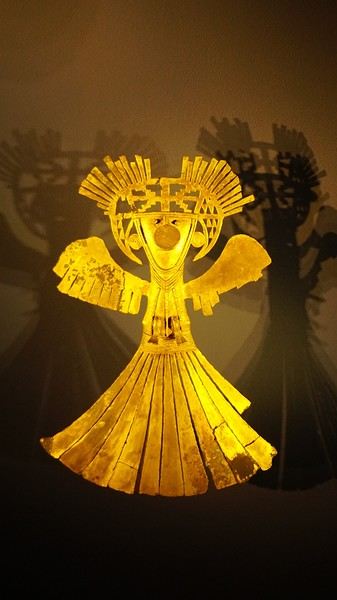
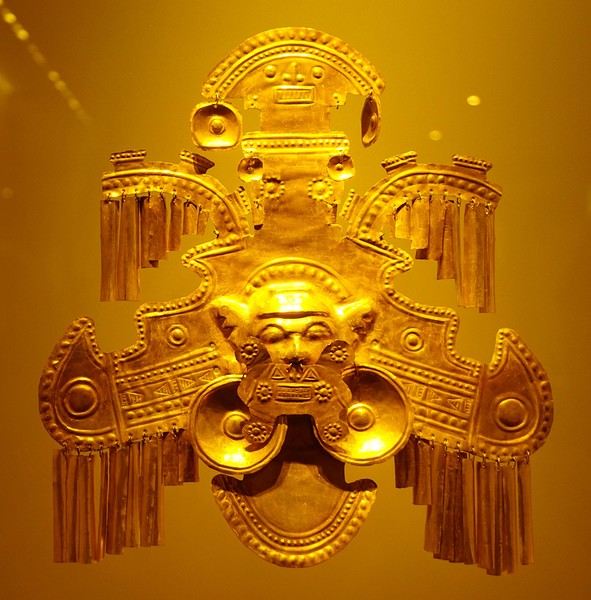
About two hours later, we decided to walk (careful, it’s a climb!) to the Monserrate cable car (3152m). Long wait to buy tickets and board the cable car! Once we arrived, a few raindrops, an impressive panoramic view of Bogotá’s vastness, a quick visit to the basilica (a pilgrimage site for Colombians), a walk through the tourist market, and at the top, plenty of small restaurants where we had our first Colombian meal. After our hearty lunch, we were lucky to see the sun return! No line for the descent. We then headed back to the hotel because Justine wanted to rest and recover from the trip. As for me, I continued my walk. I discovered a really nice craft market recommended by Flora, Pasaje Rivas, returned to Bolívar Square, and wandered through different streets, including the main pedestrian avenue (Calle 7), where there’s always something to see.
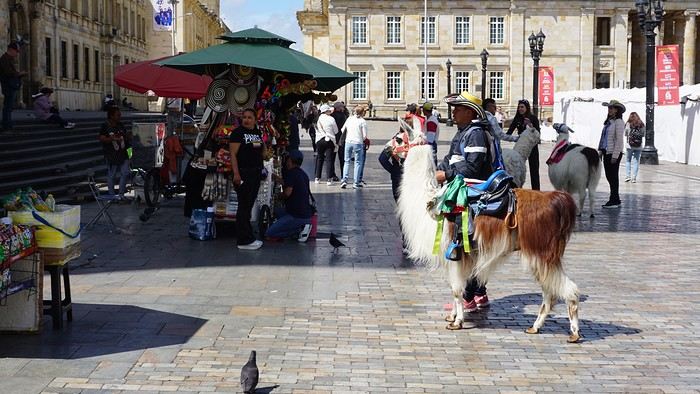
Tomorrow, a change of scenery as we head out for a hike in a small desert (Desierto de Chueca), located about 2 hours from Bogotá in the village of Nemecon. For this outing from Bogotá, with Flora’s help, we booked a car with a driver for the day. Flora also took care of booking the guide (since the site can only be visited with one). Nemecon (2/3) Today, we went to Nemecon to hike about 7.5 km in the ‘Desert of Checua.’ It’s nothing like sandy deserts! Instead, it’s geological formations sculpted by time, wind, and water. After two hours on the road—almost one of them spent navigating traffic jams with cars, trucks, buses, and a continuous flow of motorcycles on either side of our taxi—we reached Nemecon! The village center is really (too?) quiet. We met up with Deisy and headed toward the ‘desert,’ about twenty minutes away on a bumpy dirt road. Once there, a quick briefing, and off we went! Deisy didn’t stop talking (in Spanish) for over 3 hours!!! She told us so much about her region (flower farming, water management, traditions, songs, etc.), the origin of the site, and even mentioned Antonio Banderas, who filmed *The 33* in the village’s salt mine (the story of the survival of 33 Chilean miners after a collapse in their copper and gold mine). One hour of walking to reach the site, one hour to explore it, and one hour to return.
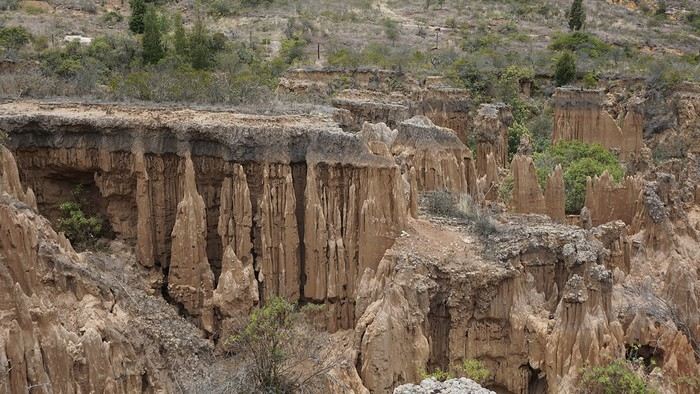
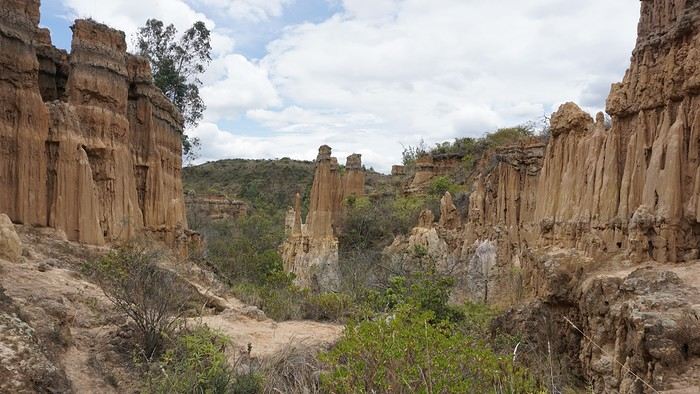
The advantage of this non-stop chatter was that it forced us to brush up on our Spanish at lightning speed. I even wondered if the effort to concentrate wasn’t more exhausting than the physical effort! Especially since on the way back, I got an oral quiz. Deisy wanted to make sure I remembered some of the information she’d given me during the visit: why is this rock white, that one red, and that one black? Back in the village, we had lunch at a restaurant recommended by Deisy before visiting the Nemecon salt mine. Before entering, a guide spent a good half-hour explaining the origin of the salt and the presence of many fossils in the area. Again, concentrating was tough because all the comments were exclusively in Spanish! An hour and a half wandering through the tunnels with a ‘lovely miner’s helmet’ on our heads!
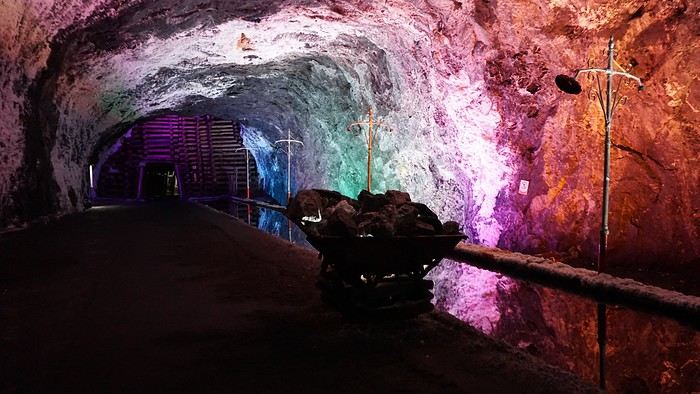
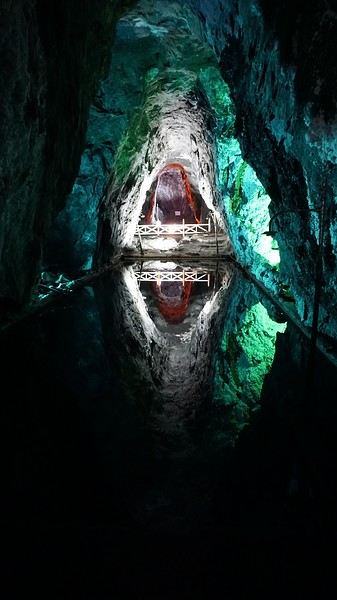
We met our driver at the mine entrance. The return to Bogotá was a bit faster, but traffic in the city center was still heavy! We arrived in front of our hotel between 8:00 and 8:30 PM. It’s been a pretty intense start to the trip! Tonight, our legs are tired. Hopefully, tomorrow will be a bit more relaxed! Bogotá (3/3) We started the day by visiting the Santa Clara Church Museum, located next to the presidential palace. Alejandra (from the local agency ‘Gaia Tours Colombia,’ which organized our stay in Caño Cristales (La Macarena)) had recommended this visit for its rich mural paintings.
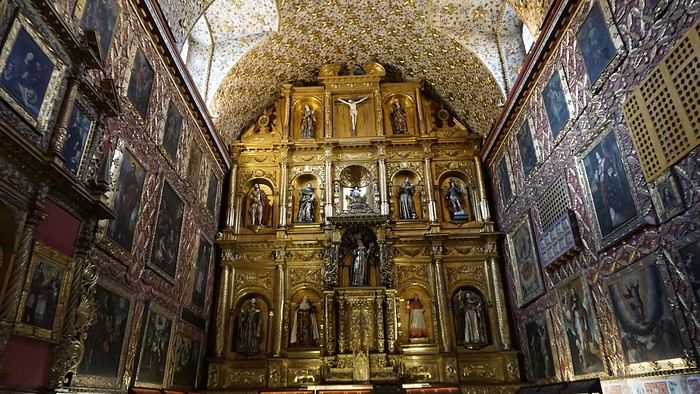
A few hundred meters further, after crossing the Plaza Mayor again, we visited the cultural complex housing the Botero Museum, the Mint Museum, and the Bank of the Republic Art Museum. Note that entry is free for all three museums. Botero Museum: There are fewer works by Botero here than in the Medellín museum, but more paintings and sculptures by other artists, all from Botero’s private collection (donated to Colombia). Mint Museum: We limited ourselves to visiting one room (on Flora’s advice) where three gold and gemstone monstrances and a Christ with a crown of emerald thorns are displayed. Photos are not allowed. Art Museum: We visited two temporary exhibitions. Lunchtime came quickly. We had a good meal at a reasonably priced small restaurant in the La Candelaria micro-district, near the Chorro de Quevedo square. We decided to spend the afternoon wandering the streets and alleys of the historic center to discover local street art.
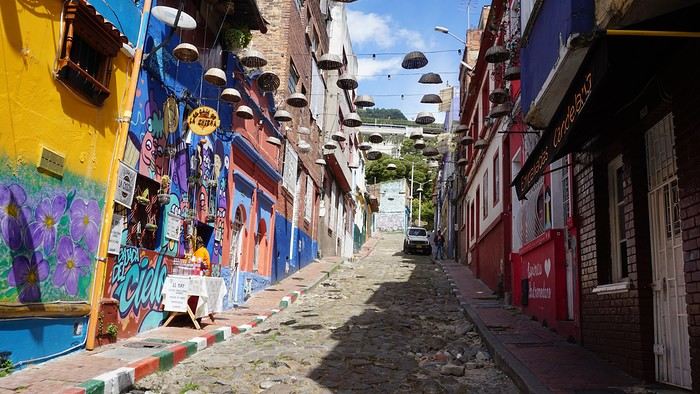
We also passed through very lively pedestrian streets. I also decided to revisit Pasaje Rivas to show Justine all the shops selling more or less artisanal products. Tomorrow morning, we fly to La Macarena at 10:30 AM. Not to dance (you’d be surprised if I told you we were going to take a South American dance class, right?!), but to visit the fabulous Caño Cristales, a river naturally colored by aquatic plants. The planned program includes hiking, horseback riding, canoeing, and swimming among these plants. This site was long inaccessible because the area was controlled by the FARC. Access and tourism development became possible after agreements and amnesty measures between the Colombian government and paramilitary groups. As in other regions, former FARC members have been able to transition into various tourism-related activities.
About two hours later, we decided to walk (careful, it’s a climb!) to the Monserrate cable car (3152m). Long wait to buy tickets and board the cable car! Once we arrived, a few raindrops, an impressive panoramic view of Bogotá’s vastness, a quick visit to the basilica (a pilgrimage site for Colombians), a walk through the tourist market, and at the top, plenty of small restaurants where we had our first Colombian meal. After our hearty lunch, we were lucky to see the sun return! No line for the descent. We then headed back to the hotel because Justine wanted to rest and recover from the trip. As for me, I continued my walk. I discovered a really nice craft market recommended by Flora, Pasaje Rivas, returned to Bolívar Square, and wandered through different streets, including the main pedestrian avenue (Calle 7), where there’s always something to see.
Tomorrow, a change of scenery as we head out for a hike in a small desert (Desierto de Chueca), located about 2 hours from Bogotá in the village of Nemecon. For this outing from Bogotá, with Flora’s help, we booked a car with a driver for the day. Flora also took care of booking the guide (since the site can only be visited with one). Nemecon (2/3) Today, we went to Nemecon to hike about 7.5 km in the ‘Desert of Checua.’ It’s nothing like sandy deserts! Instead, it’s geological formations sculpted by time, wind, and water. After two hours on the road—almost one of them spent navigating traffic jams with cars, trucks, buses, and a continuous flow of motorcycles on either side of our taxi—we reached Nemecon! The village center is really (too?) quiet. We met up with Deisy and headed toward the ‘desert,’ about twenty minutes away on a bumpy dirt road. Once there, a quick briefing, and off we went! Deisy didn’t stop talking (in Spanish) for over 3 hours!!! She told us so much about her region (flower farming, water management, traditions, songs, etc.), the origin of the site, and even mentioned Antonio Banderas, who filmed *The 33* in the village’s salt mine (the story of the survival of 33 Chilean miners after a collapse in their copper and gold mine). One hour of walking to reach the site, one hour to explore it, and one hour to return.
The advantage of this non-stop chatter was that it forced us to brush up on our Spanish at lightning speed. I even wondered if the effort to concentrate wasn’t more exhausting than the physical effort! Especially since on the way back, I got an oral quiz. Deisy wanted to make sure I remembered some of the information she’d given me during the visit: why is this rock white, that one red, and that one black? Back in the village, we had lunch at a restaurant recommended by Deisy before visiting the Nemecon salt mine. Before entering, a guide spent a good half-hour explaining the origin of the salt and the presence of many fossils in the area. Again, concentrating was tough because all the comments were exclusively in Spanish! An hour and a half wandering through the tunnels with a ‘lovely miner’s helmet’ on our heads!
We met our driver at the mine entrance. The return to Bogotá was a bit faster, but traffic in the city center was still heavy! We arrived in front of our hotel between 8:00 and 8:30 PM. It’s been a pretty intense start to the trip! Tonight, our legs are tired. Hopefully, tomorrow will be a bit more relaxed! Bogotá (3/3) We started the day by visiting the Santa Clara Church Museum, located next to the presidential palace. Alejandra (from the local agency ‘Gaia Tours Colombia,’ which organized our stay in Caño Cristales (La Macarena)) had recommended this visit for its rich mural paintings.
A few hundred meters further, after crossing the Plaza Mayor again, we visited the cultural complex housing the Botero Museum, the Mint Museum, and the Bank of the Republic Art Museum. Note that entry is free for all three museums. Botero Museum: There are fewer works by Botero here than in the Medellín museum, but more paintings and sculptures by other artists, all from Botero’s private collection (donated to Colombia). Mint Museum: We limited ourselves to visiting one room (on Flora’s advice) where three gold and gemstone monstrances and a Christ with a crown of emerald thorns are displayed. Photos are not allowed. Art Museum: We visited two temporary exhibitions. Lunchtime came quickly. We had a good meal at a reasonably priced small restaurant in the La Candelaria micro-district, near the Chorro de Quevedo square. We decided to spend the afternoon wandering the streets and alleys of the historic center to discover local street art.
We also passed through very lively pedestrian streets. I also decided to revisit Pasaje Rivas to show Justine all the shops selling more or less artisanal products. Tomorrow morning, we fly to La Macarena at 10:30 AM. Not to dance (you’d be surprised if I told you we were going to take a South American dance class, right?!), but to visit the fabulous Caño Cristales, a river naturally colored by aquatic plants. The planned program includes hiking, horseback riding, canoeing, and swimming among these plants. This site was long inaccessible because the area was controlled by the FARC. Access and tourism development became possible after agreements and amnesty measures between the Colombian government and paramilitary groups. As in other regions, former FARC members have been able to transition into various tourism-related activities.
And there you have it—promise made, promise kept. Here I go! I’m going to try and share our adventure under the Moroccan sun. I’ll do my best to capture how we felt during this trip. And I hope you’ll be kind to a newbie at this!
We planned this trip with the tips we got from this forum, so thank you to everyone who helped us prepare. Thanks to you, we had unforgettable moments.
Here’s our itinerary, which let us see the Atlas Mountains, the oases of the South, the sandy desert, and the Atlantic coast. We landed in Marrakech early in the morning, and our rental car agent was waiting for us at the airport. After sorting out the formalities, we left Marrakech heading toward Ouarzazate.
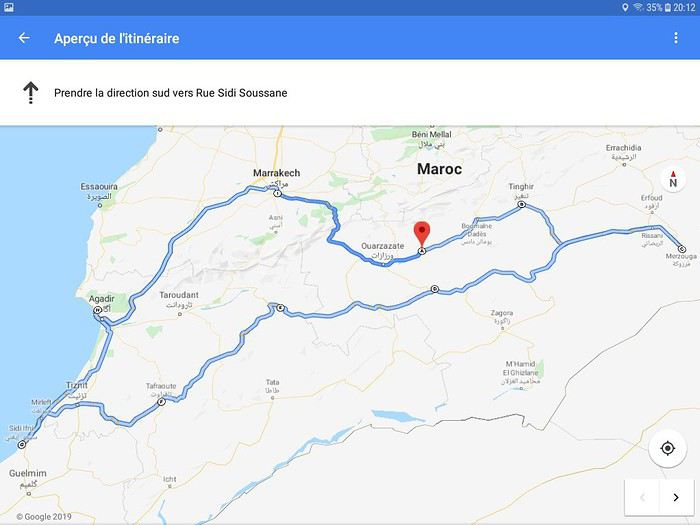
The heavy traffic in Marrakech quickly gave way to smooth driving. As soon as we left the city, it was calm. And right outside the city, we came across shepherds grazing their sheep by the roadside... It’s definitely a surprise at first! But yes... We’re in Morocco... No doubt about it... We’re in the thick of it! As we started gaining altitude, vendors waved at us, offering dried morels. At first, we weren’t sure what they were selling, but we stopped for tea on a terrace to admire the mountain scenery, and they offered us those famous morels again.
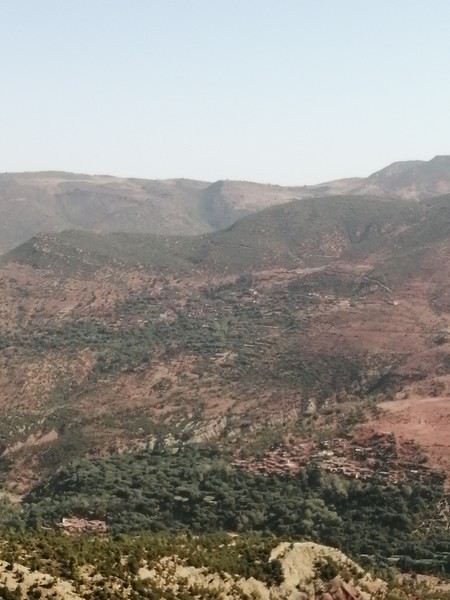
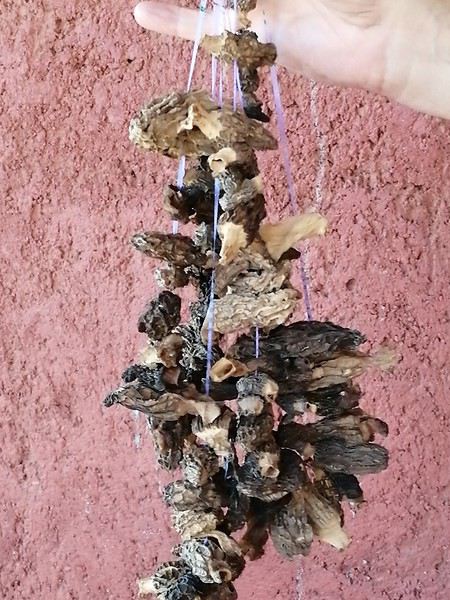
We continued our climb toward Tizi N Tichka... Gigantic valleys stretched out before us. With every turn, we discovered breathtaking landscapes.
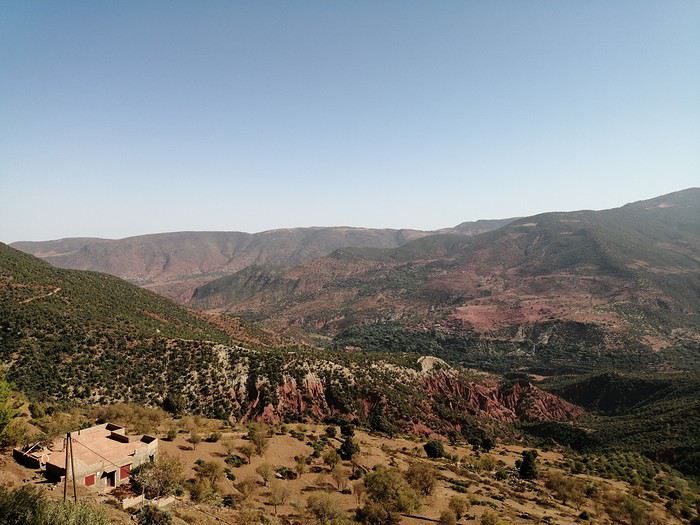
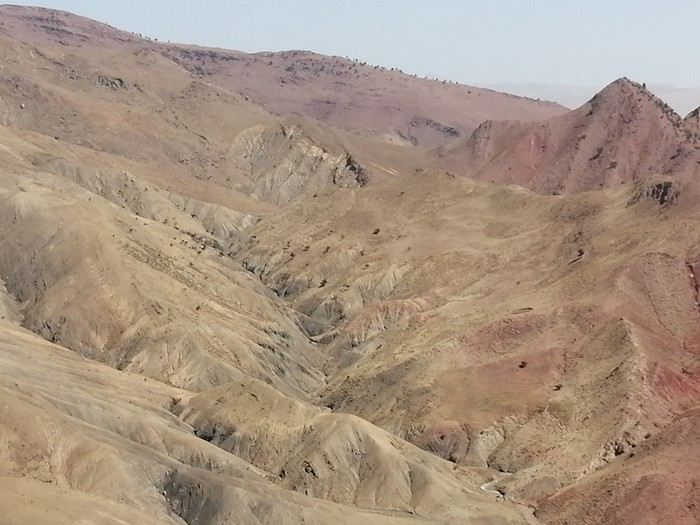
Villages built into the hillsides blended into the earth. It was strikingly simple yet harmonious.
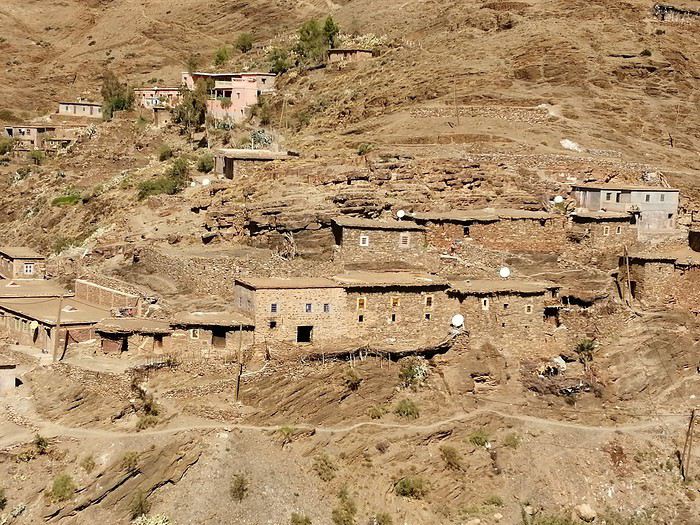
At the top of the pass, 2200m up, we stopped to soak in the moment, the fresh air, and the view.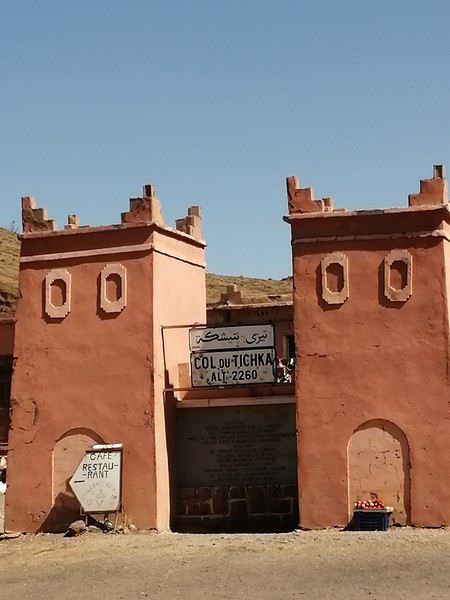
And we carried on toward Ouarzazate. The road was under construction. Mechanical giants were tackling the mountain. But the mountain was enormous. We were impressed by the scale of the work.
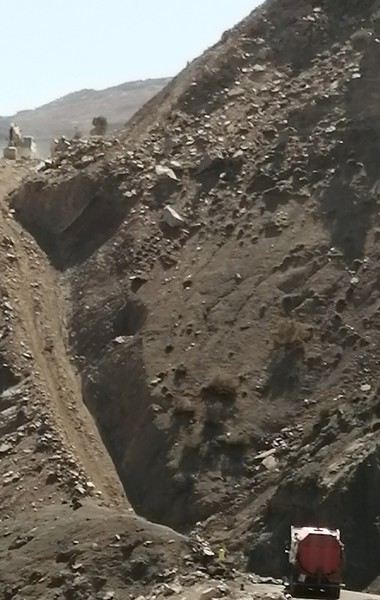
Then, we left the main road to head left toward Telouet... It was stunning. The colors changed. Maybe we felt less overwhelmed by the imposing Atlas. Just a personal impression!
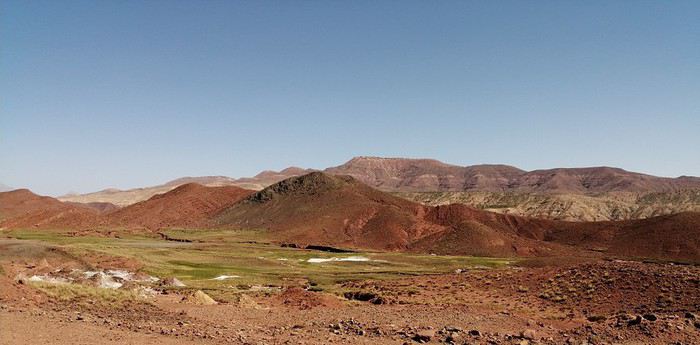
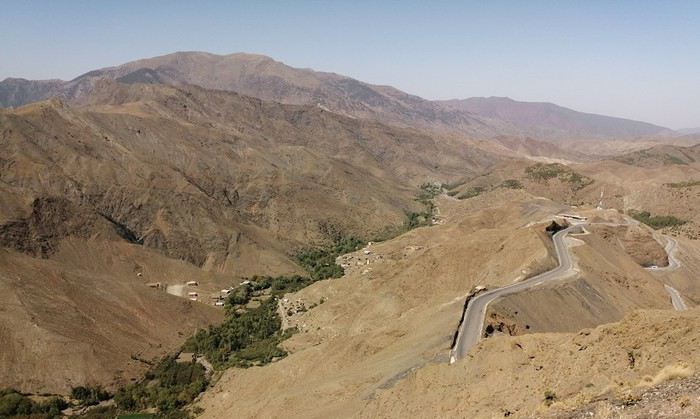
Right after passing through Telouet (maybe we’ll shock history buffs—we didn’t visit the kasbah), we went to see the salt mine. It was unexpected. Salt was everywhere. The stream water wound its way between salt crystals and waterfalls. It was really pretty. And then there was the cave. We had a guide for the visit. Stalactites and stalagmites crisscrossed here and there. At the back of the cave, we saw a small lake surrounded by crystals. It was beautiful.
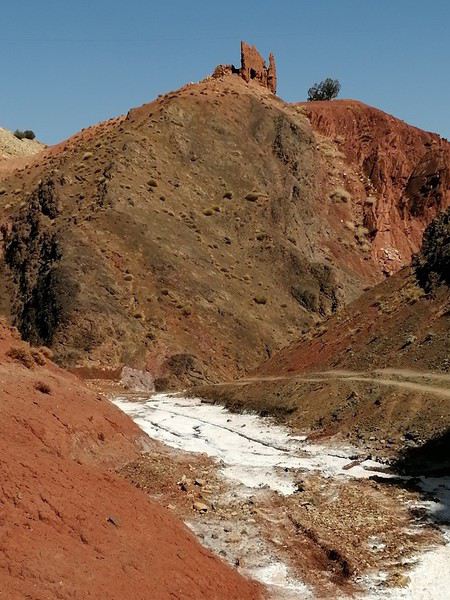
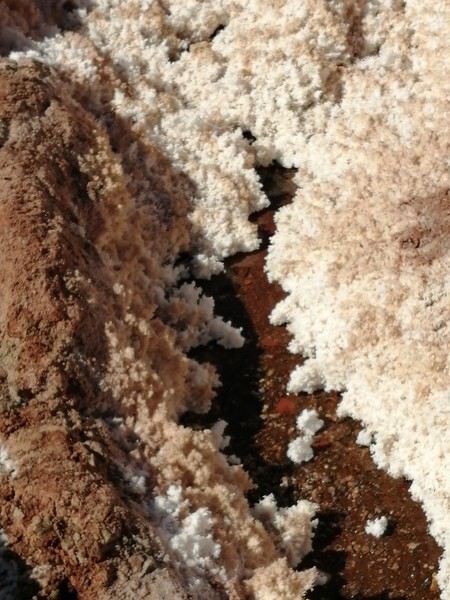
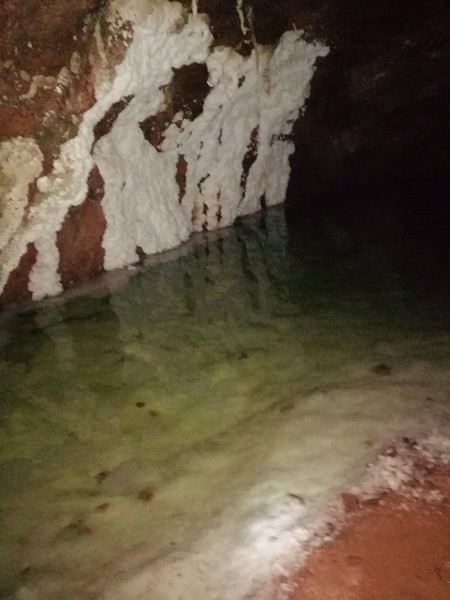
We hit the road again. We drove through stunning landscapes: vast plains for grazing herds, rivers nestled deep in the valleys.
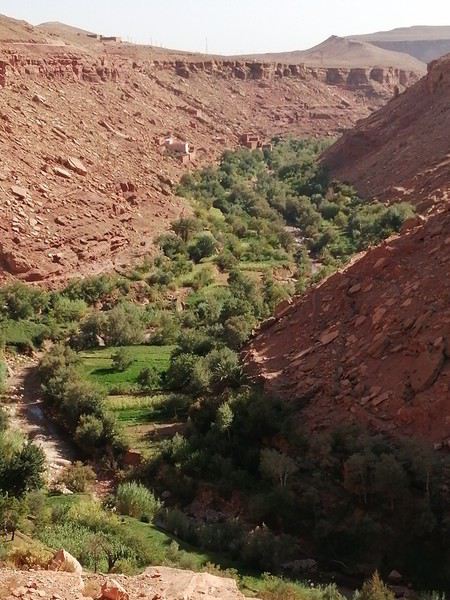
We proudly drove past the ksar Ait Benhaddou without stopping—just long enough to snap a quick photo and keep going so we’d arrive before nightfall.
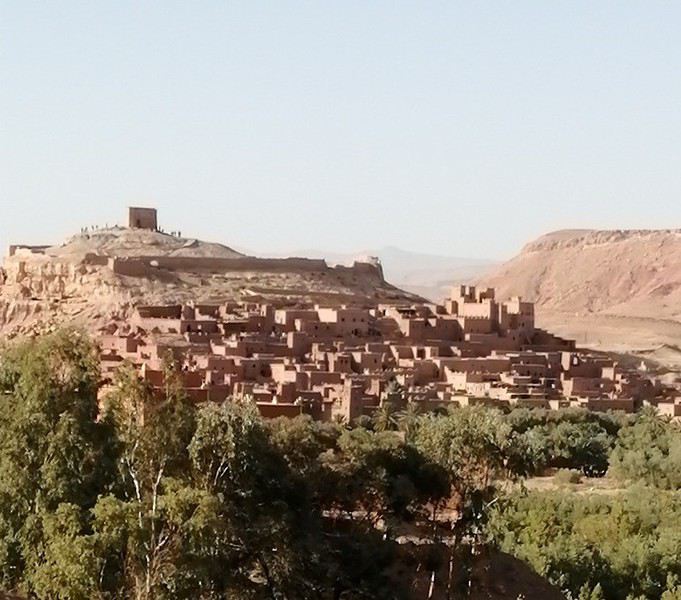
We made a few small purchases in Ouarzazate and headed straight for the Skoura palm grove, where we’d booked three nights at the guesthouse Kasbah La Palmeraie. Mohamed, the owner, welcomed us warmly, and we shared tea with the family. We felt right at home. We were made to feel welcome.
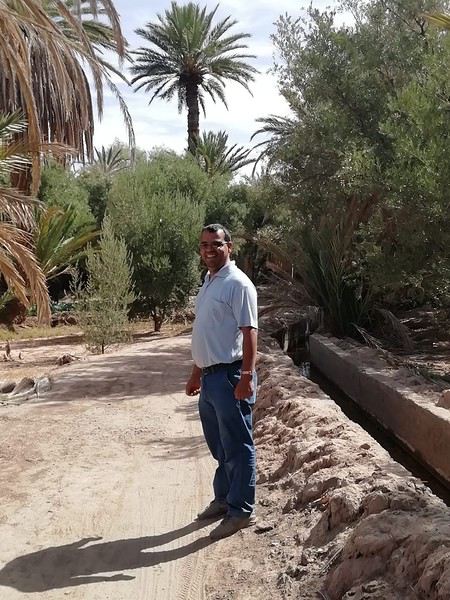
Dinner was a hit—a real Moroccan meal, a sweet-and-savory dish with steamed vermicelli and chicken. Delicious! A great surprise for us—we’d never tried it before.
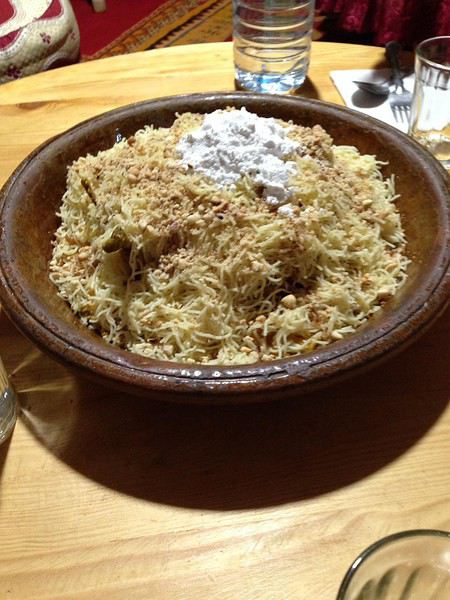
After such a long day that started so early, we were happy to crawl into bed. But we felt like the trip was off to the best possible start.
Until tomorrow, if you’d like!
We planned this trip with the tips we got from this forum, so thank you to everyone who helped us prepare. Thanks to you, we had unforgettable moments.
Here’s our itinerary, which let us see the Atlas Mountains, the oases of the South, the sandy desert, and the Atlantic coast. We landed in Marrakech early in the morning, and our rental car agent was waiting for us at the airport. After sorting out the formalities, we left Marrakech heading toward Ouarzazate.
The heavy traffic in Marrakech quickly gave way to smooth driving. As soon as we left the city, it was calm. And right outside the city, we came across shepherds grazing their sheep by the roadside... It’s definitely a surprise at first! But yes... We’re in Morocco... No doubt about it... We’re in the thick of it! As we started gaining altitude, vendors waved at us, offering dried morels. At first, we weren’t sure what they were selling, but we stopped for tea on a terrace to admire the mountain scenery, and they offered us those famous morels again.
We continued our climb toward Tizi N Tichka... Gigantic valleys stretched out before us. With every turn, we discovered breathtaking landscapes.
Villages built into the hillsides blended into the earth. It was strikingly simple yet harmonious.
At the top of the pass, 2200m up, we stopped to soak in the moment, the fresh air, and the view.
And we carried on toward Ouarzazate. The road was under construction. Mechanical giants were tackling the mountain. But the mountain was enormous. We were impressed by the scale of the work.
Then, we left the main road to head left toward Telouet... It was stunning. The colors changed. Maybe we felt less overwhelmed by the imposing Atlas. Just a personal impression!
Right after passing through Telouet (maybe we’ll shock history buffs—we didn’t visit the kasbah), we went to see the salt mine. It was unexpected. Salt was everywhere. The stream water wound its way between salt crystals and waterfalls. It was really pretty. And then there was the cave. We had a guide for the visit. Stalactites and stalagmites crisscrossed here and there. At the back of the cave, we saw a small lake surrounded by crystals. It was beautiful.
We hit the road again. We drove through stunning landscapes: vast plains for grazing herds, rivers nestled deep in the valleys.
We proudly drove past the ksar Ait Benhaddou without stopping—just long enough to snap a quick photo and keep going so we’d arrive before nightfall.
We made a few small purchases in Ouarzazate and headed straight for the Skoura palm grove, where we’d booked three nights at the guesthouse Kasbah La Palmeraie. Mohamed, the owner, welcomed us warmly, and we shared tea with the family. We felt right at home. We were made to feel welcome.
Dinner was a hit—a real Moroccan meal, a sweet-and-savory dish with steamed vermicelli and chicken. Delicious! A great surprise for us—we’d never tried it before.
After such a long day that started so early, we were happy to crawl into bed. But we felt like the trip was off to the best possible start.
Until tomorrow, if you’d like!
Hello forum,
Did any of you feel the same things we did in China?
We spent a good twenty days there in August. First, we traveled solo around Chengdu, then joined an organized tour for 12 days (Beijing, Pingyao, Xi'an, Guilin, Xingping, Yangshuo, Shanghai, Wuzhen) and extended our stay by 4 extra days to visit Zhangjiajie.
The landscapes were stunning, and we have unforgettable memories... but we were really disappointed by the following points:
- The food: way too spicy. Lacking in flavor, not much taste. I’m speaking "in general" because we did enjoy some good steamed dumplings, smoked pork, and other dumplings... But compared to Thailand, Cambodia, or India, Chinese cuisine didn’t impress us at all.
- The behavior of the Chinese: disrespectful, rushed, agitated. You constantly have to fight—people push, crowd, and overwhelm you... At the entrance to the Terracotta Army (and other sites), it’s a human tidal wave... and I mean that literally. We were carried by the crowd without even touching the ground. It was like a situation where you have one bowl of rice and 20,000 starving people diving for it...
You’re at a ticket counter, and they cut in front of you. You’re in line for boarding, suitcase ready to go on the conveyor belt, and someone shows up out of nowhere to put THEIR suitcase down... even though they have a flight ticket with THEIR seat number and won’t be leaving before you!!!! You’re getting on the bus, and someone shoves past you just so they don’t end up behind you.
It’s like these people only think about themselves. I didn’t see a single person let someone else go first or even ask—it’s as if politeness and respect are completely foreign to them.
It’s honestly exhausting and draining...
- Communication: In every other country we’ve visited, whether in Asia or Europe, we always manage—with English, a few words of Italian, French, or Spanish. In China, I’ll be blunt: if you don’t speak Chinese, you’re screwed. And yet, a pair of kids around ten or twelve years old asked us in English where we were from :)
- Understanding: Here’s the rule. Even if the person you’re talking to speaks a little English and says they understand you... make sure they *really* do, because 9 times out of 10, they don’t. Out of pride or just cluelessness, they’ll give you a big smile and nod, but in reality, they didn’t get what you were saying.
Several times with our group, in the evening at a restaurant, if we hadn’t been helped by someone at another table who spoke a little English, we’d still be there. The classic example: the waiter brings one menu (for 10 people at the table), and we’re all trying to explain that we need 4 or more menus. Five minutes later, he’s still staring at us with that same blank smile...
In 3* or 4* hotels, you go to the front desk for a hot water or AC issue. Three or four staff members just stand there beaming at you. You try to explain with photos or a translator, but in the end, you leave with the problem unresolved.
They don’t speak—they shout... on buses, in hotels...
We were also surprised to find that self-service laundromats were almost nonexistent. We got scammed once at a hotel with an astronomical bill!
As for flights, we flew Air China on the way there and Austrian Airlines on the way back—no comparison. Air China had zero service and food that was "baby food" quality. Austrian Airlines had multiple services, a decent meal, and smiling flight attendants.
I don’t know if any of you had the same experience in this country, but I’m definitely not eager to go back. Whereas if someone offered me India, Thailand, or Vietnam tomorrow, I’d be there in a heartbeat!!!
Did any of you feel the same things we did in China?
We spent a good twenty days there in August. First, we traveled solo around Chengdu, then joined an organized tour for 12 days (Beijing, Pingyao, Xi'an, Guilin, Xingping, Yangshuo, Shanghai, Wuzhen) and extended our stay by 4 extra days to visit Zhangjiajie.
The landscapes were stunning, and we have unforgettable memories... but we were really disappointed by the following points:
- The food: way too spicy. Lacking in flavor, not much taste. I’m speaking "in general" because we did enjoy some good steamed dumplings, smoked pork, and other dumplings... But compared to Thailand, Cambodia, or India, Chinese cuisine didn’t impress us at all.
- The behavior of the Chinese: disrespectful, rushed, agitated. You constantly have to fight—people push, crowd, and overwhelm you... At the entrance to the Terracotta Army (and other sites), it’s a human tidal wave... and I mean that literally. We were carried by the crowd without even touching the ground. It was like a situation where you have one bowl of rice and 20,000 starving people diving for it...
You’re at a ticket counter, and they cut in front of you. You’re in line for boarding, suitcase ready to go on the conveyor belt, and someone shows up out of nowhere to put THEIR suitcase down... even though they have a flight ticket with THEIR seat number and won’t be leaving before you!!!! You’re getting on the bus, and someone shoves past you just so they don’t end up behind you.
It’s like these people only think about themselves. I didn’t see a single person let someone else go first or even ask—it’s as if politeness and respect are completely foreign to them.
It’s honestly exhausting and draining...
- Communication: In every other country we’ve visited, whether in Asia or Europe, we always manage—with English, a few words of Italian, French, or Spanish. In China, I’ll be blunt: if you don’t speak Chinese, you’re screwed. And yet, a pair of kids around ten or twelve years old asked us in English where we were from :)
- Understanding: Here’s the rule. Even if the person you’re talking to speaks a little English and says they understand you... make sure they *really* do, because 9 times out of 10, they don’t. Out of pride or just cluelessness, they’ll give you a big smile and nod, but in reality, they didn’t get what you were saying.
Several times with our group, in the evening at a restaurant, if we hadn’t been helped by someone at another table who spoke a little English, we’d still be there. The classic example: the waiter brings one menu (for 10 people at the table), and we’re all trying to explain that we need 4 or more menus. Five minutes later, he’s still staring at us with that same blank smile...
In 3* or 4* hotels, you go to the front desk for a hot water or AC issue. Three or four staff members just stand there beaming at you. You try to explain with photos or a translator, but in the end, you leave with the problem unresolved.
They don’t speak—they shout... on buses, in hotels...
We were also surprised to find that self-service laundromats were almost nonexistent. We got scammed once at a hotel with an astronomical bill!
As for flights, we flew Air China on the way there and Austrian Airlines on the way back—no comparison. Air China had zero service and food that was "baby food" quality. Austrian Airlines had multiple services, a decent meal, and smiling flight attendants.
I don’t know if any of you had the same experience in this country, but I’m definitely not eager to go back. Whereas if someone offered me India, Thailand, or Vietnam tomorrow, I’d be there in a heartbeat!!!