Results for "collectif+ou+bus+|+50+>+148"
17288 results found.
Les Philippines, pour changer English translation pending
Dimanche 19/10/2003
Ouf, nous sommes enfin dans le 747 qui va nous amener à Manille. L'avion est plein comme un œuf. A Roissy, on nous a dit qu'il était surbooké de 73 places. Du coup, nous ne regrettons plus d'être arrivés un peu trop en avance. Nous avions prévu plus de temps que d'habitude à cause des factures de médicaments à faire viser par la Douane. En fait, l'opération a pris 5 mn. Aucun contrôle, il fallait seulement le double des factures que j'avais eu la bonne idée d'apporter.
Ensuite 55 mn de vol dans un B737 où nous étions bien serrés pour arriver à Francfort. Une heure plus tard, nous embarquons dans le 747, en premier SVP, grâce au jeune âge de Marc. Plus tard, nous regretterons le temps où voyager avec des enfants nous donnait des petits privilèges.
Lundi 20/10 22H
Manille, grande chambre d'hôtel impersonnelle, deux lits d'une personne seulement, mais deux grandes pièces et une banquette pour 1800P (les chambres à 1500P étant soi-disant toutes prises), et il y a une piscine. Pour la conversion des pesos en euros, ce n'est pas évident : 1€=63P, mais en francs, c'est très simple puisque 10P=1F. On va se retrouver à penser en francs alors que je fais la guerre à la maison pour qu'on n'en parle plus.
Nous devrions dormir car demain, nous nous levons à 6h pour prendre l'avion à 8h, mais pour notre horloge interne, il n'est que 16h. De plus, on se croirait à New-York à cause des incessants hurlements des sirènes que nous entendons depuis l'arrivée à l'hôtel. Eric a remarqué en descendant à la piscine un énorme incendie à 300m environ. D'où les sirènes. On dirait que tous les pompiers de Manille (12 millions d'habitants) convergent vers notre chambre. Pour dîner, nous sommes allés dans les rues adjacentes à l'hôtel et nous avons fini par manger dans la rue une soupe avec une assiette de riz et porc adobo, 190P pour nous 4. La sauce adobo est LA sauce philippine : sauce brune au soja, vinaigre et sucre. Nous voilà très vite dans le bain. Pas vu de blanc depuis notre arrivée à l'hôtel. Les sirènes continuent, le sommeil risque d'être léger. Vivement demain, Puerto Princesa devrait être beaucoup plus calme.
Mardi 21/10 le soir
Fin de la première journée, souvent la plus délicate dans ce genre de voyage. L'incendie d'hier était un très gros sinistre, c'est une gare de bus qui a brûlé, le feu s'étendant ensuit au bidonville voisin. Curieusement, la municipalité voulait récupérer le terrain du bidonville pour des projets immobiliers, mais les habitants s'y opposaient. Plus maintenant.
Pour arriver à Palawan, tout s'est passé comme prévu, après une nuit où personne n'a bien dormi sauf … moi. Incroyable. Une heure d'avion et nous voilà dans le petit aéroport provincial de Puerto. Nous récupérons les bagages et sortons.
Nous repérons immédiatement Lucie. Apparence sans surprise : femme brune, alerte, cheveux courts, lunettes, pas de maquillage. Pourrait interpréter une infirmière dans un téléfilm. Premier contact chaleureux. Elle est venue avec un couple d'amis philippins et leur véhicule, sorte de mini-songthaew (pour ceux qui connaissent la Thaïlande) bien pourri appelé ici multicab. Ouf, c'en est fini des 40 kg de médicaments et de vêtements que nous avons apportés pour le dispensaire.
10 mn plus tard, nous voilà à la pension où habite Lucie quand elle descend à Puerto. Le temps de poser les bagages et nous nous asseyons à l'extérieur avec Lucie. Nous avons bien sûr beaucoup à nous dire. Nous ne nous connaissons que par internet, il y a donc beaucoup de curiosité réciproque.
Comme nous l'avions devin��, son assoc se résume à 2 membres actifs, Lucie et Bernard, son ex-compagnon qui s'occupe de l'intendance en France. Le projet de dispensaire est un projet personnel de Lucie qu'elle mijote depuis une vingtaine d'années. Elle a attendu que ses 3 enfants (20, 23 et 25 ans maintenant) soient autonomes pour se lancer. Elle a beaucoup voyagé en Asie, avec en arrière-pensée le choix du pays où elle installerait son dispensaire. Elle a finalement choisi Palawan, à cause des besoins bien sûr, mais aussi parce que la majorité des habitants se débrouille bien en anglais. Le financement est en grande partie personnel. Le projet de couplage du dispensaire avec l'orphelinat a été abandonné, le directeur français de l'orphelinat étant parti avec la caisse après des rumeurs (fondées semble-t-il) de pédophilie (!). L'établissement est maintenant fermé.
Après quelques heures de papotage, nous allons faire un tour en ville. La pension est située en plein centre. Un bol de nouilles dans un resto viet, pas terribles, rien à voir avec les vietnamiens de l'avenue d'Ivry. Il y a sur Palawan, une minorité viet. A l'époque des boat people, les Philippines ont accueilli sou la pression "amicale" des USA, un contingent de réfugiés. Une partie d'entre eux a été installée sur Palawan où ils se sont assez bien intégrés. Il y a un quartier vietnamien, à la périphérie de Puerto, après l'aéroport.
Un petit tour chez un money changer pour changer quelques euros. Tout ça sans quitter l'avenue Rizal, épine dorsale de la ville qui n'a, de ce qu'on a vu aujourd'hui, aucun charme. Le pays est pauvre et ça se voit. Rizal est saturée de tricycles (prononcer à l'anglaise traillecikeul), sortes de tuk-tuk en plus rustique (si, si, c'est possible) qui créent un nuage de fumée puante nimbant tout le centre ville. Il y en avait 3000 à Puerto, mais le maire a récemment limité le nombre à 2000. C'est LE moyen de transport pour se déplacer en ville. Tarif : 4P/pers si la distance ne dépasse pas 2km ; au-delà, il faut négocier. On peut tenir à 5 dedans dont une personne sur la selle derrière le chauffeur. Ca paraît dingue, mais nous l'avons fait.
Petite sieste, puis nous allons dîner dans un des meilleurs restos de la ville, le Ka Lui, encore sur Rizal. Très belle salle joliment décorée avec parquet de bambou sur lequel nous marchons pieds nus. Pidio, le petit ami philippin de Lucie, nous accompagne. Il parle si doucement que nous avons du mal à le comprendre. Il est à Palawan pour son travail qui consiste à cartographier les zones de forêt vierge de l'île à partir de photos du satellite Spot, puis à vérifier sur place. Il est originaire de Manille. Le repas, constitué de plusieurs plats de poissons et crustacés est délicieux. Nous ne laissons rien. En amuse-gueule, nous avons dégusté des algues appelées ici "latok" et complètement inconnues chez nous. C'est croquant avec des vésicules qui craquent sous la dent et un goût de mer, un peu comme de l'huître. Ne pas confondre latok et lamok (moustique). Excellent repas, Lucie est étonnée de voir les garçons se régaler autant.
Mercredi 22/10, le soir
Hier, grosse nuit pour tout le monde (10 à 12 heures de sommeil selon les cas). Temps toujours menaçant. Un typhon passe près de nous, pas de chance. Déjeuner chez les amis de Lucie qui nous ont accueillis à l'aéroport. Malgré les consignes de Lucie, ils avaient préparé un super repas avec latok, coquillages, poulet adobo, et deux poissons différents servis avec une délicieuse sauce aigre-douce, le tout accompagné d'un légume inconnu (y compris de Lucie) et de riz bien sûr. C'était aussi bon qu'au resto d'hier soir. Accueil chaleureux de toute la famille, frères sœurs, grands-parents, … etc… plus en special guest, un beau-frère soi-disant journaliste pour l'armée et membre des services secrets en réalité. Rond, jovial, gourmand et très sympa, il a déjà rendu pas mal de services à Lucie depuis qu'elle a décidé de s'installer ici. Nous avons été reçus royalement alors que ce sont des gens très pauvres, Leia ne travaillant pas et Jong n'ayant pas de travail fixe. Leurs 2 fils de 8 et 10 ans (c'était l'anniversaire de ce dernier et nous lui avons offert 200P suivant le conseil de Lucie) étaient tétanisés et sont restés cloîtrés dans la petite maison. Il occupent 2 pièces d'une maison à loyer réduit appartenant à leur église, les logements voisins étant occupés par les frères de Jong. Si j'ai bien compris, le père, très malade, était le chef de cette communauté religieuse, avant de passer le relais à un de ses fils.
Avec Lucie, Jong et Leia, nous sommes ensuite allés voir un zoo à la sortie de la ville. Sorte de réserve d'animaux spécifiques de Palawan, nous avons vu des crocodiles de mer et de rivière (les plus gros, jusqu'à 9m), un aigle serpentaire, des aigles pêcheurs, …, et un animal que nous ne connaissions pas, le bearcat, petit plantigrade spécifique de Palawan. Sympa et ça nous sortait un peu. Chance, il n'a pas plu pendant la visite.
Le soir dîner au resto Kinabusch, très bon. Calamars grillés sur plaque de bronze pour les garçons, même chose mais avec du poisson en plus pour AM et soupe aigre aux crevettes, spécialité du coin pour moi. Pidio était avec nous. Il rentre demain à Manille pour 2 semaines de congés. Comme à chaque fois, il ira demain matin tôt au marché pour acheter 20 kg de poisson destiné à sa famille. Le poisson est nettement moins cher ici qu'à Manille. Lucie semble bien amoureuse. Au resto, impossible de tout payer malgré nos efforts, Pidio a même payé plus de la moitié (850P en tout pour nous 6).
Pidio est marié, enfin officiellement. Aux Philippines, le divorce est interdit (toujours l'église catho), ce qui est embêtant quand on veut refaire sa vie. Le couple de Pidio ne marchait plus bien et sa santé non plus. Grosse fatigue et brûlures d'estomac. Pidio va faire des analyses et le médecin lui demande où il prend ses repas. Pidio répond qu'il mange toujours chez lui, le médecin lui conseille alors de manger à l'extérieur pendant quelques temps. Son épouse avait une liaison et, voulant mettre un terme définitif à leur union, avait commencé à l'empoisonner. Pidio est devenu méfiant avec les femmes.
Le soir, nous nous sommes esquivés tôt pour les laisser passer la soirée ensemble. Après le déjeuner, coupure générale d'électricité, il paraît que ça arrive souvent ici. Le courant n'est revenu qu'en fin d'après-midi, juste avant la nuit.
Vendredi 24/10 9h
Sommes dans le bus de Port Barton attendant le départ, il pleut à seaux. Hier, pluie quasi ininterrompue, ça devient pénible. Sommes allés à Luzviminda (LUZon-VIsaias-MINdanao, 3 îles dont sont originaires les habitants du village) pour voir la maison-dispensaire de Lucie. Elle a loué un multicab car celui de Jong est trop pourri pour faire la route. Il y a environ 80 kg de bagages dont les 2 sacs que nous avons apportés. Jong, Leia et leur plus jeune fils nous accompagnent.
Voyage très lent, 1h30 pour faire 35 km. Luziminda est sur la route du sud, et donne sur la baie de Puerto. C'est un village d'agriculteurs et de pêcheurs. Un petit sentier mène à une première grande maison. C'est celle d'un américain qui n'y passe que quelques jours par an. En son absence, son gardien Greg peut en user à sa guise. Greg est le propriétaire du terrain où Lucie a fait construire. Passé cette maison, nous suivons un sentier jusqu'à la maison de Lucie. La maison de Greg et Deborah est un peu plus loin. Située sur une petite colline, la maison de Lucie est fonctionnelle. Une partie habitation de 30 m² avec un séjour-cuisine et 2 petites chambres, plus une salle d'eau attenante (non comptée dans les 30 m² ; une pièce de 20 m² pour le dispensaire. Une terrasse orientée ouest. Confort minimum, mais il y a quand même un frigo, une gazinière, une télé et 2 ensembles de fauteuils et canapés en bambou. Pas d'eau courante pour le moment, une pompe à main en contrebas.
Le site est agréable, on domine la verdure de laquelle émerge le toit de 3 habitations éparpillées. La maison est construite sur une solide base de béton montant jusqu'à 50 cm du sol, puis des panneaux de bambou tressé qu'il faudra revernir régulièrement, de même qu'il faudra traiter souvent toutes les parties en bois contre les termites. Comme trou perdu, c'est réussi. Il y a un sari-sari (épicerie) pas loin et c'est tout. Tout le reste doit être acheté à Puerto.
Nous aurions bien aimé faire une promenade pour découvrir les alentours et descendre jusqu'au port de pêche distant de 5 km, mais il pleut trop. Sommes restés sur la terrasse de 11h à 16h avec Lucie, Greg et Deborah, Jong et Leia, et leur fils qui s'est enfin déridé et qui joue bien avec Marc. Ils ont passé des heures à jouer avec 3 élastiques, ça change des tonnes de jouets dont nos enfants ne se servent pas. Deborah va aider Lucie au dispensaire qui ouvrira dans quelques semaines. Elle a l'air très gentille, mais ne parle pas bien anglais.
De retour à Puerto, je fais un saut au seul hypermarché de l'île, le NCCC qui se trouve tout près de la pension et y achète du rhum et du coca pour prendre l'apéro avec Lucie. A l'entrée du magasin, il y a une pancarte qui demande de déposer ses armes à la consigne. Tout le monde se fait palper avant de pénétrer dans la grande surface. Devant chaque banque, il y a un garde armé d'un fusil à pompe. J'ai demandé à Lucie s'il y avait souvent des braquages, réponse : non. C'est peut-être du folklore.
Après l'apéritif, nous allons dîner au Balinsasayaw, grand et excellent resto qui se trouve dans une rue parallèle à Rizal. Eric et moi partageons un plat de poisson cru mariné au kalamansi (petits agrumes de la forme d'une grosse bille et dont le jus a un goût entre le citron et la clémentine) et bien épicé et de succulents travers de porc.
Pendant le dîner, nous reparlons de ce que nous voulons faire le lendemain. Au début, nous avions prévu d'aller à Sabang pour voir la fameuse rivière souterraine, mais la route passe par un gué et il est tombé tellement d'eau que nous risquons de pas pouvoir passer. Lucie nous parle alors de Narra, un bled à 1h30 de route au sud, où un de ses copains tient un hôtel avec piscine au bord de la plage. Elle lui envoie un SMS pour savoir s'il y a de la place (3 bungalows seulement), auquel cas elle viendrait avec nous. Malheureusement, c'est plein. Nous décidons alors d'aller à Port Barton. C'est un petit village sur une plage de la côte ouest, à 150km au nord de Puerto, soit entre 4 et 12h (!) de jeepney. De là, nous pourrons éventuellement aller à Sabang en banca (bateaux traditionnels à double balancier) ou repartir vers Taytay et El Nido. Nous avons besoin de bouger, rester coincés à Puerto sous la pluie nous plombe le moral, surtout Anne-Marie qui est arrivée fatiguée et qui a mal dormi depuis.
Retour à l'hôtel. Après le coucher des enfants, nous nous retrouvons dehors avec Lucie et Roberto, le proprio de l'hôtel et ami de Lucie. Je ressors le rhum et nous finissons la soirée en rigolant bien, Roberto est très amusant et le rhum philippin n'est pas mauvais du tout, il fait penser au rhum cubain. Précisons que j'ai acheté la qualité supérieure, vieillie en fûts de chêne, à moins de 2 euros la bouteille. Roberto fait partie d'une des grandes familles de Puerto et il nous raconte plein d'histoires.
Revenons à aujourd'hui. Nous sommes donc installés dans le jeepney de Port Barton attendant le départ. Le terminal de bus et le marché ont récemment été déplacés du centre ville vers San Jose, un village à quelques km de Puerto afin de désengorger Puerto. Mais il y a toujours des bus qui partent du centre et qui font un arrêt à San Jose. Ici, rien n'est vraiment certain.
Ce matin, Pete, l'employé de nuit de la pension, très gentil et serviable, est allé vérifier que l'unique bus quotidien pour Port Barton partait bien du centre à 9h et nous a réservé des places. Nous arrivons en tricycle à 8h45. Le chauffeur nous dit qu'il ne partira qu'à 10h. Il pleut à verse et nous n'avons pas vu Lucie ce matin. La reverrons-nous ? Nous n'en savons rien, n'ayant alors aucune idée de notre itinéraire. De plus, il est possible de quitter Palawan par El Nido en avion ou bateau. Les conditions de voyage sont beaucoup plus rudes qu'en Thaïlande. Si le temps ne s'améliore pas rapidement, nous allons vers la galère. A 10h, le chauffeur vient spontanément nous prévenir que nous partirons un peu plus tard car il pleut trop. Pourquoi ?
A 10h30, la pluie est moins forte et nous partons. Nous comprenons tout de suite le problème du chauffeur : il n'y a pas d'essuie-glaces ! D'ailleurs, il n'y a pas de vitres au fenêtres, comme dans tous les jeepneys. Il y a tout de même un pare-brise que le chauffeur soulève en le maintenant ouvert avec un tasseau quand il ne pleut pas trop.
A 11h, nous sommes enfin sur la route, seule route goudronnée de l'île, dénommée sans honte "highway" et correspondant à une départementale en France. Le jeepney roule à bonne allure et à 14h, nous quittons la highway pour la piste de Port Barton. Jusque là, pas de problème, le jeepney s'arrête souvent pour embarquer ou débarquer des passagers et nous avons fait une pause déjeuner de 20 mn.
Maintenant, il s'agit de traverser l'île dans sa largeur (ici 22 km) par une piste de terre. Nous sommes optimistes et pensons qu'une heure suffira. Quelle erreur ! La piste est détrempée, parsemée d'ornières boueuses. Comme l'île est montagneuse, c'est une succession de montées et de descentes assez raides. Le jeepney part plusieurs fois en dérapage. AM et moi sommes assez crispés mais les enfants s'amusent bien. Il faut juste que le passager côté jungle fasse très attention à ne pas prendre de branche d'arbre dans la figure. Après la première fois, on est vigilant.
Une femme nous raconte que, de temps à autre, le jeepney se retrouve coincé ou en panne et que les passagers doivent alors passer la nuit sur place. Elle-même y a eu droit quelques mois auparavant. Entendant cela, AM flippe à l'idée de passer la nuit dans la jungle avec les moustiques, sangsues et autres bestiaux inquiétants. La femme se marre et je me demande si elle n'est pas un peu taquine.
Le chauffeur Toto est un as et connaît la route par cœur. Il faut dire qu'il ne fait que cet itinéraire avec son propre jeepney dénommé "Tiger" et qu'il habite Port Barton. Nous avons droit à tout excepté l'accident et la panne, ce qui est déjà bien. Un pont est endommagé, nous descendons tous et traversons le pont à pied avant d'observer la manœuvre de Toto. Nous nous enlisons 3 fois. La première, les 2 jeunes acolytes du chauffeur et des passagers du bus remplissent les ornières de pierres et nous passons. Les 2 suivantes, le jeepney est bien coincé et se dégage grâce au treuil intégré à l'avant comme sur un 4X4. Une fois, au moment de descendre, un passager empêche Marc de saisir une barre verticale, montrant nonchalamment un ver qui se tortille sur la barre. C'est une sangsue ! Je la prends avec un mouchoir en papier et la jette.
Nous arrivons finalement à bon port (Barton) à 16h30, donc nous avons mis 2h30 pour 22km. Nous nous installons à l'Eldorado, au nord du village. La GH est vide de touristes. Dîner sur place préparé par la patronne Lucy, une veuve philippine d'une cinquantaine d'années, très accueillante. Son mari était un australien né en Norvège dont elle a eu deux enfants, un garçon de 8 ans et une fille de 10. Alors que le garçon fait philippin, la fille, déjà très grande, offre un mélange étonnant, on dirait une scandinave aux yeux bridés et aux cheveux noirs, très jolie.
Très rapidement, Marc joue avec le petit garçon. Souvent, les gens pensent que voyager avec des enfants est un handicap alors que c'est souvent un moyen d'approcher plus vite les locaux.
Espérons que le soleil se montre enfin demain. Port Barton a l'air très sympa et nous n'avons pas vu de touriste, le seul étranger étant Mike qui nous a invité à passer chez lui où il vit avec son jeune compagnon philippin.
Nous voulions venir ici, pour changer des pays un peu trop balisés que sont La Thaïlande, Bali ou la Malaisie, c'est réussi.
Ouf, nous sommes enfin dans le 747 qui va nous amener à Manille. L'avion est plein comme un œuf. A Roissy, on nous a dit qu'il était surbooké de 73 places. Du coup, nous ne regrettons plus d'être arrivés un peu trop en avance. Nous avions prévu plus de temps que d'habitude à cause des factures de médicaments à faire viser par la Douane. En fait, l'opération a pris 5 mn. Aucun contrôle, il fallait seulement le double des factures que j'avais eu la bonne idée d'apporter.
Ensuite 55 mn de vol dans un B737 où nous étions bien serrés pour arriver à Francfort. Une heure plus tard, nous embarquons dans le 747, en premier SVP, grâce au jeune âge de Marc. Plus tard, nous regretterons le temps où voyager avec des enfants nous donnait des petits privilèges.
Lundi 20/10 22H
Manille, grande chambre d'hôtel impersonnelle, deux lits d'une personne seulement, mais deux grandes pièces et une banquette pour 1800P (les chambres à 1500P étant soi-disant toutes prises), et il y a une piscine. Pour la conversion des pesos en euros, ce n'est pas évident : 1€=63P, mais en francs, c'est très simple puisque 10P=1F. On va se retrouver à penser en francs alors que je fais la guerre à la maison pour qu'on n'en parle plus.
Nous devrions dormir car demain, nous nous levons à 6h pour prendre l'avion à 8h, mais pour notre horloge interne, il n'est que 16h. De plus, on se croirait à New-York à cause des incessants hurlements des sirènes que nous entendons depuis l'arrivée à l'hôtel. Eric a remarqué en descendant à la piscine un énorme incendie à 300m environ. D'où les sirènes. On dirait que tous les pompiers de Manille (12 millions d'habitants) convergent vers notre chambre. Pour dîner, nous sommes allés dans les rues adjacentes à l'hôtel et nous avons fini par manger dans la rue une soupe avec une assiette de riz et porc adobo, 190P pour nous 4. La sauce adobo est LA sauce philippine : sauce brune au soja, vinaigre et sucre. Nous voilà très vite dans le bain. Pas vu de blanc depuis notre arrivée à l'hôtel. Les sirènes continuent, le sommeil risque d'être léger. Vivement demain, Puerto Princesa devrait être beaucoup plus calme.
Mardi 21/10 le soir
Fin de la première journée, souvent la plus délicate dans ce genre de voyage. L'incendie d'hier était un très gros sinistre, c'est une gare de bus qui a brûlé, le feu s'étendant ensuit au bidonville voisin. Curieusement, la municipalité voulait récupérer le terrain du bidonville pour des projets immobiliers, mais les habitants s'y opposaient. Plus maintenant.
Pour arriver à Palawan, tout s'est passé comme prévu, après une nuit où personne n'a bien dormi sauf … moi. Incroyable. Une heure d'avion et nous voilà dans le petit aéroport provincial de Puerto. Nous récupérons les bagages et sortons.
Nous repérons immédiatement Lucie. Apparence sans surprise : femme brune, alerte, cheveux courts, lunettes, pas de maquillage. Pourrait interpréter une infirmière dans un téléfilm. Premier contact chaleureux. Elle est venue avec un couple d'amis philippins et leur véhicule, sorte de mini-songthaew (pour ceux qui connaissent la Thaïlande) bien pourri appelé ici multicab. Ouf, c'en est fini des 40 kg de médicaments et de vêtements que nous avons apportés pour le dispensaire.
10 mn plus tard, nous voilà à la pension où habite Lucie quand elle descend à Puerto. Le temps de poser les bagages et nous nous asseyons à l'extérieur avec Lucie. Nous avons bien sûr beaucoup à nous dire. Nous ne nous connaissons que par internet, il y a donc beaucoup de curiosité réciproque.
Comme nous l'avions devin��, son assoc se résume à 2 membres actifs, Lucie et Bernard, son ex-compagnon qui s'occupe de l'intendance en France. Le projet de dispensaire est un projet personnel de Lucie qu'elle mijote depuis une vingtaine d'années. Elle a attendu que ses 3 enfants (20, 23 et 25 ans maintenant) soient autonomes pour se lancer. Elle a beaucoup voyagé en Asie, avec en arrière-pensée le choix du pays où elle installerait son dispensaire. Elle a finalement choisi Palawan, à cause des besoins bien sûr, mais aussi parce que la majorité des habitants se débrouille bien en anglais. Le financement est en grande partie personnel. Le projet de couplage du dispensaire avec l'orphelinat a été abandonné, le directeur français de l'orphelinat étant parti avec la caisse après des rumeurs (fondées semble-t-il) de pédophilie (!). L'établissement est maintenant fermé.
Après quelques heures de papotage, nous allons faire un tour en ville. La pension est située en plein centre. Un bol de nouilles dans un resto viet, pas terribles, rien à voir avec les vietnamiens de l'avenue d'Ivry. Il y a sur Palawan, une minorité viet. A l'époque des boat people, les Philippines ont accueilli sou la pression "amicale" des USA, un contingent de réfugiés. Une partie d'entre eux a été installée sur Palawan où ils se sont assez bien intégrés. Il y a un quartier vietnamien, à la périphérie de Puerto, après l'aéroport.
Un petit tour chez un money changer pour changer quelques euros. Tout ça sans quitter l'avenue Rizal, épine dorsale de la ville qui n'a, de ce qu'on a vu aujourd'hui, aucun charme. Le pays est pauvre et ça se voit. Rizal est saturée de tricycles (prononcer à l'anglaise traillecikeul), sortes de tuk-tuk en plus rustique (si, si, c'est possible) qui créent un nuage de fumée puante nimbant tout le centre ville. Il y en avait 3000 à Puerto, mais le maire a récemment limité le nombre à 2000. C'est LE moyen de transport pour se déplacer en ville. Tarif : 4P/pers si la distance ne dépasse pas 2km ; au-delà, il faut négocier. On peut tenir à 5 dedans dont une personne sur la selle derrière le chauffeur. Ca paraît dingue, mais nous l'avons fait.
Petite sieste, puis nous allons dîner dans un des meilleurs restos de la ville, le Ka Lui, encore sur Rizal. Très belle salle joliment décorée avec parquet de bambou sur lequel nous marchons pieds nus. Pidio, le petit ami philippin de Lucie, nous accompagne. Il parle si doucement que nous avons du mal à le comprendre. Il est à Palawan pour son travail qui consiste à cartographier les zones de forêt vierge de l'île à partir de photos du satellite Spot, puis à vérifier sur place. Il est originaire de Manille. Le repas, constitué de plusieurs plats de poissons et crustacés est délicieux. Nous ne laissons rien. En amuse-gueule, nous avons dégusté des algues appelées ici "latok" et complètement inconnues chez nous. C'est croquant avec des vésicules qui craquent sous la dent et un goût de mer, un peu comme de l'huître. Ne pas confondre latok et lamok (moustique). Excellent repas, Lucie est étonnée de voir les garçons se régaler autant.
Mercredi 22/10, le soir
Hier, grosse nuit pour tout le monde (10 à 12 heures de sommeil selon les cas). Temps toujours menaçant. Un typhon passe près de nous, pas de chance. Déjeuner chez les amis de Lucie qui nous ont accueillis à l'aéroport. Malgré les consignes de Lucie, ils avaient préparé un super repas avec latok, coquillages, poulet adobo, et deux poissons différents servis avec une délicieuse sauce aigre-douce, le tout accompagné d'un légume inconnu (y compris de Lucie) et de riz bien sûr. C'était aussi bon qu'au resto d'hier soir. Accueil chaleureux de toute la famille, frères sœurs, grands-parents, … etc… plus en special guest, un beau-frère soi-disant journaliste pour l'armée et membre des services secrets en réalité. Rond, jovial, gourmand et très sympa, il a déjà rendu pas mal de services à Lucie depuis qu'elle a décidé de s'installer ici. Nous avons été reçus royalement alors que ce sont des gens très pauvres, Leia ne travaillant pas et Jong n'ayant pas de travail fixe. Leurs 2 fils de 8 et 10 ans (c'était l'anniversaire de ce dernier et nous lui avons offert 200P suivant le conseil de Lucie) étaient tétanisés et sont restés cloîtrés dans la petite maison. Il occupent 2 pièces d'une maison à loyer réduit appartenant à leur église, les logements voisins étant occupés par les frères de Jong. Si j'ai bien compris, le père, très malade, était le chef de cette communauté religieuse, avant de passer le relais à un de ses fils.
Avec Lucie, Jong et Leia, nous sommes ensuite allés voir un zoo à la sortie de la ville. Sorte de réserve d'animaux spécifiques de Palawan, nous avons vu des crocodiles de mer et de rivière (les plus gros, jusqu'à 9m), un aigle serpentaire, des aigles pêcheurs, …, et un animal que nous ne connaissions pas, le bearcat, petit plantigrade spécifique de Palawan. Sympa et ça nous sortait un peu. Chance, il n'a pas plu pendant la visite.
Le soir dîner au resto Kinabusch, très bon. Calamars grillés sur plaque de bronze pour les garçons, même chose mais avec du poisson en plus pour AM et soupe aigre aux crevettes, spécialité du coin pour moi. Pidio était avec nous. Il rentre demain à Manille pour 2 semaines de congés. Comme à chaque fois, il ira demain matin tôt au marché pour acheter 20 kg de poisson destiné à sa famille. Le poisson est nettement moins cher ici qu'à Manille. Lucie semble bien amoureuse. Au resto, impossible de tout payer malgré nos efforts, Pidio a même payé plus de la moitié (850P en tout pour nous 6).
Pidio est marié, enfin officiellement. Aux Philippines, le divorce est interdit (toujours l'église catho), ce qui est embêtant quand on veut refaire sa vie. Le couple de Pidio ne marchait plus bien et sa santé non plus. Grosse fatigue et brûlures d'estomac. Pidio va faire des analyses et le médecin lui demande où il prend ses repas. Pidio répond qu'il mange toujours chez lui, le médecin lui conseille alors de manger à l'extérieur pendant quelques temps. Son épouse avait une liaison et, voulant mettre un terme définitif à leur union, avait commencé à l'empoisonner. Pidio est devenu méfiant avec les femmes.
Le soir, nous nous sommes esquivés tôt pour les laisser passer la soirée ensemble. Après le déjeuner, coupure générale d'électricité, il paraît que ça arrive souvent ici. Le courant n'est revenu qu'en fin d'après-midi, juste avant la nuit.
Vendredi 24/10 9h
Sommes dans le bus de Port Barton attendant le départ, il pleut à seaux. Hier, pluie quasi ininterrompue, ça devient pénible. Sommes allés à Luzviminda (LUZon-VIsaias-MINdanao, 3 îles dont sont originaires les habitants du village) pour voir la maison-dispensaire de Lucie. Elle a loué un multicab car celui de Jong est trop pourri pour faire la route. Il y a environ 80 kg de bagages dont les 2 sacs que nous avons apportés. Jong, Leia et leur plus jeune fils nous accompagnent.
Voyage très lent, 1h30 pour faire 35 km. Luziminda est sur la route du sud, et donne sur la baie de Puerto. C'est un village d'agriculteurs et de pêcheurs. Un petit sentier mène à une première grande maison. C'est celle d'un américain qui n'y passe que quelques jours par an. En son absence, son gardien Greg peut en user à sa guise. Greg est le propriétaire du terrain où Lucie a fait construire. Passé cette maison, nous suivons un sentier jusqu'à la maison de Lucie. La maison de Greg et Deborah est un peu plus loin. Située sur une petite colline, la maison de Lucie est fonctionnelle. Une partie habitation de 30 m² avec un séjour-cuisine et 2 petites chambres, plus une salle d'eau attenante (non comptée dans les 30 m² ; une pièce de 20 m² pour le dispensaire. Une terrasse orientée ouest. Confort minimum, mais il y a quand même un frigo, une gazinière, une télé et 2 ensembles de fauteuils et canapés en bambou. Pas d'eau courante pour le moment, une pompe à main en contrebas.
Le site est agréable, on domine la verdure de laquelle émerge le toit de 3 habitations éparpillées. La maison est construite sur une solide base de béton montant jusqu'à 50 cm du sol, puis des panneaux de bambou tressé qu'il faudra revernir régulièrement, de même qu'il faudra traiter souvent toutes les parties en bois contre les termites. Comme trou perdu, c'est réussi. Il y a un sari-sari (épicerie) pas loin et c'est tout. Tout le reste doit être acheté à Puerto.
Nous aurions bien aimé faire une promenade pour découvrir les alentours et descendre jusqu'au port de pêche distant de 5 km, mais il pleut trop. Sommes restés sur la terrasse de 11h à 16h avec Lucie, Greg et Deborah, Jong et Leia, et leur fils qui s'est enfin déridé et qui joue bien avec Marc. Ils ont passé des heures à jouer avec 3 élastiques, ça change des tonnes de jouets dont nos enfants ne se servent pas. Deborah va aider Lucie au dispensaire qui ouvrira dans quelques semaines. Elle a l'air très gentille, mais ne parle pas bien anglais.
De retour à Puerto, je fais un saut au seul hypermarché de l'île, le NCCC qui se trouve tout près de la pension et y achète du rhum et du coca pour prendre l'apéro avec Lucie. A l'entrée du magasin, il y a une pancarte qui demande de déposer ses armes à la consigne. Tout le monde se fait palper avant de pénétrer dans la grande surface. Devant chaque banque, il y a un garde armé d'un fusil à pompe. J'ai demandé à Lucie s'il y avait souvent des braquages, réponse : non. C'est peut-être du folklore.
Après l'apéritif, nous allons dîner au Balinsasayaw, grand et excellent resto qui se trouve dans une rue parallèle à Rizal. Eric et moi partageons un plat de poisson cru mariné au kalamansi (petits agrumes de la forme d'une grosse bille et dont le jus a un goût entre le citron et la clémentine) et bien épicé et de succulents travers de porc.
Pendant le dîner, nous reparlons de ce que nous voulons faire le lendemain. Au début, nous avions prévu d'aller à Sabang pour voir la fameuse rivière souterraine, mais la route passe par un gué et il est tombé tellement d'eau que nous risquons de pas pouvoir passer. Lucie nous parle alors de Narra, un bled à 1h30 de route au sud, où un de ses copains tient un hôtel avec piscine au bord de la plage. Elle lui envoie un SMS pour savoir s'il y a de la place (3 bungalows seulement), auquel cas elle viendrait avec nous. Malheureusement, c'est plein. Nous décidons alors d'aller à Port Barton. C'est un petit village sur une plage de la côte ouest, à 150km au nord de Puerto, soit entre 4 et 12h (!) de jeepney. De là, nous pourrons éventuellement aller à Sabang en banca (bateaux traditionnels à double balancier) ou repartir vers Taytay et El Nido. Nous avons besoin de bouger, rester coincés à Puerto sous la pluie nous plombe le moral, surtout Anne-Marie qui est arrivée fatiguée et qui a mal dormi depuis.
Retour à l'hôtel. Après le coucher des enfants, nous nous retrouvons dehors avec Lucie et Roberto, le proprio de l'hôtel et ami de Lucie. Je ressors le rhum et nous finissons la soirée en rigolant bien, Roberto est très amusant et le rhum philippin n'est pas mauvais du tout, il fait penser au rhum cubain. Précisons que j'ai acheté la qualité supérieure, vieillie en fûts de chêne, à moins de 2 euros la bouteille. Roberto fait partie d'une des grandes familles de Puerto et il nous raconte plein d'histoires.
Revenons à aujourd'hui. Nous sommes donc installés dans le jeepney de Port Barton attendant le départ. Le terminal de bus et le marché ont récemment été déplacés du centre ville vers San Jose, un village à quelques km de Puerto afin de désengorger Puerto. Mais il y a toujours des bus qui partent du centre et qui font un arrêt à San Jose. Ici, rien n'est vraiment certain.
Ce matin, Pete, l'employé de nuit de la pension, très gentil et serviable, est allé vérifier que l'unique bus quotidien pour Port Barton partait bien du centre à 9h et nous a réservé des places. Nous arrivons en tricycle à 8h45. Le chauffeur nous dit qu'il ne partira qu'à 10h. Il pleut à verse et nous n'avons pas vu Lucie ce matin. La reverrons-nous ? Nous n'en savons rien, n'ayant alors aucune idée de notre itinéraire. De plus, il est possible de quitter Palawan par El Nido en avion ou bateau. Les conditions de voyage sont beaucoup plus rudes qu'en Thaïlande. Si le temps ne s'améliore pas rapidement, nous allons vers la galère. A 10h, le chauffeur vient spontanément nous prévenir que nous partirons un peu plus tard car il pleut trop. Pourquoi ?
A 10h30, la pluie est moins forte et nous partons. Nous comprenons tout de suite le problème du chauffeur : il n'y a pas d'essuie-glaces ! D'ailleurs, il n'y a pas de vitres au fenêtres, comme dans tous les jeepneys. Il y a tout de même un pare-brise que le chauffeur soulève en le maintenant ouvert avec un tasseau quand il ne pleut pas trop.
A 11h, nous sommes enfin sur la route, seule route goudronnée de l'île, dénommée sans honte "highway" et correspondant à une départementale en France. Le jeepney roule à bonne allure et à 14h, nous quittons la highway pour la piste de Port Barton. Jusque là, pas de problème, le jeepney s'arrête souvent pour embarquer ou débarquer des passagers et nous avons fait une pause déjeuner de 20 mn.
Maintenant, il s'agit de traverser l'île dans sa largeur (ici 22 km) par une piste de terre. Nous sommes optimistes et pensons qu'une heure suffira. Quelle erreur ! La piste est détrempée, parsemée d'ornières boueuses. Comme l'île est montagneuse, c'est une succession de montées et de descentes assez raides. Le jeepney part plusieurs fois en dérapage. AM et moi sommes assez crispés mais les enfants s'amusent bien. Il faut juste que le passager côté jungle fasse très attention à ne pas prendre de branche d'arbre dans la figure. Après la première fois, on est vigilant.
Une femme nous raconte que, de temps à autre, le jeepney se retrouve coincé ou en panne et que les passagers doivent alors passer la nuit sur place. Elle-même y a eu droit quelques mois auparavant. Entendant cela, AM flippe à l'idée de passer la nuit dans la jungle avec les moustiques, sangsues et autres bestiaux inquiétants. La femme se marre et je me demande si elle n'est pas un peu taquine.
Le chauffeur Toto est un as et connaît la route par cœur. Il faut dire qu'il ne fait que cet itinéraire avec son propre jeepney dénommé "Tiger" et qu'il habite Port Barton. Nous avons droit à tout excepté l'accident et la panne, ce qui est déjà bien. Un pont est endommagé, nous descendons tous et traversons le pont à pied avant d'observer la manœuvre de Toto. Nous nous enlisons 3 fois. La première, les 2 jeunes acolytes du chauffeur et des passagers du bus remplissent les ornières de pierres et nous passons. Les 2 suivantes, le jeepney est bien coincé et se dégage grâce au treuil intégré à l'avant comme sur un 4X4. Une fois, au moment de descendre, un passager empêche Marc de saisir une barre verticale, montrant nonchalamment un ver qui se tortille sur la barre. C'est une sangsue ! Je la prends avec un mouchoir en papier et la jette.
Nous arrivons finalement à bon port (Barton) à 16h30, donc nous avons mis 2h30 pour 22km. Nous nous installons à l'Eldorado, au nord du village. La GH est vide de touristes. Dîner sur place préparé par la patronne Lucy, une veuve philippine d'une cinquantaine d'années, très accueillante. Son mari était un australien né en Norvège dont elle a eu deux enfants, un garçon de 8 ans et une fille de 10. Alors que le garçon fait philippin, la fille, déjà très grande, offre un mélange étonnant, on dirait une scandinave aux yeux bridés et aux cheveux noirs, très jolie.
Très rapidement, Marc joue avec le petit garçon. Souvent, les gens pensent que voyager avec des enfants est un handicap alors que c'est souvent un moyen d'approcher plus vite les locaux.
Espérons que le soleil se montre enfin demain. Port Barton a l'air très sympa et nous n'avons pas vu de touriste, le seul étranger étant Mike qui nous a invité à passer chez lui où il vit avec son jeune compagnon philippin.
Nous voulions venir ici, pour changer des pays un peu trop balisés que sont La Thaïlande, Bali ou la Malaisie, c'est réussi.
Ouzbekistan, le retour English translation pending
revenue il y a qq jours d'ouzbekistan, en vrac des infos : les médias locaux n'ont rien laissé filtrer au sujet des bombes à Taskent devant les ambassades ; et la ville a gardé son aspect habituel .. Des français se sont fait controler dans le métro et à l'occasion fait dérober du fric. Les hoteliers précisent bien qu'on ne doit montrer que son passeport et l'enregistrement, pas l'argent ; difficile peut-être de refuser à un flic ! nous on n'a pas pris le métro ! pour 500 soums on se déplace partout en taxi.
au sujet des enregistrement d'hotel, on a tout gardé précieusement et on ne nous a rien demandé à la sortie du territoire ! JUSTE la déclaration de devises, faut garder précieusement celle tamponnée à l'entrée er en remplir une autre à la sortie, en tenant compte des changes effectués, of course !
Les euros se changent sans problème, mais vu qu'il faut une brouette pour emporter les billets ouzbeks (1 usd = 1000 soums), avoir des petites coupures en dollars permet de payer les hotels, les taxis longues distances etc.
attention, même la banque peut arnaquer : des liasses de soums prises à la banque et entourées d'une bandelette de controle, ne contenaient que 98 billets et pas 100 ! petite fraude de 1000 soums, mais répétée, ça complète un salaire !
la vie locale n'est pas chère; on se nourrit pour pas cher dans les tchaichanas ; bon d'accord ce n'est pas varié et le schachlik on finit par en avoir marre, mais le reste est bien gras, on trouve dans les marchés de quoi compléter en fruits. En général dans les BB le petit déj est copieux (et compris dans le prix de la chambre).
Le gros poste budget, c'est l'hotel ; on a surtout fait des BB, autour de 10 usd la nuit par personne. A Andijan, l'hotel du même nom est en réfection et a un chambre utilisable très correcte pour 15 usd la nuit à 2 ; à Namangan, l'hotel Orzu est un caractéristique du viel hotel soviétique, surtout au niveau de la plomberie ! pour 10 usd la nuit à 2 ; mais l'accueil est fort sympathique.
A CHAKHRIZABZ, on peut loger chez l'habitant en demandant aux femmes qui vendent des souvenirs dans la cour de la mosquée, et la réceptioniste de l'hotel chakrizabz, consciente du prix prohibitif de l'hotel (40 usd !!!) propose une chambre chez elle ....
A FERGHANA, une 2éme Sonia BB, 80 rue BABOUR, et à KOKAND, une adresse super, Saima Jololona 31 rue turkestan
la ferghana ? aucun problème de déplacement, d'accueil ; c'est très tranquille, pas grand chose à voir ni à faire ... humer l'air du temps ouzbek, si possible avec un peu de russe pour les contacts, car peu de gens parlent anglais.
les fleuves : l'amou diara à la hauteur du pont de BEROUNI, coule tranquille, avec des bancs de sable, et ses eaux atteignent le bord des barges qui forment le pont. le syr daria lui aussi a des bancs de sable.
l'a fait chaud, un reget, ne pas être passer au KIRGUISISTAN, on peut obtenir le visa à Taskent en 48 h en payant le double du prix ..
BON VOYAGE à ceux qui partent !
au sujet des enregistrement d'hotel, on a tout gardé précieusement et on ne nous a rien demandé à la sortie du territoire ! JUSTE la déclaration de devises, faut garder précieusement celle tamponnée à l'entrée er en remplir une autre à la sortie, en tenant compte des changes effectués, of course !
Les euros se changent sans problème, mais vu qu'il faut une brouette pour emporter les billets ouzbeks (1 usd = 1000 soums), avoir des petites coupures en dollars permet de payer les hotels, les taxis longues distances etc.
attention, même la banque peut arnaquer : des liasses de soums prises à la banque et entourées d'une bandelette de controle, ne contenaient que 98 billets et pas 100 ! petite fraude de 1000 soums, mais répétée, ça complète un salaire !
la vie locale n'est pas chère; on se nourrit pour pas cher dans les tchaichanas ; bon d'accord ce n'est pas varié et le schachlik on finit par en avoir marre, mais le reste est bien gras, on trouve dans les marchés de quoi compléter en fruits. En général dans les BB le petit déj est copieux (et compris dans le prix de la chambre).
Le gros poste budget, c'est l'hotel ; on a surtout fait des BB, autour de 10 usd la nuit par personne. A Andijan, l'hotel du même nom est en réfection et a un chambre utilisable très correcte pour 15 usd la nuit à 2 ; à Namangan, l'hotel Orzu est un caractéristique du viel hotel soviétique, surtout au niveau de la plomberie ! pour 10 usd la nuit à 2 ; mais l'accueil est fort sympathique.
A CHAKHRIZABZ, on peut loger chez l'habitant en demandant aux femmes qui vendent des souvenirs dans la cour de la mosquée, et la réceptioniste de l'hotel chakrizabz, consciente du prix prohibitif de l'hotel (40 usd !!!) propose une chambre chez elle ....
A FERGHANA, une 2éme Sonia BB, 80 rue BABOUR, et à KOKAND, une adresse super, Saima Jololona 31 rue turkestan
la ferghana ? aucun problème de déplacement, d'accueil ; c'est très tranquille, pas grand chose à voir ni à faire ... humer l'air du temps ouzbek, si possible avec un peu de russe pour les contacts, car peu de gens parlent anglais.
les fleuves : l'amou diara à la hauteur du pont de BEROUNI, coule tranquille, avec des bancs de sable, et ses eaux atteignent le bord des barges qui forment le pont. le syr daria lui aussi a des bancs de sable.
l'a fait chaud, un reget, ne pas être passer au KIRGUISISTAN, on peut obtenir le visa à Taskent en 48 h en payant le double du prix ..
BON VOYAGE à ceux qui partent !
3 semaines au Yémen English translation pending
Salut,
Je suis tres attiré par le Yémen et, ayant 3 semaines de libres aux alentours de Noel, je voudrais découvrir ce pays avec une amie.
Quelqu'un peut-il me conseiller sur un tel voyage. Nous sommes plutot des voyageurs à pied, avides de découvrir les montagnes et les hauts plateaux yémenites, et surtout leurs habitants.
J'aimerais avoir quelques retour d'experioences semblables ! (conseils d'itinéraires, logement, possibilité de bivouaquer, carto, moyen de déplacements sur de plus longues distances ...)
Merci d'avance
xavier
Je suis tres attiré par le Yémen et, ayant 3 semaines de libres aux alentours de Noel, je voudrais découvrir ce pays avec une amie.
Quelqu'un peut-il me conseiller sur un tel voyage. Nous sommes plutot des voyageurs à pied, avides de découvrir les montagnes et les hauts plateaux yémenites, et surtout leurs habitants.
J'aimerais avoir quelques retour d'experioences semblables ! (conseils d'itinéraires, logement, possibilité de bivouaquer, carto, moyen de déplacements sur de plus longues distances ...)
Merci d'avance
xavier
Peru: A Childhood Dream Finally Fulfilled
Preamble
I could have titled my travel journal like Carmen: "Some trips are born twice." Indeed, we had considered this destination back in February 2020. However, an honest tour operator advised us against traveling at that time due to the climate. So, we gave up and opted for Guatemala instead (see "On the Mayan Lands" on this site).
So, why this title? When I was in primary school, over 65 years ago, the illustrations in my history books (Machu Picchu) and geography books (Lake Titicaca) made me dream, and those images stayed in my mind. It took until 2026 to finally make this dream come true!
We prepared our trip with Tout Pérou, a French-speaking "agency." Everything was handled via email and WhatsApp exchanges with our contact: Laurent, who was both competent, friendly, and full of good advice. For 200 €, Tout Pérou provided us with drivers and guides whenever we wanted, helped us buy our domestic flights (cheaper when purchased in Peru), booked shuttles between airports and hotels, and got us a discount on the train ride to Aguas Calientes, as well as on the buses between Chivay and Puno and between Puno and Cusco. In short, Laurent took care of all the logistics and the Machu Picchu tickets. It was up to us to book our hotels. Tout Pérou provided a list, but we weren’t obliged to follow it. Another advantage of the package: we didn’t have to pay in advance; we paid the service providers directly day by day.
We didn’t meet Laurent in person because he was on vacation in Europe. Before his departure, he gave us a briefing, provided a summary table with the entire program, the service providers, their phone numbers, their fees, the schedules, and gave us plenty of advice (money, exchange, safety, etc.). After returning at the end of our stay, he kept checking in on us.
Lastly, we had also gathered information from Arnaud Lagadec, who runs a hotel in Cusco and offers tours of the region. He gave us a lot of useful information. Another contact: Thomas Montaigne, very friendly, who runs an agency in Arequipa (Agence Pérou Exclusif).
Day 1 – Paris to Lima
Foreword I’ll share our trip without any pretension—I don’t have the talent of some contributors on this forum—and I’ll illustrate it with a few photos (taken with an ordinary smartphone). My comments are personal and only reflect my own views. So, please be kind! Feel free to comment on my story as you like, but let’s avoid pointless debates.
Even though we live in the south of the Paris region, true to our habits when the flight is in the morning, we chose to spend the night before our departure in a hotel near CDG and parked our car in a parking lot in Garches. This way, we avoid the stress that often comes with traveling around Paris (accidents, roadworks, traffic jams, etc.).
Check-in and border control went smoothly on that Sunday morning. Our Air France flight was uneventful. In Lima, border control took a particularly long time, and for the first time, we didn’t get an entry visa stamped in our passports.
As planned, a driver took us to the Miraflores district, where our hotel was located. We were surprised by the numerous signs about possible tsunamis, having forgotten that Peru is prone to such events and regularly experiences earthquakes. We’d see the consequences of these during our journey.
Exhausted from the early wake-up, the 13-hour flight, and the 7-hour time difference, we had dinner at the hotel before a restful night.
Note that this day was Peru’s presidential election day. As a result, we weren’t served beer—the sale of alcohol was banned that Sunday.
I could have titled my travel journal like Carmen: "Some trips are born twice." Indeed, we had considered this destination back in February 2020. However, an honest tour operator advised us against traveling at that time due to the climate. So, we gave up and opted for Guatemala instead (see "On the Mayan Lands" on this site).
So, why this title? When I was in primary school, over 65 years ago, the illustrations in my history books (Machu Picchu) and geography books (Lake Titicaca) made me dream, and those images stayed in my mind. It took until 2026 to finally make this dream come true!
We prepared our trip with Tout Pérou, a French-speaking "agency." Everything was handled via email and WhatsApp exchanges with our contact: Laurent, who was both competent, friendly, and full of good advice. For 200 €, Tout Pérou provided us with drivers and guides whenever we wanted, helped us buy our domestic flights (cheaper when purchased in Peru), booked shuttles between airports and hotels, and got us a discount on the train ride to Aguas Calientes, as well as on the buses between Chivay and Puno and between Puno and Cusco. In short, Laurent took care of all the logistics and the Machu Picchu tickets. It was up to us to book our hotels. Tout Pérou provided a list, but we weren’t obliged to follow it. Another advantage of the package: we didn’t have to pay in advance; we paid the service providers directly day by day.
We didn’t meet Laurent in person because he was on vacation in Europe. Before his departure, he gave us a briefing, provided a summary table with the entire program, the service providers, their phone numbers, their fees, the schedules, and gave us plenty of advice (money, exchange, safety, etc.). After returning at the end of our stay, he kept checking in on us.
Lastly, we had also gathered information from Arnaud Lagadec, who runs a hotel in Cusco and offers tours of the region. He gave us a lot of useful information. Another contact: Thomas Montaigne, very friendly, who runs an agency in Arequipa (Agence Pérou Exclusif).
Day 1 – Paris to Lima
Foreword I’ll share our trip without any pretension—I don’t have the talent of some contributors on this forum—and I’ll illustrate it with a few photos (taken with an ordinary smartphone). My comments are personal and only reflect my own views. So, please be kind! Feel free to comment on my story as you like, but let’s avoid pointless debates.
Even though we live in the south of the Paris region, true to our habits when the flight is in the morning, we chose to spend the night before our departure in a hotel near CDG and parked our car in a parking lot in Garches. This way, we avoid the stress that often comes with traveling around Paris (accidents, roadworks, traffic jams, etc.).
Check-in and border control went smoothly on that Sunday morning. Our Air France flight was uneventful. In Lima, border control took a particularly long time, and for the first time, we didn’t get an entry visa stamped in our passports.
As planned, a driver took us to the Miraflores district, where our hotel was located. We were surprised by the numerous signs about possible tsunamis, having forgotten that Peru is prone to such events and regularly experiences earthquakes. We’d see the consequences of these during our journey.
Exhausted from the early wake-up, the 13-hour flight, and the 7-hour time difference, we had dinner at the hotel before a restful night.
Note that this day was Peru’s presidential election day. As a result, we weren’t served beer—the sale of alcohol was banned that Sunday.
Cape Verde island duo: which to choose based on my criteria?
Hi there,
I’ve been looking for a destination for a 2-week trip early next spring, and Cape Verde has been growing on me. (The flight isn’t too long, the temperatures are more than pleasant, and it’s an unknown country for me.)
The thing is, Cape Verde is pretty complicated when it comes to inter-island transfers, and I don’t want to spend my time in airports or on ferries—especially since those transfers aren’t exactly known for their reliability...
So, I’d like to limit internal flights to just 2, meaning the island I arrive on plus one other.
I’ve ruled out the all-inclusive islands: Sal and Boa Vista.
I’m torn between combining Santo Antão + São Vicente or Fogo + Santiago.
The goal of the trip is to see beautiful landscapes, go on day hikes (nothing multi-day), swim a little—though I prefer quiet spots—and enjoy 1 or 2 days in a city, but not much more than that!
In your opinion, which option would be the best, and why?
Thanks! :)
I’ve been looking for a destination for a 2-week trip early next spring, and Cape Verde has been growing on me. (The flight isn’t too long, the temperatures are more than pleasant, and it’s an unknown country for me.)
The thing is, Cape Verde is pretty complicated when it comes to inter-island transfers, and I don’t want to spend my time in airports or on ferries—especially since those transfers aren’t exactly known for their reliability...
So, I’d like to limit internal flights to just 2, meaning the island I arrive on plus one other.
I’ve ruled out the all-inclusive islands: Sal and Boa Vista.
I’m torn between combining Santo Antão + São Vicente or Fogo + Santiago.
The goal of the trip is to see beautiful landscapes, go on day hikes (nothing multi-day), swim a little—though I prefer quiet spots—and enjoy 1 or 2 days in a city, but not much more than that!
In your opinion, which option would be the best, and why?
Thanks! :)
Our road trip through the American Southwest for summer 2026
Hello! The itinerary is pretty much set for August 2026. Yeah, I know it’s gonna be *super* hot. But it’s the only time we can get away.
So, here’s the plan: Montpellier-CDG-Dallas.
Stay from July 31 to August 26, 2026: Car rental – check, Hotels – check, Itinerary – almost check, Photo gear – check, Budget – check, 🤪 Meal planning – meh, we’ll see... Walmart, of course, for the cooler when we arrive.
And now, without too much detail...
Fort Worth: The Longhorns and the Stockyards; JR’s ranch (for the missus); Medal of Honor Museum – Arlington.
Houston and NASA Space Center: See the Gulf of Mexico/America.
San Antonio and the missions.
Fort Stockton for an overnight stop.
El Paso via Guadalupe Mountains: El Paso and White Sands.
Tucson and the Pima Air & Space Museum: Tombstone, Bisbee.
Phoenix:
Still working on the program.
Sedona: Round trip around the area via Flagstaff and Williams, or the Grand Canyon (already done) – we’ll decide on the spot.
Albuquerque: Santa Fe, Turquoise Trail, Los Alamos.
Amarillo via Route 66: Old Route 66 in the city; Big Texas Ranch Steak 😏.
Dallas: JFK Museum; Perot Museum; West End district.
And through it all – the road, the road, and more road!!!
We’ll adapt day by day based on our mental and physical state (we’re not exactly spring chickens).
Return to France: Dallas-Montpellier via CDG.
Cheers!
So, here’s the plan: Montpellier-CDG-Dallas.
Stay from July 31 to August 26, 2026: Car rental – check, Hotels – check, Itinerary – almost check, Photo gear – check, Budget – check, 🤪 Meal planning – meh, we’ll see... Walmart, of course, for the cooler when we arrive.
And now, without too much detail...
Fort Worth: The Longhorns and the Stockyards; JR’s ranch (for the missus); Medal of Honor Museum – Arlington.
Houston and NASA Space Center: See the Gulf of Mexico/America.
San Antonio and the missions.
Fort Stockton for an overnight stop.
El Paso via Guadalupe Mountains: El Paso and White Sands.
Tucson and the Pima Air & Space Museum: Tombstone, Bisbee.
Phoenix:
Still working on the program.
Sedona: Round trip around the area via Flagstaff and Williams, or the Grand Canyon (already done) – we’ll decide on the spot.
Albuquerque: Santa Fe, Turquoise Trail, Los Alamos.
Amarillo via Route 66: Old Route 66 in the city; Big Texas Ranch Steak 😏.
Dallas: JFK Museum; Perot Museum; West End district.
And through it all – the road, the road, and more road!!!
We’ll adapt day by day based on our mental and physical state (we’re not exactly spring chickens).
Return to France: Dallas-Montpellier via CDG.
Cheers!
From the Awakening to Travel to Morocco in the 90s
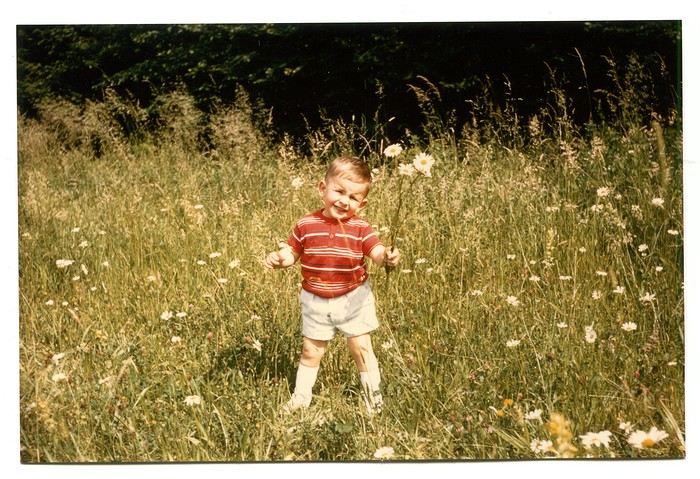
As I’ve mentioned elsewhere, I inherited my love of travel from my parents and some of my grandparents. A strong passion, but one that was unfortunately limited by our family’s modest resources. Back then, living in northern Alsace, a simple trip to the southern part of the region—with the Wine Route as our destination—felt like an extraordinary journey to a land of plenty for the little boy I was in the late 60s and early 70s.
Everything seemed so huge when you were still just a kid.
Back then, I was overwhelmed by countless sensations—I was already highly sensitive, with a keen mind and a nose and taste buds that were developing like a pro’s. Which, as I’d later realize, wasn’t always an advantage.
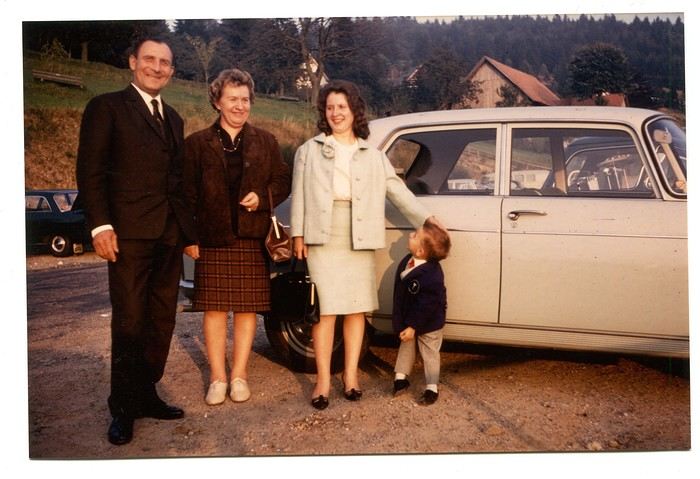
Those magical days always began with a gentle late-spring or midsummer morning. The interior of the white Peugeot 404, license plate 210 LZ 67, had already soaked up the sun before the engine purred to life, and the cabin gave off a scent I could still recognize today—a fragrance I found so pleasant. Back then, I had no idea it was just the smell of warm plastic from the car’s interior. Yes, the scents of the 404 on sunny days became my madeleine de Proust... What’s more, the whole family was unusually cheerful because those moments of relaxation and leisure were rare. Everyone worked, and no one had an easy job or was well paid. Without the *Trente Glorieuses*, these experiences might never have happened.
Once we crossed the canton’s borders, I felt like I was light-years away from my everyday surroundings, and every kilometer plunged me deeper into *terra incognita*. It was thrilling. Far from my so-called "medium-sized" town, wheat fields, cornfields, and cabbage patches stretched out, punctuated by tall poles connected by long wires and topped with vegetation—like giant clotheslines without laundry, where magical beanstalks might grow to touch the sky. Back then, I was still far from tasting their product, which was simply beer. At the time, there was still a significant local hop production. Fun fact: it wasn’t until 2002 that Anglo-Saxon scientists proved hops and cannabis belong to the same biological family.
After the fields, the landscape took another step up as it rolled past the little boy’s eyes, often glued to the windows. First came modest hills, then a succession of rolling slopes that soon formed an unbroken chain. Their 700 meters in altitude felt like Himalayan peaks to me—impressive, inert giants, a whole new world. Gazing at them, an intense emotion welled up somewhere between my stomach and lungs, nearly taking my breath away. What mysteries, what treasures did these heights hold? And then there were the cherries on top—the crowning touch that made the scene even more magical: proud, majestic castles perched on the summits like impassive sentinels. Monuments from the past, yet firmly rooted in the present on their rocky spurs. The little boy’s eyes sparkled—he’d been given a castle for Christmas, complete with battlements, towers, a drawbridge, and fully armed knights. He’d watched and lived *Ivanhoe* on the only French TV channel that existed back then.
Only once did my paternal grandfather join us on one of these trips. A tall, intelligent man with a face that could shift from stern to mischievous, clearly full of humor and charisma. Sadly, his relationship with alcohol had taken a toll on his life and, by extension, those of his loved ones. He had a strong personality—if his boss crossed the line, he wouldn’t hesitate to punch him, which meant he went through a lot of different jobs. Back then, you could quit one job and easily find another. It was quite something to see him in his final stages, hallucinating pink elephants and even drinking perfume when he had nothing else left. The last time I saw him, he’d slipped away from the doctors and nurses while hospitalized in pretty bad shape—at least, I assume his liver was the issue. We were sitting down for a family lunch when the door burst open, and there he stood in his pajamas, eyes twinkling with mischief, clearly pleased with the dramatic entrance. That theatrical moment didn’t spare us from burying him a few months later at the age of 71. One day, my mother told me the family doctor had quietly remarked that it was a shame—with his robust constitution, he could’ve lived to be a hundred. Yes, the family doctor—this was the man who’d come treat you any day, at almost any hour, just for a phone call. It really existed, it’s not a myth!
That day, his wife—my paternal grandmother—was also along for the ride. Everyone agreed that Jeannette was a good woman. She worked as a waitress at *Le Tigre*, the biggest brasserie in town, right in the center. Most customers preferred to be served by her, including local dignitaries and even the mayor. As a kid, I didn’t find her very fun, open, or warm—she seemed a bit stern. Back then, women in their fifties already had the face and build of grandmothers. Same went for men, don’t get me wrong. I had no idea about the struggles she faced because of her husband. I didn’t know that 30 years earlier, she’d had to flee Alsace while pregnant, under threat from Nazi fighter-bombers. I didn’t know she’d had several miscarriages, and that my father—her only surviving child, born prematurely in March 1940 at the other end of France—weighed less than a kilo at birth and was so tiny he could fit in a shoebox. Hard to imagine he’d grow into a strapping man nearly 1.80 meters tall, tipping the scales at 100 kilos. When you come back from summer camp in early August and ask why she didn’t pick you up with your parents, and they gently tell you she’s "in heaven," you don’t realize she passed away at 54 after suffering greatly from stomach cancer that had spread.
Back to that family outing, that enchanted parenthesis. I even remembered where we’d had lunch when I passed through Dambach-la-Ville decades later. One of those charming, flower-filled towns Alsace produces in abundance—and preserves so well. This one sits high on a hill, and I was a bit stunned on the parking lot because the view stretched far, revealing the Alsace plain below—its fields, villages, hills, and forests. The world seemed so vast and enticing that day, even though I was only glimpsing a tiny fraction of it.
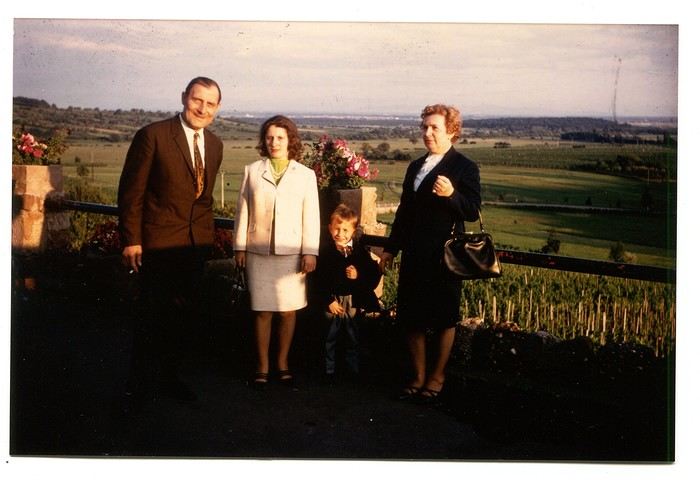
The region was already very touristy, but I wouldn’t notice the downsides until much later. That Sunday noon, I discovered a large restaurant filled with diners. I can still see the enormous piece of meat they served me, decorated with a little wooden skewer topped with a flag. I kept that one for a long time. Those were the golden days of rich, flowing, thick sauces—so flavorful—and the era of the world’s best fries, made on the spot with the best potatoes. To top it off, I was *exceptionally* allowed a small bottle of apple juice, Orangina, or—even better if possible—Sinalco. Yes, Sinalco—like Orangina, but better. A brand that must’ve disappeared in the 70s, but why, and what a shame! Since then, Orangina’s little bubbles have taken the brand to the other side of the planet—it’s now Japanese.
Year after year, I’d eagerly await that ecstatic moment when the most beautiful castle in Alsace, the Haut-Koenigsbourg, appeared in my field of vision. The perfect model, the archetype that blended into the landscape at the height of a child’s dreams. The trip home always felt like a reality check—less jarring than an alarm clock, but more diffuse and melancholic. From then on, there was only one wish: *When do we leave again?*
Those magical days always began with a gentle late-spring or midsummer morning. The interior of the white Peugeot 404, license plate 210 LZ 67, had already soaked up the sun before the engine purred to life, and the cabin gave off a scent I could still recognize today—a fragrance I found so pleasant. Back then, I had no idea it was just the smell of warm plastic from the car’s interior. Yes, the scents of the 404 on sunny days became my madeleine de Proust... What’s more, the whole family was unusually cheerful because those moments of relaxation and leisure were rare. Everyone worked, and no one had an easy job or was well paid. Without the *Trente Glorieuses*, these experiences might never have happened.
Once we crossed the canton’s borders, I felt like I was light-years away from my everyday surroundings, and every kilometer plunged me deeper into *terra incognita*. It was thrilling. Far from my so-called "medium-sized" town, wheat fields, cornfields, and cabbage patches stretched out, punctuated by tall poles connected by long wires and topped with vegetation—like giant clotheslines without laundry, where magical beanstalks might grow to touch the sky. Back then, I was still far from tasting their product, which was simply beer. At the time, there was still a significant local hop production. Fun fact: it wasn’t until 2002 that Anglo-Saxon scientists proved hops and cannabis belong to the same biological family.
After the fields, the landscape took another step up as it rolled past the little boy’s eyes, often glued to the windows. First came modest hills, then a succession of rolling slopes that soon formed an unbroken chain. Their 700 meters in altitude felt like Himalayan peaks to me—impressive, inert giants, a whole new world. Gazing at them, an intense emotion welled up somewhere between my stomach and lungs, nearly taking my breath away. What mysteries, what treasures did these heights hold? And then there were the cherries on top—the crowning touch that made the scene even more magical: proud, majestic castles perched on the summits like impassive sentinels. Monuments from the past, yet firmly rooted in the present on their rocky spurs. The little boy’s eyes sparkled—he’d been given a castle for Christmas, complete with battlements, towers, a drawbridge, and fully armed knights. He’d watched and lived *Ivanhoe* on the only French TV channel that existed back then.
Only once did my paternal grandfather join us on one of these trips. A tall, intelligent man with a face that could shift from stern to mischievous, clearly full of humor and charisma. Sadly, his relationship with alcohol had taken a toll on his life and, by extension, those of his loved ones. He had a strong personality—if his boss crossed the line, he wouldn’t hesitate to punch him, which meant he went through a lot of different jobs. Back then, you could quit one job and easily find another. It was quite something to see him in his final stages, hallucinating pink elephants and even drinking perfume when he had nothing else left. The last time I saw him, he’d slipped away from the doctors and nurses while hospitalized in pretty bad shape—at least, I assume his liver was the issue. We were sitting down for a family lunch when the door burst open, and there he stood in his pajamas, eyes twinkling with mischief, clearly pleased with the dramatic entrance. That theatrical moment didn’t spare us from burying him a few months later at the age of 71. One day, my mother told me the family doctor had quietly remarked that it was a shame—with his robust constitution, he could’ve lived to be a hundred. Yes, the family doctor—this was the man who’d come treat you any day, at almost any hour, just for a phone call. It really existed, it’s not a myth!
That day, his wife—my paternal grandmother—was also along for the ride. Everyone agreed that Jeannette was a good woman. She worked as a waitress at *Le Tigre*, the biggest brasserie in town, right in the center. Most customers preferred to be served by her, including local dignitaries and even the mayor. As a kid, I didn’t find her very fun, open, or warm—she seemed a bit stern. Back then, women in their fifties already had the face and build of grandmothers. Same went for men, don’t get me wrong. I had no idea about the struggles she faced because of her husband. I didn’t know that 30 years earlier, she’d had to flee Alsace while pregnant, under threat from Nazi fighter-bombers. I didn’t know she’d had several miscarriages, and that my father—her only surviving child, born prematurely in March 1940 at the other end of France—weighed less than a kilo at birth and was so tiny he could fit in a shoebox. Hard to imagine he’d grow into a strapping man nearly 1.80 meters tall, tipping the scales at 100 kilos. When you come back from summer camp in early August and ask why she didn’t pick you up with your parents, and they gently tell you she’s "in heaven," you don’t realize she passed away at 54 after suffering greatly from stomach cancer that had spread.
Back to that family outing, that enchanted parenthesis. I even remembered where we’d had lunch when I passed through Dambach-la-Ville decades later. One of those charming, flower-filled towns Alsace produces in abundance—and preserves so well. This one sits high on a hill, and I was a bit stunned on the parking lot because the view stretched far, revealing the Alsace plain below—its fields, villages, hills, and forests. The world seemed so vast and enticing that day, even though I was only glimpsing a tiny fraction of it.
The region was already very touristy, but I wouldn’t notice the downsides until much later. That Sunday noon, I discovered a large restaurant filled with diners. I can still see the enormous piece of meat they served me, decorated with a little wooden skewer topped with a flag. I kept that one for a long time. Those were the golden days of rich, flowing, thick sauces—so flavorful—and the era of the world’s best fries, made on the spot with the best potatoes. To top it off, I was *exceptionally* allowed a small bottle of apple juice, Orangina, or—even better if possible—Sinalco. Yes, Sinalco—like Orangina, but better. A brand that must’ve disappeared in the 70s, but why, and what a shame! Since then, Orangina’s little bubbles have taken the brand to the other side of the planet—it’s now Japanese.
Year after year, I’d eagerly await that ecstatic moment when the most beautiful castle in Alsace, the Haut-Koenigsbourg, appeared in my field of vision. The perfect model, the archetype that blended into the landscape at the height of a child’s dreams. The trip home always felt like a reality check—less jarring than an alarm clock, but more diffuse and melancholic. From then on, there was only one wish: *When do we leave again?*
Luang Prabang, Nong Khiaw, and Muang Ngoi (Laos) – Trip Report
Arrival at Luang Prabang Airport: Got my visa on the spot in under 5 minutes, but it cost me $40 + $1 for some "processing fee" and a photo.
First ATM withdrawal of the maximum allowed—about 82 €! Luckily, I had euros on me because each withdrawal comes with a fixed fee of 30,000 kips (like in Thailand, where it’s 200 baht per withdrawal, but here you can take out up to 800 €!).
Then I took the airport taxi service for 100,000 kips per person. It’s a minivan that drops passengers (8–10) at their hotels. The ticket booth is right at the exit—easy to spot with a sign that says "Taxi Service."
I left Luang Prabang for Nong Khiaw by minivan, paying 180,000 kips. A big tuk-tuk taxi picked us up at the hotel at 8:40 AM, and we picked up more people along the way until we reached a small minivan station. Our "minivan" was *very* mini—we still managed to squeeze in 12 people, with 2 up front + the driver, even though there wasn’t really space for 2 full seats—more like 1.5! Luggage was strapped to the roof under a tarp for the trip. Scheduled to leave at 9 AM, we finally took off at 9:30. The ride took 4 hours and 15 minutes from station to station—roads were rough, sometimes unpaved, and always full of potholes. This route is mostly used by trucks registered in China. We passed the dam that now blocks boat traffic between Luang Prabang and Nong Khiaw. About 40 km from Nong Khiaw, we turned off the main road onto a smaller one, less crowded with trucks but still rough. At the Nong Khiaw bus station, a shared taxi was waiting to drop everyone off at their hotels. I walked to mine—the Nam Ou View Villa, about 600 meters from the station. Nice room with a great view of the river.
Nong Khiaw is easy to explore on foot. One unpaved road runs along the river, lined with hotels and restaurants with terraces, while a parallel paved road has little traffic and all the shops. I loved the vibe and tranquility of the town. There are plenty of guesthouses, especially on the other side of the bridge. Restaurants everywhere, all in a calm atmosphere. I hiked up to the highest viewpoint—there are several. The climb is supposed to take 1.5 hours, but it took me 2. Time to enjoy the nature and catch my breath! No real difficulty, just a *lot* of uphill. There’s a small toll at the start of the climb—I don’t remember the exact amount, but it wasn’t expensive. The view at the top is stunning—360°! Mornings are cloudy, midday is usually clear, and evenings are all about the sunset ☀️. The descent was tougher for me—guaranteed sore muscles!
I also walked along the Nam Ou toward Muang Ngoi. The road is quiet and unpaved but often narrow with no views. Small villages along the way. In town, you can rent canoes, and agencies offer day trips or multi-day excursions. There are shops, a bank, and 2 ATMs.
Departure for Muang Ngoi—a village only accessible by private or public boat. I took the 11:30 AM public boat (sold as 11 AM) for 70,000 kips. There were so many of us that two boats were needed, and we were still packed in! We left 40 minutes late because the ticket collector didn’t check anything, and one ticket was missing. Of course, everyone insisted they’d paid—which was probably true, given the general disorganization. The trip took 1 hour and 5 minutes, going upstream against the current. Gorgeous.
Arriving at Muang Ngoi’s tiny dock, hotel owners were waiting for their guests or offering rooms to those without reservations. I’d booked the Riverview Bungalows & GH. The room was a bit worn but comfortable, and the view was amazing!
Muang Ngoi has ONE recently paved main street—all other paths are red dirt and dusty, perfect for unguided day hikes. I *loved* this village. People live their lives without worrying much about tourists, who aren’t too numerous yet. There’s no bank or ATM, and dollars are accepted (even preferred) for transport and hotels. Watch the condition of your bills—the hotelier refused one with a tiny stain I hadn’t even noticed! There are travel agencies for excursions, small shops... I often ate at Gecko (Western food, I admit) and across the street at Vita, which serves a delicious local dish called *Suzy*—a curry-like specialty. From Muang Ngoi, there are plenty of easy hikes. The trails are simple to find and follow, except for those crossing rice fields. Maps.Me helped me stay on track.
If you don’t want to walk, there are very local transport options: modified tractors with platforms for passengers and luggage. I took an excursion to Sopchem, a small village 40 minutes away by boat. I paid $20 round-trip for two people on a private boat. The ride was stunning—the river cuts through mountains in this section. Sopchem is tiny but charming, especially for buying textiles. Every house has a loom out front and a display selling their work. I bought two scarves for 60,000 kips each without bargaining—it seemed like a steal. Back in Luang Prabang, I saw the same scarves in a fancy boutique for 55,000 kips each—9 or 10 times the price!!!!
I also tried the village laundry service—everywhere lists the price as 25,000 kips per kilo. I picked the closest one to my hotel and watched from my balcony as the woman washed my clothes in the river, then hung them on her fence all day in the dust! Turns out only hotels have washing machines. Better to postpone laundry or do it yourself—my clothes didn’t smell great afterward!
For the return to Luang Prabang, I splurged on a private transfer. An agency at the dock arranged it for $100. I took the public boat to Nong Khiaw, where a driver was waiting. His vehicle was a pickup truck, and the trip took 4 hours total to my hotel in the city center. I recommend this agency (Lattanavongsa Tour Adventure)—very professional. They also run a hotel (same name) that looked nice from the outside, though not riverfront.
In Luang Prabang, I did the Mekong sunset cruise. Departed at 4:30 PM with Sasa Sunset Cruise for 245,000 kips, including one drink and spring rolls. I was lucky to see a beautiful sunset—I don’t regret it. I also visited the tiny Traditional Arts and Ethnology Centre—very interesting for learning about Laos’ ethnic groups and textile traditions, but *very* small. Of course, I visited the temples and wandered the alleys to admire the stunning houses. The sunset at Mount Phousi was nice, but *so* crowded! The night market is fun but not super interesting—vendors sell pretty much the same things you’ll find in daytime shops at the same prices. There are two food courts, one huge at the end of the market. I love the concept, but the quality of the stalls is debatable.
Luang Prabang The morning alms-giving ceremony for monks is called *Tak Bat*. This ritual has turned into a circus for Chinese tourists. I’d visited Luang Prabang 15 years ago and didn’t find the same serenity in the ceremony. In Luang Prabang, I exchanged euros at BFL BRED Bank (recommended in the *Routard* guide). Good rates and a smooth transaction. The employee spoke excellent French and offered me deals on the Sasa sunset cruise (with dinner) and a taxi to the airport. I took her up on the taxi—it was much cheaper. She explained that she works evenings at Sasa Sunset Cruise and the taxi driver is her husband.
Hope this gives you some practical tips for your next trip!
I left Luang Prabang for Nong Khiaw by minivan, paying 180,000 kips. A big tuk-tuk taxi picked us up at the hotel at 8:40 AM, and we picked up more people along the way until we reached a small minivan station. Our "minivan" was *very* mini—we still managed to squeeze in 12 people, with 2 up front + the driver, even though there wasn’t really space for 2 full seats—more like 1.5! Luggage was strapped to the roof under a tarp for the trip. Scheduled to leave at 9 AM, we finally took off at 9:30. The ride took 4 hours and 15 minutes from station to station—roads were rough, sometimes unpaved, and always full of potholes. This route is mostly used by trucks registered in China. We passed the dam that now blocks boat traffic between Luang Prabang and Nong Khiaw. About 40 km from Nong Khiaw, we turned off the main road onto a smaller one, less crowded with trucks but still rough. At the Nong Khiaw bus station, a shared taxi was waiting to drop everyone off at their hotels. I walked to mine—the Nam Ou View Villa, about 600 meters from the station. Nice room with a great view of the river.
Nong Khiaw is easy to explore on foot. One unpaved road runs along the river, lined with hotels and restaurants with terraces, while a parallel paved road has little traffic and all the shops. I loved the vibe and tranquility of the town. There are plenty of guesthouses, especially on the other side of the bridge. Restaurants everywhere, all in a calm atmosphere. I hiked up to the highest viewpoint—there are several. The climb is supposed to take 1.5 hours, but it took me 2. Time to enjoy the nature and catch my breath! No real difficulty, just a *lot* of uphill. There’s a small toll at the start of the climb—I don’t remember the exact amount, but it wasn’t expensive. The view at the top is stunning—360°! Mornings are cloudy, midday is usually clear, and evenings are all about the sunset ☀️. The descent was tougher for me—guaranteed sore muscles!
I also walked along the Nam Ou toward Muang Ngoi. The road is quiet and unpaved but often narrow with no views. Small villages along the way. In town, you can rent canoes, and agencies offer day trips or multi-day excursions. There are shops, a bank, and 2 ATMs.
Departure for Muang Ngoi—a village only accessible by private or public boat. I took the 11:30 AM public boat (sold as 11 AM) for 70,000 kips. There were so many of us that two boats were needed, and we were still packed in! We left 40 minutes late because the ticket collector didn’t check anything, and one ticket was missing. Of course, everyone insisted they’d paid—which was probably true, given the general disorganization. The trip took 1 hour and 5 minutes, going upstream against the current. Gorgeous.
Arriving at Muang Ngoi’s tiny dock, hotel owners were waiting for their guests or offering rooms to those without reservations. I’d booked the Riverview Bungalows & GH. The room was a bit worn but comfortable, and the view was amazing!
Muang Ngoi has ONE recently paved main street—all other paths are red dirt and dusty, perfect for unguided day hikes. I *loved* this village. People live their lives without worrying much about tourists, who aren’t too numerous yet. There’s no bank or ATM, and dollars are accepted (even preferred) for transport and hotels. Watch the condition of your bills—the hotelier refused one with a tiny stain I hadn’t even noticed! There are travel agencies for excursions, small shops... I often ate at Gecko (Western food, I admit) and across the street at Vita, which serves a delicious local dish called *Suzy*—a curry-like specialty. From Muang Ngoi, there are plenty of easy hikes. The trails are simple to find and follow, except for those crossing rice fields. Maps.Me helped me stay on track.
If you don’t want to walk, there are very local transport options: modified tractors with platforms for passengers and luggage. I took an excursion to Sopchem, a small village 40 minutes away by boat. I paid $20 round-trip for two people on a private boat. The ride was stunning—the river cuts through mountains in this section. Sopchem is tiny but charming, especially for buying textiles. Every house has a loom out front and a display selling their work. I bought two scarves for 60,000 kips each without bargaining—it seemed like a steal. Back in Luang Prabang, I saw the same scarves in a fancy boutique for 55,000 kips each—9 or 10 times the price!!!!
I also tried the village laundry service—everywhere lists the price as 25,000 kips per kilo. I picked the closest one to my hotel and watched from my balcony as the woman washed my clothes in the river, then hung them on her fence all day in the dust! Turns out only hotels have washing machines. Better to postpone laundry or do it yourself—my clothes didn’t smell great afterward!
For the return to Luang Prabang, I splurged on a private transfer. An agency at the dock arranged it for $100. I took the public boat to Nong Khiaw, where a driver was waiting. His vehicle was a pickup truck, and the trip took 4 hours total to my hotel in the city center. I recommend this agency (Lattanavongsa Tour Adventure)—very professional. They also run a hotel (same name) that looked nice from the outside, though not riverfront.
In Luang Prabang, I did the Mekong sunset cruise. Departed at 4:30 PM with Sasa Sunset Cruise for 245,000 kips, including one drink and spring rolls. I was lucky to see a beautiful sunset—I don’t regret it. I also visited the tiny Traditional Arts and Ethnology Centre—very interesting for learning about Laos’ ethnic groups and textile traditions, but *very* small. Of course, I visited the temples and wandered the alleys to admire the stunning houses. The sunset at Mount Phousi was nice, but *so* crowded! The night market is fun but not super interesting—vendors sell pretty much the same things you’ll find in daytime shops at the same prices. There are two food courts, one huge at the end of the market. I love the concept, but the quality of the stalls is debatable.
Luang Prabang The morning alms-giving ceremony for monks is called *Tak Bat*. This ritual has turned into a circus for Chinese tourists. I’d visited Luang Prabang 15 years ago and didn’t find the same serenity in the ceremony. In Luang Prabang, I exchanged euros at BFL BRED Bank (recommended in the *Routard* guide). Good rates and a smooth transaction. The employee spoke excellent French and offered me deals on the Sasa sunset cruise (with dinner) and a taxi to the airport. I took her up on the taxi—it was much cheaper. She explained that she works evenings at Sasa Sunset Cruise and the taxi driver is her husband.
Hope this gives you some practical tips for your next trip!
Vol pour Rome en août et risque d'annulation? English translation pending
Bonjour,
Nous avons réservé des billets pour Rome du 8 au 17 août sur Ryanair. Une amie me dit que vu le peu de voyageurs, il faut s'attendre à un très grand nombre d'annulation de vols de la part de Ryanair (je ne crois pas qu'elle ait des sources particulières). Malgré tout je m'inquiète un peu et je me dis que les compagnies pourraient annuler des vols s'ils considèrent qu'ils ne sont pas assez remplis. Pensez-vous qu'il faut s'y attendre ?
Nous avons réservé des billets pour Rome du 8 au 17 août sur Ryanair. Une amie me dit que vu le peu de voyageurs, il faut s'attendre à un très grand nombre d'annulation de vols de la part de Ryanair (je ne crois pas qu'elle ait des sources particulières). Malgré tout je m'inquiète un peu et je me dis que les compagnies pourraient annuler des vols s'ils considèrent qu'ils ne sont pas assez remplis. Pensez-vous qu'il faut s'y attendre ?
Deux semaines au Cap Vert avec enfant de deux ans et demi English translation pending
Bonjour,
Je suis en train de réfléchir à mes prochaines vacances fin octobre début novembre, et j'avais pensé au Cap Vert, qui me trotte dans la tête depuis un certain nombre d'années... cette période est propice ?
Nous sommes 3, avec une petite fille qui aura presque 3 ans, assez curieuse, et qui a déjà pris l'avion pour l'Ouest canadien et les canaries (lanzarote et fuerteventura). Pas de difficulté avec une petite ? Que ce soit au niveau sanitaire, transport (siège auto dans les taxis car si j'ai bien compris il ne faut pas louer une voiture), hébergement... Concernant la durée, on serait sur 2 semaines, mais s'il faut prolonger un peu, on le fera mais pas jusqu'à 3 semaines.
Nous aimerions articuler notre voyage avec de la rando, de la découverte de la culture locale et un peu de repos (pas de rando donc, ou on prendrait plus de temps en fin de séjour avec plage s'il y en a) : santo antao et fogo me semblent incontournables pour un voyage au Cap Vert. Aussi, j'aimerais éviter de prendre trop l'avion, idéalement arriver sur une île, prendre un avion pour aller au sud ou au nord, et repartir de la vers la France. D'ailleurs, pour aller à Fogo depuis Praia par exemple, il faut prendre le bateau ou l'avion?
Merci
Je suis en train de réfléchir à mes prochaines vacances fin octobre début novembre, et j'avais pensé au Cap Vert, qui me trotte dans la tête depuis un certain nombre d'années... cette période est propice ?
Nous sommes 3, avec une petite fille qui aura presque 3 ans, assez curieuse, et qui a déjà pris l'avion pour l'Ouest canadien et les canaries (lanzarote et fuerteventura). Pas de difficulté avec une petite ? Que ce soit au niveau sanitaire, transport (siège auto dans les taxis car si j'ai bien compris il ne faut pas louer une voiture), hébergement... Concernant la durée, on serait sur 2 semaines, mais s'il faut prolonger un peu, on le fera mais pas jusqu'à 3 semaines.
Nous aimerions articuler notre voyage avec de la rando, de la découverte de la culture locale et un peu de repos (pas de rando donc, ou on prendrait plus de temps en fin de séjour avec plage s'il y en a) : santo antao et fogo me semblent incontournables pour un voyage au Cap Vert. Aussi, j'aimerais éviter de prendre trop l'avion, idéalement arriver sur une île, prendre un avion pour aller au sud ou au nord, et repartir de la vers la France. D'ailleurs, pour aller à Fogo depuis Praia par exemple, il faut prendre le bateau ou l'avion?
Merci
Croisières, à quand la reprise? English translation pending
Bonsoir,
beaucoup se posent la question, parfois avec un optimisme surprenant ! Voici un petit rappel :
Pour qu'il y ait des croisières il faut au moins réunir 3 conditions principales (et d'autres aussi) :
- 1 un bateau DÉSINFECTÉ avec son équipage au complet et opérationnel. Pour l'instant les équipages sont disséminés dans le monde. Il faudra les retrouver, les convaincre, certains auront peur. Les convaincus devront trouver des vols pour revenir ; enfin venant de pays "exotiques" ils devront être acceptés à l'entrée des pays où seront les bateaux. Pas gagné avec toutes ces contraintes !!
- 2 un minimum de passagers car en mer un bateau armé coûte beaucoup plus cher que désarmé dans 1 port ou au mouillage !!! Comment vont-ils arriver au port d'embarquement s'ils viennent de loin ? Et mêmes remarques que pour l'équipage, ils faudra qu'ils puissent entrer dans le pays de départ...
- 3 des ports qui acceptent les bateaux. Ce que diront les gouvernements est une chose, ce que décideront les locaux qui, déjà avant l'épidémie ne voyaient plus les croisiéristes d'un très bon œil en est une autre ! Pas gagné non plus pour beaucoup d'endroits où les populations risquent de très très mal réagir à l'arrivée de milliers de personnes potentiellement porteuses du virus même si elles ne sont pas malades.
On peut rêver, mais il faut aussi parfois revenir sur terre à défaut d'être en mer. Pour moi il y aura extrêmement peu de départs avant l'automne en étant très optimiste !!! Je prépare déjà un plan B pour notre départ du 17/10 depuis le Japon Nous avons heureusement des vols reportables. Qui vivra verra.... Qu'en pensez-vous ?
beaucoup se posent la question, parfois avec un optimisme surprenant ! Voici un petit rappel :
Pour qu'il y ait des croisières il faut au moins réunir 3 conditions principales (et d'autres aussi) :
- 1 un bateau DÉSINFECTÉ avec son équipage au complet et opérationnel. Pour l'instant les équipages sont disséminés dans le monde. Il faudra les retrouver, les convaincre, certains auront peur. Les convaincus devront trouver des vols pour revenir ; enfin venant de pays "exotiques" ils devront être acceptés à l'entrée des pays où seront les bateaux. Pas gagné avec toutes ces contraintes !!
- 2 un minimum de passagers car en mer un bateau armé coûte beaucoup plus cher que désarmé dans 1 port ou au mouillage !!! Comment vont-ils arriver au port d'embarquement s'ils viennent de loin ? Et mêmes remarques que pour l'équipage, ils faudra qu'ils puissent entrer dans le pays de départ...
- 3 des ports qui acceptent les bateaux. Ce que diront les gouvernements est une chose, ce que décideront les locaux qui, déjà avant l'épidémie ne voyaient plus les croisiéristes d'un très bon œil en est une autre ! Pas gagné non plus pour beaucoup d'endroits où les populations risquent de très très mal réagir à l'arrivée de milliers de personnes potentiellement porteuses du virus même si elles ne sont pas malades.
On peut rêver, mais il faut aussi parfois revenir sur terre à défaut d'être en mer. Pour moi il y aura extrêmement peu de départs avant l'automne en étant très optimiste !!! Je prépare déjà un plan B pour notre départ du 17/10 depuis le Japon Nous avons heureusement des vols reportables. Qui vivra verra.... Qu'en pensez-vous ?
On the Silk Road: Chronicles of a Sixty-Something Traveling Completely Independently
From Beijing to Khiva: China, Kyrgyzstan, Tajikistan, Uzbekistan
Chronicle of anecdotes, highlights, and other adventures that marked this eight-week journey in 2018.
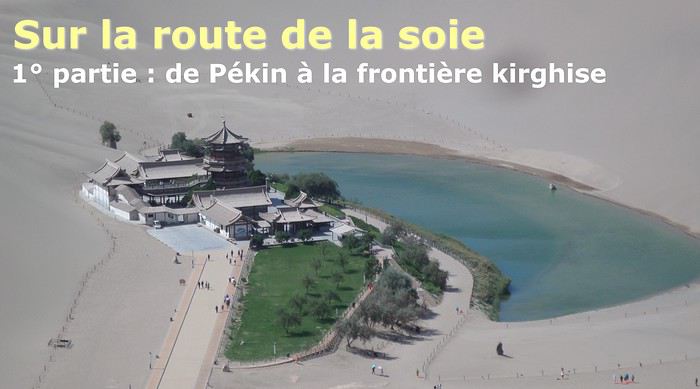
The Chinese Far West More than 30 years after my first trip to eastern China, I finally fulfilled an old dream: traveling solo from Beijing to the far west, discovering Xinjiang, the Uyghur people and the oppression they endure, the oases of Turpan and Kashgar, the Taklamakan Desert, the end of the Great Wall... The route was covered by train.
MENU PART 1: CHINA
1- Beijing (Jiankou) : the authentic Great Wall, without tourists 2- Cycling in Beijing, the best way to get around 3- Beijing : departure for the far west 4- Jiayuguan : getting by without English 5- Jiayuguan : scams and heritage 6- Dunhuang : abundance in the middle of the desert 7- Turpan : the Uyghurs under heavy surveillance 8- Kashgar : love at first sight for the old city 9- Kashgar : China’s recipe for controlling the populace 10- Tashkurgan : what on earth was I thinking going there! Kyrgyz border: a surreal epic Photo album from the 80s, contributions from other travelers (page 2)
1- JIANKOU Finding the authentic Great Wall, without tourists or a guide Friday, August 24, 2018 Thirty years later, I didn’t feel like revisiting the Great Wall at Badaling or any other overcrowded site. I chose to explore it at Jiankou, in its wildest, most authentic, and unrestored section, starting from a lost village deep in a valley—though it wasn’t *that* lost, since it had everything for communication.
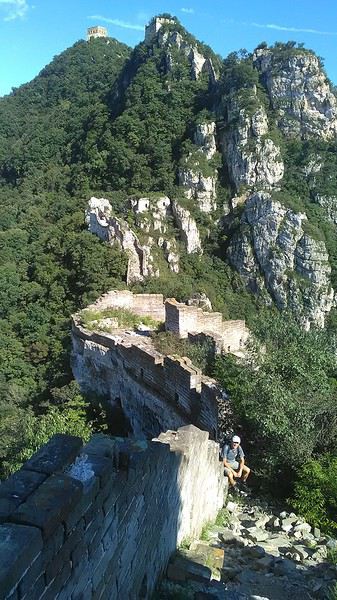
No need to pay for a taxi to get there—by timing it right, you can take the bus for just a few yuan. You have to get off at Xizhazi, the bus terminus. Be careful, there are only two buses a day in each direction. At the Xizhazi bus stop, I met a young couple who’d arrived with zero information about what to expect. We hiked the three of us toward the restored section of Mutianyu.
Still, be cautious With GPS and a topographic map (OpenTopoMap), you can set off without a problem or guide. The trail up to Jiankou is easy and well-marked. The trails down are too. But be careful—once you’re on the Wall, it’s real mountain hiking, with easy but dangerous climbing sections (over sheer drops). Not for amateurs or those afraid of heights! But what a reward. The Wall all to yourself, where it’s at its most daring. Truly mesmerizing.
More photos...
2- BEIJING The best way to get around the capital Sunday, August 26 The best way to explore the city is still by bike. Most are in a bike-share system, but you need to use an app—WeChat, the app that does everything, like monitoring your every move. No way I was installing that.
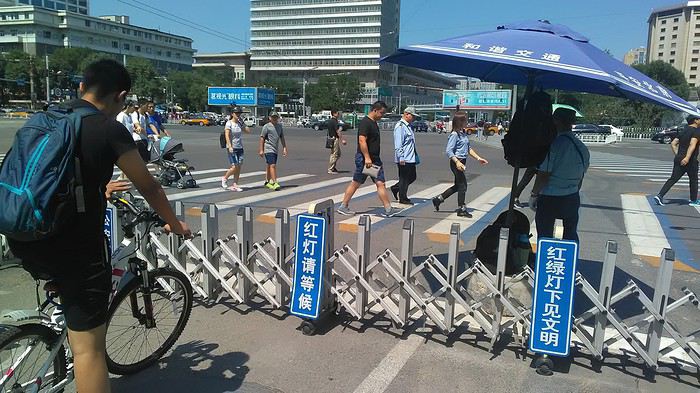
I found one at a rental shop near the hostel. The key is to quickly learn local traffic customs to minimize risks. Bike lanes are wide along the avenues.
But you still have to: - Watch out for anything parked on the bike paths—the most annoying are people napping or talking on the phone in their cars - Keep an eye on everything coming the wrong way—the list is long - The worst is right turns on red, which in Chinese traffic rules seem to have priority Once you get the hang of it, it’s fine. The city is huge but flat, so you can just wing it.
3- BEIJING By train to the far west Sunday, August 26 Beijing West Station is the size and operates like an airport. With your e-ticket from the agency, you first have to pick up your ticket at the special "English" counter, after passing through security. With your ticket in hand, you have to exit and enter through the boarding waiting area—not the platform—after a second security check.
 Then you find the right hall and wait for the sign to finally access the platform. In the end, it works pretty well given the incredible number of passengers to manage. Everywhere in Beijing, I saw that the Chinese have mastered crowd flow management.
Nice surprise: second-class carriages are clean, air-conditioned, and bright. Perfect, since I was in for 20 hours. One uniformed attendant per carriage, mobile meal service—luxury! Small downside: no luggage space. Hauling your suitcase up to the top bunk is quite a workout. I was in the middle, so it wasn’t too bad. The landscape, though, whether rural or urban, is pretty bleak. That should change once we leave the eastern plains.
Of course, I got my first police visit, with a thorough passport check and bag search. I was warned—going to the Chinese far west exposes you to this kind of hassle. But they were polite and respectful.
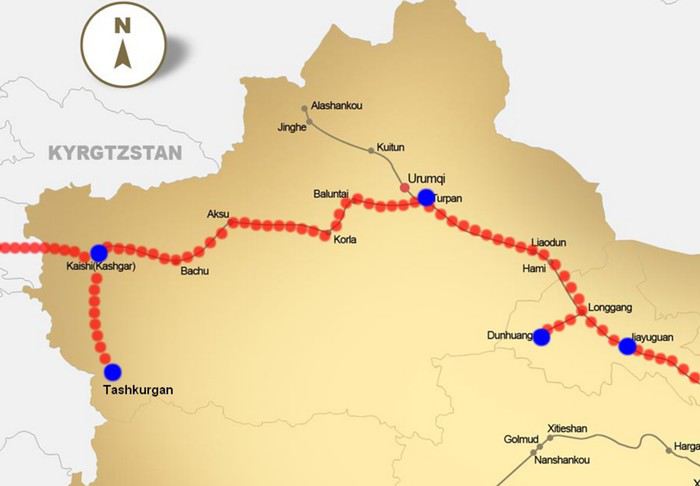 The Chinese Far West
4- JIAYUGUAN Getting by without English Monday, August 27 At the gates of two deserts (Gobi and Taklamakan) and at the foot of the Tibetan highlands, the Great Wall ends at Jiayuguan. Here, I found the deeper China I’d somewhat rediscovered during my bike ride, even if now everyone gets around on electric bikes and I’m no longer stared at like an alien.
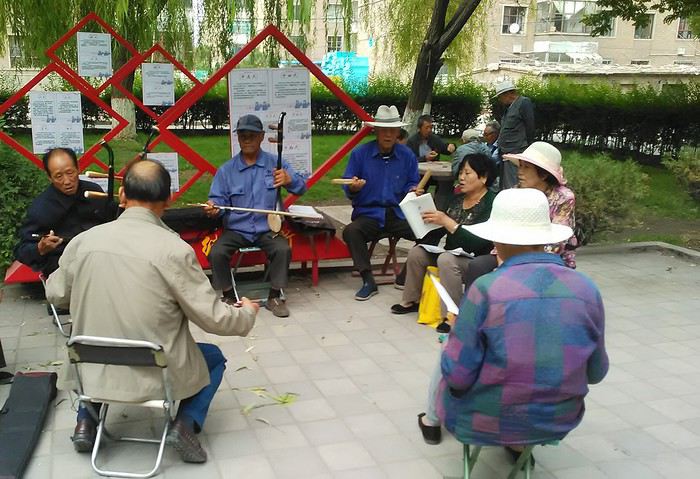
Prices are nothing like Beijing: you can find a full meal for 2 €, and my bike cost 7 € for two days. Plus, few people speak English—neither the owner of the HI hostel where I stayed, nor the ticket sellers at the sites, let alone the servers at the small eateries where I ate. Everything is written in Chinese. So I had to use the little Chinese I know to communicate about essentials. It makes the locals laugh to see a European trying to speak their language, but it earns respect. With Google Translate’s help, I managed.
Rant: With their avenues blocked for construction for kilometers without warning, and new roads not yet on maps, I must’ve taken 15 km of detours. More photos...
5- JIAYUGUAN Scams and heritage Tuesday, August 28 The Great Wall doesn’t exactly end at the fort I visited yesterday but 10 km further, at the entrance to a river gorge at the foot of the mountains. All that’s left is a badly damaged tower (more like a mound of earth) and a section of clay wall, similar to the one I biked yesterday.
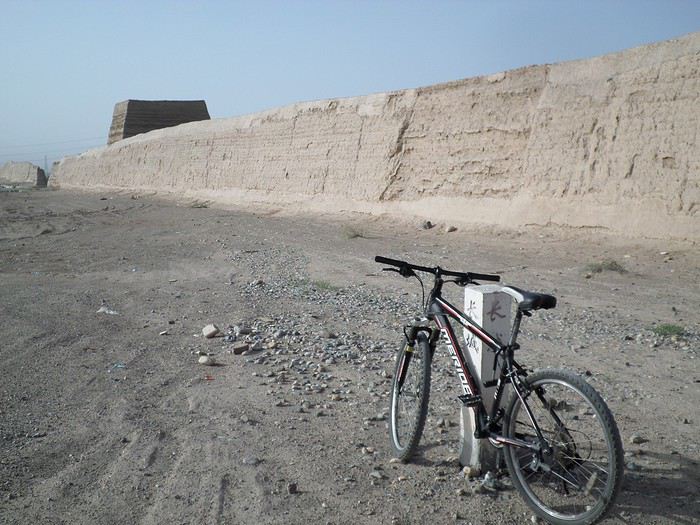
This morning, I hopped on my bike, determined to venture into the desert to see this highly symbolic site. First, you access it via a wide, brand-new road with not a soul in sight. Just before the site, I came across a grand welcome gate, very period-style, but it’s actually the inevitable toll booth.
Behind the gate, the road continues straight to the site, which you can see in the distance—at least 2 km away—the remains of the tower and wall. I had to leave my bike here. Fine. I went to the ticket counter and asked the price: 120 yuan! I couldn’t believe it—over 15 € for a simple mound of earth.
I showed my displeasure to the attendant, who couldn’t care less, and immediately turned back. 120 yuan—that’s the price for a new road, a fancy gate planted 2 km before the site just to force you to take a shuttle, and employees with nothing to do all day... Now I understand why I didn’t meet anyone!
Heritage China is a bit pricey Generally, sites are expensive for the country’s standard of living, but travelers are supposed to have money, so why hold back? I even gave up on the Forbidden City—reservations required days in advance (or on the black market at an impossible price). I prefer to keep the memory of my first visit, when entry must’ve cost a few dozen cents, and there were only a handful of visitors.
This morning, I took a taxi to see remarkable tombs of common people from the 3rd to 6th centuries. They’re small vaulted caves made of painted bricks, depicting scenes of daily life. Very pretty and moving. But even here, though the price was more reasonable, I was left wanting—only one of the 16 tombs is open to visitors, and it’s apparently not the most beautiful.
The authentic China—at least what’s left of it... Wandering the impersonal avenues of the city, you stumble upon a market. There, you still find traditional China—small shops with questionable hygiene, Go players, musicians, and even a dental prosthetist. The last refuge for those untouched by modernity. More photos...
6- DUNHUANG Abundance in the middle of the desert Wednesday, August 29 Well, I thought the landscape would be less bleak as I headed west. Nope. The only distraction in this expanse of dark, clayey sand is the forests of pylons and wind turbines, plus wild camels racing each other.
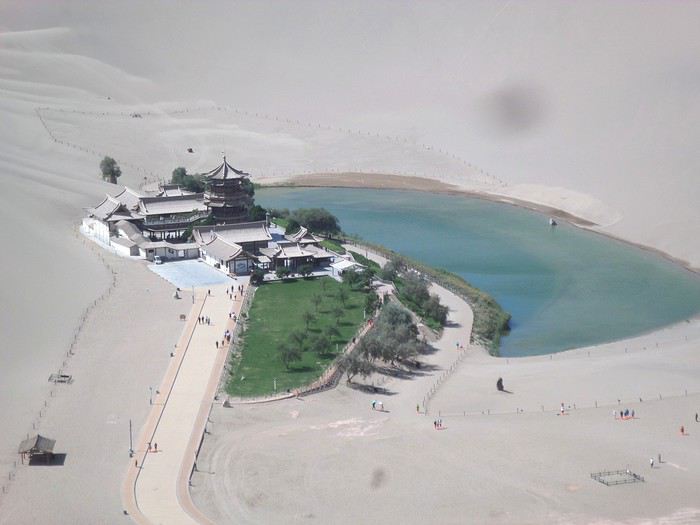 However, Dunhuang, the gateway to the Taklamakan, is by far the most pleasant Chinese city I know. There’s a real city center you can explore on foot. It’s hot but not unbearable, with a light, dry breeze. Much nicer than Beijing. The Han Chinese are still the majority, but the Muslim Uyghurs are more numerous, and the muezzin’s call to prayer echoes around the mosque.
The most surprising thing is the abundance and diversity of fruits and vegetables. You wonder how it all grows here. Well-irrigated, the desert sands are very fertile. Here, raisins have subtle, mysterious flavors, and the lamb really tastes like lamb.
Today, I visited the must-see Mingshashan, a dune complex next to which Pila is a molehill. The Basque Country, but covered in sand... More photos...
7- TURPAN The Uyghurs under heavy surveillance Friday, August 31 Surveillance cameras everywhere in the city, armed police stationed at intersections, in front of public buildings, at the entrance and inside tourist sites, police stations on every corner, patrols on foot or by car, khaki uniforms even for middle schoolers... here, the Han Chinese are in the minority, and you can feel it. Turpan feels like a city under siege.
To enter the youth hostel where I stayed, there’s even a security gate, and the receptionist (a Han, like everyone in tourism) wears a bulletproof vest! Reassuring. Still, you don’t feel particularly threatened here, especially as a European. The troublemakers are the Chinese, not the Uyghurs. Generally, China is a very safe country for visitors.
Smile, you’re on camera! I was biking on an avenue when the car in front of me got flashed for driving slowly. I quickly understood why when I got flashed too.
Here, the official time is Beijing time, but it gets dark two hours later. It’ll be even worse in Kashgar. Trickier to manage: everything is displayed in Chinese and Arabic. Nothing in English. Choosing a menu is a shot in the dark. Apart from a few young Chinese, no one here speaks English, and my Chinese doesn’t seem very understandable...
Mogao, the end of the road for the Han Yesterday, near Dunhuang, I went to Mogao, a complex of decorated caves with Buddha sculptures and paintings. Stunning, but so crowded! Luckily, here in Turpan, Chinese tourists barely venture out. So I visited a Silk Road ghost town with only a handful of other visitors and under a howling wind.
The modern Chinese city is swallowing up the old Uyghur neighborhoods—only a museum-like district remains in the center, and pockets of resistance on the outskirts are doomed to disappear soon. More photos...
8- KASHGAR A (relative) love at first sight for the old city Sunday, September 2 After three overnight trains, here I am in the far west of China, nearly 4,000 km from the capital. Despite the omnipresent police and an old city preserved UNESCO-style, Kashgar is my Chinese love at first sight.
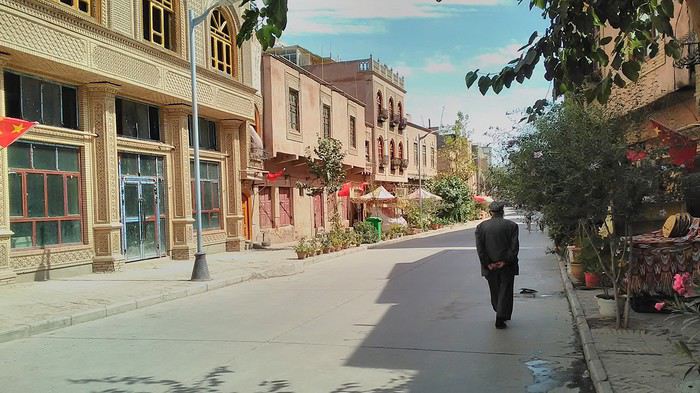
Finally, Chinese... well, sort of, because we’re in Uyghur territory here—a Turkic people with nothing culturally in common with the Han, the eastern Chinese. It started badly yesterday at Turfan station, where after three security gate passes, at least five passport checks, and a bag search, three adorable policewomen confiscated my antibacterial lotion because it had a flammable logo...
Then came the welcoming committee of armed cops at Kashgar station. Once all that was over, they left me alone—except you still have to go through security checks like everyone else to enter the old city, the bazaar, the livestock market... The further west you go, the more the siege mentality is evident. Luckily, the border isn’t far...
Despite the inevitable destruction-reconstruction, the city center has been well preserved. Thankfully, because it’s a very original style, a mix of local and colonial. I love it, even if it’s a bit too artificial, sanitized, and watered-down, and rather empty of residents. On the Silk Road, the city was famous for its great food. And it still is—rarely have I seen such richness and abundance of food! And not just scorpions or snakes. More photos...
9- KASHGAR China’s recipe for controlling the populace Saturday, September 1 Xinjiang, along with Tibet, is a "sensitive" area of rebellion in the eyes of Chinese authorities. As a result, the state has these regions and their populations under total control. Tourists also feel the consequences, even if they’re not at risk of re-education camps.
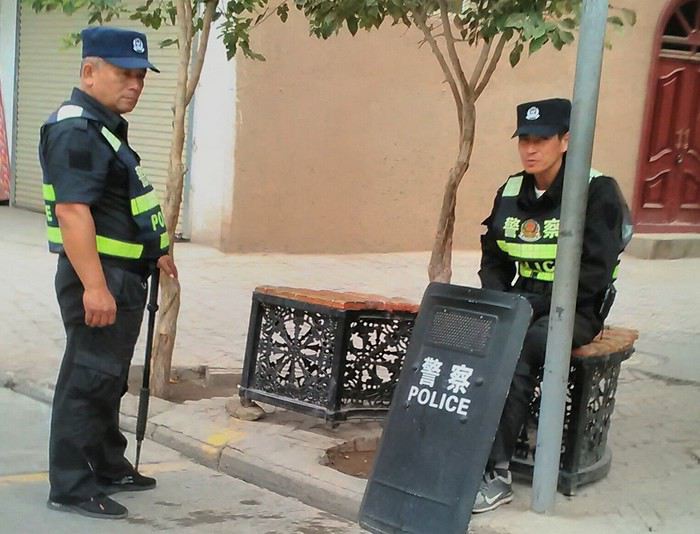 - Putting barbed wire and anti-ramming barriers around sensitive sites (schools, big hotels, government buildings...)
- Installing traffic surveillance gates with cameras and photo flashes (for all vehicles passing, including bikes) throughout the city and even in the countryside
- Posting uniformed guards with tasers, batons, or huge baseball bats every 100 meters
- Training the Han population (ethnic Chinese) in self-defense with sticks, preferably in the morning on the street. Men and women of all ages
- Starting school with the national anthem, doing military exercises, and receiving political indoctrination, all neatly lined up in the courtyard. (The dream school for any teacher)
- Placing a snitch in uniform (a pseudo-guard) in public gathering places, like youth hostels. Mine spends the day loafing around the courtyard
- Putting Chinese flags everywhere on the streets to remind everyone who’s in charge
- Installing security gates at every entrance to areas frequented by tourists (thanks for that) but not just there
- Never photographing cops, or else! I tried, but it’s not easy...
- Putting barbed wire and anti-ramming barriers around sensitive sites (schools, big hotels, government buildings...)
- Installing traffic surveillance gates with cameras and photo flashes (for all vehicles passing, including bikes) throughout the city and even in the countryside
- Posting uniformed guards with tasers, batons, or huge baseball bats every 100 meters
- Training the Han population (ethnic Chinese) in self-defense with sticks, preferably in the morning on the street. Men and women of all ages
- Starting school with the national anthem, doing military exercises, and receiving political indoctrination, all neatly lined up in the courtyard. (The dream school for any teacher)
- Placing a snitch in uniform (a pseudo-guard) in public gathering places, like youth hostels. Mine spends the day loafing around the courtyard
- Putting Chinese flags everywhere on the streets to remind everyone who’s in charge
- Installing security gates at every entrance to areas frequented by tourists (thanks for that) but not just there
- Never photographing cops, or else! I tried, but it’s not easy...
With all that, you can stroll around safely Not much crime! As for the amount the Chinese state spends to maintain such a system, it’s staggering! A third of the Han living in Xinjiang work in security. Today, I wandered freely around old Kashgar, which is quite large after all. More photos...
10- TASHKURGAN What on earth was I thinking going there! Wednesday, September 5 First, there’s the taxi—pretty crappy, with a driver who doesn’t speak a word of English and won’t stop smoking. Over six hours in that... shared with a completely out-of-it American.
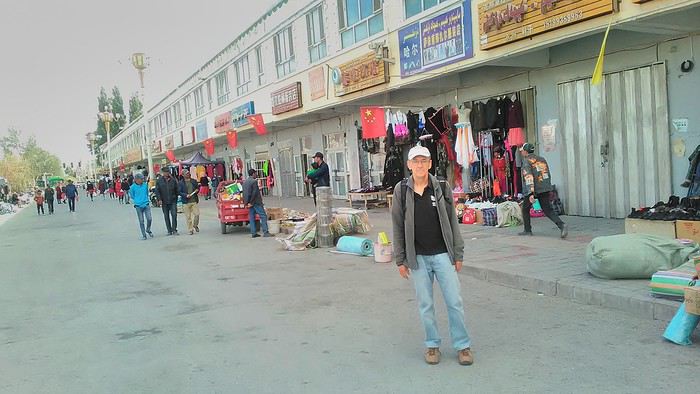
Then there are all the checkpoints along the way. I won’t go on—you know the drill by now.
After that, there’s Tashkurgan—a town with nothing to see, nothing to do. Deserted as soon as night falls. There’s this huge youth hostel and a few lost Chinese tapping away on their smartphones, chain-smoking. This lost American-European crowd, swapping tips on how to enter Pakistan or Tajikistan.
Luckily, there’s the Chinese Pamir Highway, lined with peaks over 7,000m. There’s the feeling of no longer being in China, with a population whose features are Middle Eastern. And these Tajik women with their stunning hairstyles and vibrant costumes. There’s the fact of having reached the westernmost Chinese city, far from crowds and tourist sites. A sort of end of the world. More photos...
11- KYRGYZ BORDER A surreal epic Thursday, September 6 The road from Kashgar to the Kyrgyzstan border is a little over 200 km and passes through beautiful landscapes of colorful, desert-like mountains with acrobatic folds. That’s the bucolic part of the trip.
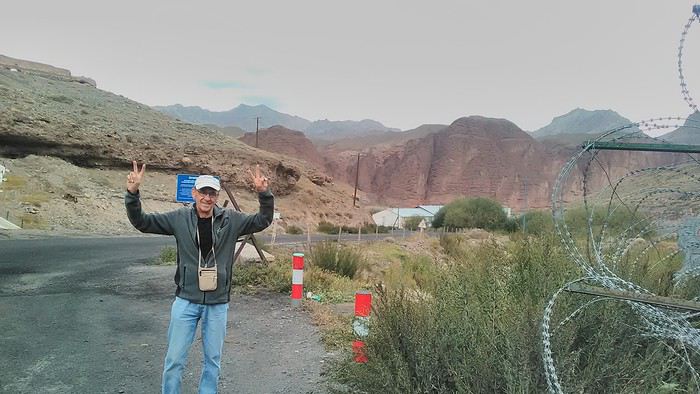 Yesterday, I managed to gather four people to rent a minibus to reach the border more easily: a Spaniard and an Argentine I’d already met in Turpan, and two New Zealanders who responded to the ad left at the hostel.
Absurdity and paranoia of Chinese authorities The highlight was crossing the town of Wuqia, 50 km past Kashgar. After tallying up with my fellow sufferers, we must’ve passed about ten checkpoints with: - Passport checks: 14 times, sometimes by two cops side by side - Bag checks: 4 times - Smartphone checks: 2 times, with deletion of "non-compliant" photos, and registration of your IMEI in the exit log!... Absurd and surreal at the same time, since my camera stayed in my bag, my apps are in French, and my photos have been online for ages...
With all that, we arrived just as the last checkpoint before the no man’s land marking the border between the two countries was on lunch break. And bam! Another 1.5-hour wait, alongside truckers who were much more used to this than we were.
What to think? The cops themselves aren’t fooled. They play the role they’re asked to, but sometimes you can coax a smile out of them—they realize how ridiculous the situation is.
What’s the point? That’s the big question my companions and I were tempted to answer with "to piss people off." To show you your place isn’t here, but with the other tourists, over there in the east, in Shanghai, Xi’an, or Guangzhou.
As for you, a traveler from a democratic country, you really experience this as aggression, humiliation, a violation of your private space. And yet, I’m respected, they speak to me properly. Today, I better understand what a Palestinian or a citizen of an occupied country might feel daily. A unique experience! Thanks, China.
And to top it off, the cherry on the cake! It’s still this glowing button you press to rate your passage after clearing the last obstacle before the exit stamp. I was so surprised it turned off before I could react. The Spaniard, with great humor and irony, had time to vote "excellent." In the end, he wasn’t wrong—you can hardly do better!
PS: I ditched my buddies at the border. They didn’t want to pay for a taxi to continue. So I took a direct taxi to Osh. The first 100 km are fabulous. I couldn’t take many photos, but I’ll be back on Monday to go to Tajikistan.
More photos...
The rest of the Silk Road, Part 2, in these travel journals: Kyrgyzstan, Tajikistan, Uzbekistan.
The Chinese Far West More than 30 years after my first trip to eastern China, I finally fulfilled an old dream: traveling solo from Beijing to the far west, discovering Xinjiang, the Uyghur people and the oppression they endure, the oases of Turpan and Kashgar, the Taklamakan Desert, the end of the Great Wall... The route was covered by train.
MENU PART 1: CHINA
1- Beijing (Jiankou) : the authentic Great Wall, without tourists 2- Cycling in Beijing, the best way to get around 3- Beijing : departure for the far west 4- Jiayuguan : getting by without English 5- Jiayuguan : scams and heritage 6- Dunhuang : abundance in the middle of the desert 7- Turpan : the Uyghurs under heavy surveillance 8- Kashgar : love at first sight for the old city 9- Kashgar : China’s recipe for controlling the populace 10- Tashkurgan : what on earth was I thinking going there! Kyrgyz border: a surreal epic Photo album from the 80s, contributions from other travelers (page 2)
1- JIANKOU Finding the authentic Great Wall, without tourists or a guide Friday, August 24, 2018 Thirty years later, I didn’t feel like revisiting the Great Wall at Badaling or any other overcrowded site. I chose to explore it at Jiankou, in its wildest, most authentic, and unrestored section, starting from a lost village deep in a valley—though it wasn’t *that* lost, since it had everything for communication.
No need to pay for a taxi to get there—by timing it right, you can take the bus for just a few yuan. You have to get off at Xizhazi, the bus terminus. Be careful, there are only two buses a day in each direction. At the Xizhazi bus stop, I met a young couple who’d arrived with zero information about what to expect. We hiked the three of us toward the restored section of Mutianyu.
Still, be cautious With GPS and a topographic map (OpenTopoMap), you can set off without a problem or guide. The trail up to Jiankou is easy and well-marked. The trails down are too. But be careful—once you’re on the Wall, it’s real mountain hiking, with easy but dangerous climbing sections (over sheer drops). Not for amateurs or those afraid of heights! But what a reward. The Wall all to yourself, where it’s at its most daring. Truly mesmerizing.
More photos...
2- BEIJING The best way to get around the capital Sunday, August 26 The best way to explore the city is still by bike. Most are in a bike-share system, but you need to use an app—WeChat, the app that does everything, like monitoring your every move. No way I was installing that.
I found one at a rental shop near the hostel. The key is to quickly learn local traffic customs to minimize risks. Bike lanes are wide along the avenues.
But you still have to: - Watch out for anything parked on the bike paths—the most annoying are people napping or talking on the phone in their cars - Keep an eye on everything coming the wrong way—the list is long - The worst is right turns on red, which in Chinese traffic rules seem to have priority Once you get the hang of it, it’s fine. The city is huge but flat, so you can just wing it.
3- BEIJING By train to the far west Sunday, August 26 Beijing West Station is the size and operates like an airport. With your e-ticket from the agency, you first have to pick up your ticket at the special "English" counter, after passing through security. With your ticket in hand, you have to exit and enter through the boarding waiting area—not the platform—after a second security check.
Then you find the right hall and wait for the sign to finally access the platform. In the end, it works pretty well given the incredible number of passengers to manage. Everywhere in Beijing, I saw that the Chinese have mastered crowd flow management.Nice surprise: second-class carriages are clean, air-conditioned, and bright. Perfect, since I was in for 20 hours. One uniformed attendant per carriage, mobile meal service—luxury! Small downside: no luggage space. Hauling your suitcase up to the top bunk is quite a workout. I was in the middle, so it wasn’t too bad. The landscape, though, whether rural or urban, is pretty bleak. That should change once we leave the eastern plains.
Of course, I got my first police visit, with a thorough passport check and bag search. I was warned—going to the Chinese far west exposes you to this kind of hassle. But they were polite and respectful.
The Chinese Far West4- JIAYUGUAN Getting by without English Monday, August 27 At the gates of two deserts (Gobi and Taklamakan) and at the foot of the Tibetan highlands, the Great Wall ends at Jiayuguan. Here, I found the deeper China I’d somewhat rediscovered during my bike ride, even if now everyone gets around on electric bikes and I’m no longer stared at like an alien.
Prices are nothing like Beijing: you can find a full meal for 2 €, and my bike cost 7 € for two days. Plus, few people speak English—neither the owner of the HI hostel where I stayed, nor the ticket sellers at the sites, let alone the servers at the small eateries where I ate. Everything is written in Chinese. So I had to use the little Chinese I know to communicate about essentials. It makes the locals laugh to see a European trying to speak their language, but it earns respect. With Google Translate’s help, I managed.
Rant: With their avenues blocked for construction for kilometers without warning, and new roads not yet on maps, I must’ve taken 15 km of detours. More photos...
5- JIAYUGUAN Scams and heritage Tuesday, August 28 The Great Wall doesn’t exactly end at the fort I visited yesterday but 10 km further, at the entrance to a river gorge at the foot of the mountains. All that’s left is a badly damaged tower (more like a mound of earth) and a section of clay wall, similar to the one I biked yesterday.
This morning, I hopped on my bike, determined to venture into the desert to see this highly symbolic site. First, you access it via a wide, brand-new road with not a soul in sight. Just before the site, I came across a grand welcome gate, very period-style, but it’s actually the inevitable toll booth.
Behind the gate, the road continues straight to the site, which you can see in the distance—at least 2 km away—the remains of the tower and wall. I had to leave my bike here. Fine. I went to the ticket counter and asked the price: 120 yuan! I couldn’t believe it—over 15 € for a simple mound of earth.
I showed my displeasure to the attendant, who couldn’t care less, and immediately turned back. 120 yuan—that’s the price for a new road, a fancy gate planted 2 km before the site just to force you to take a shuttle, and employees with nothing to do all day... Now I understand why I didn’t meet anyone!
Heritage China is a bit pricey Generally, sites are expensive for the country’s standard of living, but travelers are supposed to have money, so why hold back? I even gave up on the Forbidden City—reservations required days in advance (or on the black market at an impossible price). I prefer to keep the memory of my first visit, when entry must’ve cost a few dozen cents, and there were only a handful of visitors.
This morning, I took a taxi to see remarkable tombs of common people from the 3rd to 6th centuries. They’re small vaulted caves made of painted bricks, depicting scenes of daily life. Very pretty and moving. But even here, though the price was more reasonable, I was left wanting—only one of the 16 tombs is open to visitors, and it’s apparently not the most beautiful.
The authentic China—at least what’s left of it... Wandering the impersonal avenues of the city, you stumble upon a market. There, you still find traditional China—small shops with questionable hygiene, Go players, musicians, and even a dental prosthetist. The last refuge for those untouched by modernity. More photos...
6- DUNHUANG Abundance in the middle of the desert Wednesday, August 29 Well, I thought the landscape would be less bleak as I headed west. Nope. The only distraction in this expanse of dark, clayey sand is the forests of pylons and wind turbines, plus wild camels racing each other.
However, Dunhuang, the gateway to the Taklamakan, is by far the most pleasant Chinese city I know. There’s a real city center you can explore on foot. It’s hot but not unbearable, with a light, dry breeze. Much nicer than Beijing. The Han Chinese are still the majority, but the Muslim Uyghurs are more numerous, and the muezzin’s call to prayer echoes around the mosque.The most surprising thing is the abundance and diversity of fruits and vegetables. You wonder how it all grows here. Well-irrigated, the desert sands are very fertile. Here, raisins have subtle, mysterious flavors, and the lamb really tastes like lamb.
Today, I visited the must-see Mingshashan, a dune complex next to which Pila is a molehill. The Basque Country, but covered in sand... More photos...
7- TURPAN The Uyghurs under heavy surveillance Friday, August 31 Surveillance cameras everywhere in the city, armed police stationed at intersections, in front of public buildings, at the entrance and inside tourist sites, police stations on every corner, patrols on foot or by car, khaki uniforms even for middle schoolers... here, the Han Chinese are in the minority, and you can feel it. Turpan feels like a city under siege.
To enter the youth hostel where I stayed, there’s even a security gate, and the receptionist (a Han, like everyone in tourism) wears a bulletproof vest! Reassuring. Still, you don’t feel particularly threatened here, especially as a European. The troublemakers are the Chinese, not the Uyghurs. Generally, China is a very safe country for visitors.
Smile, you’re on camera! I was biking on an avenue when the car in front of me got flashed for driving slowly. I quickly understood why when I got flashed too.
Here, the official time is Beijing time, but it gets dark two hours later. It’ll be even worse in Kashgar. Trickier to manage: everything is displayed in Chinese and Arabic. Nothing in English. Choosing a menu is a shot in the dark. Apart from a few young Chinese, no one here speaks English, and my Chinese doesn’t seem very understandable...
Mogao, the end of the road for the Han Yesterday, near Dunhuang, I went to Mogao, a complex of decorated caves with Buddha sculptures and paintings. Stunning, but so crowded! Luckily, here in Turpan, Chinese tourists barely venture out. So I visited a Silk Road ghost town with only a handful of other visitors and under a howling wind.
The modern Chinese city is swallowing up the old Uyghur neighborhoods—only a museum-like district remains in the center, and pockets of resistance on the outskirts are doomed to disappear soon. More photos...
8- KASHGAR A (relative) love at first sight for the old city Sunday, September 2 After three overnight trains, here I am in the far west of China, nearly 4,000 km from the capital. Despite the omnipresent police and an old city preserved UNESCO-style, Kashgar is my Chinese love at first sight.
Finally, Chinese... well, sort of, because we’re in Uyghur territory here—a Turkic people with nothing culturally in common with the Han, the eastern Chinese. It started badly yesterday at Turfan station, where after three security gate passes, at least five passport checks, and a bag search, three adorable policewomen confiscated my antibacterial lotion because it had a flammable logo...
Then came the welcoming committee of armed cops at Kashgar station. Once all that was over, they left me alone—except you still have to go through security checks like everyone else to enter the old city, the bazaar, the livestock market... The further west you go, the more the siege mentality is evident. Luckily, the border isn’t far...
Despite the inevitable destruction-reconstruction, the city center has been well preserved. Thankfully, because it’s a very original style, a mix of local and colonial. I love it, even if it’s a bit too artificial, sanitized, and watered-down, and rather empty of residents. On the Silk Road, the city was famous for its great food. And it still is—rarely have I seen such richness and abundance of food! And not just scorpions or snakes. More photos...
9- KASHGAR China’s recipe for controlling the populace Saturday, September 1 Xinjiang, along with Tibet, is a "sensitive" area of rebellion in the eyes of Chinese authorities. As a result, the state has these regions and their populations under total control. Tourists also feel the consequences, even if they’re not at risk of re-education camps.
- Putting barbed wire and anti-ramming barriers around sensitive sites (schools, big hotels, government buildings...)
- Installing traffic surveillance gates with cameras and photo flashes (for all vehicles passing, including bikes) throughout the city and even in the countryside
- Posting uniformed guards with tasers, batons, or huge baseball bats every 100 meters
- Training the Han population (ethnic Chinese) in self-defense with sticks, preferably in the morning on the street. Men and women of all ages
- Starting school with the national anthem, doing military exercises, and receiving political indoctrination, all neatly lined up in the courtyard. (The dream school for any teacher)
- Placing a snitch in uniform (a pseudo-guard) in public gathering places, like youth hostels. Mine spends the day loafing around the courtyard
- Putting Chinese flags everywhere on the streets to remind everyone who’s in charge
- Installing security gates at every entrance to areas frequented by tourists (thanks for that) but not just there
- Never photographing cops, or else! I tried, but it’s not easy...With all that, you can stroll around safely Not much crime! As for the amount the Chinese state spends to maintain such a system, it’s staggering! A third of the Han living in Xinjiang work in security. Today, I wandered freely around old Kashgar, which is quite large after all. More photos...
10- TASHKURGAN What on earth was I thinking going there! Wednesday, September 5 First, there’s the taxi—pretty crappy, with a driver who doesn’t speak a word of English and won’t stop smoking. Over six hours in that... shared with a completely out-of-it American.
Then there are all the checkpoints along the way. I won’t go on—you know the drill by now.
After that, there’s Tashkurgan—a town with nothing to see, nothing to do. Deserted as soon as night falls. There’s this huge youth hostel and a few lost Chinese tapping away on their smartphones, chain-smoking. This lost American-European crowd, swapping tips on how to enter Pakistan or Tajikistan.
Luckily, there’s the Chinese Pamir Highway, lined with peaks over 7,000m. There’s the feeling of no longer being in China, with a population whose features are Middle Eastern. And these Tajik women with their stunning hairstyles and vibrant costumes. There’s the fact of having reached the westernmost Chinese city, far from crowds and tourist sites. A sort of end of the world. More photos...
11- KYRGYZ BORDER A surreal epic Thursday, September 6 The road from Kashgar to the Kyrgyzstan border is a little over 200 km and passes through beautiful landscapes of colorful, desert-like mountains with acrobatic folds. That’s the bucolic part of the trip.
Yesterday, I managed to gather four people to rent a minibus to reach the border more easily: a Spaniard and an Argentine I’d already met in Turpan, and two New Zealanders who responded to the ad left at the hostel.Absurdity and paranoia of Chinese authorities The highlight was crossing the town of Wuqia, 50 km past Kashgar. After tallying up with my fellow sufferers, we must’ve passed about ten checkpoints with: - Passport checks: 14 times, sometimes by two cops side by side - Bag checks: 4 times - Smartphone checks: 2 times, with deletion of "non-compliant" photos, and registration of your IMEI in the exit log!... Absurd and surreal at the same time, since my camera stayed in my bag, my apps are in French, and my photos have been online for ages...
With all that, we arrived just as the last checkpoint before the no man’s land marking the border between the two countries was on lunch break. And bam! Another 1.5-hour wait, alongside truckers who were much more used to this than we were.
What to think? The cops themselves aren’t fooled. They play the role they’re asked to, but sometimes you can coax a smile out of them—they realize how ridiculous the situation is.
What’s the point? That’s the big question my companions and I were tempted to answer with "to piss people off." To show you your place isn’t here, but with the other tourists, over there in the east, in Shanghai, Xi’an, or Guangzhou.
As for you, a traveler from a democratic country, you really experience this as aggression, humiliation, a violation of your private space. And yet, I’m respected, they speak to me properly. Today, I better understand what a Palestinian or a citizen of an occupied country might feel daily. A unique experience! Thanks, China.
And to top it off, the cherry on the cake! It’s still this glowing button you press to rate your passage after clearing the last obstacle before the exit stamp. I was so surprised it turned off before I could react. The Spaniard, with great humor and irony, had time to vote "excellent." In the end, he wasn’t wrong—you can hardly do better!
PS: I ditched my buddies at the border. They didn’t want to pay for a taxi to continue. So I took a direct taxi to Osh. The first 100 km are fabulous. I couldn’t take many photos, but I’ll be back on Monday to go to Tajikistan.
More photos...
The rest of the Silk Road, Part 2, in these travel journals: Kyrgyzstan, Tajikistan, Uzbekistan.
Dans de beaux drâa.... English translation pending
S🙂lam!
En ouverture de ptit fil, un article...vestimentaire:
https://www.voyagemauritanie.com/tenues-traditionelles-maures-detours-operator
Pour Ceux qui, comme nousautes, souhaitent s'en ramener un, de drâa, le tarif (à négocier) sur le Marché Capitale de Nouakchott, pour un complet (boubou+pantalon+chemise), de qualité disons "correcte" (selon un avis Local, hein) , compter dans les 25-30 euros comme ça . L'entrée de gamme, appelée , en fine cotonnade idéale pour rester à la maison par grosse chaleur, s'obtient à moins "cher".Le haut de gamme, connu sous le terme , qu'on trouve plutôt en boutique spécialisée, voit s'envoler les prix, genre + 1000 euros, mon frère.
A suivre, si ça vous branche, un ptit topo circonstancié et illustré de nos , oulah kiffées à la mi-février juste passée.Je veux y partager notre expérience de l'hospitalité (de toutes classes sociales), du vibrant (marchés de Nouakchott), de l'oasis, du logistique (hébergements, restauration, transports...), nos interactions avec bourricots et chameaux à (presque) chaque coin de rue, au rythme du "rite" sucré des 3 thés et des 5 appels à la prière quotidiens.
@++, incha allah, les potos.
Sanouk3😎
En ouverture de ptit fil, un article...vestimentaire:
https://www.voyagemauritanie.com/tenues-traditionelles-maures-detours-operator
Pour Ceux qui, comme nousautes, souhaitent s'en ramener un, de drâa, le tarif (à négocier) sur le Marché Capitale de Nouakchott, pour un complet (boubou+pantalon+chemise), de qualité disons "correcte" (selon un avis Local, hein) , compter dans les 25-30 euros comme ça . L'entrée de gamme, appelée , en fine cotonnade idéale pour rester à la maison par grosse chaleur, s'obtient à moins "cher".Le haut de gamme, connu sous le terme , qu'on trouve plutôt en boutique spécialisée, voit s'envoler les prix, genre + 1000 euros, mon frère.
A suivre, si ça vous branche, un ptit topo circonstancié et illustré de nos , oulah kiffées à la mi-février juste passée.Je veux y partager notre expérience de l'hospitalité (de toutes classes sociales), du vibrant (marchés de Nouakchott), de l'oasis, du logistique (hébergements, restauration, transports...), nos interactions avec bourricots et chameaux à (presque) chaque coin de rue, au rythme du "rite" sucré des 3 thés et des 5 appels à la prière quotidiens.
@++, incha allah, les potos.
Sanouk3😎
L'Alaska en camping-car en juin 2019 English translation pending
Bonjour à tous,
Je parcours le forum depuis quelques années et je me suis dis : si j'écrivais un carnet de voyage!
Nous sommes allés plusieurs fois en Amérique du Nord, la quatrième fois dans l' Ouest USA en 2017.
Mon épouse me dit : et si l'on allait voir ailleurs: Moi 😕.
En été 2018 nous sommes en chambre d'hôte en Dordogne et partageons le repas du soir avec un couple d'Américain et de Néo Zélandais. Bien sur, le thème de la discussion est " les voyages".
Les 2 couples nous disent: pourquoi pas l'Alaska ? Vous qui aimez les paysages vous ne seriez pas déçus.
L'Alaska??? mais il fait froid. Pas en été! OK pour l'Alaska en plus c'est le 49ème état des USA. 😛
C'est comme cela que nous sommes allés en Alaska du 12 Juin au 1er Juillet 2019.
Un road trip de 20 jours en CAMPING CAR ou RV pour véhicule récréatif.
Notre choix s'est porté sur le RV, car après bien des infos sur le forum et autres, il ns semblait judicieux et intéressant d'opter pour ce moyen de transport, bien que ce soit la 1ère fois.
Donc, départ de RDC le 12 Juin avec une escale de 1h30 à Reykjavif en Islande avec Icelandair.
Au total un vol de 10h00 pour arriver à Anchorage en Alaska en début d'APM.
En sortant de l'aéroport, nous sommes surpris par la chaleur qu'il fait. Mais ns sommes en été !! oui mais en Alaska 😐! Il faut savoir que la température peut monter jusqu'à 30° dans certains endroits. Bon d'accord, ce n'est pas les 40 voir 50° de l'Utah ou du Névada 😎 Pour des raisons de sécurité Cruises América qui est le loueur du RV, impose une nuit de repos avant la prise en charge du véhicule. Ns avons donc réservé un chambre au Guest house inn à l'est de la ville. Et là 1ère surprise ns sommes à côté d'un magasin de vente de cannabis (vente libre en Alaska) ça sent la beuh!!! et tout ce qui va avec (les fumeurs un peu désœuvrés) Pendant la nuit ns entendrons des cris car en plus l'hôtel est situé à côté d'un foyer d'hébergement. Bonjour l'ambiance. Sandrine mon épouse n'est pas bien rassurée.Ns ne sommes pas bien loin du centre et allons faire un tour pour prendre la température des lieux. Anchorage = 300.000 habitants pour une population de 700.000 personnes sur le territoire Aléoutien et une superficie de 3 fois la France.
Jeudi 13 Juin. Ns prenons en charge notre RV avec un RDV à 9h00 du matin. L'employée de Cruises América ns fait faire le tour du propriétaire avec les explications d'usage. Sandrine a également imprimé le manuel en français qui ns sera bien utile. L'avantage réel du RV est que ns rangeons nos affaires une fois pour tout le voyage.
Après 2 heures de préparation, ns roulons enfin en direction du premier supermarché pour faire le plein de courses . Ce sera un Fred Meyers (à notre avis supérieur au Walmart, mais plus cher). Ns prenons enfin la route, direction Talkeetna au nord d'Anchorage à 184 kms pour notre 1ère étape. Ns avons réservé un vol chez Talkeetna air taxi pour survoler les montagnes et atterrir sur un glacier , qui est en fait le camp de base des alpinistes (c'est le vrai nom que l'on donne aux personnes qui gravissent les montagnes). Ns allons découvrir également les versants du Dénali qui est le plus haut sommet de l'Amérique du Nord (6.190m)
le sommet du Dénali.
Suite à ce vol extraordinaire, ns prenons nos quartiers sur le camping de Talkeetna pour une nuit.
Demain départ pour le parc du Dénali.
En sortant de l'aéroport, nous sommes surpris par la chaleur qu'il fait. Mais ns sommes en été !! oui mais en Alaska 😐! Il faut savoir que la température peut monter jusqu'à 30° dans certains endroits. Bon d'accord, ce n'est pas les 40 voir 50° de l'Utah ou du Névada 😎 Pour des raisons de sécurité Cruises América qui est le loueur du RV, impose une nuit de repos avant la prise en charge du véhicule. Ns avons donc réservé un chambre au Guest house inn à l'est de la ville. Et là 1ère surprise ns sommes à côté d'un magasin de vente de cannabis (vente libre en Alaska) ça sent la beuh!!! et tout ce qui va avec (les fumeurs un peu désœuvrés) Pendant la nuit ns entendrons des cris car en plus l'hôtel est situé à côté d'un foyer d'hébergement. Bonjour l'ambiance. Sandrine mon épouse n'est pas bien rassurée.Ns ne sommes pas bien loin du centre et allons faire un tour pour prendre la température des lieux. Anchorage = 300.000 habitants pour une population de 700.000 personnes sur le territoire Aléoutien et une superficie de 3 fois la France.
Jeudi 13 Juin. Ns prenons en charge notre RV avec un RDV à 9h00 du matin. L'employée de Cruises América ns fait faire le tour du propriétaire avec les explications d'usage. Sandrine a également imprimé le manuel en français qui ns sera bien utile. L'avantage réel du RV est que ns rangeons nos affaires une fois pour tout le voyage.
Après 2 heures de préparation, ns roulons enfin en direction du premier supermarché pour faire le plein de courses . Ce sera un Fred Meyers (à notre avis supérieur au Walmart, mais plus cher). Ns prenons enfin la route, direction Talkeetna au nord d'Anchorage à 184 kms pour notre 1ère étape. Ns avons réservé un vol chez Talkeetna air taxi pour survoler les montagnes et atterrir sur un glacier , qui est en fait le camp de base des alpinistes (c'est le vrai nom que l'on donne aux personnes qui gravissent les montagnes). Ns allons découvrir également les versants du Dénali qui est le plus haut sommet de l'Amérique du Nord (6.190m)
le sommet du Dénali.
Suite à ce vol extraordinaire, ns prenons nos quartiers sur le camping de Talkeetna pour une nuit.
Demain départ pour le parc du Dénali.
Croisière tour monde MSC 2021 English translation pending
Bonjour
Nous avons réservé une croisière tour du monde en...2021. Je reconnais qu.il y a encore plusieurs mois avant le départ mais j.aimerais échanger avec d.autres croisiéristes faisant le même voyage (navire Poesia et trajet passant par Panama).
Excursion kayak dans les grottes de Ao Nang puis visite de Koh Phi Phi English translation pending
Bonjour à tous,
Mon conjoint et moi allons faire 10 jours en Thailande fin décembre 2019 dont 4 jours à Phuket et nous aimerions faire une sortie incluant une excursion kayak dans les grottes à ao nang. Avez vous des noms de société qui proposent cette excursion à nous proposer s il vous plait? Idéalement est ce que ç est possible de faire le kayak a Ao nang le matin et Koh phi phi l aprem ou c'est impossible?
Merci à tous.
Mon conjoint et moi allons faire 10 jours en Thailande fin décembre 2019 dont 4 jours à Phuket et nous aimerions faire une sortie incluant une excursion kayak dans les grottes à ao nang. Avez vous des noms de société qui proposent cette excursion à nous proposer s il vous plait? Idéalement est ce que ç est possible de faire le kayak a Ao nang le matin et Koh phi phi l aprem ou c'est impossible?
Merci à tous.
Visites des "tribus" en Afrique et dans le monde en général English translation pending
je me pose la question sur les visites aux "tribus" en afrique et dans le monde en general
nicolas hulot a ete le premier a faire des emissions a grande ecoute sur la vallee de l omo les himbas les san et autres nous donnant l impression a l epoque que tout ca n etait pas accessible
maintenant ca l est
des flopees de touristes defilent tous les ans a travers ces musees humains
on va se faire les himbas visiter les villages san
les autorites des pays interesses se foutent de ces minorites qu ils aimeraient voir disparaitre
l afrique en "marche" ce n est pas ces sauvages
mais bon si ca amene des touristes pourquoi pas
demande t on a ces gens si ils veulent nous voir
parce que on les payent d une certaine facon argent petits cadeaux produits de premiere necessite, notre necessite
je ne suis pas donneuse de lecons
j etais en equateur il y a 30 ans dans les marches ruraux mais je n ai pas ose prendre de photos etant les seuls touristes j etais genee
j ai ete dans la vallee de l omo il y a 25 ans quand le to m a dit qu il fallait se munir de billets de 1 birr pour prendre les photos alors la c etait le pompon j admire l inde qui pour des raisons que j ignore interdit l acces a une partie des andaman ou vivent des gens de l age de pierre
je prone l interdiction de certaines zones de cette planete y compris l antarctique
je ne suis pas militante mais j ai beaucoup voyage
depuis 16 ans au botswana je ne bouge plus
Choix d'une prochaine randonnée au Népal English translation pending
Bonjour a tous,
Mon copain et moi prévoyons notre prochain trek au Népal en novembre ( Nous avons déjà fait le tour des Annapurnas, Everset BC avec les lacs de Gokyos et Hélambu; le tout sans guide ni porteur). Pour le prochain nous avons pensé au haut Dolpo mais je vois que les bonnes périodes sont septembre octobre; est il possible de tenter novembre quand même? Avez vous des idées pour le choix d'un autre trek si le haut dolpo n'est pas possible? je commence a me renseigner sur le Manaslu vallée de la Tsum ou le tour du Kangchenjunga; connaissez vous ces treks? merci d'avance pour vos retour.
Paysage minéral du Ningxia dans le nord-ouest de la Chine English translation pending
Jour 1 : Yinchuan et tombes de Xixia
De retour d'un petit voyage dans une région de Chine, je voudrai partager avec vous ce carnet de voyage, j'espère qu'il vous plaira. Il vous permettra aussi d'avoir
Quelques jours dans le Nord-Ouest de la Chine, dans la minuscule région du Ningxia traversée par le Fleuve Jaune, sur les traces des civilisations de la Route de la Soie, et surtout à la découverte d’un condensé de majestueux paysages arides : désert de sable, grasslands verdoyantes, montagnes ocres. Une région pas très connue en dehors de Chine, voici une carte pour vous permettre de situer cette petite région (en rouge): Après avoir réceptionné notre véhicule, outil indispensable pour ce road trip de 600 kilomètres seulement (l'avantage de visiter la plus petite province de cet immense pays), un SUV de Buick plutôt maigre en terme d'équipement, nous commençons notre exploration par la ville de Yinchuan, capitale de la province autonome du Ningxia. Yinchuan n’a pas l’allure des grandes capitales provinciales du pays, elle semble vide et si petite. On y roule plutôt facilement sur les grandes avenues et on se gare sans difficulté.
 Cette région qui a la particularité d’être administrée par la minorité musulmane Hui, a une histoire assez originale, la région autonome du Ningxia a été fondée en 1959 seulement. C'est une des régions qui est tout en bas des classements du pays, en terme de richesse, de PIB ou de population... Mais qui est devenu un grand centre de production de vin ! Sur les contreforts des Montagnes de Helan Shan, on voit défiler les panneaux indiquant les domaines viticoles qui se visitent. Pour ce premier jour, on part donc logiquement d’abord à la visite des bâtiments caractéristiques de la ville, tout d’abord la mosquée de Nanguan.
 Tout autour de la mosquée, des vendeurs de moutons hallal.
 Pour continuer notre découverte de Yinchuan et de la culture Hui, nous nous rendons en sortie de la ville, au Hui Minority cultural center, qui est un ensemble de bâtiments (pas encore finis) dont une très belle mosquée encore.
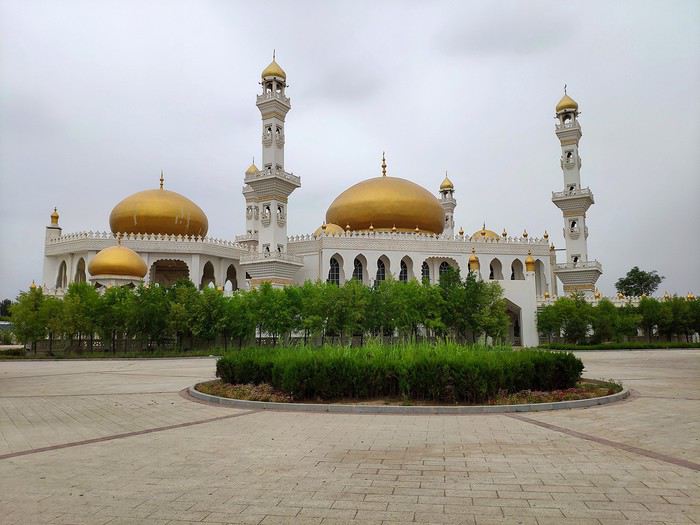 L'intérieur est très joli.
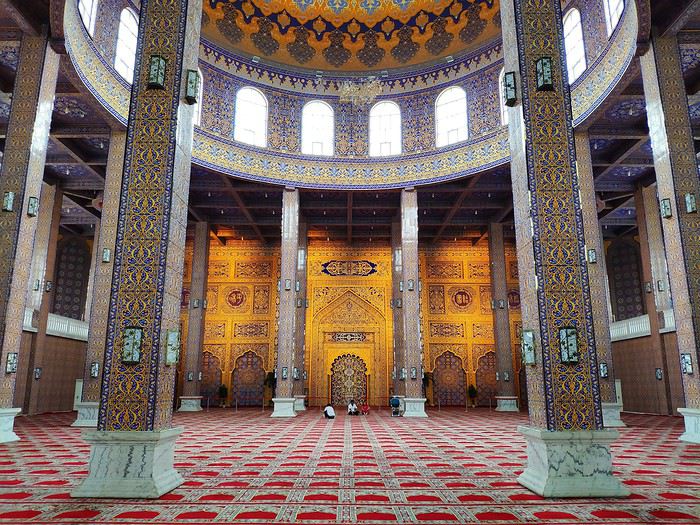 On y voit fortement l’influence de la route de la soie.
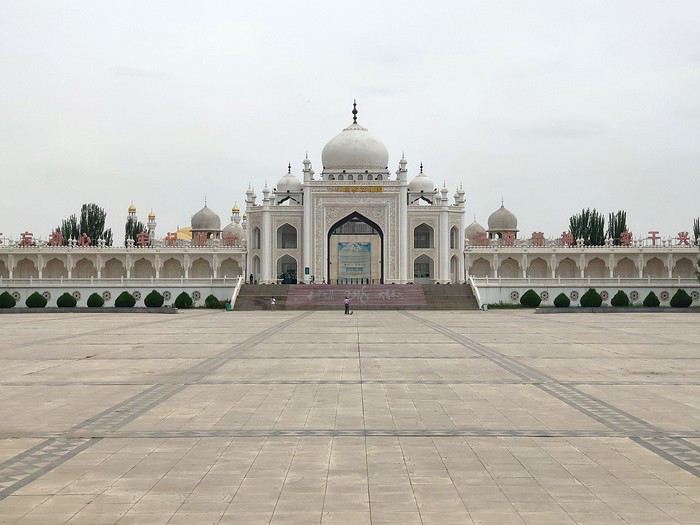 Après ce premier aperçu culturel de la région du Ningxia, nous mangeons un repas local composé de mouton bien sûr et accompagné d’une salade de pousses de Goji. La baie de Goji est la première spécialité de la région du Ningxia, un super fruit réputé pour contenir pleins de micronutriments.
L’après midi est consacré aux mausolées royaux de la dynastie Xixia. Cette dynastie a régné sur cette région de Chine il y a 5000 ans et leur sépulture est considérée comme un trésor archéologique. Les tombes en forme de grande butte de terre séchée entourés de murailles ont été stratégiquement placées selon les principes du Fengshui, entre les montagnes de Helan Shan et le Fleuve Jaune.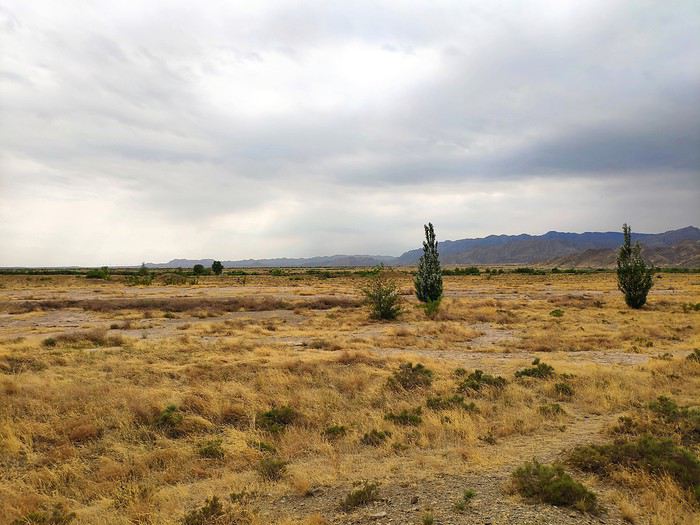 La dynastie Xixia est une dynastie qui a régné sur une partie de la route de la soie avant d'être finalement vaincue par les Mongols au XIIIe siècle. Le site est grandiose avec cette plaine aride au pied de la chaine de montagne de Helan.
 Le site étant immense, il faut prendre d’abord une navette pour en faire le tour puis ensuite on peut louer des vélos pour rejoindre les dernières tombes. Le problème est qu’il est déjà tard et il n’est plus possible de louer de vélos, on part donc en exploration à pieds pour aller s’approcher le plus près, mais on sait que l’on n’aura pas le temps de les atteindre, 5 kilomètres de distance.
 Néanmoins, le site prend une autre dimension à pieds, sous cette chaleur écrasante et le soleil parfois caché par les nuages ajoute une touche grandiose à ce site qui semble si vide et immense. On aperçoit la ville de Yinchuan au fond, avec ses grands bâtiments modernes et les cheminées des usines chimiques, deux mondes qui se contemplent avec 1000 ans de différence.
 En rentrant en ville, on fait un détour par South Square où se trouve une version miniature de Tian An Men Square.
 La nuit tombe tard à Yinchuan par rapport à Hangzhou qui se trouve à 2000 kilomètres à l’Est de Hangzhou. Ce qui nous donne l’occasion de rentrer tranquillement en ville et de visiter le quartier d’affaire de Yinchuan.
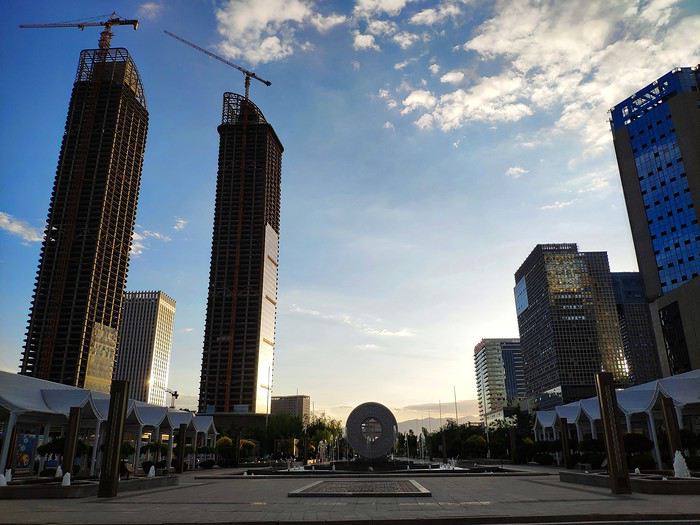 Puis on grimple regarder le soleil se coucher depuis une esplanade qui est parfaitement orientée plein Ouest pour terminer cette première journée dans le Ningxia.
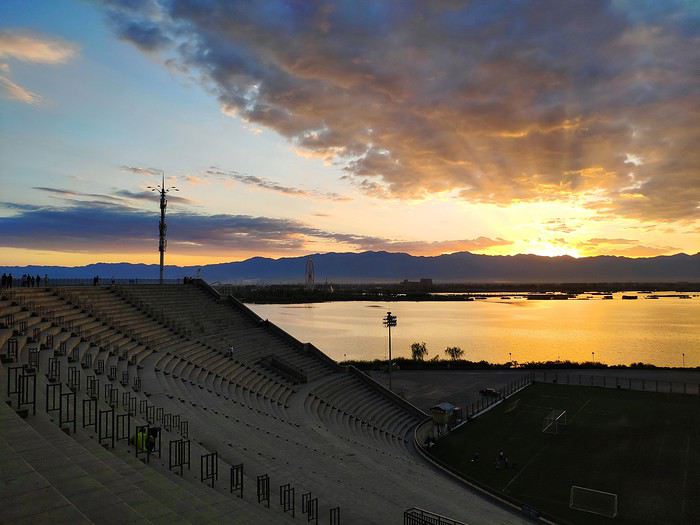
A suivre...
De retour d'un petit voyage dans une région de Chine, je voudrai partager avec vous ce carnet de voyage, j'espère qu'il vous plaira. Il vous permettra aussi d'avoir
Quelques jours dans le Nord-Ouest de la Chine, dans la minuscule région du Ningxia traversée par le Fleuve Jaune, sur les traces des civilisations de la Route de la Soie, et surtout à la découverte d’un condensé de majestueux paysages arides : désert de sable, grasslands verdoyantes, montagnes ocres. Une région pas très connue en dehors de Chine, voici une carte pour vous permettre de situer cette petite région (en rouge):
Après avoir réceptionné notre véhicule, outil indispensable pour ce road trip de 600 kilomètres seulement (l'avantage de visiter la plus petite province de cet immense pays), un SUV de Buick plutôt maigre en terme d'équipement, nous commençons notre exploration par la ville de Yinchuan, capitale de la province autonome du Ningxia. Yinchuan n’a pas l’allure des grandes capitales provinciales du pays, elle semble vide et si petite. On y roule plutôt facilement sur les grandes avenues et on se gare sans difficulté.
Cette région qui a la particularité d’être administrée par la minorité musulmane Hui, a une histoire assez originale, la région autonome du Ningxia a été fondée en 1959 seulement. C'est une des régions qui est tout en bas des classements du pays, en terme de richesse, de PIB ou de population... Mais qui est devenu un grand centre de production de vin ! Sur les contreforts des Montagnes de Helan Shan, on voit défiler les panneaux indiquant les domaines viticoles qui se visitent. Pour ce premier jour, on part donc logiquement d’abord à la visite des bâtiments caractéristiques de la ville, tout d’abord la mosquée de Nanguan.
Tout autour de la mosquée, des vendeurs de moutons hallal.
Pour continuer notre découverte de Yinchuan et de la culture Hui, nous nous rendons en sortie de la ville, au Hui Minority cultural center, qui est un ensemble de bâtiments (pas encore finis) dont une très belle mosquée encore.
L'intérieur est très joli.
On y voit fortement l’influence de la route de la soie.
Après ce premier aperçu culturel de la région du Ningxia, nous mangeons un repas local composé de mouton bien sûr et accompagné d’une salade de pousses de Goji. La baie de Goji est la première spécialité de la région du Ningxia, un super fruit réputé pour contenir pleins de micronutriments.L’après midi est consacré aux mausolées royaux de la dynastie Xixia. Cette dynastie a régné sur cette région de Chine il y a 5000 ans et leur sépulture est considérée comme un trésor archéologique. Les tombes en forme de grande butte de terre séchée entourés de murailles ont été stratégiquement placées selon les principes du Fengshui, entre les montagnes de Helan Shan et le Fleuve Jaune.
La dynastie Xixia est une dynastie qui a régné sur une partie de la route de la soie avant d'être finalement vaincue par les Mongols au XIIIe siècle. Le site est grandiose avec cette plaine aride au pied de la chaine de montagne de Helan.
Le site étant immense, il faut prendre d’abord une navette pour en faire le tour puis ensuite on peut louer des vélos pour rejoindre les dernières tombes. Le problème est qu’il est déjà tard et il n’est plus possible de louer de vélos, on part donc en exploration à pieds pour aller s’approcher le plus près, mais on sait que l’on n’aura pas le temps de les atteindre, 5 kilomètres de distance.
Néanmoins, le site prend une autre dimension à pieds, sous cette chaleur écrasante et le soleil parfois caché par les nuages ajoute une touche grandiose à ce site qui semble si vide et immense. On aperçoit la ville de Yinchuan au fond, avec ses grands bâtiments modernes et les cheminées des usines chimiques, deux mondes qui se contemplent avec 1000 ans de différence.
En rentrant en ville, on fait un détour par South Square où se trouve une version miniature de Tian An Men Square.
La nuit tombe tard à Yinchuan par rapport à Hangzhou qui se trouve à 2000 kilomètres à l’Est de Hangzhou. Ce qui nous donne l’occasion de rentrer tranquillement en ville et de visiter le quartier d’affaire de Yinchuan.
Puis on grimple regarder le soleil se coucher depuis une esplanade qui est parfaitement orientée plein Ouest pour terminer cette première journée dans le Ningxia.
A suivre...
Two weeks with a friend in southern Kazakhstan
Hello everyone!
I’m back from two weeks in southern Kazakhstan. I went with a friend, and we organized everything ourselves. We came back enchanted by this trip: stunning landscapes, lots of animals seen in the parks, and above all, top-notch hospitality and welcome... All of this makes me really want to go back and explore the other countries in the region. In the meantime, I’m sharing the story of these two weeks of travel... Don’t hesitate if you have any questions. And if you want more practical info and/or see more photos, you can check out my blog: https://smilingaroundtheworld.com/category/kazakhstan/
Day 1: First Kazakh steps in Shymkent
So here we are in Kazakhstan for two weeks. We had an excellent flight with Air Astana, which instantly made it into my top 3 best airlines! From the airport, the service was top-notch, with very friendly staff who went out of their way to ensure we both got vegetarian meals (my order hadn’t been taken into account when booking the tickets online). The flight to Nur-Sultan (the new name for the capital, formerly Astana, renamed last month in honor of the resigning president) was three-quarters empty, and we each got to stretch out over three seats. We were given an incredible travel kit, including a reversible sleep mask with phosphorescent writing: “Do not disturb” or “Wake me for meals.” Awesome! As for the lighting in the plane, I think the interior cycled through every color to simulate evening, early night, pitch-black night, and then dawn. It was even a bit surreal—those lights and everyone’s glowing masks ^^ The flight was a bit early and too short for us to sleep well, but it was still pleasant :-)
Upon arriving in Nur-Sultan, the atmosphere was a bit colder. There was staff everywhere, and we were under heavy surveillance. A camera even filmed us as we entered the terminal. We got our passports stamped and settled in to wait for our second flight. We eventually realized we were waiting in the wrong place... We were still in the international terminal, while our next flight was domestic. We finally found the right spot—saved! We started our trip in Shymkent, in the south of the country. We dropped our bags at the City Hostel, a super modern youth hostel offering double rooms. The decor is industrial-style, with very high ceilings—we loved it. When we arrived, it was too early for check-in, so we just left our luggage and went for a walk around the neighborhood. There was quite a bit of traffic, and the avenues were very wide. Despite that, there was also a lot of greenery and green spaces, which lightened things up a bit.
We had lunch (pizza + smoothie) on the top floor of a shopping mall, then headed to the pre-Russian quarter, a much quieter area with its little streets and individual houses.
Back at the hostel, after checking in, we treated ourselves to a two-hour nap—it felt great! In the late afternoon, we set out to find the Salman Bazaar. It wasn’t easy to organize—we realized Shymkent isn’t a very touristy destination—but we eventually managed with the help of the hostel receptionist, who called us a taxi. This bazaar is huge and has everything you could need for daily life: clothes, food, household products, toys... We did some shopping for dinner, then took another taxi to Independence Park, inaugurated in 2011 for the 20th anniversary of Kazakhstan’s independence. We really liked this park—it’s very wooded, and the late afternoon light was, as always, beautiful and pleasant... In the center, a large monument resembles the center of a yurt.
We then walked back to the hostel via Independence Square and several parks. We wanted to grab a drink along the way but didn’t find anything inspiring—oh well. We had dinner at the hostel and went straight to bed. Tomorrow, we’re getting up early... We’re heading out for two days to explore Aksou-Jabagly National Park. This park is famous for its landscapes at this time of year—it should be in full bloom, especially with tulips. We’ll see!
Days 2 & 3: Canyon, tulips, and wildlife in Aksou-Jabagly Park
Located two hours from Shymkent, Aksou-Jabagly Park is reputed to be one of the most beautiful in the region. We took a taxi from Shymkent, and upon arrival, we were warmly welcomed by Ruslan and his mother. They live at the entrance to the reserve, at the foot of the mountains, in a house surrounded by poplars. The setting is exceptional, and we immediately fell in love with the place. For our first day, we set off to explore the Aksou Canyon. Ruslan arranged a 4x4 with a driver and a ranger. The ranger speaks a few words of English, and with Coralie’s few words of Russian, we should manage! After a “viewpoint” stop, the road turns into a dirt track. It’s rained a lot lately, and the track is sometimes very muddy—at one point, we even had to cross a river. Four-wheel drive was definitely needed! The ranger pointed out some marmots by the side of the path—they were adorable.
We finally arrived at “Inspector’s House No. 1,” which overlooks the canyon. The view is magnificent, with high cliffs, wildflowers, conifers, and the Aksou River winding far below. While the driver chatted with the inspector, we descended to the bottom of the canyon with the ranger. The tulips I’d been hoping for were there—I was so happy! There were red, yellow, and even bicolor ones...
At the bottom of the canyon, we took a little break by the river. “Aksou” means “white waters” in Kazakh—the water does indeed have a very special color, a blue that’s both very light and very intense, like some South American lagoons. It bubbles around the rocks. The climb back up was easier than we feared. Once at the top, we continued along the canyon. The perspective changed as we progressed, and we never got tired of the view... Eagles circled above us.
After about 2 km, the driver picked us up, and we continued to a small kiosk at the foot of the mountains, where we had a picnic. Ruslan’s mother had prepared vegetarian “lunch boxes”—it was delicious and felt good to eat. However, it had gotten noticeably colder, so we put our jackets and scarves back on! After the meal, the driver walked off with a bucket—we figured he was going mushroom picking with Inspector No. 2, who had a house nearby.
We enjoyed the spot a bit longer while the driver gathered mushrooms, and then we headed back toward Ruslan’s place. Or so we thought... The return trip turned out to be quite long—the park wasn’t as deserted as it seemed, and the driver stopped every five minutes to chat with people we passed. At one point, we ran into Inspector No. 2 on horseback—it looked like there was a problem with a car further ahead... The driver and ranger bolted out of the car, headed toward the other vehicle, and we heard raised voices... When they came back, we tried to figure out what had happened, but no luck. We stopped again at Inspector No. 1’s house (are you following?), and they made us get out, telling us Inspector No. 2 needed the car for a few minutes... They left us stranded with Inspector No. 1, who went home, leaving us in the garden :-D We kept busy with the puppies, and I even took a little nap in the sun... Three-quarters of an hour later, we finally left—we didn’t fully understand what happened and never found out!
We got back (almost) without stopping to Ruslan’s house. Our room was ready, and we settled in quickly before dinner. It was already 6:30 PM, even though we were supposed to be back by 4 PM. Mushroom picking really slows things down ^^ Ruslan’s mother had prepared a delicious meal: vegetable soup, raw vegetable salad, and a mushroom, carrot, and potato stew. We loved it!
We spent the rest of the evening planning the rest of our trip while sipping tea. At one point, Ruslan and his mother signaled that there were wild boars right across from us—we could see them clearly! There were three adults and three piglets. We also took a little walk in the garden, watched the sunset, I did some blogging, and Coralie read... A lovely evening, and an equally lovely ten-hour night! The next morning, after a good breakfast, we set off on foot into the park. The trail starts right next to Ruslan’s house—so convenient! Today, we were with another ranger, two Germans (brother and sister), and their English-speaking guide (who didn’t guide much). We walked on a dirt road—there were even more tulips than yesterday, and the snow-capped mountains in the distance were stunning. After 5 km, we reached a small cabin, then continued another kilometer to Kishy Kaindy, a viewpoint overlooking the Jabagly River waterfalls (Jabagly means “year-old foal”). It was spectacular! We stayed a good while admiring this natural wonder. Like yesterday, the ranger didn’t rush us at all—it was really nice. We also saw eagles and an ibex perched on a ridge.
We had a picnic at the cabin before heading back the same way we came. This time, the snow-capped peaks were facing us—so beautiful! We picked up our bags and said goodbye to Ruslan’s mother. She was really happy today because her granddaughter was there. She told us she was a “babushka”—I understood that! Ruslan then drove us to Turar Ryskulov, where we took a shared taxi back to Shymkent.
In Shymkent, we struggled a bit with our Airbnb. We waited half an hour for the person who was supposed to let us in, then discovered the Wi-Fi wasn’t working—but we had a lot of bookings to make that evening. The lady finally lent us a Kazakh SIM card with data, which Coralie put in her phone in “hotspot” mode so I could get some internet too. All of that took nearly two hours. Phew! We then rushed to do some shopping at the supermarket. On the way back, some lights caught my eye—it was a pedestrian street all decorated with a funfair next to it. It was very lively, and we spent a good while strolling and people-watching! The rest of our evening was studious, between preparing dinner and booking our next stops.
Day 4: Turkestan, Yasawi Mausoleum, and Sauran ruins
This morning, after one last stroll in Shymkent, we headed to Turkestan. When we arrived at the bus station, we were told the next bus was in nearly three hours, but there were minibuses leaving when full. The system was well-oiled, and in just fifteen minutes, our minibus was ready to go. We each had a seat (and one for our luggage since there’s no trunk!), and the minibus was quite new—nothing like Madagascar ;-)
The trip went well despite a few driving scares—the driver was going a bit fast for my liking! Along the road, the fields were full of poppies—so pretty. When we arrived, we headed straight to the Edem hotel, where we wouldn’t be staying (we had a train to Almaty at midnight) but where we wanted to leave our luggage for the day. They agreed easily—great! Once we’d dropped off our bags and suitcases, we started our visits.
We began with the architectural gem and largest pilgrimage site in Kazakhstan: the mausoleum of Khodja Ahmad Yasawi, a great Sufi sage. Yasawi’s original tomb was already a pilgrimage site when Tamerlane ordered the construction of a larger mausoleum in 1390. It’s decorated with white and blue tiles and has a turquoise dome (currently under renovation). The main facade, unfinished at Tamerlane’s death, was left in earth with visible scaffolding. Impressive! The site is UNESCO-listed. Inside, the main hall displays a large cauldron, and other small rooms showcase plates, ancient coins, belts... Yasawi’s tomb is visible via two adjacent corridors.
We then strolled through the park, which includes many other mausoleums and tombs. We visited the old baths, the Friday Mosque, and then the history museum. The underground mosque, where Yasawi’s cell is located (where he retreated at the end of his life), was unfortunately closed for renovations.
We then went back to the Edem hotel to have them call us a taxi, and we set off to visit the ancient fortress of Sauran. This Silk Road city, once prosperous, is now reduced to ruins, with thousands of poppies blooming between them. High walls once surrounded a bustling and pleasant city. Many foundations remain visible. The place is vast, quiet, almost deserted, and imbued with a certain melancholy... The deep red poppies swayed in the wind, between the remnants of this city, reminding us how fleeting things are.
Back in Turkestan, we had dinner at the Edem hotel’s restaurant (we had to thank them somehow ;-)) and then rushed to the station to catch our train... 18 hours of travel awaited us to Almaty!
Day 5: From Turkestan to Almaty, 18 hours by train across the Kazakh steppe
We traveled from Turkestan to Almaty by train. We booked our tickets the day before departure, and only six seats were left: three in second class, not together at all, and three in first class, also not together but in the same carriage. We opted for first class! It was more expensive, but for such a long trip, a little comfort wouldn’t hurt... We wondered if we’d manage to switch cabins to be together, but it resolved itself: when we boarded, the conductor/carriage chief immediately noticed we weren’t together. He literally kicked a young man out of his berth so we could travel in the same cabin. We felt bad for the young man, even though he seemed to take it well... we thanked him with dried fruit (and I can confirm he took it well—the next day, he came to chat with us). In any case, we were really happy to have our own little cabin for this long journey, especially since we were the only foreigners and the only women in the carriage.
Eighteen hours by train might seem long, but these long trips while traveling aren’t wasted time—they’re the breathing space of the journey. They’re the essential moments for digesting what we’ve already experienced and preparing for future discoveries. They’re also privileged moments for reflection. Traveling slowly, to the rhythm of the train, means falling asleep in Turkestan’s outskirts, lulled by the train’s rocking and creaking, and waking up in the steppe. It’s feeling the train slow down and stop, stepping onto the platform for a moment, and watching the women sell food to passengers. It’s taking the time to write, read, think. It’s chatting with our neighbors and, despite the language barrier, managing to communicate a little. It’s picnicking at the little table in our cabin, with the landscape rolling by outside, and listening to music. It’s feeling privileged, imagining ourselves on the Orient Express or the Trans-Siberian. Reminding ourselves that one day, one day for real, we’ll take that Trans-Siberian. And smiling, thinking that in the meantime, in a few months, there’ll be the Trans-Canadian...
Days 6 & 7: Almaty, the “little apple”
The former capital of Kazakhstan, Almaty is known as the most Western and lively city in the country. At first, we had a bit of trouble identifying the city center—it’s more spread out and less dense than what we’re used to in Europe—but once we got our bearings, we really enjoyed strolling along the wide avenues lined with cafés and in the few pedestrian streets. The city’s emblem is the apple, which you’ll find in various forms around the city, from benches to statues to fountains. The original apple, from which all the apples we know today descend, is said to come from the mountains of Kazakhstan.
For nature, Almaty is a pretty green city. It has large parks, like Panfilov Park, which houses the Zenkov Cathedral. Some streets are also very tree-lined, so much so that they almost look like gardens. Often, high mountains peek out from behind the streets...
For shopping, traditional boutiques sit alongside big international brands. We really liked the Green Bazaar, a large market that sells everything. The food section was great, with stalls of pickled vegetables, dried fruits, and beautifully stacked fresh fruits... A feast for the eyes and lots of temptations for me!
For culture, Almaty has several museums. We visited two: the Fine Arts Museum and the National Museum. Both are housed in very Soviet-looking buildings on the outside, but the Fine Arts Museum turned out to be quite modern inside, with a pleasant museography. The National Museum, on the other hand, has stayed true to its roots ^^ Just walking through it was an experience in itself. And we did quite a bit of shopping there... The hall is a giant shop with lots of handicrafts—we treated ourselves.
The Arasan Baths are a must in Almaty. They’re said to be among the most beautiful baths in Central Asia... Architecturally, I didn’t find them amazing (nothing like Budapest’s, for example), but wow, did it feel good to relax there after a day of sightseeing! I happily moved between the sauna, hammam, and Russian sauna, with a preference for the latter—less dry than a traditional sauna and less humid than the hammam. You can buy bundles of leaves to slap yourself (or get slapped) with to boost circulation. The prices are very affordable too... On a weekday evening, we paid 1,800 tenge, or 4.5 euros, for an hour. Note that they add 20 minutes for changing, so you really get a full hour in the baths.
For restaurants, we didn’t try many because we preferred to limit our food budget by cooking ourselves. However, we did try and highly recommend Daredzhani, a great Georgian restaurant where we feasted. We didn’t know Georgian cuisine before, but we really liked it—vegetables cooked in various ways, cheese-filled breads, potato and/or egg-filled breads, and very thin fruit pastes made from grapes. We actually ate there twice because it was so good! We also loved Coffee Delia, where you can enjoy delicious pastries in a very cozy setting.
Besides being a pleasant place to live, Almaty is also a great base for exploring the surrounding area, and we were happy to stay eight days to discover more of the region!
Days 7, 8 & 9: Getting green around Almaty: Kok Tobe, Shymbulak, Medeo, and Big Almaty Lake
During our stay in Almaty, we used a rather unusual means of transport several times: the cable car! Here, it’s called a "gondola," and it allowed us to gain some altitude and breathe in the fresh mountain air surrounding Almaty ;-)
First cable car ride: Kok Tobe. The cable car starts in the city center and takes you to the top of a hill overlooking Almaty. At the top, it’s fairground vibes with an upside-down house, a Ferris wheel, rides, and the inevitable eagle trainer... There’s even a little corner dedicated to the Beatles, complete with music and a statue!
Second ride: Shymbulak. This time, you take a bus to Medeo, then three cable cars to the top of the mountain, at 3,200 meters altitude. Shymbulak is the largest ski resort in Central Asia. We went there to hike, but there was still snow and skiers, so we settled for admiring the view... With the blue sky and sun we had, it was gorgeous! We then treated ourselves to tea on the terrace—chalet vibes... At Paul’s, we weren’t completely out of place ;-)
Before taking the bus back, we stopped by Medeo, where there’s a large ice rink. With 10,000 m², it can host a thousand skaters in winter! This season, it’s closed; part of it is used as a go-kart track, and the other as a landing strip for paragliders.
Located an hour’s drive from the city center, Big Almaty Lake reveals itself at the last moment, around a bend, nestled in a setting of mountains and greenery. With the recent cold snap, it’s frozen, and the edges are snowy—a beautiful winter atmosphere! The ice was starting to melt, though—we could hear the water moving underneath, and when Coralie tried to walk on the ice, it collapsed under her feet. Unfortunately, it’s impossible to walk around it—a ranger keeps an eye out and blocks the adventurous (including us ;-)).
Days 10 & 11: Excursions around Almaty: Charyn Canyon, Issyk, and Turgen
Almaty’s tourism office is very active and organizes outings on weekends and holidays. We went to Charyn Canyon and then to Issyk and Turgen. A great way to discover the Almaty area at a modest cost (the outing costs about 6,000 tenge, or 15 euros per person).
Formed over millennia by erosion and wind, Charyn Canyon is reminiscent of the Colorado and the Grand Canyon. The most touristy part we visited is called the Valley of Castles, referring to the rock formations that resemble towers. We first walked along the ridge, where there are many viewpoints, then descended into the canyon. A three-kilometer walk leads to the banks of the Charyn River. The place seems to be a favorite relaxation spot for Kazakh families, who picnic, play ball, sunbathe... There’s also a hotel, bungalows, yurts, and a restaurant. Issyk is famous for its burial mounds and its Golden Man—maybe even a Golden Woman—found there. A small museum displays some artifacts. A little further on is Issyk Lake, once dried up but now reappearing... Whether naturally or not isn’t very clear!
As for Turgen, it’s a natural park known for its gorges and waterfalls. We didn’t have time to explore it in detail, but the bus drove through some beautiful landscapes, and we still walked to Bear Waterfall. It’s not incredible, but it’s still a nice little hike.
Besides the practical side of these organized excursions from Almaty, we appreciated being able to do an activity that Kazakhs do on weekends. During the Issyk/Turgen excursion, we really hit it off with Karina, a young student dragged there on vacation by her mother. She’s currently studying computer science at the best university in Astana and hopes to go to Europe eventually... A brilliant young woman, and a chance for us to chat in English ;-)
Days 12 & 13: The spectacular landscapes of Altyn-Emel Park
The last stop on our Kazakhstan trip was Altyn-Emel Park. This park is quite hard to access, so we opted for a car with a driver for two days—pure luxury!
Our driver’s name is Andrei. We met him at 7 AM outside our apartment on Wednesday morning. He doesn’t speak English, but a young man from the agency we booked through was also there, and we went over the itinerary together before leaving with Andrei.
Our first stop was Tamgaly Tas, two hours from Almaty. It’s a site where you can see 16th-century petroglyphs depicting Buddha. The place is also known for climbing—there were lots of young people harnessed up and/or climbing. It’s right in the middle of the Kazakh countryside, and we had a bit of trouble finding it!
Even with the language barrier, Andrei turned out to be very friendly. He suggested photo stops from time to time, didn’t rush us, and pointed out animals he saw... We even backed up on the road to see and help a tortoise cross!
It took another two and a half hours to reach Bashi, the “gateway” village to Altyn-Emel Park. After a quick stop at the rangers’, we arrived at the hotel. Our guidebook mentioned modest guesthouses, but things are changing... The hotel is large, brand new, and still being expanded. It reminded me of some Chinese hotels in Laos.
We had a quick lunch with Andrei—he explained that he’s a truck driver normally, delivering clothes and fabrics between Kazakhstan, Afghanistan, and Russia. He also showed us photos of his wife and son and told us he’s recently become a grandfather! We then headed to the park, grabbing a ranger on the way. Like in Aksou-Jabagly, he was dressed in full military gear. We first headed toward the Katutau Mountains. The rocks are reddish, sculpted by wind and erosion—the place reminded us a bit of Charyn Canyon. We had some “free time” to explore—we didn’t need to be told twice... Meanwhile, Andrei and the ranger chatted nonstop—it looked like they’d hit it off!
We got back in the car and continued along the track to the Aktau Mountains. Change of scenery! The mountains weren’t red anymore but white... Or so they appeared from afar. When we got closer, we realized they were actually multicolored, striped with yellow, pink, and ochre veins... It was magnificent, even more so with the late afternoon light. We had time to explore on our own again, and we walked with delight in this almost dreamlike landscape. We thought we’d made the right choice coming here ;-) We made one last stop before heading back to see a 700-year-old willow. It’s in an oasis where other tourists were camping—very tempting... I got the coordinates of their guide for next time ;-) The way back was in beautiful light, between sunset and a distant storm. Nature even treated us to a gorgeous sunset!
It was past 8 PM when we got back to the hotel, but our dinner was still waiting for us. We ate with Andrei, chatted a bit with a Polish woman who spoke both Russian and French (we put her to work chatting with Andrei ;-)), and then had a quiet evening with Wi-Fi, a shower, and reading in our room.
The next day, after breakfast, we met up with the same ranger and headed toward the singing dunes. These dunes are supposed to make a sound when you slide down their slopes. I was more than skeptical, but okay! When we arrived, we discovered a beautiful landscape—the main dune is gigantic, and when we reached the top, the view was extraordinary: it was the first time I’d seen a dune in the desert, snow-capped mountains, and a river all in one glance! A group of Chinese tourists was ahead of us on the dune, but they turned back quickly, and we were alone. After studying the terrain, I chose a slope that seemed good, and I started sliding down on my bottom... Quickly, I heard and felt a strong vibration, which turned into a hum. The dune really sings! It’s completely crazy... We did several tests—the most effective was sliding down side by side. But it works as long as there aren’t too many tourists doing it and the dune has time to rebuild between slides... There are about thirty singing dunes in the world. This phenomenon, already described by Marco Polo, comes from the synchronous movement of sand grains, which must be very round and covered with a varnish called “desert glaze”...
Covered in sand but delighted, we headed back to Bashi. The ranger stopped at a small spring so we could wash up, but it was almost dry. Along the way, we also saw the “Oshaktas,” a place where Genghis Khan’s expedition is said to have camped in 1219 during his conquest of Central Asia. The stones were apparently used to support the cauldron where food was prepared. A little further on, the ranger made us stop: there were antelopes!!! We saw one up close and a herd further away.
When we got back to the hotel, I took a quick shower to get rid of the sand—I felt like I had it everywhere! We had a quick lunch and then hit the road back to Almaty. Andrei drove very well, had a nice playlist, and I let myself be lulled while watching the landscape roll by outside...
For our last night in Kazakhstan, we booked a yurt in the hills above Almaty, not far from Medeo. For one night, we pretended to be nomads... The bed was a bit hard, and the air was a bit chilly, but we loved it! And the welcome was kind, the meal very good—only downside: the horse milk and camel milk, still warm... I almost threw up. Well, it was an experience, and all of this beautifully concluded our Kazakh stay!
I’m back from two weeks in southern Kazakhstan. I went with a friend, and we organized everything ourselves. We came back enchanted by this trip: stunning landscapes, lots of animals seen in the parks, and above all, top-notch hospitality and welcome... All of this makes me really want to go back and explore the other countries in the region. In the meantime, I’m sharing the story of these two weeks of travel... Don’t hesitate if you have any questions. And if you want more practical info and/or see more photos, you can check out my blog: https://smilingaroundtheworld.com/category/kazakhstan/
Day 1: First Kazakh steps in Shymkent
So here we are in Kazakhstan for two weeks. We had an excellent flight with Air Astana, which instantly made it into my top 3 best airlines! From the airport, the service was top-notch, with very friendly staff who went out of their way to ensure we both got vegetarian meals (my order hadn’t been taken into account when booking the tickets online). The flight to Nur-Sultan (the new name for the capital, formerly Astana, renamed last month in honor of the resigning president) was three-quarters empty, and we each got to stretch out over three seats. We were given an incredible travel kit, including a reversible sleep mask with phosphorescent writing: “Do not disturb” or “Wake me for meals.” Awesome! As for the lighting in the plane, I think the interior cycled through every color to simulate evening, early night, pitch-black night, and then dawn. It was even a bit surreal—those lights and everyone’s glowing masks ^^ The flight was a bit early and too short for us to sleep well, but it was still pleasant :-)
Upon arriving in Nur-Sultan, the atmosphere was a bit colder. There was staff everywhere, and we were under heavy surveillance. A camera even filmed us as we entered the terminal. We got our passports stamped and settled in to wait for our second flight. We eventually realized we were waiting in the wrong place... We were still in the international terminal, while our next flight was domestic. We finally found the right spot—saved! We started our trip in Shymkent, in the south of the country. We dropped our bags at the City Hostel, a super modern youth hostel offering double rooms. The decor is industrial-style, with very high ceilings—we loved it. When we arrived, it was too early for check-in, so we just left our luggage and went for a walk around the neighborhood. There was quite a bit of traffic, and the avenues were very wide. Despite that, there was also a lot of greenery and green spaces, which lightened things up a bit.
We had lunch (pizza + smoothie) on the top floor of a shopping mall, then headed to the pre-Russian quarter, a much quieter area with its little streets and individual houses.
Back at the hostel, after checking in, we treated ourselves to a two-hour nap—it felt great! In the late afternoon, we set out to find the Salman Bazaar. It wasn’t easy to organize—we realized Shymkent isn’t a very touristy destination—but we eventually managed with the help of the hostel receptionist, who called us a taxi. This bazaar is huge and has everything you could need for daily life: clothes, food, household products, toys... We did some shopping for dinner, then took another taxi to Independence Park, inaugurated in 2011 for the 20th anniversary of Kazakhstan’s independence. We really liked this park—it’s very wooded, and the late afternoon light was, as always, beautiful and pleasant... In the center, a large monument resembles the center of a yurt.
We then walked back to the hostel via Independence Square and several parks. We wanted to grab a drink along the way but didn’t find anything inspiring—oh well. We had dinner at the hostel and went straight to bed. Tomorrow, we’re getting up early... We’re heading out for two days to explore Aksou-Jabagly National Park. This park is famous for its landscapes at this time of year—it should be in full bloom, especially with tulips. We’ll see!
Days 2 & 3: Canyon, tulips, and wildlife in Aksou-Jabagly Park
Located two hours from Shymkent, Aksou-Jabagly Park is reputed to be one of the most beautiful in the region. We took a taxi from Shymkent, and upon arrival, we were warmly welcomed by Ruslan and his mother. They live at the entrance to the reserve, at the foot of the mountains, in a house surrounded by poplars. The setting is exceptional, and we immediately fell in love with the place. For our first day, we set off to explore the Aksou Canyon. Ruslan arranged a 4x4 with a driver and a ranger. The ranger speaks a few words of English, and with Coralie’s few words of Russian, we should manage! After a “viewpoint” stop, the road turns into a dirt track. It’s rained a lot lately, and the track is sometimes very muddy—at one point, we even had to cross a river. Four-wheel drive was definitely needed! The ranger pointed out some marmots by the side of the path—they were adorable.
We finally arrived at “Inspector’s House No. 1,” which overlooks the canyon. The view is magnificent, with high cliffs, wildflowers, conifers, and the Aksou River winding far below. While the driver chatted with the inspector, we descended to the bottom of the canyon with the ranger. The tulips I’d been hoping for were there—I was so happy! There were red, yellow, and even bicolor ones...
At the bottom of the canyon, we took a little break by the river. “Aksou” means “white waters” in Kazakh—the water does indeed have a very special color, a blue that’s both very light and very intense, like some South American lagoons. It bubbles around the rocks. The climb back up was easier than we feared. Once at the top, we continued along the canyon. The perspective changed as we progressed, and we never got tired of the view... Eagles circled above us.
After about 2 km, the driver picked us up, and we continued to a small kiosk at the foot of the mountains, where we had a picnic. Ruslan’s mother had prepared vegetarian “lunch boxes”—it was delicious and felt good to eat. However, it had gotten noticeably colder, so we put our jackets and scarves back on! After the meal, the driver walked off with a bucket—we figured he was going mushroom picking with Inspector No. 2, who had a house nearby.
We enjoyed the spot a bit longer while the driver gathered mushrooms, and then we headed back toward Ruslan’s place. Or so we thought... The return trip turned out to be quite long—the park wasn’t as deserted as it seemed, and the driver stopped every five minutes to chat with people we passed. At one point, we ran into Inspector No. 2 on horseback—it looked like there was a problem with a car further ahead... The driver and ranger bolted out of the car, headed toward the other vehicle, and we heard raised voices... When they came back, we tried to figure out what had happened, but no luck. We stopped again at Inspector No. 1’s house (are you following?), and they made us get out, telling us Inspector No. 2 needed the car for a few minutes... They left us stranded with Inspector No. 1, who went home, leaving us in the garden :-D We kept busy with the puppies, and I even took a little nap in the sun... Three-quarters of an hour later, we finally left—we didn’t fully understand what happened and never found out!
We got back (almost) without stopping to Ruslan’s house. Our room was ready, and we settled in quickly before dinner. It was already 6:30 PM, even though we were supposed to be back by 4 PM. Mushroom picking really slows things down ^^ Ruslan’s mother had prepared a delicious meal: vegetable soup, raw vegetable salad, and a mushroom, carrot, and potato stew. We loved it!
We spent the rest of the evening planning the rest of our trip while sipping tea. At one point, Ruslan and his mother signaled that there were wild boars right across from us—we could see them clearly! There were three adults and three piglets. We also took a little walk in the garden, watched the sunset, I did some blogging, and Coralie read... A lovely evening, and an equally lovely ten-hour night! The next morning, after a good breakfast, we set off on foot into the park. The trail starts right next to Ruslan’s house—so convenient! Today, we were with another ranger, two Germans (brother and sister), and their English-speaking guide (who didn’t guide much). We walked on a dirt road—there were even more tulips than yesterday, and the snow-capped mountains in the distance were stunning. After 5 km, we reached a small cabin, then continued another kilometer to Kishy Kaindy, a viewpoint overlooking the Jabagly River waterfalls (Jabagly means “year-old foal”). It was spectacular! We stayed a good while admiring this natural wonder. Like yesterday, the ranger didn’t rush us at all—it was really nice. We also saw eagles and an ibex perched on a ridge.
We had a picnic at the cabin before heading back the same way we came. This time, the snow-capped peaks were facing us—so beautiful! We picked up our bags and said goodbye to Ruslan’s mother. She was really happy today because her granddaughter was there. She told us she was a “babushka”—I understood that! Ruslan then drove us to Turar Ryskulov, where we took a shared taxi back to Shymkent.
In Shymkent, we struggled a bit with our Airbnb. We waited half an hour for the person who was supposed to let us in, then discovered the Wi-Fi wasn’t working—but we had a lot of bookings to make that evening. The lady finally lent us a Kazakh SIM card with data, which Coralie put in her phone in “hotspot” mode so I could get some internet too. All of that took nearly two hours. Phew! We then rushed to do some shopping at the supermarket. On the way back, some lights caught my eye—it was a pedestrian street all decorated with a funfair next to it. It was very lively, and we spent a good while strolling and people-watching! The rest of our evening was studious, between preparing dinner and booking our next stops.
Day 4: Turkestan, Yasawi Mausoleum, and Sauran ruins
This morning, after one last stroll in Shymkent, we headed to Turkestan. When we arrived at the bus station, we were told the next bus was in nearly three hours, but there were minibuses leaving when full. The system was well-oiled, and in just fifteen minutes, our minibus was ready to go. We each had a seat (and one for our luggage since there’s no trunk!), and the minibus was quite new—nothing like Madagascar ;-)
The trip went well despite a few driving scares—the driver was going a bit fast for my liking! Along the road, the fields were full of poppies—so pretty. When we arrived, we headed straight to the Edem hotel, where we wouldn’t be staying (we had a train to Almaty at midnight) but where we wanted to leave our luggage for the day. They agreed easily—great! Once we’d dropped off our bags and suitcases, we started our visits.
We began with the architectural gem and largest pilgrimage site in Kazakhstan: the mausoleum of Khodja Ahmad Yasawi, a great Sufi sage. Yasawi’s original tomb was already a pilgrimage site when Tamerlane ordered the construction of a larger mausoleum in 1390. It’s decorated with white and blue tiles and has a turquoise dome (currently under renovation). The main facade, unfinished at Tamerlane’s death, was left in earth with visible scaffolding. Impressive! The site is UNESCO-listed. Inside, the main hall displays a large cauldron, and other small rooms showcase plates, ancient coins, belts... Yasawi’s tomb is visible via two adjacent corridors.
We then strolled through the park, which includes many other mausoleums and tombs. We visited the old baths, the Friday Mosque, and then the history museum. The underground mosque, where Yasawi’s cell is located (where he retreated at the end of his life), was unfortunately closed for renovations.
We then went back to the Edem hotel to have them call us a taxi, and we set off to visit the ancient fortress of Sauran. This Silk Road city, once prosperous, is now reduced to ruins, with thousands of poppies blooming between them. High walls once surrounded a bustling and pleasant city. Many foundations remain visible. The place is vast, quiet, almost deserted, and imbued with a certain melancholy... The deep red poppies swayed in the wind, between the remnants of this city, reminding us how fleeting things are.
Back in Turkestan, we had dinner at the Edem hotel’s restaurant (we had to thank them somehow ;-)) and then rushed to the station to catch our train... 18 hours of travel awaited us to Almaty!
Day 5: From Turkestan to Almaty, 18 hours by train across the Kazakh steppe
We traveled from Turkestan to Almaty by train. We booked our tickets the day before departure, and only six seats were left: three in second class, not together at all, and three in first class, also not together but in the same carriage. We opted for first class! It was more expensive, but for such a long trip, a little comfort wouldn’t hurt... We wondered if we’d manage to switch cabins to be together, but it resolved itself: when we boarded, the conductor/carriage chief immediately noticed we weren’t together. He literally kicked a young man out of his berth so we could travel in the same cabin. We felt bad for the young man, even though he seemed to take it well... we thanked him with dried fruit (and I can confirm he took it well—the next day, he came to chat with us). In any case, we were really happy to have our own little cabin for this long journey, especially since we were the only foreigners and the only women in the carriage.
Eighteen hours by train might seem long, but these long trips while traveling aren’t wasted time—they’re the breathing space of the journey. They’re the essential moments for digesting what we’ve already experienced and preparing for future discoveries. They’re also privileged moments for reflection. Traveling slowly, to the rhythm of the train, means falling asleep in Turkestan’s outskirts, lulled by the train’s rocking and creaking, and waking up in the steppe. It’s feeling the train slow down and stop, stepping onto the platform for a moment, and watching the women sell food to passengers. It’s taking the time to write, read, think. It’s chatting with our neighbors and, despite the language barrier, managing to communicate a little. It’s picnicking at the little table in our cabin, with the landscape rolling by outside, and listening to music. It’s feeling privileged, imagining ourselves on the Orient Express or the Trans-Siberian. Reminding ourselves that one day, one day for real, we’ll take that Trans-Siberian. And smiling, thinking that in the meantime, in a few months, there’ll be the Trans-Canadian...
Days 6 & 7: Almaty, the “little apple”
The former capital of Kazakhstan, Almaty is known as the most Western and lively city in the country. At first, we had a bit of trouble identifying the city center—it’s more spread out and less dense than what we’re used to in Europe—but once we got our bearings, we really enjoyed strolling along the wide avenues lined with cafés and in the few pedestrian streets. The city’s emblem is the apple, which you’ll find in various forms around the city, from benches to statues to fountains. The original apple, from which all the apples we know today descend, is said to come from the mountains of Kazakhstan.
For nature, Almaty is a pretty green city. It has large parks, like Panfilov Park, which houses the Zenkov Cathedral. Some streets are also very tree-lined, so much so that they almost look like gardens. Often, high mountains peek out from behind the streets...
For shopping, traditional boutiques sit alongside big international brands. We really liked the Green Bazaar, a large market that sells everything. The food section was great, with stalls of pickled vegetables, dried fruits, and beautifully stacked fresh fruits... A feast for the eyes and lots of temptations for me!
For culture, Almaty has several museums. We visited two: the Fine Arts Museum and the National Museum. Both are housed in very Soviet-looking buildings on the outside, but the Fine Arts Museum turned out to be quite modern inside, with a pleasant museography. The National Museum, on the other hand, has stayed true to its roots ^^ Just walking through it was an experience in itself. And we did quite a bit of shopping there... The hall is a giant shop with lots of handicrafts—we treated ourselves.
The Arasan Baths are a must in Almaty. They’re said to be among the most beautiful baths in Central Asia... Architecturally, I didn’t find them amazing (nothing like Budapest’s, for example), but wow, did it feel good to relax there after a day of sightseeing! I happily moved between the sauna, hammam, and Russian sauna, with a preference for the latter—less dry than a traditional sauna and less humid than the hammam. You can buy bundles of leaves to slap yourself (or get slapped) with to boost circulation. The prices are very affordable too... On a weekday evening, we paid 1,800 tenge, or 4.5 euros, for an hour. Note that they add 20 minutes for changing, so you really get a full hour in the baths.
For restaurants, we didn’t try many because we preferred to limit our food budget by cooking ourselves. However, we did try and highly recommend Daredzhani, a great Georgian restaurant where we feasted. We didn’t know Georgian cuisine before, but we really liked it—vegetables cooked in various ways, cheese-filled breads, potato and/or egg-filled breads, and very thin fruit pastes made from grapes. We actually ate there twice because it was so good! We also loved Coffee Delia, where you can enjoy delicious pastries in a very cozy setting.
Besides being a pleasant place to live, Almaty is also a great base for exploring the surrounding area, and we were happy to stay eight days to discover more of the region!
Days 7, 8 & 9: Getting green around Almaty: Kok Tobe, Shymbulak, Medeo, and Big Almaty Lake
During our stay in Almaty, we used a rather unusual means of transport several times: the cable car! Here, it’s called a "gondola," and it allowed us to gain some altitude and breathe in the fresh mountain air surrounding Almaty ;-)
First cable car ride: Kok Tobe. The cable car starts in the city center and takes you to the top of a hill overlooking Almaty. At the top, it’s fairground vibes with an upside-down house, a Ferris wheel, rides, and the inevitable eagle trainer... There’s even a little corner dedicated to the Beatles, complete with music and a statue!
Second ride: Shymbulak. This time, you take a bus to Medeo, then three cable cars to the top of the mountain, at 3,200 meters altitude. Shymbulak is the largest ski resort in Central Asia. We went there to hike, but there was still snow and skiers, so we settled for admiring the view... With the blue sky and sun we had, it was gorgeous! We then treated ourselves to tea on the terrace—chalet vibes... At Paul’s, we weren’t completely out of place ;-)
Before taking the bus back, we stopped by Medeo, where there’s a large ice rink. With 10,000 m², it can host a thousand skaters in winter! This season, it’s closed; part of it is used as a go-kart track, and the other as a landing strip for paragliders.
Located an hour’s drive from the city center, Big Almaty Lake reveals itself at the last moment, around a bend, nestled in a setting of mountains and greenery. With the recent cold snap, it’s frozen, and the edges are snowy—a beautiful winter atmosphere! The ice was starting to melt, though—we could hear the water moving underneath, and when Coralie tried to walk on the ice, it collapsed under her feet. Unfortunately, it’s impossible to walk around it—a ranger keeps an eye out and blocks the adventurous (including us ;-)).
Days 10 & 11: Excursions around Almaty: Charyn Canyon, Issyk, and Turgen
Almaty’s tourism office is very active and organizes outings on weekends and holidays. We went to Charyn Canyon and then to Issyk and Turgen. A great way to discover the Almaty area at a modest cost (the outing costs about 6,000 tenge, or 15 euros per person).
Formed over millennia by erosion and wind, Charyn Canyon is reminiscent of the Colorado and the Grand Canyon. The most touristy part we visited is called the Valley of Castles, referring to the rock formations that resemble towers. We first walked along the ridge, where there are many viewpoints, then descended into the canyon. A three-kilometer walk leads to the banks of the Charyn River. The place seems to be a favorite relaxation spot for Kazakh families, who picnic, play ball, sunbathe... There’s also a hotel, bungalows, yurts, and a restaurant. Issyk is famous for its burial mounds and its Golden Man—maybe even a Golden Woman—found there. A small museum displays some artifacts. A little further on is Issyk Lake, once dried up but now reappearing... Whether naturally or not isn’t very clear!
As for Turgen, it’s a natural park known for its gorges and waterfalls. We didn’t have time to explore it in detail, but the bus drove through some beautiful landscapes, and we still walked to Bear Waterfall. It’s not incredible, but it’s still a nice little hike.
Besides the practical side of these organized excursions from Almaty, we appreciated being able to do an activity that Kazakhs do on weekends. During the Issyk/Turgen excursion, we really hit it off with Karina, a young student dragged there on vacation by her mother. She’s currently studying computer science at the best university in Astana and hopes to go to Europe eventually... A brilliant young woman, and a chance for us to chat in English ;-)
Days 12 & 13: The spectacular landscapes of Altyn-Emel Park
The last stop on our Kazakhstan trip was Altyn-Emel Park. This park is quite hard to access, so we opted for a car with a driver for two days—pure luxury!
Our driver’s name is Andrei. We met him at 7 AM outside our apartment on Wednesday morning. He doesn’t speak English, but a young man from the agency we booked through was also there, and we went over the itinerary together before leaving with Andrei.
Our first stop was Tamgaly Tas, two hours from Almaty. It’s a site where you can see 16th-century petroglyphs depicting Buddha. The place is also known for climbing—there were lots of young people harnessed up and/or climbing. It’s right in the middle of the Kazakh countryside, and we had a bit of trouble finding it!
Even with the language barrier, Andrei turned out to be very friendly. He suggested photo stops from time to time, didn’t rush us, and pointed out animals he saw... We even backed up on the road to see and help a tortoise cross!
It took another two and a half hours to reach Bashi, the “gateway” village to Altyn-Emel Park. After a quick stop at the rangers’, we arrived at the hotel. Our guidebook mentioned modest guesthouses, but things are changing... The hotel is large, brand new, and still being expanded. It reminded me of some Chinese hotels in Laos.
We had a quick lunch with Andrei—he explained that he’s a truck driver normally, delivering clothes and fabrics between Kazakhstan, Afghanistan, and Russia. He also showed us photos of his wife and son and told us he’s recently become a grandfather! We then headed to the park, grabbing a ranger on the way. Like in Aksou-Jabagly, he was dressed in full military gear. We first headed toward the Katutau Mountains. The rocks are reddish, sculpted by wind and erosion—the place reminded us a bit of Charyn Canyon. We had some “free time” to explore—we didn’t need to be told twice... Meanwhile, Andrei and the ranger chatted nonstop—it looked like they’d hit it off!
We got back in the car and continued along the track to the Aktau Mountains. Change of scenery! The mountains weren’t red anymore but white... Or so they appeared from afar. When we got closer, we realized they were actually multicolored, striped with yellow, pink, and ochre veins... It was magnificent, even more so with the late afternoon light. We had time to explore on our own again, and we walked with delight in this almost dreamlike landscape. We thought we’d made the right choice coming here ;-) We made one last stop before heading back to see a 700-year-old willow. It’s in an oasis where other tourists were camping—very tempting... I got the coordinates of their guide for next time ;-) The way back was in beautiful light, between sunset and a distant storm. Nature even treated us to a gorgeous sunset!
It was past 8 PM when we got back to the hotel, but our dinner was still waiting for us. We ate with Andrei, chatted a bit with a Polish woman who spoke both Russian and French (we put her to work chatting with Andrei ;-)), and then had a quiet evening with Wi-Fi, a shower, and reading in our room.
The next day, after breakfast, we met up with the same ranger and headed toward the singing dunes. These dunes are supposed to make a sound when you slide down their slopes. I was more than skeptical, but okay! When we arrived, we discovered a beautiful landscape—the main dune is gigantic, and when we reached the top, the view was extraordinary: it was the first time I’d seen a dune in the desert, snow-capped mountains, and a river all in one glance! A group of Chinese tourists was ahead of us on the dune, but they turned back quickly, and we were alone. After studying the terrain, I chose a slope that seemed good, and I started sliding down on my bottom... Quickly, I heard and felt a strong vibration, which turned into a hum. The dune really sings! It’s completely crazy... We did several tests—the most effective was sliding down side by side. But it works as long as there aren’t too many tourists doing it and the dune has time to rebuild between slides... There are about thirty singing dunes in the world. This phenomenon, already described by Marco Polo, comes from the synchronous movement of sand grains, which must be very round and covered with a varnish called “desert glaze”...
Covered in sand but delighted, we headed back to Bashi. The ranger stopped at a small spring so we could wash up, but it was almost dry. Along the way, we also saw the “Oshaktas,” a place where Genghis Khan’s expedition is said to have camped in 1219 during his conquest of Central Asia. The stones were apparently used to support the cauldron where food was prepared. A little further on, the ranger made us stop: there were antelopes!!! We saw one up close and a herd further away.
When we got back to the hotel, I took a quick shower to get rid of the sand—I felt like I had it everywhere! We had a quick lunch and then hit the road back to Almaty. Andrei drove very well, had a nice playlist, and I let myself be lulled while watching the landscape roll by outside...
For our last night in Kazakhstan, we booked a yurt in the hills above Almaty, not far from Medeo. For one night, we pretended to be nomads... The bed was a bit hard, and the air was a bit chilly, but we loved it! And the welcome was kind, the meal very good—only downside: the horse milk and camel milk, still warm... I almost threw up. Well, it was an experience, and all of this beautifully concluded our Kazakh stay!
La traversée des Célèbes (Sulawesi) en photos English translation pending
Mais pourquoi donc aller aux Célèbes (Sulawesi en Indonésien) ?
Parce j'ai toujours rêvé des Célèbes 🙂
A part ça, voici quelques arguments plus convaincants :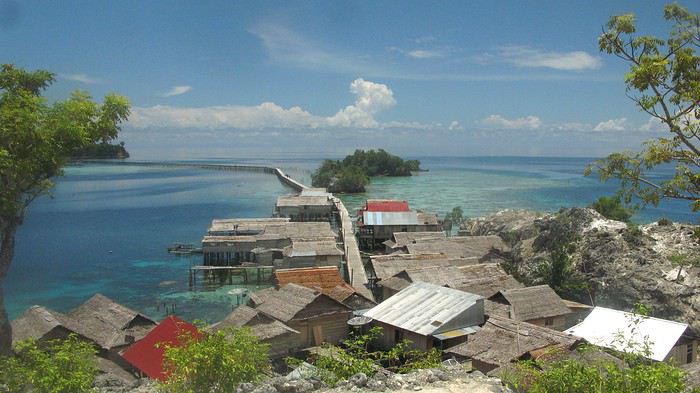
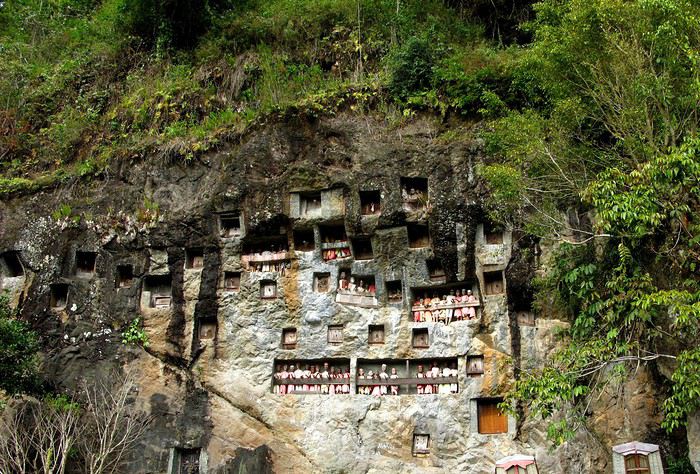
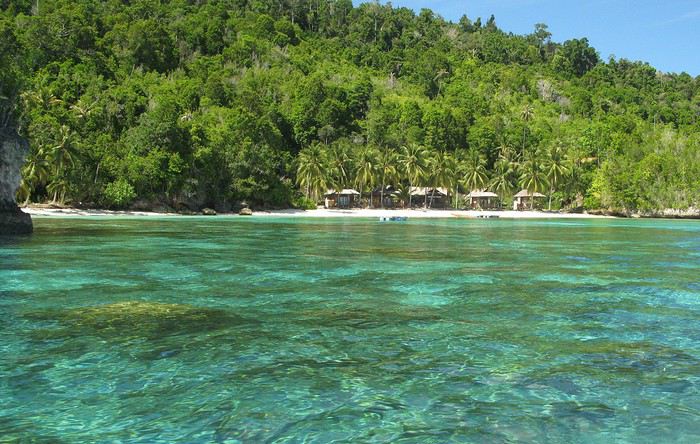

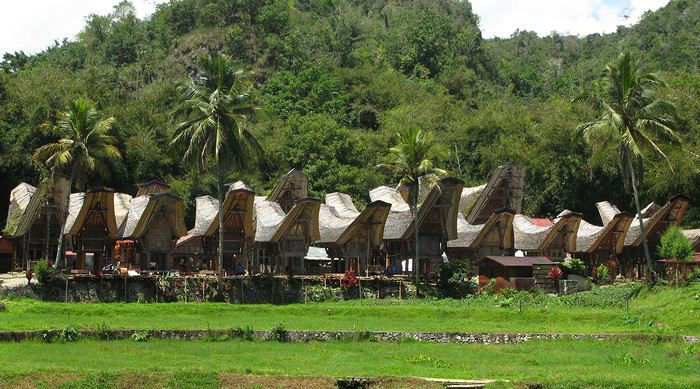
Parmi les nombreuses raisons d'aller jusqu'aux lointaines Célèbes : - découvrir la riche et surprenante culture Toraja, en particulier ses cérémonies funéraires - buller dans l'archipel paradisiaque des Togians frangé de récifs coralliens et y taquiner le poisson, - nager avec les méduse multicolores (non urticantes 😉 ), une expérience unique - rencontrer des habitants adorables dans des villages isolés sur des iles du bout du monde - nager au milieu des tortues et requins le long du célèbre tombant de Bunaken, l'un des meilleurs spots du monde d'après les spécialistes - partir à la recherche de l'étrange tarsier, qui ne vit qu'ici et à Bohol, une ile des Philippines- parcourir le pays Minahasa et ses volcans - randonner dans la forêt de Lore LIndu à la recherche de ses étonnants mégalithes à la façon ile de Paques - se baigner le long des immenses plages désertes de la région de Bira - rencontrer le si chaleureux peuple indonésien et ses multiples ethnies- nager avec les requins baleines.. et beaucoup d'autres raisons
Si quelques uns de ces arguments vous ont convaincus, suivez moi pour cette traversée sud-nord de Sulawesi en photos
Avant de commencer la traversée, quelques infos générales de présentation des Célèbes et du contexte du voyage ... que vous pouvez sauter pour aller directement à l'EPISODE 1 Makassar" avec ses photos :
Pour commencer à découvrir Sulawesi, à l'est de Bornéo, dont l'ile principale a une forme si étrange, il faut du temps, les trajets sont interminables, les bateaux sont incertains, le centre de l'ile est une zone de montagnes longtemps infranchissables (pour aller du nord au sud il fallait passer pas la mer). Pour donner une idée, il faut 5-6 jours par la route de Makassar a Manado (cf carte avec notre trajet terre-mer ... les petites huttes sont nos haltes).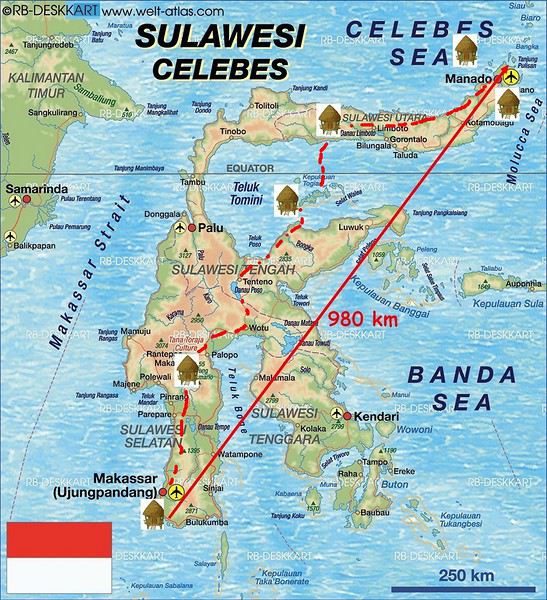
- Voyage réalisé en couple: c'est notre 3ème voyage en Indonésie après Java-Bali-Lombok et Flores-Komodo, environ 10ème en Asie du Sud-Est Depuis un 4eme voyage a été effectué aux Moluques, les fameuses iles aux Epices dont le nom m'a aussi longtemps fait réver🙂. Cf mon carnet de voyage "Les Moluques: splendeurs (et galères) d'un archipel inconnu des touristes" voyageforum.com/...-touristes-d9181018/. ... les Moluques sont vraiment inconnues des touristes (rencontrés 4 en 3 semaines)
- En septembre (en 25 jours), un bon mois coté météo et avec très peu de touristes, ce qui permet de ne jamais réserver quoi que ce soit, il y a de la place partout (logements, transports, ...) . De toute façon Sulawesi n'est pas une destination très touristique ... bien que les Togians vont rapidement le devenir depuis qu'un aéroport à ouvert à proximité 🤪 (sans avions lors de notre passage 🙂) - Ce voyage a déjà 2 ans, le carnet a été réalisé grâce aux notes que j'ai prises sur place (nom d’hôtels, de lieux, horaires, ...) et à ce que mémoire n'a pas oublié.
- Si certains préparent leur voyage aux Célèbes, vous trouverez des infos pratiques regroupées à la fin.
Trajet prévu/réalisé
Arrivée par Jakarta-Makassar, retour Manado-Kuala Lumpur
Trajet prévu : Makassar - Bira - Pays Toraja - Togians - forêt de Lore Lindu - région de Gorontalo, peut-être Tumbak - Pays Minahasa / Tangkoko / Tomohon /- Manado
- La forêt de Lore-Lindu et ses mégalithes me tentait beaucoup, mais est abandonnée par manque de temps, sauf a courir tout le temps, ce qui n'est pas dans nos habitudes. - Idem pour Dongalla (région de Palu) décimé depuis par un séisme et un tsunami en sept 2018. Le trajet Poso Palu est vraiment trop long, ça nous a découragé 😛 - On n'a jamais mis le lac de Senkang avec ses villages lacustres à notre programme, car on est allé au merveilleux lac Inle en Birmanie 2 ans plus tôt .. et on a eu peur d'être déçu tant la barre a été mise haute au lac Inle 😊
Finalement, la région de Gorontalo sera supprimée , ainsi que Tumbak et les volcans du pays Minahasa Bunaken sera ajouté : les raisons de ces changements sont décrites au fil de l'eau dans le carnet.
Jusqu'au dernier jour avant le départ, on aurait aimé passer qqs jours dans la région de Bira tout au sud de l'ile, on y renonce finalement la veille de notre départ, on n'aura pas le temps d'aller partout.
Pour les logements et les transports, on voit au jour le jour comme d'habitude : ça a tjs marché ... à l'exception quasi-systématique d'une nuit lors de chacun de nos voyages. Il y a tjs un jour ou le trajet est plus long que prévu, ce qui nous fait arriver de nuit, ou la guesthouse repérée n'existe pas, ou est fermée ... Sur le coup c'est une galère, on se demande se qu'on fait ici ... puis dès qu'on a trouvé un arrangement, il nous reste le souvenir d'un moment difficile, mais c'est aussi ce qui fait le charme d'un voyage !
Assez discuté, c'est parti pour Makassar Viendront ensuite le Pays Toraja, les iles Togians, le pays Minahasa (et le tarsier🙂) et l'ile de Bunaken
EPISODE 1 : Makassar Après une arrivée à Makassar dans la matinée, le 1er objectif est de prendre le bus de nuit pour Rantepao (pays Toraja) et donc d'aller acheter des billets.
Il y a 3 terminaux de bus a Makassar, coup de chance le Terminal Daya pour le nord de l'ile (donc le pays Toraja) se situe sur la route de l’aéroport au centre ville. Il suffit donc de prendre le bus aéroport-centre ville pour qqs roupies et de se faire déposer au terminal. Plusieurs compagnies proposent des bus VIP pour Rantepao, on en choisit une au hasard, après s'être assuré que ce bus avait bien 3 sièges frontaux (au lieu de 4 comme ds tous les bus) et des gros sièges couchettes :
Il est 10h, le bus part vers 21h, ça nous laisse un peu de temps pour une rapide visite de Makassar. (aussi appelée Ujung Pandang) et pour se remettre dans l'ambiance si chaleureuse de l'Indonésie Donc direction Paotere en taxi, le vieux port commercial au nord de la ville. Le port est très plaisant, on se croirait dans une petite ville alors que Makassar a 2 millions d'habitants. Balade sur les quais très animés, avec le marché aux poissons, qqs petits canaux, mais le clou du spectacle est l'alignement des voiliers de commerce bugi tout en bois.
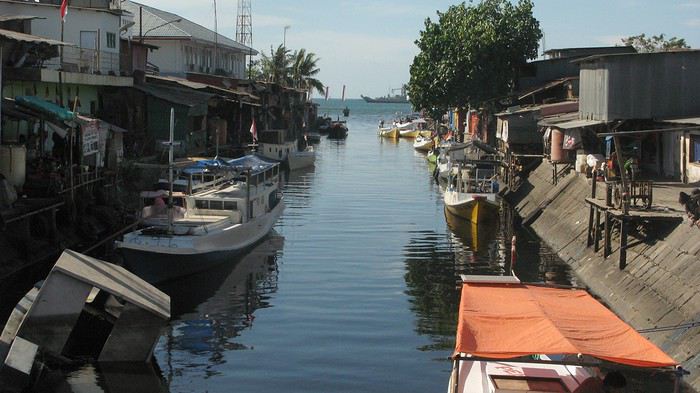
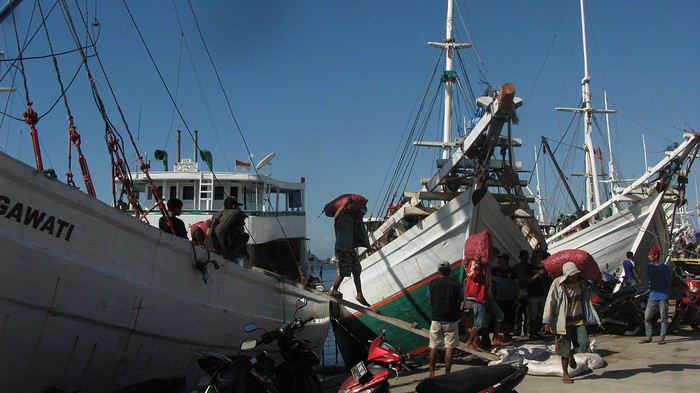
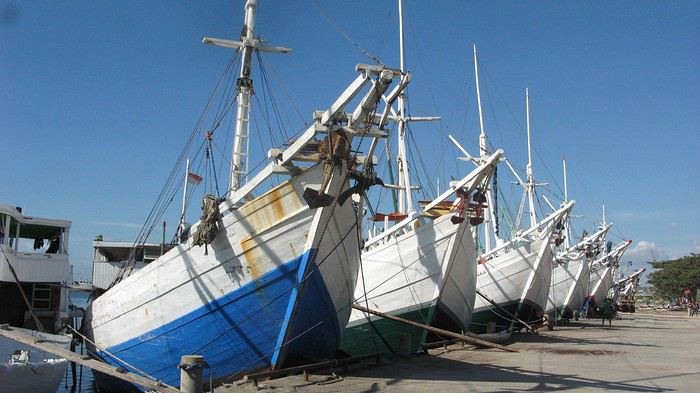
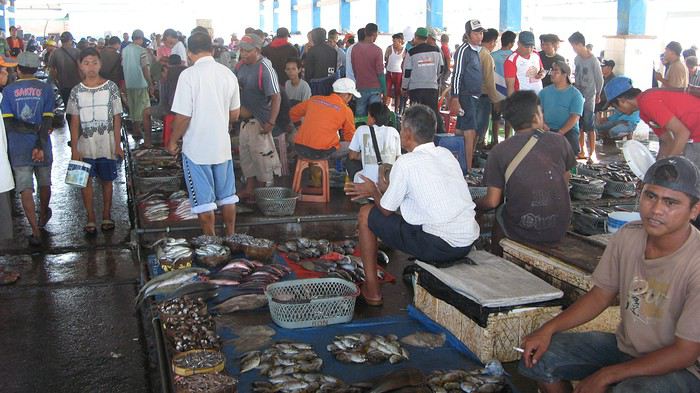
Ensuite direction le centre ville (Port Rotterdam) en becak, un tuktuk à pédales (c'est le moyen de transport des habitants de Paotere)
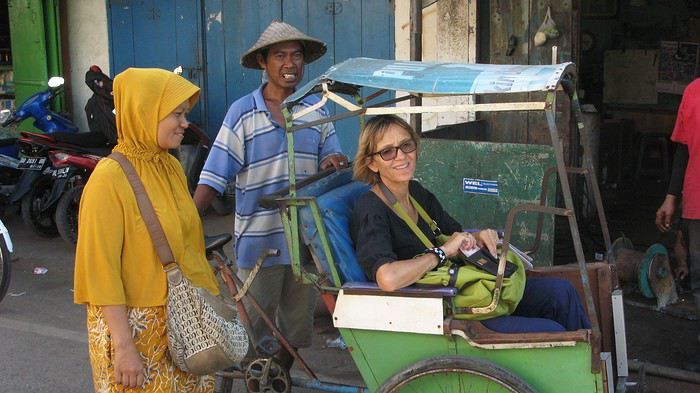
On passe par des petites rues très animées avec des marchés on l'on peut trouver de tout, y compris des chèvres vivantes (bien plus sympa que ce qu'on découvrira plus tard au marché de Tomohon 🏴☠️ 😮 photos a venir)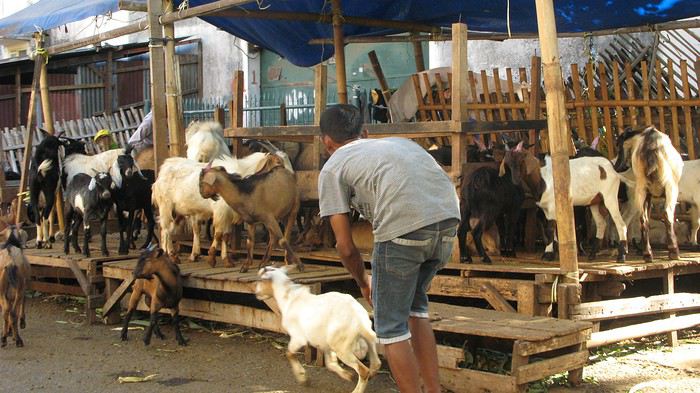
ça fait envie à beaucoup d'entre vous .. mais pas de bol, j'aime pas les bananes 🙁 :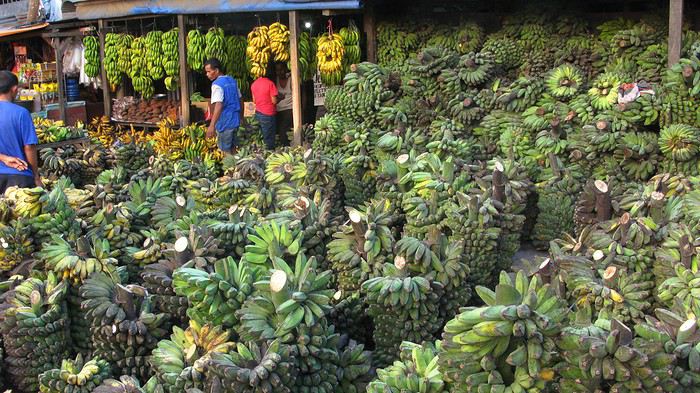
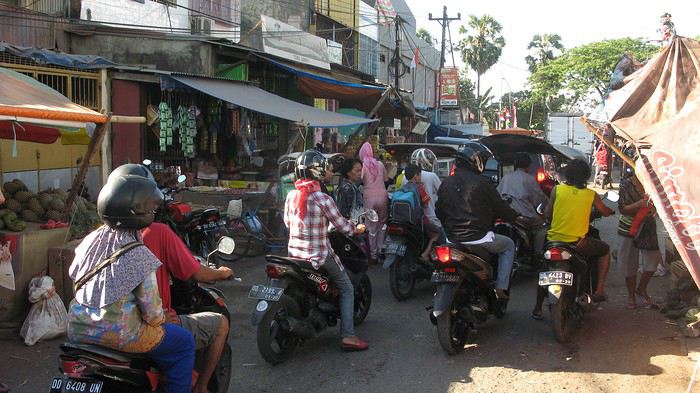
En s'approchant du centre, on serre un peu les fesses au milieu de la circulation plus dense, mais tout se passe bien Quelques touristes arpentent la place devant le Fort Rotterdam, mais il n'a pas l'air en très bon état : on s'en passera donc et on préfère flaner au hasard dans des ruelles et en bord de mer au milieu des vendeurs de jus de fruits frais ... un délice comme toujours, des jeunes qui dansent, chantent ... un moment agréable. Rien d'extraordinaire, mais on aime bien se plonger dans cette ambiance locale.
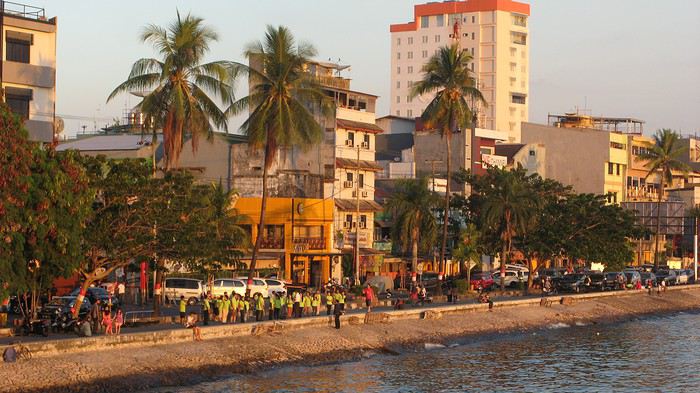
Concours de Hijab ? En tout cas cas, le sud de l'ile est bien musulman (à Sulawesi, les musulmans, les catholiques, les protestants et les animistes se partagent les différentes régions) :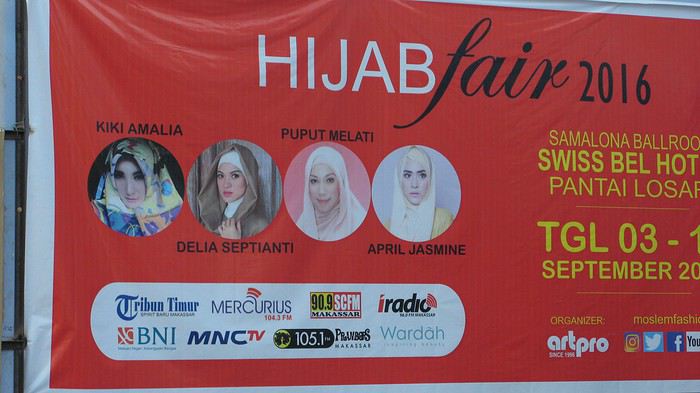
Pour finir la journée avant de prendre le bus de nuit, un petit repas-apéro avec coucher du soleil sur les cocotiers de la petite ile en face :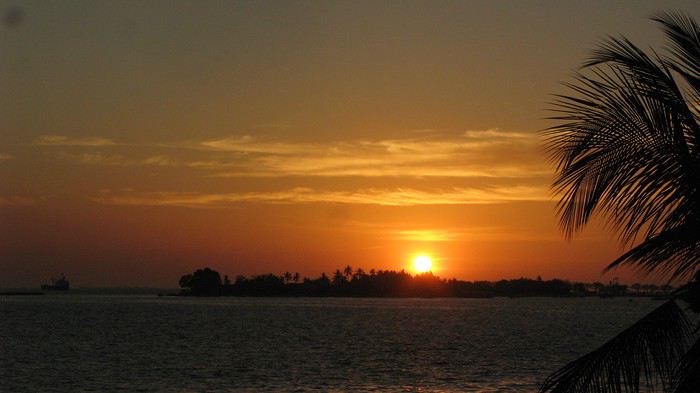
Après cette rapide visite de Makassar, on retrouve notre bus de nuit qui est bien un VIP avec 3 fauteuils de front seulement. Très confortable, j'ai de quoi allonger mes longues jambes. Une bonne nuit, un arrêt pipi-boisson-repas au milieu, et nous voila au pays Toraja au lever du jour.
A part ça, voici quelques arguments plus convaincants :
Parmi les nombreuses raisons d'aller jusqu'aux lointaines Célèbes : - découvrir la riche et surprenante culture Toraja, en particulier ses cérémonies funéraires - buller dans l'archipel paradisiaque des Togians frangé de récifs coralliens et y taquiner le poisson, - nager avec les méduse multicolores (non urticantes 😉 ), une expérience unique - rencontrer des habitants adorables dans des villages isolés sur des iles du bout du monde - nager au milieu des tortues et requins le long du célèbre tombant de Bunaken, l'un des meilleurs spots du monde d'après les spécialistes - partir à la recherche de l'étrange tarsier, qui ne vit qu'ici et à Bohol, une ile des Philippines- parcourir le pays Minahasa et ses volcans - randonner dans la forêt de Lore LIndu à la recherche de ses étonnants mégalithes à la façon ile de Paques - se baigner le long des immenses plages désertes de la région de Bira - rencontrer le si chaleureux peuple indonésien et ses multiples ethnies- nager avec les requins baleines.. et beaucoup d'autres raisons
Si quelques uns de ces arguments vous ont convaincus, suivez moi pour cette traversée sud-nord de Sulawesi en photos
Avant de commencer la traversée, quelques infos générales de présentation des Célèbes et du contexte du voyage ... que vous pouvez sauter pour aller directement à l'EPISODE 1 Makassar" avec ses photos :
Pour commencer à découvrir Sulawesi, à l'est de Bornéo, dont l'ile principale a une forme si étrange, il faut du temps, les trajets sont interminables, les bateaux sont incertains, le centre de l'ile est une zone de montagnes longtemps infranchissables (pour aller du nord au sud il fallait passer pas la mer). Pour donner une idée, il faut 5-6 jours par la route de Makassar a Manado (cf carte avec notre trajet terre-mer ... les petites huttes sont nos haltes).
- Voyage réalisé en couple: c'est notre 3ème voyage en Indonésie après Java-Bali-Lombok et Flores-Komodo, environ 10ème en Asie du Sud-Est Depuis un 4eme voyage a été effectué aux Moluques, les fameuses iles aux Epices dont le nom m'a aussi longtemps fait réver🙂. Cf mon carnet de voyage "Les Moluques: splendeurs (et galères) d'un archipel inconnu des touristes" voyageforum.com/...-touristes-d9181018/. ... les Moluques sont vraiment inconnues des touristes (rencontrés 4 en 3 semaines)
- En septembre (en 25 jours), un bon mois coté météo et avec très peu de touristes, ce qui permet de ne jamais réserver quoi que ce soit, il y a de la place partout (logements, transports, ...) . De toute façon Sulawesi n'est pas une destination très touristique ... bien que les Togians vont rapidement le devenir depuis qu'un aéroport à ouvert à proximité 🤪 (sans avions lors de notre passage 🙂) - Ce voyage a déjà 2 ans, le carnet a été réalisé grâce aux notes que j'ai prises sur place (nom d’hôtels, de lieux, horaires, ...) et à ce que mémoire n'a pas oublié.
- Si certains préparent leur voyage aux Célèbes, vous trouverez des infos pratiques regroupées à la fin.
Trajet prévu/réalisé
Arrivée par Jakarta-Makassar, retour Manado-Kuala Lumpur
Trajet prévu : Makassar - Bira - Pays Toraja - Togians - forêt de Lore Lindu - région de Gorontalo, peut-être Tumbak - Pays Minahasa / Tangkoko / Tomohon /- Manado
- La forêt de Lore-Lindu et ses mégalithes me tentait beaucoup, mais est abandonnée par manque de temps, sauf a courir tout le temps, ce qui n'est pas dans nos habitudes. - Idem pour Dongalla (région de Palu) décimé depuis par un séisme et un tsunami en sept 2018. Le trajet Poso Palu est vraiment trop long, ça nous a découragé 😛 - On n'a jamais mis le lac de Senkang avec ses villages lacustres à notre programme, car on est allé au merveilleux lac Inle en Birmanie 2 ans plus tôt .. et on a eu peur d'être déçu tant la barre a été mise haute au lac Inle 😊
Finalement, la région de Gorontalo sera supprimée , ainsi que Tumbak et les volcans du pays Minahasa Bunaken sera ajouté : les raisons de ces changements sont décrites au fil de l'eau dans le carnet.
Jusqu'au dernier jour avant le départ, on aurait aimé passer qqs jours dans la région de Bira tout au sud de l'ile, on y renonce finalement la veille de notre départ, on n'aura pas le temps d'aller partout.
Pour les logements et les transports, on voit au jour le jour comme d'habitude : ça a tjs marché ... à l'exception quasi-systématique d'une nuit lors de chacun de nos voyages. Il y a tjs un jour ou le trajet est plus long que prévu, ce qui nous fait arriver de nuit, ou la guesthouse repérée n'existe pas, ou est fermée ... Sur le coup c'est une galère, on se demande se qu'on fait ici ... puis dès qu'on a trouvé un arrangement, il nous reste le souvenir d'un moment difficile, mais c'est aussi ce qui fait le charme d'un voyage !
Assez discuté, c'est parti pour Makassar Viendront ensuite le Pays Toraja, les iles Togians, le pays Minahasa (et le tarsier🙂) et l'ile de Bunaken
EPISODE 1 : Makassar Après une arrivée à Makassar dans la matinée, le 1er objectif est de prendre le bus de nuit pour Rantepao (pays Toraja) et donc d'aller acheter des billets.
Il y a 3 terminaux de bus a Makassar, coup de chance le Terminal Daya pour le nord de l'ile (donc le pays Toraja) se situe sur la route de l’aéroport au centre ville. Il suffit donc de prendre le bus aéroport-centre ville pour qqs roupies et de se faire déposer au terminal. Plusieurs compagnies proposent des bus VIP pour Rantepao, on en choisit une au hasard, après s'être assuré que ce bus avait bien 3 sièges frontaux (au lieu de 4 comme ds tous les bus) et des gros sièges couchettes :
Il est 10h, le bus part vers 21h, ça nous laisse un peu de temps pour une rapide visite de Makassar. (aussi appelée Ujung Pandang) et pour se remettre dans l'ambiance si chaleureuse de l'Indonésie Donc direction Paotere en taxi, le vieux port commercial au nord de la ville. Le port est très plaisant, on se croirait dans une petite ville alors que Makassar a 2 millions d'habitants. Balade sur les quais très animés, avec le marché aux poissons, qqs petits canaux, mais le clou du spectacle est l'alignement des voiliers de commerce bugi tout en bois.
Ensuite direction le centre ville (Port Rotterdam) en becak, un tuktuk à pédales (c'est le moyen de transport des habitants de Paotere)
On passe par des petites rues très animées avec des marchés on l'on peut trouver de tout, y compris des chèvres vivantes (bien plus sympa que ce qu'on découvrira plus tard au marché de Tomohon 🏴☠️ 😮 photos a venir)
ça fait envie à beaucoup d'entre vous .. mais pas de bol, j'aime pas les bananes 🙁 :
En s'approchant du centre, on serre un peu les fesses au milieu de la circulation plus dense, mais tout se passe bien Quelques touristes arpentent la place devant le Fort Rotterdam, mais il n'a pas l'air en très bon état : on s'en passera donc et on préfère flaner au hasard dans des ruelles et en bord de mer au milieu des vendeurs de jus de fruits frais ... un délice comme toujours, des jeunes qui dansent, chantent ... un moment agréable. Rien d'extraordinaire, mais on aime bien se plonger dans cette ambiance locale.
Concours de Hijab ? En tout cas cas, le sud de l'ile est bien musulman (à Sulawesi, les musulmans, les catholiques, les protestants et les animistes se partagent les différentes régions) :
Pour finir la journée avant de prendre le bus de nuit, un petit repas-apéro avec coucher du soleil sur les cocotiers de la petite ile en face :
Après cette rapide visite de Makassar, on retrouve notre bus de nuit qui est bien un VIP avec 3 fauteuils de front seulement. Très confortable, j'ai de quoi allonger mes longues jambes. Une bonne nuit, un arrêt pipi-boisson-repas au milieu, et nous voila au pays Toraja au lever du jour.
Six jours à Budapest en décembre 2011 (récit complet) English translation pending
Pour une fois, ce jeudi 8 décembre 2011, il n' a pas fallu se lever trop tôt, pour se rendre à l'aéroport de Lyon St Exupéry, notre vol ne partant qu' à 9 heures.

On a survolé les Alpes, car notre vol pour Budapest, n'était pas direct...
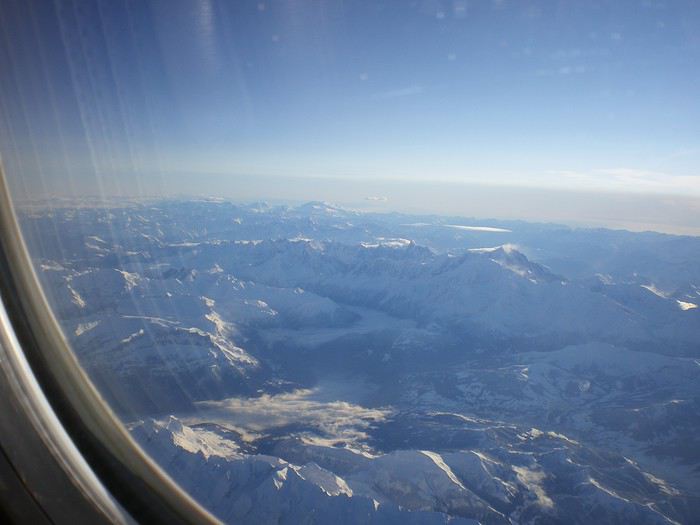
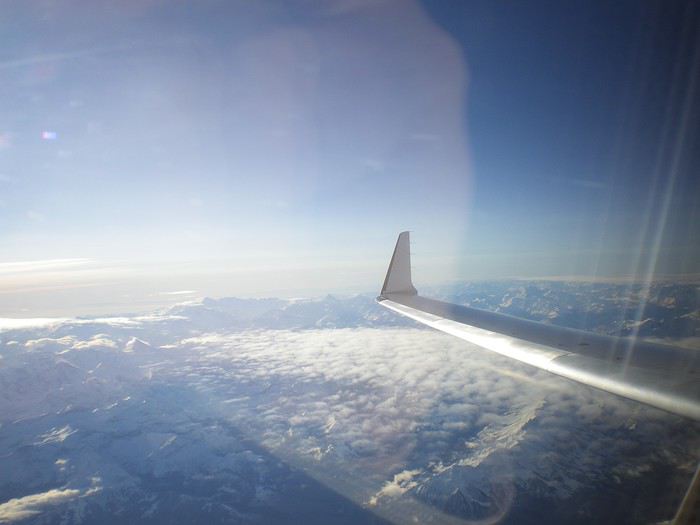
Il a fallu prendre notre avion pour Budapest à MUNICH.

Mais le voyage a été rapide avec un atterrissage à BUDAPEST vers 12h30 /13h00.
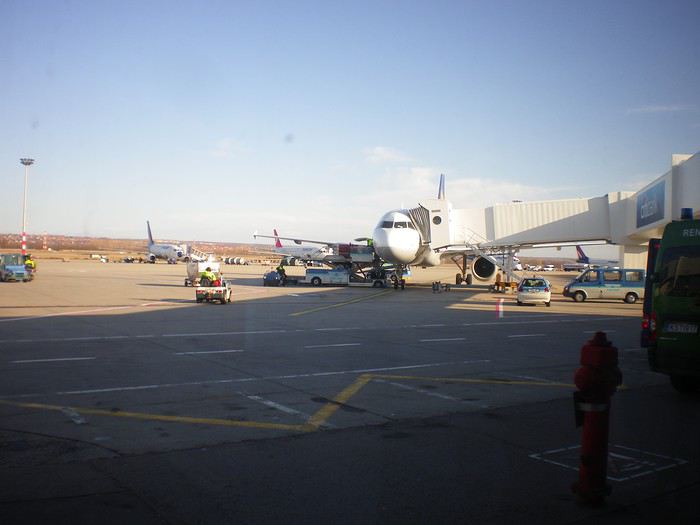 Depuis l'aéroport nous avons rejoint le centre ville de Budapest en métro.
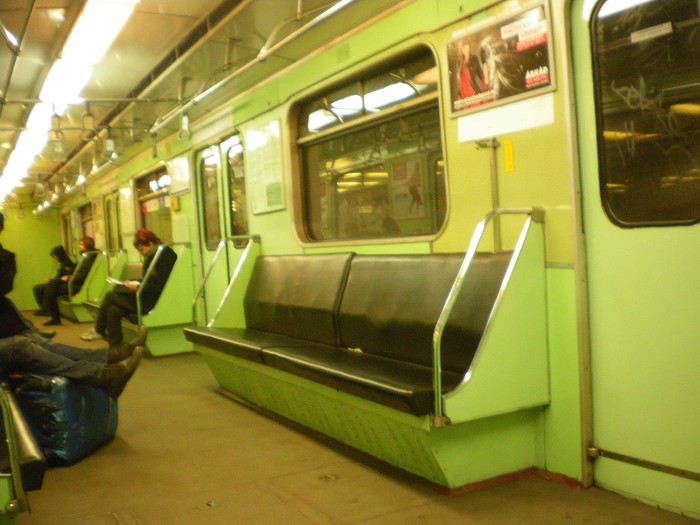
Et la première chose que nous avons fait, cela a été de rejoindre notre hôtel, l'Hôtel Thomas, pas très loin d'une bouche de métro.
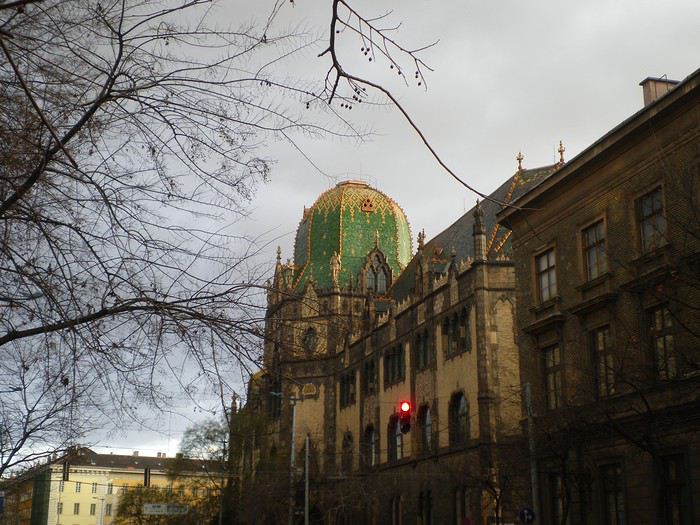
Nous sommes partis par la suite à la découverte du quartier où se trouvait notre hôtel.
Nous sommes passés devant le Central Market Hall, superbe halle couverte en architecture métallique type Baltard ou l'on trouve à la fois toutes les denrées alimentaires fraiches , et des restaurants pour manger. Ce lieu pas très loin de notre hôtel nous servira de lieu de restauration à plusieurs reprises.
Nous enjambons ce pont au dessus du Danube, pour nous rendre dans le jardin de la Citadelle, qui nous offrira une belle vue sur Budapest.


Il n'est que 15h30/16H00 mais en décembre le soleil se couche rapidement.
En regagnant notre hôtel , nous passons devant l'entrée des bains Gellert.
 Le plus fameux bain thermal et bain médical de la capitale,
 Cette fois, nous rentrons dans le marché couvert, le lieu est magnifique.
Et c'est au premier étage de cette halle, que nous trouvons de quoi nous restaurer.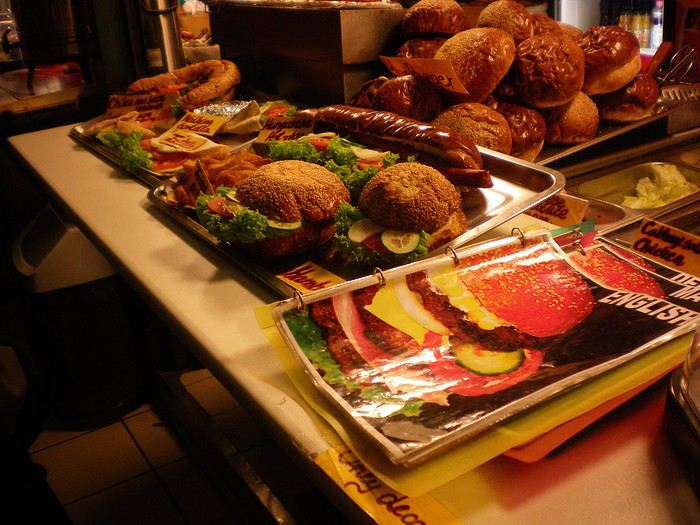
On a survolé les Alpes, car notre vol pour Budapest, n'était pas direct...
Il a fallu prendre notre avion pour Budapest à MUNICH.
Mais le voyage a été rapide avec un atterrissage à BUDAPEST vers 12h30 /13h00.
Depuis l'aéroport nous avons rejoint le centre ville de Budapest en métro.Et la première chose que nous avons fait, cela a été de rejoindre notre hôtel, l'Hôtel Thomas, pas très loin d'une bouche de métro.
Nous sommes partis par la suite à la découverte du quartier où se trouvait notre hôtel.
Nous sommes passés devant le Central Market Hall, superbe halle couverte en architecture métallique type Baltard ou l'on trouve à la fois toutes les denrées alimentaires fraiches , et des restaurants pour manger. Ce lieu pas très loin de notre hôtel nous servira de lieu de restauration à plusieurs reprises.
Nous enjambons ce pont au dessus du Danube, pour nous rendre dans le jardin de la Citadelle, qui nous offrira une belle vue sur Budapest.
Il n'est que 15h30/16H00 mais en décembre le soleil se couche rapidement.
En regagnant notre hôtel , nous passons devant l'entrée des bains Gellert.
Le plus fameux bain thermal et bain médical de la capitale,
Cette fois, nous rentrons dans le marché couvert, le lieu est magnifique.Et c'est au premier étage de cette halle, que nous trouvons de quoi nous restaurer.
Les plus beaux uniformes des personnels navigants des compagnies aériennes English translation pending
Bonjour à tous,
Voici mon nouveau sujet : les uniformes des personnels navigants des compagnies aériennes. Quels sont selon vous les plus beaux d'entre eux, pour les hôtesses, les stewards et les pilotes (avec photos à l'appui) ?
Au plaisir de vous lire et de voir vos photos !

Voici mon nouveau sujet : les uniformes des personnels navigants des compagnies aériennes. Quels sont selon vous les plus beaux d'entre eux, pour les hôtesses, les stewards et les pilotes (avec photos à l'appui) ?
Au plaisir de vous lire et de voir vos photos !
2019, une bonne résolution: pas d'avion! English translation pending
Bonsoir et comme il est d'usage aujourd'hui : bonne année
Cette année je ne prendrai pas d'avion pour mes voyages.
Je pense rester en Europe et y voyager en train (essentiellement) de préférence électrique 😛
C'est pas que j'en ai marre des destinations lointaines (l'Asie plus particulièrement) mais il n'est pas aisé de s'y rendre de manière écologique. Je me vois mal dans le trans-sibérien jusqu'à Pékin.
Car en effet, c'est par souci d'écologie que je me décide à ne plus polluer autant qu'auparavant.
Déjà que je n'ai plus de voiture depuis près de 25 ans.
Mais j'ai hélas pour la planète dépassé largement le quota d'émissions de gaz à effet de serre que la sagesse aurait dû m'imposer. Mon bilan carbone est épouvantable. Je me dois de me repentir 😛
Un premier voyage est déjà programmé la semaine prochaine : 4 jours à Bristol (GB) via Londres.
Quelques destinations envisagées depuis Bruxelles :
- Biarritz : 6h45 de trajet - Nice : 8h30 à 9h00 de trajet - Rennes : 4h00 à 5h00 de trajet - Berlin : 7h00 à 8h00 de trajet - Hambourg : 7h00 de trajet - Genova (It) : 12h00 à 13h00 (un peu long, envisager une étape intermédiaire) de trajet
Première indication : cela prend plus de temps en train mais surtout ... cela coûte beaucoup plus cher que d'utiliser un avion 😮
Et donc polluer davantage permet d'aller plus vite et coûte moins cher 🤪 Cherchez l'erreur 😕
Ceci n'est qu'une réflexion.
Vélosophiquement 😉
à lire Brussels Airport va franchir la barre des 25 millions de passagers ... et surtout la remarque de Marcel Beliveau dans les commentaires
Cette année je ne prendrai pas d'avion pour mes voyages.
Je pense rester en Europe et y voyager en train (essentiellement) de préférence électrique 😛
C'est pas que j'en ai marre des destinations lointaines (l'Asie plus particulièrement) mais il n'est pas aisé de s'y rendre de manière écologique. Je me vois mal dans le trans-sibérien jusqu'à Pékin.
Car en effet, c'est par souci d'écologie que je me décide à ne plus polluer autant qu'auparavant.
Déjà que je n'ai plus de voiture depuis près de 25 ans.
Mais j'ai hélas pour la planète dépassé largement le quota d'émissions de gaz à effet de serre que la sagesse aurait dû m'imposer. Mon bilan carbone est épouvantable. Je me dois de me repentir 😛
Un premier voyage est déjà programmé la semaine prochaine : 4 jours à Bristol (GB) via Londres.
Quelques destinations envisagées depuis Bruxelles :
- Biarritz : 6h45 de trajet - Nice : 8h30 à 9h00 de trajet - Rennes : 4h00 à 5h00 de trajet - Berlin : 7h00 à 8h00 de trajet - Hambourg : 7h00 de trajet - Genova (It) : 12h00 à 13h00 (un peu long, envisager une étape intermédiaire) de trajet
Première indication : cela prend plus de temps en train mais surtout ... cela coûte beaucoup plus cher que d'utiliser un avion 😮
Et donc polluer davantage permet d'aller plus vite et coûte moins cher 🤪 Cherchez l'erreur 😕
Ceci n'est qu'une réflexion.
Vélosophiquement 😉
à lire Brussels Airport va franchir la barre des 25 millions de passagers ... et surtout la remarque de Marcel Beliveau dans les commentaires
Guide pour Angkor Wat? English translation pending
Bonjour à tous,
Je suis à la recherche d'un guide francophone pour visiter Angkor Wat en février prochain.
Je me demande quel serait le tarif associé pour une visite guidée de :
- 1 jour
- 3 jours
Incluant la visite guidée et le transport.
Avez-vous d'autres suggestions aussi. Nous sommes un petit groupe de 4.
Merci à l'avance, tous vos commentaires seront largement appréciés.
Je suis à la recherche d'un guide francophone pour visiter Angkor Wat en février prochain.
Je me demande quel serait le tarif associé pour une visite guidée de :
- 1 jour
- 3 jours
Incluant la visite guidée et le transport.
Avez-vous d'autres suggestions aussi. Nous sommes un petit groupe de 4.
Merci à l'avance, tous vos commentaires seront largement appréciés.
Le tourisme en France en grand danger English translation pending
Sans surprise, les manifestations des gilets jaunes ont des répercussions très négatives sur l'ensemble du tourisme en France, et particulièrement à Paris, alors que l'activité du secteur s'était avérée très bonne sur les dix premiers mois de l'année. Au delà des annulations, c'est aussi et surtout maintenant "l'image accueillante de Paris et de la France qui est irrémédiablement dégradée" comme le soulignent nombre de professionnels.
Lire la suite...
Visa en commun pour le Belarus et la Russie English translation pending
Bonjour tout le monde,
Le Belarus et la Russie vont signer un accord pour créer une zone visa en commun.
Le règles ne sont toujours pas claires, vu que les deux pays ont des procédures et exigences différents pour l'émission d'un visa de tourisme.
Je reviendra sur le sujet dès que ces règles sont claires.
Néanmoins, le début est annoncé pour le 20 mai.
http://belarusfeed.com/belarus-russia-visa-recognition-rules/
http://belarusfeed.com/belarus-russia-visa-recognition-rules/
Voyage en Équateur English translation pending
Bonjour à tous,
Fin novembre et décembre j'ai l'intention de séjourner trois semaines en Equateur. Je vais passer 15 jours dans la réserve biologique du rio Bigal située près de Loreto à une heure de la ville de Coca. Mais auparavant je souhaite voyager une semaine à partir de Quito. Je suis donc preneur de tout conseil, de tout avis afin d'affiner mon projet en cette saison. Je voyagerai en solo, sac au dos... avec les transports collectifs du pays. Merci d'avance pour tout conseil afin de déterminer mes choix et limiter mes objectifs. Je n'ai rien prévu pour l'instant.
Bien à vous, Jean Pierre
Fin novembre et décembre j'ai l'intention de séjourner trois semaines en Equateur. Je vais passer 15 jours dans la réserve biologique du rio Bigal située près de Loreto à une heure de la ville de Coca. Mais auparavant je souhaite voyager une semaine à partir de Quito. Je suis donc preneur de tout conseil, de tout avis afin d'affiner mon projet en cette saison. Je voyagerai en solo, sac au dos... avec les transports collectifs du pays. Merci d'avance pour tout conseil afin de déterminer mes choix et limiter mes objectifs. Je n'ai rien prévu pour l'instant.
Bien à vous, Jean Pierre
Une première au pays des Tsars... Moscou et Saint-Pétersbourg English translation pending
Priviét chers voyageurs :)
C'est une première pour moi dans la section "Asie centrale", plus habituée à celle du Moyen-Orient :)
La Russie ne faisait pas partie de ma liste des pays à découvrir dans l'immédiat mais une opportunité s'est présentée et bien évidemment, je l'ai saisie.
Prévu pour fin septembre, le voyage sera court (environ une dizaine de jours) et avec une camarade de voyage rencontrée à Jérusalem il y a quelques mois, nous atterrirons directement à Saint Petersbourg. Nous terminerons le voyage par Moscou en y passant deux jours avant de repartir à Paris pour l'une et en Chine pour l'autre.
Et c'est là, chers voyageurs bien aimés, que vous intervenez. C'est donc une première pour toutes les deux dans le pays le plus chaud du monde (attention, une blague s'est glissée dans cette phrase !) et nous serions ravies d'avoir de précieux conseils de votre part quant aux incontournables dans ces deux villes. Les sites à visiter, les musées à voir, les balades à faire, les plats à goûter, les transports à prendre, les températures à affronter...Tout, tout, tout, dîtes-nous tout sur la Russie:)
Certains en reviennent peut-être, d'autres s'apprêtent à partir. Je dévorerai vos impressions ! Parce-que mon esprit de partage n'a pas bougé; si vous êtes sur notre route et que vous souhaitez partager un petit bout de chemin avec nous, hurlez "ramenez la coupe à la maison", je saurai que c'est l'un(e) d'entre vous :)
D'avance, merci infiniment de vos retours !
Belle journée, Bibi:)
C'est une première pour moi dans la section "Asie centrale", plus habituée à celle du Moyen-Orient :)
La Russie ne faisait pas partie de ma liste des pays à découvrir dans l'immédiat mais une opportunité s'est présentée et bien évidemment, je l'ai saisie.
Prévu pour fin septembre, le voyage sera court (environ une dizaine de jours) et avec une camarade de voyage rencontrée à Jérusalem il y a quelques mois, nous atterrirons directement à Saint Petersbourg. Nous terminerons le voyage par Moscou en y passant deux jours avant de repartir à Paris pour l'une et en Chine pour l'autre.
Et c'est là, chers voyageurs bien aimés, que vous intervenez. C'est donc une première pour toutes les deux dans le pays le plus chaud du monde (attention, une blague s'est glissée dans cette phrase !) et nous serions ravies d'avoir de précieux conseils de votre part quant aux incontournables dans ces deux villes. Les sites à visiter, les musées à voir, les balades à faire, les plats à goûter, les transports à prendre, les températures à affronter...Tout, tout, tout, dîtes-nous tout sur la Russie:)
Certains en reviennent peut-être, d'autres s'apprêtent à partir. Je dévorerai vos impressions ! Parce-que mon esprit de partage n'a pas bougé; si vous êtes sur notre route et que vous souhaitez partager un petit bout de chemin avec nous, hurlez "ramenez la coupe à la maison", je saurai que c'est l'un(e) d'entre vous :)
D'avance, merci infiniment de vos retours !
Belle journée, Bibi:)
Troisième périple dans cet Ouest fascinant! English translation pending
Tout juste revenus en juin 2017 d'un périple de 3 semaines dans l'Ouest des USA (carnet "2 Charentais ds l'Ouest des USA"), le projet d'un 3ème séjour se profilait...
Dès le mois d'Octobre 2017, nous trouvons des billets intéressants : 2 Paris/Denver-Denver/Paris, première nuit d'hôtel à l'aéroport de Denver (1270 €)... pour début juin 2018.
Bien entendu, nous n'avons pas choisi cette destination au hasard. Nous avions ciblé quelques sites. Restait à construire notre périple. Une fois de plus, des aides précieuses de routards ont été les bienvenues !
Habitant la province, il nous faut nous rendre à Paris la veille de notre départ. Judicieuse précaution, car en mai 2017, un suicide à proximité de notre gare de province nous avait retardés de 3 heures...
Cette année 2018, départ pour Paris prévu le 3 juin. Mais, depuis 2 mois, des grèves SNCF perlées nous obligent à trouver une autre solution. Nous optons pour un trajet en voiture sur Bordeaux. Une de nos enfants, son conjoint et leur petit y demeurent. Nous y laisserions notre voiture. Ils nous conduiraient à l'aéroport. Quelques jours avant le vol prévu le 3 juin au matin, nous apprenons que l'aéroport de Bx/Mérignac est très touché par une grève Air France !!
Dernière solution loin de nous enchanter : Aller en voiture à Paris, avec les risques éventuels, la fatigue... Une âme charitable nous propose un parking dans Paris...
Le 2 juin, pas d'annulation de vol Bx/Orly à notre connaissance. Nous partons donc à Bordeaux. Nous en profitons pour passer une bonne partie de la journée dans la jolie ville de St Emilion. Nous l'avions visitée il y a plus de 40 ans ! Nous arpentons les rues pavées, étroites, à l'abri du soleil de la vieille ville. Nous y déjeunons, puis direction Bazas, au Sud de Bordeaux...
Bien entendu, nous n'avons pas choisi cette destination au hasard. Nous avions ciblé quelques sites. Restait à construire notre périple. Une fois de plus, des aides précieuses de routards ont été les bienvenues !
Habitant la province, il nous faut nous rendre à Paris la veille de notre départ. Judicieuse précaution, car en mai 2017, un suicide à proximité de notre gare de province nous avait retardés de 3 heures...
Cette année 2018, départ pour Paris prévu le 3 juin. Mais, depuis 2 mois, des grèves SNCF perlées nous obligent à trouver une autre solution. Nous optons pour un trajet en voiture sur Bordeaux. Une de nos enfants, son conjoint et leur petit y demeurent. Nous y laisserions notre voiture. Ils nous conduiraient à l'aéroport. Quelques jours avant le vol prévu le 3 juin au matin, nous apprenons que l'aéroport de Bx/Mérignac est très touché par une grève Air France !!
Dernière solution loin de nous enchanter : Aller en voiture à Paris, avec les risques éventuels, la fatigue... Une âme charitable nous propose un parking dans Paris...
Le 2 juin, pas d'annulation de vol Bx/Orly à notre connaissance. Nous partons donc à Bordeaux. Nous en profitons pour passer une bonne partie de la journée dans la jolie ville de St Emilion. Nous l'avions visitée il y a plus de 40 ans ! Nous arpentons les rues pavées, étroites, à l'abri du soleil de la vieille ville. Nous y déjeunons, puis direction Bazas, au Sud de Bordeaux...