Bonjour,
Nous envisageons un voyage de 4 semaines dans le Pacifique.😎
Pour faire un voyage différent de ceux qu’on a l’habitude de faire, pour la plongée sous-marine, le dépaysement aussi bien sur le plan humain que paysages, et randonner un peu.
La première destination qui m’est venue à l’esprit, car elle est mythique c’est la Polynésie avec un voyage qui ressemblerait à ça :
Archipel Marquises : NUKU HIVA, UA POU et éventuellement Hiva Oa pour un total de 12 jours (y compris les jours de transferts)
Archipel Sous Le Vent : uniquement Maupiti 3 jours
Archipel des Tuamotu : Rangiroa, Fakarava et Mataiva pour un total de 11 jours
Tahiti et Moorea 2/3 jours
La seconde possibilité que j’ai commencé à étudier et qui semble aussi très intéressante est la Nouvelle Calédonie couplée au Vanuatu, qui pourrait ressembler à ça :
Ile principale : une boucle Nouméa – Koné – Hienghène (plongée) : 4 jours
La pointe Sud : 3 jours
Ile des Pins : 3 jours
Iles de la Loyauté : Ouvéa (3 jours), Lifou (3 jours) ou peut-être qu’une des deux ?
Puis direction le Vanuatu
Passage rapide à Etafa puis Tanna (Volcans) et Santo (plongée et visite) pour un total de 10 jours
Entre les deux mon cœur balance, je suis donc intéressé par tout avis ou conseil sur l’une ou l’autre des destinations. 😛
Pour certains ça peut faire un peu « survol », mais ne vous inquiétez pas, si ça nous plait énormément on y retournera.😉
Merci d'avance
Max
Bonjour,
Nous sommes un couple trentenaire et dans le cadre d'un Tour du monde nous faisons un stop de 10 jours à Tahiti :) Que me conseillerez-vous comme circuit ? J'ai dans l'idée Tahiti (4 jours avec location d'une voiture) et Mooréa (6 jours) car notre budget est limité... Est-il nécessaire de réserver les pensions à l'avance ?
Merci !
Nous sommes un couple trentenaire et dans le cadre d'un Tour du monde nous faisons un stop de 10 jours à Tahiti :) Que me conseillerez-vous comme circuit ? J'ai dans l'idée Tahiti (4 jours avec location d'une voiture) et Mooréa (6 jours) car notre budget est limité... Est-il nécessaire de réserver les pensions à l'avance ?
Merci !
Salut a tous,
Nous revenons de 10 jours en Polynesie, destination paradis dans notre TDM et voici nos retours.
Tout d'abord merci a ceux qui nous avaient renseigne pour organiser nos 10 jours et j'espere que nos conseils vous aideront.
J1 Pappete: juste 1 nuit a la Pension DAMYR, a 2 min de l'aeroport. Tres bien, 7000cfp, avec petit dej et transferts aeroport. Bon accueil, propre, le lit pas super confort, mais parfait pour 1 nuit. Je recommande
J2, 3, 4 MOOREA. Superbe! nuits aux Tipaniers a 7000CFP, tres bien, propre, super accueil. A faire: tour de l'ile en voiture ou en bateau, kayak, randos
J5, 6 BORA spectaculaire! arretons de decrier Bora qui est magnifique, a couper le souffle; c a faire vraiment Nuits au Matai, super promo 1 nuit achetee, 1 nuit offerte, et les prix etaient encore plus bas que d'habitude. Nous avons paye 20000cfp/nuit avec transfert, un super deal; pour ceux qui y sont en ce moment renseignez vous aupres de l'agence tahiti nui travel.
A Faire: le tour de l'ile avec NONO (via la pension Chez Nono), on a passe une journee inoubliable avec les requins et les raies, super organisation, excellente ambiance.
J 7, 8, 9: Huahine, La sauvage. Tres belle ile, excellent contact avec les habitants, il y a moins de choses a faire, le lagon est moins beau et les plages sont petites mais l'ambiance est tres sereine, peu touristique, on est seul au monde. Nous avons loue un scooter, tres sympa pour voir les plantations de vanille, la ferme perliere, les marae et les plages perdues. Nuits au Mauarii (sur Huahine Iti): bien, mais trop cher pour ce que c'est, compter au moins 15000cfp le bungalow, assez roots; accueil moyen. bof.
J10: Papeete. Visite du marche and Co. Nuit a la Pension MYRNA. la catastrophe!!!! a eviter de toute urgence, accueil glacial voir odieux, salle de bain sale avec cafards, transferts payants chers etc... on a deteste! a fuir!
Pour les billets 'pass inter iles', je vous confirme qu'ils sont a acheter directement a l'aeroport, sauf si votre agence les propose en metropole. il y a bcp de vols donc pas mal de dispos.
Cote budget: oui c'est pas donne, mais c'est pas non plus inabordable. Il y a plein de roulottes et quelques gargotes pas cheres. On a negocie tous les prix des hotels, il y a des campings tres bien bref on peut voyager en Polynesie pour un budget eleve mais raisonnable... a condition de ne pas aller au Sofitel et autres Saint Regis tous les soirs!
Nous on a adore et on reflechit a quand y retourner!!
Bon voyage!
Berenice
Nous revenons de 10 jours en Polynesie, destination paradis dans notre TDM et voici nos retours.
Tout d'abord merci a ceux qui nous avaient renseigne pour organiser nos 10 jours et j'espere que nos conseils vous aideront.
J1 Pappete: juste 1 nuit a la Pension DAMYR, a 2 min de l'aeroport. Tres bien, 7000cfp, avec petit dej et transferts aeroport. Bon accueil, propre, le lit pas super confort, mais parfait pour 1 nuit. Je recommande
J2, 3, 4 MOOREA. Superbe! nuits aux Tipaniers a 7000CFP, tres bien, propre, super accueil. A faire: tour de l'ile en voiture ou en bateau, kayak, randos
J5, 6 BORA spectaculaire! arretons de decrier Bora qui est magnifique, a couper le souffle; c a faire vraiment Nuits au Matai, super promo 1 nuit achetee, 1 nuit offerte, et les prix etaient encore plus bas que d'habitude. Nous avons paye 20000cfp/nuit avec transfert, un super deal; pour ceux qui y sont en ce moment renseignez vous aupres de l'agence tahiti nui travel.
A Faire: le tour de l'ile avec NONO (via la pension Chez Nono), on a passe une journee inoubliable avec les requins et les raies, super organisation, excellente ambiance.
J 7, 8, 9: Huahine, La sauvage. Tres belle ile, excellent contact avec les habitants, il y a moins de choses a faire, le lagon est moins beau et les plages sont petites mais l'ambiance est tres sereine, peu touristique, on est seul au monde. Nous avons loue un scooter, tres sympa pour voir les plantations de vanille, la ferme perliere, les marae et les plages perdues. Nuits au Mauarii (sur Huahine Iti): bien, mais trop cher pour ce que c'est, compter au moins 15000cfp le bungalow, assez roots; accueil moyen. bof.
J10: Papeete. Visite du marche and Co. Nuit a la Pension MYRNA. la catastrophe!!!! a eviter de toute urgence, accueil glacial voir odieux, salle de bain sale avec cafards, transferts payants chers etc... on a deteste! a fuir!
Pour les billets 'pass inter iles', je vous confirme qu'ils sont a acheter directement a l'aeroport, sauf si votre agence les propose en metropole. il y a bcp de vols donc pas mal de dispos.
Cote budget: oui c'est pas donne, mais c'est pas non plus inabordable. Il y a plein de roulottes et quelques gargotes pas cheres. On a negocie tous les prix des hotels, il y a des campings tres bien bref on peut voyager en Polynesie pour un budget eleve mais raisonnable... a condition de ne pas aller au Sofitel et autres Saint Regis tous les soirs!
Nous on a adore et on reflechit a quand y retourner!!
Bon voyage!
Berenice
Bonjour, notre objectif serait des vacances pour 2 ou 3 semaines en juillet ou août 2006, pour quatre personnes (un couple avec deux ados) pour bora bora. Y a-t-il de bonnes adresses et d'autres à éviter? Y a-t-il possibilité depuis bora bora d'aller aux marquises et de quelle manière (avion ou bateau) ou faut-il obligatoirement passer par papeete? Y a-t-il d'autres îles en polynésie, peu connues, mais aussi bien, où on peut résider? Je précise que le logement nous importe peu (hotel, chez l'habitant ou location, peu importe). Je suis intéressé par tous renseignements.
Merci
Laurent
Bonjour,
Mon fiancé et moi souhaitons vraiment découvrir l'île de Pâques pour notre voyage de noces. Après quelques recherches, il appert que l'on ne peut y accéder que via Santiago ou Papeete.
Dès lors nous nous sommes dit que nous pourrions peut-être combiner les 3 destinations : Nouvelle-Zélande, Tahiti, île de Pâques.
Est-ce que 10 jours / 2 semaines suffisent pour faire un road trip en Nouvelle-Zélande? Peut-être pas pour les 2 îles mais seulement pour l'île du Sud par exemple?
D'après ce que j'ai déjà pu lire, 3-4 jours suffisent à l'île de Pâques. Ducoup nous ne ferions également que 2-3 jours à Tahiti.
Pensez-vous que tout cela soit faisable en 3 semaines?!
Ou faudrait-il plutôt miser sur seulement Tahiti-île de Pâques? Y'a-t'il beaucoup de choses à visiter à Tahiti?
Merci beaucoup pour vos renseignements!
Mon fiancé et moi souhaitons vraiment découvrir l'île de Pâques pour notre voyage de noces. Après quelques recherches, il appert que l'on ne peut y accéder que via Santiago ou Papeete.
Dès lors nous nous sommes dit que nous pourrions peut-être combiner les 3 destinations : Nouvelle-Zélande, Tahiti, île de Pâques.
Est-ce que 10 jours / 2 semaines suffisent pour faire un road trip en Nouvelle-Zélande? Peut-être pas pour les 2 îles mais seulement pour l'île du Sud par exemple?
D'après ce que j'ai déjà pu lire, 3-4 jours suffisent à l'île de Pâques. Ducoup nous ne ferions également que 2-3 jours à Tahiti.
Pensez-vous que tout cela soit faisable en 3 semaines?!
Ou faudrait-il plutôt miser sur seulement Tahiti-île de Pâques? Y'a-t'il beaucoup de choses à visiter à Tahiti?
Merci beaucoup pour vos renseignements!
Ia ora na!
Avec mon chéri nous avons prévu de partir en vacances. Nous habitons sur Tahiti depuis 6 mois et n'avons vu pour 'instant que Moorea!! Nous projetons de partir sur 2 week-ends dans les îles de la société. Pour cela, nous avons l'embarras du choix.
Ce qui nous "pose question" c'est que nous avons 10 jours de vacances en avril (du 3 au 12) et 12 jours en mai (du 14 au 25). Nous aimerions essayer de bénéficier de tarifs intéressants au salon du tourisme. Ce qui veut dire : pas de pass inter'îles. Ce qui veut dire, rester au même endroit sur la période-dite.
Dans ce cas là, avez-vous des conseils de destination? En vacances, ce que nous aimons c'est la découverte, nous sommes plutôt actifs. Nous n'envisageons donc pas vraiment de passer 10 jours sur un petit atoll à buller. Nous aimons la culture, les balades, la nature (végétale et humaine ;) ), la rando, la plongée, le snorkel...
Merci pour vos réponses et... à très bientôt!
Marine et Antoine
Avec mon chéri nous avons prévu de partir en vacances. Nous habitons sur Tahiti depuis 6 mois et n'avons vu pour 'instant que Moorea!! Nous projetons de partir sur 2 week-ends dans les îles de la société. Pour cela, nous avons l'embarras du choix.
Ce qui nous "pose question" c'est que nous avons 10 jours de vacances en avril (du 3 au 12) et 12 jours en mai (du 14 au 25). Nous aimerions essayer de bénéficier de tarifs intéressants au salon du tourisme. Ce qui veut dire : pas de pass inter'îles. Ce qui veut dire, rester au même endroit sur la période-dite.
Dans ce cas là, avez-vous des conseils de destination? En vacances, ce que nous aimons c'est la découverte, nous sommes plutôt actifs. Nous n'envisageons donc pas vraiment de passer 10 jours sur un petit atoll à buller. Nous aimons la culture, les balades, la nature (végétale et humaine ;) ), la rando, la plongée, le snorkel...
Merci pour vos réponses et... à très bientôt!
Marine et Antoine
Salut a tous !
Nous sommes 2 petites suissesses en mal d'aventures qui, dans le cadre d'un tour du monde, on la chance de pouvoir passer 10 jours en polynesie francaise ( arrivee Papeete) .
Cela fait maintenant 2 mois que nous parcourons l'Amerique du Sud sans relaches, l'idee est donc de pouvoir se poser, a priori sur Moorea (bonne idee ?), pour profiter de l'endroit tout en alliant farniente , plongee ( masque tuba), et decouverte.
Est-il possible de voyager en mode "Backpack" en polynesie a petits prix (35 euros par jour par personne)? Est-ce que dormir en Hamac sur la plage se fait (c'est ce qu'on a deja fait pendant un mois en Amazonie)? Tous bons plans, bonnes idees, bonnes adresses sont bienvenus !
Merci d'avance !
Berenice & Lena
Nous sommes 2 petites suissesses en mal d'aventures qui, dans le cadre d'un tour du monde, on la chance de pouvoir passer 10 jours en polynesie francaise ( arrivee Papeete) .
Cela fait maintenant 2 mois que nous parcourons l'Amerique du Sud sans relaches, l'idee est donc de pouvoir se poser, a priori sur Moorea (bonne idee ?), pour profiter de l'endroit tout en alliant farniente , plongee ( masque tuba), et decouverte.
Est-il possible de voyager en mode "Backpack" en polynesie a petits prix (35 euros par jour par personne)? Est-ce que dormir en Hamac sur la plage se fait (c'est ce qu'on a deja fait pendant un mois en Amazonie)? Tous bons plans, bonnes idees, bonnes adresses sont bienvenus !
Merci d'avance !
Berenice & Lena
Bonjour les voyageurs
Je fais appel aux fans et connaisseurs de la Polynesie. Nous sommes en tour du monde et notre prochaine destination est la Polynesie, le 17 mars pour 10 jours.
Margouillat m'a deja donne pas mal de conseils mais je suis tjs hesitante sur le choix des iles et la duree sur chacune.
Question 1: en 10 jours, 2 ou 3 iles? en sachant que l'on prendra un pass inter ile et en sachant aussi qu'on veut se reposer, plage, snorkelling, ballade en bateau, kayak etc... si on choisit de faire 3 iles, ne va-t-on pas courrir? je ne me rends pas trop compte.
Question 2: on pensait a Moorea, Huahine, Bora et Maupiti. Mais si il fallait en choisir 2 ou 3, lesquelles? y en a t-il qui sont un peu similaires? on hesite beaucoup.
Merci de vos conseils
Berenice
www.lebeauvoyage.top-depart.com
Je fais appel aux fans et connaisseurs de la Polynesie. Nous sommes en tour du monde et notre prochaine destination est la Polynesie, le 17 mars pour 10 jours.
Margouillat m'a deja donne pas mal de conseils mais je suis tjs hesitante sur le choix des iles et la duree sur chacune.
Question 1: en 10 jours, 2 ou 3 iles? en sachant que l'on prendra un pass inter ile et en sachant aussi qu'on veut se reposer, plage, snorkelling, ballade en bateau, kayak etc... si on choisit de faire 3 iles, ne va-t-on pas courrir? je ne me rends pas trop compte.
Question 2: on pensait a Moorea, Huahine, Bora et Maupiti. Mais si il fallait en choisir 2 ou 3, lesquelles? y en a t-il qui sont un peu similaires? on hesite beaucoup.
Merci de vos conseils
Berenice
www.lebeauvoyage.top-depart.com
bonjour, je vais passer 10jrs en polynésie en décembre et je ne sais pas quoi choisir entre les tuamotu ou les sociétés, sachant que je voudrai faire de la plongée!! si possible les 2 mais c'est trop court!!!!!!!!!!
merci bcp pour vos réponses
al
Bonjour,
Je suis inscrit depuis peu sur le forum, nous désirons nous installer sur tahiti, pour son climat son éloignement de la métropole qui aujourd'hui malheureusement n'apporte plus grand chose a entreprendre, a part le chomage, la précarité dont on risque de voir venir et beaucoup d'autre chose, notre choix de changé de vie s'est posé surtout pour l'avenir de notre enfant qui a six ans.
Notre vie est simple en métropole, notre soucis premier n'est pas matérielle ou alimentaire savoir combien coute un paquet de café ou de yohourt etc .... notre soucis premier est l'avenir de notre enfant.
Nous avions vu et regarder d'autre pays notament les usa ou le canada, europe aussi meme les dom qui on le meme statut que la métropole.
nous n'avons pas été convaincu.
Notre position aujourd'hui de changer de vie et de pays malgré que tahiti soit une collectivité territoriale mais avec une indépendance avancée s'est posé a nous.
aprés avoir lu longuement et surtout essayé de compendre la polynnesie française, nous avons opté sans decision définitive car beaucoup de choses peuvent changer ou évoluer de voir ce qui était réalisable sur tahiti.
Plusieurs point on retenu mon attention vie tres chères location chères difficulté de trouver du travail pour un étrangers tourisme en chute libre emploi en priorité pour polynesiens ( que je trouve tout a fait normal) chomage etc etc si on écoutait et si on tenait compte de tous ces élements on irait nulle part.
Ma femme est infirmiere libérale depuis 20 ans, , je sais pour avoir consulté le forum que la corporation médicale recherche toujours du personnel de santé sur tahiti. élement déja favorable, combien de temp il faudra pour trouver du travail la bonne question. mais qui sait la chance peut sourire. question salaire j'ai vu que ce n'etait pas tres haut par rapport a la vie a tahiti. est ce que je me trompe ? je ne fais référence qu'a ce que j'ai lu. quand je lis qu'il faut environ entre 400 000 et 500 000 fp environ 4500 euros pour vivre pas mois. qui peut svp me le confirmer. sachant que nous sommes pas des accrocs de magasin alimentaire. Quant a moi en 2003 j'ai quitté mon job pour élever ma fille, comme c'etait ma femme qui gagnait plus nous avions opté pour cette solution. cela fait six ans que je ne travaille plus donc je ne peux prétendre a rien comme job.
Ma question est simple toute source d'information est la bienvenue. merci pour vos demande A+ de vous lire
Je suis inscrit depuis peu sur le forum, nous désirons nous installer sur tahiti, pour son climat son éloignement de la métropole qui aujourd'hui malheureusement n'apporte plus grand chose a entreprendre, a part le chomage, la précarité dont on risque de voir venir et beaucoup d'autre chose, notre choix de changé de vie s'est posé surtout pour l'avenir de notre enfant qui a six ans.
Notre vie est simple en métropole, notre soucis premier n'est pas matérielle ou alimentaire savoir combien coute un paquet de café ou de yohourt etc .... notre soucis premier est l'avenir de notre enfant.
Nous avions vu et regarder d'autre pays notament les usa ou le canada, europe aussi meme les dom qui on le meme statut que la métropole.
nous n'avons pas été convaincu.
Notre position aujourd'hui de changer de vie et de pays malgré que tahiti soit une collectivité territoriale mais avec une indépendance avancée s'est posé a nous.
aprés avoir lu longuement et surtout essayé de compendre la polynnesie française, nous avons opté sans decision définitive car beaucoup de choses peuvent changer ou évoluer de voir ce qui était réalisable sur tahiti.
Plusieurs point on retenu mon attention vie tres chères location chères difficulté de trouver du travail pour un étrangers tourisme en chute libre emploi en priorité pour polynesiens ( que je trouve tout a fait normal) chomage etc etc si on écoutait et si on tenait compte de tous ces élements on irait nulle part.
Ma femme est infirmiere libérale depuis 20 ans, , je sais pour avoir consulté le forum que la corporation médicale recherche toujours du personnel de santé sur tahiti. élement déja favorable, combien de temp il faudra pour trouver du travail la bonne question. mais qui sait la chance peut sourire. question salaire j'ai vu que ce n'etait pas tres haut par rapport a la vie a tahiti. est ce que je me trompe ? je ne fais référence qu'a ce que j'ai lu. quand je lis qu'il faut environ entre 400 000 et 500 000 fp environ 4500 euros pour vivre pas mois. qui peut svp me le confirmer. sachant que nous sommes pas des accrocs de magasin alimentaire. Quant a moi en 2003 j'ai quitté mon job pour élever ma fille, comme c'etait ma femme qui gagnait plus nous avions opté pour cette solution. cela fait six ans que je ne travaille plus donc je ne peux prétendre a rien comme job.
Ma question est simple toute source d'information est la bienvenue. merci pour vos demande A+ de vous lire
bonjour,
nous allons donc là bas 3 semaines en mars, on va faire plusiers iles, on sait pas lesquelles encore exactement, quelle pension de famille conseillez pour un jeune couple ou lesquelles vous nous deconseiller,
je pense qu'on alternera les catégories,
pouvez vous me precisez si ds ces pensions il y a des moustiquaires
merci, je suis preneuse de toutes vos info
merci, je suis preneuse de toutes vos info
Bonjour à toutes et à tous. Préparant un voyage en Polynésie française pour l'automne 2019, avec mon mari et un ami, nous aimerions savoir s'il est obligatoire de faire escale à Los Angeles pour un vol Paris Papeete. En effet les commentaires sur cette escale ne sont pas souvent positifs. J'ai entendu parler de vols directs. Qu'en est-il ? Quelle en est la frequence ? Merci de me répondre si quelqu'un a des informations. Au plaisir de vous lire.
bonjour nous sommes deux familles Québecoises qui sont intéressée a venir s'installer en polynésie....Nous sommes tannées du climats et nous avons besoin de changement!!! Comment s'y prend-on si on veut déménager la-bas???...Nos deux conjoints sont des travailleurs de la construction...Ya-t-il beaucoup d'emploi??? Merci a tous ceux qui vont me repondre!!!
😉 Bonsoir,
Hier nous avons pris les vols Marseille-Tahiti 2900€ pour les deux avec air france malgré le tarif élevé je pense avoir obtenu un bon tarif...
Maintenant j 'ai besoin de votre aide voici notre première ébauche de notre séjours
Papeete 1 nuits
Moorea 4 nuits
Raiatea 4nuits
Bora 3 nuits
Rangiroa 3 nuits
Papeete 2 nuits
du 30 Mars au 17 vous en pensez quoi?
Car on hésité d' aller sur Rangiroa et resté sur les sociétés et faire Huainé...
Ensuite viens les questions cruciale je pense qu'avec internet nous avons le choix des logements mais par contre pour les transferts que nenni
Donc comment rejoindre à l 'aller comme au retour le centre de Papeete depuis l'aéroport sans prendre de taxi, idem pour Moorea et Bora
Location de scooter meilleur loueur!!!!
Excursions a faire ou a éviter.
Allez tous a vos claviers j 'attend vos conseils
Merci d 'avance à tous
Bonjour à tous,
Je commence à étudier la question de faire un voyage de mini 3 semaines ou 3.5 semaines en septembre 2016. Je ne suis pas encore au point sur les iles que je voudrais voir (j 'y travaille mais je maitrise pas encore le nom des iles et leurs caractéristiques, je sais que pour le vol ca tourne à 2000 euros voire 1600 en passant par Londres) mais je voudrais déjà savoir si c'est encore jouable de le préparer pour cette période (je pense le préparer par moi même) ou si ca va faire juste au niveau des réservations des vols intérieurs et des hebergements. J'ai lu que quelqu'un en s''y prenant 10 mois avant avait déjà vu des vols intérieurs pleins... Tant que je ne connais pas mon parcours, je ne peux réserver et les jours passent...
Merci de vos retours!
Je commence à étudier la question de faire un voyage de mini 3 semaines ou 3.5 semaines en septembre 2016. Je ne suis pas encore au point sur les iles que je voudrais voir (j 'y travaille mais je maitrise pas encore le nom des iles et leurs caractéristiques, je sais que pour le vol ca tourne à 2000 euros voire 1600 en passant par Londres) mais je voudrais déjà savoir si c'est encore jouable de le préparer pour cette période (je pense le préparer par moi même) ou si ca va faire juste au niveau des réservations des vols intérieurs et des hebergements. J'ai lu que quelqu'un en s''y prenant 10 mois avant avait déjà vu des vols intérieurs pleins... Tant que je ne connais pas mon parcours, je ne peux réserver et les jours passent...
Merci de vos retours!
Bonjour tout le monde
Je viens partager avec vous le magnifique voyage que nous avons fait en Polynésie Française du 3 au 23 Novembre 2019
Depuis de très nombreuses années nous avions envie d’aller en Polynésie Française, mais le nombre d’heures de voyage pour y arriver ainsi que le décalage horaire nous rebutait un peu, voir beaucoup. L’an passé nous avons fait 18 heures de voyage ça c’est très bien passé, alors pourquoi pas aller en Polynésie.
Des personnes rencontrées au cours de nos différents voyages, nous parlaient d’une croisière qu’ils avaient faite aux Iles Marquises sur un cargo mixte L’Aranui et qu’ils en étaient revenus enchantés. Une croisière sur ce bateau nous tentait bien. Régulièrement on reparlait de ce voyage, donc courant 2018 je ressors donc les guides, me renseigne sur le trajet du bateau, sa durée, etc.. Nous aimerions aussi passer 4 nuits et 3 jours pleins à Papeete pour nous remettre du voyage, du décallage horaire, visiter l’île tranquillement, ensuite nous ferions la croisière aux Iles Marquises et finirions par 2 nuits et une journée complète à Huahine. Yapuka à articuler tout ça.
Début Octobre 2018 je me renseigne auprès de Voyageurs du Monde pour avoir un devis. nous pensions faire ce voyage en Septembre 2019 mais il n’y avait plus de place dans la catégorie de cabine que je voulais, ce sera donc pour début Novembre 2019. Bon nous allons casser la tirelire, mais c’est maintenant où jamais.
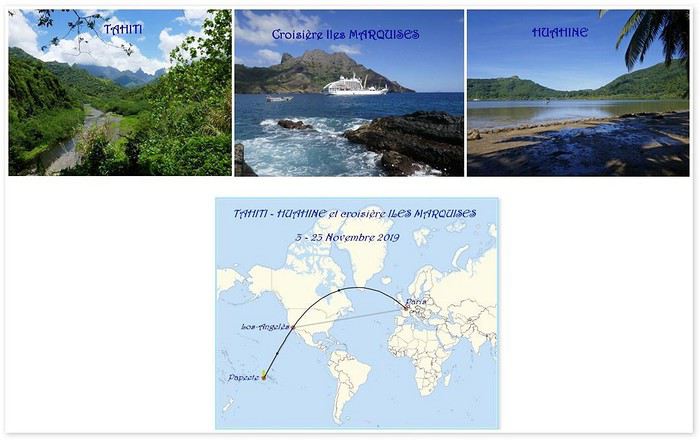 Voilà notre trajet
Paris – Papeete (Tahiti) Iles de la Société Papeete Vallée de la Papenoo Tour de l’ile Embarquement sur l’Aranui Fakarava Iles des Tuamotu En mer Hiva Oa – Tahuata Iles Marquises Fatu Hiva (Omoa-Hananave) Hiva Oa – (Tahuata (plage) Ua Huka (Vaipaee – Hokatu) Nuku-Hiva Ua Pou En mer Rangiroa Iles Tuamotu Bora-Bora Iles de la Société Papeete – Huahine Huahine Huhaine – Papeete Papeete - Paris
Pour plus de photos c'est ici.
à suivre
Je viens partager avec vous le magnifique voyage que nous avons fait en Polynésie Française du 3 au 23 Novembre 2019
Depuis de très nombreuses années nous avions envie d’aller en Polynésie Française, mais le nombre d’heures de voyage pour y arriver ainsi que le décalage horaire nous rebutait un peu, voir beaucoup. L’an passé nous avons fait 18 heures de voyage ça c’est très bien passé, alors pourquoi pas aller en Polynésie.
Des personnes rencontrées au cours de nos différents voyages, nous parlaient d’une croisière qu’ils avaient faite aux Iles Marquises sur un cargo mixte L’Aranui et qu’ils en étaient revenus enchantés. Une croisière sur ce bateau nous tentait bien. Régulièrement on reparlait de ce voyage, donc courant 2018 je ressors donc les guides, me renseigne sur le trajet du bateau, sa durée, etc.. Nous aimerions aussi passer 4 nuits et 3 jours pleins à Papeete pour nous remettre du voyage, du décallage horaire, visiter l’île tranquillement, ensuite nous ferions la croisière aux Iles Marquises et finirions par 2 nuits et une journée complète à Huahine. Yapuka à articuler tout ça.
Début Octobre 2018 je me renseigne auprès de Voyageurs du Monde pour avoir un devis. nous pensions faire ce voyage en Septembre 2019 mais il n’y avait plus de place dans la catégorie de cabine que je voulais, ce sera donc pour début Novembre 2019. Bon nous allons casser la tirelire, mais c’est maintenant où jamais.
Voilà notre trajetParis – Papeete (Tahiti) Iles de la Société Papeete Vallée de la Papenoo Tour de l’ile Embarquement sur l’Aranui Fakarava Iles des Tuamotu En mer Hiva Oa – Tahuata Iles Marquises Fatu Hiva (Omoa-Hananave) Hiva Oa – (Tahuata (plage) Ua Huka (Vaipaee – Hokatu) Nuku-Hiva Ua Pou En mer Rangiroa Iles Tuamotu Bora-Bora Iles de la Société Papeete – Huahine Huahine Huhaine – Papeete Papeete - Paris
Pour plus de photos c'est ici.
à suivre
Bonnjour,
Je pars sur Tahiti en debut juillet et arrive malheureusement à 23H40... Donc le temps de récupérer la valoche, il va être au moins minuit trente. Ma question est de savoir où loger à cette heure et sans payer une fortune.
Merci...
Je pars sur Tahiti en debut juillet et arrive malheureusement à 23H40... Donc le temps de récupérer la valoche, il va être au moins minuit trente. Ma question est de savoir où loger à cette heure et sans payer une fortune.
Merci...
Bonjour à tous
Cette année c est le grand saut pour nous : destination LA POLYNESIE FRANÇAISE
C est un peu l angoisse pour moi car vu le prix d un tel voyage je ne veux pas me tromper...
Nous partons mi octobre, avec nos enfants de 7 et 10 ans, pour 15 jours sur place et j ai besoin d aide pour savoir si c est n importe quoi ou réalisable mais bof ou réalisable et Treeees Bieeeen lol
Voici l itinéraire envisagé :
Tahit(2 nuits(i-Moorea(4 nuits)-Bora Bora(2-3 nuits)-Huahine(3 nuits)-Maupiti(3 nuits)-Tahiti(1 nuit)
L ordre est il correct ainsi que le nombre de nuits?
Nous sommes tous les 4 fans de snorkeling et nous voudrions faire excursions 4x4 et sorties bateau également...
Pour l hebergement nous aimerions chambre d hôte ou petite pension tres familiale cool Mais PAS de camping EN FAIT c est surtout pour notre porte monnaie lol
Et puis et puis et puis...c est la Polynésie donc ...on continue de casser la tirelire et on aimerait se faire 2 nuits sur pilotis mais ouuuu???
Et enfin, si vous avez des idées pour activités pour les enfants j en serai ravie!!!
Bref...AIDEZ MOI SVP ma logique part un peu dans tous les sens là
Merci à tous ceux qui prendront le temps de me répondre
Bonjour,
Je suis Tahitienne et j'envisage de faire des etudes dans le tourisme.
J'aimerais vous poser quelques questions :
- Comment percevez-vous la destination de Tahiti et ses iles?
- Pour ceux qui y sont deja allé, qu' avez vous aimé en Polynesie et qu'est ce qui vous a moins plu ??
J'aurais vraiment besoin de votre aide. Merci d'avance et 'nana' !
Je suis Tahitienne et j'envisage de faire des etudes dans le tourisme.
J'aimerais vous poser quelques questions :
- Comment percevez-vous la destination de Tahiti et ses iles?
- Pour ceux qui y sont deja allé, qu' avez vous aimé en Polynesie et qu'est ce qui vous a moins plu ??
J'aurais vraiment besoin de votre aide. Merci d'avance et 'nana' !
Bonjour.
Je vais pour septembre 2012 quitter la France pour aller travailler sur TAHITI comme magnétiseur. Je démissionnerai de mon travail actuel pour pouvoir ouvrir ce cabinet sur PAPEETE, je suis marié et ai 2 enfants. J'ai déjà pris contact avec la Chambre des Commerces et surtout des Impôts pour savoir quel statut juridique je dois utiliser. A priori ce sera l'étiquette auto-entrepreneur qui sera retenue.
Est- ce quelqu'un qui a fait ce type de démarche peut me guider dans ce projet ?
Merci à ceux et celles qui pourront me guider.
Cordialement, Philippe
Je vais pour septembre 2012 quitter la France pour aller travailler sur TAHITI comme magnétiseur. Je démissionnerai de mon travail actuel pour pouvoir ouvrir ce cabinet sur PAPEETE, je suis marié et ai 2 enfants. J'ai déjà pris contact avec la Chambre des Commerces et surtout des Impôts pour savoir quel statut juridique je dois utiliser. A priori ce sera l'étiquette auto-entrepreneur qui sera retenue.
Est- ce quelqu'un qui a fait ce type de démarche peut me guider dans ce projet ?
Merci à ceux et celles qui pourront me guider.
Cordialement, Philippe
This trip is a more budget-friendly—and shorter—alternative to the 14-day Aranui 5 cruise, which includes a few days at sea and a detour to Bora Bora in the Leeward Islands on the way back. The advantage of the cruise is that it lets you see and visit (though far too quickly) the two islands of Tahuata and Fatu Hiva, which don’t have airports. By plane, you’ll only be able to land on 4 of the 6 islands. However, Tahuata is accessible from Hiva Oa via a day trip (or two-day trip) shuttle. Plan for two extra days in your total time dedicated to the Marquesas Islands (called *Fenua Enata* in Marquesan language).
Our itinerary is perfect for those who aren’t excited by cruises and prefer to get closer to the local communities. This 9-day trip cost us around 2500 € all-inclusive. For a 14-day cruise on the Aranui, expect to pay 2300 € per person for a basic cabin for four, or 3800 € per person for a superior double cabin.
Air Tahiti offers a 4-island Marquesas Pass (Nuku Hiva, Ua Pou, Ua Huka, and Hiva Oa) for 86,000 XPF (about 700 €). The journey is made on an ATR 72 from Tahiti to Nuku Hiva or Hiva Oa, and on a 19-seat Twin Otter between the islands (often only 13 or 15 seats are available due to cargo, so book well in advance). We’re traveling as a couple. We booked our family-run guesthouse stays at the Tourism Fair in early February, where you can meet the owners and make your choice. Stays are almost always half-board or breakfast-only. Transfers are usually included, but you can always book a car or taxi.
**NUKU HIVA**
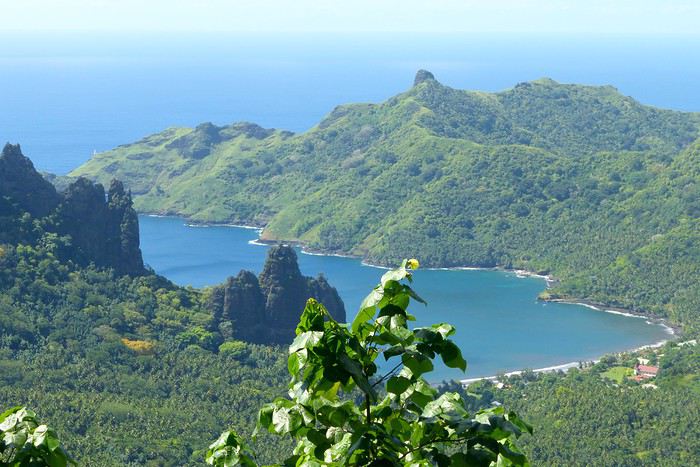
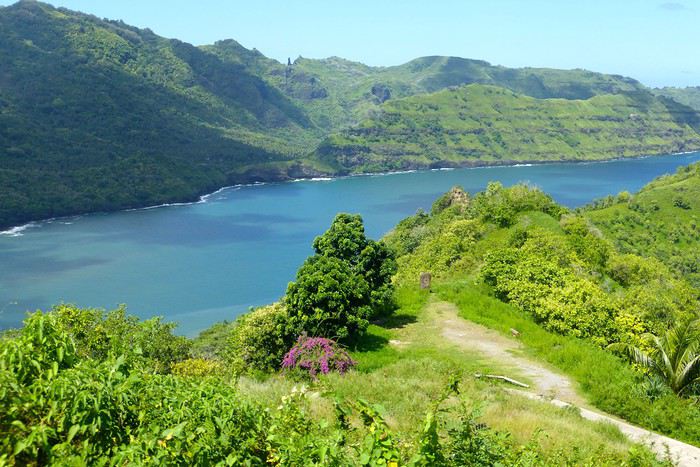
**A LITTLE GEOGRAPHY** Nuku Hiva (NH) is located about 1,500 km from Tahiti, in the north of French Polynesia. At 387 km², it’s the second-largest island in French Polynesia after Tahiti. It was formed by incredible volcanic phenomena and cataclysms between 1 and 6 million years ago, which lifted the island thousands of meters above the sea. Even after millennia of slow erosion, collapses, and settling, NH remains the most majestic of the Marquesas, with its sheer cliffs, deep valleys featuring immense waterfalls, and black walls that were once the inner walls of enormous volcanoes.
**A LITTLE HISTORY** The first contact between NH’s inhabitants and Europeans was in 1595 with Spanish navigators who only stayed briefly. It wasn’t until the late 18th century that Europeans arrived in greater numbers on NH (and the other Marquesas Islands), disrupting a very fragile social and cultural balance. It’s believed that nearly 100,000 people lived on Nuku Hiva at that time—a population decimated over the decades by epidemics, diseases brought by Europeans, and alcohol used for barter. The disastrous result: by the 1930s, only 2,500 people remained, having largely lost their identity and living in poverty. Today, the island has about 2,600 inhabitants spread across several villages, with Taiohae as the main one.
**NUKU HIVA IN LITERATURE**
1 / One of the famous writers who visited NH and stayed there was Herman Melville, who arrived in July 1842, the author of *Moby Dick*. The island had just come under French protectorate. Seduced by the enchanting *vahinés* and dazzled by his paradisiacal vision of the place, Melville deserted his ship. He ended up a prisoner of a local tribe, the Taipi, in Taipivai, where he stayed for a month and a half until an Australian ship captain secured his release in exchange for a musket and a roll of cotton fabric! Melville wrote a novel about this tumultuous episode in his life, considered a classic of travel literature. The book, *Typee: A Peep at Polynesian Life*, published in 1846 in the United States, was a huge success.
2 / Another famous Scottish writer, Robert Louis Stevenson, arrived in NH aboard a yacht that anchored in Anaho Bay, the island’s most beautiful, in July 1888. Stevenson was already known for two magnificent novels that marked their era: *Treasure Island* and *Dr. Jekyll & Mr. Hyde*. Stevenson, too, was captivated by the island’s natural beauty, though he also noted the devastating decline in identity, socio-cultural life, and physical health of a population ravaged by disease and alcohol. His account of his stay, *In the South Seas: An Account of Experiences and Observations in the Marquesas, Paumotus, and Gilbert Islands During Two Cruises on the Yacht Casco (1888) and the Schooner Equator (1889)*, was published in 1896 in New York, four years after his death in Apia, Western Samoa, where he had settled. It was also published in London in 1900.
3 / In August 1903, Victor Segalen, a French naval doctor, ethnologist, and archaeologist, landed in NH from the ship *La Durance*, sent to Polynesia to recover the possessions of the painter Paul Gauguin, who had died in April of that year. He, too, was enthralled by the Marquesas but lamented the loss of identity, dignity, and pride of the Māori, alienated by a Christianization that destroyed their culture and customs, denied their gods, and erased their past. He wrote about his experience, doubts, and fears in *Les Immémoriaux*.
4 / In December 1907, Jack London arrived in NH aboard the sailboat *Stark*, following in the footsteps of his illustrious predecessor, Herman Melville. London was in poor physical condition, exhausted from his relentless travels that had taken him from the Klondike in Canada to Japan, Australia, and London in Europe. He was appalled and shocked by Nuku Hiva’s degraded health situation: where Melville had encountered over 2,000 vigorous and healthy Marquesan warriors, London found only 12 suffering from various diseases—the rest had been wiped out by tuberculosis! His approach remained humanistic, and he maintained a sharp geopolitical awareness of these traditional Polynesian cultures, weakened by the inexorable advance of modernity in the early 20th century. He continued his journey to the Tuamotu Islands and Tahiti, publishing *Martin Eden*, the moving account of his initiatory voyage in the South Pacific, in 1911.
5 / Finally, Alain Gerbault, a writer, linguist, ethnologist, and tireless traveler, arrived in the Marquesas via the Panama Canal in December 1933. He was completely exhausted after an endless crossing on a small sailboat, the *Firecrest*. Enthralled by his stay in the Marquesas, he continued to the Tuamotu Islands in 1934, then Tahiti in 1935. Gerbault fought for the preservation of traditions, as well as the songs and dances banned by the Churches and the French Administration (these bans lasted over 50 years, mind you...!!!). Bora Bora remained his favorite island. A staunch Pétainist during World War II, he was forced to flee Bora Bora for Samoa, then Tonga, and finally Timor, a half-Portuguese island and thus neutral during the war. His travel accounts, *In Pursuit of the Sun: Logbook from New York to Tahiti* and *A Paradise Is Dying*, were published in the late 1940s. He died in Timor in 1941, and his ashes were repatriated to Bora Bora.
Back to our trip and stay.
**Day 1: April 27**
Departure from Papeete at 6:30 AM—we had to wake up two hours earlier and reach the airport in the dark. Takeoff at dawn, good weather en route, flight duration: 4 hours.
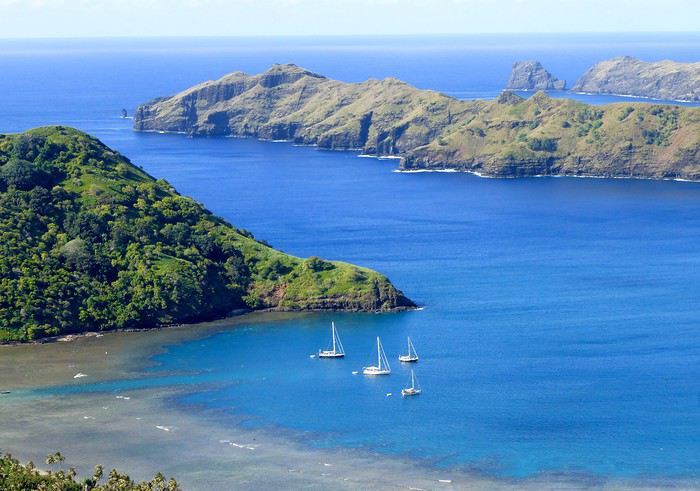
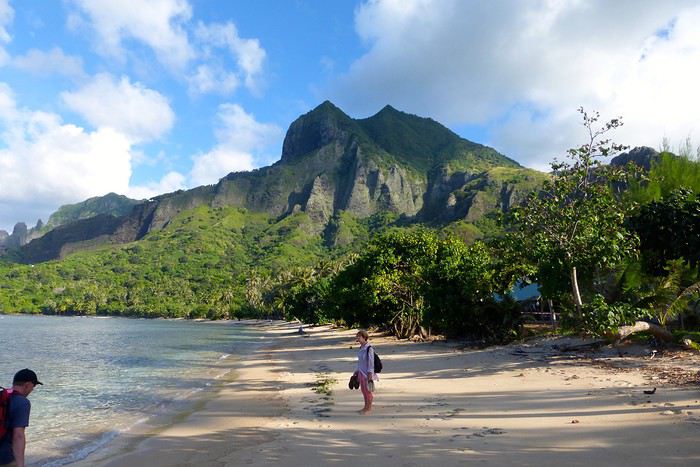
Arrival around 10:30 AM in Nuku Hiva, the first stop of this trip. We booked two nights in half-board at Pension Koku’u, transfers included. Maybe not such a great idea, those included transfers, especially on this unique island where the airport is located on *Terre Déserte*, on the other side of the mountain, opposite and about 45 km from the main village of Taiohae. They’re charged at a steep price. Expect 6,000 XPF round-trip by taxi, but 15,000 XPF charged by guesthouses or hotels. The difference is notable. It wasn’t the best idea, but we can’t go back. Even for residents like us who know how to travel in Polynesia, the Air Tahiti employee who sold me the Pass couldn’t give any useful advice about the stay itself—probably because he’d never been to the Marquesas. It’s really annoying! In short, the good idea to remember is renting a car (like a Suzuki) to be free to manage your time and stop at leisure. The road signage is a bit basic, but you’ll manage just fine. Our host Alvane waits for us—without a sign (sic!)—and after searching for each other for 5 minutes, we’re off on a journey of over an hour (with photo stops) in a Land Rover with smooth tires (luckily, it’s not raining!). The recently paved and marked mountain road is impeccable. No time to catch our breath at the guesthouse; we leave immediately (not a great idea after waking up at dawn plus 4 hours on a plane) for a half-day hike that was also included in the prepaid stay. A sandwich was provided (really pathetic for the physical effort required), we have water, and we fill a few bottles at the spring near the ceremonial site of Taipivai, our first stop. Then the hike begins in the Hanaheu Valley, descending toward Anaho Bay and its namesake beach. A magnificent and wild spot, a few sailboats anchored, we swim—the water is really warm, over 30°C at the shore. That warm is rare and not necessarily pleasant. We then have to climb a very steep slope; this hike is actually quite tough. The air is still, humid, and stifling under the foliage, there’s a bit of mud, and tiny ants (which don’t bite, I’ll have you know), locally called *fofolles*, running over shoes, ankles, and calves. Not very pleasant...! On top of that, there are mosquitoes to protect against! In hindsight, it seems wise to bring energy bars from Papeete if you plan to hike on the afternoon of your arrival day. We weren’t careful... Result: a moment of weakness for me and a hyperventilation attack climbing back up from Anaho Bay!!! We return to the guesthouse at night. There we find Claudine and her four children—Marquesan-style atmosphere, friendly and casual. We share family life. Very simple room with a bathroom, no mosquitoes, we can sleep with the window open, but the night will be noisy, as is often the case in Polynesia. Roosters are everywhere and don’t sleep, dogs bark or whine. So we end up waking up early... like everyone else.
**Day 2: April 28**
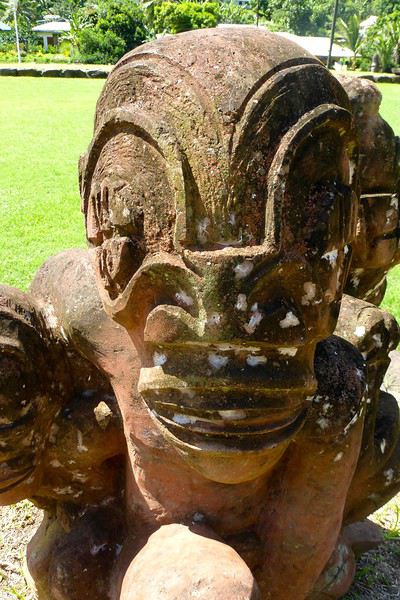
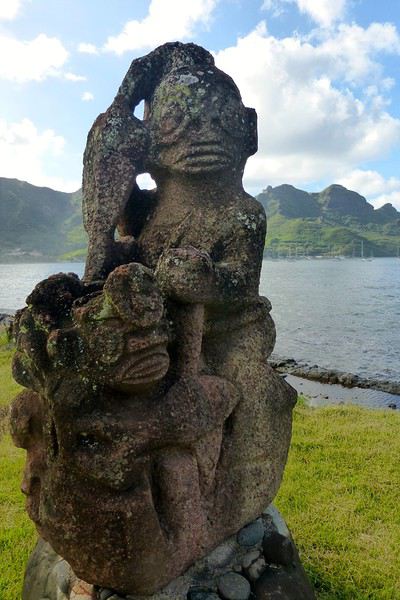
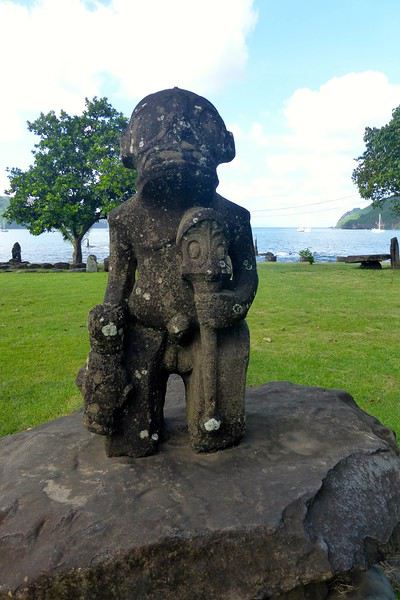
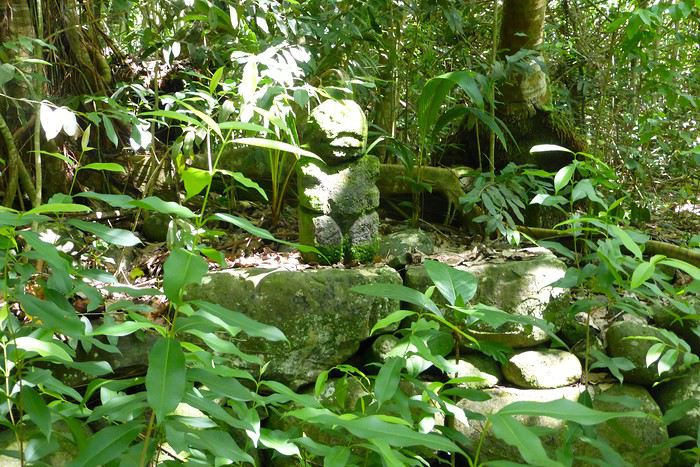
We booked a full-day excursion with Thierry: it starts with a 45-minute boat ride to reach Hakatea Beach, hidden in a small secret bay like many along Nuku Hiva’s coasts. From there, the hike lasts all day—11 km round-trip on flat but also rugged terrain (ancient paved and elevated paths over 1,000 years old)—and river crossings. Bring the right shoes (like plastic Crocs with high socks—not very stylish but practical). We cross the former village of Hakaui, walk along the foundations of dwellings, and there are still weathered tikis in the lush vegetation. The ultimate goal of this hike is to reach the tall Vaipo waterfall. The place is magical, with openings in the vegetation and immense trees allowing photos of the treetops and caves where funeral canoes containing the bones of chiefs or great warriors were once placed. We return the same way to the beach and take another boat ride to reach Taihoae’s port. Back at the guesthouse after a glimpse of Taihoae’s waterfront.
**UA POU**
**Day 3: April 29**
Back to the airport in the late morning for the second flight of the trip to Ua Pou. 20-minute crossing in a Twin Otter (18 seats but only 13 occupied due to cargo between the islands). Beautiful weather, blue sea, nice photos to take upon departure from NH and arrival in UP. We’re greeted by Jérôme, a former military man turned tourism professional, who runs Pension Pukue’e with his wife Elisa, a native of UP. We’re in for two exceptional days. The guesthouse is comfortable, Jérôme and Elisa are very professional and pleasant. Jérôme is also a professional hiker, and Elisa is an excellent cook. We leave quickly for a half-day excursion to Hohoi, after a stop at the archaeological, cultural, and religious site of Maui’a, the Tavaka tribe’s territory. Jérôme is there to explain how Marquesan society functioned at the time and the events that took place on a site still largely buried under vegetation. Then we visit a flower-stone sculptor he knows—the only place in the Marquesas where you’ll find these stones. They’re collected in the river flowing into the sea at Hohoi, sometimes on the beach itself. Back to the guesthouse.
**Day 4: April 30**
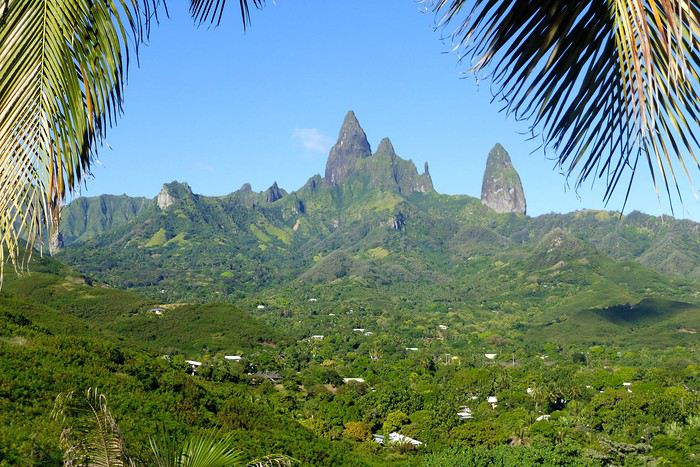
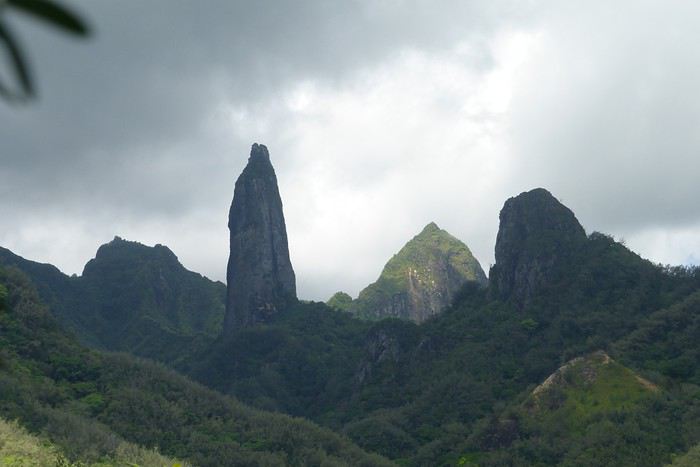
A nature hike in the mountains—moderately difficult—toward the Vaiea waterfall is on our program for a good 4 hours. It’s hot, there are mosquitoes, and the dip in the pool under the waterfall (24°C water) is a rare pleasure. Lunch at a friend of Jérôme’s, a former chef for French minister François Fillon, who prepares delicious food. Elisa picks us up by car to return to the guesthouse. Ua Pou is a beautiful and elegant island with its sharp peaks and wild nature. Our favorite, thanks to Jérôme and his wife.
**UA HUKA**
**Day 4: May 1**
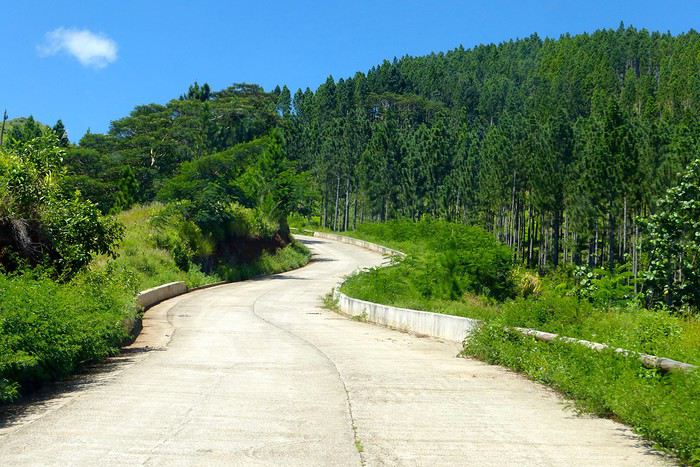
Departure for Ua Huka, the smallest inhabited island in the northern group of the Marquesas, located about 1,300 km northeast of Tahiti. Landing is at the oldest airfield in the Marquesas, built in 1972, between the villages of Vaipaee and Hane. Ua Huka has about 680 inhabitants, according to the last census, spread across 3 villages (since the 1870s): Vaipaee, Hane, and Hokatu. The island peaks at Mount Hitikau at only 884 meters. Its origin: a Hawaiian-type shield volcano that—over a few million years—collapsed to become a caldera (or elliptical depression) in which two small volcanoes appeared, the craters of Tahoatikiau and Teepoepo, now part of the Vaikivi Park. The island is rugged and wild, lower than the others, so less cloud-covered and drier. The bays are jagged, the coastline in ochre tones above the intense blue of the sea, and the beaches are constantly disturbed by the powerful surf. The village of Hokatu is only a few kilometers away (just 14 km of road on the island), but Maurice, our host, drives slowly, and it takes time to go up and down. The road is entirely paved or concreted, which isn’t the case on Ua Pou, for example. The guesthouse is disappointing, perched above the village and thus isolated. Beautiful view of the famous Hane motu and the sparkling sea under the bright sun. Apart from that, there are mosquitoes and cockroaches, the bungalow isn’t clean. Meals are taken with Maurice and Delphine in the village—fine dining isn’t on the menu! Ouch!!! We didn’t luck out...
**Day 5: May 2**
Early in the morning, after breakfast, Delphine takes us to the craft center, which turns out to be a letdown—the items for sale are, in my opinion, crude and poorly carved. Nothing like what’s offered at the Marquesas Fair, held twice a year in Papeete, where you can admire and buy small wonders: wood carvings, flower stone, and coral. Delphine is disappointed we’re not interested, and it shows... She’s a bit sulky! These are items meant for Aranui cruise passengers who land on Ua Huka once every two weeks... Solo travelers like us don’t seem to interest her much. The rest of the day—spent with Maurice—is dedicated to visiting cultural centers and small museums, like the Sea Museum in Hane with its ancient canoes, the municipal archaeological museum on the Te Tumu site above the airfield, the petroglyph house near Hokatu Beach, and finally the Papuakeikaraa arboretum, which gathers endemic plants from all over Polynesia and an impressive citrus collection. No excursion planned to Vaikivi Park, toward the previously mentioned craters that recall the island’s volcanic past. Also missing are the viewpoints, the unique endemic vegetation, and especially the petroglyphs. Too bad... at that price!!! Still, in the evening, we go fishing—with sandwiches and drinks in coolers—with other villagers from the dock at the end of the paved road. It’s cool, windy, no mosquitoes, lots of fish caught, and a great atmosphere. Plus, magnificently starry skies.
Ua Huka is one of the rare islands not invaded by the black rat, which has preserved its birdlife, particularly the ultramarine lorikeet (or *pihiti* in Marquesan), which feeds almost exclusively on flower nectar (banana, coconut, hibiscus, mango, guava trees). A dog imported from New Zealand has been specially trained to detect rats: it inspects cargo unloaded from boats and the docks.
I recommend spending two full days on the island—one for visiting the various museums, the other for hiking in the island’s center park, where the archaeological sites are in their raw state: foundations of agricultural terrace walls, gathering places (or *tohua*), dwelling pavements (or *paepae*), sacred sites (or *me’ae* in Marquesan, *marae* in Tahitian) with their tikis and petroglyphs.
To finish, a bit of info on the island’s name, tied to Marquesan oral culture: according to the legend of the creation of the six Marquesas Islands, Ua Huka is the one that puts the finishing touch on the construction of the god Oatea’s house, each island having a defined architectural function. Ua Huka represents the hole (*ua*) where the god deposits what’s left (*huka* in Marquesan) of the unused materials during construction.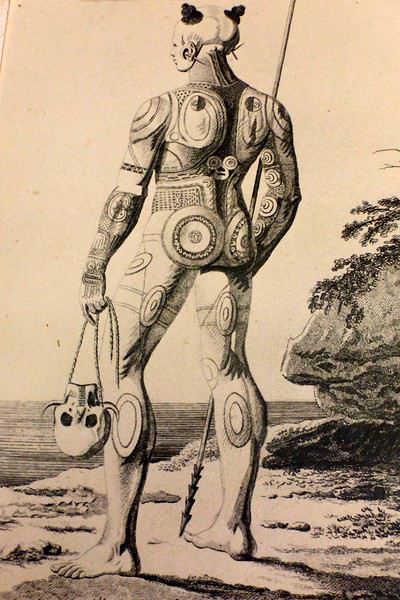
**HIVA OA**
**Day 6: May 3**
Departure in the late morning for Hiva Oa. Maurice—who had other things to do—dropped us off at the airfield 3 hours early... so this stop is a bit of a flop, even if we decided to stay positive! Hiva Oa is the third-largest island in French Polynesia after Tahiti and Nuku Hiva, and before Raiatea in the Leeward Islands. The island is beautiful, lush, verdant, and jagged. The mountains soar into the sky, the sea views are grand, the light is sublime—we’re lucky. Beautiful weather. Tania from Pension Kanahau waits for us at the airport. We’re in for two wonderful days with her. Tania is welcoming, smiling, and dynamic. What a pleasure to be with her, at her place—she cooks divinely and serves the best tuna in the world (the Big Eye reserved for the Japanese) and croquettes made with lobster, shrimp, and crab with breadfruit cubes, for example. Comfortable bungalow, no mosquitoes at night, we can sleep with the window open. It’s fantastic! After settling in, Tania takes us to town in Atuona, a pleasant and well-laid-out little village. We start with lunch—a delicious raw fish in coconut milk—then continue with the must-see attractions: the Catholic cemetery where Paul Gauguin and Jacques Brel’s graves are, overlooking the town; the abandoned Protestant cemetery, reclaimed by the bush, with impressive Marquesan warrior tombs made of huge coral slabs and adorned with a tiki head (harder to find, as no one goes there... ask for directions!); the craft center; the Gauguin Museum (and the Jacques Brel Museum); and the waterfront. While we stroll peacefully, Tania organizes an excursion for the next day, May 4, a full day with Pifa O’Connor, a 36-year-old who knows his island inside out, is passionate about local history, and with whom we’ll hit it off.
**Day 7: May 4**
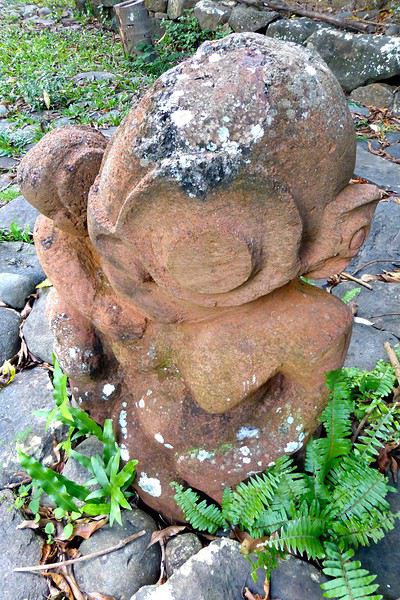
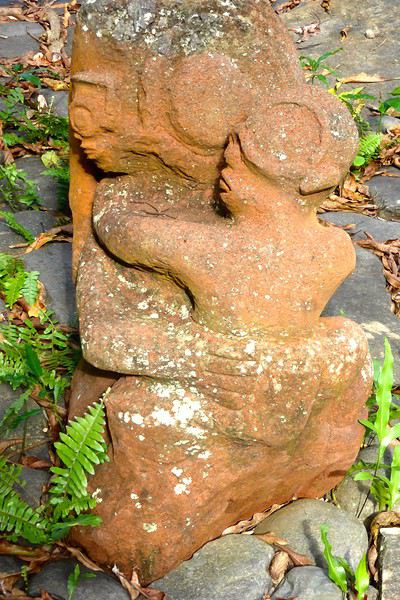
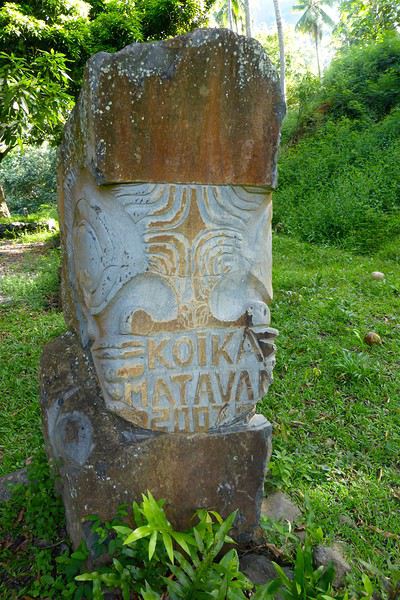
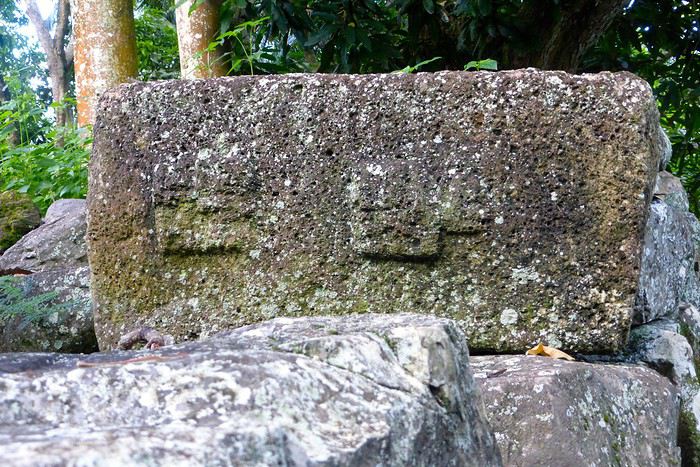
Pifa arrives at 8 AM sharp at the guesthouse, and we immediately buy sandwiches and water at a small supermarket in Atuona. First, we make a brief stop by the roadside at an unmarked spot, from which we descend a small path through dense vegetation leading to the famous smiling tiki—the only one of its kind in the Marquesas and Polynesia. The place is improbable, the tiki isn’t huge, but it’s beautiful and impressive. Then we’re off on the road that, dizzyingly, runs along and overlooks the island’s northern coast, at the edge of the ancient volcano. Few vehicles pass, the road—now a rocky track—is full of potholes, and we proceed slowly. (Note that this road has been fully paved since 2018.) The panoramas are majestic, with every shade of green against the blue sea. We stop again at the top of a cliff adorned with a huge stone, the *sacrifice stone*, from which young virgin girls were once thrown into the sea to appease angry gods. Another pause for lunch this time, at a small restaurant near the exceptional archaeological site of Puamau. We’ll experience the highlights of this trip during this excursion with our guide, Pifa, who spares no explanations. We discover, on a vast esplanade, the ceremonial complexes of Ta’a Oa and Meae Te I’Ipona, the latter featuring superb tikis, particularly the reclining tiki—or *Maki Taua Pepe*—representing Motherhood, a woman giving birth in a squatting position, as was often the case in many civilizations. Also notable is the *Takaii*, the largest tiki recorded in Polynesia to date. There’s also a huge stone with a now-blunt edge, on which the circumcision of chiefs’ and notables’ pre-adolescent sons was performed. A tough ordeal! But that’s not all! It seems there are more on the mountainside rising steeply behind the archaeological site—overturned tikis, platforms, and, apparently, a giant tiki at the top, which must have fallen but was visible from afar on the sea 30 or 40 years ago, according to the island’s elders. This meeting, worship, and living place—it was actually a small town—is immense. Thousands of people once lived in this part of the island. The site—a religious, social, and cultural sanctuary—would be the size of the largest Mayan sites in Yucatán, but the few concerned owners—two or three families who own the mountainside—don’t want to hear about intensive clearing or tree cutting for now. UNESCO rightly asks for some compliance efforts to grant special treatment to Hiva Oa in particular and the Marquesas in general. We’re not there yet, unfortunately, due to insurmountable local rigidities! This kind of attitude is quite typical in Polynesia: people are afraid to uncover *marae* buried under vegetation—they’re taboo and sometimes said to emit negative and deadly waves, so it’s better not to disturb or anger the ancient spirits or gods who might take revenge. The old religion is never far away in Polynesia, despite the successes of the missionaries.
We return to the guesthouse in the late afternoon. Last night in the Marquesas with Tania, who prepares a fine and delicious meal. Note that dinner costs 2,500 XPF per person.
**Day 8: May 5**
We take the plane as planned, via Nuku Hiva (short stopover). Arrival on time in Papeete.
May this travel journal inspire many of you to visit the Marquesas one day. It’s far, it’s expensive, it’s the trip of a lifetime—it’s unforgettable and unmissable.
Our itinerary is perfect for those who aren’t excited by cruises and prefer to get closer to the local communities. This 9-day trip cost us around 2500 € all-inclusive. For a 14-day cruise on the Aranui, expect to pay 2300 € per person for a basic cabin for four, or 3800 € per person for a superior double cabin.
Air Tahiti offers a 4-island Marquesas Pass (Nuku Hiva, Ua Pou, Ua Huka, and Hiva Oa) for 86,000 XPF (about 700 €). The journey is made on an ATR 72 from Tahiti to Nuku Hiva or Hiva Oa, and on a 19-seat Twin Otter between the islands (often only 13 or 15 seats are available due to cargo, so book well in advance). We’re traveling as a couple. We booked our family-run guesthouse stays at the Tourism Fair in early February, where you can meet the owners and make your choice. Stays are almost always half-board or breakfast-only. Transfers are usually included, but you can always book a car or taxi.
**NUKU HIVA**
**A LITTLE GEOGRAPHY** Nuku Hiva (NH) is located about 1,500 km from Tahiti, in the north of French Polynesia. At 387 km², it’s the second-largest island in French Polynesia after Tahiti. It was formed by incredible volcanic phenomena and cataclysms between 1 and 6 million years ago, which lifted the island thousands of meters above the sea. Even after millennia of slow erosion, collapses, and settling, NH remains the most majestic of the Marquesas, with its sheer cliffs, deep valleys featuring immense waterfalls, and black walls that were once the inner walls of enormous volcanoes.
**A LITTLE HISTORY** The first contact between NH’s inhabitants and Europeans was in 1595 with Spanish navigators who only stayed briefly. It wasn’t until the late 18th century that Europeans arrived in greater numbers on NH (and the other Marquesas Islands), disrupting a very fragile social and cultural balance. It’s believed that nearly 100,000 people lived on Nuku Hiva at that time—a population decimated over the decades by epidemics, diseases brought by Europeans, and alcohol used for barter. The disastrous result: by the 1930s, only 2,500 people remained, having largely lost their identity and living in poverty. Today, the island has about 2,600 inhabitants spread across several villages, with Taiohae as the main one.
**NUKU HIVA IN LITERATURE**
1 / One of the famous writers who visited NH and stayed there was Herman Melville, who arrived in July 1842, the author of *Moby Dick*. The island had just come under French protectorate. Seduced by the enchanting *vahinés* and dazzled by his paradisiacal vision of the place, Melville deserted his ship. He ended up a prisoner of a local tribe, the Taipi, in Taipivai, where he stayed for a month and a half until an Australian ship captain secured his release in exchange for a musket and a roll of cotton fabric! Melville wrote a novel about this tumultuous episode in his life, considered a classic of travel literature. The book, *Typee: A Peep at Polynesian Life*, published in 1846 in the United States, was a huge success.
2 / Another famous Scottish writer, Robert Louis Stevenson, arrived in NH aboard a yacht that anchored in Anaho Bay, the island’s most beautiful, in July 1888. Stevenson was already known for two magnificent novels that marked their era: *Treasure Island* and *Dr. Jekyll & Mr. Hyde*. Stevenson, too, was captivated by the island’s natural beauty, though he also noted the devastating decline in identity, socio-cultural life, and physical health of a population ravaged by disease and alcohol. His account of his stay, *In the South Seas: An Account of Experiences and Observations in the Marquesas, Paumotus, and Gilbert Islands During Two Cruises on the Yacht Casco (1888) and the Schooner Equator (1889)*, was published in 1896 in New York, four years after his death in Apia, Western Samoa, where he had settled. It was also published in London in 1900.
3 / In August 1903, Victor Segalen, a French naval doctor, ethnologist, and archaeologist, landed in NH from the ship *La Durance*, sent to Polynesia to recover the possessions of the painter Paul Gauguin, who had died in April of that year. He, too, was enthralled by the Marquesas but lamented the loss of identity, dignity, and pride of the Māori, alienated by a Christianization that destroyed their culture and customs, denied their gods, and erased their past. He wrote about his experience, doubts, and fears in *Les Immémoriaux*.
4 / In December 1907, Jack London arrived in NH aboard the sailboat *Stark*, following in the footsteps of his illustrious predecessor, Herman Melville. London was in poor physical condition, exhausted from his relentless travels that had taken him from the Klondike in Canada to Japan, Australia, and London in Europe. He was appalled and shocked by Nuku Hiva’s degraded health situation: where Melville had encountered over 2,000 vigorous and healthy Marquesan warriors, London found only 12 suffering from various diseases—the rest had been wiped out by tuberculosis! His approach remained humanistic, and he maintained a sharp geopolitical awareness of these traditional Polynesian cultures, weakened by the inexorable advance of modernity in the early 20th century. He continued his journey to the Tuamotu Islands and Tahiti, publishing *Martin Eden*, the moving account of his initiatory voyage in the South Pacific, in 1911.
5 / Finally, Alain Gerbault, a writer, linguist, ethnologist, and tireless traveler, arrived in the Marquesas via the Panama Canal in December 1933. He was completely exhausted after an endless crossing on a small sailboat, the *Firecrest*. Enthralled by his stay in the Marquesas, he continued to the Tuamotu Islands in 1934, then Tahiti in 1935. Gerbault fought for the preservation of traditions, as well as the songs and dances banned by the Churches and the French Administration (these bans lasted over 50 years, mind you...!!!). Bora Bora remained his favorite island. A staunch Pétainist during World War II, he was forced to flee Bora Bora for Samoa, then Tonga, and finally Timor, a half-Portuguese island and thus neutral during the war. His travel accounts, *In Pursuit of the Sun: Logbook from New York to Tahiti* and *A Paradise Is Dying*, were published in the late 1940s. He died in Timor in 1941, and his ashes were repatriated to Bora Bora.
Back to our trip and stay.
**Day 1: April 27**
Departure from Papeete at 6:30 AM—we had to wake up two hours earlier and reach the airport in the dark. Takeoff at dawn, good weather en route, flight duration: 4 hours.
Arrival around 10:30 AM in Nuku Hiva, the first stop of this trip. We booked two nights in half-board at Pension Koku’u, transfers included. Maybe not such a great idea, those included transfers, especially on this unique island where the airport is located on *Terre Déserte*, on the other side of the mountain, opposite and about 45 km from the main village of Taiohae. They’re charged at a steep price. Expect 6,000 XPF round-trip by taxi, but 15,000 XPF charged by guesthouses or hotels. The difference is notable. It wasn’t the best idea, but we can’t go back. Even for residents like us who know how to travel in Polynesia, the Air Tahiti employee who sold me the Pass couldn’t give any useful advice about the stay itself—probably because he’d never been to the Marquesas. It’s really annoying! In short, the good idea to remember is renting a car (like a Suzuki) to be free to manage your time and stop at leisure. The road signage is a bit basic, but you’ll manage just fine. Our host Alvane waits for us—without a sign (sic!)—and after searching for each other for 5 minutes, we’re off on a journey of over an hour (with photo stops) in a Land Rover with smooth tires (luckily, it’s not raining!). The recently paved and marked mountain road is impeccable. No time to catch our breath at the guesthouse; we leave immediately (not a great idea after waking up at dawn plus 4 hours on a plane) for a half-day hike that was also included in the prepaid stay. A sandwich was provided (really pathetic for the physical effort required), we have water, and we fill a few bottles at the spring near the ceremonial site of Taipivai, our first stop. Then the hike begins in the Hanaheu Valley, descending toward Anaho Bay and its namesake beach. A magnificent and wild spot, a few sailboats anchored, we swim—the water is really warm, over 30°C at the shore. That warm is rare and not necessarily pleasant. We then have to climb a very steep slope; this hike is actually quite tough. The air is still, humid, and stifling under the foliage, there’s a bit of mud, and tiny ants (which don’t bite, I’ll have you know), locally called *fofolles*, running over shoes, ankles, and calves. Not very pleasant...! On top of that, there are mosquitoes to protect against! In hindsight, it seems wise to bring energy bars from Papeete if you plan to hike on the afternoon of your arrival day. We weren’t careful... Result: a moment of weakness for me and a hyperventilation attack climbing back up from Anaho Bay!!! We return to the guesthouse at night. There we find Claudine and her four children—Marquesan-style atmosphere, friendly and casual. We share family life. Very simple room with a bathroom, no mosquitoes, we can sleep with the window open, but the night will be noisy, as is often the case in Polynesia. Roosters are everywhere and don’t sleep, dogs bark or whine. So we end up waking up early... like everyone else.
**Day 2: April 28**
We booked a full-day excursion with Thierry: it starts with a 45-minute boat ride to reach Hakatea Beach, hidden in a small secret bay like many along Nuku Hiva’s coasts. From there, the hike lasts all day—11 km round-trip on flat but also rugged terrain (ancient paved and elevated paths over 1,000 years old)—and river crossings. Bring the right shoes (like plastic Crocs with high socks—not very stylish but practical). We cross the former village of Hakaui, walk along the foundations of dwellings, and there are still weathered tikis in the lush vegetation. The ultimate goal of this hike is to reach the tall Vaipo waterfall. The place is magical, with openings in the vegetation and immense trees allowing photos of the treetops and caves where funeral canoes containing the bones of chiefs or great warriors were once placed. We return the same way to the beach and take another boat ride to reach Taihoae’s port. Back at the guesthouse after a glimpse of Taihoae’s waterfront.
**UA POU**
**Day 3: April 29**
Back to the airport in the late morning for the second flight of the trip to Ua Pou. 20-minute crossing in a Twin Otter (18 seats but only 13 occupied due to cargo between the islands). Beautiful weather, blue sea, nice photos to take upon departure from NH and arrival in UP. We’re greeted by Jérôme, a former military man turned tourism professional, who runs Pension Pukue’e with his wife Elisa, a native of UP. We’re in for two exceptional days. The guesthouse is comfortable, Jérôme and Elisa are very professional and pleasant. Jérôme is also a professional hiker, and Elisa is an excellent cook. We leave quickly for a half-day excursion to Hohoi, after a stop at the archaeological, cultural, and religious site of Maui’a, the Tavaka tribe’s territory. Jérôme is there to explain how Marquesan society functioned at the time and the events that took place on a site still largely buried under vegetation. Then we visit a flower-stone sculptor he knows—the only place in the Marquesas where you’ll find these stones. They’re collected in the river flowing into the sea at Hohoi, sometimes on the beach itself. Back to the guesthouse.
**Day 4: April 30**
A nature hike in the mountains—moderately difficult—toward the Vaiea waterfall is on our program for a good 4 hours. It’s hot, there are mosquitoes, and the dip in the pool under the waterfall (24°C water) is a rare pleasure. Lunch at a friend of Jérôme’s, a former chef for French minister François Fillon, who prepares delicious food. Elisa picks us up by car to return to the guesthouse. Ua Pou is a beautiful and elegant island with its sharp peaks and wild nature. Our favorite, thanks to Jérôme and his wife.
**UA HUKA**
**Day 4: May 1**
Departure for Ua Huka, the smallest inhabited island in the northern group of the Marquesas, located about 1,300 km northeast of Tahiti. Landing is at the oldest airfield in the Marquesas, built in 1972, between the villages of Vaipaee and Hane. Ua Huka has about 680 inhabitants, according to the last census, spread across 3 villages (since the 1870s): Vaipaee, Hane, and Hokatu. The island peaks at Mount Hitikau at only 884 meters. Its origin: a Hawaiian-type shield volcano that—over a few million years—collapsed to become a caldera (or elliptical depression) in which two small volcanoes appeared, the craters of Tahoatikiau and Teepoepo, now part of the Vaikivi Park. The island is rugged and wild, lower than the others, so less cloud-covered and drier. The bays are jagged, the coastline in ochre tones above the intense blue of the sea, and the beaches are constantly disturbed by the powerful surf. The village of Hokatu is only a few kilometers away (just 14 km of road on the island), but Maurice, our host, drives slowly, and it takes time to go up and down. The road is entirely paved or concreted, which isn’t the case on Ua Pou, for example. The guesthouse is disappointing, perched above the village and thus isolated. Beautiful view of the famous Hane motu and the sparkling sea under the bright sun. Apart from that, there are mosquitoes and cockroaches, the bungalow isn’t clean. Meals are taken with Maurice and Delphine in the village—fine dining isn’t on the menu! Ouch!!! We didn’t luck out...
**Day 5: May 2**
Early in the morning, after breakfast, Delphine takes us to the craft center, which turns out to be a letdown—the items for sale are, in my opinion, crude and poorly carved. Nothing like what’s offered at the Marquesas Fair, held twice a year in Papeete, where you can admire and buy small wonders: wood carvings, flower stone, and coral. Delphine is disappointed we’re not interested, and it shows... She’s a bit sulky! These are items meant for Aranui cruise passengers who land on Ua Huka once every two weeks... Solo travelers like us don’t seem to interest her much. The rest of the day—spent with Maurice—is dedicated to visiting cultural centers and small museums, like the Sea Museum in Hane with its ancient canoes, the municipal archaeological museum on the Te Tumu site above the airfield, the petroglyph house near Hokatu Beach, and finally the Papuakeikaraa arboretum, which gathers endemic plants from all over Polynesia and an impressive citrus collection. No excursion planned to Vaikivi Park, toward the previously mentioned craters that recall the island’s volcanic past. Also missing are the viewpoints, the unique endemic vegetation, and especially the petroglyphs. Too bad... at that price!!! Still, in the evening, we go fishing—with sandwiches and drinks in coolers—with other villagers from the dock at the end of the paved road. It’s cool, windy, no mosquitoes, lots of fish caught, and a great atmosphere. Plus, magnificently starry skies.
Ua Huka is one of the rare islands not invaded by the black rat, which has preserved its birdlife, particularly the ultramarine lorikeet (or *pihiti* in Marquesan), which feeds almost exclusively on flower nectar (banana, coconut, hibiscus, mango, guava trees). A dog imported from New Zealand has been specially trained to detect rats: it inspects cargo unloaded from boats and the docks.
I recommend spending two full days on the island—one for visiting the various museums, the other for hiking in the island’s center park, where the archaeological sites are in their raw state: foundations of agricultural terrace walls, gathering places (or *tohua*), dwelling pavements (or *paepae*), sacred sites (or *me’ae* in Marquesan, *marae* in Tahitian) with their tikis and petroglyphs.
To finish, a bit of info on the island’s name, tied to Marquesan oral culture: according to the legend of the creation of the six Marquesas Islands, Ua Huka is the one that puts the finishing touch on the construction of the god Oatea’s house, each island having a defined architectural function. Ua Huka represents the hole (*ua*) where the god deposits what’s left (*huka* in Marquesan) of the unused materials during construction.
**HIVA OA**
**Day 6: May 3**
Departure in the late morning for Hiva Oa. Maurice—who had other things to do—dropped us off at the airfield 3 hours early... so this stop is a bit of a flop, even if we decided to stay positive! Hiva Oa is the third-largest island in French Polynesia after Tahiti and Nuku Hiva, and before Raiatea in the Leeward Islands. The island is beautiful, lush, verdant, and jagged. The mountains soar into the sky, the sea views are grand, the light is sublime—we’re lucky. Beautiful weather. Tania from Pension Kanahau waits for us at the airport. We’re in for two wonderful days with her. Tania is welcoming, smiling, and dynamic. What a pleasure to be with her, at her place—she cooks divinely and serves the best tuna in the world (the Big Eye reserved for the Japanese) and croquettes made with lobster, shrimp, and crab with breadfruit cubes, for example. Comfortable bungalow, no mosquitoes at night, we can sleep with the window open. It’s fantastic! After settling in, Tania takes us to town in Atuona, a pleasant and well-laid-out little village. We start with lunch—a delicious raw fish in coconut milk—then continue with the must-see attractions: the Catholic cemetery where Paul Gauguin and Jacques Brel’s graves are, overlooking the town; the abandoned Protestant cemetery, reclaimed by the bush, with impressive Marquesan warrior tombs made of huge coral slabs and adorned with a tiki head (harder to find, as no one goes there... ask for directions!); the craft center; the Gauguin Museum (and the Jacques Brel Museum); and the waterfront. While we stroll peacefully, Tania organizes an excursion for the next day, May 4, a full day with Pifa O’Connor, a 36-year-old who knows his island inside out, is passionate about local history, and with whom we’ll hit it off.
**Day 7: May 4**
Pifa arrives at 8 AM sharp at the guesthouse, and we immediately buy sandwiches and water at a small supermarket in Atuona. First, we make a brief stop by the roadside at an unmarked spot, from which we descend a small path through dense vegetation leading to the famous smiling tiki—the only one of its kind in the Marquesas and Polynesia. The place is improbable, the tiki isn’t huge, but it’s beautiful and impressive. Then we’re off on the road that, dizzyingly, runs along and overlooks the island’s northern coast, at the edge of the ancient volcano. Few vehicles pass, the road—now a rocky track—is full of potholes, and we proceed slowly. (Note that this road has been fully paved since 2018.) The panoramas are majestic, with every shade of green against the blue sea. We stop again at the top of a cliff adorned with a huge stone, the *sacrifice stone*, from which young virgin girls were once thrown into the sea to appease angry gods. Another pause for lunch this time, at a small restaurant near the exceptional archaeological site of Puamau. We’ll experience the highlights of this trip during this excursion with our guide, Pifa, who spares no explanations. We discover, on a vast esplanade, the ceremonial complexes of Ta’a Oa and Meae Te I’Ipona, the latter featuring superb tikis, particularly the reclining tiki—or *Maki Taua Pepe*—representing Motherhood, a woman giving birth in a squatting position, as was often the case in many civilizations. Also notable is the *Takaii*, the largest tiki recorded in Polynesia to date. There’s also a huge stone with a now-blunt edge, on which the circumcision of chiefs’ and notables’ pre-adolescent sons was performed. A tough ordeal! But that’s not all! It seems there are more on the mountainside rising steeply behind the archaeological site—overturned tikis, platforms, and, apparently, a giant tiki at the top, which must have fallen but was visible from afar on the sea 30 or 40 years ago, according to the island’s elders. This meeting, worship, and living place—it was actually a small town—is immense. Thousands of people once lived in this part of the island. The site—a religious, social, and cultural sanctuary—would be the size of the largest Mayan sites in Yucatán, but the few concerned owners—two or three families who own the mountainside—don’t want to hear about intensive clearing or tree cutting for now. UNESCO rightly asks for some compliance efforts to grant special treatment to Hiva Oa in particular and the Marquesas in general. We’re not there yet, unfortunately, due to insurmountable local rigidities! This kind of attitude is quite typical in Polynesia: people are afraid to uncover *marae* buried under vegetation—they’re taboo and sometimes said to emit negative and deadly waves, so it’s better not to disturb or anger the ancient spirits or gods who might take revenge. The old religion is never far away in Polynesia, despite the successes of the missionaries.
We return to the guesthouse in the late afternoon. Last night in the Marquesas with Tania, who prepares a fine and delicious meal. Note that dinner costs 2,500 XPF per person.
**Day 8: May 5**
We take the plane as planned, via Nuku Hiva (short stopover). Arrival on time in Papeete.
May this travel journal inspire many of you to visit the Marquesas one day. It’s far, it’s expensive, it’s the trip of a lifetime—it’s unforgettable and unmissable.
Bonjour à tous, je pars avec mon épouse à Tahiti en juillet prochain et je dois avouer que j'ai un peu peur des requins. qu'en est-il exactemment des risques ? Les guides mentionnent des requins citron, tigre, etc etc.
Quelqu'un pourrait-il me renseigner sur les véritables risques, des requins et de toute la faune sous-amrine (raie, murène) ?
Nous allons à Tahiti, Moorea, Huahine, Bora Bora. Nous ne faisons pas de plongée que de la baignade (pouvons-nous éloigner du bord sans danger ?) et du snorkeling.
Merci de me renseigner ca serait très aimable . 🙂
Nous allons à Tahiti, Moorea, Huahine, Bora Bora. Nous ne faisons pas de plongée que de la baignade (pouvons-nous éloigner du bord sans danger ?) et du snorkeling.
Merci de me renseigner ca serait très aimable . 🙂
ia orana,
Je sais pas, vous... Mais nous, une croisière commence immanquablement par de l'avion... C'est sûr, habiter sur une ile paradisiaque présente des gros avantages, mais question croisières... De nombreuses compagnies font escales en Polynésie, mais il n'y en a peu qui font partir leurs voyages à partir de Papeete... Donc, avion ! Juste 8 petites heures dans un bel avion bleu entre Papeete et Los Angeles pour commencer ! et hop ! On saute dans un autre d'Alaska air pour se retrouver en fin d'après-midi, un peu fatigués, dans le centre ville de Vancouver, Colombie Britannique, Canada. Demain sera un autre jour...

Je sais pas, vous... Mais nous, une croisière commence immanquablement par de l'avion... C'est sûr, habiter sur une ile paradisiaque présente des gros avantages, mais question croisières... De nombreuses compagnies font escales en Polynésie, mais il n'y en a peu qui font partir leurs voyages à partir de Papeete... Donc, avion ! Juste 8 petites heures dans un bel avion bleu entre Papeete et Los Angeles pour commencer ! et hop ! On saute dans un autre d'Alaska air pour se retrouver en fin d'après-midi, un peu fatigués, dans le centre ville de Vancouver, Colombie Britannique, Canada. Demain sera un autre jour...
Bonjour !
je commence a organiser mon sejour a tahiti et je me demandais si vous connaissaissiez un hotel ou une maison d'hote pas trop chere pour une nuit a papeete entre deux vols (arrivee tardive a Papeete et depart le lendemain sur les iles).
Par ailleurs j'ai une amie qui m'a parle de Huahine. Qu'en pensez vous ? mieux que Bora Bora ? En fait je ne resterai que 8 jours en polynesie (je sais c court ) donc je ne pourrais pas faire tt les iles ....🤪
Merci infiniment de vos reponses !!
je commence a organiser mon sejour a tahiti et je me demandais si vous connaissaissiez un hotel ou une maison d'hote pas trop chere pour une nuit a papeete entre deux vols (arrivee tardive a Papeete et depart le lendemain sur les iles).
Par ailleurs j'ai une amie qui m'a parle de Huahine. Qu'en pensez vous ? mieux que Bora Bora ? En fait je ne resterai que 8 jours en polynesie (je sais c court ) donc je ne pourrais pas faire tt les iles ....🤪
Merci infiniment de vos reponses !!
Ia orana,
Nous arrivons le 23 aout à 5h du mat à l’aéroport de Tahiti et repartons le 13 septembre à 7h50.
Nous souhaitons passer le niveau 1 de plongée, c’est pourquoi j’ai prévu 6 ou 7 jours à Moorea pour commencer. Ensuite Maupiti me tiens vraiment à cœur car très belle et préservée. De plus je rêve de nager avec les baleines et c’est surtout à Moorea et Maupiti que je peux les voir (Rurutu aussi mais c’est trop loin). Finir par Rangiroa pour les plus belles plongées et la belle pension Tevahine dispo juste à ce moment c’est sûr.
Les incertitudes sont plus au milieu : envie de Tahaa pour la vanille, les tortues et le beau Vahine Island, Bora Bora pour voir parce que c’est Bora Bora mais je
n’ai pas envie d’y rester trop, et Huahine ça a l’air bien aussi…
Option E Moorea 4 Maupiti 5 Tahaa 4 Bora 2 Rangiroa 5
Option F Moorea 4 Huahine 3 Bora 2 Maupiti 5 Tahaa 2 Rangiroa 4
Option E Moorea 4 Maupiti 5 Tahaa 4 Bora 2 Rangiroa 5
Option F Moorea 4 Huahine 3 Bora 2 Maupiti 5 Tahaa 2 Rangiroa 4
Hello,
Who among us hasn’t dreamed of having a ticket to Tahiti, Bora Bora, or the Marquesas in their pocket—preferably a one-way ticket to “paradise”?
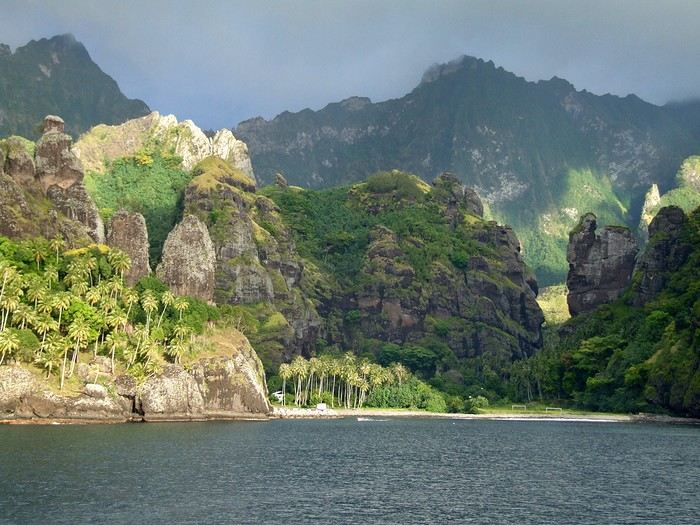 Idyllic landscape of a dream island, but difficult to access: the Bay of Virgins in Fatu Hiva, Marquesas Islands
Among the values conveyed by literature, tourism, and advertising is the quest for “elsewhere,” for a change of scenery, in the truest sense of the word—that is, the need to leave one’s country. This need for otherness, for difference, is projected onto dreamlike, idealized, even mythicized places. In our imaginary world, the island is often that place.
Yet we forget that islands have also been ideal prisons. The examples are numerous: Elba and Saint Helena, Alcatraz and Poulo Condor, If and Yeu, the Devil’s Islands and Leros. The latter, located in Greece in the Dodecanese, hosted a sinister forced labor camp during the colonels’ dictatorship as well as a psychiatric hospital. Despite the beauty of its bay, tourism has remained marginal there due to its bad reputation, unlike the neighboring island of Patmos.
I’d like to share a selection of about a dozen islands from across the world’s seas and oceans. For dreaming...
°°°°°°°°°°°°°°°
SANTORINI
July 27, 1967
At dawn, the ferry from Agios Nikolaos (Crete) enters the immense caldera of Santorini. From the ship’s deck, Rainer, my travel companion, and I are left in awe by the sight of these towering, multicolored cliffs looming over us. We disembark and begin the steep climb on foot via the winding mule path up to the village of Fira, the capital perched above the cliff. Though it’s still very early, we head to the youth hostel. There wasn’t a soul in the alleys that morning—or rather, there were only cats! I have a fond memory of that encounter with Santorini: a sensory shock, a breathtaking volcanic site, a harmony of blue, ochre-red, and white. A welcoming island, as it was traditional to welcome the xénou, an island that hadn’t yet fully recovered from the terrible 1956 earthquake, a Cycladic architectural marvel where local life was still preserved.
It’s easy to see why, in antiquity, the island was named Kallisté (καλλίστη), “the most beautiful,” as it’s nearly impossible to resist gazing at this landscape shaped by tectonic forces. Indeed, a massive volcanic cataclysm—the Minoan eruption—shaped this scenery in the 17th century BCE, creating a caldera that was quickly filled by the sea. The enormous tsunamis that followed reached Crete, leading to the disappearance of the Minoan civilization.
A cliffside path along the caldera leads us to the peaceful village of Oia, at the northern tip of the island. Blue-domed churches and flower-filled villages with whitewashed houses line the way. This walk is a continuous marvel, offering splendid views of the caldera and the neighboring islands formed by the breakup of the ancient volcano (Thirissa, Nea Kameni). Oia is a large, picturesque village, like Fira perched on the cliff’s edge, which was severely damaged by the 1956 earthquake, and its scars are still visible. Its cave-like houses with vaulted roofs haven’t yet been turned into luxury hotels or shops. Absolute tranquility reigns here.
 Oia in 1967—a peaceful village overlooking the caldera. But where are the pools and trendy bars?
A lush countryside covered in olive trees and vineyards welcomes us for a pleasant hike, interrupted by the kindness of a friendly islander who gives us a lift in his truck for a few kilometers. He’s off to harvest his tomatoes, which he grows at the foot of Pyrgos Hill. The delicious little cherry tomato of Santorini earned an EU Protected Designation of Origin (PDO) in 2013. We climb up to the village of Pyrgos, perched on a hill and dominated by the elegant bell tower of its church. Finally, we reach the black sand beach of Kamari on the island’s eastern coast to enjoy a swim.
{...} To be continued
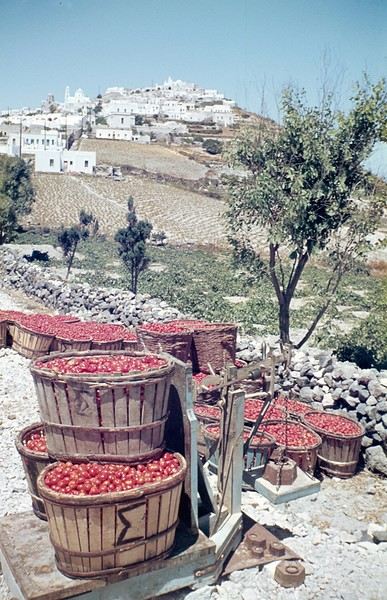

°°°°°°°°°°°°°°°°°
RAIVAVAE (French Polynesia)
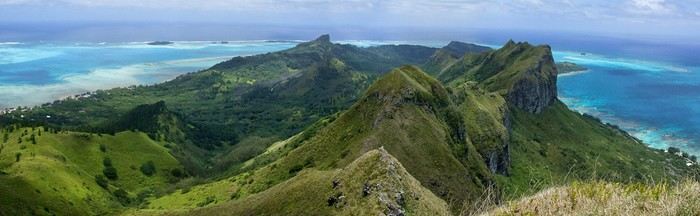
November 15, 2007
Éléonore from Pension Tama welcomes us with traditional flower leis, as if she’d been waiting for old friends she hadn’t seen in ages. The small airport terminal is lively, the atmosphere warm—people hugging, rejoicing in reunions, all under kilos of flowers. Then, just as quickly, the place empties until the next flight... in a few days.
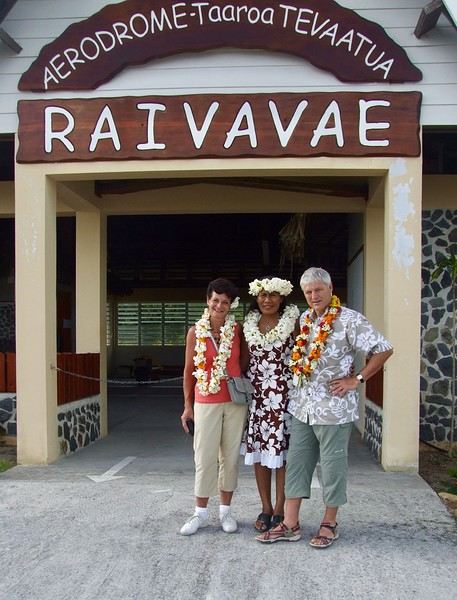
In the Austral Islands, a ninety-minute flight from Tahiti, Raivavae is a world away from the frenetic pace of Papeete or the tourist crowds of the Leeward Islands. The true paradise of the South Seas can still be savored here—it’s a bit like Bora Bora half a century ago. Our first feeling upon arriving on this island is wonder, with smiles that could melt even the gloomiest among us, landscapes so stunning they take your breath away, and above all, a sense of disorientation and fulfillment. Picture a mountainous island, about ten kilometers by three and a half, encircled by a coral reef and wild motu, cradling a lagoon with shades of blue that would make Bora Bora green with envy.
The roughly one thousand inhabitants of Raivavae are spread across four villages around the island. Children are everywhere, as is typical in Polynesia, and they greet you with open, genuine smiles. Here, ancestral values have survived progress. The predominantly Protestant population is very devout, as evidenced by the several temples built across the island. Religious fervor sets the rhythm of daily life. Sundays are reserved for worship and Sunday school (catechism). Work is forbidden on that day, and tourist activities are suspended. These rules are strict and respected.
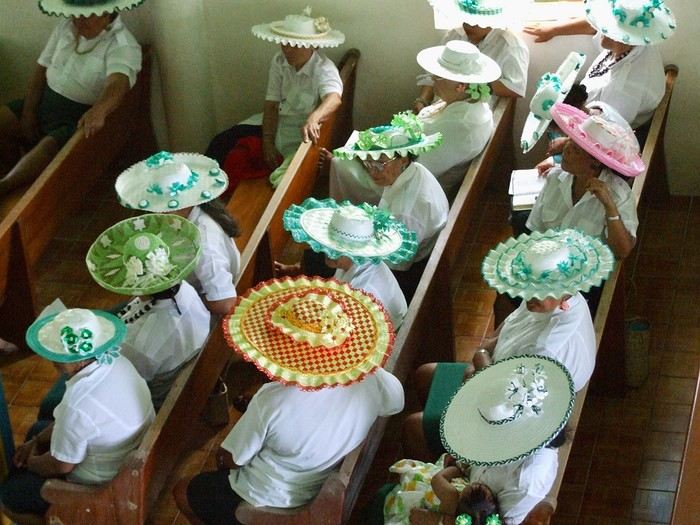 Hat contest for the worship celebration
Yet a sense of resignation is ever-present. The people of Raivavae know they are—and will remain—isolated. Despite the construction of an airstrip in 2004 and a few weekly flights to Tahiti and its nearest neighbor, Tubuai (200 km away), the island remains on the fringes of the world. One painful aspect is the separation of children from their parents when they leave for middle school in Tubuai starting in fifth grade. Television brings daily images of a world the islanders will likely never know, but one they often aspire to.
We are privileged. We have the pristine white-sand beaches of the motu and some of the most beautiful bays in Polynesia all to ourselves. The jewel in the crown, the island’s emblematic spot, is the “motu-pool,” about twenty minutes by boat. A natural, exquisite basin with crystal-clear water, gradients of blue, and white sand. And best of all, there’s almost no one there. In fact, lounging on the beach is frowned upon, especially for young women. Religion looks very unfavorably on sunbathing and lazing around. And yet, everything here leans toward that philosophy of life.
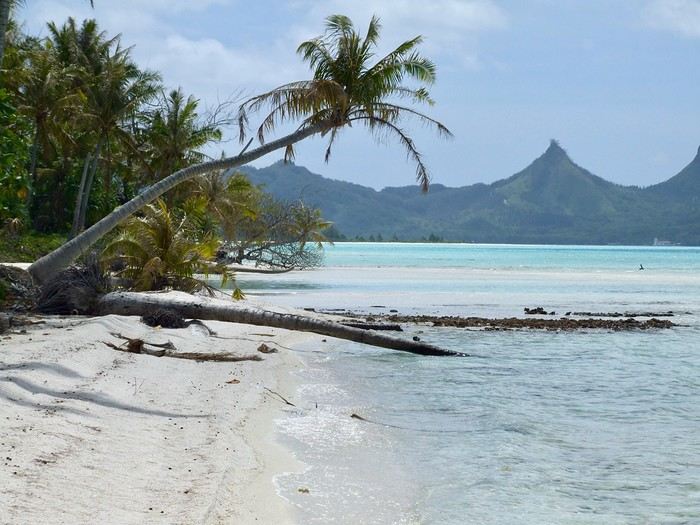
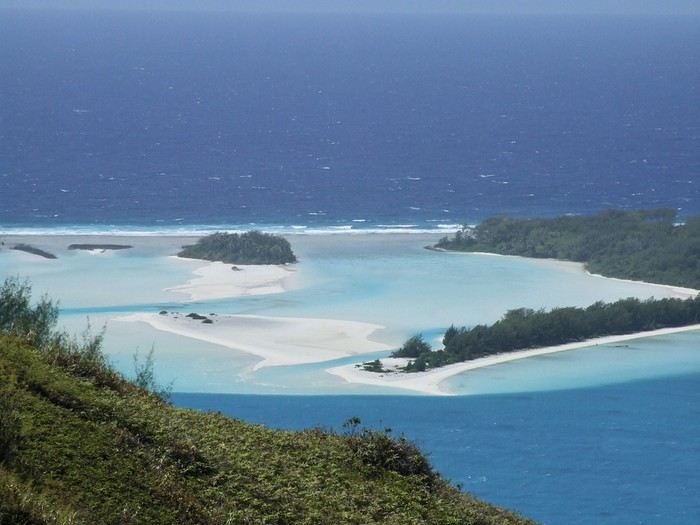 The "motu-pool"
{...} To be continued
Who among us hasn’t dreamed of having a ticket to Tahiti, Bora Bora, or the Marquesas in their pocket—preferably a one-way ticket to “paradise”?
Idyllic landscape of a dream island, but difficult to access: the Bay of Virgins in Fatu Hiva, Marquesas IslandsAmong the values conveyed by literature, tourism, and advertising is the quest for “elsewhere,” for a change of scenery, in the truest sense of the word—that is, the need to leave one’s country. This need for otherness, for difference, is projected onto dreamlike, idealized, even mythicized places. In our imaginary world, the island is often that place.
Yet we forget that islands have also been ideal prisons. The examples are numerous: Elba and Saint Helena, Alcatraz and Poulo Condor, If and Yeu, the Devil’s Islands and Leros. The latter, located in Greece in the Dodecanese, hosted a sinister forced labor camp during the colonels’ dictatorship as well as a psychiatric hospital. Despite the beauty of its bay, tourism has remained marginal there due to its bad reputation, unlike the neighboring island of Patmos.
I’d like to share a selection of about a dozen islands from across the world’s seas and oceans. For dreaming...
°°°°°°°°°°°°°°°
SANTORINI
July 27, 1967
At dawn, the ferry from Agios Nikolaos (Crete) enters the immense caldera of Santorini. From the ship’s deck, Rainer, my travel companion, and I are left in awe by the sight of these towering, multicolored cliffs looming over us. We disembark and begin the steep climb on foot via the winding mule path up to the village of Fira, the capital perched above the cliff. Though it’s still very early, we head to the youth hostel. There wasn’t a soul in the alleys that morning—or rather, there were only cats! I have a fond memory of that encounter with Santorini: a sensory shock, a breathtaking volcanic site, a harmony of blue, ochre-red, and white. A welcoming island, as it was traditional to welcome the xénou, an island that hadn’t yet fully recovered from the terrible 1956 earthquake, a Cycladic architectural marvel where local life was still preserved.
It’s easy to see why, in antiquity, the island was named Kallisté (καλλίστη), “the most beautiful,” as it’s nearly impossible to resist gazing at this landscape shaped by tectonic forces. Indeed, a massive volcanic cataclysm—the Minoan eruption—shaped this scenery in the 17th century BCE, creating a caldera that was quickly filled by the sea. The enormous tsunamis that followed reached Crete, leading to the disappearance of the Minoan civilization.
A cliffside path along the caldera leads us to the peaceful village of Oia, at the northern tip of the island. Blue-domed churches and flower-filled villages with whitewashed houses line the way. This walk is a continuous marvel, offering splendid views of the caldera and the neighboring islands formed by the breakup of the ancient volcano (Thirissa, Nea Kameni). Oia is a large, picturesque village, like Fira perched on the cliff’s edge, which was severely damaged by the 1956 earthquake, and its scars are still visible. Its cave-like houses with vaulted roofs haven’t yet been turned into luxury hotels or shops. Absolute tranquility reigns here.
Oia in 1967—a peaceful village overlooking the caldera. But where are the pools and trendy bars?A lush countryside covered in olive trees and vineyards welcomes us for a pleasant hike, interrupted by the kindness of a friendly islander who gives us a lift in his truck for a few kilometers. He’s off to harvest his tomatoes, which he grows at the foot of Pyrgos Hill. The delicious little cherry tomato of Santorini earned an EU Protected Designation of Origin (PDO) in 2013. We climb up to the village of Pyrgos, perched on a hill and dominated by the elegant bell tower of its church. Finally, we reach the black sand beach of Kamari on the island’s eastern coast to enjoy a swim.
{...} To be continued
°°°°°°°°°°°°°°°°°
RAIVAVAE (French Polynesia)
November 15, 2007
Éléonore from Pension Tama welcomes us with traditional flower leis, as if she’d been waiting for old friends she hadn’t seen in ages. The small airport terminal is lively, the atmosphere warm—people hugging, rejoicing in reunions, all under kilos of flowers. Then, just as quickly, the place empties until the next flight... in a few days.
In the Austral Islands, a ninety-minute flight from Tahiti, Raivavae is a world away from the frenetic pace of Papeete or the tourist crowds of the Leeward Islands. The true paradise of the South Seas can still be savored here—it’s a bit like Bora Bora half a century ago. Our first feeling upon arriving on this island is wonder, with smiles that could melt even the gloomiest among us, landscapes so stunning they take your breath away, and above all, a sense of disorientation and fulfillment. Picture a mountainous island, about ten kilometers by three and a half, encircled by a coral reef and wild motu, cradling a lagoon with shades of blue that would make Bora Bora green with envy.
The roughly one thousand inhabitants of Raivavae are spread across four villages around the island. Children are everywhere, as is typical in Polynesia, and they greet you with open, genuine smiles. Here, ancestral values have survived progress. The predominantly Protestant population is very devout, as evidenced by the several temples built across the island. Religious fervor sets the rhythm of daily life. Sundays are reserved for worship and Sunday school (catechism). Work is forbidden on that day, and tourist activities are suspended. These rules are strict and respected.
Hat contest for the worship celebrationYet a sense of resignation is ever-present. The people of Raivavae know they are—and will remain—isolated. Despite the construction of an airstrip in 2004 and a few weekly flights to Tahiti and its nearest neighbor, Tubuai (200 km away), the island remains on the fringes of the world. One painful aspect is the separation of children from their parents when they leave for middle school in Tubuai starting in fifth grade. Television brings daily images of a world the islanders will likely never know, but one they often aspire to.
We are privileged. We have the pristine white-sand beaches of the motu and some of the most beautiful bays in Polynesia all to ourselves. The jewel in the crown, the island’s emblematic spot, is the “motu-pool,” about twenty minutes by boat. A natural, exquisite basin with crystal-clear water, gradients of blue, and white sand. And best of all, there’s almost no one there. In fact, lounging on the beach is frowned upon, especially for young women. Religion looks very unfavorably on sunbathing and lazing around. And yet, everything here leans toward that philosophy of life.
The "motu-pool"{...} To be continued
Bonjour,
Je devais aller cet été au Groenland mais j'ai annulé. Du coup, je devais passer 21 jours aux marquises en 2021 mais comme je tiens absolument à me rendre au Groenland l'année prochaine, les Marquises ça sera pour 2022.
ça me permet de prendre mon temps pour trouver ce qui me correspond le mieux. J'ai déjà échangé avec plusieurs d'entre vous.
J'ai l'intention de rester 3 semaines dans la même île. Au début, j'avais choisi Maupiti puis mon choix s'est porté sur Hiva Oa. J'ai échangé avec une autochtone qui loue des bungalows. J'en ai trouvé un pour 100 euros/nuit. Elle me fait un prix car j'y resterai 3 semaines. 100 euros en demi pension par jour. ça me semble honnête. Peut être que ça aura augmenté dans deux ans ?
Qui s'est rendu à HIVA OA et peux m'en parler ? Je suis contemplative mais trois semaines au même endroit n'est ce pas trop long ?
Le cas échéant, n'est il pas préférable que je me rende sur une autre île ? Je pense à Maupiti mais la liaison aérienne Maupiti Hiva Oa est est possible et vous me conseilleriez de le faire dans quel ordre ? D'abord Hiva Oa ou d'abord Maupiti ? La liaison aérienne entre les deux îles est elle coûteuse ?
En effet, le vol Paris-Papetee-Hiva Oa est coûteux et je crains qu'il en soit de même pour Hiva Oa-Maupiti.
Enfin, Maupiti n'est il pas devenu trop touristique par rapport à Hiva Oa ? Je précise que je m'y rendrai au mois d'octobre.
Un grand merci pour votre aide.
Confinement vôtre.
Nat
Je devais aller cet été au Groenland mais j'ai annulé. Du coup, je devais passer 21 jours aux marquises en 2021 mais comme je tiens absolument à me rendre au Groenland l'année prochaine, les Marquises ça sera pour 2022.
ça me permet de prendre mon temps pour trouver ce qui me correspond le mieux. J'ai déjà échangé avec plusieurs d'entre vous.
J'ai l'intention de rester 3 semaines dans la même île. Au début, j'avais choisi Maupiti puis mon choix s'est porté sur Hiva Oa. J'ai échangé avec une autochtone qui loue des bungalows. J'en ai trouvé un pour 100 euros/nuit. Elle me fait un prix car j'y resterai 3 semaines. 100 euros en demi pension par jour. ça me semble honnête. Peut être que ça aura augmenté dans deux ans ?
Qui s'est rendu à HIVA OA et peux m'en parler ? Je suis contemplative mais trois semaines au même endroit n'est ce pas trop long ?
Le cas échéant, n'est il pas préférable que je me rende sur une autre île ? Je pense à Maupiti mais la liaison aérienne Maupiti Hiva Oa est est possible et vous me conseilleriez de le faire dans quel ordre ? D'abord Hiva Oa ou d'abord Maupiti ? La liaison aérienne entre les deux îles est elle coûteuse ?
En effet, le vol Paris-Papetee-Hiva Oa est coûteux et je crains qu'il en soit de même pour Hiva Oa-Maupiti.
Enfin, Maupiti n'est il pas devenu trop touristique par rapport à Hiva Oa ? Je précise que je m'y rendrai au mois d'octobre.
Un grand merci pour votre aide.
Confinement vôtre.
Nat
Bonjour,
Qui peut me dire s'il existe des liaisons maritimes régulières ( et fréquentes ! ) aux Tuamotus ?
J'aimerais aller de AHE à MANIHI en bateau le mardi 25 ou le mercredi 26 juin 2013 ( sachant qu'il n'y a, a priori, pas de vols Air Tahiti ces deux jours-là ).
Merci de vos réponses :-)
Au moins quatorze personnes ont trouvé la mort, jeudi, dans le crash d'un Twin Otter d'Air Moorea, selon un bilan provisoire. Six autres personnes sont portées disparues. Les raisons de l'accident n'ont pour l'heure pas été déterminées.
"Le Twin Otter a décollé de Moorea à midi avec dix-neuf passagers à bord et le pilote. Après son décollage, il n'a plus eu de contact avec la tour de contrôle. Nous n'avons pas d'informations précises sur la façon dont il s'est abimé en mer. Des bateaux qui se trouvaient dans le secteur se sont rendus sur le lieu de l'accident (...) Il y a dix minutes, les secours avaient repêché quatorze corps sur les vingt personnes qui se trouvaient à bord", a déclaré en milieu d'après-midi le pdg d'Air Tahiti (ndlr, Air Moorea est une filiale d'Air Tahiti), Christian Vernaudon, avant d'ajouter: "Pour le moment, les corps sont toujours à Moorea (....) nous sommes tous bouleversés, c'est la pire chose qui puisse arriver". A l'aéroport domestique de Tahiti-Faa'a, la consternation pouvait se lire sur les visages même si certains passagers étrangers ne comprenaient pas pourquoi leur vol était annulé. Une cellule de crise a été mise en place pour accueillir les proches des victimes qui attendaient, en larmes, de plus amples informations. Les corps devraient être rapatriés, en fin d'après-midi, à la base aérienne de Faa'a où une chapelle ardente doit être dressée.
"Les moteurs se sont coupés"
Bien que les raisons du crash soient, à l'heure actuelle, indéterminées, un témoin qui se baignait dans le lagon de Moorea à quelques centaines de mètres du lieu de l'accident, a expliqué à Tahitipresse, que les deux moteurs de l'appareil s'étaient subitement arrêtés: "Le Twin Otter a décollé. Il n'était pas très haut. Le temps était magnifique, mais, d'un seul coup, les moteurs ont fait un drôle de bruit puis se sont carrément coupés alors que l'avion était encore en phase de décollage", explique Bernard, qui réside à proximité de l'aéroport de Moorea. "Puis l'avion est tombé, pas comme une pierre mais en suivant sa trajectoire. L'impact n'a pas été fort. J'ai vu la queue flotter à la verticale quelques instants puis il s'est enfoncé (...) Des bateaux de pêche ont alors foncé vers l'impact. J'étais complètement hébété", a-t-il ajouté. Cet accident est l'une des catastrophes aériennes les plus importantes qu'ait connu la Polynésie française. En avril 1991, un Dornier d'Air Tahiti s'était crashé au large de Nuku-Hiva (archipel des Marquises), faisant dix victimes. En 1973, un Boeing de la Pan Am s'était également écrasé, peu après son décollage de l'aéroport de Tahiti-Faa'a.
"Le Twin Otter a décollé de Moorea à midi avec dix-neuf passagers à bord et le pilote. Après son décollage, il n'a plus eu de contact avec la tour de contrôle. Nous n'avons pas d'informations précises sur la façon dont il s'est abimé en mer. Des bateaux qui se trouvaient dans le secteur se sont rendus sur le lieu de l'accident (...) Il y a dix minutes, les secours avaient repêché quatorze corps sur les vingt personnes qui se trouvaient à bord", a déclaré en milieu d'après-midi le pdg d'Air Tahiti (ndlr, Air Moorea est une filiale d'Air Tahiti), Christian Vernaudon, avant d'ajouter: "Pour le moment, les corps sont toujours à Moorea (....) nous sommes tous bouleversés, c'est la pire chose qui puisse arriver". A l'aéroport domestique de Tahiti-Faa'a, la consternation pouvait se lire sur les visages même si certains passagers étrangers ne comprenaient pas pourquoi leur vol était annulé. Une cellule de crise a été mise en place pour accueillir les proches des victimes qui attendaient, en larmes, de plus amples informations. Les corps devraient être rapatriés, en fin d'après-midi, à la base aérienne de Faa'a où une chapelle ardente doit être dressée.
"Les moteurs se sont coupés"
Bien que les raisons du crash soient, à l'heure actuelle, indéterminées, un témoin qui se baignait dans le lagon de Moorea à quelques centaines de mètres du lieu de l'accident, a expliqué à Tahitipresse, que les deux moteurs de l'appareil s'étaient subitement arrêtés: "Le Twin Otter a décollé. Il n'était pas très haut. Le temps était magnifique, mais, d'un seul coup, les moteurs ont fait un drôle de bruit puis se sont carrément coupés alors que l'avion était encore en phase de décollage", explique Bernard, qui réside à proximité de l'aéroport de Moorea. "Puis l'avion est tombé, pas comme une pierre mais en suivant sa trajectoire. L'impact n'a pas été fort. J'ai vu la queue flotter à la verticale quelques instants puis il s'est enfoncé (...) Des bateaux de pêche ont alors foncé vers l'impact. J'étais complètement hébété", a-t-il ajouté. Cet accident est l'une des catastrophes aériennes les plus importantes qu'ait connu la Polynésie française. En avril 1991, un Dornier d'Air Tahiti s'était crashé au large de Nuku-Hiva (archipel des Marquises), faisant dix victimes. En 1973, un Boeing de la Pan Am s'était également écrasé, peu après son décollage de l'aéroport de Tahiti-Faa'a.