Bonjour tout le monde.
Afin de comprendre ce pays, pour que les voyageur comme moi soit préparé, je vous propose de nous donner tout les différence qu'il y a entre la France et Etats Unis.
Ce que vous aimez et ce que vous n'aimez pas. Les différences culturelles, les différence de mentalité, les différence administratifs pour les long voyages.
Ce qu'il faut éviter de faire et que l'on fait en France.
Et bien d'autres choses qui vous passe par la tête, car comme dit Nicolas Hulot, la connaissance et le premier pas vers le respect.
J’imagine que c’est que je ressens en ce moment n’a rien de spécial, mais suis rentrée d’un premier voyage en Inde il y a deux semaines et je me sens totalement bouleversée. Je ne peux pas arrêter d’y penser. Désolée tout d’abord pour mes fautes de français car ce n’est pas ma langue maternelle.
C’était un pays qui m'avait toujours fasciné par sa complexité et — même si c’est cliché de le dire— par son exotisme. L’Inde m’était familière par sa littérature : Etudiante, je dévorais les romans de ses écrivains anglophones qui raflaient les prix Booker— Arundhati Roy, Rohinton Mistry, Aravind Adiga, Kiran Desai, Salman Rushdie….Sans oublier les Indiens de la diaspora comme Naipaul et Verghese.
Cependant, ce n’est qu’à 28 ans, après quelques voyages dans d’autres pays asiatiques moins intimidants, que j’ai acheté un billet pour Delhi avec mon conjoint en me demandant si on ne venait pas de faire une bêtise. J’étais presque persuadé que ma fascination pour cette culture allait se dissiper au premier contact avec la réalité. Mais, même si je me suis effondrée par moments face à des scènes de pauvreté épouvantables, je suis surtout hypnotisée et folle amoureuse ce pays après ce voyage.
C’était encore plus complexe, plus dépaysant de ce que j’avais imaginé. J’ai éprouvé un sentiment de faire face à une altérité totale. Delhi— qu’on m’avait décrit comme «tout simplement horrible »— était pour moi un enchantement avec ses allures d’Asie centrale—le Pakistan et l’Afghanistan telles que je les fantasme…ils y étaient quelque part !—, son influence musulmane, ses sanctuaires soufis, le parfum des offrandes, le chaos total…l’humanité telle que je ne l’ai pas ressentie nulle part ailleurs. Moi, qui fuis la niaiserie et le romanticisme pour touristes comme la peste—j’habite Paris, après tout, et j’en ai marre—, me suis retrouvée absolument émue par les sutras qui annoncent l’entrée au paradis au Taj Mahal. Moi, qui ne suis pas allée à l’église depuis qu’on m’a laissé le choix, me retrouve plus que touchée par la dévotion des Sikhs après avoir visité le Temple d’Or. Moi, qui ne suis pas ni fêtarde ni très musicale… j’ai du mal à contenir mon envie de danser au passage d’une procession de mariage.
Bref…J’ai fait un itinéraire classique, touristique…en mode sac à dos, certes…Et pourtant je l’ai impression d’avoir changé, d’avoir découvert qu’il y a un monde plus intense et moins désenchanté que le nôtre, pacifié, aseptisé et rationnel. Au même temps, je sens que c’est un privilège de « riche » de pouvoir se permettre d’être fasciné par un pays où le poids des traditions et des religions génère autant de souffrance.
Que des sentiments partagés et contradictoires…
C’était un pays qui m'avait toujours fasciné par sa complexité et — même si c’est cliché de le dire— par son exotisme. L’Inde m’était familière par sa littérature : Etudiante, je dévorais les romans de ses écrivains anglophones qui raflaient les prix Booker— Arundhati Roy, Rohinton Mistry, Aravind Adiga, Kiran Desai, Salman Rushdie….Sans oublier les Indiens de la diaspora comme Naipaul et Verghese.
Cependant, ce n’est qu’à 28 ans, après quelques voyages dans d’autres pays asiatiques moins intimidants, que j’ai acheté un billet pour Delhi avec mon conjoint en me demandant si on ne venait pas de faire une bêtise. J’étais presque persuadé que ma fascination pour cette culture allait se dissiper au premier contact avec la réalité. Mais, même si je me suis effondrée par moments face à des scènes de pauvreté épouvantables, je suis surtout hypnotisée et folle amoureuse ce pays après ce voyage.
C’était encore plus complexe, plus dépaysant de ce que j’avais imaginé. J’ai éprouvé un sentiment de faire face à une altérité totale. Delhi— qu’on m’avait décrit comme «tout simplement horrible »— était pour moi un enchantement avec ses allures d’Asie centrale—le Pakistan et l’Afghanistan telles que je les fantasme…ils y étaient quelque part !—, son influence musulmane, ses sanctuaires soufis, le parfum des offrandes, le chaos total…l’humanité telle que je ne l’ai pas ressentie nulle part ailleurs. Moi, qui fuis la niaiserie et le romanticisme pour touristes comme la peste—j’habite Paris, après tout, et j’en ai marre—, me suis retrouvée absolument émue par les sutras qui annoncent l’entrée au paradis au Taj Mahal. Moi, qui ne suis pas allée à l’église depuis qu’on m’a laissé le choix, me retrouve plus que touchée par la dévotion des Sikhs après avoir visité le Temple d’Or. Moi, qui ne suis pas ni fêtarde ni très musicale… j’ai du mal à contenir mon envie de danser au passage d’une procession de mariage.
Bref…J’ai fait un itinéraire classique, touristique…en mode sac à dos, certes…Et pourtant je l’ai impression d’avoir changé, d’avoir découvert qu’il y a un monde plus intense et moins désenchanté que le nôtre, pacifié, aseptisé et rationnel. Au même temps, je sens que c’est un privilège de « riche » de pouvoir se permettre d’être fasciné par un pays où le poids des traditions et des religions génère autant de souffrance.
Que des sentiments partagés et contradictoires…
Bonjour
Nous sommes français, et aimerions bien nous installer au Canada (Montréal), nous aimerions avoir des témoignages de français émigrés là bas, qu'ils nous disent les différences avec la france et si ça vaut le coup de tenter l'expérience. Merci d'avance
Nous sommes français, et aimerions bien nous installer au Canada (Montréal), nous aimerions avoir des témoignages de français émigrés là bas, qu'ils nous disent les différences avec la france et si ça vaut le coup de tenter l'expérience. Merci d'avance
Salut,
J'aimerais partir en thailande au mois de septembre mais ayant 21 ans et étant encore à la charge de mes parents, ceux-ci s'inquiètent de l'éventuelle dangerosité de la Thaïlande où voleurs à la tire, prostituées au grand coeur et à la bourse vide, et spadassins avides de sang, se côtoient. Pouvez-vous me faire part de vos expériences en Thaïlande et m'aider à vaincre l'obscurantisme des médias qui ont aliéné mes parents ? J'ajoute que si je ne peux trouver des coéquipiers sur ce site, je serai d'avis de partir seul. En attendant vos réponses et l'intervention d'un Voltaire éclairé (surtout pas de Crébillon s'il-vous-plaît), je vous souhaite une bonne fin de semaine.
J'aimerais partir en thailande au mois de septembre mais ayant 21 ans et étant encore à la charge de mes parents, ceux-ci s'inquiètent de l'éventuelle dangerosité de la Thaïlande où voleurs à la tire, prostituées au grand coeur et à la bourse vide, et spadassins avides de sang, se côtoient. Pouvez-vous me faire part de vos expériences en Thaïlande et m'aider à vaincre l'obscurantisme des médias qui ont aliéné mes parents ? J'ajoute que si je ne peux trouver des coéquipiers sur ce site, je serai d'avis de partir seul. En attendant vos réponses et l'intervention d'un Voltaire éclairé (surtout pas de Crébillon s'il-vous-plaît), je vous souhaite une bonne fin de semaine.
From Beijing to Khiva: China, Kyrgyzstan, Tajikistan, Uzbekistan
Chronicle of anecdotes, highlights, and other adventures that marked this eight-week journey in 2018.
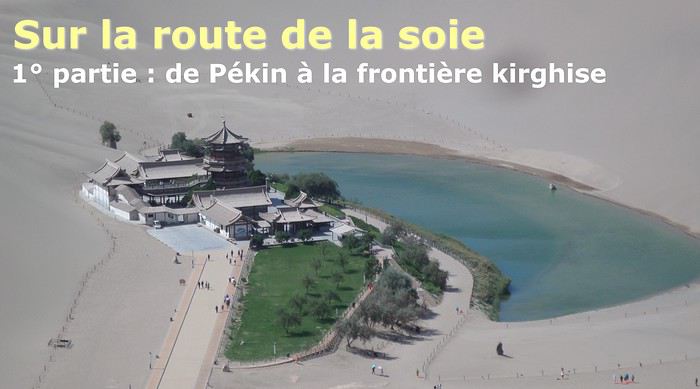
The Chinese Far West More than 30 years after my first trip to eastern China, I finally fulfilled an old dream: traveling solo from Beijing to the far west, discovering Xinjiang, the Uyghur people and the oppression they endure, the oases of Turpan and Kashgar, the Taklamakan Desert, the end of the Great Wall... The route was covered by train.
MENU PART 1: CHINA
1- Beijing (Jiankou) : the authentic Great Wall, without tourists 2- Cycling in Beijing, the best way to get around 3- Beijing : departure for the far west 4- Jiayuguan : getting by without English 5- Jiayuguan : scams and heritage 6- Dunhuang : abundance in the middle of the desert 7- Turpan : the Uyghurs under heavy surveillance 8- Kashgar : love at first sight for the old city 9- Kashgar : China’s recipe for controlling the populace 10- Tashkurgan : what on earth was I thinking going there! Kyrgyz border: a surreal epic Photo album from the 80s, contributions from other travelers (page 2)
1- JIANKOU Finding the authentic Great Wall, without tourists or a guide Friday, August 24, 2018 Thirty years later, I didn’t feel like revisiting the Great Wall at Badaling or any other overcrowded site. I chose to explore it at Jiankou, in its wildest, most authentic, and unrestored section, starting from a lost village deep in a valley—though it wasn’t *that* lost, since it had everything for communication.
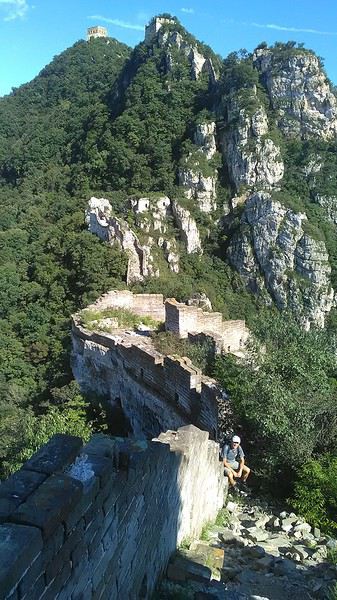
No need to pay for a taxi to get there—by timing it right, you can take the bus for just a few yuan. You have to get off at Xizhazi, the bus terminus. Be careful, there are only two buses a day in each direction. At the Xizhazi bus stop, I met a young couple who’d arrived with zero information about what to expect. We hiked the three of us toward the restored section of Mutianyu.
Still, be cautious With GPS and a topographic map (OpenTopoMap), you can set off without a problem or guide. The trail up to Jiankou is easy and well-marked. The trails down are too. But be careful—once you’re on the Wall, it’s real mountain hiking, with easy but dangerous climbing sections (over sheer drops). Not for amateurs or those afraid of heights! But what a reward. The Wall all to yourself, where it’s at its most daring. Truly mesmerizing.
More photos...
2- BEIJING The best way to get around the capital Sunday, August 26 The best way to explore the city is still by bike. Most are in a bike-share system, but you need to use an app—WeChat, the app that does everything, like monitoring your every move. No way I was installing that.
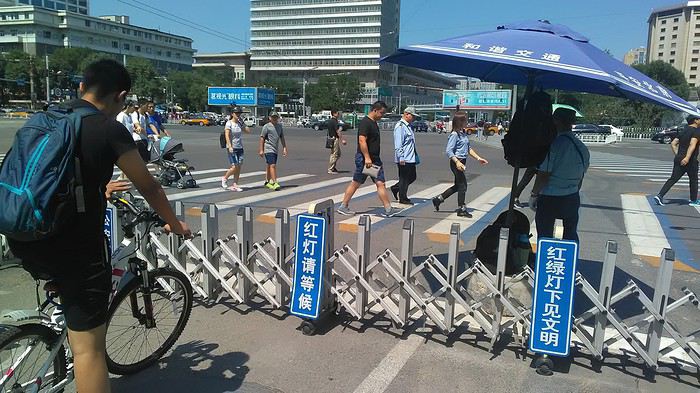
I found one at a rental shop near the hostel. The key is to quickly learn local traffic customs to minimize risks. Bike lanes are wide along the avenues.
But you still have to: - Watch out for anything parked on the bike paths—the most annoying are people napping or talking on the phone in their cars - Keep an eye on everything coming the wrong way—the list is long - The worst is right turns on red, which in Chinese traffic rules seem to have priority Once you get the hang of it, it’s fine. The city is huge but flat, so you can just wing it.
3- BEIJING By train to the far west Sunday, August 26 Beijing West Station is the size and operates like an airport. With your e-ticket from the agency, you first have to pick up your ticket at the special "English" counter, after passing through security. With your ticket in hand, you have to exit and enter through the boarding waiting area—not the platform—after a second security check.
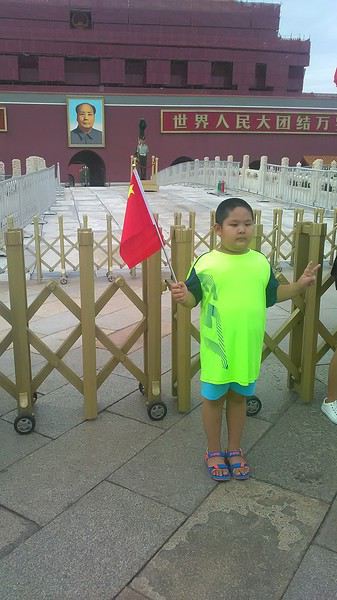 Then you find the right hall and wait for the sign to finally access the platform. In the end, it works pretty well given the incredible number of passengers to manage. Everywhere in Beijing, I saw that the Chinese have mastered crowd flow management.
Nice surprise: second-class carriages are clean, air-conditioned, and bright. Perfect, since I was in for 20 hours. One uniformed attendant per carriage, mobile meal service—luxury! Small downside: no luggage space. Hauling your suitcase up to the top bunk is quite a workout. I was in the middle, so it wasn’t too bad. The landscape, though, whether rural or urban, is pretty bleak. That should change once we leave the eastern plains.
Of course, I got my first police visit, with a thorough passport check and bag search. I was warned—going to the Chinese far west exposes you to this kind of hassle. But they were polite and respectful.
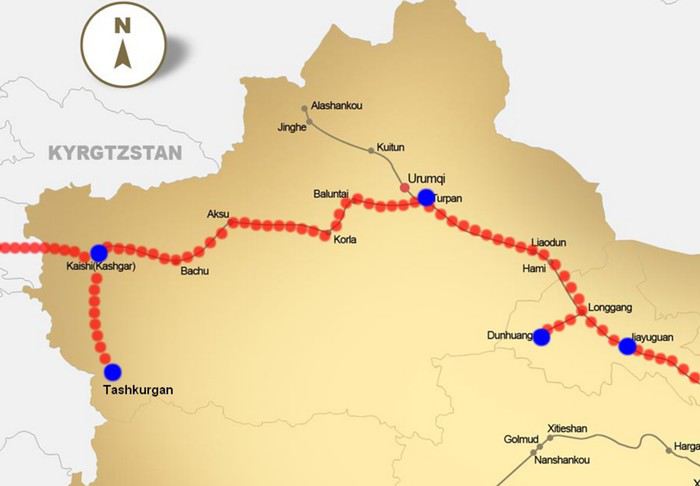 The Chinese Far West
4- JIAYUGUAN Getting by without English Monday, August 27 At the gates of two deserts (Gobi and Taklamakan) and at the foot of the Tibetan highlands, the Great Wall ends at Jiayuguan. Here, I found the deeper China I’d somewhat rediscovered during my bike ride, even if now everyone gets around on electric bikes and I’m no longer stared at like an alien.
Prices are nothing like Beijing: you can find a full meal for 2 €, and my bike cost 7 € for two days. Plus, few people speak English—neither the owner of the HI hostel where I stayed, nor the ticket sellers at the sites, let alone the servers at the small eateries where I ate. Everything is written in Chinese. So I had to use the little Chinese I know to communicate about essentials. It makes the locals laugh to see a European trying to speak their language, but it earns respect. With Google Translate’s help, I managed.
Rant: With their avenues blocked for construction for kilometers without warning, and new roads not yet on maps, I must’ve taken 15 km of detours. More photos...
5- JIAYUGUAN Scams and heritage Tuesday, August 28 The Great Wall doesn’t exactly end at the fort I visited yesterday but 10 km further, at the entrance to a river gorge at the foot of the mountains. All that’s left is a badly damaged tower (more like a mound of earth) and a section of clay wall, similar to the one I biked yesterday.
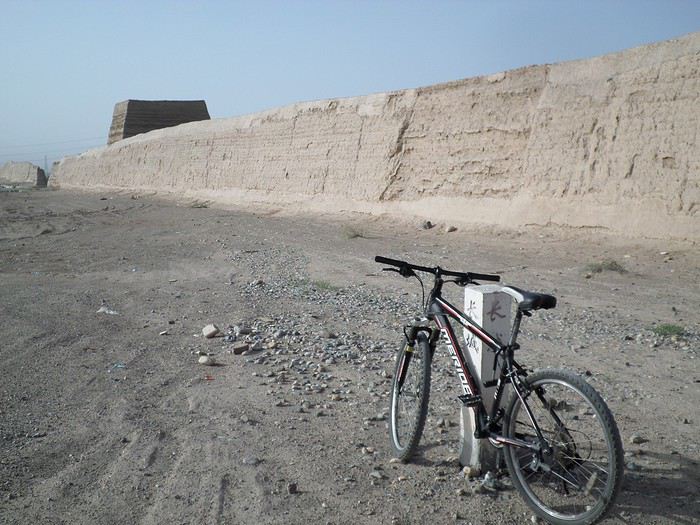
This morning, I hopped on my bike, determined to venture into the desert to see this highly symbolic site. First, you access it via a wide, brand-new road with not a soul in sight. Just before the site, I came across a grand welcome gate, very period-style, but it’s actually the inevitable toll booth.
Behind the gate, the road continues straight to the site, which you can see in the distance—at least 2 km away—the remains of the tower and wall. I had to leave my bike here. Fine. I went to the ticket counter and asked the price: 120 yuan! I couldn’t believe it—over 15 € for a simple mound of earth.
I showed my displeasure to the attendant, who couldn’t care less, and immediately turned back. 120 yuan—that’s the price for a new road, a fancy gate planted 2 km before the site just to force you to take a shuttle, and employees with nothing to do all day... Now I understand why I didn’t meet anyone!
Heritage China is a bit pricey Generally, sites are expensive for the country’s standard of living, but travelers are supposed to have money, so why hold back? I even gave up on the Forbidden City—reservations required days in advance (or on the black market at an impossible price). I prefer to keep the memory of my first visit, when entry must’ve cost a few dozen cents, and there were only a handful of visitors.
This morning, I took a taxi to see remarkable tombs of common people from the 3rd to 6th centuries. They’re small vaulted caves made of painted bricks, depicting scenes of daily life. Very pretty and moving. But even here, though the price was more reasonable, I was left wanting—only one of the 16 tombs is open to visitors, and it’s apparently not the most beautiful.
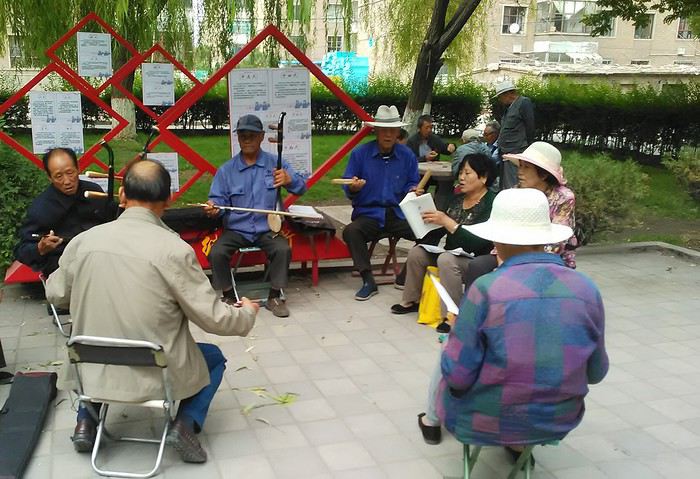
The authentic China—at least what’s left of it... Wandering the impersonal avenues of the city, you stumble upon a market. There, you still find traditional China—small shops with questionable hygiene, Go players, musicians, and even a dental prosthetist. The last refuge for those untouched by modernity. More photos...
6- DUNHUANG Abundance in the middle of the desert Wednesday, August 29 Well, I thought the landscape would be less bleak as I headed west. Nope. The only distraction in this expanse of dark, clayey sand is the forests of pylons and wind turbines, plus wild camels racing each other.
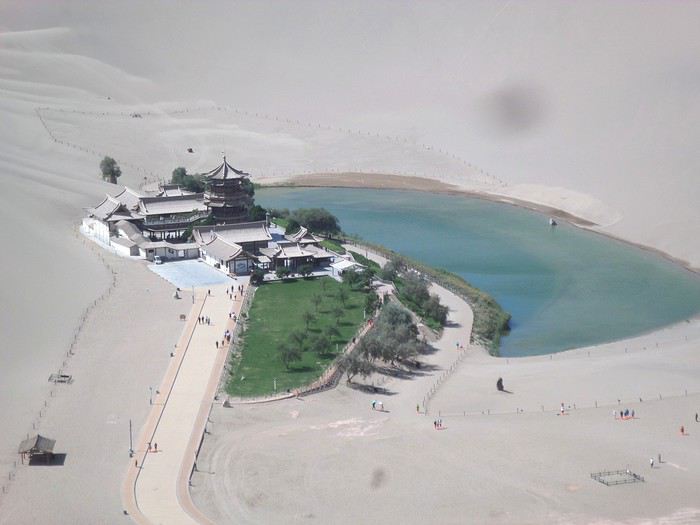 However, Dunhuang, the gateway to the Taklamakan, is by far the most pleasant Chinese city I know. There’s a real city center you can explore on foot. It’s hot but not unbearable, with a light, dry breeze. Much nicer than Beijing. The Han Chinese are still the majority, but the Muslim Uyghurs are more numerous, and the muezzin’s call to prayer echoes around the mosque.
The most surprising thing is the abundance and diversity of fruits and vegetables. You wonder how it all grows here. Well-irrigated, the desert sands are very fertile. Here, raisins have subtle, mysterious flavors, and the lamb really tastes like lamb.
Today, I visited the must-see Mingshashan, a dune complex next to which Pila is a molehill. The Basque Country, but covered in sand... More photos...
7- TURPAN The Uyghurs under heavy surveillance Friday, August 31 Surveillance cameras everywhere in the city, armed police stationed at intersections, in front of public buildings, at the entrance and inside tourist sites, police stations on every corner, patrols on foot or by car, khaki uniforms even for middle schoolers... here, the Han Chinese are in the minority, and you can feel it. Turpan feels like a city under siege.
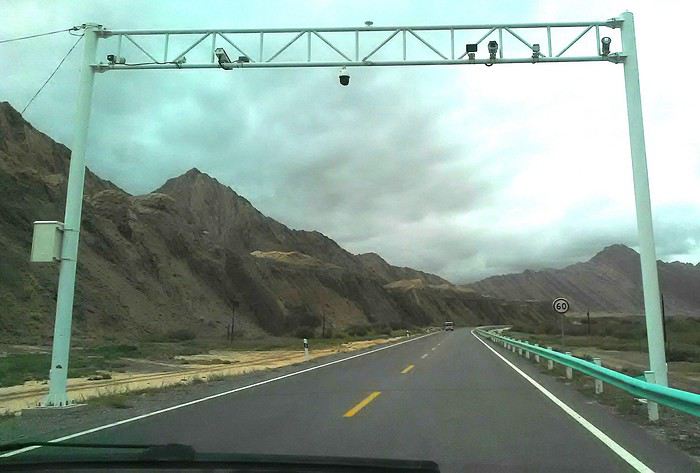
To enter the youth hostel where I stayed, there’s even a security gate, and the receptionist (a Han, like everyone in tourism) wears a bulletproof vest! Reassuring. Still, you don’t feel particularly threatened here, especially as a European. The troublemakers are the Chinese, not the Uyghurs. Generally, China is a very safe country for visitors.
Smile, you’re on camera! I was biking on an avenue when the car in front of me got flashed for driving slowly. I quickly understood why when I got flashed too.
Here, the official time is Beijing time, but it gets dark two hours later. It’ll be even worse in Kashgar. Trickier to manage: everything is displayed in Chinese and Arabic. Nothing in English. Choosing a menu is a shot in the dark. Apart from a few young Chinese, no one here speaks English, and my Chinese doesn’t seem very understandable...
Mogao, the end of the road for the Han Yesterday, near Dunhuang, I went to Mogao, a complex of decorated caves with Buddha sculptures and paintings. Stunning, but so crowded! Luckily, here in Turpan, Chinese tourists barely venture out. So I visited a Silk Road ghost town with only a handful of other visitors and under a howling wind.
The modern Chinese city is swallowing up the old Uyghur neighborhoods—only a museum-like district remains in the center, and pockets of resistance on the outskirts are doomed to disappear soon. More photos...
8- KASHGAR A (relative) love at first sight for the old city Sunday, September 2 After three overnight trains, here I am in the far west of China, nearly 4,000 km from the capital. Despite the omnipresent police and an old city preserved UNESCO-style, Kashgar is my Chinese love at first sight.
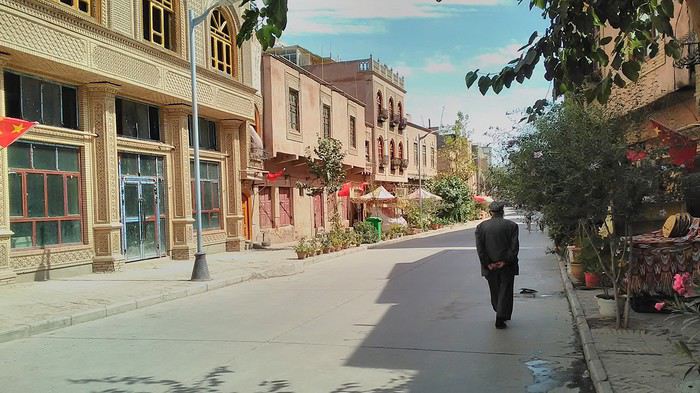
Finally, Chinese... well, sort of, because we’re in Uyghur territory here—a Turkic people with nothing culturally in common with the Han, the eastern Chinese. It started badly yesterday at Turfan station, where after three security gate passes, at least five passport checks, and a bag search, three adorable policewomen confiscated my antibacterial lotion because it had a flammable logo...
Then came the welcoming committee of armed cops at Kashgar station. Once all that was over, they left me alone—except you still have to go through security checks like everyone else to enter the old city, the bazaar, the livestock market... The further west you go, the more the siege mentality is evident. Luckily, the border isn’t far...
Despite the inevitable destruction-reconstruction, the city center has been well preserved. Thankfully, because it’s a very original style, a mix of local and colonial. I love it, even if it’s a bit too artificial, sanitized, and watered-down, and rather empty of residents. On the Silk Road, the city was famous for its great food. And it still is—rarely have I seen such richness and abundance of food! And not just scorpions or snakes. More photos...
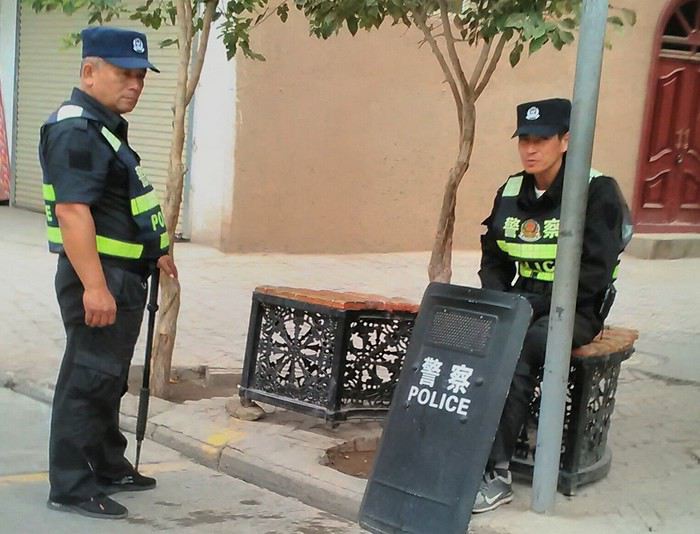
9- KASHGAR China’s recipe for controlling the populace Saturday, September 1 Xinjiang, along with Tibet, is a "sensitive" area of rebellion in the eyes of Chinese authorities. As a result, the state has these regions and their populations under total control. Tourists also feel the consequences, even if they’re not at risk of re-education camps.
 - Putting barbed wire and anti-ramming barriers around sensitive sites (schools, big hotels, government buildings...)
- Installing traffic surveillance gates with cameras and photo flashes (for all vehicles passing, including bikes) throughout the city and even in the countryside
- Posting uniformed guards with tasers, batons, or huge baseball bats every 100 meters
- Training the Han population (ethnic Chinese) in self-defense with sticks, preferably in the morning on the street. Men and women of all ages
- Starting school with the national anthem, doing military exercises, and receiving political indoctrination, all neatly lined up in the courtyard. (The dream school for any teacher)
- Placing a snitch in uniform (a pseudo-guard) in public gathering places, like youth hostels. Mine spends the day loafing around the courtyard
- Putting Chinese flags everywhere on the streets to remind everyone who’s in charge
- Installing security gates at every entrance to areas frequented by tourists (thanks for that) but not just there
- Never photographing cops, or else! I tried, but it’s not easy...
- Putting barbed wire and anti-ramming barriers around sensitive sites (schools, big hotels, government buildings...)
- Installing traffic surveillance gates with cameras and photo flashes (for all vehicles passing, including bikes) throughout the city and even in the countryside
- Posting uniformed guards with tasers, batons, or huge baseball bats every 100 meters
- Training the Han population (ethnic Chinese) in self-defense with sticks, preferably in the morning on the street. Men and women of all ages
- Starting school with the national anthem, doing military exercises, and receiving political indoctrination, all neatly lined up in the courtyard. (The dream school for any teacher)
- Placing a snitch in uniform (a pseudo-guard) in public gathering places, like youth hostels. Mine spends the day loafing around the courtyard
- Putting Chinese flags everywhere on the streets to remind everyone who’s in charge
- Installing security gates at every entrance to areas frequented by tourists (thanks for that) but not just there
- Never photographing cops, or else! I tried, but it’s not easy...
With all that, you can stroll around safely Not much crime! As for the amount the Chinese state spends to maintain such a system, it’s staggering! A third of the Han living in Xinjiang work in security. Today, I wandered freely around old Kashgar, which is quite large after all. More photos...
10- TASHKURGAN What on earth was I thinking going there! Wednesday, September 5 First, there’s the taxi—pretty crappy, with a driver who doesn’t speak a word of English and won’t stop smoking. Over six hours in that... shared with a completely out-of-it American.
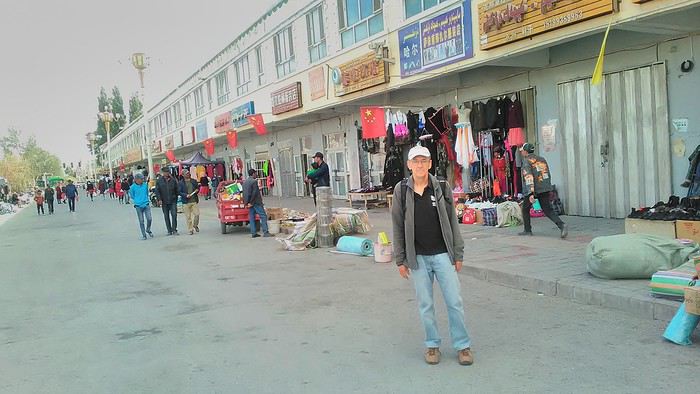
Then there are all the checkpoints along the way. I won’t go on—you know the drill by now.
After that, there’s Tashkurgan—a town with nothing to see, nothing to do. Deserted as soon as night falls. There’s this huge youth hostel and a few lost Chinese tapping away on their smartphones, chain-smoking. This lost American-European crowd, swapping tips on how to enter Pakistan or Tajikistan.
Luckily, there’s the Chinese Pamir Highway, lined with peaks over 7,000m. There’s the feeling of no longer being in China, with a population whose features are Middle Eastern. And these Tajik women with their stunning hairstyles and vibrant costumes. There’s the fact of having reached the westernmost Chinese city, far from crowds and tourist sites. A sort of end of the world. More photos...
11- KYRGYZ BORDER A surreal epic Thursday, September 6 The road from Kashgar to the Kyrgyzstan border is a little over 200 km and passes through beautiful landscapes of colorful, desert-like mountains with acrobatic folds. That’s the bucolic part of the trip.
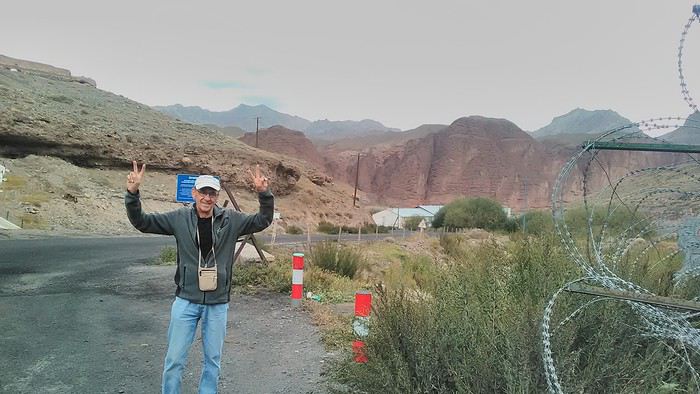 Yesterday, I managed to gather four people to rent a minibus to reach the border more easily: a Spaniard and an Argentine I’d already met in Turpan, and two New Zealanders who responded to the ad left at the hostel.
Absurdity and paranoia of Chinese authorities The highlight was crossing the town of Wuqia, 50 km past Kashgar. After tallying up with my fellow sufferers, we must’ve passed about ten checkpoints with: - Passport checks: 14 times, sometimes by two cops side by side - Bag checks: 4 times - Smartphone checks: 2 times, with deletion of "non-compliant" photos, and registration of your IMEI in the exit log!... Absurd and surreal at the same time, since my camera stayed in my bag, my apps are in French, and my photos have been online for ages...
With all that, we arrived just as the last checkpoint before the no man’s land marking the border between the two countries was on lunch break. And bam! Another 1.5-hour wait, alongside truckers who were much more used to this than we were.
What to think? The cops themselves aren’t fooled. They play the role they’re asked to, but sometimes you can coax a smile out of them—they realize how ridiculous the situation is.
What’s the point? That’s the big question my companions and I were tempted to answer with "to piss people off." To show you your place isn’t here, but with the other tourists, over there in the east, in Shanghai, Xi’an, or Guangzhou.
As for you, a traveler from a democratic country, you really experience this as aggression, humiliation, a violation of your private space. And yet, I’m respected, they speak to me properly. Today, I better understand what a Palestinian or a citizen of an occupied country might feel daily. A unique experience! Thanks, China.
And to top it off, the cherry on the cake! It’s still this glowing button you press to rate your passage after clearing the last obstacle before the exit stamp. I was so surprised it turned off before I could react. The Spaniard, with great humor and irony, had time to vote "excellent." In the end, he wasn’t wrong—you can hardly do better!
PS: I ditched my buddies at the border. They didn’t want to pay for a taxi to continue. So I took a direct taxi to Osh. The first 100 km are fabulous. I couldn’t take many photos, but I’ll be back on Monday to go to Tajikistan.
More photos...
The rest of the Silk Road, Part 2, in these travel journals: Kyrgyzstan, Tajikistan, Uzbekistan.
The Chinese Far West More than 30 years after my first trip to eastern China, I finally fulfilled an old dream: traveling solo from Beijing to the far west, discovering Xinjiang, the Uyghur people and the oppression they endure, the oases of Turpan and Kashgar, the Taklamakan Desert, the end of the Great Wall... The route was covered by train.
MENU PART 1: CHINA
1- Beijing (Jiankou) : the authentic Great Wall, without tourists 2- Cycling in Beijing, the best way to get around 3- Beijing : departure for the far west 4- Jiayuguan : getting by without English 5- Jiayuguan : scams and heritage 6- Dunhuang : abundance in the middle of the desert 7- Turpan : the Uyghurs under heavy surveillance 8- Kashgar : love at first sight for the old city 9- Kashgar : China’s recipe for controlling the populace 10- Tashkurgan : what on earth was I thinking going there! Kyrgyz border: a surreal epic Photo album from the 80s, contributions from other travelers (page 2)
1- JIANKOU Finding the authentic Great Wall, without tourists or a guide Friday, August 24, 2018 Thirty years later, I didn’t feel like revisiting the Great Wall at Badaling or any other overcrowded site. I chose to explore it at Jiankou, in its wildest, most authentic, and unrestored section, starting from a lost village deep in a valley—though it wasn’t *that* lost, since it had everything for communication.
No need to pay for a taxi to get there—by timing it right, you can take the bus for just a few yuan. You have to get off at Xizhazi, the bus terminus. Be careful, there are only two buses a day in each direction. At the Xizhazi bus stop, I met a young couple who’d arrived with zero information about what to expect. We hiked the three of us toward the restored section of Mutianyu.
Still, be cautious With GPS and a topographic map (OpenTopoMap), you can set off without a problem or guide. The trail up to Jiankou is easy and well-marked. The trails down are too. But be careful—once you’re on the Wall, it’s real mountain hiking, with easy but dangerous climbing sections (over sheer drops). Not for amateurs or those afraid of heights! But what a reward. The Wall all to yourself, where it’s at its most daring. Truly mesmerizing.
More photos...
2- BEIJING The best way to get around the capital Sunday, August 26 The best way to explore the city is still by bike. Most are in a bike-share system, but you need to use an app—WeChat, the app that does everything, like monitoring your every move. No way I was installing that.
I found one at a rental shop near the hostel. The key is to quickly learn local traffic customs to minimize risks. Bike lanes are wide along the avenues.
But you still have to: - Watch out for anything parked on the bike paths—the most annoying are people napping or talking on the phone in their cars - Keep an eye on everything coming the wrong way—the list is long - The worst is right turns on red, which in Chinese traffic rules seem to have priority Once you get the hang of it, it’s fine. The city is huge but flat, so you can just wing it.
3- BEIJING By train to the far west Sunday, August 26 Beijing West Station is the size and operates like an airport. With your e-ticket from the agency, you first have to pick up your ticket at the special "English" counter, after passing through security. With your ticket in hand, you have to exit and enter through the boarding waiting area—not the platform—after a second security check.
Then you find the right hall and wait for the sign to finally access the platform. In the end, it works pretty well given the incredible number of passengers to manage. Everywhere in Beijing, I saw that the Chinese have mastered crowd flow management.Nice surprise: second-class carriages are clean, air-conditioned, and bright. Perfect, since I was in for 20 hours. One uniformed attendant per carriage, mobile meal service—luxury! Small downside: no luggage space. Hauling your suitcase up to the top bunk is quite a workout. I was in the middle, so it wasn’t too bad. The landscape, though, whether rural or urban, is pretty bleak. That should change once we leave the eastern plains.
Of course, I got my first police visit, with a thorough passport check and bag search. I was warned—going to the Chinese far west exposes you to this kind of hassle. But they were polite and respectful.
The Chinese Far West4- JIAYUGUAN Getting by without English Monday, August 27 At the gates of two deserts (Gobi and Taklamakan) and at the foot of the Tibetan highlands, the Great Wall ends at Jiayuguan. Here, I found the deeper China I’d somewhat rediscovered during my bike ride, even if now everyone gets around on electric bikes and I’m no longer stared at like an alien.
Prices are nothing like Beijing: you can find a full meal for 2 €, and my bike cost 7 € for two days. Plus, few people speak English—neither the owner of the HI hostel where I stayed, nor the ticket sellers at the sites, let alone the servers at the small eateries where I ate. Everything is written in Chinese. So I had to use the little Chinese I know to communicate about essentials. It makes the locals laugh to see a European trying to speak their language, but it earns respect. With Google Translate’s help, I managed.
Rant: With their avenues blocked for construction for kilometers without warning, and new roads not yet on maps, I must’ve taken 15 km of detours. More photos...
5- JIAYUGUAN Scams and heritage Tuesday, August 28 The Great Wall doesn’t exactly end at the fort I visited yesterday but 10 km further, at the entrance to a river gorge at the foot of the mountains. All that’s left is a badly damaged tower (more like a mound of earth) and a section of clay wall, similar to the one I biked yesterday.
This morning, I hopped on my bike, determined to venture into the desert to see this highly symbolic site. First, you access it via a wide, brand-new road with not a soul in sight. Just before the site, I came across a grand welcome gate, very period-style, but it’s actually the inevitable toll booth.
Behind the gate, the road continues straight to the site, which you can see in the distance—at least 2 km away—the remains of the tower and wall. I had to leave my bike here. Fine. I went to the ticket counter and asked the price: 120 yuan! I couldn’t believe it—over 15 € for a simple mound of earth.
I showed my displeasure to the attendant, who couldn’t care less, and immediately turned back. 120 yuan—that’s the price for a new road, a fancy gate planted 2 km before the site just to force you to take a shuttle, and employees with nothing to do all day... Now I understand why I didn’t meet anyone!
Heritage China is a bit pricey Generally, sites are expensive for the country’s standard of living, but travelers are supposed to have money, so why hold back? I even gave up on the Forbidden City—reservations required days in advance (or on the black market at an impossible price). I prefer to keep the memory of my first visit, when entry must’ve cost a few dozen cents, and there were only a handful of visitors.
This morning, I took a taxi to see remarkable tombs of common people from the 3rd to 6th centuries. They’re small vaulted caves made of painted bricks, depicting scenes of daily life. Very pretty and moving. But even here, though the price was more reasonable, I was left wanting—only one of the 16 tombs is open to visitors, and it’s apparently not the most beautiful.
The authentic China—at least what’s left of it... Wandering the impersonal avenues of the city, you stumble upon a market. There, you still find traditional China—small shops with questionable hygiene, Go players, musicians, and even a dental prosthetist. The last refuge for those untouched by modernity. More photos...
6- DUNHUANG Abundance in the middle of the desert Wednesday, August 29 Well, I thought the landscape would be less bleak as I headed west. Nope. The only distraction in this expanse of dark, clayey sand is the forests of pylons and wind turbines, plus wild camels racing each other.
However, Dunhuang, the gateway to the Taklamakan, is by far the most pleasant Chinese city I know. There’s a real city center you can explore on foot. It’s hot but not unbearable, with a light, dry breeze. Much nicer than Beijing. The Han Chinese are still the majority, but the Muslim Uyghurs are more numerous, and the muezzin’s call to prayer echoes around the mosque.The most surprising thing is the abundance and diversity of fruits and vegetables. You wonder how it all grows here. Well-irrigated, the desert sands are very fertile. Here, raisins have subtle, mysterious flavors, and the lamb really tastes like lamb.
Today, I visited the must-see Mingshashan, a dune complex next to which Pila is a molehill. The Basque Country, but covered in sand... More photos...
7- TURPAN The Uyghurs under heavy surveillance Friday, August 31 Surveillance cameras everywhere in the city, armed police stationed at intersections, in front of public buildings, at the entrance and inside tourist sites, police stations on every corner, patrols on foot or by car, khaki uniforms even for middle schoolers... here, the Han Chinese are in the minority, and you can feel it. Turpan feels like a city under siege.
To enter the youth hostel where I stayed, there’s even a security gate, and the receptionist (a Han, like everyone in tourism) wears a bulletproof vest! Reassuring. Still, you don’t feel particularly threatened here, especially as a European. The troublemakers are the Chinese, not the Uyghurs. Generally, China is a very safe country for visitors.
Smile, you’re on camera! I was biking on an avenue when the car in front of me got flashed for driving slowly. I quickly understood why when I got flashed too.
Here, the official time is Beijing time, but it gets dark two hours later. It’ll be even worse in Kashgar. Trickier to manage: everything is displayed in Chinese and Arabic. Nothing in English. Choosing a menu is a shot in the dark. Apart from a few young Chinese, no one here speaks English, and my Chinese doesn’t seem very understandable...
Mogao, the end of the road for the Han Yesterday, near Dunhuang, I went to Mogao, a complex of decorated caves with Buddha sculptures and paintings. Stunning, but so crowded! Luckily, here in Turpan, Chinese tourists barely venture out. So I visited a Silk Road ghost town with only a handful of other visitors and under a howling wind.
The modern Chinese city is swallowing up the old Uyghur neighborhoods—only a museum-like district remains in the center, and pockets of resistance on the outskirts are doomed to disappear soon. More photos...
8- KASHGAR A (relative) love at first sight for the old city Sunday, September 2 After three overnight trains, here I am in the far west of China, nearly 4,000 km from the capital. Despite the omnipresent police and an old city preserved UNESCO-style, Kashgar is my Chinese love at first sight.
Finally, Chinese... well, sort of, because we’re in Uyghur territory here—a Turkic people with nothing culturally in common with the Han, the eastern Chinese. It started badly yesterday at Turfan station, where after three security gate passes, at least five passport checks, and a bag search, three adorable policewomen confiscated my antibacterial lotion because it had a flammable logo...
Then came the welcoming committee of armed cops at Kashgar station. Once all that was over, they left me alone—except you still have to go through security checks like everyone else to enter the old city, the bazaar, the livestock market... The further west you go, the more the siege mentality is evident. Luckily, the border isn’t far...
Despite the inevitable destruction-reconstruction, the city center has been well preserved. Thankfully, because it’s a very original style, a mix of local and colonial. I love it, even if it’s a bit too artificial, sanitized, and watered-down, and rather empty of residents. On the Silk Road, the city was famous for its great food. And it still is—rarely have I seen such richness and abundance of food! And not just scorpions or snakes. More photos...
9- KASHGAR China’s recipe for controlling the populace Saturday, September 1 Xinjiang, along with Tibet, is a "sensitive" area of rebellion in the eyes of Chinese authorities. As a result, the state has these regions and their populations under total control. Tourists also feel the consequences, even if they’re not at risk of re-education camps.
- Putting barbed wire and anti-ramming barriers around sensitive sites (schools, big hotels, government buildings...)
- Installing traffic surveillance gates with cameras and photo flashes (for all vehicles passing, including bikes) throughout the city and even in the countryside
- Posting uniformed guards with tasers, batons, or huge baseball bats every 100 meters
- Training the Han population (ethnic Chinese) in self-defense with sticks, preferably in the morning on the street. Men and women of all ages
- Starting school with the national anthem, doing military exercises, and receiving political indoctrination, all neatly lined up in the courtyard. (The dream school for any teacher)
- Placing a snitch in uniform (a pseudo-guard) in public gathering places, like youth hostels. Mine spends the day loafing around the courtyard
- Putting Chinese flags everywhere on the streets to remind everyone who’s in charge
- Installing security gates at every entrance to areas frequented by tourists (thanks for that) but not just there
- Never photographing cops, or else! I tried, but it’s not easy...With all that, you can stroll around safely Not much crime! As for the amount the Chinese state spends to maintain such a system, it’s staggering! A third of the Han living in Xinjiang work in security. Today, I wandered freely around old Kashgar, which is quite large after all. More photos...
10- TASHKURGAN What on earth was I thinking going there! Wednesday, September 5 First, there’s the taxi—pretty crappy, with a driver who doesn’t speak a word of English and won’t stop smoking. Over six hours in that... shared with a completely out-of-it American.
Then there are all the checkpoints along the way. I won’t go on—you know the drill by now.
After that, there’s Tashkurgan—a town with nothing to see, nothing to do. Deserted as soon as night falls. There’s this huge youth hostel and a few lost Chinese tapping away on their smartphones, chain-smoking. This lost American-European crowd, swapping tips on how to enter Pakistan or Tajikistan.
Luckily, there’s the Chinese Pamir Highway, lined with peaks over 7,000m. There’s the feeling of no longer being in China, with a population whose features are Middle Eastern. And these Tajik women with their stunning hairstyles and vibrant costumes. There’s the fact of having reached the westernmost Chinese city, far from crowds and tourist sites. A sort of end of the world. More photos...
11- KYRGYZ BORDER A surreal epic Thursday, September 6 The road from Kashgar to the Kyrgyzstan border is a little over 200 km and passes through beautiful landscapes of colorful, desert-like mountains with acrobatic folds. That’s the bucolic part of the trip.
Yesterday, I managed to gather four people to rent a minibus to reach the border more easily: a Spaniard and an Argentine I’d already met in Turpan, and two New Zealanders who responded to the ad left at the hostel.Absurdity and paranoia of Chinese authorities The highlight was crossing the town of Wuqia, 50 km past Kashgar. After tallying up with my fellow sufferers, we must’ve passed about ten checkpoints with: - Passport checks: 14 times, sometimes by two cops side by side - Bag checks: 4 times - Smartphone checks: 2 times, with deletion of "non-compliant" photos, and registration of your IMEI in the exit log!... Absurd and surreal at the same time, since my camera stayed in my bag, my apps are in French, and my photos have been online for ages...
With all that, we arrived just as the last checkpoint before the no man’s land marking the border between the two countries was on lunch break. And bam! Another 1.5-hour wait, alongside truckers who were much more used to this than we were.
What to think? The cops themselves aren’t fooled. They play the role they’re asked to, but sometimes you can coax a smile out of them—they realize how ridiculous the situation is.
What’s the point? That’s the big question my companions and I were tempted to answer with "to piss people off." To show you your place isn’t here, but with the other tourists, over there in the east, in Shanghai, Xi’an, or Guangzhou.
As for you, a traveler from a democratic country, you really experience this as aggression, humiliation, a violation of your private space. And yet, I’m respected, they speak to me properly. Today, I better understand what a Palestinian or a citizen of an occupied country might feel daily. A unique experience! Thanks, China.
And to top it off, the cherry on the cake! It’s still this glowing button you press to rate your passage after clearing the last obstacle before the exit stamp. I was so surprised it turned off before I could react. The Spaniard, with great humor and irony, had time to vote "excellent." In the end, he wasn’t wrong—you can hardly do better!
PS: I ditched my buddies at the border. They didn’t want to pay for a taxi to continue. So I took a direct taxi to Osh. The first 100 km are fabulous. I couldn’t take many photos, but I’ll be back on Monday to go to Tajikistan.
More photos...
The rest of the Silk Road, Part 2, in these travel journals: Kyrgyzstan, Tajikistan, Uzbekistan.
Je rentre d'un voyage de 3 semaine a l'etranger. J'ai parler avec beaucoup de touriste etranger, Japonais, Américain, australien, New zelandais, Chinois et tous mon fait la même reflexion sur leur sejour touristique en france. PARIS est considérer comme une ville dangereuse il se sont senti en insécuritée.Certain de leur compatriote se sont fait dépouller dans la rue et victime de vol par les pic poket dans le metro. Ils considèrent les français peux aimable en général.
Bonjour,
Je souhite partir m'établir en France, je ne sais absolument paas par ou commencer mes demarches, c'est sur que je vais devoir travailler la bas. Idealement, je commencerait par un petit boulot puit j'aimerais eventuellement trouver dans mon domaine ( en ressources humaines) comment ca fonctionne? Quelqu'un peut me donner des pistes????
merci
merci
Pour l'instant ça ne concerne que les vols en codeshare avec Finnair, mais ce n'est qu'un début...
A compter du 12 janvier 2010, les boissons alcoolisées seront payantes en classe économique sur les vols Europe de la compagnie Finnair y compris sur les vols AF Marketing / AY Operating, c'est notamment le cas sur la ligne Paris-Helsinki :
- Vin rouge et vin blanc ..................5 EUR - Bière .......................................... 4 EUR - Champagne .................................5 EUR - Boissons alcoolisées plus fortes .... 5 EUR
A compter du 12 janvier 2010, les boissons alcoolisées seront payantes en classe économique sur les vols Europe de la compagnie Finnair y compris sur les vols AF Marketing / AY Operating, c'est notamment le cas sur la ligne Paris-Helsinki :
- Vin rouge et vin blanc ..................5 EUR - Bière .......................................... 4 EUR - Champagne .................................5 EUR - Boissons alcoolisées plus fortes .... 5 EUR
Un Australien écope de 3 ans de prison pour lèse-majesté Un auteur australien a été condamné à trois ans de prison lundi en Thaïlande pour avoir insulté la famille royale dans un roman paru en 2005 et dont seuls sept exemplaires s'étaient vendus.  Harry Nicolaides a été condamné à trois ans de prison. (Photo: AP Photo)
Les étrangers sont rarement punis dans ce pays qui traque en revanche les détracteurs de la monarchie, notamment sur le Web.
Harry Nicolaides, 41 ans, avait été arrêté le 31 août à l'aéroport international de Bangkok alors qu'il s'apprêtait à quitter le pays sans savoir qu'il était recherché, selon des organisations de défense des droits de l'Homme. «Ca ne peut pas être réel. On se croirait dans un mauvais rêve», a déclaré l'écrivain, les larmes aux yeux, aux journalistes. Il a présenté des excuses et a plaidé coupable, ce qui lui a permis de voir sa sentence ramenée à trois ans au lieu de six.
Le tribunal l'a déclaré coupable d'avoir «suggéré l'existence d'un abus de pouvoir royal» dans un passage de son livre traitant de la vie personnelle d'un prince fictif.
Le crime de lèse-majesté peut valoir 3 à 15 ans de prison à son auteur. En 2007, un Suisse avait écopé de dix ans derrière les barreaux pour avoir abîmé des portraits du roi un jour d'ivresse. L'homme avait été gracié après avoir purgé environ un mois de sa peine.Le sujet est devenu particulièrement sensible en Thaïlande ces dernières années à mesure que se pose de façon de plus en plus pressante la question de la succession du roi Bhumibol Adulyadej, âgé de 81 ans et révéré comme un dieu. Monté sur le trône le 5 mai 1950, il est le plus ancien monarque régnant du monde.
Harry Nicolaides a été condamné à trois ans de prison. (Photo: AP Photo)
Les étrangers sont rarement punis dans ce pays qui traque en revanche les détracteurs de la monarchie, notamment sur le Web.
Harry Nicolaides, 41 ans, avait été arrêté le 31 août à l'aéroport international de Bangkok alors qu'il s'apprêtait à quitter le pays sans savoir qu'il était recherché, selon des organisations de défense des droits de l'Homme. «Ca ne peut pas être réel. On se croirait dans un mauvais rêve», a déclaré l'écrivain, les larmes aux yeux, aux journalistes. Il a présenté des excuses et a plaidé coupable, ce qui lui a permis de voir sa sentence ramenée à trois ans au lieu de six.
Le tribunal l'a déclaré coupable d'avoir «suggéré l'existence d'un abus de pouvoir royal» dans un passage de son livre traitant de la vie personnelle d'un prince fictif.
Le crime de lèse-majesté peut valoir 3 à 15 ans de prison à son auteur. En 2007, un Suisse avait écopé de dix ans derrière les barreaux pour avoir abîmé des portraits du roi un jour d'ivresse. L'homme avait été gracié après avoir purgé environ un mois de sa peine.Le sujet est devenu particulièrement sensible en Thaïlande ces dernières années à mesure que se pose de façon de plus en plus pressante la question de la succession du roi Bhumibol Adulyadej, âgé de 81 ans et révéré comme un dieu. Monté sur le trône le 5 mai 1950, il est le plus ancien monarque régnant du monde.
source: www.lematin.ch
Harry Nicolaides a été condamné à trois ans de prison. (Photo: AP Photo)
Les étrangers sont rarement punis dans ce pays qui traque en revanche les détracteurs de la monarchie, notamment sur le Web.
Harry Nicolaides, 41 ans, avait été arrêté le 31 août à l'aéroport international de Bangkok alors qu'il s'apprêtait à quitter le pays sans savoir qu'il était recherché, selon des organisations de défense des droits de l'Homme. «Ca ne peut pas être réel. On se croirait dans un mauvais rêve», a déclaré l'écrivain, les larmes aux yeux, aux journalistes. Il a présenté des excuses et a plaidé coupable, ce qui lui a permis de voir sa sentence ramenée à trois ans au lieu de six.
Le tribunal l'a déclaré coupable d'avoir «suggéré l'existence d'un abus de pouvoir royal» dans un passage de son livre traitant de la vie personnelle d'un prince fictif.
Le crime de lèse-majesté peut valoir 3 à 15 ans de prison à son auteur. En 2007, un Suisse avait écopé de dix ans derrière les barreaux pour avoir abîmé des portraits du roi un jour d'ivresse. L'homme avait été gracié après avoir purgé environ un mois de sa peine.Le sujet est devenu particulièrement sensible en Thaïlande ces dernières années à mesure que se pose de façon de plus en plus pressante la question de la succession du roi Bhumibol Adulyadej, âgé de 81 ans et révéré comme un dieu. Monté sur le trône le 5 mai 1950, il est le plus ancien monarque régnant du monde.source: www.lematin.ch
bonjour à tous,
est ce qu'il y a des bons plans pour se faire surclasser chez Air France sur des vols comme Paris - Fort de France par exemple ??? Merci pour vos réponses
est ce qu'il y a des bons plans pour se faire surclasser chez Air France sur des vols comme Paris - Fort de France par exemple ??? Merci pour vos réponses
Bonjour à tous,
je reviens de 2 mois de voyage où j'ai pris 12 vols différents : Air France / Delta / Hawaiian Air Line.
Je suis attaché à Air France en tant que compagnie nationale et "joue le jeu" de la fidélité avec Flying Blue mais je dois reconnaître que les prestations des PNC en classe éco me déçoivent. Peut-être ai-je une attente trop haute de la compagnie nationale ? en classe éco ?
Je suis rentré ce jour d'un vol JFK - CDG en A380 et j'ai bien senti que les PNC font leur job mais sont assez peu orientés vers le fait de faire ressentir au client qu'il est "important". Je me permets d'écrire cela car je l'ai beaucoup vu sur les autres compagnies et dans les entreprises aux USA (restaurants par exemple), cela ne veut pas dire pour autant qu'on lèche les bottes des clients.
Ce soir, j'étais sur le pont supérieur, en bout de classe éco. Mon plateau repas arrive en dernier et je n'ai pas mon souhait de plat. Ce n'est pas un drame, je dîne ! Mais je prends mon temps, je discute avec la passagère à côté de moi et les plateaux commencent à repartir à l'arrière et là, un échange démarre avec un PNC : PCN "vous en êtes-où avec votre plateau ?" Moi "Pourquoi une telle question ?" PNC "pour savoir" Moi "je dîne et j'apprécie mon repas"
Remarque : le PNC était passé avant, m'enlever ma bouteille de vin, alors qu'elle n'était pas terminée.
La passagère à côté de moi souhaite un fromage en plus, il n'y en a plus. Réponse d'un autre PNC "nous avons juste le nombre de plateaux".
Bref, j'ai bien senti que je ne respectais pas le temps du repas, que je dépassais de 10 minutes et que cela allait les déranger dans leur propre repas, quand ils se mettent au fond de l'appareil, rideaux fermés.
Idem en cours du voyage, pour demander un verre d'eau. Il faut passer le bout de son museau à travers le rideau qui est fermé.
Cette sensation est assez désagréable car j'ai le sentiment d'être traité comme du bétail, que l'on me nourrit certes avec une coupe de champagne mais néanmoins comme du bétail. On porte une jolie tenue, on sent bon mais j'ai le sentiment que le fond n'y est pas. Aux USA, ils vendent leur nourriture c'est vrai et il n'y a rien à manger mais lorsqu'ils vous servent à boire, j'ai eu le ressenti qu'ils étaient plus souriants et nous laissait le temps, pour que l'on se sente bien.
Le temps alloué au repas semble également être strict, chez AF.
Mais peut-être que j'en demande trop ?
je reviens de 2 mois de voyage où j'ai pris 12 vols différents : Air France / Delta / Hawaiian Air Line.
Je suis attaché à Air France en tant que compagnie nationale et "joue le jeu" de la fidélité avec Flying Blue mais je dois reconnaître que les prestations des PNC en classe éco me déçoivent. Peut-être ai-je une attente trop haute de la compagnie nationale ? en classe éco ?
Je suis rentré ce jour d'un vol JFK - CDG en A380 et j'ai bien senti que les PNC font leur job mais sont assez peu orientés vers le fait de faire ressentir au client qu'il est "important". Je me permets d'écrire cela car je l'ai beaucoup vu sur les autres compagnies et dans les entreprises aux USA (restaurants par exemple), cela ne veut pas dire pour autant qu'on lèche les bottes des clients.
Ce soir, j'étais sur le pont supérieur, en bout de classe éco. Mon plateau repas arrive en dernier et je n'ai pas mon souhait de plat. Ce n'est pas un drame, je dîne ! Mais je prends mon temps, je discute avec la passagère à côté de moi et les plateaux commencent à repartir à l'arrière et là, un échange démarre avec un PNC : PCN "vous en êtes-où avec votre plateau ?" Moi "Pourquoi une telle question ?" PNC "pour savoir" Moi "je dîne et j'apprécie mon repas"
Remarque : le PNC était passé avant, m'enlever ma bouteille de vin, alors qu'elle n'était pas terminée.
La passagère à côté de moi souhaite un fromage en plus, il n'y en a plus. Réponse d'un autre PNC "nous avons juste le nombre de plateaux".
Bref, j'ai bien senti que je ne respectais pas le temps du repas, que je dépassais de 10 minutes et que cela allait les déranger dans leur propre repas, quand ils se mettent au fond de l'appareil, rideaux fermés.
Idem en cours du voyage, pour demander un verre d'eau. Il faut passer le bout de son museau à travers le rideau qui est fermé.
Cette sensation est assez désagréable car j'ai le sentiment d'être traité comme du bétail, que l'on me nourrit certes avec une coupe de champagne mais néanmoins comme du bétail. On porte une jolie tenue, on sent bon mais j'ai le sentiment que le fond n'y est pas. Aux USA, ils vendent leur nourriture c'est vrai et il n'y a rien à manger mais lorsqu'ils vous servent à boire, j'ai eu le ressenti qu'ils étaient plus souriants et nous laissait le temps, pour que l'on se sente bien.
Le temps alloué au repas semble également être strict, chez AF.
Mais peut-être que j'en demande trop ?
Une personne vient de recevoir ce courrier:
Ivry sur Seine, le 12 Août 2009
Monsieur,
Le fait de proposer à la vente tout ou partie de vos Miles sur Internet ( Annonce N° ******, sur le site www.eBay.fr, ainsi que sur le site "voyageForum.com" sous le pseudonyme "*****") est en complète contradiction avec les termes des Contions Générales qui régissent le programme auquel vous avez souscrit.
Nous vous rappelons que de tels agissements sont contraires à l’article1.4.7 des Conditions Générales du Programme, qui stipule: 1.4.7 "La vente, l’achat, le courtage, la revente, le troc ou l’échange de Miles-Statut et de Miles-Prime, de billets primes ou bons en l’échange d’une quelconque contrepartie sont interdits. Les contrevenants, y compris tout passager utilisant une Prime achetée ou troquée, pourront être tenus de payer des dommages et intérêts ainsi que les frais de justice. Les Miles-Statut, les Miles-Prime et les Primes n’ont pas de valeur marchande et ne peuvent en aucun cas être convertis en argent."
A ce titre, et par application de l'article 1.4.8 de ces mêmes Conditions Générales qui stipule, 1.4.8 "La violation des conditions de transport ou des conditions tarifaires d’AIR FRANCE, de KLM, ou de tous partenaires Aériens – SkyTeam y compris -, des conditions générales des Partenaires Non-Aériens, la violation grave des Conditions Générales, l’utilisation abusive du Programme - notamment le non-respect des politiques et procédures du programme -, la vente ou le troc de Primes ou de billets, et toute fausse déclaration de faits relativement aux présentes, tout comportement répréhensible - notamment tout comportement fâcheux ou malveillant à l’égard de tout employé d’AIR FRANCE, KLM ou de leurs Partenaires, tout comportement indiscipliné à bord ou dans les salons, ou tout refus de suivre les instructions d’un employé -, pourront entraîner l’annulation du compte du Membre et l’exclusion consécutive du Programme, la confiscation de la totalité des Miles-Statut et des Miles-Prime accumulés et l’annulation des Primes antérieurement émises mais non utilisées." nous sommes au regret de vous informer de la fermeture définitive de votre compte Flying Blue et de vous exclure du Programme dès à présent ainsi que pour toute adhésion ultérieure. Nous vous demandons également de bien vouloir nous restituer par courrier votre carte d'adhérent dans les meilleurs délais, à l'adresse indiquée ci-après, à l'attention du Service Prévention des Fraudes.
Nous vous laissons le soin d'alerter l'acheteur du billet prime N°********- Réf dossier ******-, de la suspension effective, et de l'invalidité qui en découle, du titre de transport aux motifs ci-dessus évoqués.
Nous vous prions d'agréer, Monsieur, l'expression de nos plus cordiales salutations.
Pour le service,
Blue Link Services Flying Blue - AF / KLM Prévention des Fraudes - Audit Department 94852 Ivry Sur Seine Cedex Email: Audit@bluelinkservices.
Monsieur,
Le fait de proposer à la vente tout ou partie de vos Miles sur Internet ( Annonce N° ******, sur le site www.eBay.fr, ainsi que sur le site "voyageForum.com" sous le pseudonyme "*****") est en complète contradiction avec les termes des Contions Générales qui régissent le programme auquel vous avez souscrit.
Nous vous rappelons que de tels agissements sont contraires à l’article1.4.7 des Conditions Générales du Programme, qui stipule: 1.4.7 "La vente, l’achat, le courtage, la revente, le troc ou l’échange de Miles-Statut et de Miles-Prime, de billets primes ou bons en l’échange d’une quelconque contrepartie sont interdits. Les contrevenants, y compris tout passager utilisant une Prime achetée ou troquée, pourront être tenus de payer des dommages et intérêts ainsi que les frais de justice. Les Miles-Statut, les Miles-Prime et les Primes n’ont pas de valeur marchande et ne peuvent en aucun cas être convertis en argent."
A ce titre, et par application de l'article 1.4.8 de ces mêmes Conditions Générales qui stipule, 1.4.8 "La violation des conditions de transport ou des conditions tarifaires d’AIR FRANCE, de KLM, ou de tous partenaires Aériens – SkyTeam y compris -, des conditions générales des Partenaires Non-Aériens, la violation grave des Conditions Générales, l’utilisation abusive du Programme - notamment le non-respect des politiques et procédures du programme -, la vente ou le troc de Primes ou de billets, et toute fausse déclaration de faits relativement aux présentes, tout comportement répréhensible - notamment tout comportement fâcheux ou malveillant à l’égard de tout employé d’AIR FRANCE, KLM ou de leurs Partenaires, tout comportement indiscipliné à bord ou dans les salons, ou tout refus de suivre les instructions d’un employé -, pourront entraîner l’annulation du compte du Membre et l’exclusion consécutive du Programme, la confiscation de la totalité des Miles-Statut et des Miles-Prime accumulés et l’annulation des Primes antérieurement émises mais non utilisées." nous sommes au regret de vous informer de la fermeture définitive de votre compte Flying Blue et de vous exclure du Programme dès à présent ainsi que pour toute adhésion ultérieure. Nous vous demandons également de bien vouloir nous restituer par courrier votre carte d'adhérent dans les meilleurs délais, à l'adresse indiquée ci-après, à l'attention du Service Prévention des Fraudes.
Nous vous laissons le soin d'alerter l'acheteur du billet prime N°********- Réf dossier ******-, de la suspension effective, et de l'invalidité qui en découle, du titre de transport aux motifs ci-dessus évoqués.
Nous vous prions d'agréer, Monsieur, l'expression de nos plus cordiales salutations.
Pour le service,
Blue Link Services Flying Blue - AF / KLM Prévention des Fraudes - Audit Department 94852 Ivry Sur Seine Cedex Email: Audit@bluelinkservices.
Why bike (MTB) along the canal between the Two Seas: the lateral canal of the Garonne from Bordeaux to Toulouse, and the Midi Canal from Toulouse to the Mediterranean?
This canal was created to connect the Mediterranean to the Atlantic without going around Spain, and along its entire length, there’s an old towpath (used to pull barges). Since this path is closed to traffic (except for service vehicles from Voies Navigables de France), no cars drive on it—it’s dangerous, noisy, and polluting. The Canal between the Two Seas was built for transporting goods, so it passes through many towns you can explore without dealing with traffic. You can stock up on supplies or spend the night. You’ll discover the varied landscapes of the countryside, always in the serenity brought by the calm and slow flow of the canal’s water. Most of the time, you’ll be in the shade of trees planted to stabilize the banks with their roots. All you have to do is follow this blue—or rather green—ribbon without needing to consult a map. But the biggest advantage is that it’s flat! Of course, on the Canal du Midi, water flows from the watershed divide at Naurouze eastward to the Mediterranean and westward to Toulouse. On the lateral canal of the Garonne, water flows toward Bordeaux. But this slope is almost imperceptible, which is a huge plus when you want to travel by bike for several days with luggage.
When I say "bike," I really mean MTB because, while the towpath has been replaced in some places by a paved bike path, it mostly resembles a dirt trail—sometimes smooth, sometimes rocky, and often cluttered with roots from the magnificent trees lining it. Since the canal was classified as a UNESCO World Heritage site, improvements have been underway, but it won’t be tomorrow that you’ll be able to ride from Bordeaux to Sète on a road bike. And I’m afraid the first sections of the path will be worn out before the rest is finished. You might even run into construction work for this bike path. That’s what happened to me during the spring of 2007.
Sunday, 03/11 – Valence d'Agen 08:15 to Toulouse (Rangueil) 16:30 97 km in 8h15 (6h on the bike) I started on the recently paved path along the lateral canal of the Garonne. The first locks appeared, and as I approached Moissac, the path turned into a billiard table until Castelsarrasin. After the Cousteau port, I was back on the classic dirt towpath with its rocks, roots, and nutria holes. But not for long—soon, I hit ruts left by backhoes and bulldozers, which, fortunately, were resting for the Sunday. A pile of rubble taller than me blocked the entire width of the path. I didn’t want to turn back to find the previous bridge and ride on the other bank, which was just as impassable (dense grass). It wasn’t easy to carry a bike with full panniers, so I lifted it over several mounds. I kept going, sometimes on foot, unsure how far the construction extended. Another bulldozer—luckily, the ground was dry. The work went all the way to Montech, making the path impassable. I recommend taking the N113, which runs parallel (that’s what I did on the way back). In Montech, the famous water slope was at rest, waiting for tourists. For many kilometers, I was back on the traditional towpath. The closer I got to Toulouse, the better the surface became, and the more cyclists and pedestrians I saw—until the city center, where there was nonstop bike traffic, especially students heading to Rangueil.
Monday, 03/12 – Rangueil 09:10 to Revel 16:30 86 km in 7h20 (5h30 on the bike) As soon as you reach Toulouse, you make a 90° turn to follow the connection between the lateral canal and the Canal du Midi. Heading east, you pass the barge selling the famous Toulouse violet souvenirs. A real bike path has been built for 50 km to Port Lauragais. It’s a true joy for Toulousains and travelers. Restrooms have been installed or shared with highway rest areas, allowing you to refill water (of course, bikes are banned from ASF rest areas, but cleverly placed racks let you secure your bike and walk in). At Port Lauragais, it’s another rest area shared by highway users, cyclists, and boaters. You’ll find a cafeteria, restaurant, hotel, and a shop selling regional souvenirs. But the real pleasure is reaching the watershed divide at Naurouze, where water flows toward the Mediterranean on one side and the Atlantic on the other. There, I decided to leave the Canal du Midi, which continues toward Castelnaudary with a much rougher towpath, to follow the *Rigole* that feeds the canal with water from the Saint-Ferréol basin. For me, it was like returning to the source—a bit like a pilgrimage in honor of the brilliant Pierre-Paul Riquet, the designer of this magnificent work. I followed the service trail along the *Rigole*. It’s actually a variant of the GR 653, leading to Revel alongside this artificial waterway. It’s fed by water from the Montagne Noire, and I was worried about a steep climb. But that wasn’t the case—the *Rigole* winds for 40 km, flowing gently under the trees. It was better than a dream: a smooth dirt path with the crunch of pine needles under the wheels, where I only crossed paths with a few fishermen... And to soothe sore buns, the last kilometers were on packed earth—a paradise (ATVs, stay away!). More walkers and cyclists appeared there.
Tuesday, 03/13 After a restful night in Revel, I started the morning with a walk around Lake Saint-Ferréol. A very pleasant 10 km hike, but I don’t recommend it for mountain bikers unless you’re used to mountain terrain and have strong calves. Otherwise, you can take the road—there are at least two hotels near the lake. In the afternoon, I began the return trip to Tarn-et-Garonne via the same path, with the same pleasure.
Total: 378 km of suffering and bliss, for which I must thank the departmental and regional councils for their funding, Voies Navigables de France for maintenance, and the volunteers who mark the hiking trails. And don’t you think you’re exaggerating a bit with your 378 km of bliss and the paradise of the *Rigole*?
Okay, fine—it wasn’t always idyllic. Sometimes the path was downright *pierrique*... but I had great weather, and the landscapes were so beautiful (water, sun, vegetation). In the rain or mud, it would’ve been less fun. What does *pierrique* even mean?
*Pierrique* is worse than rocky. I know a Pierrick, and he’s tough. And why *Facteur4*?
It’s France’s goal to reduce greenhouse gas emissions by a factor of 4 by 2050. I’m doing my part by biking to work 3 out of 4 times. And your cassoulet?
Guilty as charged. I ate the best cassoulet of my life at the Hôtel du Midi in Revel. But it was very productive in methane. My stomach hurt so much I couldn’t sleep and ended up writing my postcards between 3 and 4 AM. So many great memories!
This canal was created to connect the Mediterranean to the Atlantic without going around Spain, and along its entire length, there’s an old towpath (used to pull barges). Since this path is closed to traffic (except for service vehicles from Voies Navigables de France), no cars drive on it—it’s dangerous, noisy, and polluting. The Canal between the Two Seas was built for transporting goods, so it passes through many towns you can explore without dealing with traffic. You can stock up on supplies or spend the night. You’ll discover the varied landscapes of the countryside, always in the serenity brought by the calm and slow flow of the canal’s water. Most of the time, you’ll be in the shade of trees planted to stabilize the banks with their roots. All you have to do is follow this blue—or rather green—ribbon without needing to consult a map. But the biggest advantage is that it’s flat! Of course, on the Canal du Midi, water flows from the watershed divide at Naurouze eastward to the Mediterranean and westward to Toulouse. On the lateral canal of the Garonne, water flows toward Bordeaux. But this slope is almost imperceptible, which is a huge plus when you want to travel by bike for several days with luggage.
When I say "bike," I really mean MTB because, while the towpath has been replaced in some places by a paved bike path, it mostly resembles a dirt trail—sometimes smooth, sometimes rocky, and often cluttered with roots from the magnificent trees lining it. Since the canal was classified as a UNESCO World Heritage site, improvements have been underway, but it won’t be tomorrow that you’ll be able to ride from Bordeaux to Sète on a road bike. And I’m afraid the first sections of the path will be worn out before the rest is finished. You might even run into construction work for this bike path. That’s what happened to me during the spring of 2007.
Sunday, 03/11 – Valence d'Agen 08:15 to Toulouse (Rangueil) 16:30 97 km in 8h15 (6h on the bike) I started on the recently paved path along the lateral canal of the Garonne. The first locks appeared, and as I approached Moissac, the path turned into a billiard table until Castelsarrasin. After the Cousteau port, I was back on the classic dirt towpath with its rocks, roots, and nutria holes. But not for long—soon, I hit ruts left by backhoes and bulldozers, which, fortunately, were resting for the Sunday. A pile of rubble taller than me blocked the entire width of the path. I didn’t want to turn back to find the previous bridge and ride on the other bank, which was just as impassable (dense grass). It wasn’t easy to carry a bike with full panniers, so I lifted it over several mounds. I kept going, sometimes on foot, unsure how far the construction extended. Another bulldozer—luckily, the ground was dry. The work went all the way to Montech, making the path impassable. I recommend taking the N113, which runs parallel (that’s what I did on the way back). In Montech, the famous water slope was at rest, waiting for tourists. For many kilometers, I was back on the traditional towpath. The closer I got to Toulouse, the better the surface became, and the more cyclists and pedestrians I saw—until the city center, where there was nonstop bike traffic, especially students heading to Rangueil.
Monday, 03/12 – Rangueil 09:10 to Revel 16:30 86 km in 7h20 (5h30 on the bike) As soon as you reach Toulouse, you make a 90° turn to follow the connection between the lateral canal and the Canal du Midi. Heading east, you pass the barge selling the famous Toulouse violet souvenirs. A real bike path has been built for 50 km to Port Lauragais. It’s a true joy for Toulousains and travelers. Restrooms have been installed or shared with highway rest areas, allowing you to refill water (of course, bikes are banned from ASF rest areas, but cleverly placed racks let you secure your bike and walk in). At Port Lauragais, it’s another rest area shared by highway users, cyclists, and boaters. You’ll find a cafeteria, restaurant, hotel, and a shop selling regional souvenirs. But the real pleasure is reaching the watershed divide at Naurouze, where water flows toward the Mediterranean on one side and the Atlantic on the other. There, I decided to leave the Canal du Midi, which continues toward Castelnaudary with a much rougher towpath, to follow the *Rigole* that feeds the canal with water from the Saint-Ferréol basin. For me, it was like returning to the source—a bit like a pilgrimage in honor of the brilliant Pierre-Paul Riquet, the designer of this magnificent work. I followed the service trail along the *Rigole*. It’s actually a variant of the GR 653, leading to Revel alongside this artificial waterway. It’s fed by water from the Montagne Noire, and I was worried about a steep climb. But that wasn’t the case—the *Rigole* winds for 40 km, flowing gently under the trees. It was better than a dream: a smooth dirt path with the crunch of pine needles under the wheels, where I only crossed paths with a few fishermen... And to soothe sore buns, the last kilometers were on packed earth—a paradise (ATVs, stay away!). More walkers and cyclists appeared there.
Tuesday, 03/13 After a restful night in Revel, I started the morning with a walk around Lake Saint-Ferréol. A very pleasant 10 km hike, but I don’t recommend it for mountain bikers unless you’re used to mountain terrain and have strong calves. Otherwise, you can take the road—there are at least two hotels near the lake. In the afternoon, I began the return trip to Tarn-et-Garonne via the same path, with the same pleasure.
Total: 378 km of suffering and bliss, for which I must thank the departmental and regional councils for their funding, Voies Navigables de France for maintenance, and the volunteers who mark the hiking trails. And don’t you think you’re exaggerating a bit with your 378 km of bliss and the paradise of the *Rigole*?
Okay, fine—it wasn’t always idyllic. Sometimes the path was downright *pierrique*... but I had great weather, and the landscapes were so beautiful (water, sun, vegetation). In the rain or mud, it would’ve been less fun. What does *pierrique* even mean?
*Pierrique* is worse than rocky. I know a Pierrick, and he’s tough. And why *Facteur4*?
It’s France’s goal to reduce greenhouse gas emissions by a factor of 4 by 2050. I’m doing my part by biking to work 3 out of 4 times. And your cassoulet?
Guilty as charged. I ate the best cassoulet of my life at the Hôtel du Midi in Revel. But it was very productive in methane. My stomach hurt so much I couldn’t sleep and ended up writing my postcards between 3 and 4 AM. So many great memories!
De nombreux forums sur VF traitent des salons, des sièges, des repas ou de l'accueil à bord sur Air France, mais aucun ne regroupe les quatre sur un même forum. Je propose cette page -sur le modèle de Skytrax- pour traiter des expériences, heureuses ou malheureuses en cabine l'Espace Affaires ou l'Espace Première sur Air France. En voilà quelques unes pour commencer.
Bonjour,
Quel sont les differences et les specificités du desert de Namibie par rapport au sahara algérien ? Lequel des deux deserts presente les paysages les plus beaux et les plus grandioses ? Toute experience est la bienvenue.
Quel sont les differences et les specificités du desert de Namibie par rapport au sahara algérien ? Lequel des deux deserts presente les paysages les plus beaux et les plus grandioses ? Toute experience est la bienvenue.
Bonsoir à toutes et à tous,
Je suis invité par un vieil ami australien à son mariage qui a lieu aux Philippines en octobre prochain.
Ne connaissant pas du tout le coin (premier voyage en Asie du Sud est), je ne sais pas trop à quoi m'attendre.
A lire les différents posts, le nord des Philippines n'est pas le coeur de l'activité touristique. Je serai à Vigan, à 8h au nord de Manille en bus (visiblement). Connaissez-vous cette région? y'a t'il beaucoup de choses à faire? Car je resterai 8/9 jours après la noce pour visiter un peu le pays.
Par ailleurs, il semblerait qu'à cette période, ce soit encore la saison des pluies. A quoi dois-je m'attendre dans ce secteur? Et si je bouge, vers quelle zone serait-il plus intéressant de bouger vue la saison?
Merci à vous toutes et tous,
Kub
Je suis invité par un vieil ami australien à son mariage qui a lieu aux Philippines en octobre prochain.
Ne connaissant pas du tout le coin (premier voyage en Asie du Sud est), je ne sais pas trop à quoi m'attendre.
A lire les différents posts, le nord des Philippines n'est pas le coeur de l'activité touristique. Je serai à Vigan, à 8h au nord de Manille en bus (visiblement). Connaissez-vous cette région? y'a t'il beaucoup de choses à faire? Car je resterai 8/9 jours après la noce pour visiter un peu le pays.
Par ailleurs, il semblerait qu'à cette période, ce soit encore la saison des pluies. A quoi dois-je m'attendre dans ce secteur? Et si je bouge, vers quelle zone serait-il plus intéressant de bouger vue la saison?
Merci à vous toutes et tous,
Kub
Bonjours à tous.
Voila aujourd'hui je ne suis plus étudiant , je suis en cdi dans le but de m'aider à partir au canada pour une durée de 1ans. Seulement je ne connait pas les démarches à suivres pour y aller😕. Partir avec ou sans organisme? Quelles différences ? Un visa? si oui lequel ? Mon projet étant de partir 1ans vivre au canada de trouver un taff , dans n'importe quel branche du moment que je sais payer mon loyer pour me loger. Evidement j'ai le niveau scolaire francais en Anglais ( je vous laisse imaginez..) Dans mon titre j'ai signaler Canada et non le Quebec , bha oui j'aimerai savoir parler couramment l'anglais et non Quebecois. Vancouver ? Toronto?
Merci a tous, toutes réponses est excellente à prendre alors n'hésitez surtout pas !
Voila aujourd'hui je ne suis plus étudiant , je suis en cdi dans le but de m'aider à partir au canada pour une durée de 1ans. Seulement je ne connait pas les démarches à suivres pour y aller😕. Partir avec ou sans organisme? Quelles différences ? Un visa? si oui lequel ? Mon projet étant de partir 1ans vivre au canada de trouver un taff , dans n'importe quel branche du moment que je sais payer mon loyer pour me loger. Evidement j'ai le niveau scolaire francais en Anglais ( je vous laisse imaginez..) Dans mon titre j'ai signaler Canada et non le Quebec , bha oui j'aimerai savoir parler couramment l'anglais et non Quebecois. Vancouver ? Toronto?
Merci a tous, toutes réponses est excellente à prendre alors n'hésitez surtout pas !
bonjour
ma copine et moi, tous 2 diplomes, galerons en france, et ne voulant pas nous resigner a subir les aleas d'une vie incertaine en France, voudrions immigrer au Quebec ou au Canada
j'ai donc plusieurs questions si vous pouvez nous renseigner (Français ayant fait la meme demarche ou Quebecois frequentant ce forum): est il facile pour des Français d'immigrer au Canada ? est ce encore plus facile pour le Québec ? (pour vivre et travailler) doit on d'abord arriver en tant que touriste et faire une demande de residence et de visa de travail ensuite ou tout avant d'arriver ? ma copine etant dans les sciences (environnement, ecologie), cette question sera plus specifique a ma personne: pourrais je facilement trouver un poste dans le marketing ? enfin, en equivalent euros, combien coute une location d'appart dans la plupart des villes (quebec, ottawa, vancouver) et ou aller pour trouver du boulot facilement dans nos domaines ?
merci d'avance a tous ceux qui pourront nous aider
nous comptons partir autour de Janvier (car ca fait des mois qu'on galere en France sans situation)
ma copine et moi, tous 2 diplomes, galerons en france, et ne voulant pas nous resigner a subir les aleas d'une vie incertaine en France, voudrions immigrer au Quebec ou au Canada
j'ai donc plusieurs questions si vous pouvez nous renseigner (Français ayant fait la meme demarche ou Quebecois frequentant ce forum): est il facile pour des Français d'immigrer au Canada ? est ce encore plus facile pour le Québec ? (pour vivre et travailler) doit on d'abord arriver en tant que touriste et faire une demande de residence et de visa de travail ensuite ou tout avant d'arriver ? ma copine etant dans les sciences (environnement, ecologie), cette question sera plus specifique a ma personne: pourrais je facilement trouver un poste dans le marketing ? enfin, en equivalent euros, combien coute une location d'appart dans la plupart des villes (quebec, ottawa, vancouver) et ou aller pour trouver du boulot facilement dans nos domaines ?
merci d'avance a tous ceux qui pourront nous aider
nous comptons partir autour de Janvier (car ca fait des mois qu'on galere en France sans situation)
Bonjour
Comment avoir l'accent anglais ?
J'apprends l'anglais en autodidacte avec des livres, des audios, des vidéos, des dialogues quotidiens écrits avec des personnes ne parlant que anglais...mais je peine à acquérir l'accent anglais.
J'ai toujours ce french accent qui n'est pas très joli. Je trouve que ça décrédibilise mes propos lorsque l' accent n'est pas bon.
Ya t il une manière précise d'avoir l'accent anglais ?!
Comment avoir l'accent anglais ?
J'apprends l'anglais en autodidacte avec des livres, des audios, des vidéos, des dialogues quotidiens écrits avec des personnes ne parlant que anglais...mais je peine à acquérir l'accent anglais.
J'ai toujours ce french accent qui n'est pas très joli. Je trouve que ça décrédibilise mes propos lorsque l' accent n'est pas bon.
Ya t il une manière précise d'avoir l'accent anglais ?!
Nouveau continent, nouvelles têtes, nouvelle couleur.
Le gabarit a quelque peu changé entre le thaïlandais et l’africain, y’en a un qu’on ira pas chercher. Avec les laotiens on faisait les malins, avec l’africain on s’abstient. On se sent encore plus étranger qu’ailleurs, d’autant plus qu’au centre de Johannesburg nous sommes les seuls blancs et les regards fusillent. Les immeubles sont un New York abandonné aux 70′s.
Les blancs sont en haut, ils font des gâteaux, les noirs sont en bas, trainant ici là… Plus qu’ailleurs les différences se font sentir dans un pays où les disparités sont aussi extrêmes qu’au Brésil. Nous irons d’ailleurs prochainement à la rencontre des habitants des townships de Soweto… Le pompiste est noir, la caissière est noire, le gardien est noir, le flic est noir, le serveur est noir, la femme de ménage est noire, les carwatchers sont noirs, le reste est blanc dans un 4×4 lyophilisé noir. La fin de l’apartheid n’a que 20 ans, et d’un point de vue extérieur, la distribution des rôles semble avoir peu changé.
Plus au sud la nature reprend vite le dessus. En traversant le Drakensberg, les terres s’étendent à des kilomètres, avec des collines aussi vertes et un ciel aussi bleu que l’univers de Tom Sawyer. Cela nous rappelle les steppes Mongoles, c’était en 82. Les gens marchent, des heures, le long de routes désertes ou sur les autotroutes, mais ça ne va pas plus vite ! Nous acceptons de prendre les femmes et les enfants.
En afrique nous avons l’heure, ils ont le temps…
Nous descendons à Durban pour un match de rugby (club sud Africain contre Australien), l’ambiance est familliale, un peu à l’américaine. Hot dogs, litrons de bière et tatouages sont de rigueur pour être des leurs. De près, les shorts dessinent très bien les fesses des belles bêtes que sont ces 100 kilos de rugbyman. En mêlée ça fait quand même 1 tonne 6 de carpaccio…
Au détour du marché, nous nous attardons au gré des petits chanteurs faisant des pieds et des mains un rythme de gospel. Une vibration qui retentit également dans les églises sud africaines, dont la célébration se termine par de longues files d’attente où les fidèles, une centaine, se confessent un par un.
Nous sommes déjà convertis.


Retrouvez nos autres articles et toutes nos photos sur notre blog de tour du monde en signature...Bonne lecture :)
Retrouvez nos autres articles et toutes nos photos sur notre blog de tour du monde en signature...Bonne lecture :)
Bonjour a toute et a tous, je suis nouvelle ici.. ( c'est pour dire, sa ma pris une demi-heure pour trouver comment crée une nouvelle discussion --' )
Voila je me présente, je m'appel Amelie, j'ai 20 ans et je suis originaire de Toulouse ( 31 ). Malgré mon âge, je désir partir de la France, je ne supporte plus le comportement des gens, non serviable, non sociable, chacun pour soi et j'en passe .. Je reve d'un pays simple où les gens on de la valeur, de la sociabilité, de préférence un pays ensoleillé (je pensais a des îles, mais je suis ouverte a d'autre proposition ).
Mais voila, il faut être realiste, y a t il des pays comme sa ? Quel pays vous me conseillerez ? Si oui, pouvez me dire - s'il est facile de trouver du travail, en particulier de la restauration ? - quel est le coût de la vie ? - la langue parlé ? - est-ce assez facile de se loger ?
J'oublie peut-être des questions importantes ..
J'espere avoir de nombreuses réponses.
Je vous remercie :)
Voila je me présente, je m'appel Amelie, j'ai 20 ans et je suis originaire de Toulouse ( 31 ). Malgré mon âge, je désir partir de la France, je ne supporte plus le comportement des gens, non serviable, non sociable, chacun pour soi et j'en passe .. Je reve d'un pays simple où les gens on de la valeur, de la sociabilité, de préférence un pays ensoleillé (je pensais a des îles, mais je suis ouverte a d'autre proposition ).
Mais voila, il faut être realiste, y a t il des pays comme sa ? Quel pays vous me conseillerez ? Si oui, pouvez me dire - s'il est facile de trouver du travail, en particulier de la restauration ? - quel est le coût de la vie ? - la langue parlé ? - est-ce assez facile de se loger ?
J'oublie peut-être des questions importantes ..
J'espere avoir de nombreuses réponses.
Je vous remercie :)
Que répondez vous à vos proches quand ils vous posent cette question qu'on a tous dû avoir...
" Tu vas encore aux Etats Unis, t'en as pas marre ?" 😄
Lachez vous !
Bonjour,
nous partons en Namibie au mois d'août, pour 3 semaines. Nous sommes passionnés d'ornithologie, et avons choisi (presque ... pas tout à fait finalisé) notre itinéraire en fonction des sites riches en oiseaux.
Nous avons opté (mais pas encore réservé) pour une location de 4x4 avec une tente sur le toit, et pensons dormir dans les campings des réserves et autres parcs.
Le premier problème que je me pose, c'est que je n'ai jamais conduit de 4x4 ...
Vous qui avez de l'expérience (!), auriez-vous un conseil à me donner ?
Puis-je me lancer comme ça ? faire quelques heures de conduite dans une auto-école ?
Je vous remercie d'avance pour vos réponses.
Pour info, je vais avoir 55 ans, mon mari ne conduit pas
Cordialement
Geneviève
Bonjour à tous ceux qui me liront.
De voyages en vagabondages . .... voila que le temps de se poser arrive !. Avec une possibilité de rebondir ensuite, faire des courts séjours " ailleurs " toujours.. mais avec un point de chute perso : " entre deux voyages ". Pour bien des raisons bonnes ou non, ce sera en France.!!!
Aussi, l'ayant quitté pendant longtemps je ne sais vraiment pas OU m'installer ? Je n'ai pas d'apriori régional , me sentant citoyenne d'un peu partout , d' ici ou là.
Pas de grande ville. plutôt moyennne. pas au milieu de rien non plus, un bel endroit de vie , des possibilités d'activités diverses , une population mélangée , du social du culturel, des associations multiples, piscine, médiathèque .... c'est pas trop non ??
A tous ceux qui ont eu dans leur vie " un coup de coeur ". pour quelque part.. A ceux qui vivent dans un environnement correspondant aux quelques idées citées!.
J'attends Tous vos messages , qu'ils soient sincères, que l'on puisse en discuter ensuite si possible. je suis impatiente . MERCI. MINGAN
De voyages en vagabondages . .... voila que le temps de se poser arrive !. Avec une possibilité de rebondir ensuite, faire des courts séjours " ailleurs " toujours.. mais avec un point de chute perso : " entre deux voyages ". Pour bien des raisons bonnes ou non, ce sera en France.!!!
Aussi, l'ayant quitté pendant longtemps je ne sais vraiment pas OU m'installer ? Je n'ai pas d'apriori régional , me sentant citoyenne d'un peu partout , d' ici ou là.
Pas de grande ville. plutôt moyennne. pas au milieu de rien non plus, un bel endroit de vie , des possibilités d'activités diverses , une population mélangée , du social du culturel, des associations multiples, piscine, médiathèque .... c'est pas trop non ??
A tous ceux qui ont eu dans leur vie " un coup de coeur ". pour quelque part.. A ceux qui vivent dans un environnement correspondant aux quelques idées citées!.
J'attends Tous vos messages , qu'ils soient sincères, que l'on puisse en discuter ensuite si possible. je suis impatiente . MERCI. MINGAN
Est-il possible de percevoir allocations sociales d Etat et communales et aide au logement en tant que francais en Tchequie a Pragues si demandeur d emploi non indemnise.?
bonjour a tous , moi c tibo
j'ai 25 ans et je part pour 3 mois en Australie de janvier a avril 2010
j'hesite encore avec le visa a prendre car je ne pense pas travailler la bas donc si je veux y retourner plus tard pour plus de temps et cette fois ci travailler il faut que je prenne un visa normal , tourisme quoi non ?
car on ne peu avoir 2 whv je crois
on parle beacoup du WHV en ce moment ya t-il des jeunes qui vont encore en australie avec un simple visa de tourisme ???
merci
j'hesite encore avec le visa a prendre car je ne pense pas travailler la bas donc si je veux y retourner plus tard pour plus de temps et cette fois ci travailler il faut que je prenne un visa normal , tourisme quoi non ?
car on ne peu avoir 2 whv je crois
on parle beacoup du WHV en ce moment ya t-il des jeunes qui vont encore en australie avec un simple visa de tourisme ???
merci
Bonjour , 🙂
J'ai découvert après une croisière avec Costa qu'il existaitun autre compagnie MSC. Costa nous a beacoup plus et avons réservé une nouvelle croisière pour avril 2010, mais MSC est t'il un organisme Italien aussi ? Quelle est la différence entre les deux ?
Bonne journée a tous 😉
Patricia. 🙂
J'ai découvert après une croisière avec Costa qu'il existaitun autre compagnie MSC. Costa nous a beacoup plus et avons réservé une nouvelle croisière pour avril 2010, mais MSC est t'il un organisme Italien aussi ? Quelle est la différence entre les deux ?
Bonne journée a tous 😉
Patricia. 🙂
Bonjour,
J'ai lu sur le guide du routard qu'il fallait eviter la frontiere Malaisie-Thailande. J'aimerais comprendre pourquoi, car ils ne fournissent pas plus d'explications, et j'aimerais connaitre le veritable "danger", car j'atterris a Kuala Lumpur, et comptait remonter vers le nord afin de passer la frontiere Thailandaise...
Savez-vous de quoi il s'agit ?
Si vous pouvez m'eclairer un peu plus, je vous en remercie.
Amitie
Je me rends compte que j'ai de plus en plus tendance quand je suis à l'étranger et qu'on me demande ma nationalité de répondre que je suis européen.
Quelle place occupe pour vous l'europe dans votre identité? Avez vous un sentiment d'identité européenne?
Quand vous rencontrez des personnes d'autres pays de l'europe à l'autre bout du monde cela vous parait il un point commun fort????