Discussions similar to: Apprendre kabyle
FR

394 similar discussions in English

Thailand Naturally


Time flies: here we are already presenting our tenth travel journal to VoyageForum’s readers!

We discovered Thailand about a dozen years ago, and it quickly became addictive for us. It’s only fair to say that this country stands out from many—if not most—thanks to an extraordinary combination of qualities: a generally smiling, laid-back, and friendly people; a territory dotted with natural beauties of exotic exuberance; a substantial selection of dishes, each more delicious than the last; and an obvious ease in making yourself understood and finding help to organize your activities.

Over the years, it’s been tough to keep things fresh, to continue sparking readers’ interest—and who knows, maybe even enthusiasm. We’re going to try to rise to that challenge.

After revisiting or introducing you to over 120 temples in Thailand, this year Joel and Françoise want to reveal a "Thailand Naturally."

Both in well-known areas and others that are more off the beaten path.

By "natural," we first mean nature itself, with its stunning sites and landscapes. But it’s also about places where Thais love to stroll with family and friends. Sometimes it’s just faces, glances, moments of life, or ceremonies captured on the spot. For the ladies, there’ll certainly be flowers to admire along the way. Uh... for the gentlemen too, who appreciate them (the flowers)... oh, and also for the gentlemen who appreciate gentlemen who appreciate flowers. And even for the ladies who don’t appreciate gentlemen. Alright, let’s go wild—on top of all that, we’ll still include a few places of worship. No matter how hard we try to resist, there’s always someone or something pulling us toward temples. The ever-vibrant popular devotion encourages us, and we never regret it.

To do this, we’ll lead you through six provinces or regions that will reveal themselves as the story unfolds, letting you enjoy the thrill of discovery. Even if we’ve mentioned some of them in previous years, this time it’ll all be new. For a more complete picture of any province we’ve already covered, readers can check out our past travel journals—just click on our username Jojoone1 to see what we’ve published.

One last note before we begin: we’re sticking to our tastes, our preferences, and what brings us joy. We just really wanted to show you multiple facets of the country’s interior—we’ll see if we pull it off...
Open
Oh djadja in Karamoja...
Back from two weeks in Karamoja, northeastern Uganda, from Moroto to Kidepo Valley National Park.

A few notes from a few months ago for those who might be interested and whom this area wouldn’t leave indifferent. And rightly so.

First, about access to the region: There have been huge improvements to the infrastructure lately. Although not yet finished, the roadworks have made a big difference, and it’ll be even quicker to get there soon. Currently, allow 8 hours. First from Kampala to Mbale, then from Mbale to Moroto via Soroti. The Jinja to Mbale section is under construction, so that slows things down—count 3.5 to 4 hours from Kampala if there aren’t too many traffic jams on the way out or back. From Mbale to Moroto via Soroti, allow another 4 hours, with only a few kilometers of good dirt road left now that the tarmac is being laid. In a few months, it’ll be done, maybe even sooner.

You can do it in two legs with an overnight in Mbale itself or at Sipi Falls, or go direct. In Mbale, stay at Nurali’s if you really want to keep costs down—also a great spot for Indian food. The vibe is nostalgic, like stepping back in time with granny’s oilcloth table cover (if your granny were Indian). Otherwise, Wash and Wills has a nice pool and a view of the mountains across the way. Lovely garden.

For those who don’t mind driving on dirt roads when it hasn’t rained too much, or who aren’t afraid of taking longer, I’d still recommend going via Nakapiripirit from Mbale. It’s longer, more tiring, and tougher (and if it rains a lot, it can be a real hassle), but wow, is it ever more beautiful. Your call.

Once you arrive in Karamoja, it’s time to enjoy the region you’ve taken the time to reach. So many people only go for Kidepo—what a shame, since the area has so much more to offer. The people are incredibly friendly, and the local culture is so diverse and fascinating.

In Moroto, accommodation options are multiplying like loaves and fishes. At Tita’s, the Karatunga campsite, and of course the institution, Mount Moroto Hotel, which feels a bit stuck in time but is where you’ll find a bit of Moroto’s history. In short, something for every taste and budget. The same goes for meals—you can eat for 5,000 UGX (1.25 €) in local spots or 25,000 UGX (6 €) at the fancier places in town. No risk of going broke here.

Same in Kaabong. From a sleepy little town, it’s slowly but surely moving toward a gentle, steady kind of modernity. There are hotels and guesthouses like Kaabong Resort, which I’d recommend. Forget the name and the appearances—ignore the "Resort" part that’s just there to lure you in. In the end, it’s a cozy little place where you’ll hear both local radio and Madonna’s greatest hits (from the late ‘90s). The staff are welcoming and attentive. They really want to make you happy, and it shows. Here too, you can eat for 5,000 UGX in the village or 15,000–20,000 UGX at the hotels.

Between Moroto and Kaabong, stop in Kotido—more new developments there too. And more guesthouses and restaurants with very reasonable prices. La Maison is a spot that, for the more Francophone among us, will feel like a little taste of France. But Kotido is really worth it for the Karamoja region’s biggest livestock market, held on Wednesdays. Colors, noise, smells—so much joy in being there, right in the middle of all that energy pulsing with the pastoral life of Karamoja. Not a single herder will refuse a photo, proudly sporting the "Karamojong package": a vibrant piece of fabric, a military jacket harking back to the Karamojong’s glorious fighting days, an ostrich-feather hat (or a Guangzhou knockoff), a walking stick, and the dual-purpose stool (for sitting or resting your head, used vertically or horizontally depending on how tired you are and how much local beer you’ve had).

In Moroto, take the local tracks—either across the plains or along the Mount Moroto range. The area is mostly pastoral, with manyattas seeking protection not just from raiders (now rare) but also from grazing animals. On the tracks along the mountains, you’ll cross a few small streams and see some camps for gold prospectors or marble cutters, as well as other geological wonders that are putting pressure on the area from unscrupulous investors. You can also follow the tracks into the valleys to discover the Tepeth villages—more agricultural, more remote, surrounded by unexpected greenery.

KaraTunga can help you explore all this. It’s a local agency I haven’t used myself, but they can provide guides and offer services like mountain hikes or manyatta visits...
Open
How to cross the border, customs to Switzerland and France?
Hi everyone. I might sound silly to some, but I don’t care. I live in the Paris region and I’m driving to Switzerland this summer. The thing is, I’m really struggling to understand what I need to do. I’ve read that I have to declare what I’m bringing (GPS, tablet, watch, phone, etc.). Is that true, and what’s the point? How does crossing the border by car work? Is it normally hassle-free, like passing through a toll in France? I have an expired ID card that’s been extended by the state, and I’ve printed the official government document explaining that Switzerland accepts it (just in case).

On the way back to France, we’d like to bring back some chocolate, maybe a little alcohol, some local biscuit boxes, and nothing more. Maybe one or two T-shirts from there, but no cigarettes, no devices, etc. Are there quantity limits? Since it’s just my wife and me, do we need to stop at the border when entering France?

Again, sorry for the basic questions, but we’re really confused, and when I ask customs, they just send me pages to read. So thanks to anyone who takes the time to answer each of my questions.
Open
Sumatra: Off the Beaten Path in Asia
Here’s the thing: ever since Sumatra, I’ve become picky. I don’t want the grey-green of the North Sea anymore. I want turquoise, crystal-clear waters—so clear you can see the coral 10 meters down. You see it, right? I don’t want those "equatorial greenhouses" you visit politely in well-maintained park alleys. I want wild, humid, buzzing jungle—hostile yet captivating at the same time. I don’t want wheat that becomes flour that becomes bread that dips into soup. I want jade-green rice terraces rippling in the wind through distant valleys, where you can enjoy a nasi goreng. I want more! I want coconut trees in sight, fine sand underfoot, smiles in the streets, and the world’s largest volcanic lake with a charming little island inside. Simple, really!

Here’s the 26-day itinerary across this island:

LAKE TOBA: 4 days It’s the story of a volcanic island at the bottom of a lake at the bottom of a volcano. The lake is Toba. The island is Samosir. Time here is for pausing. Time is for savoring lobsters, swimming in calm waters, enjoying the mild climate without the tourist crowds. And when time isn’t for pausing, it’s for wandering at a leisurely pace—walking, canoeing, or scootering. You’ll discover lush jungle landscapes, Batak villages (a Christian ethnic group) with surprising architecture, small inner lakes, and breathtaking views from the summit. Tuk Tuk, the main village on Samosir, offers plenty of charming restaurants and accommodations. But you can also venture into lost villages and find a peaceful haven with locals... and never want to leave. If you want to know more and see all the photos, it’s here: Lake Toba.

BERASTAGI: 2 days We’re in the heart of Sumatra’s volcanoes. Berastagi is the starting point for climbing the smoking, sulfurous mountains nearby. The town itself isn’t interesting, but you’ll find everything you need (markets, lodging, warungs, restaurants...). For the volcanoes, the most accessible is Gunung Sibayak. No guide needed—the hike only takes a few hours (depending on where you start). All accommodations provide clear directions. The summit is only 2,095 meters high. Oh, this volcano isn’t all that impressive. But it’s really nice to feel the earth’s warmth in this lunar, ochre-yellow landscape, through the hissing fumaroles escaping the rocks. The place is stunning on a clear day, or even better if you’re lucky enough to rise above the clouds. Across from it, you’ll see the splendid view of a more turbulent neighboring volcano: Mount Sinabung and its dramas.

The jungle KETAMBE: 4 days

This is the real jungle. Not the Hollywood studio kind or the city zoo version. No: the jungle. Teeming, dense, humid, and noisy. With the help of a specialized guide, we spotted plenty of insects and birds, long-tailed macaques, "Thomas leaf monkeys," and the much-anticipated orangutan... Ketambe is less touristy than Bukit Lawang. The animals are completely wild, not "semi-tame." This part of Gunung Leuser National Park is also harder to access, but the experience remains authentic even as tourism grows. In these times of deforestation advancing like a terrestrial cancer, experiencing the jungle is a unique, moving, essential moment: it’s "For the wild beauty of the last primary forests" (Le Monde, November 13, 2013). Leech socks and a small backpack: you’re ready for a multi-day trek? Off you go for muddy slopes, liters of sweat, hot rivers, endless green... and primates! Sleeping at least one night is a memorable adventure: the sounds of the jungle in total darkness deliver their dose of sensations, chills, and lifelong memories. If you want to know more and see all the photos, it’s here: the Ketambe jungle.

PULAU WEH: 5 days It’s all here: turquoise waters, fishing villages, thrilling scuba diving, lush jungle, coconut trees, warungs, and fresh fish on abandoned beaches with seashells and crustaceans. A small island north of Sumatra (50 minutes by ferry), Pulau Weh is slowly recovering from the 2004 tsunami. For now, the place isn’t overrun by tourists. But the infrastructure is more pleasant than in the rest of Sumatra. You’ll find some charming bungalows right on the water. Rent a scooter, and you can easily find yourself alone on a paradise-like cove for a romantic sunset. For the party scene, uh... it’s pretty quiet! People come here mainly for scuba diving with its colorful corals (though some have bleached) and lively marine life. Snorkeling also reveals beautiful sights. If you’re not here to swim, there’s always lazing on the beach in a hammock, sipping while gazing at the turquoise waves. That’s great too! If you want to know more and see all the photos, it’s here: Pulau Weh.

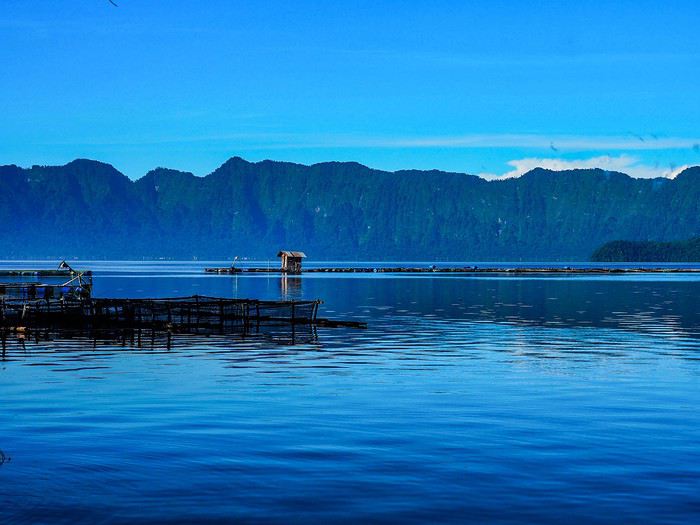
LAKE MANINJAU: 2 days The mist yawns slowly over the waters at dawn. When it finally lifts, you discover a blue treasure at the bottom of the old volcano’s caldera. In central-west Sumatra, Lake Maninjau is home to the Minang Kabau people. Less touristy than Lake Toba, it still offers equally beautiful landscapes. By scooter, a full day is enough to circle the lake (40 km) through villages, jungle, and rice terraces: it’s very pleasant, especially the southern part where traffic is light. You’ll find bungalows by the water, mainly near the village of Maninjau (yes, same name as the lake). From the crater’s heights, you can admire the whole of Maninjau (the lake!). To get there, you can navigate the 44 hairpin turns (!) by motorized vehicle from Maninjau (the village!) or tackle the path climbing from Bayur to Puncak Lawang, where the view is... top (yes, same name as the village).
HARAU VALLEY: 3 days Magnificent rice terraces surrounded by towering cliffs and cascading waterfalls. That’s what awaits the adventurer—happy like Ulysses after a long journey to the fertile Harau Valley. It’s peaceful, off the beaten path, and rejuvenating. Few tourists here, and few accommodations. The well-known Abdi Homestay offers quiet bungalows, slightly set back from the main road, in a stunning setting. Again, renting a scooter is a great idea, but here, "happiness is in the fields"—well, the rice terraces. So, park your two wheels and venture along the paths crisscrossing the terraces, following small streams, brushing past villages lost in the valley. If you want to know more and see all the photos, it’s here: Harau Valley.

BEACHES SOUTH of PADANG: 4 days 20 km south of Padang lies Bungus Beach. But that’s not it yet... You’ll need to take a fisherman’s boat for 40 minutes south to land on a peninsula inaccessible by car. That’s the minimum to reach this little paradise, nestled between jungle and sea, far from Padang’s pollution and hustle. An Eden on an isolated beach, with nothing but small bungalows and possible excursions to the nearby islands. The only way to get around: by boat and on foot... Pure bliss, toes in the water. And on the blog "Un tour dans le sac", nothing is spared—especially not the description to make your mouth water (Indian Ocean water, that is): sublime turquoise waters, postcard-perfect coconut trees, lazing in your favorite hammock.

For the practical side, here’s some info:

Sumatra Travel: Itinerary Summary My thoughts Sumatra is a magnificent Indonesian island and still relatively untouched. Tourists mainly flock to Java and Bali. It’s especially suited for nature lovers who’ll appreciate its volcanoes, paradise islands, jungle, and rice terraces. Sumatra is huge: in 3 weeks, we only visited the northern half of the island... And even then, we barely scratched the surface of this stunning part of Sumatra. That said, this itinerary offers an exceptional variety of landscapes: beaches, volcanoes, rice terraces, jungle—the winning combo!

Overall, Sumatra is still lacking in infrastructure, and maybe that’s a good thing: it’s far from Bali’s rampant "hotel urbanization." That said, you’ll have to accept spartan comfort: Sumatra, as beautiful as it is, is only for backpackers, adventurers, and travelers who can do without cozy 3-star hotels. In short, Sumatra is earned, but the effort is well worth it, and the warm welcome from the locals will make you forget the minor travel inconveniences.

A disappointment? The food isn’t as good as Bali’s (check out our article on the subject (link)). The stop in Berastagi is nice but not essential, especially if you’ve already seen Java’s impressive volcanoes.

A favorite? There were so many! But if I had to choose, I’d pick the Ketambe jungle. It was my first experience in a natural environment I didn’t know: a primary forest and memories that’ll last!

Would I do the Sumatra trip again? I regret not going to the Mentawai Islands. This archipelago, off Sumatra’s west coast, has long remained isolated: some inhabitants still live traditionally. These "flower men" live in harmony with nature. Unfortunately, their way of life is threatened by modern influences, and their fragile, unique culture risks disappearing. I would’ve loved to spend time with this incredible ethnic group. But it takes time: a week seems necessary. I would’ve had to skip some stops in our itinerary—maybe the peninsula south of Bungus and Berastagi?

Budget: It’s really cheap, especially the food, which, let’s be honest, isn’t amazing. Backpackers who can settle for spartan comfort (small bungalows without AC or hot water) and local food in warungs can easily get by on 20 € per day for two people (food + lodging). The cost of flights from Europe to Sumatra remains high. For our part, we found great deals on Paris-Hong Kong tickets (350 € round trip). Then you just need to reach Medan by low-cost airline.

No mandatory tipping in restaurants or accommodations. However, it’s more common to tip guides or taxi drivers.

Like many places in Indonesia, everything is negotiable. If you’re new to this, it’s not easy at first... Especially when dealing with a population poorer than us, "rich Westerners." But bargaining is part of the local culture! And you’ll get used to it—it even becomes fun. Plus, you don’t want to be that tourist paying the "tourist price" they’ll likely quote first, right?

To negotiate, be firm, respect your counterpart, smile, stay polite... Clearly show it’s too expensive or that the deal is done (by shaking hands, for example). Typing the numbers on your phone helps communicate the price. Learning a few words in the local language ("It’s too expensive," "How much?") is appreciated! Okay, it’s a rough tip, but here’s a base: dividing the first price by 2 gets you close to a fair negotiation.

Currently, 15,000 Indonesian rupiahs are worth about 1 €.

Accommodation Infrastructure is underdeveloped in Sumatra. You’ll find fewer "charming lodgings" than in Bali. Still, there are some very pleasant places. If you read our Sumatra articles, we recommend Abdi Homestay in Harau Valley and Silimalumbo at Lake Toba. In Pulau Weh, the choice is wider, but we suggest trying the seafood pasta at Bixio Café!

Health We didn’t get sick in Sumatra. By following a few simple rules (avoiding tap water, not swimming in stagnant freshwater), you’ll avoid the main issues. Hygiene is improving anyway. Anti-malaria treatment is still recommended, but cases are rare.

Also, keep in mind that Sumatra has a hot, humid climate—adjust your behavior accordingly (stay hydrated, protect yourself from the sun, etc.).
Open
Independent trek in Lower Dolpo + looking for a trekking partner, details to be decided
Hi there,

I’m heading to Nepal for two months in October/November, including a 20-day trek that I’m planning in Dolpo this time (after the Dhaulagiri Circuit and the Three Passes trek in the Khumbu region in previous years).

1/ Is it possible to organize a trek in Dolpo solo—that is, without going through an agency? (I know permits are mandatory, but I’ve heard conflicting info about whether a guide is required.)

I’m considering one of these two routes: - Lower Dolpo loop + variations - Dunai to Lo Manthang traverse (I’d love any tips if someone’s done this route, especially about resupply points)

2/ If it’s not allowed, are there guides or agencies in Dunai that might offer services? I’d appreciate any local contacts.

3/ Lastly, I’m looking for 1–3 trekking partners. Dates and route to be decided together. Experience with high-altitude trekking would be a plus, but simplicity, a thirst for adventure, and a good sense of humor are non-negotiable. Also, up for a self-sufficient experience (no guide or porters), depending on the answers to the points above.

Thanks in advance for your replies!

Olivier
Open
5 Days in Porto in September 2017 (Full Travel Journal)
Tuesday, September 12 We had to get up early that day to leave our house at 3:30 AM, as our flight from Lyon Saint-Exupéry was scheduled for 6:35 AM. In the end, our Transavia flight took off with a delay.


I’d found a round-trip flight from Lyon to Porto on the Transavia website for 58 € per person, including only a carry-on bag.


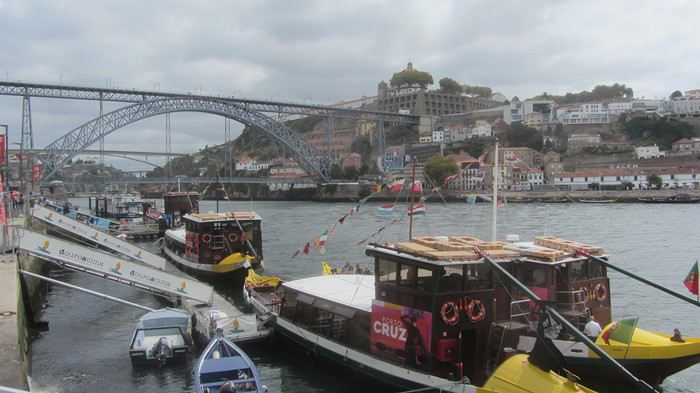
Before landing at Porto Airport, we flew over the Douro River and the famous bridge between Porto and Vila Nova de Gaia.


The Douro flows into the Atlantic Ocean.

From the airport, we took the metro, which starts above ground before diving into Porto’s underground.


Once we’d dropped off our bags at the hotel, we set off to explore Porto.


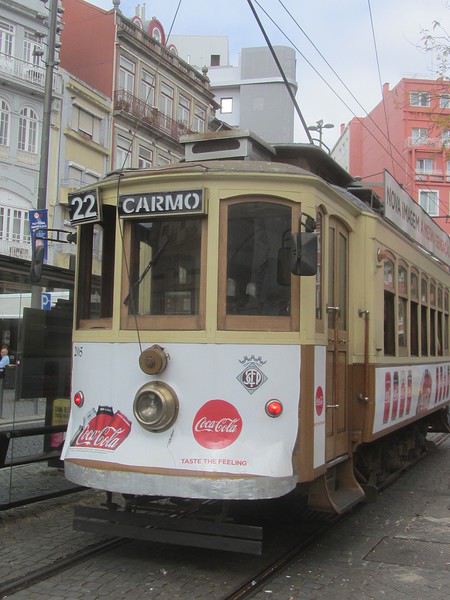
You can’t go to Portugal without riding a tram—it’s a must! So we took an old tram (Line 1) to the beach.


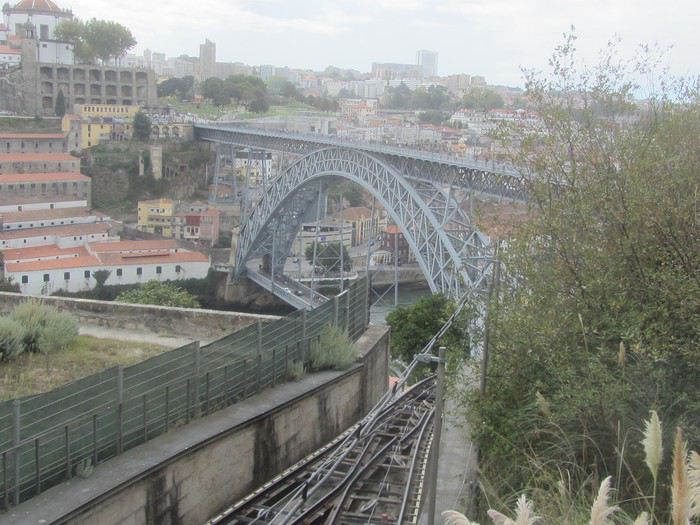
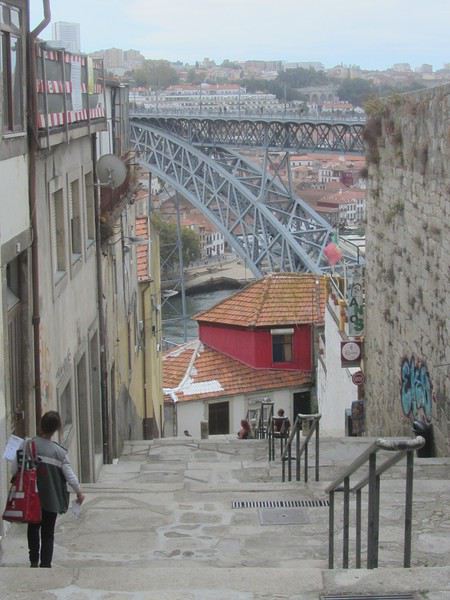
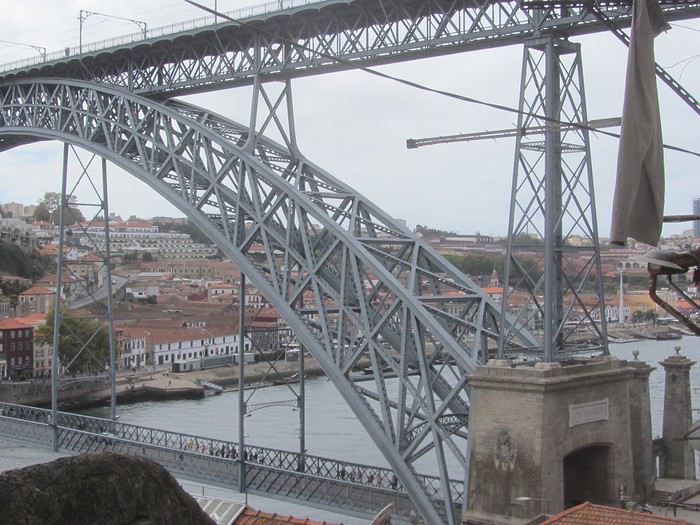

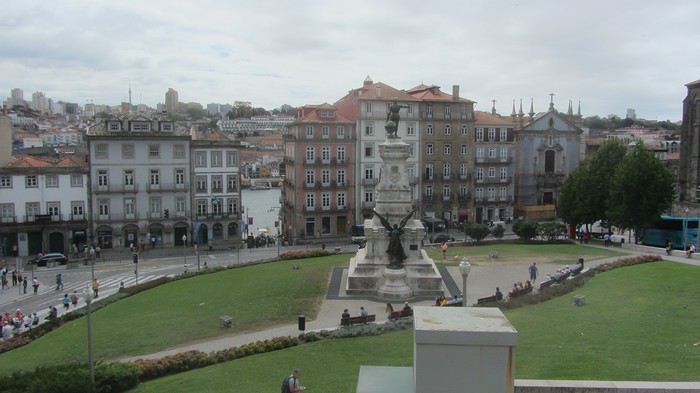
The Guindais Funicular connects Praça da Batalha, high up in the city, to Ribeira in the historic center near the quays.


We didn’t take it—going down the stairs was fine. A one-way ticket costs 2.5 €.


The Dom Luís I Bridge is one of the city’s icons. Built between 1881 and 1886 by engineer Théophile Seyrig, a disciple of Gustave Eiffel,


The historic Ribeira district, once run-down, is undergoing an urban revival. Porto is gradually regaining its former splendor.


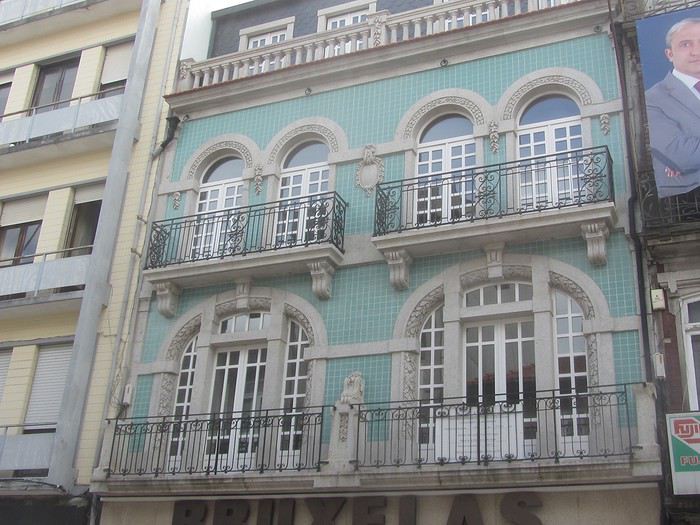
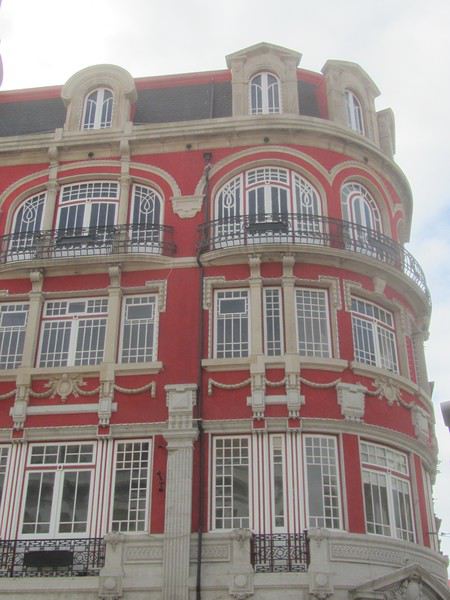
Old mansions with crests are being restored, splendid façades adorned with azulejos, Baroque-style churches, yellow trams, ancient shops, trendy restaurants, hip bars, boutiques, and design hotels!


Open
A 4-day long weekend in Porto
Hello fellow travelers!!😉 My flight tickets are booked—off to Porto for a 4-day weekend! I was thinking of spending 2 days in the Douro (from my early Saturday morning arrival (!!) until Sunday evening) and 2 days in Porto (from Sunday evening to Tuesday evening). Does that sound reasonable to you? I plan to rent a car for the first two days so I can be free to move around without being tied to train or bus schedules. What are your favorite spots? Any village recommendations to visit and spend the night (Saturday night)? Has anyone done this kind of weekend before? Thanks in advance for all your great tips, and have a wonderful day! Manou
Open
Three More Months in Southern Africa
Hello, fellow bird lovers, big mammal enthusiasts, and Southern Africa fans!

The title of this second travel journal obviously references the one that came before it: Three months in Southern Africa in a Ford Figo 😉

That was back in spring 2016, and I was discovering this incredible region of the world with wide-eyed wonder. Though absolutely enchanted by my trip, I’ll admit: I didn’t think I’d be back so soon.

Fortunately, circumstances had other plans. For their 70th birthdays, my parents had the wonderful idea of inviting the whole family—my sister, my brother-in-law, my three nieces, and me—for two weeks in the Cape Town area and Namibia. The only one missing was my godson (the eldest), who was tied up in Switzerland for his air traffic controller training.

Of course, I wasn’t going to settle for just this (delicious) taste of adventure… so, as an appetizer, main course, and dessert, I added two and a half months of travels through South Africa, Lesotho, Mozambique, and Zimbabwe (the last two being new to me). What can I say? I’m a travel glutton! 😛

Here’s the general outline of my itinerary, with details to come as I share the story:

With family (March 29 to April 13, 2018)

South Africa (5 days) Namibia (9 days)

Solo (April 13 to June 30, 2018)

Zimbabwe: Victoria Falls (5 days) South Africa and Lesotho (26 days) Mozambique (21 days) Zimbabwe (10 days) South Africa (15 days)

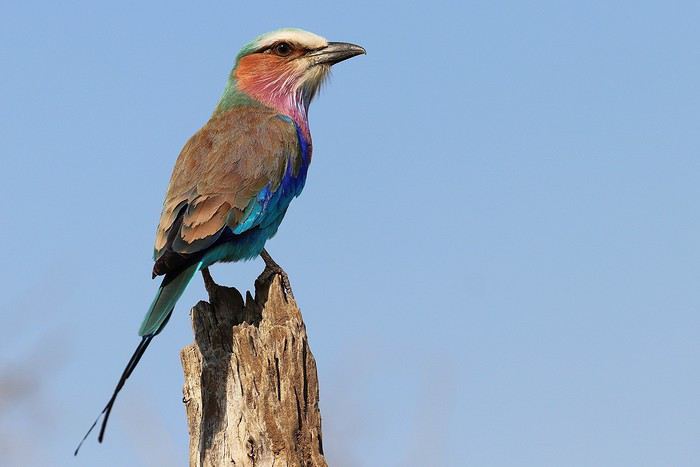
And since I need a cliché to illustrate this journal... ... it’ll be the famous lilac-breasted roller (lilac-breasted roller), one of my little favorites (I might even make it my profile picture, actually)!
I have to say, in 2016, exploring Southern Africa multiplied my interest (already strong, but mostly limited to vultures and raptors) in avian wildlife. 🙂

Happy reading!

P.S. Beyond sharing, I’m also counting on this journal to motivate me to finally sort through the roughly 10,000 photos that have been sitting on a hard drive for four months. 🤪😏
Open
Bolivia: Beyond the Illusions, the Disaster
When I set off for Bolivia, like many Europeans, I was full of illusions (fed by the propaganda of President Evo Morales, a would-be dictator with limited intelligence). I quickly became disillusioned—everything there seems to be built on lies: political disaster, ecological disaster, economic disaster despite drug trafficking and smuggling with China, dietary disaster, intellectual disaster... Its only saving grace is being a vast, sparsely populated country, so nature lovers can still find rich, relatively untouched landscapes far from human settlements (but for how long?)

Where humans dominate, the disaster worsens year by year: water, soil, and air are contaminated, meat is pumped full of hormones, GMOs are everywhere, fish are loaded with lead and mercury (thousands of tons of waste are dumped into Lake Titicaca on both the Bolivian and Peruvian sides), and the food is ultra-artificial (all the additives banned in Europe are abundant there). For example, out of 50 fruit yogurts, only two actually contain fruit... In short, don’t expect to go there for a health retreat.

As for its capital, even though you’ll see "wonderful" written everywhere, the city is ugly, extremely polluted, and not particularly interesting. But since few Bolivians leave Bolivia and the public education system is one of the dumbest in the world, they don’t care. A stupid law decreeing that taxes are only paid once construction is finished means thousands of buildings will never be completed... Anyway, you’ve probably gathered by now that it’s not worth wasting too much time there. If you decide to go to Bolivia, it’s best to know what you’re getting into...

So what should you do? A stop in Copacabana is pleasant, as is one in Tiwanaku. A stay in Samaipata is nice, and the cities of Sucre and Potosí still have charm. The Uyuni salt flats are also worth seeing. Venture off the beaten path, even if transportation is complicated and sometimes dangerous.

Don’t be surprised by the omnipresent police (many of whom are corrupt) and military, or by the almost daily protests... These are just some of Bolivia’s characteristics. But when you pass through quickly, you tend to see what you want to see.

On the gastronomy front, aside from the fact that in many places the food is a cocktail of pesticides, GMOs, heavy metals, and dangerous additives—all washed down with plenty of Coca-Cola—don’t expect refined cuisine... That said, like everywhere, you’ll find kind people (though relationships are often superficial) and stunning landscapes. There you go—just offering a different perspective from the dazzled accounts of tourists who only scratch the surface without understanding the harsh realities. And I haven’t even touched on the administrations, social disparities, the TIPNIS conflict, disappearances (girls for prostitution and boys for organ trafficking), etc...
Open
No, I Won’t Be Going Back to China
Hello forum,

Did any of you feel the same things we did in China?

We spent a good twenty days there in August. First, we traveled solo around Chengdu, then joined an organized tour for 12 days (Beijing, Pingyao, Xi'an, Guilin, Xingping, Yangshuo, Shanghai, Wuzhen) and extended our stay by 4 extra days to visit Zhangjiajie.

The landscapes were stunning, and we have unforgettable memories... but we were really disappointed by the following points:

- The food: way too spicy. Lacking in flavor, not much taste. I’m speaking "in general" because we did enjoy some good steamed dumplings, smoked pork, and other dumplings... But compared to Thailand, Cambodia, or India, Chinese cuisine didn’t impress us at all.

- The behavior of the Chinese: disrespectful, rushed, agitated. You constantly have to fight—people push, crowd, and overwhelm you... At the entrance to the Terracotta Army (and other sites), it’s a human tidal wave... and I mean that literally. We were carried by the crowd without even touching the ground. It was like a situation where you have one bowl of rice and 20,000 starving people diving for it...

You’re at a ticket counter, and they cut in front of you. You’re in line for boarding, suitcase ready to go on the conveyor belt, and someone shows up out of nowhere to put THEIR suitcase down... even though they have a flight ticket with THEIR seat number and won’t be leaving before you!!!! You’re getting on the bus, and someone shoves past you just so they don’t end up behind you.

It’s like these people only think about themselves. I didn’t see a single person let someone else go first or even ask—it’s as if politeness and respect are completely foreign to them.

It’s honestly exhausting and draining...

- Communication: In every other country we’ve visited, whether in Asia or Europe, we always manage—with English, a few words of Italian, French, or Spanish. In China, I’ll be blunt: if you don’t speak Chinese, you’re screwed. And yet, a pair of kids around ten or twelve years old asked us in English where we were from :)

- Understanding: Here’s the rule. Even if the person you’re talking to speaks a little English and says they understand you... make sure they *really* do, because 9 times out of 10, they don’t. Out of pride or just cluelessness, they’ll give you a big smile and nod, but in reality, they didn’t get what you were saying.

Several times with our group, in the evening at a restaurant, if we hadn’t been helped by someone at another table who spoke a little English, we’d still be there. The classic example: the waiter brings one menu (for 10 people at the table), and we’re all trying to explain that we need 4 or more menus. Five minutes later, he’s still staring at us with that same blank smile...

In 3* or 4* hotels, you go to the front desk for a hot water or AC issue. Three or four staff members just stand there beaming at you. You try to explain with photos or a translator, but in the end, you leave with the problem unresolved.

They don’t speak—they shout... on buses, in hotels...

We were also surprised to find that self-service laundromats were almost nonexistent. We got scammed once at a hotel with an astronomical bill!

As for flights, we flew Air China on the way there and Austrian Airlines on the way back—no comparison. Air China had zero service and food that was "baby food" quality. Austrian Airlines had multiple services, a decent meal, and smiling flight attendants.

I don’t know if any of you had the same experience in this country, but I’m definitely not eager to go back. Whereas if someone offered me India, Thailand, or Vietnam tomorrow, I’d be there in a heartbeat!!!
Open
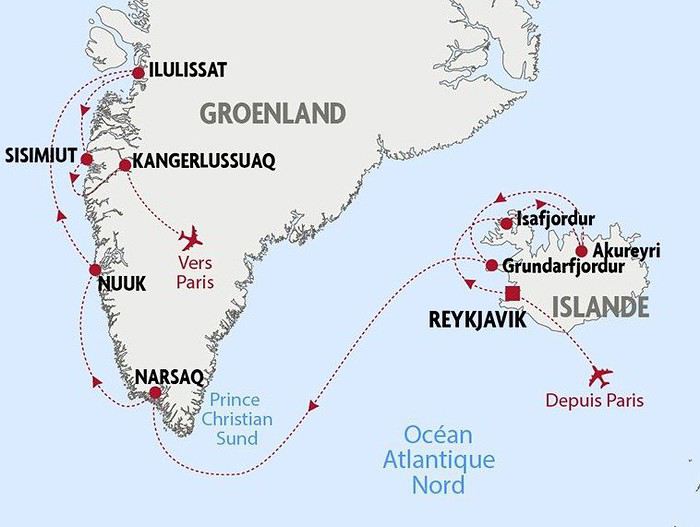
Review of a disappointing cruise with Rivages du Monde in Iceland and Greenland


Hello everyone,

The itinerary was tempting, and we decided to take this cruise with friends. It also gave us a chance to discover this company, which offers many river cruises in a French-speaking atmosphere. The boat is only rated 3 stars, so we knew we wouldn’t have the same comfort or services as usual, but we accepted that. After all, the price is half that of a cruise with Ponant in the same area.

From the booking stage, this company was unlike any other. We later learned that Rivages du Monde isn’t a shipowner but just a service provider.

It operates in a somewhat outdated, old-fashioned, or even backward way, depending on how you see it. Information about the cruise, excursions, and the boat comes in the form of a very brief PDF. Documents, quotes, and invoices are sent by mail.

There’s no personal account on the company’s website, no passenger form to fill out, and no online check-in.

Fifteen days before the balance was due, I received the invoice with its share of surprises. I had to send my credit card details by mail (well, why not?), or pay by check.

The bad surprise was a fuel surcharge. The good one was that we were upgraded from category 3 to category 7, moving from deck 6 to deck 4. Since the information was so lacking, I had no idea what the benefits of this upgrade would be. I almost complained and asked to keep the cabin I had chosen, but I read in some comments that cabins on deck 6 were to be avoided due to loud creaking. So I said nothing.

Booking excursions, which had to be paid at the same time as the balance, was strongly recommended before departure. They were reserved by filling out an A4 sheet after reading a 3- or 4-line description in the PDF. The duration of the excursion and the departure time weren’t indicated. No information about disembarkation—would it be at the dock or by tender?

The boat. The MS Astoria is the oldest passenger ship in the world. Built in 1948, it started its career as a transatlantic liner until 1960. Often restored, it has retained an old-fashioned, vintage charm... or so the ads say. In the end, it didn’t look that old, as it had been modified and refurbished so much. Only its original bell remains in a display case. Its vintage look is more visible on the outside than inside. The outdoor decks are spacious, great for sightseeing. There weren’t too many passengers for the size of the ship. Inside, it’s not very modern or beautiful, but it was decent. A pleasant surprise—it handled the sea better than we expected.

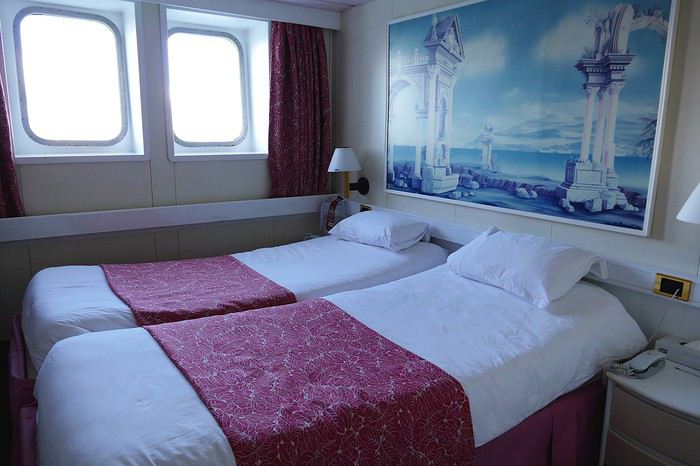
The cabin was outdated and small, as we expected—no desk, no sofa, and two portholes that made it very bright. Well-equipped with new storage furniture, it even had a fridge. The bathroom would have been spacious if it didn’t have a bidet. The bed had a board instead of a proper base, but the mattress was good, and we slept well the whole cruise. Don’t look too closely at the finishing details, but overall, it was better than I expected. On deck 4, the cabin creaked a little at night, but it didn’t bother us. The cabins are different sizes on the plan, but in reality, they all have the same surface area.

Note the strange color of the hot water.


The buffet was tiny, with few choices and very basic, ordinary dishes. A few mixed industrial salads, some fresh salad and cold cuts. For the main course, chicken, pork, some kind of minced meat, or fish. Then potatoes, rice, pasta, or steamed vegetables (always the same ones). For dessert, flavorless pastries in various colors or fresh melon and watermelon salad. That was the sad, single menu for the entire cruise at the buffet. Note that the buffet was only open for 2 hours at lunchtime and 1 hour in the afternoon for a snack.

Tea, coffee, and water were available all day.

The restaurant. The table was nicely set and pretty, but the meals weren’t much better than at the buffet. The “beef fillet in pastry” was like boiled beef stew—it fell apart easily (even though we asked for it rare or at least medium-rare). The “asparagus velouté” was actually leek soup with “hay” that crunched under your teeth. The poire belle Hélène or profiteroles were sad, distant relatives of the well-known desserts—very skimpy. And those were just a few examples.

Drinks were included with meals: still or sparkling bottled water, white, red, or rosé wine, coffee, tea, or herbal tea.

The bar. The servers were nice but far from having the class and know-how you find on other cruise lines. We wanted to try the cocktails, but only once. The margarita was warm, with bottled chemical lemon, no ice, and no salt. The caipirinha was brown! And later, we noticed that in the Singapore Sling, they replaced the Champagne with soda!!! What a skill set!!!

The lectures were very popular. Almost all passengers eagerly attended the talks by the two naturalists.

The musical entertainment was French variety—good-natured and friendly most of the time. A little classical music, chamber music so sad it made you sleepy. Nothing like the pianos and violins you find elsewhere... (Princess or HAL).

The shows. With very limited resources, the dancers did their best. The outfits were very revealing in certain strategic areas, and that was the rule for all themes.

The “red vests.” The atmosphere on board was more like a company outing than a cruise. There was a lot of staff to run the excursions desk, assist and supervise passengers during stops, or act as guides during excursions. These “red vests” behaved like they were on a summer camp—they had a great time and gathered as often as possible to laugh and have fun. They didn’t hesitate to roll their eyes behind passengers’ backs. But the “group leaders” became very authoritarian and directive when addressing passengers.

One evening, our friend asked a “red vest” about the excursion time the next day. That was top-secret information, impossible to get (I’ll come back to that). The “red vest” replied that they wouldn’t tell him because, by the next day, he would have forgotten anyway. That shows the level of respect this staff had for the passengers.

Also worth noting: among the passengers was a man in a wheelchair. For the entire cruise, he couldn’t go ashore. No one ever offered to help his wife get him off the ship.

My perception of this cruise is inevitably shaped by my past experiences. Some passengers shared my opinion, but others were completely satisfied with everything and found the food good. They also swallowed all the bad excuses, cooked up with a security sauce, without question—reassured and delighted that “everything” was done for “their safety,” which is the most important thing, isn’t it?

To be continued—the stops and the organization, even more pitiful than the hospitality...
Open
Faces and Landscapes of Senegal (Gorée, Saint-Louis)
Hello!


I invite you to share our wonderful discovery of Saint-Louis and its surroundings: Djoudj Park and the Langue de Barbarie... Daily life, heritage, landscapes, and wildlife (birds)...

We stayed in Senegal for 10 days in April/May 2018, specifically in Saint-Louis, Senegal, since we were there for the Jazz Festival held every year. But we took the opportunity to explore this country we didn’t know!

In this travel journal, you’ll find: - A short stop in Gorée, which we visited before heading to Saint-Louis - The different faces of Saint-Louis, especially the vibrant fishermen’s district - Djoudj Park, with its many birds - The Langue de Barbarie ... and much more!

Before going to Senegal, I did some research on this forum and others. So many strong opinions about Senegal—you either love it or hate it! If it hadn’t been for the festival, we might not have gone... What a shame that would’ve been, because we loved it!

Of course, I saw poverty, idleness, and litter, especially plastic bags—a global scourge. A bit of harassment from street vendors, especially at first when you don’t know how to deflect it and accidentally encourage it. The privileges of a social class and inequalities, though that’s something you encounter in many poor countries, not just in Africa.

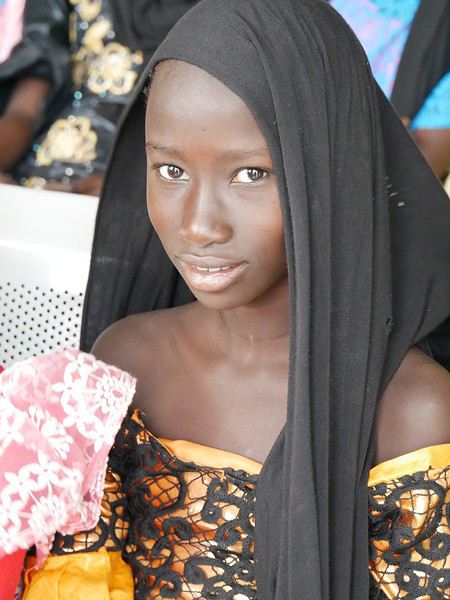
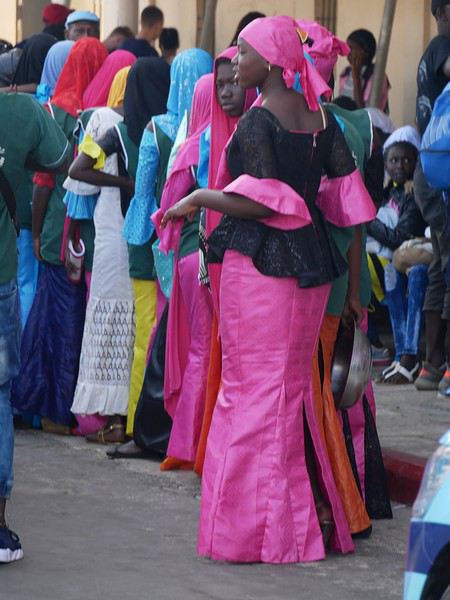
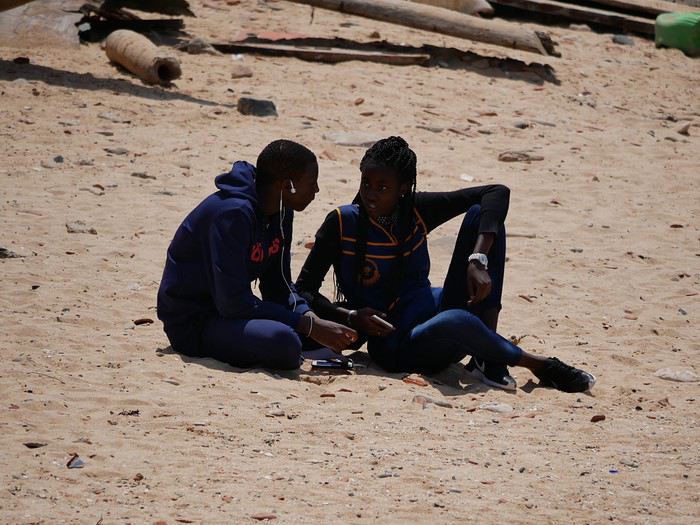
But when I close my eyes and remember our trip, what stays with me is the youth, the beauty of so many boys and girls, the elegance of the women, and the sparkle in their eyes and smiles. The light and colors, the smell of grilled fish, the taste of freshly roasted peanuts and baobab fruit. The honking horns, the call of the muezzins, the music, the bursts of laughter.


To be continued...
Open
Why South Africa? A simple example!
Hello everyone...

Well, here I am, back again...

By chance, a bit like Mrs. Attila, my route roughly followed the same paths I took 8 and 6 years ago... I even thought of various travel journal titles like... "Where the grass has grown back!"

And then. People who know me (and some forum members) must be wondering:

"Why come back so often, almost every year since the 2000s, to this part of the world?"

Usually, I answer:

For the people, the landscapes, the animals. Because it’s a big country, a very big one where the horizon feels even farther away.

A country with so much variety—deserts, mountains, oceans, cities...

Because it’s a country that’s quite easy for "average" Europeans to navigate in terms of hygiene, food, driving, and way of life... Because you can plan your entire trip from your living room, all by yourself.

And because there’s still a pioneer spirit in the air.

And most of all, it’s a country that has turned toward the future without forgetting its past, giving the word "forgiveness" its full meaning.

Well, all that... those are just words.

Here comes, little by little, an example of a "classic" itinerary—simple, reliable, efficient, and balanced. Three weeks of discoveries, a first taste of this country!

Hence the final title of this travel journal:

Why South Africa? A simple example!

Open
Pollution: The Hidden Side of Tulum
I'm about to leave for Tulum, and unlike many who worry about which amusement park they can visit, I'm doing in-depth research on the place I'm going to. And this time, the more I look, the scarier it gets. Numerous articles, mostly in English (with a few rare ones in French like this one: https://parismatch.be/actualites/environnement/114152/la-pollution-la-face-cachee-de-tulum), show that Tulum, behind the postcard image, is an extremely polluted area because it developed very quickly without putting in place the infrastructure to handle human waste.

Two key points:

- 80% of the hotels, which are multiplying in Tulum, dump their wastewater directly into nature (the sea and the ground)! We know that Tulum's subsoil is like Swiss cheese, with water circulating in an interconnected way. Fecal pollution is everywhere, as is chemical pollution from everyday products. You're swimming in sewage in the sea and in the cenotes, which are all interconnected. The water in your shower is polluted with fecal matter. The water used for cooking is too.

- Trash is dumped in the jungle 10 km from Tulum. A massive landfill there grows every day.

Greenwashing is intense there, even more so than elsewhere. And the hipsters lounge around on Instagram without a care about where their... well, you know, goes. I contacted about ten hotels, explicitly asking which wastewater treatment plant their sewage goes to and how they recycle their waste. I got no response, except for one very arrogant one, explaining that this isn't the developed world and that waste isn't viewed the same way here. The manager, who has the look of a mobster, claimed not to know where his wastewater and waste go and advised me to look elsewhere. I don't think I'll be giving my money to this place or risking my health just to say "I went there too."
Open
Major safety risks in Peru?
Hi everyone, Since the safety reports on Peru are sometimes a bit outdated, I got curious and checked the Ministry of Foreign Affairs website for travel advice. It’s honestly pretty worrying!! Here’s the link: https://www.diplomatie.gouv.fr/fr/conseils-aux-voyageurs/conseils-par-pays/perou/

Among other things, they don’t just mention fake taxis that rob you or express kidnappings (especially in Arequipa), but also drugs that can be slipped into your drink if left unattended, "with the risk of scopolamine being added."

They’ve marked the Cuzco region as a red zone (formally avoid!!) and central Lima as an orange zone, "to avoid after dark."

What do those who’ve been there recently think?
Open
Little issue with eTA for Canada
Hi everyone,

I’m a bit embarrassed because I need to travel to Quebec from February 27th to March 13th. I’m a regular visitor to Canada—this will be my 10th trip since 1997, plus a year as a permanent resident (2000–2001) and a cross-country run from Vancouver to Halifax in 2011. So, I’m definitely not a terrorist! But since our last trip in July 2015, they’ve introduced this eTA thing. Seems more like a way to make money than to actually secure Canada, if you ask me, but anyway, that’s not the point. I applied for an eTA for myself, my wife, and our two kids. They all got approved within hours, but not me! I was asked to create a GC key and then an IRCC account, which I did. Normally, you get news within 72 hours, but since Monday, January 15th, nothing! In the "message" section of the account, it says "explanation letter (required)" with a deadline of January 25th, but I can’t find any explanation anywhere—despite searching the Canadian government website and Google. No links, nothing! I’ve emailed them but haven’t heard back yet. I’m thinking of calling the Canadian embassy in Paris tomorrow. Even though I’m not stressing yet, it’d be a bummer if everyone else got to go without me! If anyone’s had this issue before or knows what this explanation letter is about, I’d love to hear more.
Open
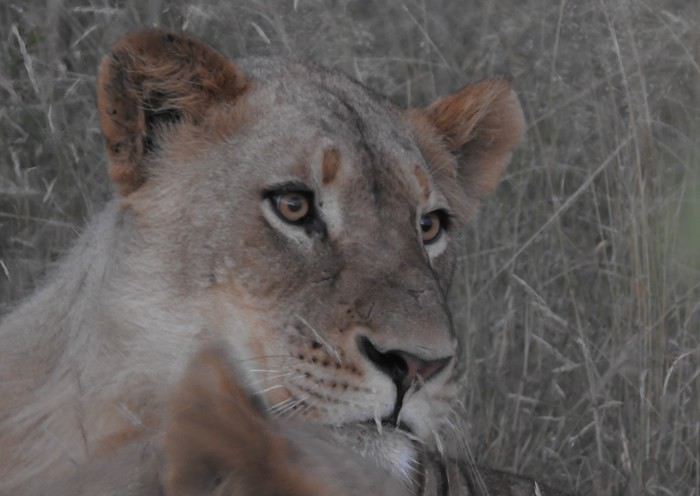
Petting a lion in South Africa?
In South Africa, over the past few years, places offering interactions with lions have exploded across the country—but mainly in the most tourist-heavy areas (well, well...).

Under various names ("reserve," "center," "park," "institute"), tourists are lured in with the chance to pet lion cubs, walk alongside lions—all for a fee, of course. Volunteers are even recruited to support the animal cause—also for a fee.

The origin story of these big cats is always noble: orphaned cubs rescued from the wild, or from terrible places, or from an injured mother that was saved. (That’s an awful lot of orphaned lion cubs... a real epidemic?)

The future of these felines is supposedly bright—either a return to the wild or retirement in a reserve.

The "center’s" activities—the rescue of these poor cubs or lions, the study of their behavior, genetic improvement, repopulating the wild, and lately, advertising.

What will the tourist do?

How can you resist the incredible opportunity to pet a lion cub, walk beside a lion, get up close without barriers, see them so near? Plus, you’re doing a good deed by funding the rescue of these magnificent animals, cared for with such dedication by these passionate people!

What have you actually just done?

What are the facts? (Conclusions from a very interesting report)

There are over 200 lion breeding farms, currently holding more than 12,000 captive felines, most of which are lions. (Up from 8,000 in recent years.) More than 800 captive lions are killed each year by hunters. Who, by the way, try to establish ethical hunting rules. Almost none of these places have any real connection to animal protection agencies or wildlife conservation scientists. It’s a commercial operation, generating over $100,000 USD/month, particularly through volunteer programs. The real rescue centers can be counted on one hand! There are no reintroduction programs for captive lions. They aren’t needed—lions don’t require captive-bred animals for reintroduction, especially not those imprinted by humans or genetically compromised. And they don’t breed, sell, or interact with the animals in any way!

(They don’t breed, trade—mostly receiving animals rather than acquiring them—or interact with the animals in any way.)

Taking a lion cub from its mother is unnatural and only done to exploit the animals, visitors, and volunteers.

(Taking lion cubs away from their mothers isn’t natural and is only done to exploit the animals and you as the visitor or volunteer.)

Obviously, the number of animals actually "rescued from the wild" is minuscule. Information provided at these places is poor, confusing, and biased—or outright false. They exploit people’s gullibility and empathy for a commercial operation under the guise of animal welfare. Under the pretense of animal protection and research, many lions end up sold to zoos. Most are sold to hunting reserves. The use of big cat bones in traditional Chinese medicine is ancient and growing rapidly—over 1,000 lions are killed each year for this purpose.

The uncomfortable questions!

* Is there interaction with the lions? * Where are the old lions? * Do you buy or sell animals? * Where do the animals come from, and where do they go? Where do all these cubs come from? * Do you have a recognized predator specialist? * If you release animals, when and where?

The right answers!

We interact minimally, if at all! They need to stay wild! The old lions are here. Never buying. Selling is extremely rare. It’d be like an animal shelter buying dogs! We have few animals, all rescued. No breeding, ever. It’d be like an animal shelter breeding dogs! Yes. Extremely rare!

It’s clear this is purely a financial operation, and there’s a 99% chance you’re participating in what I’d call a scam.

Basically, lions are bred on farms. When they’re cubs, you pay to pet them. When they’re older, you pay to walk with them or get close. And when they’re fully grown, they either become breeders on the farm or end up as targets—in a zoo, as bone powder, or worse.

Pet a lion cub, and you’re sentencing it to a lifetime in captivity or death!

The same principle applies to leopards—though not exactly to cheetahs.

Real rescue and conservation centers exist, but they’re rare. The others are everywhere.

Please, keep this in mind on your next vacation!
Open
Cancellation of my British Airways return flight to Phoenix and emergency landing
I just had to bring back another unforgettable souvenir besides my simple hotel hassle for Thanksgiving in Page, Arizona! So, I decided to head back last Wednesday on "the" flight that was going to have a problem leaving Phoenix! 😉

Just to remind you, last year I had a flight delay issue due to a Lufthansa strike.

This year, I decided to go even bigger! ... So, we board British Airways flight BA0288 out of Phoenix. Everything goes well until takeoff. The plane takes off, we're in the air for about 30 minutes, and then they announce that the plane is turning back to land in Phoenix due to an issue with one of the engines...

I’d later find out from videos that the engine in question was simply spewing flames... Terrifying! 🤪

So, back to Phoenix airport—I’ll spare you the details—flight canceled. At 3 AM, British Airways staff finally manage to find me a new flight (the same one the next day, by the way). So, after 5 endless hours of waiting, I know I’m leaving 24 hours later, on December 7th at 8:40 PM.

I ask them to book me a hotel room, since that was the condition for agreeing to leave 24 hours after my original flight.

The British Airways staff tell me all the hotels are fully booked and that basically, I’m on my own.

So, just to clarify... *All* the hotels in Phoenix. I did a quick search—about 62,000 rooms fully booked in Phoenix! Wow! 😛

Thanks, British! So, stuck on foot in an airport at 3 AM, with zero desire to drop $100 on a taxi to find a hotel, and the same the next day to get back—especially since I can’t trust them to book a room, and I doubt they’d reimburse me easily afterward... I end up more or less forced to sleep in the airport...

I’ll spare you even more details—no meal the next day, not even a drink... Just a bottle of water and a sandwich the first night (I should’ve taken more if I’d known...).

The next day, British Airways staff finally show up around 4:30 PM, fresh, well-rested, and showered... Meanwhile, I’d been struggling like a homeless person in that damn airport, sleeping on the floor, filthy...

I ask to see the manager, explain my misadventure after an emergency landing, and remind them that the least they could do was help me get a hotel room.

The manager—super cold and borderline rude... All she can say is:

"We’ve done everything we can for you. Have a good flight, sir!"

So, I wanted to give British Airways a little shout-out.

Of course, since then, British Airways hasn’t responded to messages or even tags on social media...

Now, I just have to deal with the compensation claims, which are well-deserved this time...

To be continued...
Open
Come discover Ireland with us
IRELAND - INTRODUCTION

We planned our 15-day trip to Ireland several months in advance to create an itinerary that would let us see a multitude of tourist attractions across various regions of the Republic of Ireland and Northern Ireland.

We researched the main attractions in each region and noted their GPS coordinates.

After that, we used Google Maps to create a packed but realistic daily route. We printed all the itineraries, and they proved extremely useful since some attractions weren’t listed on the GPS a friend lent us, and some roads aren’t clearly marked.

This way, we were able to stick to our daily schedule.

Three months before our departure, we rented a car directly from Autoescape’s website for 136.44 € over 14 days. The rental was with BUDGET, and the car we got was a ŠKODA Citigo.

This rate includes unlimited mileage, collision damage waiver (CDW), theft protection (TP) with a 1,500 € excess, and unlimited third-party liability coverage.

Some roads in Ireland are very narrow, so a compact car is much appreciated. Don’t forget that driving is on the left, and there are plenty of roundabouts.

Luckily, my partner finds driving this way easy, and our travels went smoothly.

It’s worth mentioning how courteous and patient Irish drivers are—it’s truly phenomenal.

Two weeks before our trip, we booked our accommodations at various places like B&Bs, hotels, and university campuses through Hotels.com. We’ll talk more about each of them later.

When we arrived at Dublin Airport, going through customs was quite tedious. There are two lines: one for EU citizens and another for other foreigners. The wait for non-EU travelers is significantly longer.

The car rental isn’t directly at the terminal. You have to take a shuttle to the rental center. Once there, a company representative finalizes the contract and hands over the keys to our rental car.

And off we went on our adventure!

It’s also important to note that some roads have tolls. For most of them, you pay directly at a toll booth, and the fees are usually under 2 €.

However, the M50 motorway around Dublin works differently—it’s a prepaid toll. You’re charged when you drive between Junction 6 (N3 Blanchardstown) and Junction 7 (N4 Lucan). A large purple sign warns you as you approach one of these junctions.

Cameras automatically record your license plate, and fees are applied based on your vehicle category. For a standard car, the fee is 3.10 €.

You have until 8:00 PM the next day to pay at an authorized retailer or online at https://www.eflow.ie/.

We prepaid these fees directly on the site mentioned above.

If you don’t pay within the required time, you’ll be charged substantial penalties.

For dining, most grocery stores and gas stations offer a great selection of hot and cold meals at very reasonable prices. That’s why we mostly bought our food at places like SuperValu, Lidl, Spar, and Centra.

We invite you to keep reading about our adventure in the next section.
Open
Incredible India, here we go again!!
Hey there, fellow travelers 😎

We’re back from 15 days in northern India.

For our 6th visit to this country, we traveled between Uttar Pradesh and Madhya Pradesh, and let’s just say it was an emotional rollercoaster!!

So if you’re up for it, we’re taking you to Varanasi, Chitrakoot, Khajuraho, Orchha, and Agra.

Ready for takeoff??

WELCOME TO VARANASI


When you leave your sanitized, rigid Western world behind, there’s nothing like diving back into the Indian chaos. And we nailed it—because when it comes to monumental madness, we couldn’t have picked a better place to start than Varanasi 😉!!

Here’s a little recap of our first day in this insane city.

It all starts with landing at the city’s airport.

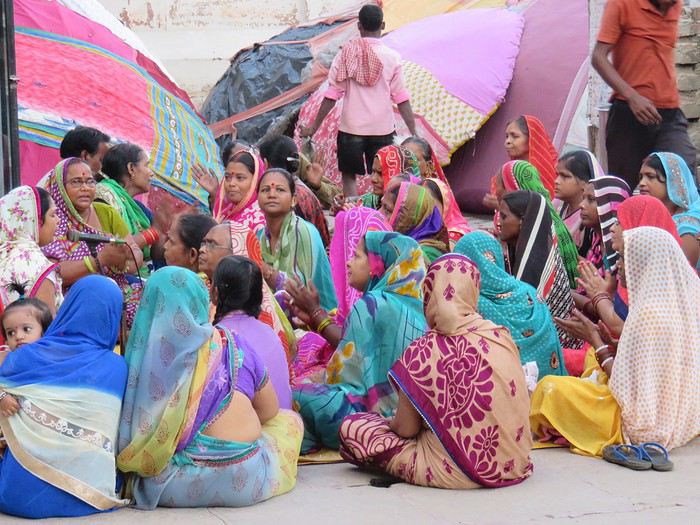
As soon as we step out, hundreds of Indians stare at us like they’ve never seen white people before (I’d forgotten how intense that is!). There are lots of women covered in black fabric, only their eyes visible—pretty striking, I must say. Turns out they’re Indians working in the Middle East, heading back to "work" after a month’s vacation.

We hop in a taxi, but after a few kilometers, we’re stopped… by the passage of the "state minister." The roads are freshly paved and spotless for his convoy (you can *totally* tell the difference with the roads he didn’t use 😛). We didn’t manage to spot him in the middle of the 25 cars surrounding him, though!!

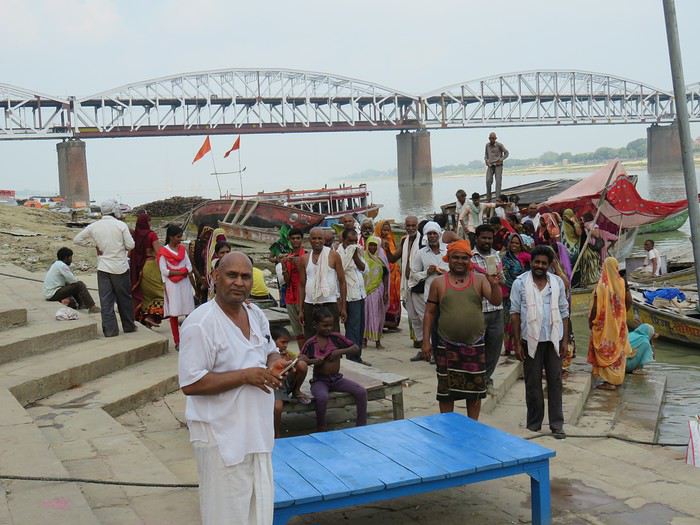
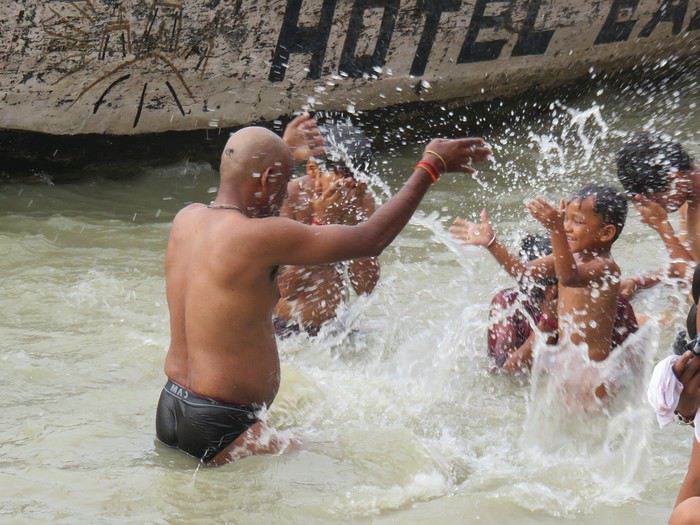
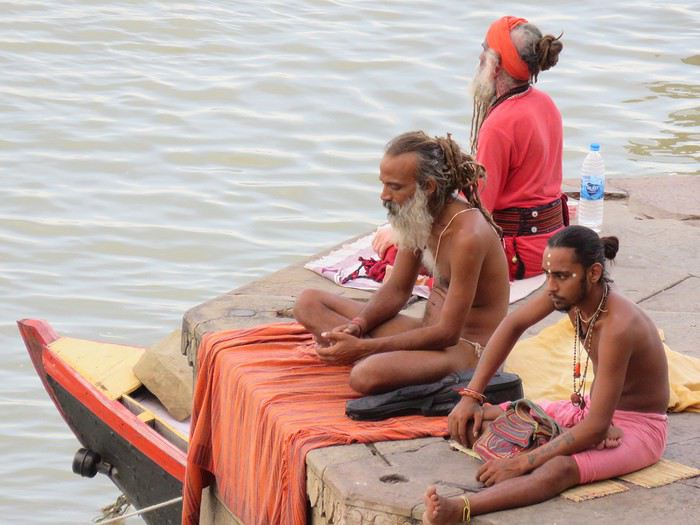
Then we arrive in front of the mythical Ganges—a peaceful spot, except for a boat full of Indian pilgrims who, once again, stare at us and take our pictures (the mutual curiosity is hilarious!!).


We board a boat, and almost immediately, we pass a cremation ghat!! Oh crap, I wasn’t expecting that so soon—it hits me hard (like, *really* hard 🤪)!! Huge piles of wood, eight massive fires with families gathered around. It lasts as long as the boat ride, and you think you must’ve imagined it… but no!!

You dock and wander through the tiny alleys.

It’s 36°C (97°F) with 90% humidity—you’re dripping.

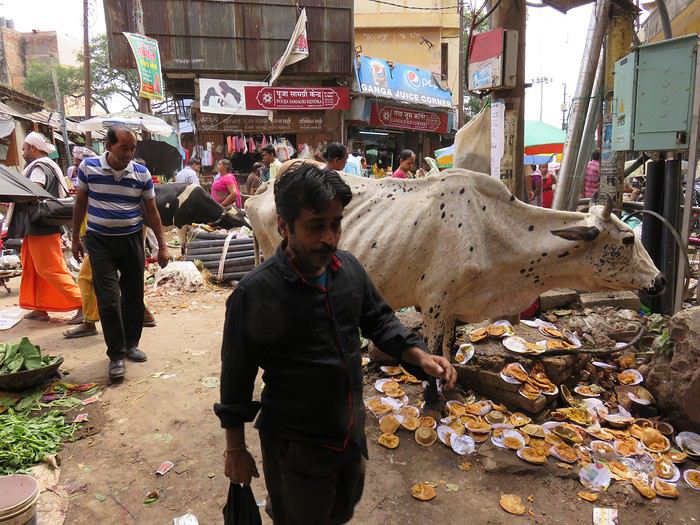
Cows block the way sometimes. The air smells like incense, then urine, then a woman’s perfume, then rotten fruit, then amazing street food—all within two meters, and *everywhere*!!


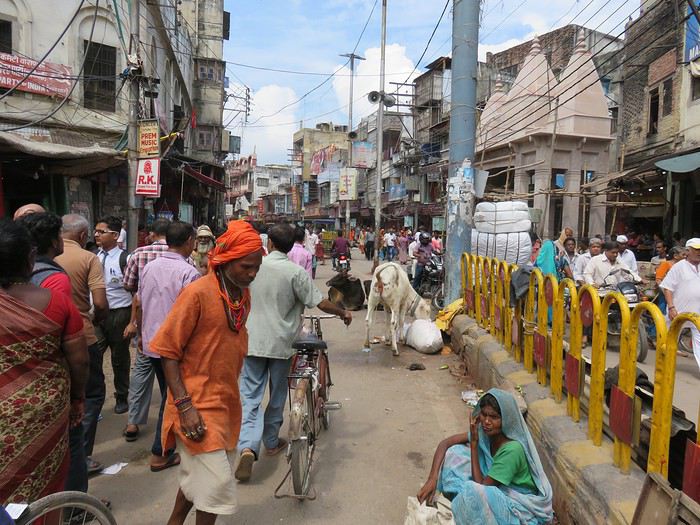
Then you step into the main street where pilgrims arrive (60,000 a day—Varanasi is the country’s holiest city!!). The chaos ramps up as you head toward the main road: nonstop honking, a bike whizzing past on your right, a scooter on your left, people brushing against you from all sides, air thick with dust and smoke (diesel *or* cremation!!), beggars of all kinds (kids, elderly, disabled) lined up to appeal to the pilgrims, the suffocating heat, and noise—*so much* noise…


In some areas, people constantly approach you: "Come see my shop," "Need a taxi?" "Want to exchange money?" And then there’s the woman with her baby in her arms, following you for meters, repeating, "No money, milk; no money, milk…" And you’re *dying* inside, but you can’t stop. If you give in, ten more will come running!! You grit your teeth, keep walking, even talk to yourself out loud!!

After half an hour, it feels like you’ve run a marathon, and you don’t even know where you live anymore!

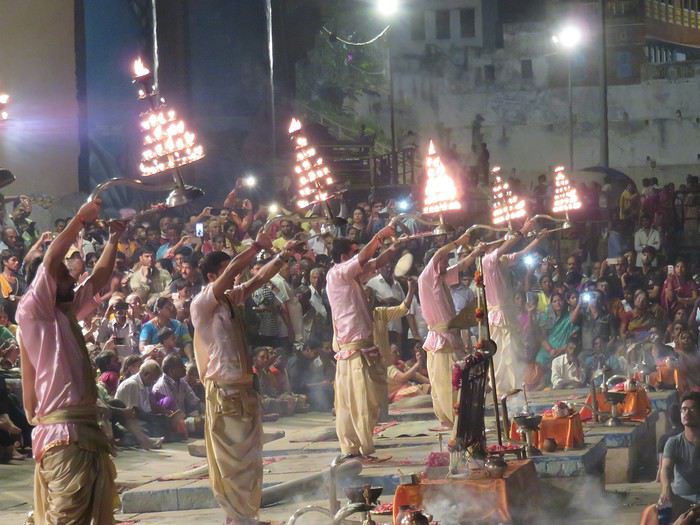
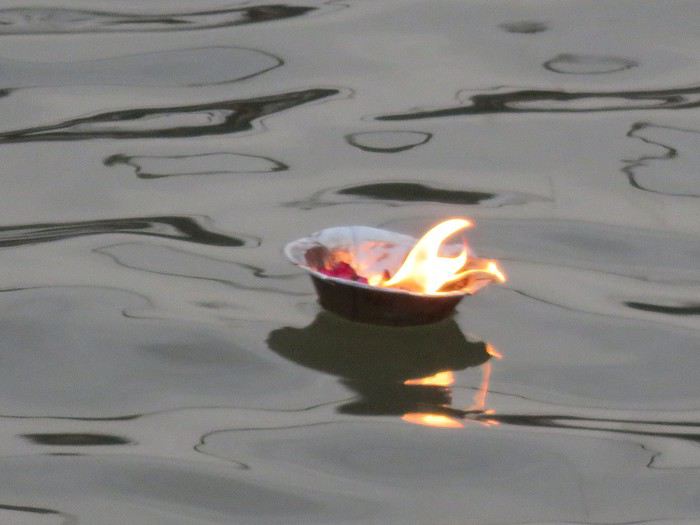
In the evening, you head to the PUJA (public prayers for all the pilgrims) on a boat in the middle of hundreds of others. Two ghats are competing—who can make the most noise. One side is singing, the other chanting, then they switch. They wave flames, the ghats are packed.


After dinner, you head back to your room around 9 PM and see hundreds of people sleeping on the scorching stones—with cows, dogs, and goats!!!!

A huge thank-you to our parents for giving us the mental balance to handle this, because *India drives you crazy*—and we’re right in the thick of it!!!

It’s an ex.tra.or.di.nary place in the truest sense of the word, with incredible beauty—especially in its human diversity—if you can look past what shocks you.


We stayed for 3 days—3 days of unmatched intensity, where the spectacle is *constant*.


So I *highly* recommend it to all travel lovers, those who embrace difference, and the strange (for us, at least). But definitely *not* for anyone looking for a relaxing vacation!!


More to come soon if you’re interested!!


Open
Thailand Travel Journal: From Chiang Mai to Bangkok, We Didn’t Buddha Our Fun


We’re excited to share our sixth travel journal with photos from Southeast Asia, this one entirely dedicated to Thailand. As a reminder, our previous travel journals can be accessed directly by clicking on the username "jojoone1" to the left of each post.

For a change, let’s start with the conclusion: our trip left us with an excellent memory. Very often, everything went like clockwork—short wait times, quick problem-solving, and the curious feeling of being pampered. Sometimes, life isn’t so cruel after all.

It’s only fair to admit that day after day, we encountered Thais who were smiling, helpful, kind, funny, and sometimes even touching. There were a few exceptions, but they were just the trees hiding the (tropical) forest. After this year’s experience, we won’t be the ones to tell you that Thailand isn’t the Land of Smiles or that laughter is just for business. We’ve witnessed so many kind behaviors and gestures that we no longer understand how anyone could complain about the people here—except for bad experiences in ultra-touristy spots packed with travelers lacking any finesse. It got to the point where it made us reflect. And we concluded that we probably have funny, friendly faces (?). We also know we’re the first to smile at them, and every day there, we show respect to everyone we meet. In any case, we have fond thoughts for many of the people we crossed paths with. Thanks to them, our trip took on a whole new human dimension.

A quick note about the photos: last year, the VoyageForum team made a change to how photos are uploaded. This gives us the choice between displaying high-definition photos (but losing ownership rights) or non-HD photos (less sharp, but the originals won’t be spread online without compensation or credit). We opted for the second solution, if only as a matter of principle. It does leave us with some regrets, especially since Françoise switched to the Canon EOS 7D Mark II, whose performance is notably better than the 7D.

Our first trip with Emirates was satisfying but left a mixed impression. Sure, it was the first time all four of our flights were on an Airbus A380. The crews were super friendly, and the meal trays were the best on the first two flights. On the return flights, the meals weren’t great and weren’t filling enough. Overall, the crews seemed disorganized and rushed—clearly some new recruits. The Doha-Paris flight, if memory serves, was on an A380-600, and in that configuration, we were packed in like it hadn’t been in years. In conclusion, it’s hard to say at this stage whether Qatar or Emirates comes out on top.

From our perspective, the journey from northern Thailand to Bangkok can be done via two different routes. This year, we took one of them, which allowed us to alternate between well-known destinations and original visits. Note that some of this year’s visits include cities we’ve already been to. So for a more complete view (Bangkok and Chiang Mai, for example), you’ll need to check out our previous travel journals.

We’ve improved our Thai vocabulary with a few more words and hope next year to move from kindergarten to first grade... For those reading us for the first time, we can only advise against visiting this country on an organized tour or looking for a French-speaking guide. The Thais have organized themselves well—they now have proven tourism practices. Maybe a guidebook for culture, a few basic English words, and a little organization are all you need for a great trip.

CHIANG MAI

Chiang Mai and its region are packed with treasures—so much so that one or two visits might not be enough.

At the airport, you go to a counter that provides a taxi ticket. The fare is 150 baht for a regular car and 200 baht for a larger vehicle. When our turn came, a large vehicle showed up, but we were only charged 150 baht. Okay, fine.

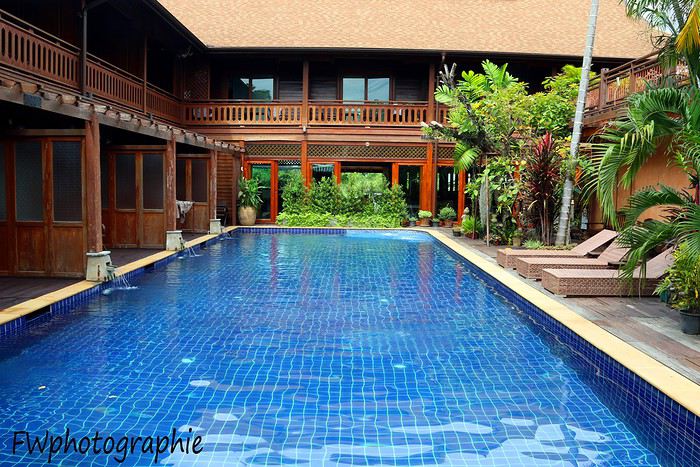
The hotels we’d selected three years ago had significantly increased their rates, so we had to find a new base. In the city center, hotels with large pools are overpriced, and despite the wide selection, it was hard to decide. We ended up at a hotel near the airport, the Baan U Sabai Boutique House. The superior room with a balcony can be negotiated for just under 40 €. It’s a beautiful, fairly new complex in traditional teak style, with very well-kept rooms and a long pool. Given the rather stormy weather in early July, it was the first time in Thailand we swam in cool water. It encouraged us to swim rather than just lounge...


At the end of the hotel street, you come out onto a busy main road where you can hail a songthaew (a kind of shared taxi). It’s easy to be offered a ride to the city center for 2 x 20 baht, but getting a return trip for less than 2 x 40 baht is tough, especially in the evening. Our red songthaew took us straight to Chiang Mai Gate, one of the city’s gates, located southeast of the historic square. We then took Phra Pok Khlao Road for a few dozen meters and chose the first little restaurant that looked nice. Within minutes, we had our dishes and smoothies for a total of 235 baht. Great quality, despite the place looking very touristy. The owner set the tone by handing out smiles left and right.

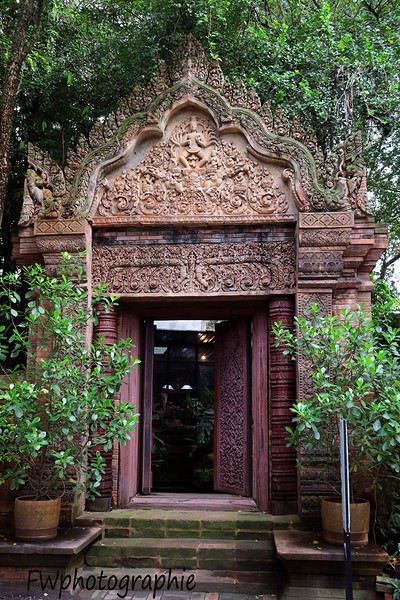
There’s an amazing spot in Chiang Mai to grab a coffee: Baan Phor Liang Meun. Once you reach Chiang Mai Gate, take Phra Pok Khlao Road for a few meters, then turn onto soi 2 (alley 2). It’s actually the first on the left. After a few dozen meters, you’ll find yourself walking alongside what looks like a Khmer temple.


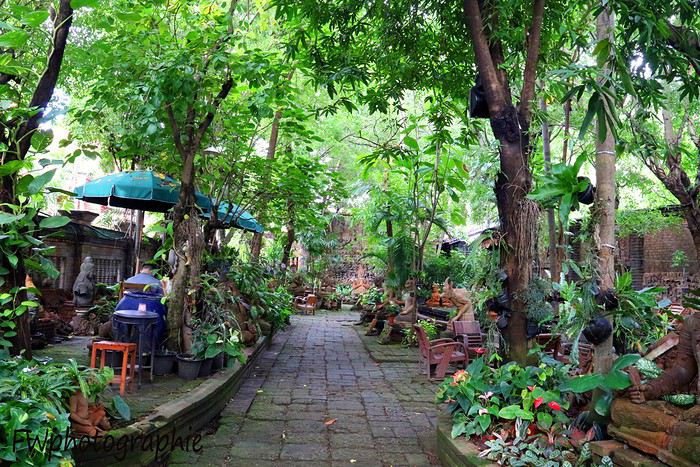
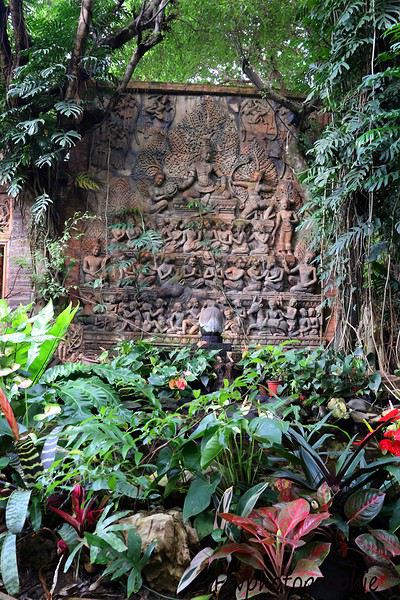
When you enter, you’re in a vast space—like a temple-garden—where you can eat a small dish or sip a good café crème as if you were in Angkor. The tables are far apart, so you’re as close to birds and squirrels as you are to other customers.


In the small building where the staff works, they provide high-quality mosquito repellent for free—something we’ll now buy regularly at 7/11. They’re small plastic bottles, mostly pink or orange, with Thai writing and "floral fragrance" in English. The scent is actually pleasant. Remember to shake the bottle before opening and pressing, or you’ll end up with cream all over your shorts...

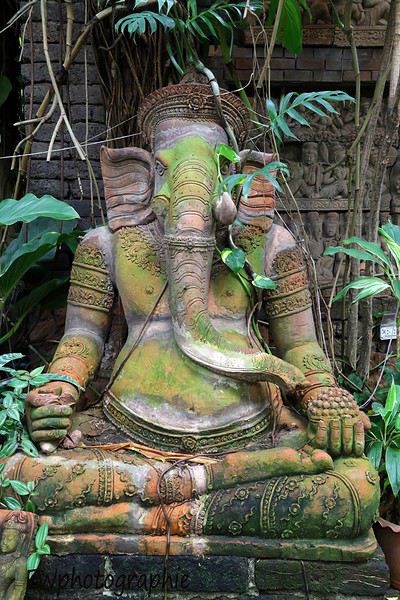
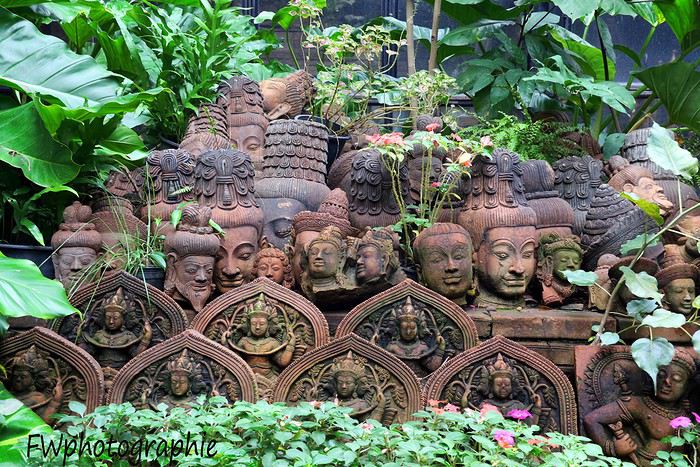
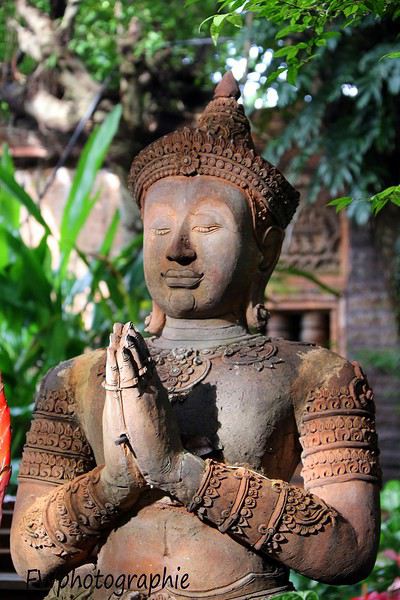
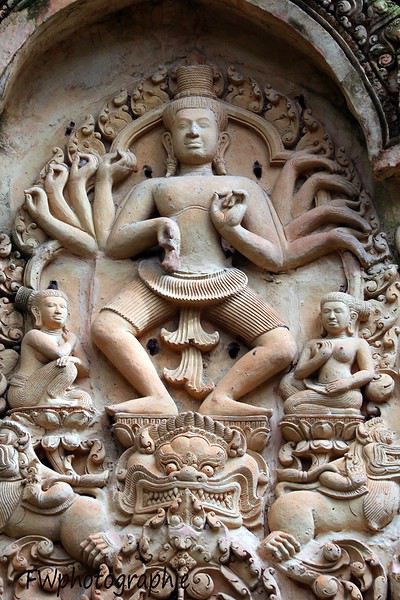
The creator of this space has been sculpting terracotta works since the early 1980s using clay from the Lamphun region—the most consistent clay found in all of Thailand. This café is like visiting an ancient temple, with its abundance of statues, high-reliefs, and bas-reliefs. It’s undeniably a romantic spot for couples—a haven of calm in a very lively city.


Open
Inside South Africa
Inside South Africa

The Burst Hose. The passenger is so impatient to arrive that the coachman whips a horse that barely tolerates the mistreatment. I can tell she’s gearing up for a kick, and suddenly, at full gallop, she stops responding. If I press the spur, she cuts out but accepts a half-pressed pedal. She pulled this stunt last year, right in the middle of the Kalahari Desert, and I can guess the trick: she blew a hose! An hour at a slow trot brings us to a Ford garage. A workshop manager, as sullen as he is efficient, has the necessary parts removed to reach the hose, then announces he doesn’t have the spare part and will need a week to get it. I suggest taking advantage of the access to make a temporary repair on the tear, but he refuses, arguing the pressure is so high that the patch would give way immediately—"It’s not a Testarossa, after all!" After reassembly, he refuses to charge us anything and advises us to head to the next town, 200 kilometers away—off we go for another four hours. Semi-trailers overtake us without mercy; I’m reminded of *Duel*. At the Land Rover dealership, we learn the part will take two working days to arrive, and it’s Thursday. I decide to have the hose delivered to the house without wheels—I’ll change it myself. Five hours later, climbing the pass in first gear, we reach the object of her desires. * Hide and Seek In Brittany, my neighbor is a taciturn, touchy fisherman. He’s anchored his old boat in the middle of the estuary that separates two departments and uses it as a storage space. It’s a jumble of nets, buoys, and traps. The old wooden vessel is falling apart, and the hull’s paint is nothing but a distant memory—so much so that the Maritime Affairs Directorate of his department orders him to remove it or repaint it. Asterix also runs a restaurant on the harbor, where he treats customers to his catch. One Sunday afternoon, we see him loading cooks, servers, and dishwashers armed with rollers, brushes, and paint cans into dinghies. Off they go for two hours of slapdash painting and laughter. Once the starboard side is done, everyone returns to prepare for the evening service. The port side will wait until the Maritime Affairs Directorate from the other department reacts. This story came back to me when I got home: the side visible from the road had been repainted, but the other side was left as is. * The Blonde, the Red, the White, and the Black Many workers are paid at the end of each week, but alcohol sales for takeaway are banned on Saturdays and Sundays. So, on Friday nights, the bars are packed, and liquor stores never empty—of people who are already full. Their limited means reduce them to cheap, harsh wines or bland beers. Yet, they still end up wasted.

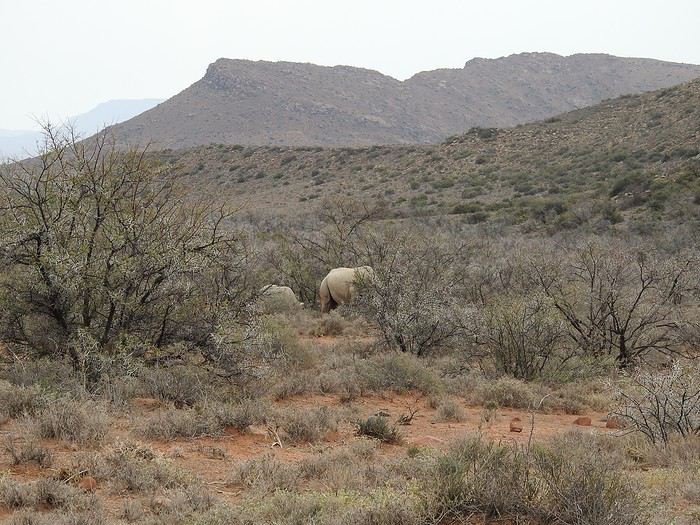
* Seven In mainland France, you can easily raise seven sheep per hectare. In the Great Karoo, it takes seven hectares of sparse but tasty vegetation to feed just one sheep. Not to mention the energy spent moving around. Add to that the fact that a French sheep produces about one and a half lambs per year, while here, between droughts and jackals, it’s closer to 0.7, and you’ll understand why, with a 7,000-hectare farm—the local basic unit—a South African farmer’s income barely exceeds that of a farm a hundred times smaller in Brittany. This weekend, the annual agricultural show is taking place at the fairgrounds. Some come from far away, so a procession of pickups, trailers, and trucks loaded with sheep makes its way up the main street: we’re definitely in the Karoo. I expected a competition of lean, wiry ascetics, able to pass on traits useful to the environment, but I suspect these bodybuilder show animals don’t just graze on the bush and are doped with alfalfa. Besides, I caught a dealer red-handed with a bag of pellets. * They’re Not Dolls Ken is a professional hunting guide, working independently. When it’s not hunting season, he goes fishing for clients, mainly in the United States. He says Trump’s election—whom he slightly resembles, though younger—would be good for his business, but he doesn’t like Trump, nor, it seems, his clients much. He wanted to be a farmer, but in the post-apartheid context, taking over a farm was a gamble. His wife, who’s more beautiful than Barbie and Melania, silently agrees. * Neighbors That’s the problem with women: their *it girl* side. Within a year of her moving in, we got two new neighbors. One on the other side of the track, the other half an hour away (here, that’s *next door*). One only travels at the controls of his black helicopter, the other aboard his private Boeing 737. The first is a very wealthy farmer from the northeast of the country who’s expanding into the Karoo. He just bought two non-contiguous farms of 6,000 hectares each. I still don’t know what the owner of the farm in between is thinking. The newcomer plans to create a wildlife reserve for breeding purposes; our future neighbors will be giraffes, rhinos, and antelopes, including rare species like the Sable. They say he’s a man in a hurry, determined: when the municipality dragged its feet on his request to refurbish the public track that serves as our border, he just went ahead and did it himself. It was a historic farm, crossed by paths leading to other farms, home to a pond full of birds where water from the mountain ends up after the villagers have taken their share. That’s where the golf course I was about to become the 29th member of was located. Now, it’s all closed off, fenced, and lined with monumental gates. The Wild West in the Western Cape. Is it because his name ends in ‘-ski’ that rumors link him to Slavic mafias and advise against crossing him? The same rumors say he’s involved in the uranium market—well, there’s uranium in the Karoo’s subsoil. The second neighbor is a Saudi prince who just bought a modestly sized farm—3,500 hectares—but don’t think he’s a minor prince. He paid four and a half times the market price to get it! The farm had been in the same family for two centuries, and the owners refused to even consider selling. The prince’s agent—money, in this case, black gold—kept coming back every week despite repeated refusals, finally saying his client wanted this farm at any price. A price they were asked to set. And that’s how you sell your ancestors’ graves. There are plenty of huge farms for sale here, but the prince was looking for a property where he wouldn’t see any roads, tracks, or other houses or farms. He’ll come a few days a year to hunt. However, he’s annoyed: the runway at the nearest airport, two hours away, isn’t long enough for his private jet, so he’ll have to land in Cape Town, like me, and endure nearly two hours by helicopter. That’s how it goes in South Africa. I’d be curious to know what Julius Malema, leader of the EFF (Economic Freedom Fighters), who advocates the Zimbabwean model of land redistribution, thinks about it.

* Biko The autobiography of a journalist and politician of European descent, South African, is published this week. In 1977, this rookie got her editor’s permission to investigate the death in detention of black leader Steve Biko. The apartheid regime’s political police claimed he had died from a hunger strike. The bold young woman discovered that the medical examiners reported a slightly overweight corpse, and later, it was revealed that Biko had died from abuse, if not torture. Under pressure after publishing her investigation, Helen Zille, disillusioned, gave up journalism and turned to politics. She is one of the white South Africans who fought against apartheid, and it’s reassuring that some people have a conscience that transcends class or race. *

You Have the Watches... …we have the time. Anyone who’s worked with Africans knows this response they occasionally throw at us. Willem, the inconsistent gardener, couldn’t stand the observation: running around the place at top speed, even with a pitchfork over his shoulder, wasn’t getting the job done. So Jan replaced him. We share the same first name—no doubt we’ll accomplish great things. He’s known to be reliable, meaning he shows up for work, and he only speaks Afrikaans. We communicate like at the circus: thumbs up, thumbs down. Jan has the build of a bushman but the bone structure and features of a mixed-race person—multiple mixes. He’s a sprite, always moving, sometimes without purpose or destination (the journey is the path). I lose sight of him—it’s not exactly a virgin forest—and he reappears elsewhere, busy. Jan doesn’t understand wasted water—he must think the same of us trying to cultivate the desert. He’s a gardener like I’m a violinist, virtuosos of playback. After a very light lunch, he lies down on the ground in the shadow of the stables and falls asleep. If his arrival time in the morning is variable, it’s never before the agreed hour, but his departure time is unchanging: it’s 3 PM, no matter what. No point trying to fool him; he can count and shows me the fancy watch eating up his thin wrist. * Colours Veldrift, Oyster Catcher, Lobster Red, Namib, Dune, Lion's Den, Kalahari, Bush Fire, Karoo Dawn, Cape Fynbos, Safari Trail, African Pan, Bushveld Plains, African Queen, Karoo Drift. A bestiary? A herbarium? No, the colors offered by the country’s top paint manufacturer. All the shades of the continent from an armchair. * Pets She loves three mastiffs, a meter tall at the withers. Is it for their beauty? Their breed? Their deterrent power, because knowing these beasts exist, no one would dare enter her property without an invitation? A bit of all that, probably. She won’t say. She loves pets but likes other people’s less, especially the poor ones. So, she actively participates in the campaign to sterilize dogs and cats in the neighboring township. Just think, the poor things can’t afford to feed or care for them, meaning they can’t ensure them a decent life. She and others justify the pets section of the local mini-supermarket. Whether your pet is a puppy, adult, or mature, whether it likes fish or prefers beef (no one thought of a dog-based reference from the township?), you’ll find your happiness. While you order, many locals will only have access to the parking lot to beg. * Democracy in Africa

What would Tocqueville say about Democracy in America this fall? After the father, we had the son; after the husband, and by default, we might get the wife. No one else, really? Let’s not talk about France and its current vaudeville. A Ivorian academic believes African peoples aren’t ready for "Western-style" democracy (caricatured as a free T-shirt buying a vote). Does he know the same is true elsewhere, where many voters vote not for a vision, a project, or convictions, but to protect their own interests? Here in South Africa, national elections were held recently, confirming the ANC’s decline in favor of the Democratic Alliance (DA). Historically (since the end of apartheid) seen as the party of whites (who make up less than 10% of the population), it has managed to rally those disillusioned by the clientelism, incompetence, and corruption of Mandela’s unworthy heirs. The DA now governs five of the country’s six largest cities. In the neighboring township, long after the vote ended, ANC and DA T-shirt wearers cross paths courteously. Today, it’s different. The DA’s national leader is holding a rally in a vacant lot. A few hundred people are there, including a good third of children, three-quarters of them ragged. Not an ANC T-shirt in sight amid the smoke of braais and deafening music. Fewer than ten pale faces: the journalist I’m driving, a local official, and activists. A small convoy of limousines arrives—just four, fewer than any of President Zuma’s offspring’s private stables. The crowd stirs, flags wave, and ululations ring out. Mmusi Maimane is a light-skinned mixed-race man, towering over the assembly, which he gently parts, joining in the dances and posing for selfies. He’ll give his speech, half in English, half in Afrikaans, perched on a truck platform—the meeting’s cost must be bearable for taxpayers. A mediocre populist orator, no doubt, but skilled. Two hours later, in the evening, another gathering. This time in a historic town property. A hundred and fifty people, casual chic, all white except for three mixed-race individuals... and the DA President. A Rotary Club vibe: everyone the town has in terms of farmers, shopkeepers, and entrepreneurs has paid their dues to honor Mmusi Maimane’s visit. His admirers see him as a new Mandela or compare him to Obama; his opponents think he’s being manipulated, and his detractors call him a traitor. He’s under forty, intelligent, and his wife is white. The chance he’ll become President of South Africa isn’t zero. * Posh Port Out, Starboard Home. Sonja, who walks the desert at dawn, calls one of her acquaintances posh, meaning snobbish. She’s got a sharp tongue. Wealthy English people (not the ones sent to Australia as convicts one-way) traveling to India would book their cabin on the port side on the way out and starboard on the way back. That way, they had a view of the coast throughout the journey instead of the ocean’s emptiness—whatever Kersauzon says. I didn’t know that by choosing my seat on the plane, depending on the route and time, so the sun lights up the landscape instead of blinding me, I was being posh. * Cosmopolitan Wine Tasting A pale lookalike of Jacob Zuma, a painter teaching his art in Europe; an Antwerp writer in South Africa; a desert gardener with a surfer look; an Irishwoman teaching yoga in the Karoo; an Afrikaner passionate about world history; another, our host, up to his neck in wine; and two French observers—observed observers. Conversations flow, then bottles, just before some hosts leave. Recurring corruption scandals involving President Zuma and his inner circle. A Chenin Blanc. Napoleon, who could have changed the course of South African history. An unwooded Chardonnay. The snake, a puff adder, one found in her garden. A Sauvignon Blanc. The kudu hit by a car at the village exit, which didn’t survive. A Pinotage. The bloody Anglo-Boer War. A Shiraz named Down to Earth. * Little Patagonia A story of pressure or depression, temperature differentials, or perhaps an age-old war between the elements—almost every day at the end of the afternoon, as if tucking in, the wind rushes down the mountain and gives a free haircut. When it falls, you don’t know where, and you hope it hurt itself and won’t get back up. I’m going to build a mast on the house, hoist the sails, trim them, and sail across the desert—it will remember the sea. *

Meeting in the township.


Since a cover is needed (in black and white)...
Open
Ban Gioc Waterfalls (Vietnam)
Hello,

We’re planning our trip for October 2017!! (Yes, it’s still far off—but planning it is already like a vacation.) We’re interested in the Ban Gioc Waterfalls, but I can’t quite make up my mind about them. Will there still be water in October? Is this stop worth it? (Even if there’s no water?) Thanks for your replies! Happy travels to everyone, Eric
Open
The most welcoming people?
Hi there,

While reading some travel journals, I notice that we always reflect on the people of the countries we visit.

I’d love to hear your thoughts on which people charmed you the most during your travels?

I’m not looking for controversy, just reflections and personal feelings. Looking forward to reading your replies...
Open
Mauritius: From One Lagoon to Another via the Southern Roads
From one lagoon to another or from one island to another… From Blue Bay to Le Morne Brabant or from Île aux Aigrettes to Île aux Bénitiers. In this travel journal, I invite you on a journey through the south of Mauritius—a region undoubtedly less known than the busy shores of the beach resorts, yet it’s an enchanting, authentic, and charming Mauritius that unfolds along this route.


Blue Bay, now there’s a place name that immediately sets the tone… obviously, blue is the dominant shade of this lagoon. Here, you’d almost want to add an “s” to the word *blue*, so many are the shades of blue in this bay. From the matte turquoise of the early morning, where the mangroves on the shore are reflected in the lagoon’s depths, to the translucent light blue of midday—most stunning when the sun is at its zenith. Then there’s the deep navy blue of late afternoon, as the last rays of sunlight add golden touches to the ripples.


What a joy to admire this landscape with all its tones—they shift with the angle of the sun, the presence of clouds, or even the underwater terrain (light sand or coral). How could anyone ever tire of such paradise-like sights! Let’s set the scene a little more. This lagoon is one of the largest on Mauritius, and luckily, its shores remain preserved. There are no unsightly buildings along its edges—just a few pavilions from a luxury hotel, partially hidden by *filaos* (a type of tropical pine) and coconut palms. Across the way lies the quiet village and beach of Blue Bay.


For the rest, nature reigns supreme here, with lush greenery (palm trees, *filaos*, and mangroves) alternating with light sandy beaches dotted with black rocks. The lagoon’s entrance is protected by a coral barrier, where waves from the Indian Ocean crash, forming a frothy edge that outlines the horizon. And as if this setting weren’t already idyllic enough, there’s also an island floating on these impossibly beautiful blue waters: Île des Deux Cocos. This private tropical haven has just one structure—a house with striking Moorish-style architecture. Renting it would cost a fortune, I can only imagine… so let’s just admire this dreamy landscape from afar.


Even though the lagoon’s waters are astonishingly clear, to see the tropical fish and coral, you’ll need to explore either by glass-bottom boat (the view is a bit blurry and distorted) or—much better—by snorkeling. There, you swim in the middle of a real aquarium… without any walls. The wonder is guaranteed! I’ll admit that during my (too short) snorkeling session, I didn’t see all the species in this lagoon—far from it! Apparently, there are over 72 different kinds.


But I did spot and admire some elegant angelfish, colorful parrotfish with their shimmering scales, and especially schools of striped fish—the famous sergeant majors. These two Mauritians, seen from behind with their legs in the water, have another way of interacting with the bay’s fish—they’re teasing them with fishing lines and hooks.


Exploring the lagoon can be nicely rounded out with a kayak trip. With just a few paddle strokes, I’m almost in the middle of the bay. There, during a pause, my gaze wavers between admiring the stunning surroundings and peering at the underwater world through the crystal-clear waters. Look! A few fish dart near my kayak… before quickly hiding in the coral crevices. A little farther on, near the lagoon’s shores, I now glide along the mangroves and their tangled roots—another fascinating aspect of the area to discover.
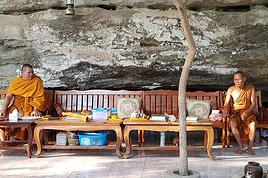


A lagoon so rich in sights and aesthetic emotions quickly makes you feel like you’ve arrived at the gates of paradise. As my thoughts drift with each stroke of the paddle, the peaceful silence of the lagoon is suddenly shattered by a growing noise… a passenger plane flies overhead before landing on a runway near the island’s airport, which is close to the lagoon. Okay, you’ve got to admit—that’s really the only detail in this environment that brings you back to reality. Can paradise truly exist on Earth? Still, luckily, takeoffs and landings aren’t *too* frequent!


Twilight comes quickly in subtropical regions—it’s now the blue hour over the blue lagoon. From Île des Deux Cocos, a few notes of rhythmic music drift over, accompanied by colorful lights. The evening will be festive well into the night…


………………………………………………………………

After the lagoon and its sea baths, it’s time for a *bain de foule*—we’re now in town. The main city in the south, with its 16,000 inhabitants, Mahébourg is even Mauritius’ second-largest urban area. Its vibe is nothing like the hustle (and traffic jams) of the capital, Port Louis. Here, no tall buildings—just residences, houses, shacks, and shops that give off the charming, laid-back atmosphere of a provincial tropical town.


You’ll encounter the crowd a little later at the central market. It’s Monday morning, a busy day, but the morning is just beginning, and some aisles of the covered market are still sparse.


Under these colorful tarps, stalls overflow with mounds of vegetables and fruits. Here, tomatoes in bulk; there, pyramids of eggplants… Farther on, fruit displays: watermelons, pineapples, bananas, and lychees—the first of the season, a vendor tells me. It all looks so appetizing! We continue our visit, weaving between crate carriers, vendors, and busy housewives feeling, weighing, and comparing the produce… before finally buying their groceries. Baskets fill up as conversations flow in a relaxed but somewhat noisy atmosphere.


Near the exit, stalls line up with Indo-Mauritian specialties. Here, the air smells of deep-fried goodness. The displays are piled high with samoussas and dholl puris—those famous flatbreads made with lentil flour and stuffed with spiced vegetables. There are also some eggplant fritters… The sight of all these local treats makes me want to try them, even if it all looks a bit (okay, *very*) greasy. Let’s grab some for our midday picnic! On the other hand, I’ll pass on the chili cakes, even though the vendor kindly offers them. I’m not used to that local *piquant* heat!


Leaving the market, we take a random street—this one’s particularly crowded and busy. It leads to another covered market, this one for clothes. Here, stalls overflow with colorful fabrics and saris, as well as T-shirts, jeans, and caps…


Near the Chaux River, just before the bridge leading to a working-class neighborhood on the outskirts, stands the old lavoir. It seems like a relic from the past—its basins are completely dry, and the place is deserted. No one is scrubbing, beating, or wringing out laundry. Either Monday isn’t laundry day here, or washing machines have replaced the *lavandières* (laundry women)?

A large community of Indian origin lives in Mahébourg, and of course, they have their places of worship, like this Hindu temple at the city’s entrance, decorated with colors and deities.


--

To be continued in the next post: the Hindu festival of Diwali, Île aux Aigrettes, the rocky cliffs of the South…
Open
Wild hikes and bears on Hokkaido Island, Japan
Not very well known: Hokkaido Island has national parks that rival those in North America. Hiking there is free (even many mountain huts) and requires no formalities. These treks are described in the LP *Hiking in Japan* guide—you can just buy the Hokkaido PDF. It’s way better than Mount Fuji. Of course, everything depends on the weather, which is very unstable in the Japanese mountains (frequent strong winds). The trails are often obstacle courses.

The Daisetsu Zan traverse is a stunning hike through volcanic terrain with a remote section in the middle that requires at least one night of camping (there are basic huts for the rest, which is popular with Japanese hikers): 4 to 6 days.

The Shiretoko traverse takes 2 days with views including an island in Russia, but the ridge is brown bear territory—there are even more here than in Denali National Park in Alaska (brown bears and grizzlies are the same). I ran into 7 in just 6 hours of hiking!

I’m heading to Rebun and Rishiri Islands next.
Open
January 2015 Photo Contest: A Monumental World
Many of us longtime members surely remember the little frieze of monuments that used to decorate the top of VF pages.

Eiffel Tower, Statue of Liberty, Taj Mahal...

The famous must-see icons of architectural heritage!

Today, I’m inviting you to dig through your archives and share 3 photos of these international stars made of stone, marble, concrete, or steel.

I can already hear some of you protesting that this theme isn’t very original.

Well, it’s up to you to think outside the box...

So the monument doesn’t have to be the original. It could be its twin in Las Vegas, a matchstick replica made by Uncle Bob, a piece of jewelry, a gorgeous snow globe made in China, and so on.

The monument can be photographed from above, below, in the rain, as a reflection...

Deserted or swarming with visitors...

Montages are also allowed! 😉

In short, a classic topic that’ll become original thanks to your creative take.

Now, there are still 3 rules:

- No selfies (But a photo showing people taking selfies in front of a monument is allowed...🤪)

- Once a monument has been posted by someone, no one else can post it again. I don’t want to see the same thing 10 times...😊

- The theme isn’t about the monument’s originality. Please don’t post a photo of a monument known only to you or almost no one...😏

You can post your photos (one per message) until January 21, 2015, at 11:55 PM

Voting will take place from January 22, 2015, at 12:05 AM to January 29, 2015, at 11:55 PM.

During the vote, you’ll choose your 3 favorite photos, awarding 3 points to your top pick, 2 to your second, and 1 to your third.

Please clearly indicate the photographer’s name and the number of the winning photo!

For the rest, I’m using Cocottte’s rules:

The winner is the one with the most points. In case of a tie, the winner will be the one with the most first-place votes, or, if still tied, the most second-place votes. If there’s a perfect tie, the winner will be the one who reached their score first. The winner will then choose a theme for February’s contest and organize it. Ties for any place other than first won’t be broken.

You can vote without participating, participate without voting, or do neither. Slideshow

Finally, here’s the little off-topic link where all your comments and other expressions of good humor are welcome!
Open
Travel Journal: Northern Laos, Chiang Mai, Bangkok
Here’s our third travel journal with photos, following Vietnam in 2012 and Southern Thailand + Angkor in 2013. Once again, we’d like to thank everyone who brightens up this site with their experiences and tips. Every year, some parts of our itinerary are made easier or richer thanks to your contributions. We hope our own story will do the same for other travelers.

**10 JULY 2014**

We booked our flight tickets back in September to get a better deal than last year. We were happy with the 1291 € price for two people from Paris—until mid-January, when several airlines started offering promotions we hadn’t expected for our travel dates. Next year, we’ll take the gamble and wait longer, hoping to fly with Qatar Airways, for example. Fate had us flying with Indian Airlines. The Paris-to-Delhi leg was on a brand-new Boeing Dreamliner—obviously fresh off the assembly line. After a quick four-hour layover to stretch our legs, we boarded an Airbus A321 that looked prehistoric for the Delhi-to-Bangkok flight. Honestly, if the outside of the plane had matched the inside, we’d never have made it. Broken screens, shattered armrests—you name it. As for the meal trays, we would’ve devoured them only after a week stranded on a desert island. The cabin crew didn’t win us over either. And we really didn’t appreciate the behavior, attitudes, or stares from most of the people we encountered during our layovers in Delhi. This year’s experience has definitely put us off flying with this airline again—or even setting foot in India ever again. That’s just our personal take, but it’s clear.

Stepping onto Thai soil was an immense relief. After exchanging just a few euros, we took a taxi from the designated spot and had a completely different experience from last year: the driver was normal and efficient. So efficient, in fact, that we arrived at our destination much earlier than expected. A well-deserved tip, and it seemed to make his day.

We dropped our bags at reception and rushed to Harmonique restaurant, just 300 meters away, just in time for the last dinner service. We’d talked about this place at length last year. We’d been looking forward to it for a year, but we only managed to nibble on some spring rolls because what we really wanted was a good night’s sleep. While quite a few customers were still around, four staff members walked through the dining area with two large trash bins from the day’s service. They were clearly pleased with themselves and having a good laugh. It made us chuckle too—seeing something like that done so naturally, when back home, some people would’ve been outraged to witness it in a similar establishment!
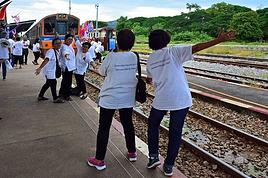

A quick word about the Swan Hotel: we’re grateful to those who recommended it on this site and on their blogs. It’s quietly located in the Silom district, just steps from the river. We have fond memories of the giant, ultra-comfortable bed and the well-maintained pool. It was very peaceful, though we were there during a quieter season. At 30 € with breakfast when we booked (and around 20 € without breakfast now), we can’t imagine finding a better-suited hotel in Bangkok.

**11 JULY**

We couldn’t find an open bank and had to withdraw cash from an ATM. Now we know: July 11 is a public holiday in Thailand. It suddenly occurred to us that next year, we’ll keep some baht from our return trip to save time at the airport and avoid little hiccups like this.

We decided not to head straight to Laos and instead spent the day visiting Muang Boran, also known as Ancient City, about 30 km southeast of Bangkok.

There are plenty of ways to get there. We ruled out taxis—too expensive. Besides, we enjoy using local transport; it’s more fun. We took a taxi to Democracy Monument, then found the bus stop about 100 meters from the roundabout, on one of the avenues leading to it. Someone always points you in the right direction. We hopped on bus 511 for a long ride, with two major slowdowns at red lights. The same happened on the way back, as our route crossed busier roads. We told the driver our destination, and he let us know when to get off. No problem—someone already flagged us down 20 meters later to put us in a *songthaew* (a shared taxi-van) that took us straight to the site. The bus and *songthaew* fares were minimal. Already, the people around us were smiling, and we were smiling back.

The entrance fee has gone up: 700 baht. That includes bike rental, a tour minibus, and a boat ride on the river. We still hadn’t fully recovered from the flight, and with the heavy, humid heat, we opted for the electric cart instead—no regrets. Still, 150 baht per hour.

We had an amazing day, beyond our expectations. The park features full-scale or scaled-down replicas of Thailand’s main landmarks, along with countless statues and landscaped gardens. There are also reconstructions of a typical Thai village, a northern Thai village, a farm with animals, and a floating village.

Almost everything we saw was well-made and aesthetically pleasing. The whole place is absolutely worth the trip. We spent six solid hours there without dawdling.

Here’s a very incomplete sample of what we admired:


Visitors will find restrooms, restaurants, and a few shops scattered throughout the site. On the way back, just cross the road using the pedestrian bridge about 250 meters to the left of the exit. Flag down a *songthaew* as it passes.

The whole day flew by between the visit and the commute. We still had time to return to Harmonique to try their famous crab curry. Once you’ve finished it, you think—life isn’t so bad after all.
Open

You might also like